

Link building sites are the platforms and pages where a website can earn backlinks honestly: journalist request services, guest posting blogs, resource pages, directories, review sites and podcast directories. Pick the right ones and they put your site in front of real editors and real audiences. Pick the wrong ones and you pay for links that Google treats as spam. This guide explains the types that work, the numbers behind them, how to check a site before you pitch it, and the ones to avoid.
What link building sites actually are
A link building site is any website that gives you a real route to a backlink. That sounds broad, and it is. A journalist platform that matches reporters with expert sources is a link building site. So is a blog in your niche that accepts guest posts, a council page that lists local tradespeople, and a review site where customers compare software. What they share is a real audience and a real editorial reason to link.
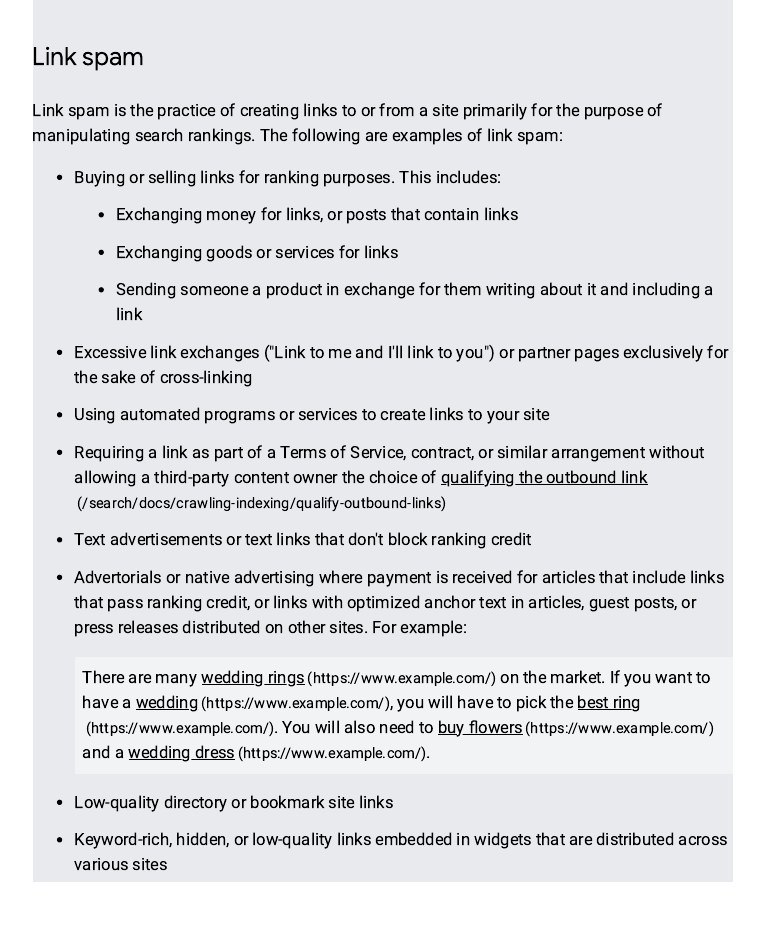
That last point is what separates a useful site from a trap. Google’s spam policies list “low-quality directory or bookmark site links” as link spam, and buying or selling links to influence rankings as link spam too. A site that exists only to sell links, with no readers of its own, fails both tests at once. A site with an editor, an audience and standards of its own is a different thing entirely. The whole job is telling the two apart before you spend time or money.
Do links from these sites still matter?
Yes, but the honest answer is more careful than most link sellers give. Links still track closely with rankings, yet the relationship is modest and it runs both ways: pages that rank well also get found and cited more. The numbers below come from large studies, and each one is worth reading with its limits in mind.
| Finding | Source | What it means for you |
|---|---|---|
| The number-one result in Google averages 3.8 times the backlinks of positions two to ten | Backlinko, study of 11.8 million Google search results, updated April 2025 | Top pages hold far more links than the pages below them, but this is a correlation, not a promise |
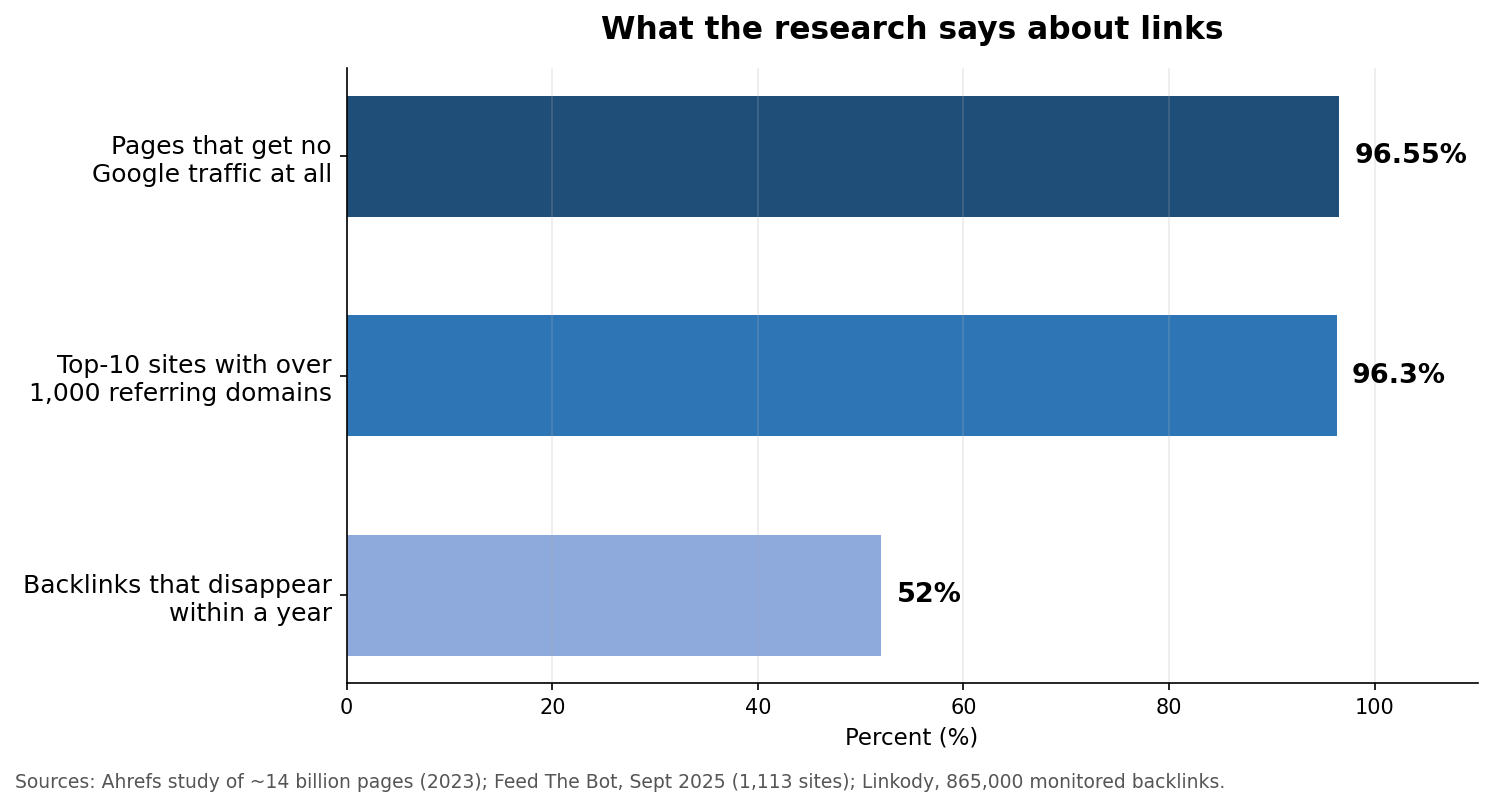
| 96.55% of all pages get zero traffic from Google | Ahrefs, study of around 14 billion pages, 2023 | Most pages earn nothing at all; a page with no links behind it is rarely the exception |
| 96.3% of sites in the top ten have over 1,000 unique linking domains | Feed The Bot, September 2025, 1,113 websites ranking in the top ten for 200 commercial phrases | Competitive terms are usually won by sites with deep, varied link profiles |
| Referring domains have a 0.255 correlation with rankings | Ahrefs, January 2025 analysis of US keywords | Links help, but the link between link counts and position is modest |
| About 52% of backlinks disappear within a year, and only about 31% survive after five years | Linkody, based on 865,000 monitored backlinks | Links decay, so link building is maintenance, not a one-off job |
| Guest posts cost about $300–460 each and digital PR links about $1,250–1,500 each | BuzzStream vendor data, June 2026 | Good editorial links are expensive; cheap ones usually are not editorial at all |
The pattern across these studies is plain. Links from real sites with real traffic still count, and competitive pages almost always have many of them. But no single link, and no single site, moves a ranking on its own. That is why the type of site matters more than the number of sites on your list.
The 7 types of link building sites worth your time
1. Journalist request platforms
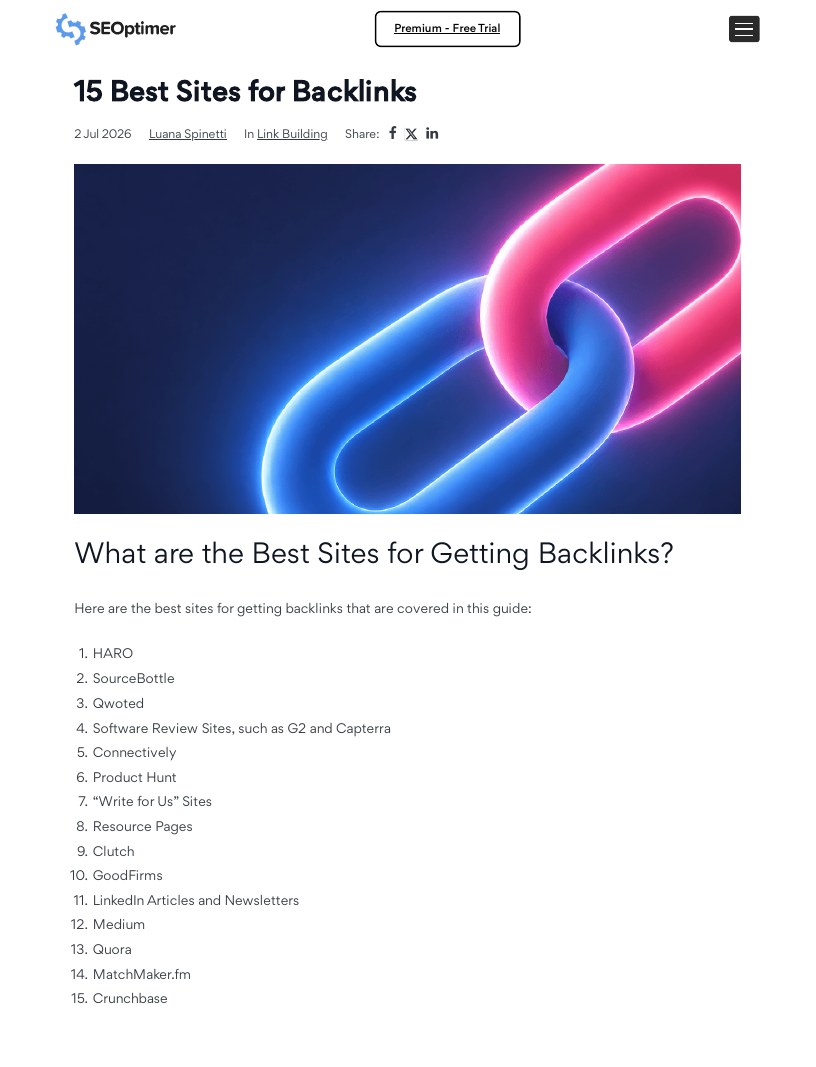
These connect reporters with expert sources. You answer a journalist’s question, and if your answer is used, you usually get a link from the publication. HARO (Help a Reporter Out) is the best known: it relaunched in April 2025 as a free daily email digest after its owner, Featured.com, bought the brand. Qwoted and SourceBottle work the same way, with profiles and pitch limits — Qwoted’s free plan allows two pitches a month, with a paid plan at $149 a month. No platform guarantees a link, and a published mention can still be unlinked or nofollow, but the links you do earn come from real news sites and carry real weight.
2. Guest posting sites
Blogs that publish outside writers are still one of the most direct routes to a relevant link. Search for “write for us” pages in your niche, then read the site before you pitch: does it publish often, does it have real readers, and does it link out to sources it actually respects? High-authority sites accept only a small share of pitches — some accept fewer than one in ten — so a short, specific pitch aimed at one editor beats a mass email every time. A guest post on a relevant site with real traffic is worth far more than ten posts on sites that exist only to sell placements.
3. Resource pages
A resource page is a page that exists to link out: a university’s list of industry guides, a trade body’s list of tools, a council’s list of local services. These pages are built to be helpful, which makes them one of the few places where asking for a link is normal. The test is the same as everywhere else. If the page is curated, up to date and clearly read by real people, a link from it is worth having. If it links to hundreds of unrelated sites and has not been updated in years, skip it.
4. Business directories
Directories get a bad name because most of them deserve it. Google’s own spam policies name low-quality directory links as link spam. But a small number of directories are genuine: your local chamber of commerce, a trade association list, a niche directory that vets its members. The difference is easy to spot. A real directory has an application process, a human who checks it, and users who actually browse it. A spam directory accepts anyone instantly, lists thousands of unrelated businesses, and has no traffic of its own. One or two real directories are enough; a hundred cheap ones are a liability.
5. Software review sites
If you sell software, review sites such as G2 and Capterra are link building sites in all but name. People comparing tools land on these pages first, and a profile there earns you a link from a high-authority domain as well as buyers who are ready to choose. Public review sites became the most consulted software-buying source in 2024, at 31% of buyers, so the link is a side benefit of being where buyers already look.
6. Podcast guesting sites
Podcast directories and guest-matching sites such as MatchMaker.fm connect hosts with guests. An appearance usually earns a link from the show’s website, and often from its episode notes on several platforms. These links are usually nofollow, but they put your name in front of a focused audience and they tend to come from sites with real listeners, which is the quality signal that matters.
7. Link marketplaces, used with care
Marketplaces such as WhitePress or Link Publishers list thousands of sites where you can buy a guest post or a link insertion, with prices shown up front — typically $30 to $300 or more per link depending on the site’s authority. They are convenient, and they are also the riskiest item on this list. Google’s spam policies are clear that exchanging money for links to influence rankings is link spam. If you use a marketplace at all, treat it as a way to find publishers, then judge each site by the same five checks below. A paid placement on a real site with a real audience is advertising; a paid link on a site built to sell links is a manual action waiting to happen.
How to vet a link building site in five checks
Use these checks on any site before you pitch it, pay for it, or link from it. A strong site passes all five. One failure is a warning; two is a reason to walk away.
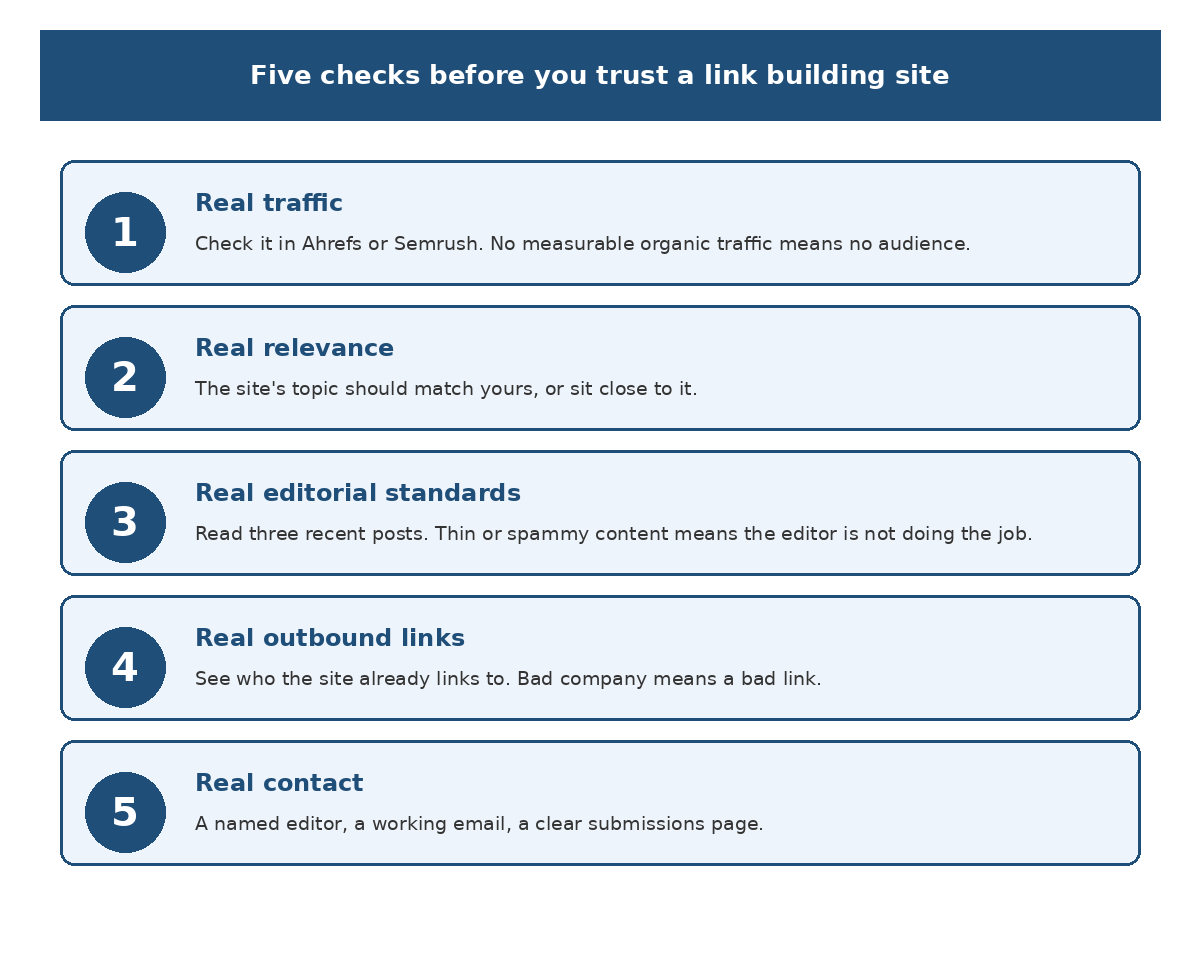
- Real traffic. Check the site in a tool such as Ahrefs or Semrush. A site with no measurable organic traffic has no audience to pass on to you.
- Real relevance. The site’s topic should match yours, or sit close to it. A link from a cooking blog to a law firm helps neither side.
- Real editorial standards. Read three recent posts. If they are thin, badly written or stuffed with outbound links to unrelated sites, the editor is not doing their job.
- Real outbound links. Look at who the site already links to. If its pages link out to casinos, payday loans and link sellers, your link will sit in bad company.
- Real contact. A named editor, a working email and a clear submissions page. Sites that hide behind a form and a price list are selling links, not publishing content.
Link building sites to avoid
Some sites look like opportunities and are not. Avoid any site that promises a set number of links for a flat fee, guarantees a specific ranking, or offers links from a “private blog network” — a group of sites built only to link to paying customers. Rank With Links builds links by manual outreach and uses zero PBNs, because networks like these are exactly what Google’s spam policies target. Also avoid Fiverr SEO packages that promise hundreds of links overnight: those links almost always come from PBNs or spam directories, and cleaning them up costs far more than the package saved. Finally, avoid any site that asks you to link back as a condition of listing, or that buries your link in a footer or sidebar where no reader will ever see it.
A simple four-step process
- List ten sites, not a hundred. Pick two journalist platforms, three guest posting blogs, two resource pages and three directories or review sites in your niche. A short list you actually work is better than a long list you never touch.
- Check each one with the five checks above. Drop any that fail two or more. You will usually lose a third of your list at this stage, and that is the point.
- Pitch one person, not a list. Find the editor’s name, read their last three articles, and pitch one idea that fits what they already publish. Mention the specific article you are building on.
- Track what you earn. Record every link, its date, and whether it is followed or nofollow. Remember that about half of all backlinks disappear within a year, so check your profile every few months and replace what you lose.
If you would rather have someone else do the outreach, our manual link building services work the same way: real sites, real editors, and no PBNs. Either way, the rule stays the same. A link is only as good as the site it comes from.
Frequently asked questions
What are link building sites?
Link building sites are platforms and pages where a website can earn a backlink honestly, such as journalist request services like HARO, blogs that accept guest posts, resource pages, business directories, review sites and podcast directories. The useful ones have a real audience and a real editorial reason to link. Sites that exist only to sell links, with no readers of their own, are not worth your time and can draw a penalty from Google.
Are free link building sites worth using?
Yes, if they are free because they are editorial rather than because they are worthless. HARO, SourceBottle and Qwoted’s free plan cost nothing and can earn links from real publications, because the value comes from your expertise, not your payment. Free directories and free guest post marketplaces are a different story: if a site accepts anyone without checking, its links carry no weight and can harm your site.
Which link building site is best for beginners?
Start with HARO or SourceBottle. Both are free, both send you journalist questions by email, and both need only a short, useful answer rather than a full article or a budget. Answer two or three questions a week for a month and you will learn what editors want, which is the skill every other type of link building depends on.
Can I buy backlinks from link building sites?
You can pay for a guest post placement or a sponsored article, but Google’s spam policies treat buying links to influence rankings as link spam. The safe route is to pay for the content and the placement, and to make sure any paid link is marked nofollow or sponsored. We advise against buying links for ranking purposes: the short-term gain is rarely worth the risk of a manual action.
How many link building sites should I use?
Ten good ones beat a hundred poor ones. A short list of sites you have checked properly, with real traffic and real relevance, will earn you more useful links than a long list of directories that accept anyone. Add new sites only after you have pitched the ones you already have.
How long does it take to get a backlink from a link building site?
It varies by type. A journalist platform can produce a link within days if your answer is picked up quickly. A guest post usually takes two to six weeks from pitch to publication, because an editor has to review, edit and schedule it. Resource pages and directories can take a month or more. If a site promises a link within 24 hours, it is almost certainly selling links rather than earning them.

Abdullah Zulfiqar is Co-founder and Client Success Manager at RankWithLinks, an SEO agency helping businesses grow online. He specializes in client relations and SEO strategy, driving measurable results and maximizing ROI through effective link-building and digital marketing solutions.