
Introduction
In the age of digital commerce, buying and selling has never been easier. Among the many platforms that have transformed the way people trade goods and services, Facebook Marketplace stands out as one of the most accessible, widely used, and rapidly growing online selling platforms in the world. Launched in 2016, Facebook Marketplace has grown from a simple local buying and selling feature into a full-scale e-commerce destination used by millions of people every single day.
Whether you are looking to sell old furniture, buy a used car, find a rental property, or discover great deals in your neighborhood, Facebook Marketplace offers a convenient and largely free platform to do it all — right within the Facebook app you already use.
In this article, we explore everything you need to know about Facebook Marketplace — what it is, how it works, its key features, benefits, limitations, and tips for using it effectively.
What Is Facebook Marketplace?
Facebook Marketplace is a digital commerce platform built directly into Facebook that allows individuals and businesses to buy, sell, and trade items with people in their local area or across the country. It functions as a classifieds-style marketplace where sellers can list products, set prices, upload photos, and communicate with potential buyers — all without leaving the Facebook ecosystem.
Unlike standalone e-commerce platforms such as eBay or Amazon, Facebook Marketplace leverages the existing Facebook social network to create a more personal, trust-based buying and selling experience. Buyers can view a seller’s Facebook profile, see mutual friends, and read reviews — adding a layer of transparency that anonymous listing sites often lack.
Facebook Marketplace is available on both the Facebook mobile app and the desktop website, making it accessible to virtually anyone with a Facebook account.
A Brief History of Facebook Marketplace
Facebook first introduced a version of Marketplace back in 2007, but it was limited and did not gain much traction. The platform was relaunched in October 2016 with a completely redesigned experience focused on local buying and selling.
The relaunch was an immediate success. Within one month of its 2016 relaunch, Facebook Marketplace had over 100 million users across 47 countries. By 2021, the platform had grown to over 1 billion users monthly, firmly establishing itself as one of the most popular online marketplaces in the world.
Over the years, Facebook has continuously expanded Marketplace’s capabilities — adding vehicle listings, property rentals, business storefronts, shipping options, and checkout features that allow transactions to happen entirely within the platform.
How Does Facebook Marketplace Work?
Facebook Marketplace is designed to be simple and intuitive. Here is how it works for both buyers and sellers.
For Buyers
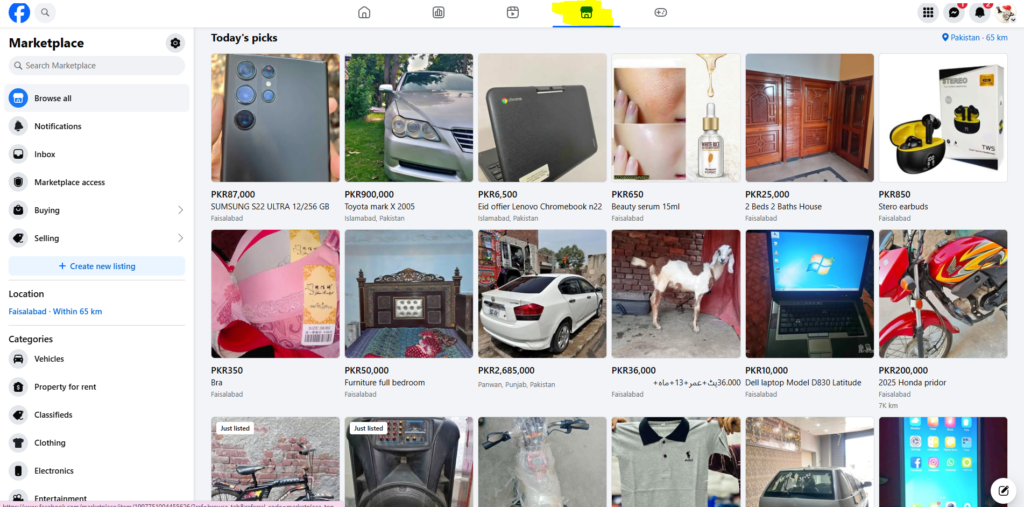
Buyers access Marketplace through the Facebook app or website by clicking the Marketplace icon — a small storefront symbol. From there, they can browse listings filtered by location, category, and price range. The platform automatically shows nearby listings first based on the user’s location settings.
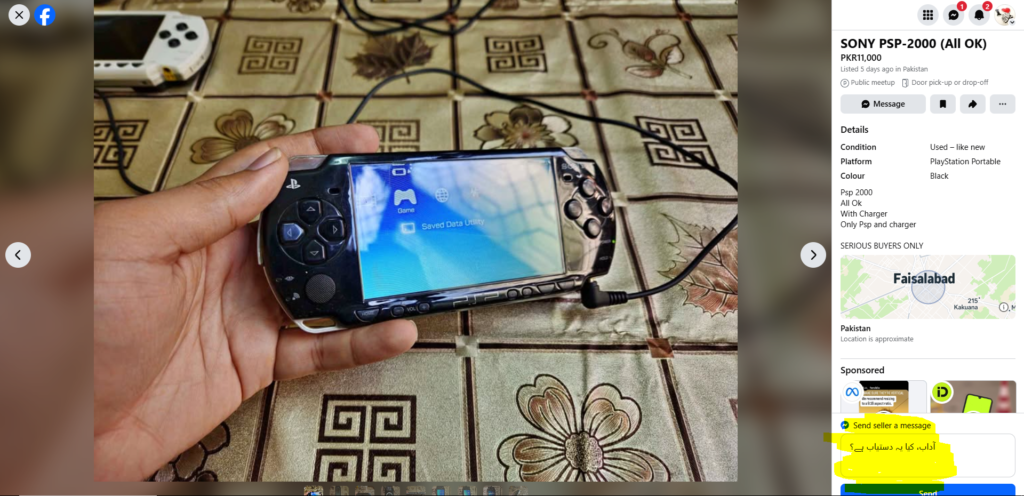
When a buyer finds something they are interested in, they can tap “Message Seller” to open a direct conversation through Facebook Messenger. Buyers and sellers then negotiate price, arrange pickup or delivery, and complete the transaction on their own terms.
For listings that support Facebook Checkout, buyers can also purchase items directly within the platform using a debit or credit card, making the process even more seamless.
For Sellers
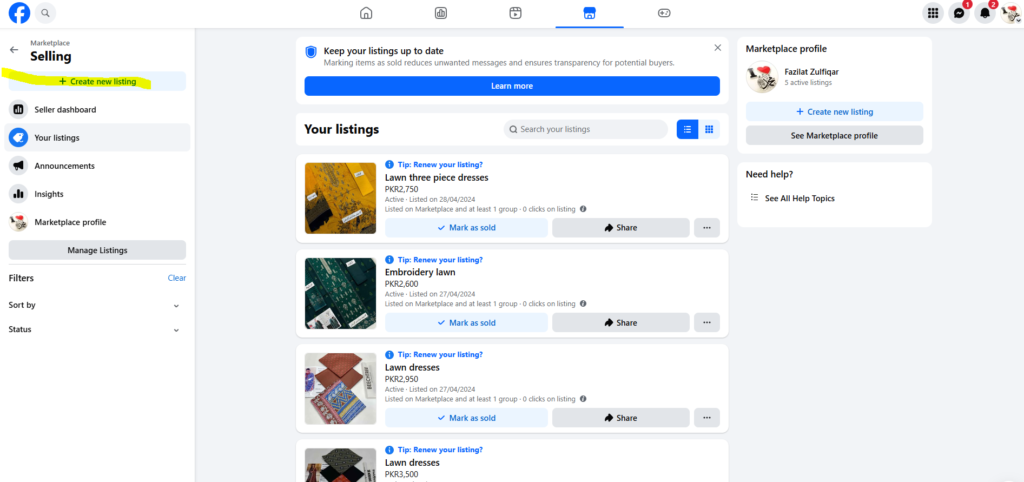
Selling on Facebook Marketplace is straightforward. A seller clicks “Create New Listing,” selects the type of listing (item for sale, vehicle, property, or job), uploads photos, writes a title and description, sets a price, and chooses a category. The listing then goes live and becomes visible to nearby buyers almost immediately.
Sellers can choose to offer local pickup only, or enable shipping for eligible items to reach buyers nationwide. Facebook also allows sellers to share their listings directly to Facebook Groups, dramatically expanding their audience beyond just Marketplace browsers.
Key Features of Facebook Marketplace
Local and Nationwide Selling
Facebook Marketplace was originally built around local commerce — connecting buyers and sellers in the same city or neighborhood. However, the platform has since expanded to support nationwide shipping for many product categories, giving sellers access to a much larger pool of potential buyers.
Wide Range of Categories
Marketplace supports an extensive variety of listing categories including vehicles, electronics, clothing and accessories, furniture and home goods, garden and outdoor items, musical instruments, sporting goods, toys and games, tools, real estate and rentals, and much more. This makes it a versatile destination for almost any type of transaction.
Facebook Checkout and In-App Payments
For eligible listings, Facebook offers an integrated checkout experience where buyers can pay directly through the platform. This removes the need to exchange payment details privately and offers buyers purchase protection on qualifying orders.
Messenger Integration
All buyer-seller communication happens through Facebook Messenger, which is already familiar to billions of users. This makes negotiating, asking questions, and arranging meetups simple and convenient without needing to share phone numbers.
Seller Ratings and Reviews
Buyers can leave ratings and reviews for sellers after completing a transaction. These ratings build a seller’s reputation on the platform over time, helping future buyers make more informed decisions about who they are buying from.
Facebook Groups Integration
One of the most powerful features of Marketplace is its connection to Facebook Groups. Sellers can post their listings directly into buy-and-sell groups relevant to their product or location, reaching an audience of thousands of interested buyers with a single additional tap.
Saved Listings and Search Alerts
Buyers can save listings they are interested in and set up alerts to be notified when new items matching their search criteria are posted. This is particularly useful for buyers hunting for specific items at the right price.
What Can You Buy and Sell on Facebook Marketplace?
Facebook Marketplace supports a wide variety of transactions. Some of the most popular categories include the following.
Furniture and Home Decor — Sofas, beds, dining tables, rugs, lamps, and home accessories are among the most listed and sold items on Marketplace. Many buyers use it specifically to furnish homes at a fraction of retail prices.
Electronics — Smartphones, laptops, gaming consoles, cameras, and accessories are consistently popular. Buyers often find significant savings compared to retail prices.
Vehicles — Cars, trucks, motorcycles, boats, and recreational vehicles are heavily traded on Marketplace, which has become one of the most visited platforms for used vehicle sales.
Clothing and Fashion — New and gently used clothing, shoes, and accessories are widely listed. Many sellers use Marketplace as an alternative to dedicated fashion resale apps.
Pet Supplies— Pet owners also use Marketplace to buy and sell everyday items like toys, carriers, and essentials such as dog food for small breed pets, often at lower prices than retail.
Real Estate and Rentals — Landlords and property managers list rental properties, and some homeowners list properties for sale directly on Marketplace, often at no cost.
Free Items — One of the most beloved sections of Marketplace is the free items category, where people give away items they no longer need — from furniture to plants to building materials.
Handmade and Vintage Goods — Crafters, artists, and collectors use Marketplace to sell handmade products, antiques, and collectibles to a local audience.
Benefits of Facebook Marketplace
It Is Free to Use
For most sellers, listing items on Facebook Marketplace is completely free. There are no listing fees and no subscription costs. Facebook only charges a small selling fee (currently 5% per shipment, or a flat fee for low-value orders) when sellers use the shipping and checkout features. Local in-person transactions incur no fees at all.
Massive Built-In Audience
With nearly 3 billion monthly active users on Facebook, Marketplace has access to one of the largest built-in audiences of any platform on earth. Sellers do not need to build a following or invest in advertising to reach potential buyers — the audience is already there.
Trust Through Social Profiles
Because every buyer and seller has a Facebook profile, there is a natural layer of social accountability that anonymous platforms lack. Buyers can check a seller’s profile, see how long they have been on Facebook, view mutual friends, and read past transaction ratings before deciding to purchase.
Easy and Fast Listing Process
Creating a listing on Facebook Marketplace takes just a few minutes. The mobile app makes it especially easy — sellers can photograph an item, fill in a few details, set a price, and go live in under five minutes.
Local Community Commerce
Marketplace fosters a sense of local community by connecting neighbors and helping people keep money circulating within their local economy. It is a modern digital version of a neighborhood yard sale or classified ads section.
Integrated Communication
The built-in Messenger integration means all communication is centralized, easy to track, and does not require sharing personal contact details until both parties are comfortable.
Limitations and Challenges of Facebook Marketplace
Despite its many strengths, Facebook Marketplace has some notable limitations that users should be aware of.
No Universal Buyer Protection — Unlike eBay or Amazon, Facebook Marketplace does not offer universal buyer protection for all transactions. Purchase protection only applies to orders processed through Facebook Checkout. In-person cash transactions have no recourse if something goes wrong.
Scams and Fraud — Marketplace is unfortunately a target for scammers. Common scams include fake payment confirmations, overpayment scams, listings for items that do not exist, and requests to take communication off-platform. Users must stay vigilant. however, many platforms now leverage advanced security like Sift account takeover protection to detect and block compromised accounts before they can interact with unsuspecting buyers.
No Standardized Shipping — While Facebook has improved its shipping features, the experience is still less polished and reliable than dedicated e-commerce platforms. Many categories still rely entirely on local pickup.
Inconsistent Listing Quality — Because anyone can list anything, the quality and accuracy of listings varies enormously. Buyers often encounter outdated listings, inaccurate descriptions, or sellers who are unresponsive.
Privacy Considerations — Because Marketplace is tied to personal Facebook accounts, some users are uncomfortable with the level of personal information visible to strangers during a transaction.
Tips for Buying Safely on Facebook Marketplace
Always meet in a public place for in-person transactions — many police stations offer designated “safe exchange zones” for this purpose. Inspect items thoroughly before handing over payment. Use Facebook Checkout when available for the added protection it offers. Be cautious of deals that seem too good to be true, and never send payment via wire transfer, gift cards, or cryptocurrency to someone you have not met.
Tips for Selling Successfully on Facebook Marketplace
Use clear, well-lit photos taken from multiple angles. Write an honest and detailed description that answers the questions buyers are most likely to ask. Price your item competitively by checking what similar items are selling for on the platform. Respond to messages promptly — slow responses are the fastest way to lose a sale. Share your listing to relevant Facebook Groups to maximize visibility.
Facebook Marketplace vs. Other Platforms
Compared to Craigslist, Facebook Marketplace offers a significantly safer and more modern experience thanks to social profiles and Messenger integration. Compared to eBay, it is better suited for local transactions and free to use for in-person sales, though it lacks eBay’s powerful buyer and seller protection systems. Compared to dedicated apps like Depop or Poshmark, it has a far larger general audience but less of a specialized community feel for niche categories like fashion.
Conclusion
Facebook Marketplace has fundamentally changed the way millions of people buy and sell goods. By combining the reach of the world’s largest social network with a simple, accessible commerce platform, it has created a space where anyone — from a college student selling a second-hand textbook to a small business moving inventory — can connect with buyers and sellers quickly, easily, and mostly for free.
While it is not without its challenges, particularly around buyer protection and scam prevention, the platform’s massive audience, zero-cost listing model, social trust layer, and seamless communication tools make it one of the most valuable and practical marketplaces available today.
Whether you are decluttering your home, hunting for a bargain, or building a small business, Facebook Marketplace is a platform worth knowing well.

Abdullah Zulfiqar is Co-founder and Client Success Manager at RankWithLinks, an SEO agency helping businesses grow online. He specializes in client relations and SEO strategy, driving measurable results and maximizing ROI through effective link-building and digital marketing solutions.