
Introduction
Apps for stores to boost e-commerce success in 2026 are no longer optional — they are the difference between a store that grows and a store that slowly dies.
I learned this the hard way. A few years back, I was managing a mid-size fashion store doing around $12,000 per month. The products were good. The ads were running. But growth had completely stalled.
After a full audit, the problem was clear: we had the wrong apps. We were paying for 21 tools, most of them overlapping, some of them conflicting, and nearly all of them slowing down the store. Page speed had dropped. Conversions had dropped with it.
We rebuilt the entire app stack from scratch — 9 carefully chosen tools, each with a clear job. Within 90 days, revenue jumped to $29,000 per month. Nothing else changed.
That experience changed how I think about e-commerce apps forever. More is not better. Right is better.
In this guide, I will walk you through the exact apps that are moving the needle for stores in 2026 — organized by category, with honest pros and cons, pricing, and real-world results.
Key Takeaways
- Mobile commerce drives 78%+ of e-commerce traffic in 2026
- The right 8–12 apps outperform a bloated 20+ app stack
- AI-powered upsell and email apps deliver the highest ROI
- Cart abandonment recovery is still the #1 quick win
- App speed impact matters — every slow app costs you conversions
Why Most Store Owners Pick the Wrong Apps
Here’s the honest truth: the Shopify App Store alone has over 8,000 apps. Most store owners install whatever shows up first in search results or whatever another Shopify owner recommended in a Facebook group.
The result? A slow store, overlapping features, monthly fees for tools nobody uses, and zero clarity on what’s actually driving revenue.
Before picking any app, ask three questions:
- Does this directly increase revenue, save time, or improve customer experience?
- Will this slow down my store’s page speed?
- Does this replace something I’m already paying for?
If you can’t answer yes to at least one of the first two, skip it.
The 6 Categories Every Store Needs to Cover
Before I list specific apps, understand that a healthy e-commerce app stack covers six areas:
- Email and SMS Marketing
- Upsell and Cross-Sell
- Reviews and Social Proof
- Customer Loyalty and Retention
- Cart Abandonment Recovery
- Analytics and Conversion Optimization
Miss any of these and you’re leaving money on the table.
Best Apps by Category
Category 1: Email and SMS Marketing
Best App: Klaviyo
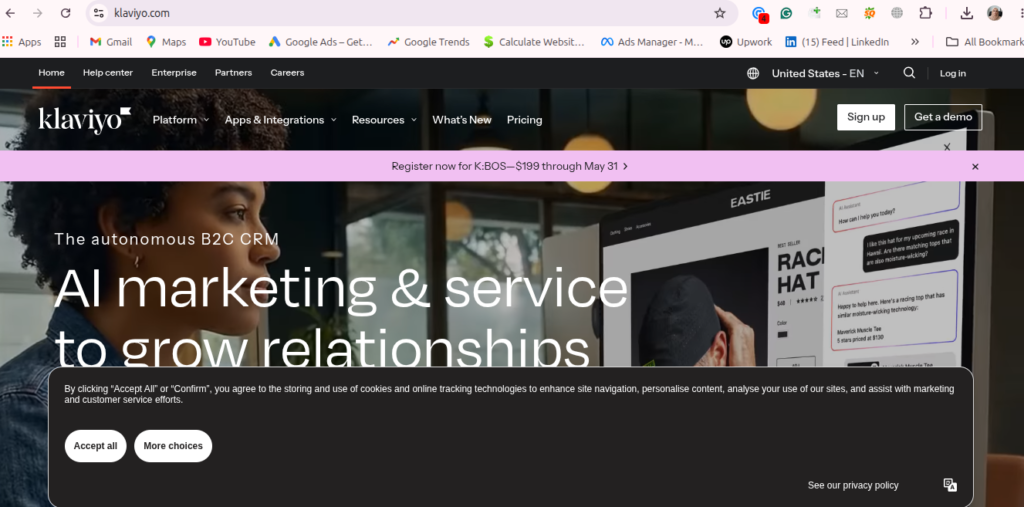
Klaviyo is the gold standard for e-commerce email marketing in 2026. It connects directly to your store data and lets you send the right message at the right time — automatically.
What makes Klaviyo different from basic email tools is behavioral triggers. When a customer views a product three times but doesn’t buy, Klaviyo notices. When someone hasn’t ordered in 90 days, Klaviyo can win them back automatically.
Best For: Stores doing $5,000+/month who want to scale with data
Pricing: Free up to 500 contacts, then starts at $20/month
Pros:
- Deep Shopify/WooCommerce integration
- Powerful segmentation
- SMS and email in one platform
- Pre-built automation flows
Cons:
- Gets expensive at large list sizes
- Learning curve for beginners
- Some advanced features require higher plans
Expert Tip: Set up these three flows on Day 1 — Welcome Series, Abandoned Cart, and Post-Purchase. These three alone can add 15–25% to your monthly revenue.
Runner Up: Omnisend
Omnisend is a strong alternative, especially for stores that want email, SMS, and push notifications in one tool at a lower price point than Klaviyo.
Category 2: Upsell and Cross-Sell
Best App: ReConvert
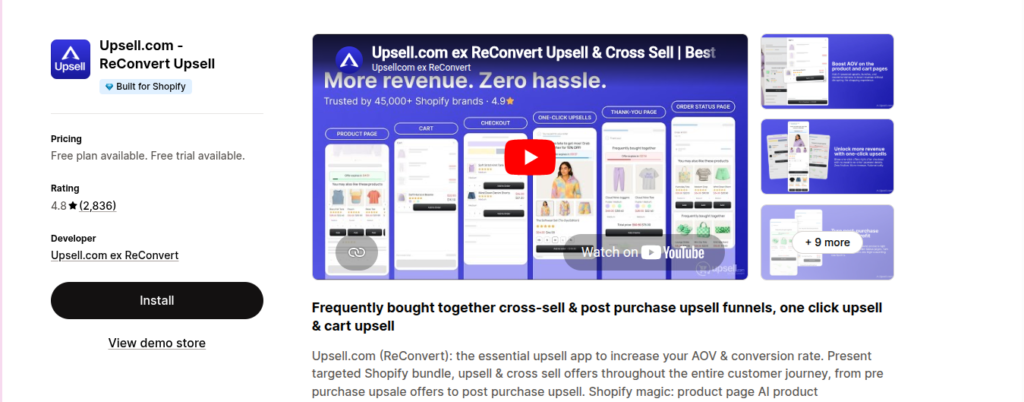
ReConvert turns your thank-you page — the most overlooked page in e-commerce — into a revenue machine. After a customer buys, they land on a page optimized to get them to buy again.
In my experience, a well-optimized post-purchase upsell page can increase average order value by 10–18% with zero extra ad spend.
Best For: Any store that wants to increase average order value
Pricing: Free plan available, paid from $4.99/month
Pros:
- Easy drag-and-drop builder
- Birthday collectors, product recommendations, surveys
- Works on thank-you page and order status page
- Great ROI for low cost
Cons:
- Limited to post-purchase flow
- Design customization can feel restrictive on lower plans
Also Consider: iCart
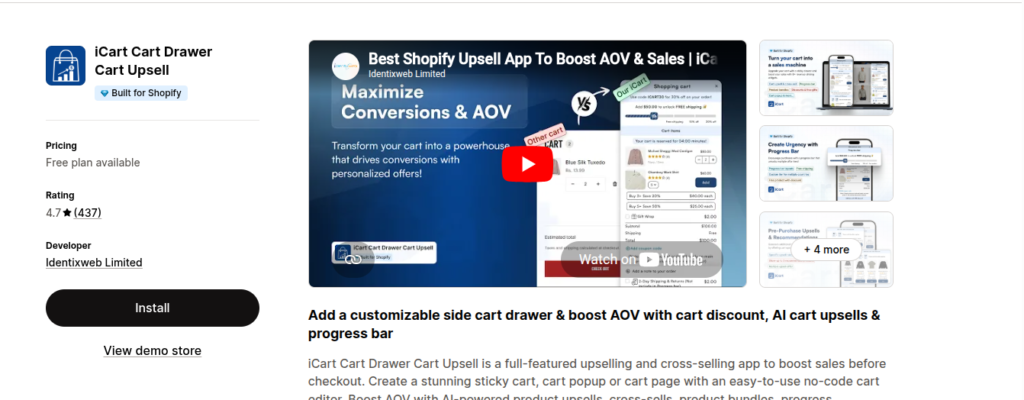
iCart adds upsell and cross-sell features directly inside the cart drawer — before checkout. It’s excellent for bundle offers and volume discounts. Over 2,300 Shopify merchants recommend it for increasing average order value without being pushy.
Category 3: Reviews and Social Proof
Best App: Judge.me
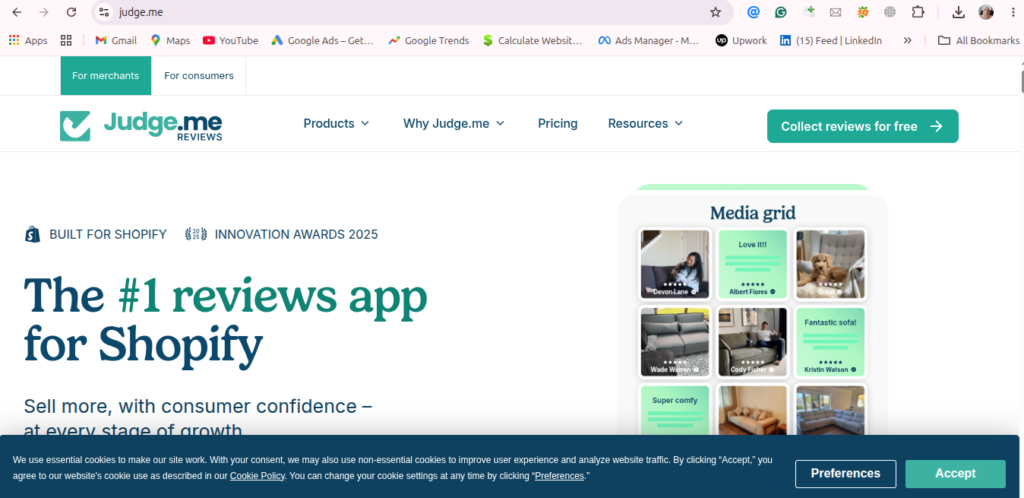
In 2026, customers don’t trust stores — they trust other customers. Reviews are your most powerful sales tool, and Judge.me makes collecting them automatic.
It sends review request emails after delivery, pulls in photo and video reviews, and displays them beautifully on your product pages.
Best For: All store sizes
Pricing: Free plan available, paid plan at $15/month
Pros:
- Unlimited review requests even on free plan
- Photo and video reviews
- Google Shopping review integration
- Fast loading — doesn’t slow your store
Cons:
- Design options less flexible than some competitors
- Advanced widgets need paid plan
Expert Tip: Always respond to reviews — good and bad. Stores that respond to reviews see 12% higher conversion rates. It signals to new customers that a real human is behind the store.
Runner Up: Loox
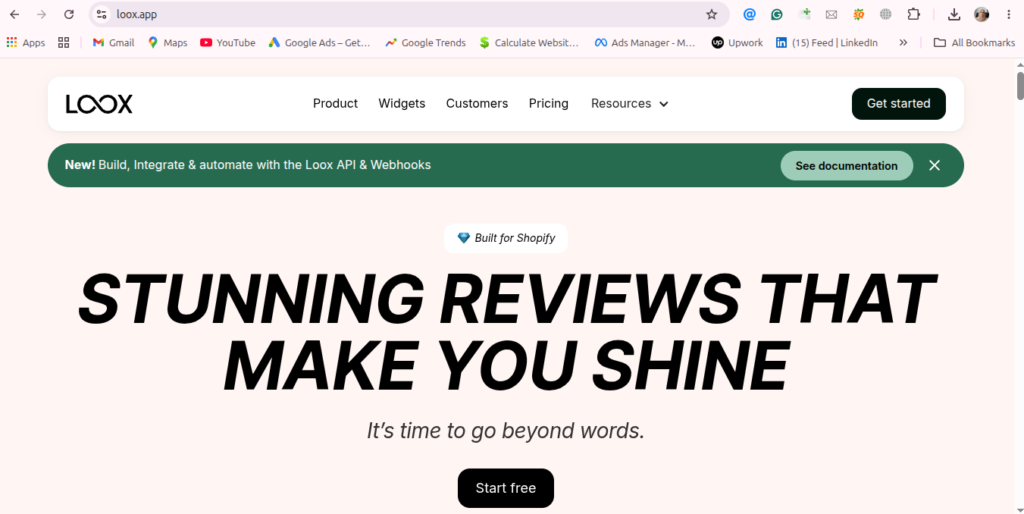
Loox specializes in photo reviews and looks visually stunning. It’s pricier than Judge.me but creates a more premium social proof experience. Great for fashion, beauty, and lifestyle brands.
Category 4: Customer Loyalty and Retention
Best App: Smile.io
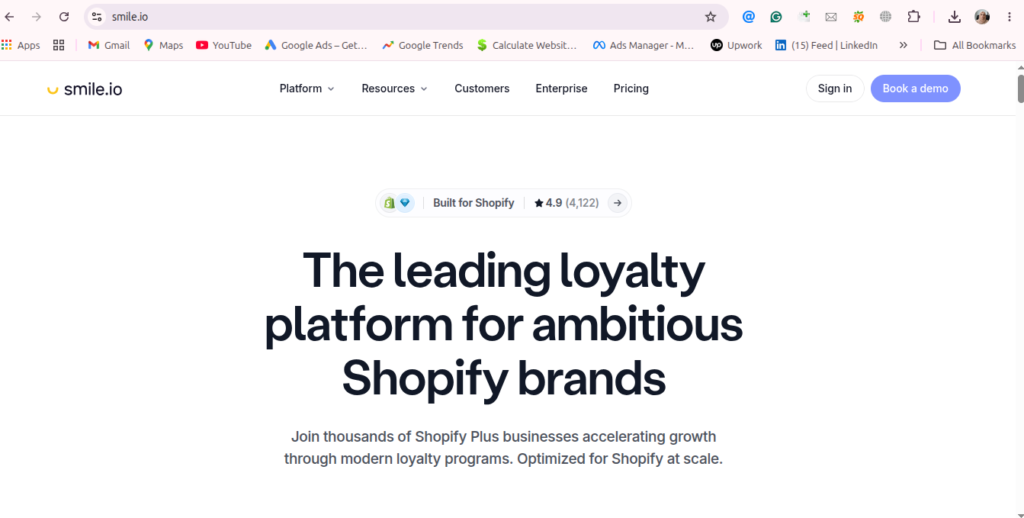
Getting a new customer costs 5x more than keeping an existing one. Smile.io builds a points and rewards system that keeps customers coming back.
Customers earn points for purchases, reviews, referrals, and social shares. They redeem them for discounts. Simple psychology, powerful results.
Best For: Stores with repeat purchase potential
Pricing: Free plan available, paid from $49/month
Pros:
- Easy to set up
- Points, referral, and VIP program in one
- Good brand customization
- Strong integration with Klaviyo and other apps
Cons:
- Free plan is limited
- Paid plans jump steeply in price
- Not ideal for one-time purchase products
Category 5: Cart Abandonment Recovery
Best App: Tidio
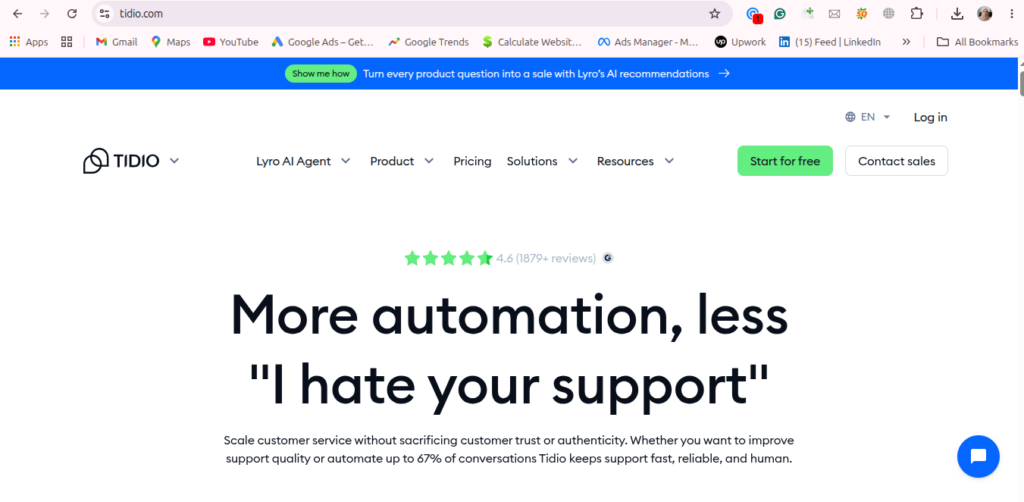
Cart abandonment is one of the biggest revenue leaks in e-commerce. The global average cart abandonment rate sits around 70%. That means 7 out of 10 people who add something to your cart leave without buying.
Tidio combines live chat, AI chatbots, and automation to recover those customers in real time. When someone tries to leave your site, Tidio can trigger a chat with a discount offer.
Best For: Stores with significant traffic
Pricing: Free plan available, paid from $29/month
Pros:
- Live chat and chatbot in one
- Abandoned cart recovery bot included
- Email and Messenger integration
- Real-time visitor tracking
Cons:
- Some AI features need higher plans
- Can feel intrusive if configured poorly
- Takes time to set up properly
Expert Tip: Don’t offer a discount immediately. First, ask if the customer has a question. Many abandoned carts are due to confusion, not price sensitivity.
Category 6: Analytics and Conversion Optimization
Best App: Hotjar
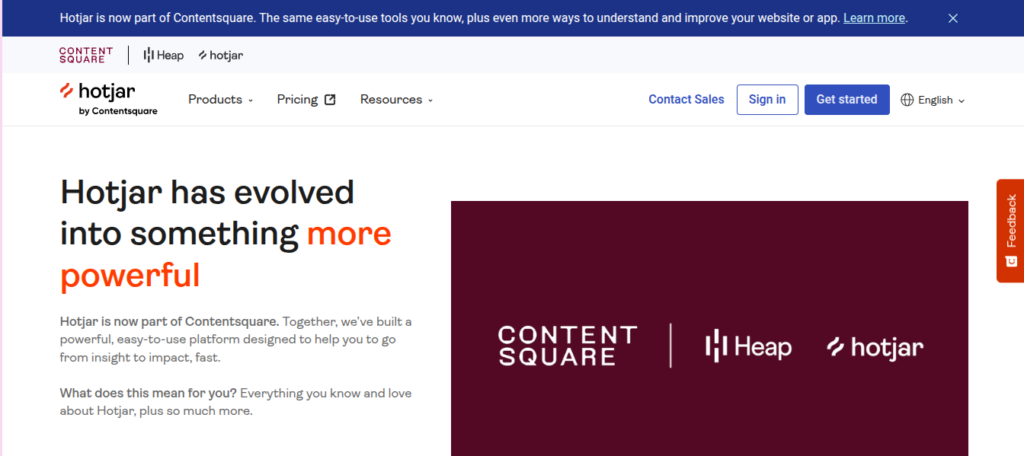
Data without context is just numbers. Hotjar shows you heatmaps, session recordings, and user surveys — so you can see exactly where customers get confused, frustrated, or drop off.
I’ve used Hotjar to identify that a single confusing product size chart was costing one client over $4,000/month in lost sales. One fix, immediate impact.
Best For: Stores doing $10,000+/month ready to optimize
Pricing: Free plan available, paid from $32/month
Pros:
- Heatmaps show where people click and scroll
- Session recordings reveal real user behavior
- Surveys capture customer voice
- Works on any platform
Cons:
- Free plan has recording limits
- Takes time to analyze data properly
- Not a direct revenue tool — requires action on findings
Also Consider: Triple Whale
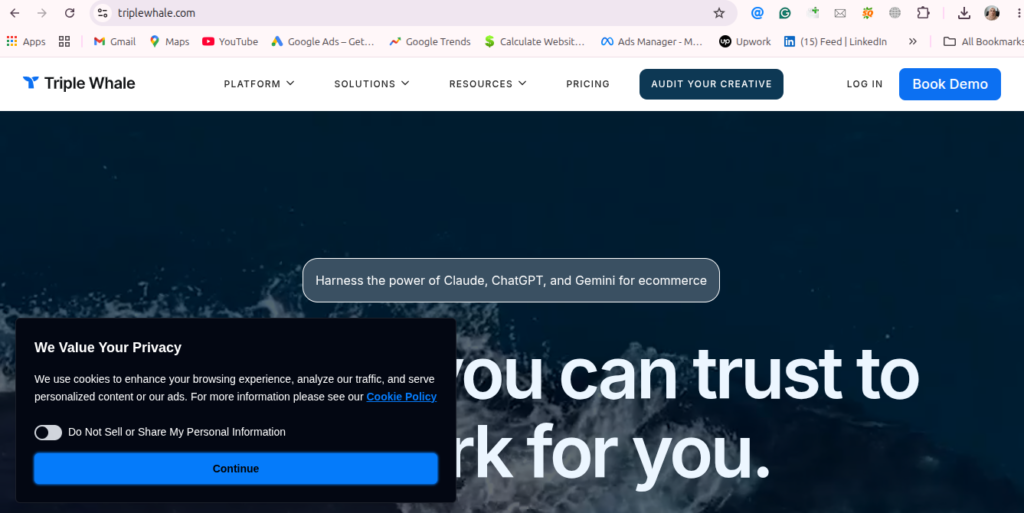
Triple Whale is the analytics platform purpose-built for Shopify brands. It gives you a clear picture of your true ad attribution, profit margins, and customer lifetime value in one dashboard. If you run paid ads, it’s worth every penny.
Comparison Table: Top E-Commerce Apps by Category
| Category | Best App | Free Plan | Starting Price | Best For |
|---|---|---|---|---|
| Email & SMS | Klaviyo | Yes | $20/month | Growing brands |
| Upsell | ReConvert | Yes | $4.99/month | AOV increase |
| Reviews | Judge.me | Yes | $15/month | All store sizes |
| Loyalty | Smile.io | Yes | $49/month | Repeat buyers |
| Cart Recovery | Tidio | Yes | $29/month | High traffic stores |
| Analytics | Hotjar | Yes | $32/month | CRO-focused stores |
| Mobile Apps | Tapcart | No | $200/month | Established brands |
| AI Chat | Zipchat | No | $49/month | Conversion boost |
The Lean App Stack for 2026
Based on working with dozens of stores, here’s the minimal stack that covers all your bases:
Under $500/month total spend:
- Klaviyo — Email and SMS automation
- Judge.me — Reviews and social proof
- ReConvert — Post-purchase upsell
- Tidio — Live chat and cart recovery
- Smile.io — Loyalty program
- Hotjar — Behavior analytics
This stack alone, properly configured, can increase a store’s monthly revenue by 20–40% within 90 days.
Apps Worth Watching in 2026
These newer apps are gaining traction fast and worth testing:
Zipchat — AI-powered chat that converts conversations into sales. Early data shows 15–20% conversion lift for stores using it correctly.
Triple Whale — The best attribution and profitability dashboard for DTC brands running paid ads.
Tapcart — Turns your Shopify store into a native mobile app with push notifications. Mobile commerce is only growing — this is worth the investment for stores above $50K/month.
Common Mistakes Store Owners Make With Apps
Installing too many apps. Every app adds code to your store. More code means slower load times. Slower load times mean lower conversion rates. Be ruthless about what you keep.
Never reviewing app performance. Install the app, configure it, then forget it. This is how you end up paying for tools that stopped working months ago.
Choosing apps based on price alone. The cheapest app is rarely the best investment. A $29/month app that adds $500/month in revenue is a bargain. A free app that slows your store and costs you 2% in conversions is expensive.
Skipping the setup. Most apps come pre-configured with generic defaults. Taking one hour to customize an app to your brand and audience can double its effectiveness.
Not integrating apps with each other. Klaviyo connected to Judge.me means you can send review request emails triggered by delivery confirmation. Smile.io connected to Klaviyo means you can email customers when they’re close to a reward. Integrations multiply results.
Pros and Cons of Building a Large App Stack
Pros
- Covers all revenue leakage points
- Automates tasks that would require staff
- Creates a better customer experience
- Generates data for smarter decisions
Cons
- Monthly costs add up quickly
- App conflicts can cause store bugs
- Page speed can suffer with too many scripts
- Requires time to manage and optimize
Expert Tips
Tip 1: Run a speed test before and after installing any new app. Use Google PageSpeed Insights. If your score drops more than 5 points, reconsider the app.
Tip 2: Audit your apps every quarter. Remove anything you haven’t actively used or reviewed in 60 days.
Tip 3: Prioritize apps with native Shopify or WooCommerce integration over third-party API connections. Native integrations are more stable and faster.
Tip 4: Always read the 1-star and 2-star reviews in the app store before installing. They reveal the real limitations competitors won’t tell you about.
Tip 5: Stack complementary apps. Klaviyo + Judge.me + Smile.io together create a complete retention engine that works automatically.
FAQ Section
Q: How many apps should a Shopify store have in 2026?
Most experts recommend 8–12 apps maximum for a Shopify store. More than 15 apps significantly risks page speed issues. Focus on one best-in-class app per category rather than multiple overlapping tools.
Q: What is the most important app for a new e-commerce store?
For a new store, email marketing is the highest priority. Klaviyo or Omnisend should be the first app you install. Building your email list from day one is the single most valuable long-term asset in e-commerce.
Q: Do apps slow down Shopify stores?
Yes, poorly coded apps add JavaScript to your storefront which increases load time. Always test page speed after installing any new app. Prioritize apps that use Shopify’s native app blocks and extensions, which load more efficiently.
Q: Which apps help most with cart abandonment?
Tidio (live chat and chatbot recovery), Klaviyo (abandoned cart email flows), and SMSBump (abandoned cart SMS) are the three most effective tools for recovering lost carts. Used together, they can recover 10–15% of abandoned carts.
Q: Are free Shopify apps worth using?
Many free apps are excellent, especially entry-level plans from Judge.me, Tidio, and ReConvert. However, free plans have limits. As your store grows, upgrading to paid plans unlocks the features that drive serious results.
Q: What apps increase average order value the most?
ReConvert (post-purchase upsell), iCart (in-cart upsell and bundles), and Bold Upsell are consistently the highest ROI apps for increasing average order value. A well-configured upsell flow can increase AOV by 10–25%.
Q: How do I know if an app is actually helping my store?
Every app should have a clear metric tied to it. Klaviyo: email revenue as a percentage of total revenue (target 20–30%). Judge.me: review conversion lift. Tidio: chat-to-purchase rate. If you can’t measure it, you can’t manage it.
Conclusion
The stores winning in 2026 are not the ones with the most apps. They’re the ones with the right apps, properly configured, working together as a system.
Start with your biggest revenue leak. For most stores, that’s either email marketing or cart abandonment recovery. Fix that first. Then layer in reviews, loyalty, and upsells once your foundation is solid.
Don’t let the app store overwhelm you. Six well-chosen, properly configured apps will outperform 20 mediocre ones every single time.
Your action step today: Audit your current app stack. Remove anything you can’t directly tie to revenue, customer experience, or time savings. Then pick one gap from this guide and fill it.

Fazilat zulfiqar is an SEO specialist at RankWithLinks, focused on improving search rankings through smart link building and optimization.He helps businesses grow organic traffic and build strong online authority.