Not all types of backlinks carry the same weight. A single link from a respected news site can do more for your rankings than a hundred links from low-quality directories, and a link marked as sponsored is treated very differently from an editorial link a writer chose to add on merit. If you are building links without knowing which type you are getting, you are working blind.
This guide explains the 12 main types of backlinks, how Google reads each one, and which types are worth your time. The numbers in it come from published studies by Backlinko, Ahrefs and Google’s own documentation — not from guesswork.
Why the type of backlink matters
Google treats links as votes of confidence, but it does not count every vote equally. The source of the link, the page it sits on, the words used to link, and the `rel` attribute on the link all shape how much value passes to your site. Two sites can each have 100 backlinks and rank very differently, because the mix of types behind those 100 links is different.
The data backs this up. Backlinko’s analysis of 11.8 million Google search results found that the page in position one has, on average, 3.8 times more backlinks than the pages in positions two to ten — and about three times more referring domains. Referring domains matter more than raw link counts: ten links from ten different sites are worth far more than ten links from one site.
Most pages never get any links at all. Ahrefs studied more than one billion pages and found that 66.31% of them have zero backlinks. That is the real gap in link building: the pages that rank are usually the pages that earned links, and the type of link they earned is part of the story.
Backlink statistics worth knowing
| Finding | Number | Source |
|---|---|---|
| The #1 Google result has more backlinks than positions 2–10 | 3.8× more | Backlinko, 11.8 million results |
| The #1 result has more referring domains than positions 2–10 | ~3× more | Backlinko, 11.8 million results |
| Pages with no backlinks at all | 66.31% | Ahrefs, study of 1 billion+ pages |
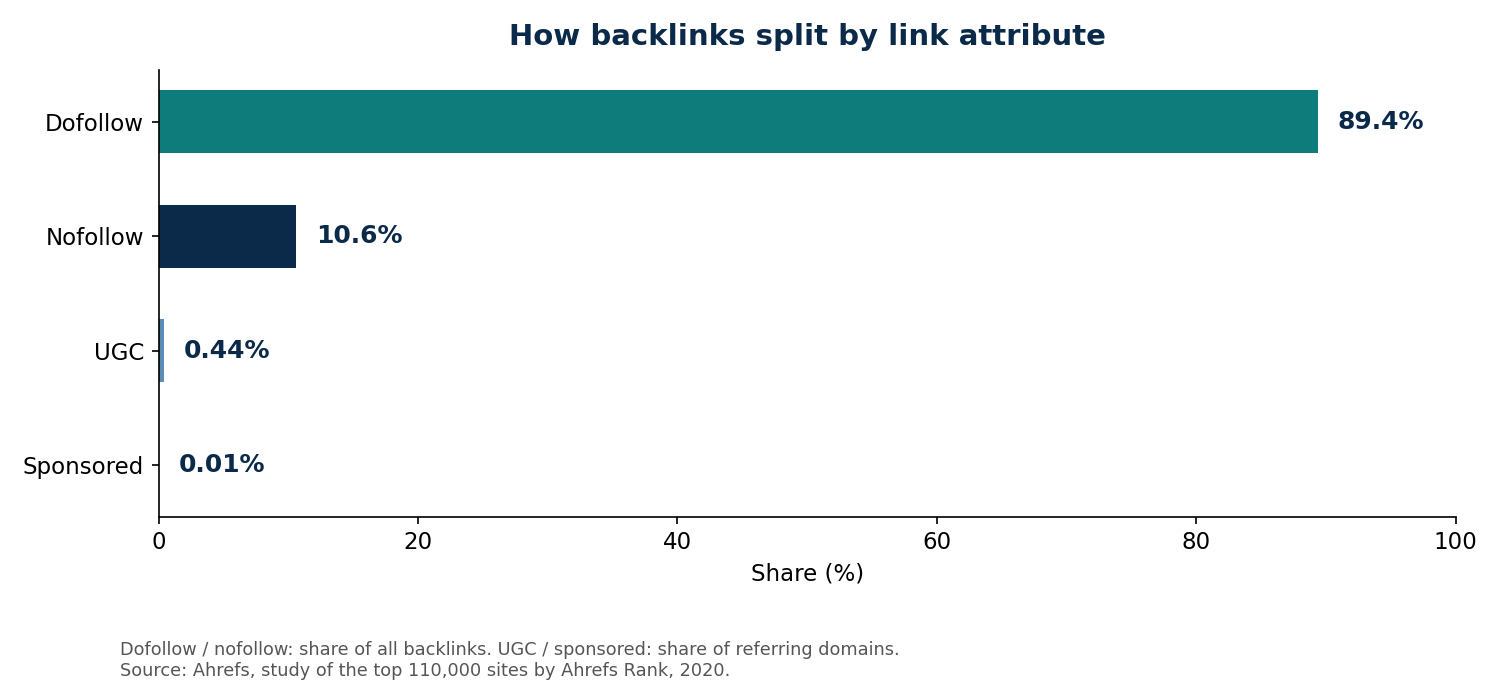
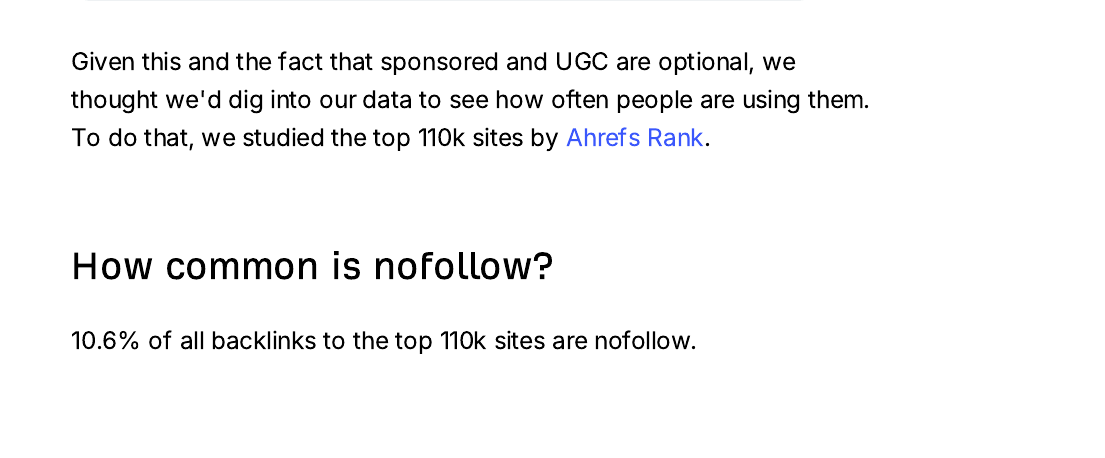
| Backlinks to top sites that are nofollow | 10.6% | Ahrefs, top 110,000 sites |
| Referring domains and rankings, Spearman correlation | 0.255 | Ahrefs, 1 million SERPs |
The four link attributes: dofollow, nofollow, sponsored and UGC
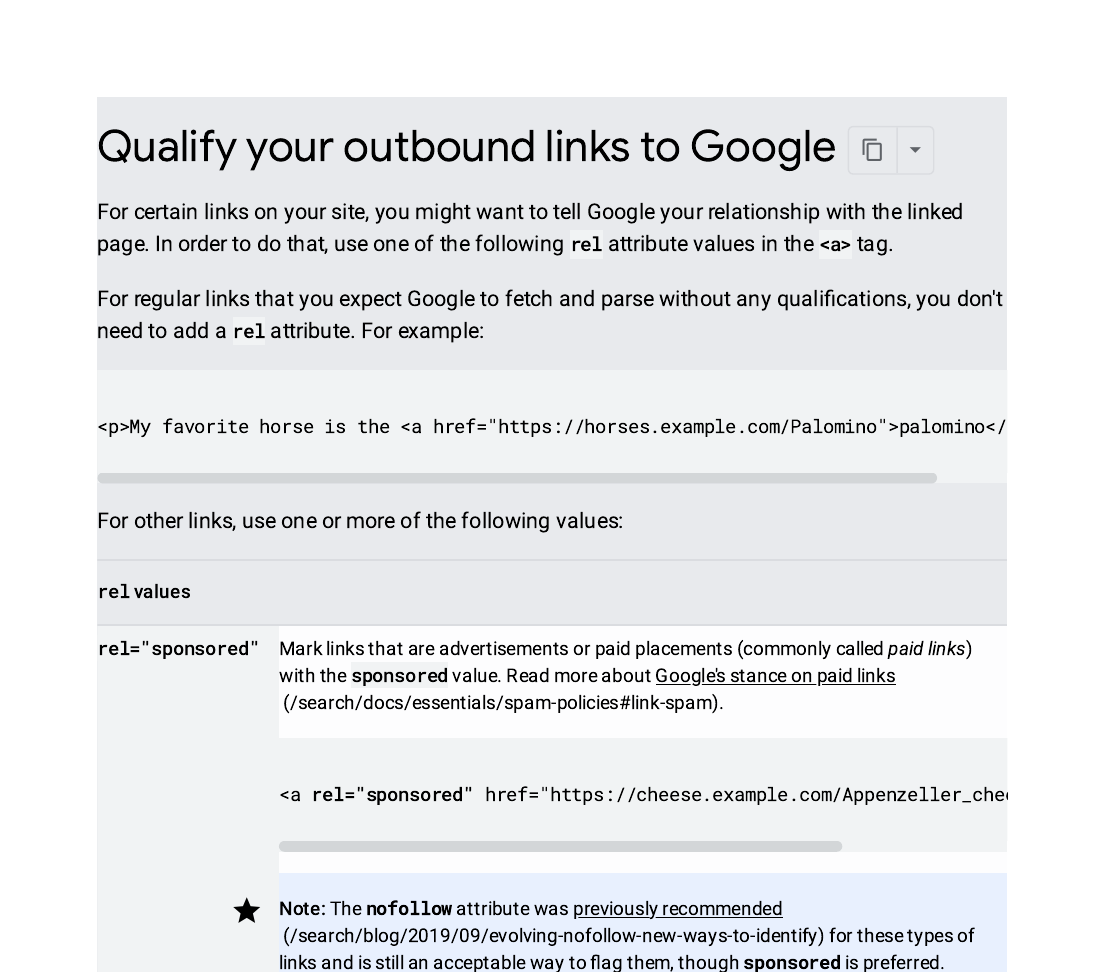
Before the 12 types, you need the four labels Google reads on a link. A normal link with no `rel` attribute is a “dofollow” link: the linking site is passing a full endorsement. The other three values tell Google something about how the link came to exist.
- Dofollow (no attribute). An ordinary editorial link. Google may pass ranking credit through it.
- Nofollow (`rel=”nofollow”`). The linking site does not want to vouch for the page. Since September 2019, Google treats nofollow as a hint rather than a strict order, so it may still use the link as a weak signal.
- Sponsored (`rel=”sponsored”`). The link is an advert or paid placement. Google introduced this value in September 2019 and calls it the preferred way to mark paid links.
- UGC (`rel=”ugc”`). The link sits in user-generated content, such as a blog comment or a forum post.
These four are rare in practice. Ahrefs studied the top 110,000 sites by Ahrefs Rank and found that 10.6% of all backlinks are nofollow, while only 0.44% of referring domains use `rel=”ugc”` and just 0.01% use `rel=”sponsored”`. Most links on the web are plain dofollow links — which is why the type and source of a link matter more than its label.
The 12 types of backlinks
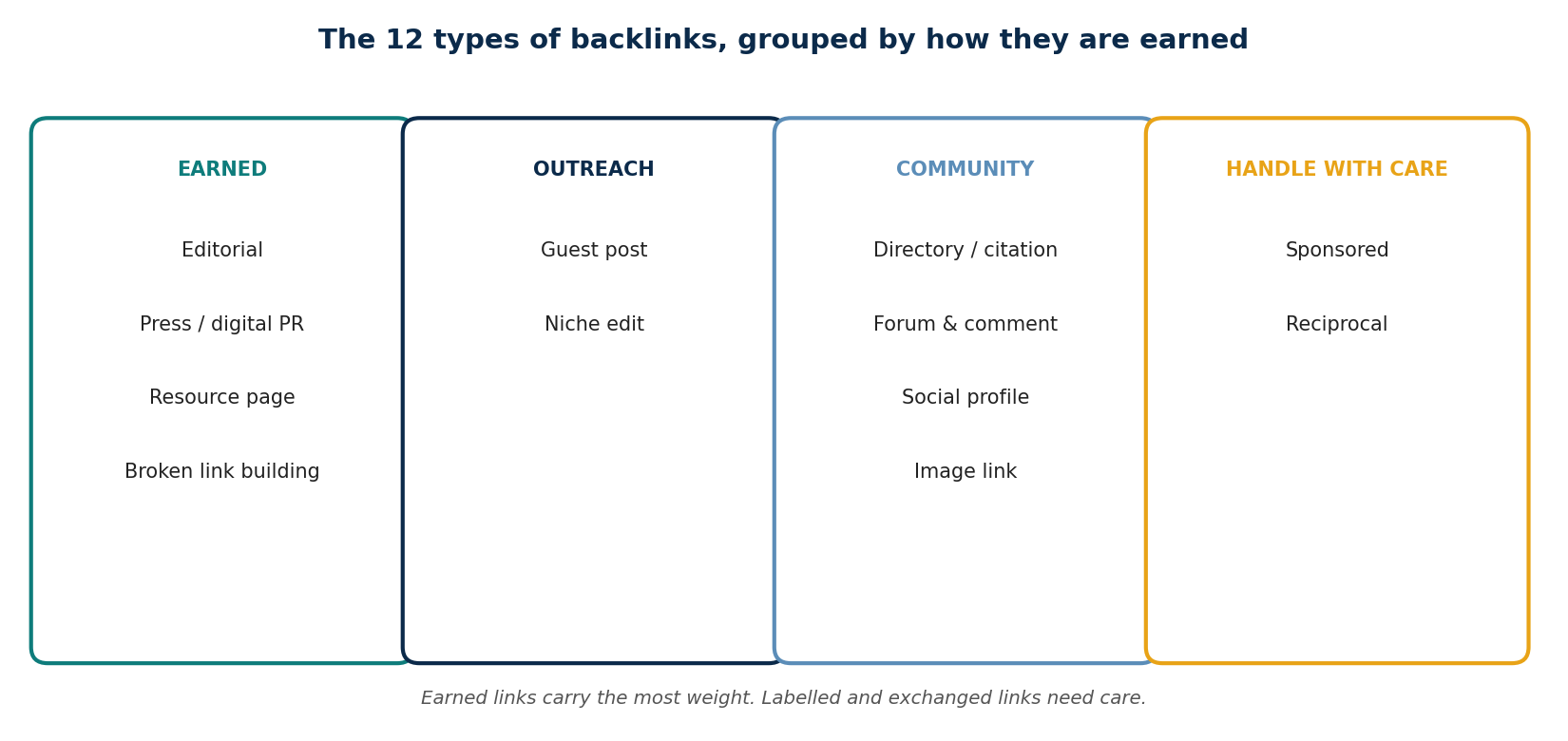
1. Editorial links
An editorial link is one a writer or editor adds because your page is genuinely useful — a journalist citing your research, a blogger linking to your guide, a resource page listing your tool. Nobody paid for it and nobody asked for it. These are the hardest links to earn and the most valuable, because Google reads them as an honest vote. Most of the links the top-ranking pages hold are editorial.
2. Guest post links
A guest post link comes from an article you wrote for another site in your niche. Done well, it puts your link in front of a real audience on a real site, inside content you wrote. The risk is scale: guest posting on low-quality sites that exist only to sell links is exactly what Google’s spam policies warn against. Pick sites you would be proud to be published on, and write the post as if your name is on it — because it is.
3. Resource page links
Resource pages are curated lists of helpful links on a topic: “best SEO tools”, “free marketing guides”, “mental health resources”. If your page is genuinely one of the best resources on the topic, asking the page owner to add it is a fair request. These links work because the page exists to link out, and the link sits beside other trusted sources.
4. Directory and citation links
Directory links come from business listings — Yelp, TripAdvisor, trade association directories, local chamber listings. On their own they rarely move rankings much, but they matter for local SEO: consistent name, address and phone details across directories help Google trust that your business is real. Avoid mass-submission directories that list any site that pays.
5. Forum and comment links
Links in forum posts, blog comments and Q&A answers are almost always nofollow, and most carry `rel=”ugc”`. They rarely pass ranking credit, but they can send real visitors and build your name in a community. Answer the question properly first; a link dropped into a thin reply helps nobody and looks like spam.
6. Social profile links
Links from your profiles on X, LinkedIn, YouTube, Facebook and similar platforms are nofollow, and Google has said social signals are not a direct ranking factor. Their value is different: they help people find you, they can drive traffic, and they make your brand easy to verify. Treat them as part of your public presence, not as a ranking tactic.
7. Image links
An image link is a link wrapped around an image — an infographic, a chart, a photo, a logo. The link’s value comes from the image’s alt text, which acts like anchor text. Original images that other sites want to reuse are a quiet source of links: publish a useful chart, and sites that embed it will often link back to you as the source.
8. Press and digital PR links
Press links come from news coverage: a journalist writing about your study, your product launch, or your expert comment. Digital PR is the work of earning that coverage — surveys, original data, expert quotes. These links are usually editorial, often from high-authority domains, and they bring traffic as well as ranking value. They are also the hardest to get, because you need something genuinely worth writing about.
9. Broken link building links
Broken link building means finding a dead link on a relevant page, then offering your own working page as a replacement. The site owner gets a fixed page; you get a link. It works because you are solving a real problem, not just asking for a favour. Check the dead page first with the Wayback Machine, and only suggest your page if it truly covers the same ground.
10. Niche edits
A niche edit is a link added into an existing article — the writer updates an old post and adds your link where it fits. These can be valuable because the page is already indexed and may already rank. The line to respect: the link must fit the article and help the reader. A link forced into an unrelated paragraph is easy for Google to spot, and easy for a reader to distrust.
11. Sponsored links
Sponsored links are paid placements, and they must be marked with `rel=”sponsored”` (or at least `rel=”nofollow”`). Google’s spam policies are clear that buying or selling links to manipulate rankings is link spam — but paid links that are properly labelled are a normal part of advertising. The value here is traffic and visibility, not ranking credit. Never pay for a link that is passed off as editorial.
12. Reciprocal links
A reciprocal link is an exchange: site A links to site B, and site B links back. A few natural exchanges between real partners are normal — suppliers linking to stockists, for example. But Ahrefs found that 73.6% of domains with 10,000 or more monthly visits have reciprocal links, so the pattern itself is common. The problem is only when exchanges are done at scale purely for rankings. Keep them rare, relevant, and honest.
Which types of backlinks help rankings most?
Editorial links from relevant, trusted sites help most, because they combine the three things Google weighs: relevance, authority and genuine endorsement. Press links and resource page links sit close behind. Guest posts and niche edits help when the host site is real and the link fits the content.
The survey data agrees that the mix matters as much as the count. In an Authority Hacker survey of 755 link builders, 89.1% said they believe nofollow links have some positive impact on rankings — even though nofollow links pass no direct endorsement. A natural profile holds a mix: mostly dofollow editorial links, with a healthy share of nofollow links from social profiles, comments and directories. Sites with only dofollow links look manufactured.
The practical rule: earn links a real person would click. If a link would still be worth having when Google ignored it — because it sends visitors, builds trust, or puts you in front of the right audience — it is the right kind of link.
Types of backlinks to avoid
Some link types do more harm than good. Google’s spam policies list link schemes — including buying or selling links for ranking purposes, excessive link exchanges, and links from low-quality directory or bookmark sites — as link spam. A manual action for unnatural links can remove a site from search results until the links are cleaned up.
Avoid links from private blog networks, automated link-building tools, link farms, and sites that exist only to sell links. Avoid exact-match anchor text repeated across dozens of low-quality sites. If a link offer sounds too easy — hundreds of links for a flat fee, overnight — it is the kind of link Google built its spam systems to catch.
How to check which types of backlinks you have
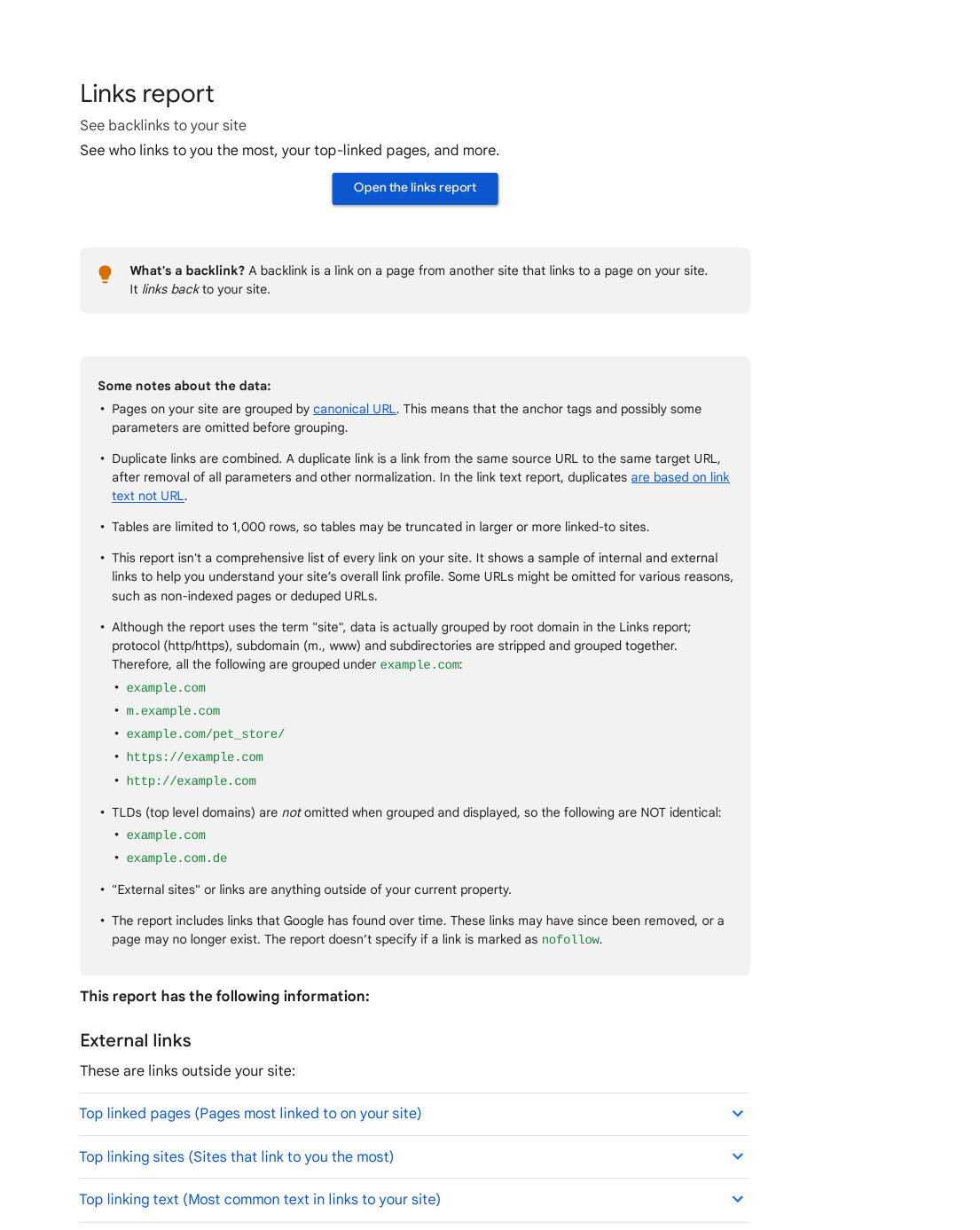
You cannot improve a backlink profile you have not looked at. Google Search Console has a free Links report that shows your top linked pages, the sites that link to you most, and the anchor text they use. Ahrefs, Semrush and Moz offer the same view with extra detail, including the dofollow and nofollow split for each link.
Check the report once a month. Look for the mix: how many links are editorial, how many are nofollow, which pages attract the most links, and whether any links come from sites you do not recognise. A sudden spike of links from irrelevant sites is worth investigating — and removing or disavowing if they are clearly spam.
If you want help earning the good kinds of links — editorial, press and resource page links from real sites — take a look at our link building services. We do manual outreach, no private blog networks, and every link is one a real person would be happy to click.
Frequently asked questions
What are the main types of backlinks?
The main types are editorial links, guest post links, resource page links, directory links, forum and comment links, social profile links, image links, press links, broken link building links, niche edits, sponsored links and reciprocal links. They also split by attribute into dofollow, nofollow, sponsored and UGC. The type and the source together decide how much value a link passes.
Which type of backlink is best for SEO?
Editorial links are the best type for SEO. They are added by a writer or editor because your page is useful, which makes them the hardest to earn and the strongest signal to Google. Press links and resource page links are close behind. Links that are paid for must be marked as sponsored and do not pass ranking credit in the same way.
Are nofollow backlinks worth anything?
Yes. Nofollow links do not pass a direct endorsement, but Google has treated nofollow as a hint since 2019, so they may still be used as a weak signal. They also send referral traffic, build brand awareness and make a link profile look natural. In an Authority Hacker survey of 755 link builders, 89.1% said nofollow links have some impact on rankings.
How many types of backlinks should my site have?
Aim for a mix rather than a number. A healthy profile has mostly dofollow editorial links, plus a natural share of nofollow links from social profiles, comments and directories. Ahrefs found that 10.6% of backlinks to the top 110,000 sites are nofollow. A profile with only one type of link looks manufactured and is easier for Google to discount.
Do social media backlinks help SEO?
Social profile links do not pass ranking credit directly, because they are nofollow and Google does not use social signals as a ranking factor. They still help: they drive traffic, help people discover your content, and make your brand easy to verify. Treat social links as part of your public presence rather than a way to buy rankings.
Should I buy backlinks to rank faster?
No. Buying links to manipulate rankings is link spam under Google’s spam policies, and it can lead to a manual action that removes your site from search results. Paid links are only acceptable when they are clearly marked with rel=”sponsored” and bought for traffic or visibility, not for ranking credit. Earning editorial links through good content and outreach is slower, but it is the approach that lasts.

Abdullah Zulfiqar is Co-founder and Client Success Manager at RankWithLinks, an SEO agency helping businesses grow online. He specializes in client relations and SEO strategy, driving measurable results and maximizing ROI through effective link-building and digital marketing solutions.