
Learning how to get backlinks from local news websites for a small business step by step is one of the most useful skills a local owner can pick up. A link from your town or city newspaper does two jobs at once: it sends real readers to your website, and it shows Google that your business is a known, trusted part of the local area. This guide walks through the whole process, from finding the right reporters to following up after your story runs, so you can earn these links honestly without paying for them or using tricks that could harm your site.
Why a local news link is worth more than a random link
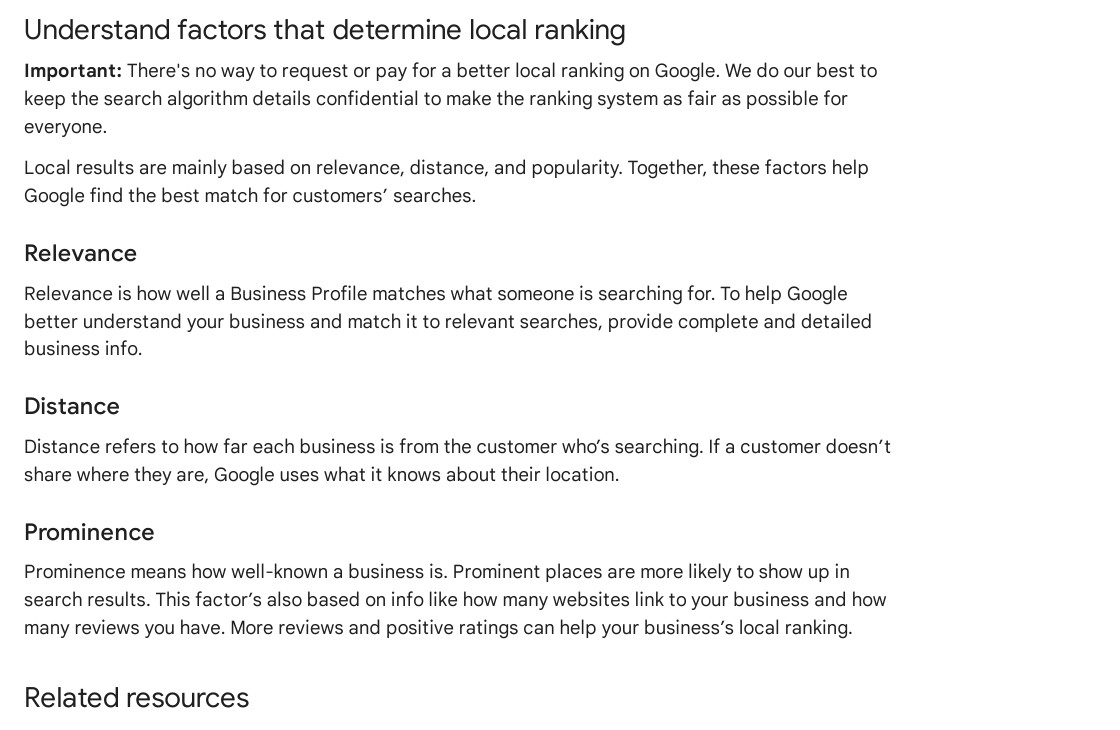
Google says its local results are mainly based on relevance, distance, and prominence. Prominence means how well known a business is, and Google states it is based on information such as how many websites link to your business and how many reviews you have. A link from a local newspaper therefore supports exactly the signal Google describes, because it comes from a publication rooted in your area rather than a random directory nobody reads.
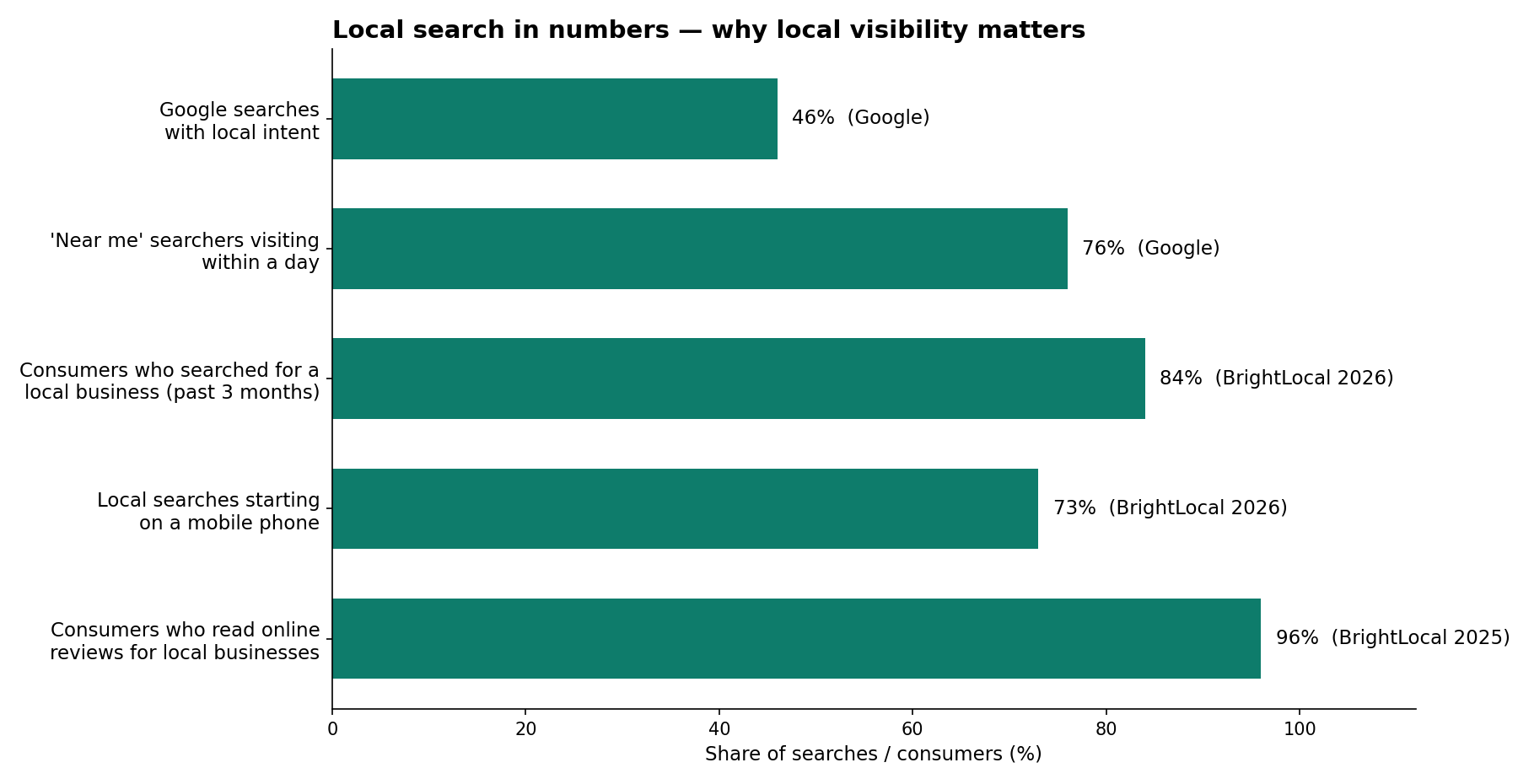
Local search itself is large. Around 46% of all Google searches carry local intent, according to figures compiled from Google data, and 76% of people who search for something “near me” visit a business within a day. BrightLocal’s 2026 consumer search research found that 84% of consumers had searched online for a local business in the previous three months, and 73% of their most recent local searches started on a mobile phone. In other words, local customers are already looking, and a news story about your business can be the page they land on.
| What the numbers say | Figure | Source |
|---|---|---|
| Google searches with local intent | 46% | Google, via local SEO statistics summaries |
| “Near me” searchers who visit a business within a day | 76% | |
| Consumers who searched for a local business in the past 3 months | 84% | BrightLocal, Consumer Search Behavior 2026 |
| Most recent local searches that started on a mobile phone | 73% | BrightLocal, Consumer Search Behavior 2026 |
| Consumers who read online reviews for local businesses | 96% | BrightLocal, Local Consumer Review Survey 2025 |
One more point matters: a news link is usually earned, not placed on demand. That is why editors trust it, readers click it, and it tends to stay live for years. A single story in a respected local paper can be worth far more than dozens of low-quality directory listings, because it carries real editorial judgement behind it.
Before you pitch: get the basics right
Reporters will check your business before they reply, so fix the basics first. Make sure your website states clearly what you do, where you are based, and which areas you serve. Keep your name, address, and phone number identical on your website, your Google Business Profile, and your main listings. Add a short “About” page with a real photo of your team or premises, and a press or contact page with an email address that someone actually monitors. If a reporter cannot verify you in two minutes, your pitch is likely to be ignored.
It also helps to know what you can offer a newsroom: a real story, a local person willing to be interviewed, clear facts, and a good photo. Newsrooms are short-staffed, so the easier you make their job, the better your chances.
Step 1: Find the local outlets and reporters who cover your area
Start with a simple list. Search for your town or city name plus “news”, “newspaper”, “local news”, and “community news”. Include the main daily or weekly paper, local TV and radio station websites, community news sites, and the local section of larger regional papers. For each outlet, note its name, its website, and the names of reporters who cover business, community, events, or your trade.
Read a few recent stories by each reporter before you contact them. A reporter who covers school funding will not want a story about a plumbing firm, but a reporter who covers high-street businesses or community events might. Your aim is a short list of five to ten genuinely relevant contacts, not a mass email to every address you can find.
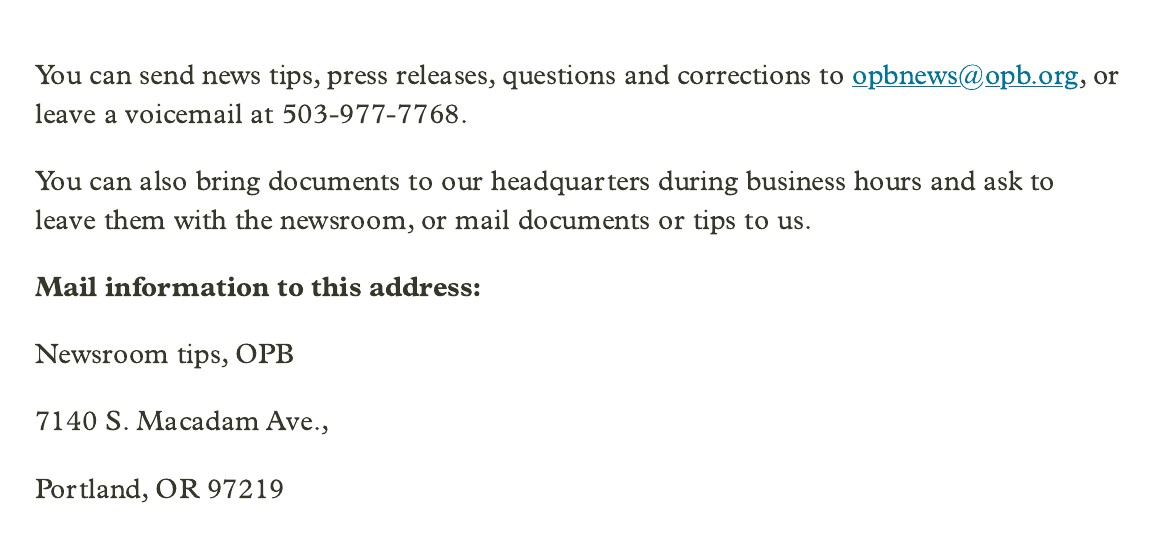
Most newsrooms publish a “news tips”, “contact us”, or “submit a story” page. These pages show exactly what they want: what happened, who is affected, when it took place, and how to reach you. Reading that page before you write is the simplest way to match what the newsroom asks for.
Step 2: Find a story that is actually newsworthy
This is the step most small businesses skip, and it is the step that decides everything. A reporter does not publish a story because you want a link; they publish it because readers will care. Good angles for a small business include:
- Opening a new branch, or moving to larger premises, with new jobs for local people.
- A milestone, such as ten years in business, your 1,000th customer, or a local award.
- A community project: free work for a local charity, a school, or a sports club.
- A useful local survey or piece of advice, based on your own real experience, for example a seasonal guide for homeowners in your town.
- An unusual or human story: a long-serving member of staff, a family business passing to the next generation, or a local problem you helped solve.
Be honest about the angle. If the story is thin, say so to yourself and pick a better one. One strong, true story will earn you more than ten weak pitches, and it protects your reputation with reporters you may want to contact again.
Step 3: Write a short, clear pitch
Keep your pitch to around 150 words. Reporters read on phones between assignments, so put the news in the first two sentences. Use this shape:
- Subject line: the story in under ten words, with the town name where it helps.
- First line: what happened, and why it matters to local readers.
- Two or three sentences of detail: names, dates, and numbers you can prove.
- What you can offer: an interview, photos, or a visit to your premises.
- Your name, business, phone number, and website.
Do not attach a long press release as your first message, and do not write “Dear Sir/Madam” to a named reporter. Address the person by name, mention one recent story of theirs that relates to yours, and keep the tone plain and factual. If you have a press release, offer it as an attachment or a link rather than pasting the whole thing into the email.
Step 4: Offer facts, photos, and an interview
When a reporter replies, respond the same day if you can. Have ready: the correct spelling of every name, exact dates, and any figures you quoted, with their source. Offer at least two good photos — your team at work, your premises, or the community project itself — and confirm you have permission to share them. If the reporter wants a quote, give a clear one in your own words and do not ask to approve the article before publication; that is not how newsrooms work.
If the story is published online, the reporter or editor will usually link your business name to your website as a matter of course, because that is standard practice for online news. You should never demand a link, and never offer payment for one. Asking for a link as a favour in exchange for money or goods would turn an earned story into a paid placement, which is a different thing entirely and is covered in the FAQ below.
Step 5: Follow up once, politely, then move on
If you hear nothing after four or five working days, send one short follow-up: restate the story in one line, ask whether it is of interest, and offer anything new, such as a photo or a fresh detail. Then stop. Repeated follow-ups annoy busy newsrooms and close doors for the future. If the answer is no, thank the reporter and keep the relationship warm for your next real story.
Keep a simple record of every pitch: outlet, reporter, date sent, story angle, and outcome. Over a year, this record shows which angles work and which outlets respond, and it stops you pitching the same story twice to the same person.
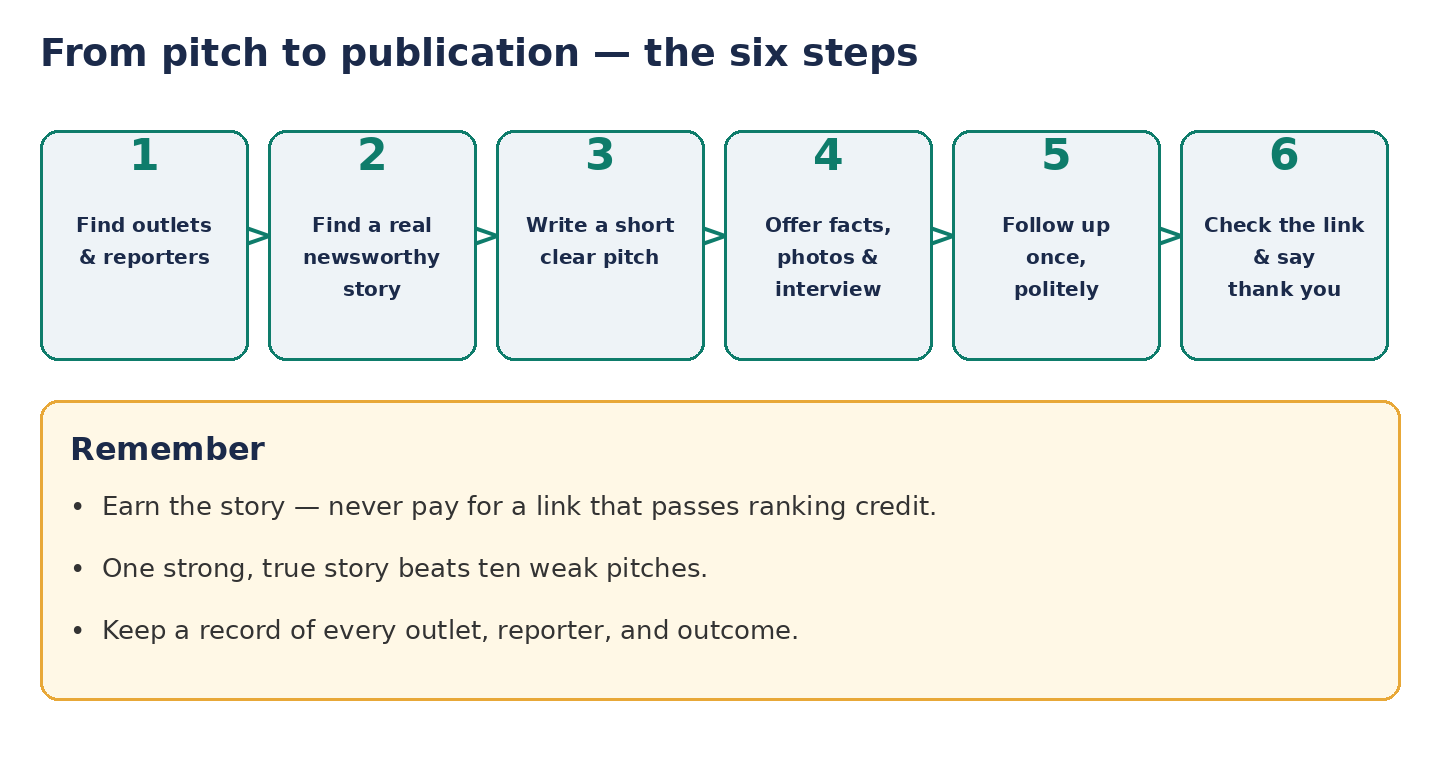
Step 6: When the story runs, check the link and say thank you
Once published, read the story carefully. Check that your business name is spelled correctly and that any link points to the right page on your site, usually your homepage or the most relevant service page. If a link is missing or broken, a short, polite email to the reporter or the web editor is reasonable — many newsrooms are happy to fix a genuine error. Thank the reporter, share the story on your own social pages with credit to the outlet, and add it to a press page on your website if you have one.
Then watch what happens in Google Search Console: the new link should appear in the Links report over the following weeks, and you may see referral visits from the news site in your analytics. Do not expect a ranking jump overnight. Local prominence builds slowly, story by story, and that steady pattern is exactly what makes it durable.
What not to do
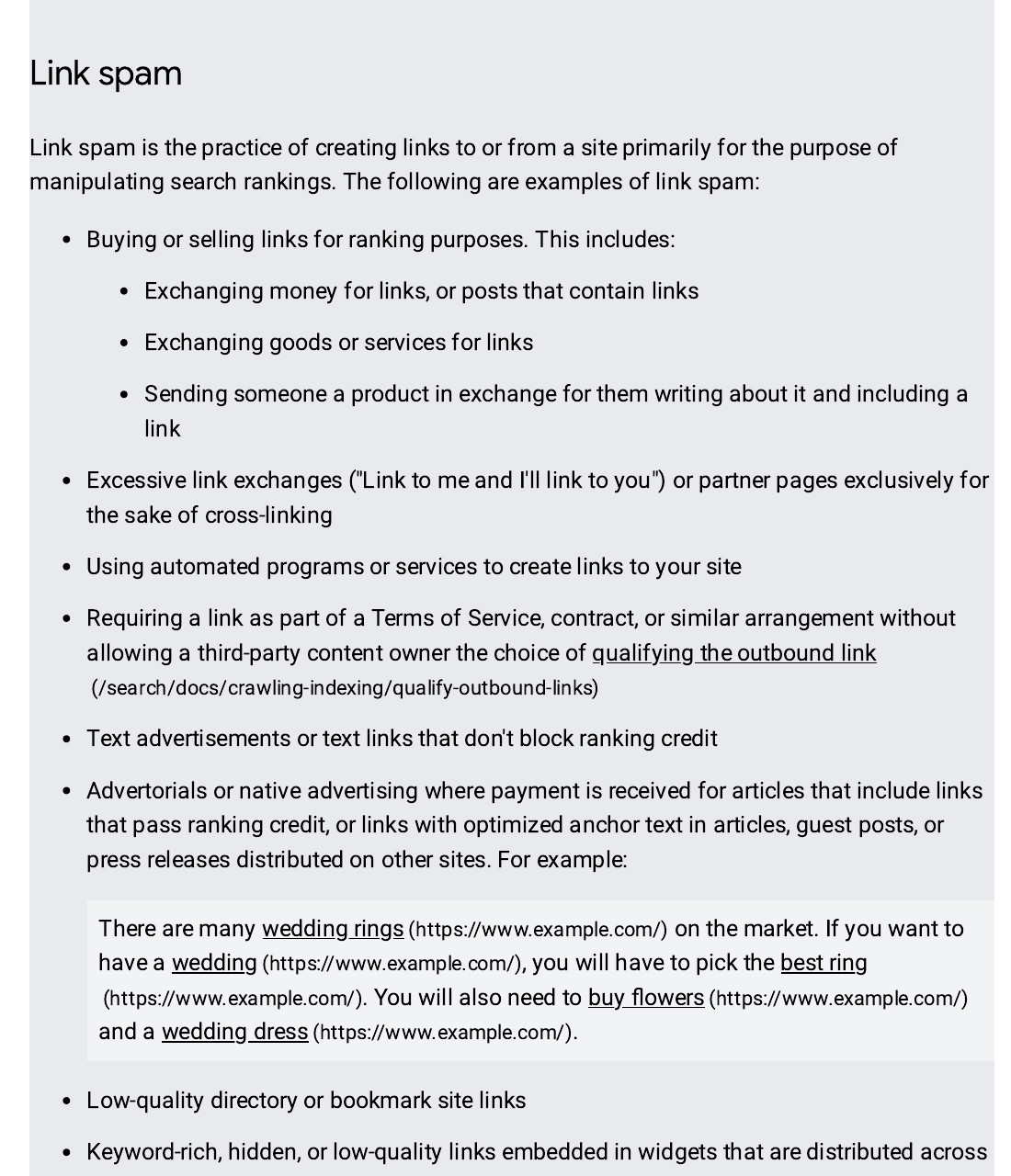
Do not pay a news site, a middleman, or a “PR” seller for a link that passes ranking credit. Google’s spam policies describe link spam as creating links mainly to manipulate rankings, and buying or selling links for ranking purposes is listed as an example. Sites that break these policies may rank lower or not appear in results at all. Do not send the same generic pitch to fifty outlets, do not invent a story or exaggerate numbers, and do not use automated tools to mass-email newsrooms. All of these approaches burn trust, and trust is the whole asset here.
A simple 12-week plan
Week 1 to 2: build your outlet list and fix your website basics. Week 3: choose your strongest story angle and prepare photos and facts. Week 4: send your first five pitches. Week 5 to 6: follow up once, and prepare a second angle. Week 7 to 10: pitch the second story and respond quickly to any replies. Week 11 to 12: review your record, thank every reporter who covered you, and plan the next quarter. Two or three earned local news links a year, kept up over time, will put most small businesses ahead of competitors who never try.
For a wider local plan, our local SEO services page explains how news links fit alongside your Google Business Profile, reviews, and local citations.
FAQ
How long does it take to get a backlink from a local news website?
Allow four to eight weeks from first pitch to publication for most local stories. Newsrooms work to their own schedules, and a story tied to an event may wait until that event happens. If you have not heard back after one polite follow-up, move on to your next angle rather than chasing the same pitch.
Do I need a big budget to get local press coverage?
No. Local news coverage is earned by having a story worth telling, not by paying for it. Your costs are your own time, good photos, and being available for an interview. Small businesses with a genuine community angle often succeed where larger firms with a bland press release fail.
Should I buy backlinks from a news website?
No. Buying links to manipulate rankings is against Google’s spam policies, and it puts your site at risk of ranking lower or disappearing from results. Earn the story instead: pitch real news, offer interviews and photos, and let the editor decide. A link you earn this way is safer and lasts longer.
What if the story runs but there is no link to my website?
First check whether the online version links your business name or mentions your website address in text. If neither is present, send a short, polite note to the reporter or web editor pointing out the omission and asking whether a link can be added. Many will fix it, but the decision is theirs, and the coverage itself still has value even without a link.
Can one news link really help my local rankings?
One link alone will not transform your rankings, but it supports the prominence signal Google describes: how well known your business is, based in part on how many websites link to it. Combined with a complete Google Business Profile, genuine reviews, and consistent listings, local news links form part of a credible local presence.
How many local news links should a small business aim for?
Aim for quality over number. Two or three earned links a year from respected outlets in your area is a realistic and useful target for most small businesses. Ten weak or paid links will not beat three genuine stories, and they carry risks that genuine coverage does not.
Sources
Google Business Profile Help, “Tips to improve your local ranking on Google”: https://support.google.com/business/answer/7091/improve-your-local-ranking-on-google?hl=en
Google Search Central, “Spam Policies for Google Web Search”: https://support.google.com/webmasters/answer/66356?hl=en
BrightLocal, “Where are your customers really searching?” (Consumer Search Behavior 2026): https://www.brightlocal.com/research/consumer-search-behavior-channels/?utm_source=Iterable&utm_medium=email&utm_campaign=campaign_20286933_AI_Tech_Money_20261008%20%5BNO%20ADS%5D&lctg=f2e5a853-8f47-4036-a567-80f8c0a3983e
BizIQ, “Local SEO Statistics 2026”: https://biziq.com/blog/local-seo-statistics-2026/

Abdullah Zulfiqar is Co-founder and Client Success Manager at RankWithLinks, an SEO agency helping businesses grow online. He specializes in client relations and SEO strategy, driving measurable results and maximizing ROI through effective link-building and digital marketing solutions.