
Guest posting for SEO means writing an article for another website in your niche, in return for a byline and usually a link back to your own site. Done well, it is one of the oldest and most straightforward ways to earn a link: you give a real publication a useful article, and its readers get something worth reading. Done badly, it is a fast way to waste money on links Google ignores. This guide explains how guest posting works, what the evidence says, what Google allows, and how to pitch a post that a good editor will actually accept.
What guest posting for SEO actually means
A guest post is an article you write for someone else’s site, not your own. It is not a press release, and it is not an advert dressed up as advice. The host site publishes it under your name, often with a short author bio, and the article may link back to a relevant page on your site where that link helps the reader.
That link is only part of the value. A good guest post also puts your name in front of a new audience, sends referral traffic, and builds your standing on a topic. If the only reason for the article is the link, readers and editors can usually tell, and the post will be weak. The best test is simple: would the article still be worth publishing if it had no link in it at all? If the answer is no, rewrite it.
How a guest post helps your rankings
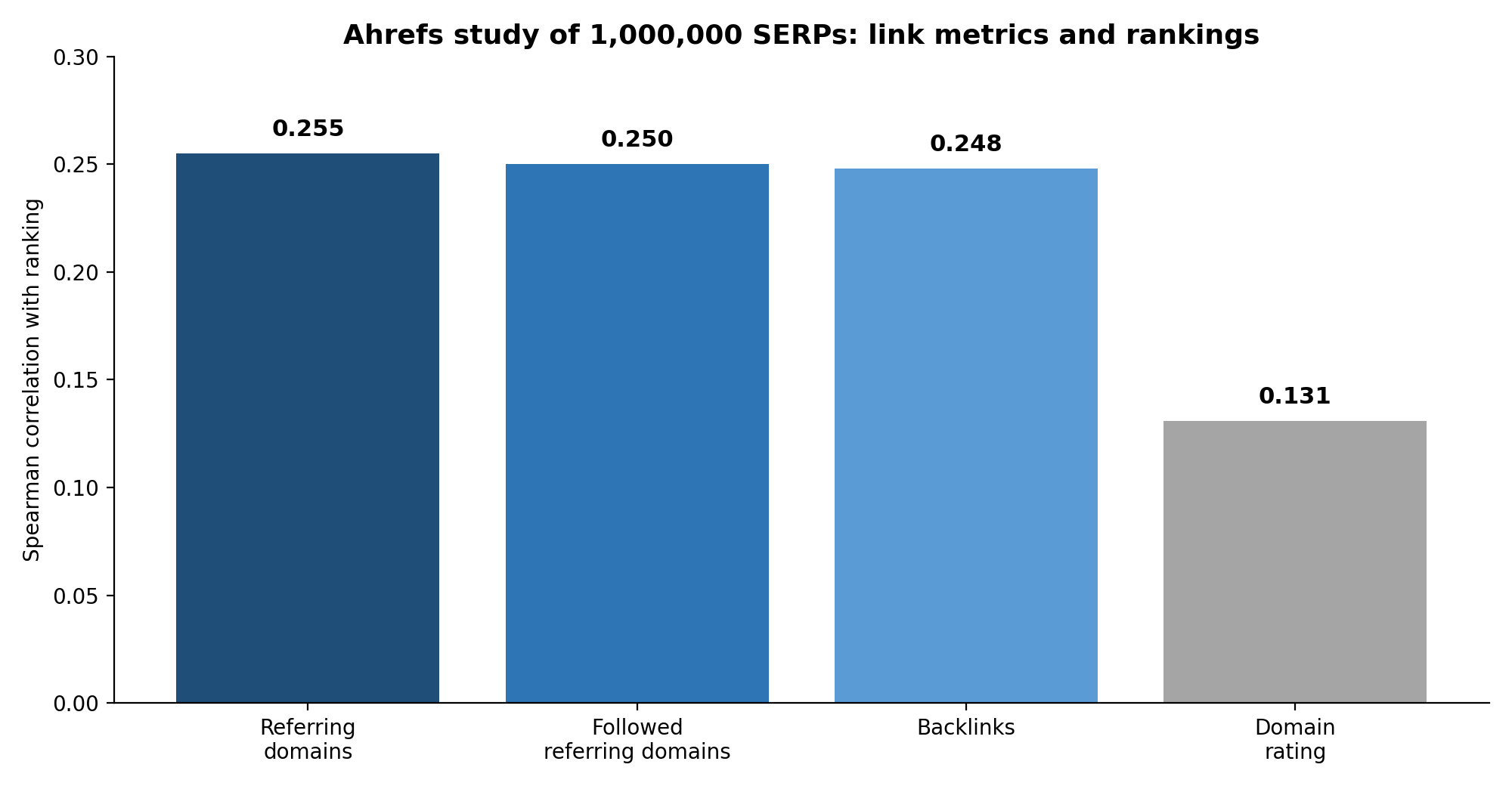
Links still matter for rankings, even though they are not the only factor. Ahrefs studied the top 20 results for 1,000,000 high-volume search terms and found that referring domains had a Spearman correlation of 0.255 with rankings, and total backlinks a correlation of 0.248. Those are modest correlations, not proof that one link causes a jump, but they point the same way: pages with stronger, more diverse link profiles tend to rank higher. Ahrefs also warns that correlation is not causation, and that links matter slightly less than they used to.
A second study makes the same point from a different angle. Backlinko analysed 11.8 million Google search results and found that the page in position one had, on average, 3.8 times more backlinks than the pages in positions two to ten. Again, this does not mean buying links will move you to position one. It means that pages Google already trusts tend to have earned many links, and a guest post on a trusted, relevant site is one honest way to join that group.
| What the research shows | What it means for you |
|---|---|
| Referring domains correlate 0.255 with rankings (Ahrefs, 1,000,000 SERPs) | Links from different sites matter more than many links from one site |
| Position one averages 3.8 times more backlinks than positions two to ten (Backlinko, 11.8 million results) | Trusted pages earn links; a guest post should earn its place |
| About 98% of guest post sites are low quality, with Domain Rating under 40 and under 10,000 monthly organic visits (BuzzStream, 257,000+ sites) | Most sites offering guest posts are not worth your time |
That last row is the warning that shapes the rest of this guide. BuzzStream analysed more than 257,000 guest post sites and found that roughly 98% were low quality. If you pitch at random, you will almost certainly land on a weak site. Choosing the site matters more than writing fast or placing many posts.
What Google allows, and what it does not
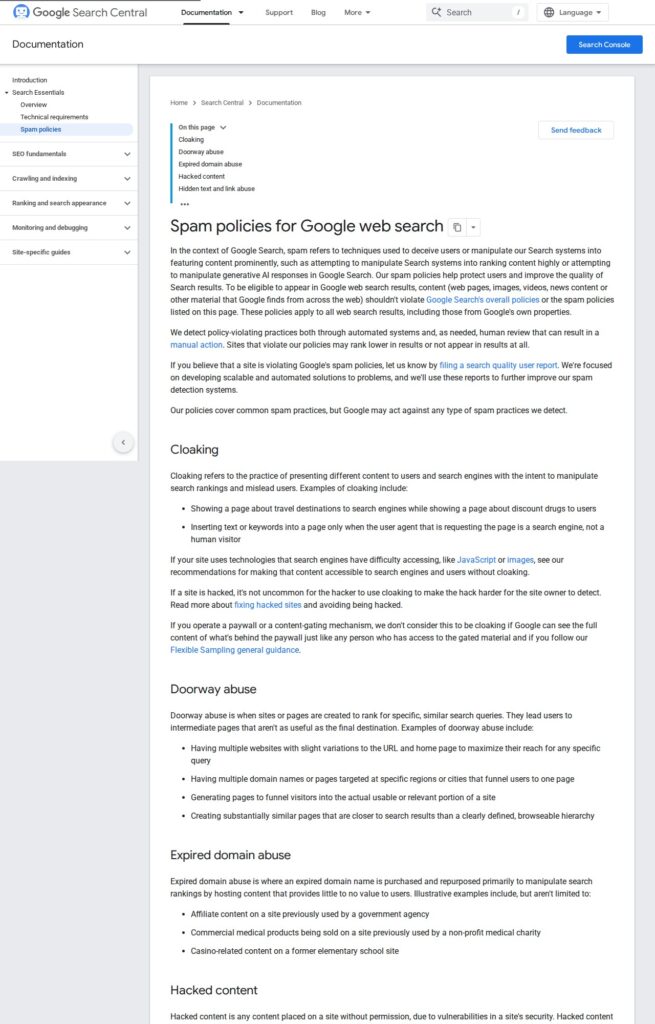
Google does not ban guest posting. Its spam policies ban link spam, which it defines as creating links mainly to manipulate rankings. The examples it lists include exchanging money for links or for posts that contain links, and using keyword-stuffed anchor text in guest posts at scale. An unpaid article, written for a publication’s real readers and reviewed by its editor, is not the target of that policy.
The line is about payment and intent. If money, a free product, or another favour changes hands for a guest post, Google expects the link to be qualified with rel=”sponsored” or rel=”nofollow”, so it does not pass ranking credit. An unqualified paid link is treated as link spam. Google’s systems may simply ignore it, or, in serious cases, the site may receive a manual action that shows in Search Console.
That rule has a practical consequence for anyone pitching guest posts. Do not pay a site for a dofollow link and call it editorial. If a site charges a publishing fee, treat the link as sponsored and say so. If an editor invites you with no payment involved, and the link genuinely helps readers, no qualifier is needed. When in doubt, ask the editor how they label paid placements. A site that refuses to label them, or that sells dozens of keyword-rich links a week, is a site to walk away from.
How to judge a site before you pitch
Before you write a single word, spend ten minutes checking the site. This short check saves more wasted effort than any pitching trick.
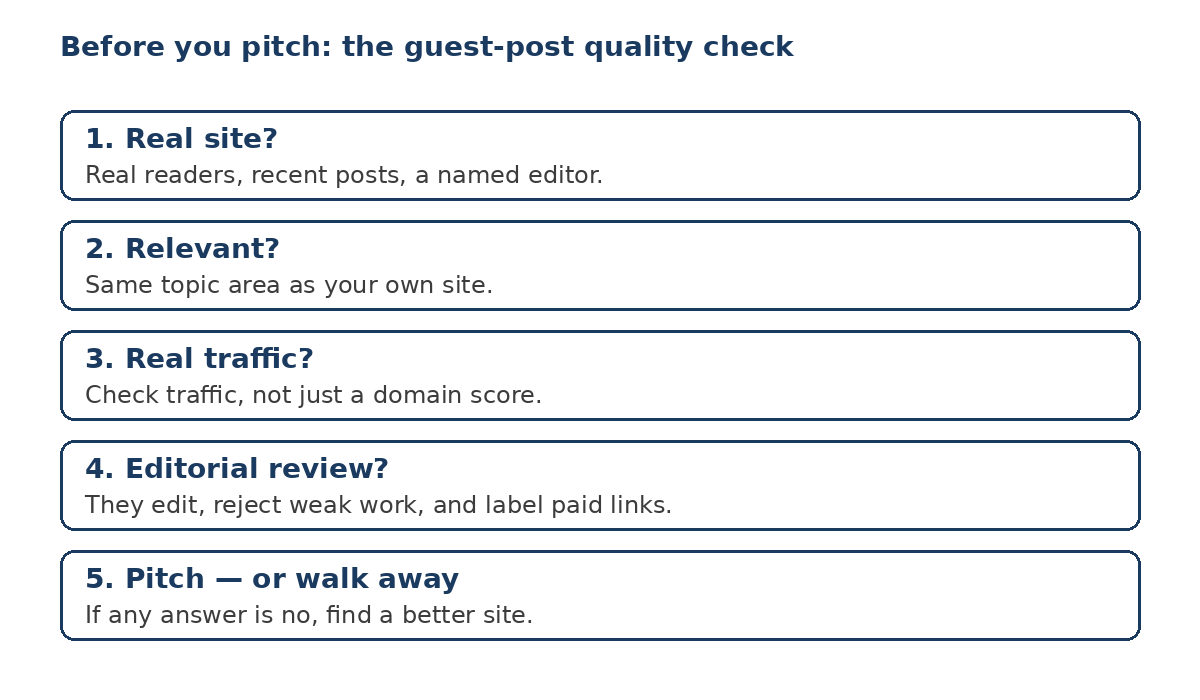
First, read the site. Are recent posts written for real readers, with named authors and dates? A real publication has an audience; a link farm has inventory.
Second, check relevance. A link from a site in your topic area is worth far more than a link from an unrelated site with a higher domain score.
Third, look at traffic, not just a score. A domain score can be inflated, while real organic traffic is harder to fake. If a site claims high authority but has almost no search traffic, treat that as a warning sign.
Fourth, check the editorial standard. Does the site publish clear guest guidelines, edit submissions, and reject weak work? Sites that accept anything, the same day, for a fee, are not.
Finally, look at the outbound links on recent posts. If every post links to unrelated commercial pages with exact-match anchor text, the site is selling links, and Google is likely to discount them.
How to pitch a post an editor will accept
Editors reject most pitches, and the most common reason is that the pitch is too promotional. OptinMonster’s guest blogging figures, compiled by Adsy, report that 79% of editors say guest content is too promotional. Your pitch should prove, in a few lines, that your article will help their readers, not just your rankings.
Start with the site, not yourself. Read three recent articles and name one in your pitch. Then suggest two or three specific titles, each with a one-line outline showing what the reader will learn. Keep the whole email short: who you are in one line, the titles, and a link to one past article so the editor can judge your writing.
Write the article to the host’s standard, not yours. Match their length, tone, and formatting. Include examples, data with sources, and at least one point of view that is not generic advice. Link out to useful sources other than your own site, and place your own link only where it genuinely helps the reader, such as a guide or tool you mention in passing. One natural link beats three forced ones.
After publication, share the post, reply to comments, and thank the editor. Editors remember writers who promote their work and cause no extra work. That is how one placement becomes a regular column, worth far more than ten one-off posts on weak sites.
Common mistakes to avoid
The first mistake is chasing volume. Ten posts on weak sites will not beat one post on a respected site in your niche, and a pattern of weak links can hurt more than it helps. The second mistake is using the same anchor text everywhere. If every guest post links with the exact phrase you want to rank for, that pattern looks manufactured. Vary your anchors, and use your brand name or a plain descriptive phrase most of the time.
The third mistake is writing the same article for every site, with only the link changed. Write each post fresh, for that site’s readers. The fourth mistake is ignoring the link label. If you paid, label it sponsored, and never agree to a deal that hides payment.
If you need help with outreach, look for a provider that works by manual outreach and is open about how placements are earned. At RankWithLinks, our manual link building services follow that approach: real sites, real editors, and no private blog networks.
Frequently asked questions
Does guest posting still work for SEO?
Yes, on the right sites. Guest posting remains one of the most used link building tactics, but its value now depends on the site, not the tactic itself. A post on a real, relevant publication with real readers can earn a link, referral traffic, and authority. A post on a site built to sell links is likely to be ignored by Google, and it can add risk if it sits among paid, unlabelled links.
How many guest posts do I need?
There is no fixed number, and anyone who promises one is guessing. One strong placement on a trusted site in your niche is worth more than many weak ones. Most small businesses do better with a small number of well-chosen posts each month, chosen for relevance and audience, than with a high-volume campaign. Track rankings and referral traffic per placement, and put more effort into the sites that actually send readers.
Should I write the post myself or hire a writer?
Either can work, as long as the article is genuinely useful and accurate. If you know the topic well, your own voice and examples will make the post stronger. If writing is not your strength, hire a writer who understands the topic and can write for that publication’s readers. Never publish AI-generated filler under your name, and never submit work you have not read and checked.
Is it safe to buy backlinks through guest posts?
No, not in the way most sellers mean it. Paying for a post whose link passes ranking credit, without a sponsored or nofollow label, breaks Google’s spam policies and can lead to links being ignored or, in serious cases, a manual action. A paid placement is only safe when the link is properly labelled as sponsored, which means it will not pass ranking credit. If a seller promises a paid dofollow link, walk away.
How long does it take to see results from guest posting?
Expect weeks to months, not days. The host must publish the post, Google must crawl it, and rankings move slowly, especially in competitive topics. Referral traffic can arrive at once, on publication day, but ranking changes from a single link are usually gradual. If a provider promises instant ranking jumps from guest posts, that promise itself is a warning sign.
What makes a guest post pitch get accepted?
A pitch gets accepted when it shows the editor that you understand their readers. Name a recent article, suggest specific titles with clear outlines, and show one example of your past writing. Keep it short, avoid praising your own business, and do not ask for a link in the first email. Editors accept writers who make their job easier.
Sources
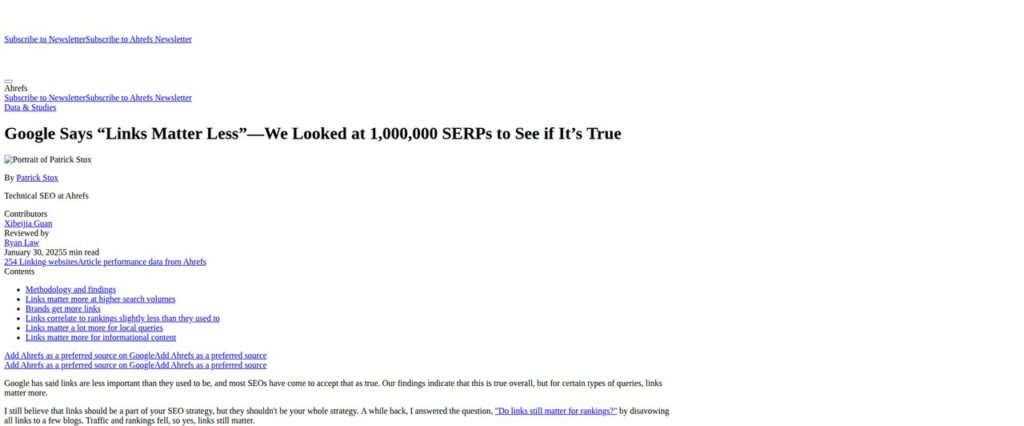
- Ahrefs, “Google Says Links Matter Less — We Looked at 1,000,000 SERPs to See if It’s True”: https://ahrefs.com/blog/links-matter-less-but-still-matter/
- Backlinko’s analysis of 11.8 million search results and BuzzStream’s analysis of 257,000+ guest post sites, as reported in Rankite’s guest posting guide: https://rankite.com/blog/guest-posting-in-seo
- Adsy, “35 Guest Posting Stats Every Marketer Has to Know” (including OptinMonster’s figure that 79% of editors find guest content too promotional): https://adsy.com/blog/35-guest-posting-stats
- Google Search Central, “Spam Policies for Google Web Search”: https://developers.google.com/search/docs/essentials/spam-policies

Abdullah Zulfiqar is Co-founder and Client Success Manager at RankWithLinks, an SEO agency helping businesses grow online. He specializes in client relations and SEO strategy, driving measurable results and maximizing ROI through effective link-building and digital marketing solutions.