
If you want to learn how to do local SEO for a real estate agent in the USA step by step, start with one simple idea: most buyers and sellers do not search for an agent in general. They search for an agent in a place. They type a city, a neighbourhood, or ‘near me’, and they call the agent Google shows first in that area. This guide works through that process in order, from choosing your market to earning reviews and local links, so you can build local visibility that lasts.
Why local search matters so much for agents
Real estate is local by nature. A buyer in Austin is not helped by an agent who ranks well in Dallas. Google knows this, so it weighs proximity, relevance, and reputation heavily for local searches. Your Google Business Profile, your website pages for each area you serve, and what past clients say about you all feed into that judgement.
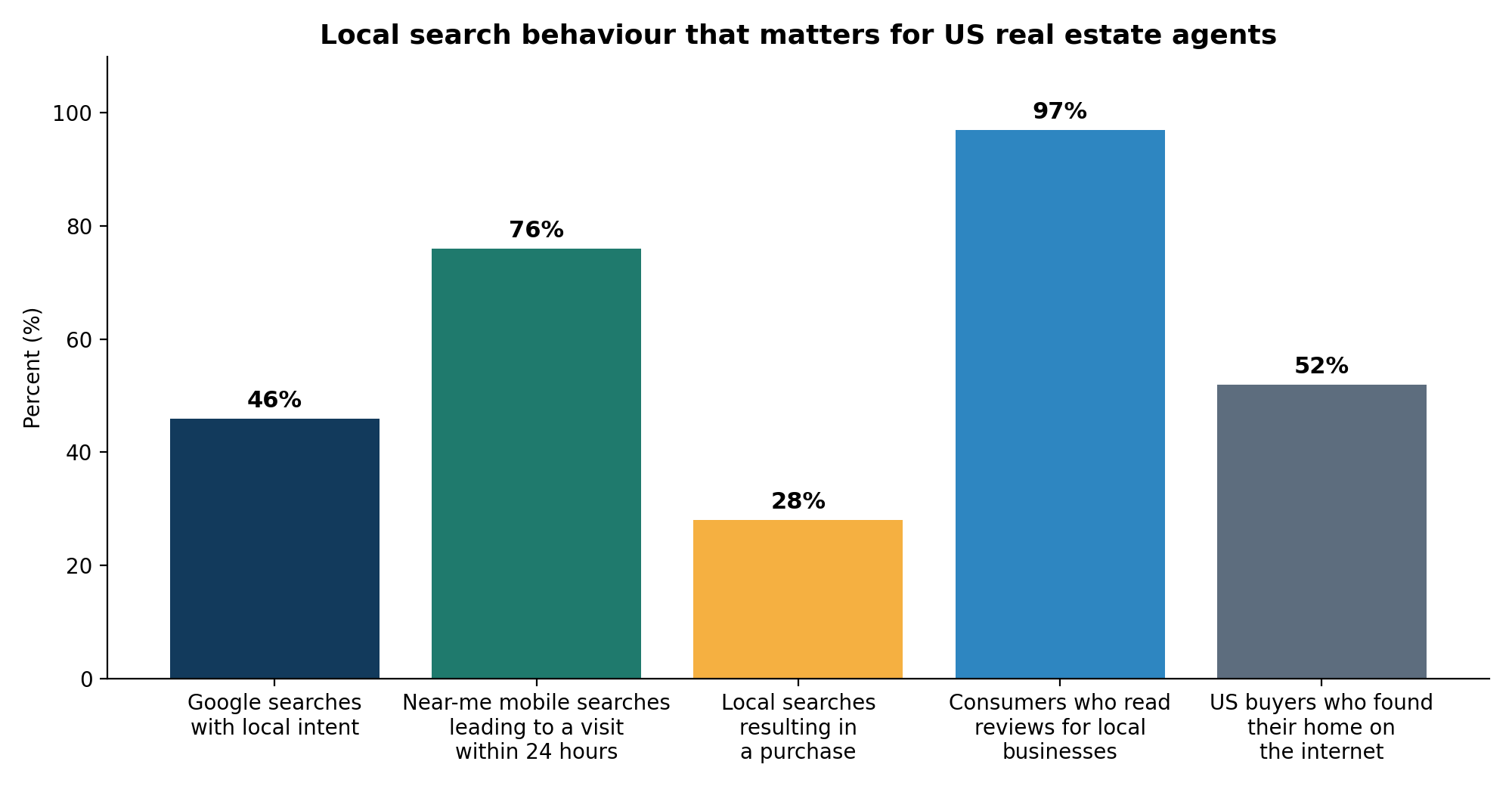
The numbers show how fast local search turns into action. Nearly half of Google searches carry local intent, and most ‘near me’ searches on a phone lead to a visit within a day. For an agent, that visit is often a phone call, a directions request, or a click to your listings page. The National Association of Realtors (NAR) 2025 Profile of Home Buyers and Sellers also found that 52% of buyers found the home they bought on the internet, while 88% of buyers bought through an agent or broker. People search online first, then still want an agent they trust. Local SEO is how you become the agent they find.
| Local search fact | What it means for an agent |
|---|---|
| 46% of Google searches have local intent (Google, via BizIQ) | Almost half of searches are about somewhere nearby, not a general topic |
| 76% of near-me mobile searches lead to a visit within 24 hours (Think with Google) | Local searchers act fast, so your profile and phone number must be correct |
| 28% of local searches result in a purchase (Think with Google) | Local traffic is high intent, not casual browsing |
| 97% of consumers read reviews for local businesses (BrightLocal, 2026) | Reviews are checked before almost every first contact |
| 52% of US buyers found their home on the internet (NAR, 2025) | Your online presence is now part of the home search itself |
Step 1: Choose one market before you optimise anything
Do not try to rank for a whole state on day one. Pick one city, or two or three neighbourhoods, where you already work and can genuinely help buyers and sellers. Write that choice down. Every page, post, and citation that follows should point back to it.
Check three things before you commit. First, is there real search demand? Search for ‘real estate agent [your city]’ and ‘[neighbourhood] homes for sale’ and look at the agents and brokerages already showing. Second, do you have local proof? Past sales, photos, school and commute knowledge, and client stories from that area are what will make your pages useful. Third, can you serve it well? If a seller calls from an area you rarely visit, you will struggle to answer local questions with confidence.
If you work in more than one market, rank them. Your main market gets the homepage focus, a full Google Business Profile, and the most detailed pages. Other markets get one solid page each, built later. Spreading thin across ten areas helps no area at all.
Step 2: Claim and complete your Google Business Profile
Your Google Business Profile is the listing that appears in Google Search and Google Maps, with your hours, phone number, reviews, photos, and map pin. For many local searches it is seen before your website, so treat it as your shopfront, not an afterthought.
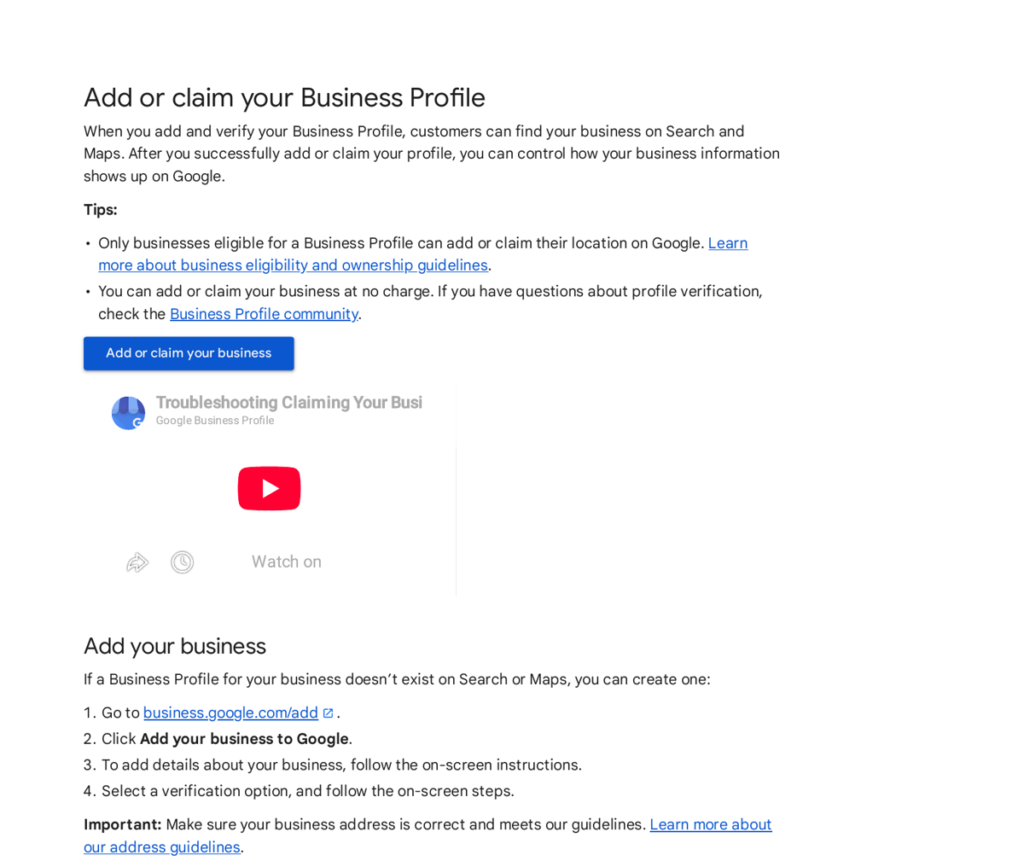
Start by claiming the profile and completing verification, following Google’s own help pages for Business Profiles. Use your real business name, exactly as clients know it. Do not add extra keywords to the name. Add your office address if you meet clients there, or set a service area if you work from home and visit clients. Choose the most accurate primary category, such as Real Estate Agent, and add a small number of relevant secondary categories only if they truly fit.
Fill in every field you can: a plain description of who you help and where, your phone number, website, opening hours, and services such as buyer representation, seller representation, and home valuation. Google reports that businesses with complete profiles receive 7 times more clicks than those with incomplete profiles, so blank fields cost you enquiries. Add real photos of your office, your team, and homes you have sold, with permission from the owners. Avoid stock photos of houses you did not sell. A profile with honest local photos builds trust faster than a polished but generic one.
Then use the profile every week. Post short updates about new listings, open houses, price changes, and local market notes. Answer questions in the Questions and Answers section with short, factual answers. Keep hours correct over holidays. Small, regular updates signal that the business is active, and they give searchers a reason to call you rather than the next agent in the list.
Step 3: Make your website match your market, page by page
Google needs to see the same market on your website as on your profile. Start with your homepage: name your main city and the areas you serve in plain words, and link to your area pages from there. Then build one page for each city or neighbourhood you serve, and make each page genuinely different.
A useful neighbourhood page answers the questions a buyer or seller in that area actually asks. Cover typical home types and price ranges in general terms, schools and transport links, commute times, and what makes the area different from the next one over. Add current listings or recently sold homes for that area where your website allows it. Link to your contact page and to your main services page, and keep the page updated when the market changes. A page that only swaps the place name and repeats the same text as ten other pages will not rank well, and it will not convince a reader either.
Keep your name, address, and phone number identical on every page and on every directory listing. If your office moved, or your phone number changed, update the website, your Business Profile, and your main citations in the same week. Mixed details confuse both Google and callers. Add your address and phone number to your site footer so every page carries the same details, and check the mobile view yourself. Most local searches happen on a phone, so a page that is hard to read or slow to load on mobile loses the enquiry before the agent ever hears about it.
Step 4: Build a review system, not a one-off request
Reviews are often the deciding factor between two agents who both appear in local results. BrightLocal’s 2026 Local Consumer Review Survey found that 97% of consumers read reviews for local businesses, and 85% are more likely to use a business after reading positive reviews. For an agent, that means a seller comparing two profiles will read what past clients said before making the first call.
Build a simple system you can repeat after every closing. Ask in person at the closing table, while the client is pleased and the details are fresh. Send one short follow-up message the same day with a direct link to your Google review page. Make the request personal: mention the home or the area, and thank them for working with you. Do not offer payment or gifts for a review, and never write reviews yourself or ask friends to pose as clients. Google and the US Federal Trade Commission treat fake reviews seriously, and one removed review damages trust more than a slow start.
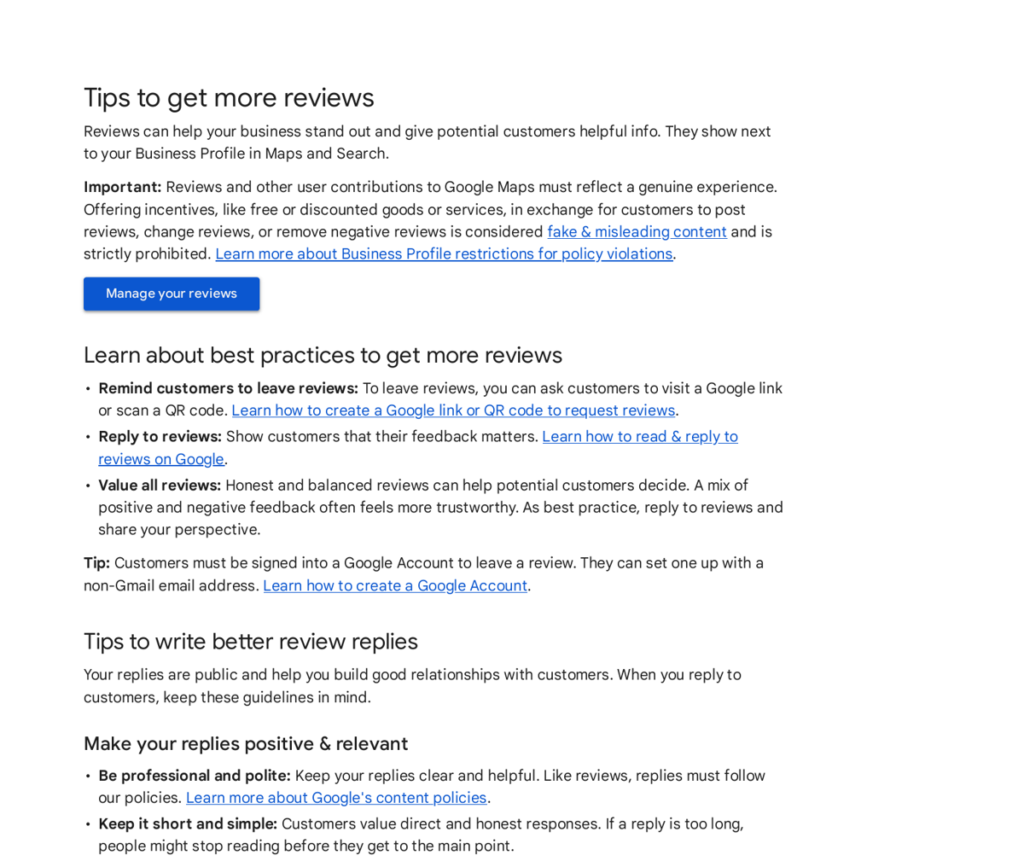
Reply to every review, good or bad, within a few days. Thank happy clients by name and mention the area if it fits. For a poor review, stay calm, thank the reviewer, and offer to talk offline. Do not argue in public and do not share private details about a transaction. Future clients read your replies as closely as the reviews themselves, and a measured reply often wins more trust than the original complaint cost you.
Step 5: Earn local citations and links from real local sites
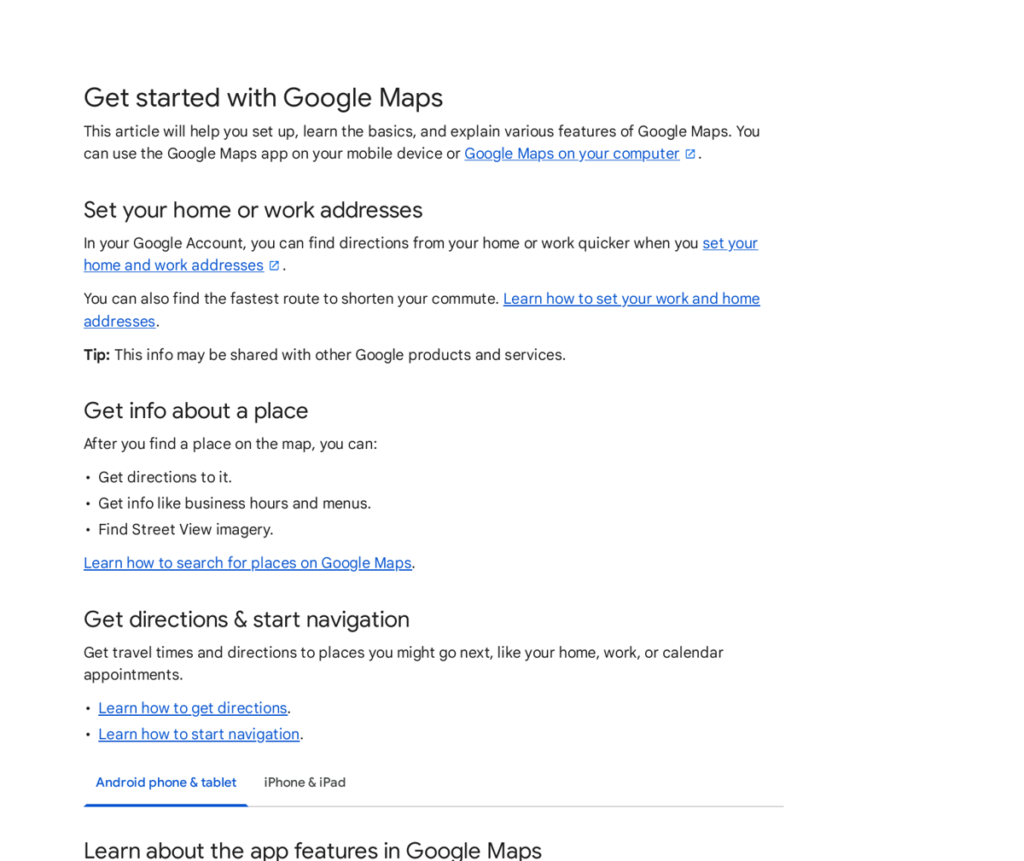
A citation is any mention of your business name, address, and phone number on another site. Start with the directories buyers actually use: your brokerage site, major real estate portals where you have a genuine agent profile, Yelp, Bing Places, Apple Maps, and your local chamber of commerce or realtor association directory. Keep the details identical everywhere, and fix duplicates rather than creating new listings on top of them.
Local links matter more than general links for this kind of SEO. A link from a neighbourhood association, a local charity you supported, a school fundraiser, or a local news story about the market carries local relevance that a generic directory cannot match. Earn them by doing things worth mentioning: publish a quarterly market update for your area, speak at a first-time buyer event, or share useful local data with a community site. If you want help earning links from real sites through manual outreach, our local SEO services are built around that approach, with no private blog networks.
Avoid buying bundles of low-quality directory links. Hundreds of identical listings on sites nobody in your city has heard of do not help, and they create clean-up work later. Twenty accurate, relevant citations and a handful of genuine local links will serve a single agent far better than a thousand thin ones.
Step 6: Publish local content that answers local questions
Content is where many agents stop at generic advice. Local SEO needs local answers. Write about the questions people in your market actually ask: how long homes take to sell in a named neighbourhood, what first-time buyers should know about a specific school zone, how to price a home on a particular street type, or what a seller should fix before listing in your city.
Each article should target one area and one question, and link back to the matching area page. Add photos you took yourself, a simple map, or a table of recent local figures from a named public source, such as your local association of realtors. Update older local pages when figures change, rather than publishing a near-duplicate new post each year. Over time this builds a set of pages that Google can trust for that area, and that buyers can actually use.
Step 7: Track what brings calls, then repeat it monthly
Local SEO fails quietly when nobody checks it. Once a month, spend 30 minutes on four checks. First, open your Business Profile insights and note profile views, calls, direction requests, and website clicks. Second, check your ranking for your main terms, such as ‘real estate agent [your city]’, from a phone in or near that city, since results change with location. Third, check your website for enquiries from local pages, and note which area pages bring the most calls. Fourth, scan new reviews and citations for errors.
Use what you find. If one neighbourhood page brings most enquiries, build the next page for a nearby area in the same style. If calls drop after a profile change, undo it and watch again. If a particular type of post brings direction requests, post more of that type. Local SEO for an agent is not a project you finish once. It is a monthly habit, and the agents who keep it up are the ones still visible when a seller in their area starts searching.
Frequently asked questions
How long does local SEO take to work for a real estate agent in the USA?
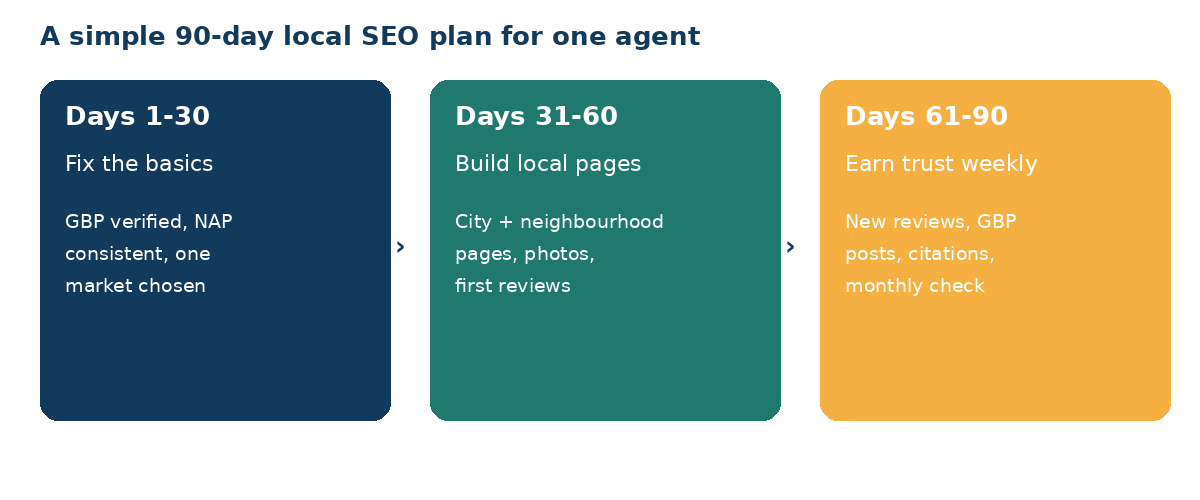
Allow at least three months of steady work before judging results. Your Business Profile can improve within weeks if it was incomplete, but rankings for competitive city terms, review growth, and local pages usually need a full quarter to build. Agents who stop after a month often quit just before the work starts to show, so set a 90-day plan and review it monthly rather than daily.
Do I need a website to rank in Google Maps as a real estate agent?
No, a verified Google Business Profile can appear in Maps and local results without a website of your own. A website still helps a great deal, because it gives buyers full listings, area guides, and a contact form, and it supports rankings for searches beyond the map results. If you must choose one first, claim and complete your Business Profile, then build the website pages for your main market.
What should a real estate agent put on a Google Business Profile?
Use your real business name, correct phone number and website, accurate hours, and a service area that matches where you actually work. Add a clear description, your main services, and real photos of your office, team, and sold homes, with permission where needed. Keep every field complete and consistent with your website, and update hours and posts regularly so searchers see an active business.
How many reviews does a real estate agent need for local SEO?
There is no fixed number, but steady and recent reviews matter more than a single burst. Aim for a small number of genuine reviews every month rather than dozens in one week, and keep asking after each closing. BrightLocal’s 2026 survey found that many consumers will not consider a business with very few reviews, so an empty profile is a real barrier even if your rankings are good.
Can one agent rank in several cities with local SEO?
Yes, but only with real work in each city. Build one strong page per city, keep citations accurate for each area you serve, and gather reviews from clients in those areas. Trying to rank in many cities with copied pages and no local proof rarely works. Start with your strongest market, prove the system there, then add the next city properly.
Is it safe to ask clients for Google reviews?
Yes, if you ask honestly and do not offer payment, gifts, or other rewards in return. Ask after a genuine transaction, send a direct link, and let clients write in their own words. Never write a review yourself, never ask someone who was not a client to pose as one, and never use a review service that posts fake reviews. Honest reviews build trust, while fake ones risk removal and lasting damage to your profile.
Sources: BizIQ, Local Search Statistics; NAR 2025 Profile of Home Buyers and Sellers, reported by RESPA News; BrightLocal Local Consumer Review Survey, summarised by Search Engine Land; Google Business Profile complete-profile clicks, summarised by BizIQ.

Abdullah Zulfiqar is Co-founder and Client Success Manager at RankWithLinks, an SEO agency helping businesses grow online. He specializes in client relations and SEO strategy, driving measurable results and maximizing ROI through effective link-building and digital marketing solutions.