
Not all backlinks are equal. A single link from a trusted, well-read site in your field can do more for your rankings than a hundred links from thin, unknown pages. That gap is what “high authority backlinks” means: links from sites that search engines already trust, pointing to your pages. This guide explains what makes a backlink high authority, what the research says about their effect, and how to earn them without cutting corners.
What high authority backlinks are
A high authority backlink is a link from a website that has earned trust over time: it has its own strong backlink profile, real traffic, and a record of publishing useful content. The link passes some of that trust to your page. Google’s own documentation describes links as a way for other sites to vouch for your content, and it lists link analysis systems and PageRank among its ranking systems. A link is, in effect, a vote — and a vote from a respected source counts for more.
Authority is not a single number. SEO tools each publish their own estimate: Ahrefs calls its score Domain Rating, Moz calls its Domain Authority, and Semrush calls its Authority Score. All three run on a 0 to 100 scale. None of them is a Google metric, and Google does not use any of them in its ranking. They are useful shortcuts for comparing sites, not targets in themselves. What matters is the reality behind the score: real sites, real readers, and links that were given because the content deserved them.
Why high authority backlinks matter: what the data shows
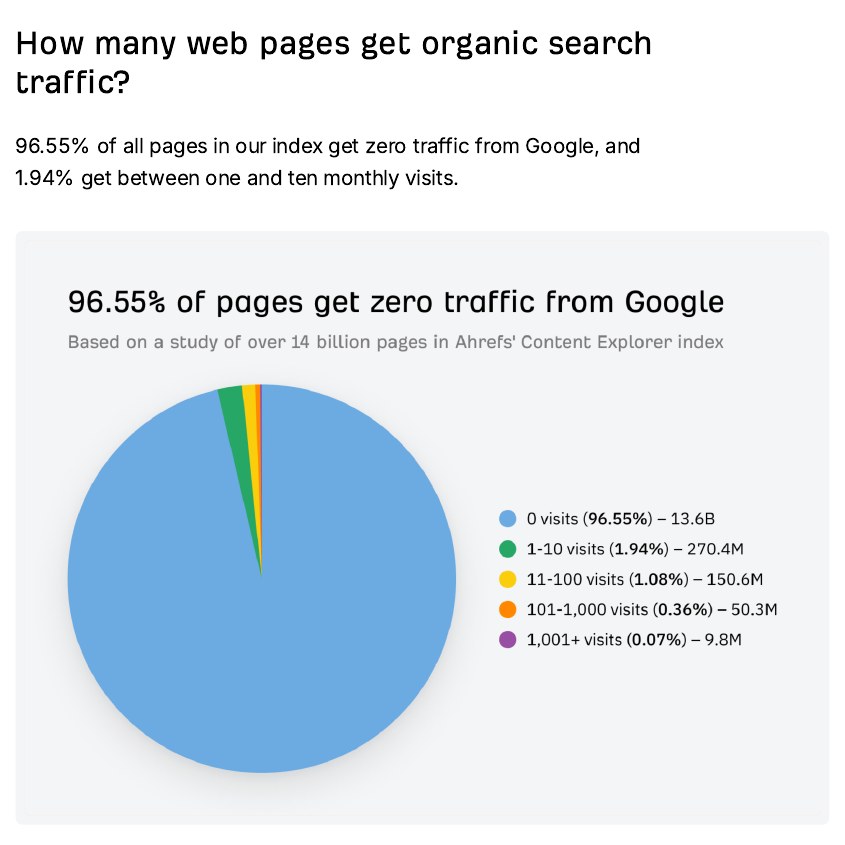
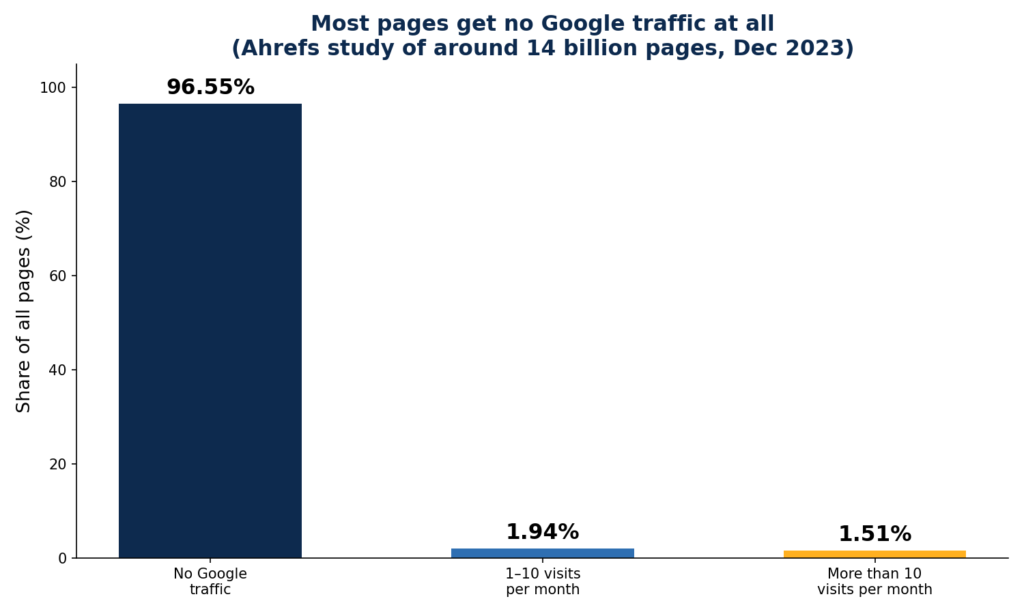
The case for authority links rests on large studies, not on opinion. Ahrefs analysed around 14 billion pages and found that 96.55% of them get no organic traffic from Google at all. In the same research, 66.31% of pages had no backlinks pointing to them, and only about 1 in every 6,671 pages with no backlinks managed more than 1,000 search visits a month. Pages without links are, in practice, invisible.
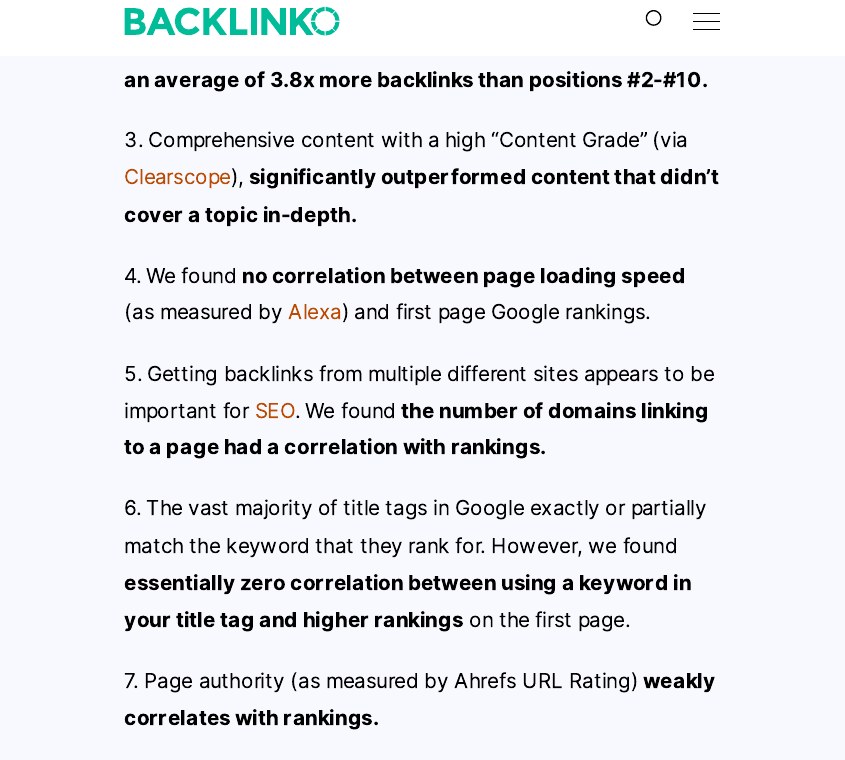
Backlinko’s analysis of 11.8 million Google search results found the other side of the same picture: the page in first place has, on average, 3.8 times more backlinks than the pages in positions two to ten. The study also found that the number of different sites linking to a page — the referring domains — tracks rankings more closely than the raw count of links. Ten links from ten different trusted sites beat fifty links from one site.
None of this proves that a link causes a ranking. Correlation is not causation, and Ahrefs says so in its own study. Strong pages attract both links and rankings. But the pattern is consistent across every large study published in the last decade: pages that rank well tend to have links from strong, relevant sites, and pages with no links tend to get no traffic. Treat authority links as a precondition for competitive rankings, not as a guarantee of them.
| Finding | Source | What it means for you |
|---|---|---|
| 96.55% of pages get no Google traffic; 66.31% of pages have no backlinks | Ahrefs study of around 14 billion pages (Dec 2023) | A page with no links rarely gets seen at all |
| The #1 result has 3.8x more backlinks than positions 2–10 | Backlinko analysis of 11.8 million Google search results | Top pages are also the most linked-to pages |
| 94% of blog posts get zero external links | Backlinko and BuzzSumo analysis of 912 million blog posts (2019) | Most content never earns a single link |
| Referring domains correlate with rankings more strongly than total link count | Backlinko study, confirmed by Ahrefs research | Chase new linking sites, not more links from the same sites |
What makes a backlink high authority
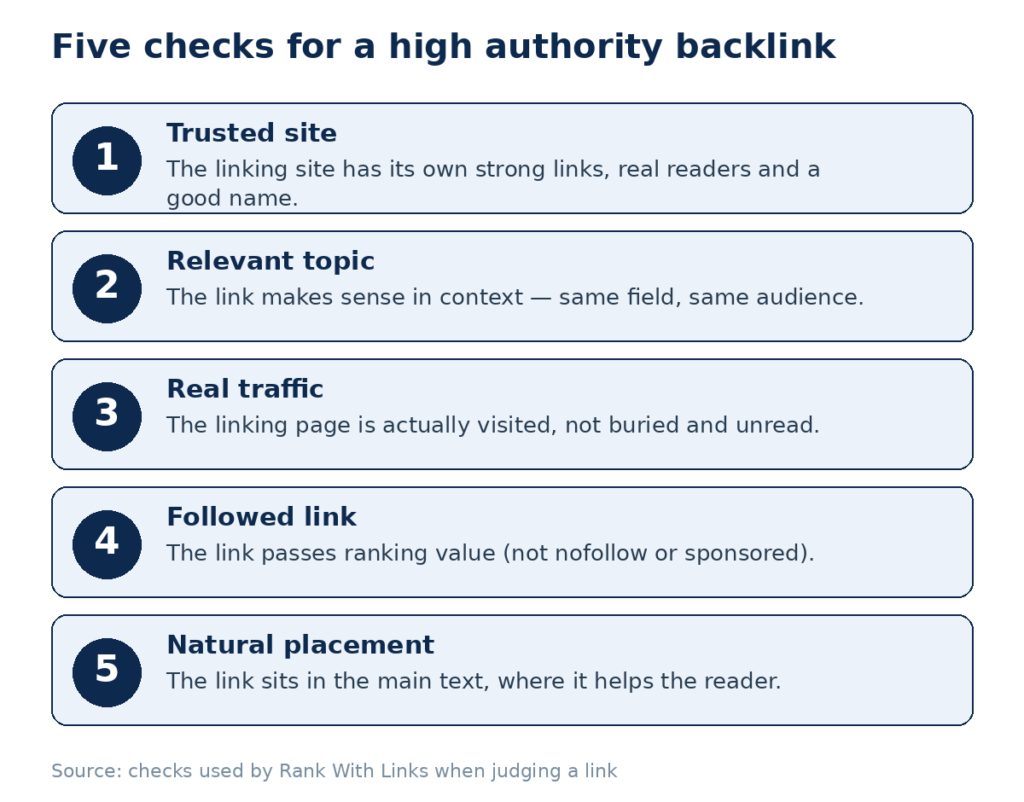
Five checks separate a strong link from a weak one. Use them before you celebrate any link you earn, and before you accept any link offered to you.
1. The linking site is trusted
A trusted site has its own history of earning links, publishes under real names, and is cited by others in its field. A link from a national newspaper, a university, an industry body, or a long-running trade publication carries weight because those sites do not link lightly. A link from a site built last month with no readers and no links of its own carries almost none.
2. The topic is relevant
A link from a site in your field counts for more than a link from an unrelated one. A plumbing business linked from a trade magazine for heating engineers is a natural fit. The same business linked from a casino blog is not, however strong that blog looks on paper. Relevance is also how a reader judges the link: if it makes sense in context, it is a good link.
3. The linking page gets real traffic
A page that people actually visit passes more value than a page nobody reads. Ahrefs found that links from pages with real traffic were a stronger signal than links from pages with none. Check whether the linking page ranks for anything and whether the site gets organic visits. A page buried five clicks deep with no traffic is a weak source, whatever its domain score says.
4. The link passes authority
Most links pass ranking value by default. Links marked nofollow, sponsored, or UGC tell Google not to pass that value, or to treat the link differently. Nofollow links can still bring readers and brand mentions, and a natural profile includes them. But when you are judging authority, a followed link from a trusted page is the one that moves the needle.
5. The placement is natural
A link inside the main text of an article, where it supports a point, is worth far more than a link in a footer, a sidebar, or an author bio. Google’s own guidance treats links placed to manipulate rankings as spam, and the position of a link is one of the signals it can read. If a reader would find the link helpful where it sits, the placement is right.
How to earn high authority backlinks
There is no shortcut that lasts. The methods below are slow, but each one produces links that survive Google updates because they were earned, not arranged.
Create something worth citing
Original research, a useful tool, a clear guide, or a dataset nobody else has published will earn links on its own. Backlinko and BuzzSumo found that 94% of blog posts never earn a single external link — most content simply gives nobody a reason to link. Before you publish, ask what a journalist or blogger would quote from the page. If the answer is nothing, the page will not earn links.
Use digital PR
Find a story in your data or your experience and offer it to journalists and trade press. A local business can publish survey results about its town. A B2B firm can share anonymised figures from its own work. Journalists need sources, and a clear, honest story with numbers is far more likely to be picked up than a generic press release about a new service.
Write guest posts for real publications
Guest posting still works when the publication is real and the article is genuinely useful. Choose sites your customers actually read, pitch a specific idea, and write the best version of it you can. A guest post on a respected trade site earns a strong link and puts your name in front of the right readers. A guest post on a site that accepts anything from anyone earns neither.
Reclaim mentions and fix broken links
Search for places where your brand or your content is mentioned without a link, and ask politely for the link to be added. Separately, find broken links on relevant resource pages and offer your working page as a replacement. Both methods work because you are helping the other site, not only asking for something.
Answer journalists’ questions
Services that connect journalists with expert sources let you offer a short, honest quote in your field. A quoted expert often earns a link from the publication. Keep answers short, factual, and free of sales language — journalists use the clearest quote, not the longest one.
What to avoid
Google’s spam policies are clear: links intended to manipulate rankings can lead to a manual action against your site, which can remove pages from search results entirely. Avoid link schemes, paid links that pass ranking value, private blog networks, and automated link building. A link that would embarrass you if a Google reviewer saw the arrangement is a link to refuse.
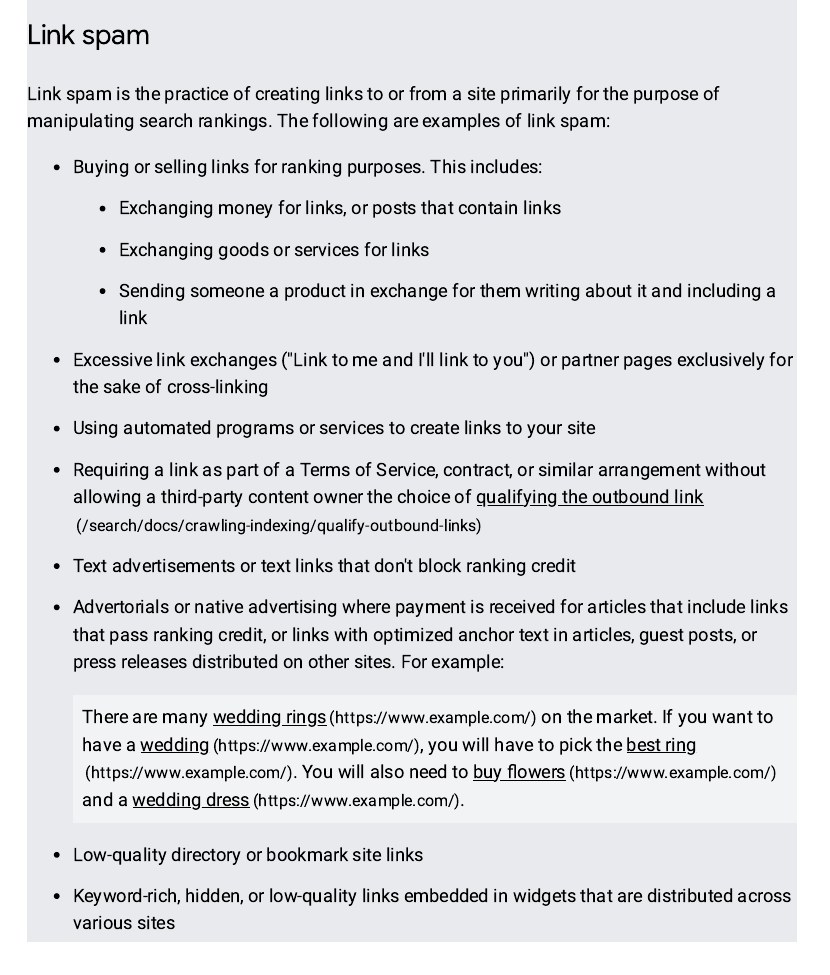
That caution applies to your own outreach too. Buying links, swapping links at scale, and placing links in low-quality guest posts all leave patterns that are easy to spot. One strong link earned honestly is worth more than a hundred arranged links, and it is the only kind that still helps a year later. If you want help earning links the manual way, see our link building services — we build links by outreach to real sites, with no private blog networks.
Frequently asked questions
What is a high authority backlink?
A high authority backlink is a link from a website that search engines already trust, because it has a strong backlink profile of its own, real traffic, and a history of useful content. It passes more ranking value than a link from a weak or new site. Tools estimate this trust with scores such as Ahrefs Domain Rating or Moz Domain Authority, but those scores are only estimates — the real test is whether the linking site is respected in its field.
How many high authority backlinks do I need?
There is no fixed number. It depends on how competitive your topic is and how strong the pages already ranking for it are. A page targeting a narrow topic may rank with a handful of good links, while a competitive commercial term may need dozens from strong sites. Check the referring domains of the pages currently in the top ten for your keyword — that tells you roughly what level of links you need to compete.
Are high authority backlinks the same as dofollow backlinks?
No. Dofollow is a technical setting: it means the link passes ranking value. Authority is about the linking site: how trusted and relevant it is. A dofollow link from a weak site is still a weak link, and a nofollow link from a major newspaper can still bring readers and brand mentions. The strongest links are both — followed, and from a trusted site.
Do high authority backlinks guarantee first place on Google?
No. Links are one of several strong signals, alongside content quality, relevance to the search, and the page’s usability. Google has also said publicly that links are not in its top three ranking factors. A page with strong links but thin content will still lose to a better page. Links raise the ceiling of what a page can achieve; they do not do the work of the content itself.
Is it safe to buy high authority backlinks?
Buying links that pass ranking value breaks Google’s spam policies and risks a manual action that can remove your pages from search results. Some sellers dress this up as sponsored posts or editorial placements, but if money changed hands for a followed link, it is a paid link. Earn links through useful content, digital PR, and genuine outreach instead — it is slower, but the links last.
How long does it take for a high authority backlink to help rankings?
Usually weeks rather than days. Google has to find the linking page, crawl it, and then reflect the new link in its ranking. A link from a page that is crawled often can show an effect within a few weeks; a link from a rarely crawled page can take longer. New links also tend to help most when the page they point to is already well built and matches what searchers want.

Abdullah Zulfiqar is Co-founder and Client Success Manager at RankWithLinks, an SEO agency helping businesses grow online. He specializes in client relations and SEO strategy, driving measurable results and maximizing ROI through effective link-building and digital marketing solutions.