
Most SaaS companies do not have a traffic problem. They have a pipeline problem. The blog brings in readers, the rankings look healthy, and yet the trial sign-ups stay flat. That gap is what good SaaS SEO strategies close. They treat search as a sales channel, not a traffic channel, and they measure success in demos, trials and paying customers — not page views.
This guide sets out seven SaaS SEO strategies that work together: content matched to each stage of the buying journey, product-led pages, comparison pages, technical fixes, link building and visibility in AI answers.
Why SaaS SEO is different from normal SEO
Selling software is not like selling shoes. Nobody buys a subscription on impulse after one search. A buying group of several people researches the problem, compares tools, reads reviews, tries a free trial and then asks finance to approve the spend. The whole cycle often takes months, and most of it happens before anyone talks to sales.
That changes what SEO has to do. A single blog post rarely closes a deal. Instead, a set of pages has to carry the buyer through the journey: a guide that names the problem, a comparison page that shortlists the options, a pricing page that answers the cost question and a trial page that makes starting easy. Each page has a different job, and each one needs to rank for the searches buyers make at that stage.
It also changes the maths. SaaS buyers are worth far more than a one-off purchase, because a customer who stays for three years pays every month. That is why SEO can pay for itself many times over in this market.
The numbers behind SaaS SEO
A few real figures explain why search deserves a serious share of a SaaS marketing budget. They come from published studies, not from guesswork.
| What was measured | Finding | Source |
|---|---|---|
| Average SEO ROI for B2B SaaS | 702% over three years, break-even in about 7 months | First Page Sage, campaign data 2021–2025 |
| SEO leads turning into sales-ready leads | 51% of SEO MQLs become SQLs, against 26% for PPC | First Page Sage |
| B2B software buyers using AI chatbots | 71% rely on AI chatbots for software research | G2, March 2026 survey of 1,076 buyers |
| Buyers starting research in an AI chatbot | 51% start in a chatbot more often than Google, up from 29% a year earlier | G2, March 2026 |
| Buyers who define requirements before sales | 83% define their purchase requirements before speaking to a sales rep | 6sense, 2025 Buyer Experience Report |
| SaaS landing page conversion | Median 3.8%, against 6.6% across all industries | Unbounce, study of 41,000+ landing pages |
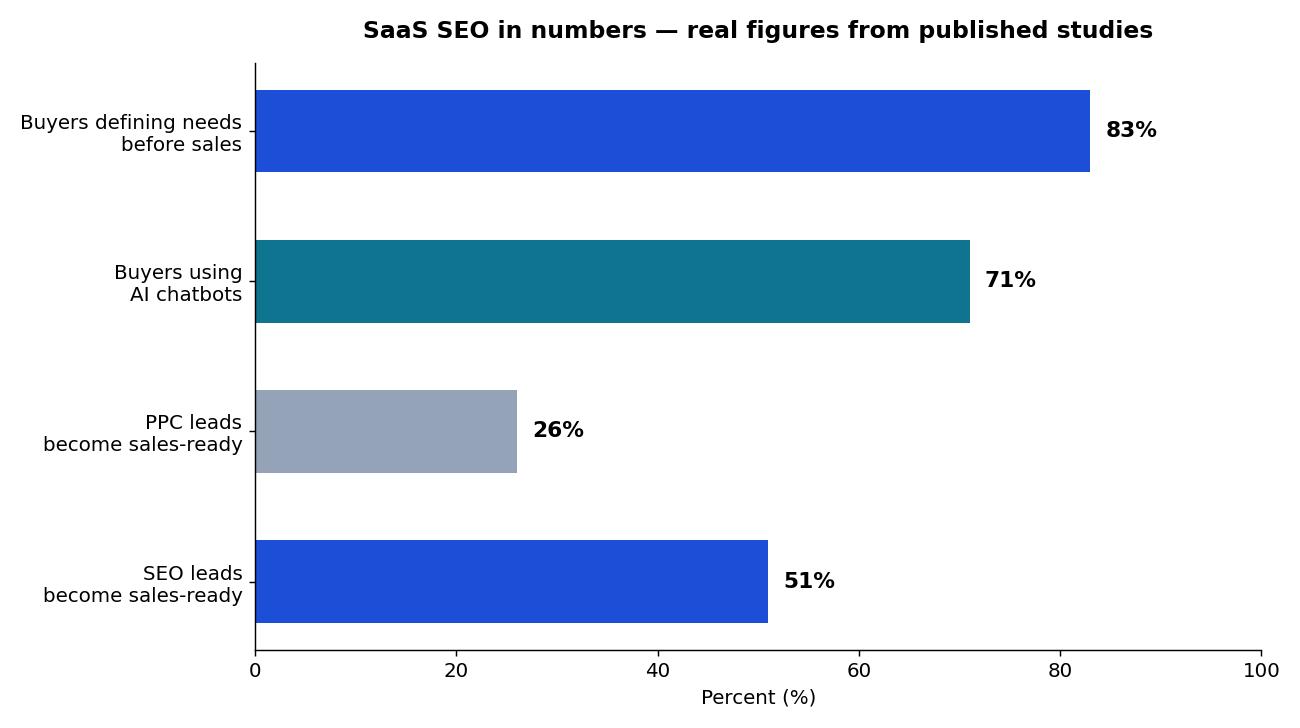
Two lessons run through the table. First, SEO leads are better leads: more than half reach sales-ready stage, roughly double the rate of paid search. Second, buyers now start in two places at once — Google and AI chatbots — so a strategy that only chases Google rankings is already out of date.
Strategy 1 — Map content to each stage of the buying journey
Start by listing the questions buyers ask at each stage, then give each stage its own pages.
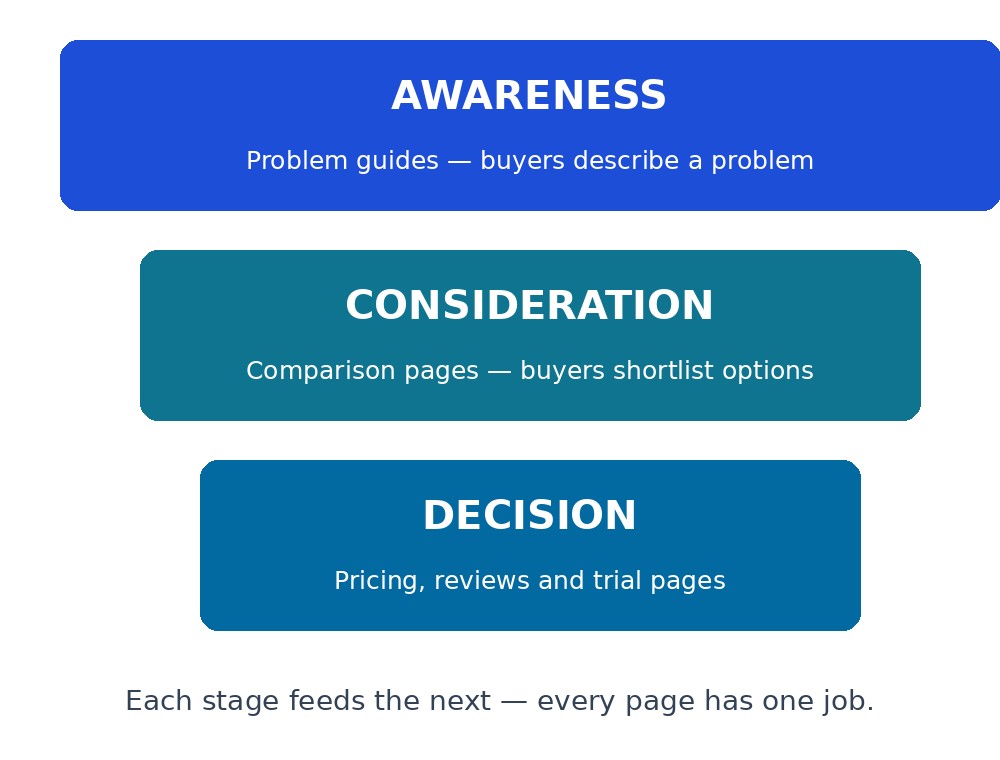
At the top of the funnel, buyers describe a problem, not a product. They search for things like “how to automate invoice reminders” or “reduce customer churn”. Guides and how-to articles win here. In the middle, they compare options: “best invoicing software for small business” or “Tool A vs Tool B”. Comparison pages and listicles win here. At the bottom, they search for your brand plus “pricing”, “reviews” or “alternatives”. Product, pricing and review pages win here.
The mistake most SaaS teams make is writing only top-of-funnel blog posts. Those posts bring traffic, but the readers are months away from buying. A balanced plan covers all three stages, and the bottom-of-funnel pages get the most care, because they sit closest to revenue.
Strategy 2 — Build product-led pages that rank
Your product pages are your best salespeople, and they should rank. That means giving each core feature its own page, written around the words buyers actually search for.
A project management tool, for example, should have pages for “Gantt chart software”, “team task management” and “project timeline template” — not one vague features page that tries to rank for everything. Each page should show the feature working, explain who it helps, and end with a clear next step: start a free trial or book a demo.
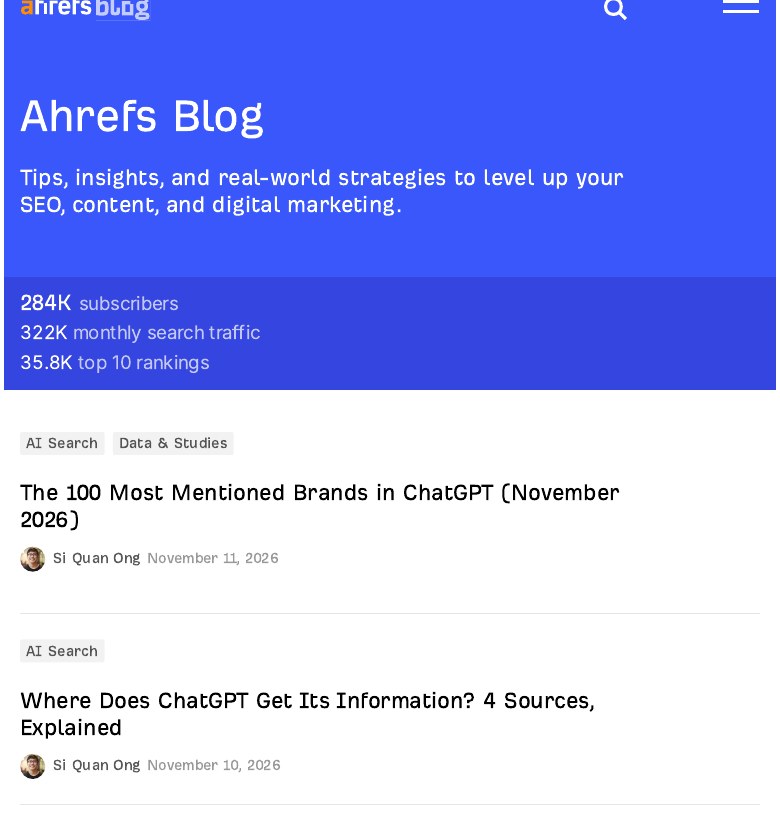
Free tools are the strongest version of this strategy. Ahrefs grew its blog from 15,000 to more than 250,000 monthly visitors from Google largely by writing about topics people actively search for, and by turning popular features into free tools that rank on their own.
Strategy 3 — Win the comparison searches
When buyers are ready to shortlist, they search for comparisons: “best CRM for startups”, “Slack alternatives”, “HubSpot vs Salesforce”. These pages convert far better than blog posts, because the reader is already choosing.
Write honest comparison pages. List your real strengths, admit where a rival is better for a certain use case, and let the reader decide. Buyers can smell a rigged comparison, and a page that hides every weakness loses trust — and the sale. Include pricing, key features, who each tool suits best, and a link to your free trial.
Also claim your “alternative to [competitor]” pages. When a rival raises prices or drops a feature, buyers search for alternatives the same week.
Strategy 4 — Fix the technical foundation first
No content strategy survives a broken website. Before writing more articles, check four things.
First, speed. SaaS buyers leave slow pages fast, and Google uses page speed as a ranking factor. Compress images, cut unused scripts and test your main pages in Google PageSpeed Insights until they pass.
Second, crawlability. Make sure Google can reach every important page, that your sitemap is up to date, and that old or duplicate pages are redirected rather than left to compete with each other.
Third, structure. Use clear headings, short paragraphs and schema markup where it fits, so Google can understand what each page is about and show it properly in results.
Fourth, the trial flow itself. If the sign-up form is buried, broken on mobile or asks for a credit card too early, even perfect rankings will not produce trials. The median SaaS landing page converts at just 3.8%, according to Unbounce — so small fixes to the page around the form are often worth more than another blog post.
Strategy 5 — Earn links from pages buyers trust
Links still decide who ranks, and in SaaS the links that matter most come from places buyers already trust: review sites, industry publications, comparison lists and genuine product round-ups.
The honest way to earn them is to publish something worth linking to: original research, a useful free tool, a clear guide or real data from your own product. Then tell the right people it exists. Digital PR works well for SaaS: a small study or survey about how your customers work can earn coverage from publications that would never link to a product page.
What does not work is buying links in bulk or swapping links with unrelated sites. Google’s spam policies are clear about link schemes, and a penalty can take months to recover from. If a tactic cannot be explained to a customer with a straight face, do not use it. Our SaaS link building services use manual outreach only — real pitches to real sites, with no private blog networks.
Strategy 6 — Be visible in AI answers, not just Google results
The G2 figures in the table above are the clearest warning in this guide: 71% of B2B software buyers now rely on AI chatbots for research, and 51% start there more often than in Google. If your product never appears in a chatbot’s answer, half your buyers may never see it.
AI visibility follows the same rules as good SEO, with one difference: chatbots cite pages that state facts plainly. Short, direct answers near the top of a page, clear headings, comparison tables and pages that other trusted sites link to all help a page get cited. Review sites and listicles matter more than ever, because chatbots often answer from third-party sources rather than from the vendor’s own site.
Do not chase AI traffic as a separate project. Write pages that answer real questions clearly, earn mentions on trusted sites, and keep your product information accurate everywhere it appears. That is the same work as good SaaS SEO — it just pays off in two places now instead of one.
Strategy 7 — Measure pipeline, not traffic
Traffic is easy to count and easy to misread. A guide that brings 10,000 readers and zero trials is worth less than a comparison page that brings 200 readers and ten trials.
Track four numbers every month: organic trials started, organic demos booked, the share of those that became paying customers, and the cost of acquiring each one. Compare SEO leads with paid leads on the same basis — First Page Sage found that 51% of SEO leads reach sales-ready stage against 26% for PPC, so SEO should usually win on quality even when paid wins on speed.
Review the numbers quarterly and cut what does not produce trials. A page that ranks well but never converts is a sign the intent is wrong, the offer is weak, or the page targets the wrong stage. Fix the page or retire it; do not keep feeding it links.
Common SaaS SEO mistakes to avoid
- Writing only top-of-funnel blog posts and wondering why trials stay flat.
- Targeting keywords with no buying intent and calling the traffic a win.
- Publishing comparison pages that are really adverts and losing the reader’s trust.
- Ignoring technical SEO while adding more content to a slow, hard-to-crawl site.
- Measuring success by rankings and sessions instead of trials, demos and revenue.
- Buying cheap links and risking a penalty that wipes out months of work.
A simple 90-day plan
| Weeks | Focus | What good looks like |
|---|---|---|
| 1–2 | Audit and fix | Speed, crawl errors and the trial flow fixed; tracking set up for trials and demos |
| 3–6 | Bottom of funnel | Pricing, comparison and alternative pages live and ranking |
| 7–10 | Middle of funnel | Comparison guides and listicles published; outreach started for links |
| 11–13 | Top of funnel + AI | Problem guides published; clear answers added for AI citations; first results reviewed |
Ninety days will not finish the job — SEO compounds over months, and First Page Sage puts the average break-even at about seven months. But ninety days is enough to fix the foundation, publish the pages closest to revenue, and know whether the plan is working.
FAQ
What is SaaS SEO?
SaaS SEO is search optimisation for software companies: ranking product, comparison and guide pages in Google, and getting cited in AI answers, so that buyers find the product while they research. Unlike general SEO, it is measured on trials, demos and paying customers rather than on traffic alone, because a SaaS customer pays every month for years.
How long does SaaS SEO take to work?
Expect early signs in three to four months and real pipeline impact in six to twelve months. First Page Sage‘s campaign data puts the average break-even for B2B SaaS SEO at about seven months, with the strongest results in the second and third year. Quick wins are possible on comparison and alternative pages, which target buyers who are already choosing.
Which pages matter most for SaaS SEO?
Pricing, comparison, alternative-to-competitor and free-tool pages matter most, because they reach buyers close to a decision and turn a bigger share of visits into trials. Problem guides matter too, but mainly as the first step of the journey. A SaaS site that only publishes blog guides will usually see traffic grow while trials stay flat.
How much should a SaaS company spend on SEO?
There is no single figure, because it depends on the market, the competition and the size of the deal. A useful rule is to compare the cost of one customer from SEO with the cost from paid search, over the full customer lifetime. SEO usually wins on cost per customer once it is running, which is why many SaaS teams treat it as a long-term investment rather than a monthly expense.
Do AI chatbots matter for SaaS SEO now?
Yes. G2‘s March 2026 survey of 1,076 B2B software buyers found that 71% rely on AI chatbots for software research, and 51% start in a chatbot more often than Google. Pages that answer questions clearly, earn links from trusted sites and appear in review round-ups are the ones chatbots cite, so the same work that helps Google rankings now helps AI visibility too.
Should a SaaS company pay for links to rank faster?
No. Buying backlinks breaks Google’s spam policies and risks a penalty that can remove a site from search results for months. It also brings links from sites buyers never see, so it rarely produces trials. Earn links instead with useful tools, original research and honest outreach to sites your buyers already trust.

Abdullah Zulfiqar is Co-founder and Client Success Manager at RankWithLinks, an SEO agency helping businesses grow online. He specializes in client relations and SEO strategy, driving measurable results and maximizing ROI through effective link-building and digital marketing solutions.