
A link building article is an article written with one clear job: to earn backlinks from other websites. It is not a sales page, and it is not a quick post written to fill a blog calendar. It is a piece of content that gives other writers, journalists, and site owners a reason to link to it — because it answers a question well, because it contains data they cannot find anywhere else, or because it explains a topic better than anything else on the subject.
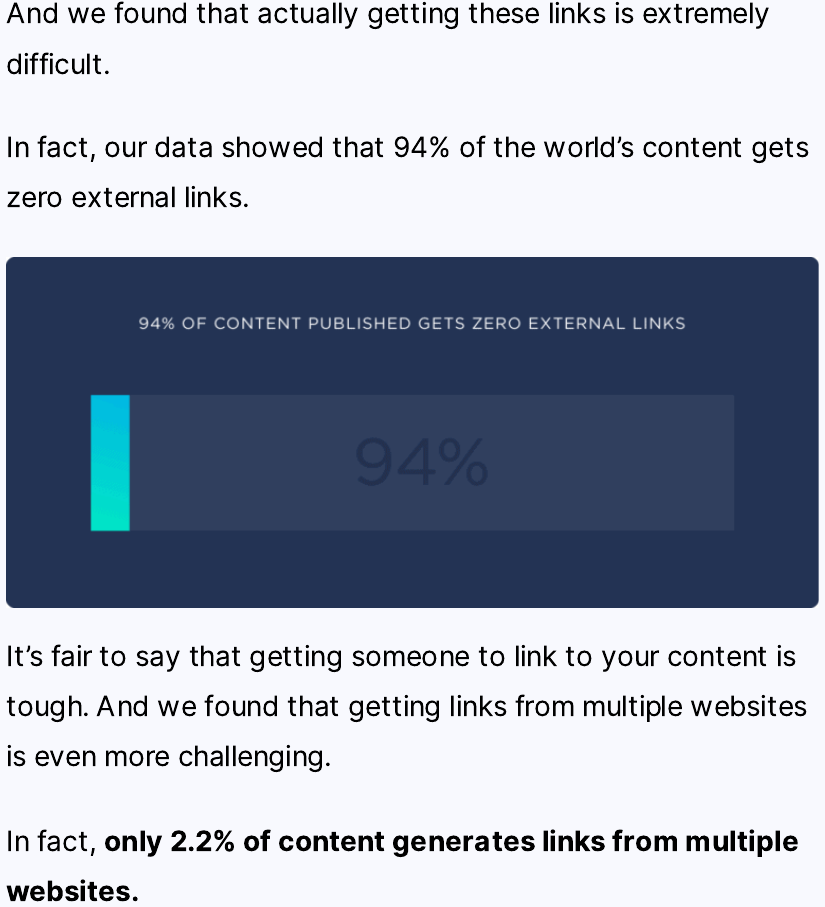
Most articles never earn a single link. Backlinko and BuzzSumo analysed 912 million blog posts and found that 94% of them have zero external links. That is the gap this guide closes. Below you will learn what link building articles are, which types earn links, and how to write one step by step — with real numbers at every stage.
What Are Link Building Articles?
A link building article is any article planned and written so that other websites want to link to it. The link is the point of the exercise. Every choice — the topic, the length, the data, the visuals — is made with that goal in mind.
There are two kinds, and it helps to keep them separate:
- Articles on your own site. You publish a guide, a study, or a tool on your own website, then promote it so other sites link to it. The link points to a page you own, and the value stays with your site.
- Guest articles on other sites. You write an article for another website in your niche, and it carries a link back to your site. The host site gets useful content, and you get a link from a relevant site.
Both kinds work, but they work in different ways. An article on your own site can keep earning links for years. A guest article usually earns one link, from the host site, and its value depends on how strong and how relevant that site is. Most small businesses should start with articles on their own site, because that is where lasting links come from.
A link building article is not the same as an ordinary blog post. An ordinary post might share news, give an opinion, or keep readers up to date. A link building article is built to be referenced. It needs a topic people search for, facts they can quote, and a structure that makes it easy to link to a specific section.
Why Most Articles Never Earn a Single Link
The odds are against the average article. The research below shows how steep the climb is, and why writing without a plan rarely pays off.
| Finding | Figure | Source |
|---|---|---|
| Blog posts with zero external links | 94% | Backlinko and BuzzSumo, 912 million blog posts, 2019 |
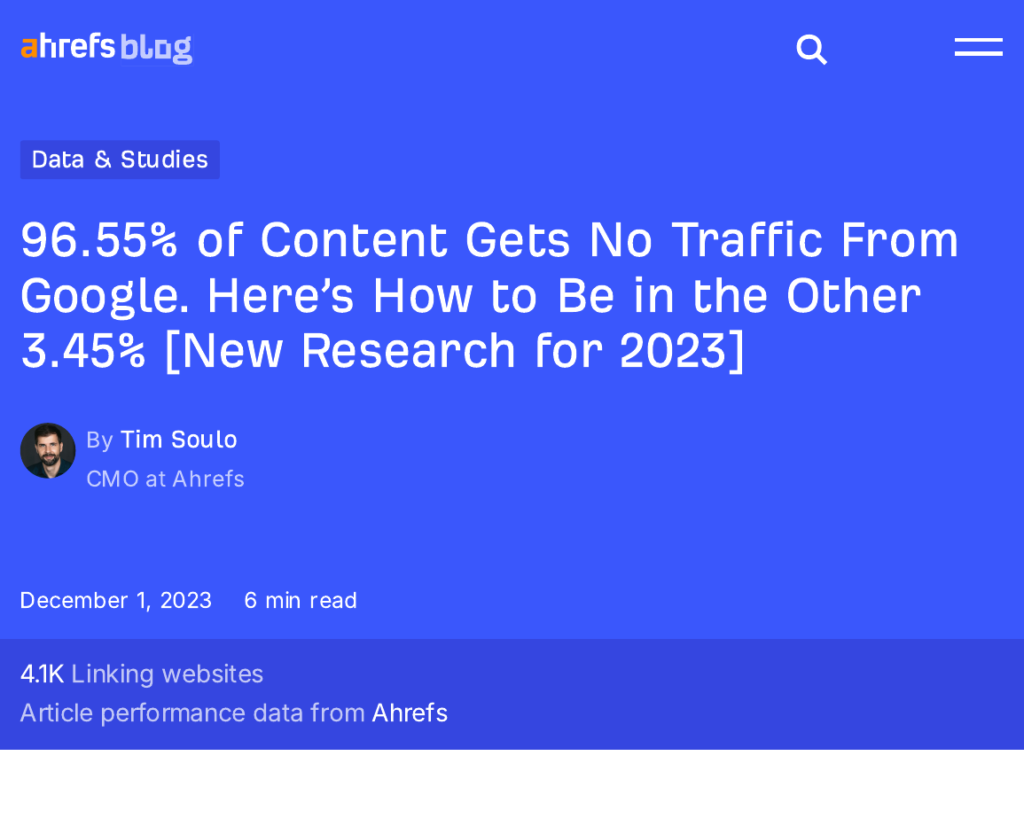
| Web pages with no organic traffic from Google | 96.55% | Ahrefs, study of 14 billion pages |
| Web pages with no backlinks at all | 66.31% | Ahrefs, Content Explorer index |
| More backlinks for the number one Google result than for results in positions 2 to 10 | 3.8 times | Backlinko, 11.8 million search results |
| Outreach emails that receive any reply | 8.5% | Backlinko and Pitchbox, 12 million emails, 2019 |
| More referring-domain links for content over 3,000 words than for content under 1,000 words | 77.2% | Backlinko and BuzzSumo, 2019 |
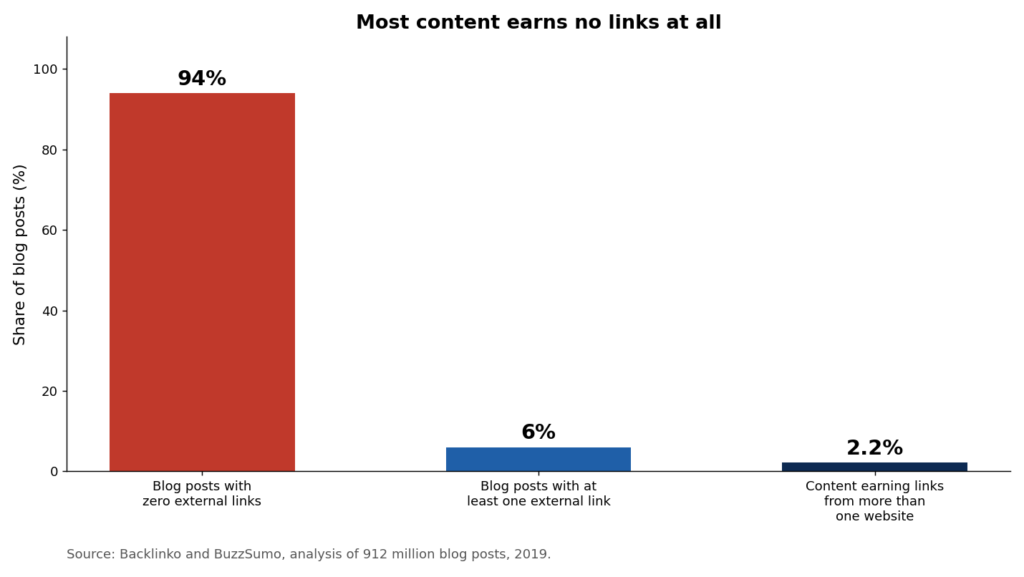
Three points stand out in that table. First, the large majority of content earns nothing, so “publish and hope” is not a plan. Second, links and rankings move together: the top result in Google holds far more backlinks than the results below it. Third, outreach is hard work — only about one email in twelve gets a reply — so the article itself has to be worth linking to before you ask anyone to link to it.
None of this means link building articles do not work. It means they only work when the article is genuinely useful. The rest of this guide shows how to make one that is.
The 5 Types of Link Building Articles That Earn Links
Not every format earns links. The five below are the ones that show up again and again in the research and in real link profiles. Pick the format that fits your topic, your skills, and the data you can get hold of.
1. Original Research and Data Studies
Articles built on fresh data earn more links than any other type. A survey of your customers, an analysis of your own sales figures, or a study of public data gives other writers something they cannot get anywhere else — a number they can quote, with your site as the source.
You do not need a huge sample. A clear study of 100 responses, honestly described, beats a vague claim with no source. Say how you collected the data, how many people or pages were involved, and what the limits are. Writers link to studies they trust, and trust comes from method, not size.
2. Definitive Guides
A long, complete guide to one topic is the workhorse of link building articles. It answers every question a reader is likely to ask, in one place, in plain words. Other writers link to it instead of writing the same explanation themselves.
Length helps, but only because complete guides are usually long. Backlinko and BuzzSumo found that content over 3,000 words earned 77.2% more referring-domain links, on average, than content under 1,000 words. Orbit Media’s 2025 blogger survey found the average blog post is 1,333 words, and bloggers who publish posts of 2,000 words or more are nearly twice as likely to report strong results — 39% against a 21% average. Write until the topic is covered, then stop. Padding does not earn links.
3. Free Tools, Templates, and Checklists
A useful template or checklist is one of the easiest articles to link to. A budgeting spreadsheet, a contract template, a hiring checklist, or a simple calculator saves the reader real work, and writers link to tools that save their own readers work too.
Keep the tool simple and free. A one-page checklist that prints well will earn more links than a complicated tool that needs a sign-up form. Put the download or the tool on the same page as the article, so the link points to a page with real content on it.
4. Expert Roundups and Quotes
Asking several experts the same question and publishing their answers creates an article that several people have a reason to share and link to. Each expert can link to it from their own site, and their readers see it too.
This only works if the question is sharp and the answers are real. “What is your top tip?” produces dull answers. “What is the one link building tactic you would stop doing in 2026, and why?” produces answers worth quoting. Use real names, real job titles, and quotes the experts have actually approved.
5. Visual Articles: Charts, Maps, and Diagrams
Some topics are easier to show than to tell. A map of house prices by town, a chart of industry salaries, or a diagram of a process is the kind of page other writers link to when they need a picture for their own article.
Build the visual from real numbers, and say where the numbers came from. A chart with a named source earns links; a chart with invented numbers earns nothing and damages trust. Add a short written summary below the visual so the page also works for readers who find it through search.
How to Write a Link Building Article, Step by Step
Follow these six steps in order. Skipping the first two is the most common reason articles earn no links.
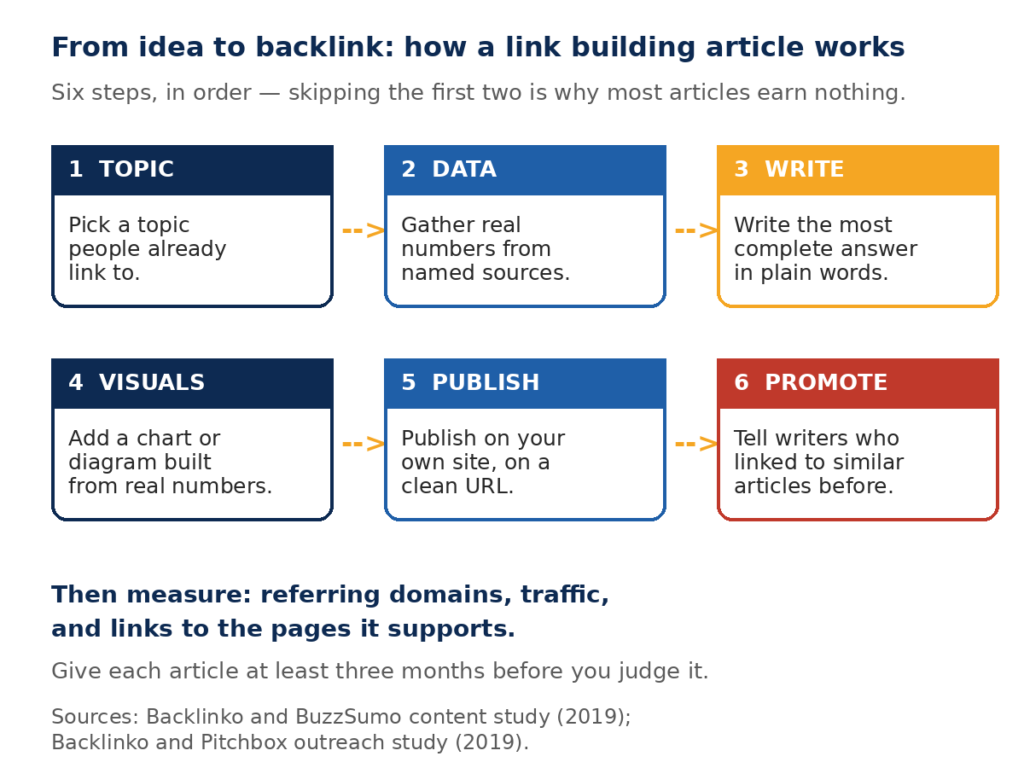
Step 1: Pick a Topic People Already Link To
Start by looking at what already earns links in your niche. Search for your topic, open the top ten results, and check which pages have links pointing to them. If every top result is a list of statistics, your article should probably include statistics. If the top results are step-by-step guides, write a better guide.
Look for gaps, too. A topic where the best page is three years old, thin, or full of broken links is a clear opening. Your article needs to be plainly better than what is already there, or nobody has a reason to switch their link to you.
Step 2: Gather Real Numbers Before You Write
Collect your facts first, from named sources, and keep a note of every link. Government statistics, industry surveys, and studies from known SEO tools are all fair game. Check the date on every figure, and do not use a number you cannot trace back to its source.
If you run a survey or analyse your own data, write down your method in one short paragraph: who was asked, how many, and when. That paragraph is often the reason a journalist trusts your article enough to link to it.
Step 3: Write It Long, Complete, and Plain
Cover the topic properly. Use short paragraphs, clear headings, and plain words. Put the main answer near the top so a reader who only reads the first screen still gets value. Add examples from real businesses, with names, rather than vague claims.
Break the article into sections with descriptive headings, because other writers often link to a specific section. Add a table or a stat highlight where numbers help the reader, and keep sentences short. A reader who has to work hard to understand your article will not link to it.
Step 4: Design Visuals Worth Linking To
Add at least one chart, diagram, or table built from your real numbers, and a featured image that sums up the topic. Give every image descriptive alt text that says what the image shows.
Visuals do two jobs. They help your own readers understand the article, and they give other writers a reason to link to your page rather than to a text-only competitor. A page with clear visuals is easier to recommend.
Step 5: Publish on Your Own Site First
Publish the article on your own website, on a clean URL that matches the topic, with the keyword in the title and the first paragraph. Make sure the page loads fast, works on a phone, and has no broken links or missing images. A page that looks unfinished will not earn links, however good the words are.
Step 6: Promote It With Targeted Outreach
Once the article is live, tell the people most likely to link to it. That means writers who have already linked to similar articles, journalists covering your topic, and site owners with resource pages in your niche. Keep each email short: say what the article covers, name one fact or visual that makes it worth a look, and give the link.
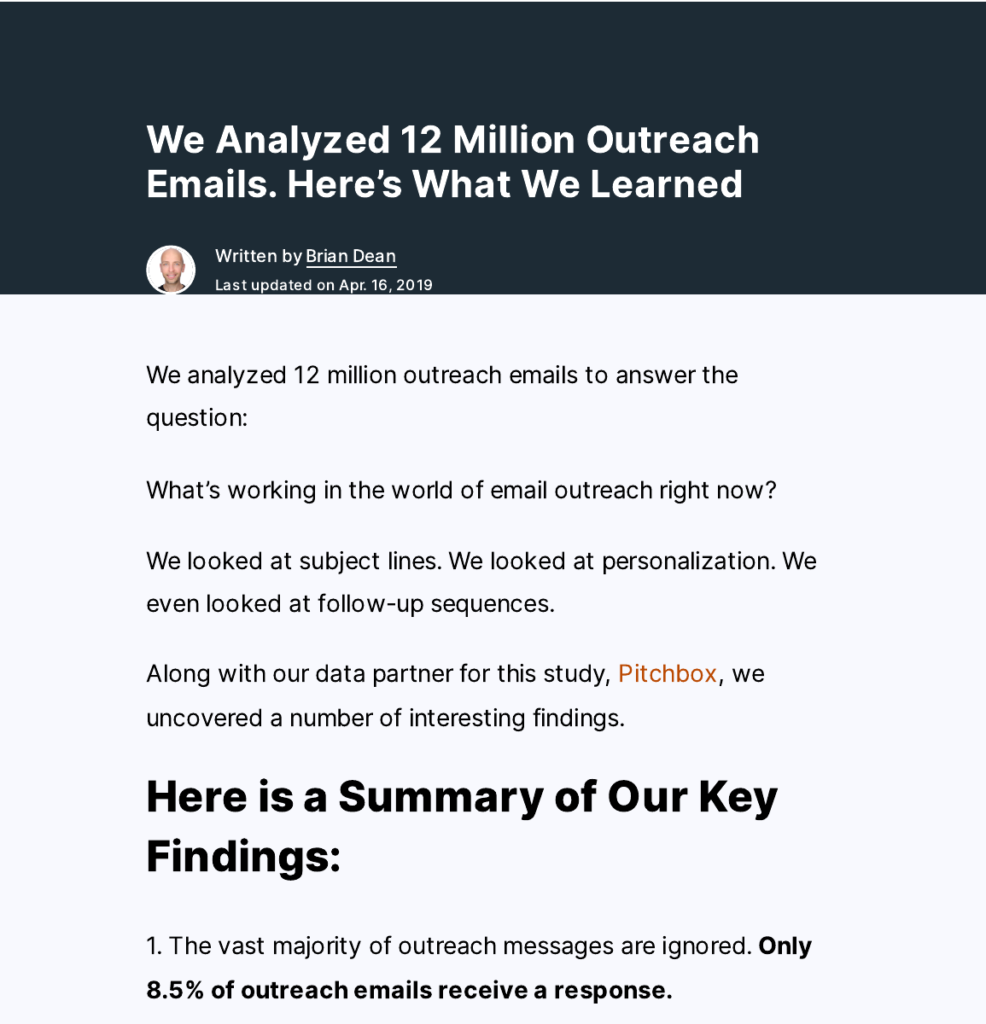
Expect most emails to go unanswered. Backlinko and Pitchbox found that only 8.5% of outreach emails receive any reply, across 12 million emails. That is normal. A short, polite follow-up a week later is worth sending, and a list of 50 well-chosen contacts will do more than 500 cold emails to the wrong people.
Guest Articles vs Articles on Your Own Site
Both approaches earn links, but they suit different goals. The table below sets out the trade-off.
| Article on your own site | Guest article on another site | |
|---|---|---|
| Links earned | Can keep earning links for years | Usually one link, from the host site |
| Control | Full control over the words, links, and updates | The host site controls the page |
| Effort | You write it and promote it yourself | You write it, then pitch it to an editor |
| Best for | Building lasting authority for your own pages | Reaching a new audience and earning a link from a relevant site |
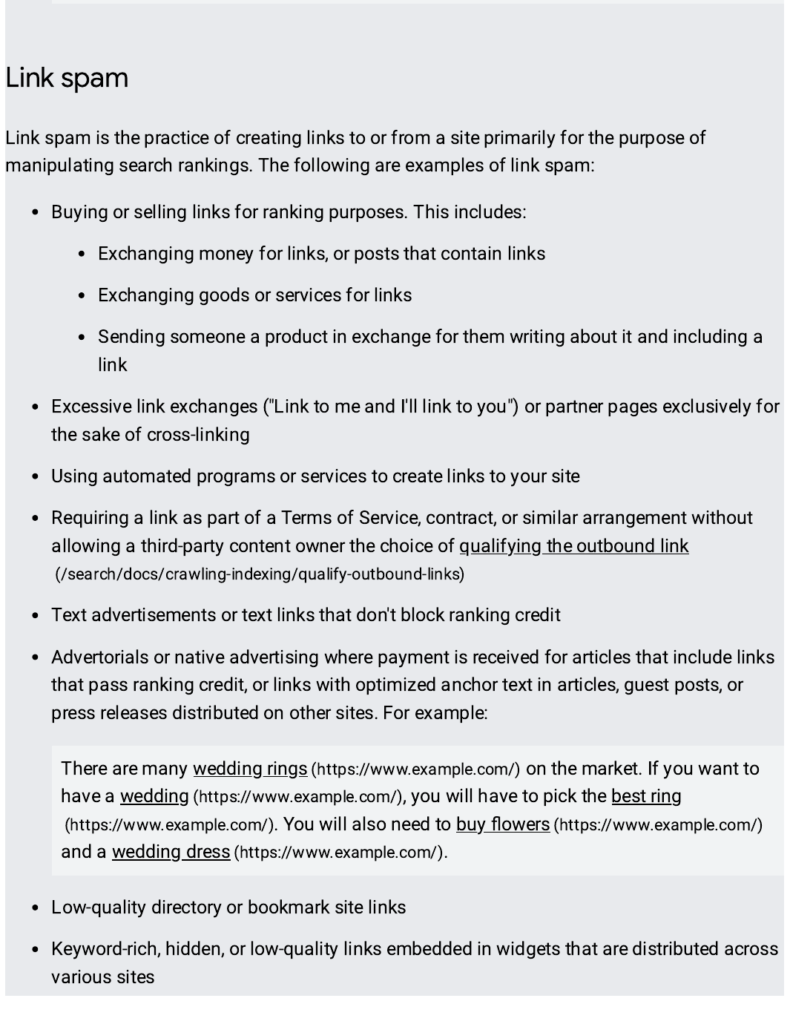
A sensible plan uses both. Publish your best work on your own site, and write guest articles for a small number of relevant sites where your audience already reads. Avoid guest posting at scale for the sake of links alone. Google’s spam policies name articles, guest posts, and press releases distributed on other sites with optimised anchor text as link spam when done at scale, and links built that way can be ignored or, in serious cases, lead to a manual action.
How to Measure Whether Your Articles Are Working
Give each article at least three months before you judge it. Links arrive slowly, and new pages take time to be found.
Check these three things once a month:
- Referring domains. How many different websites link to the article? One link from a real, relevant site is worth more than ten links from low-quality directories. Google Search Console’s Links report shows which sites link to each of your pages.
- Traffic to the article. Is the article bringing in visitors from search? A page that ranks and earns links at the same time is doing its job.
- Links to the pages the article supports. A good link building article should lift the pages it links to internally. Check whether your service or product pages linked from the article are gaining links and traffic too.
If an article earns no links after three months of promotion, look at the article itself before you blame outreach. Is the topic one people link to? Is the data fresh and sourced? Is there a visual worth sharing? Fix the weakest part, update the date, and promote it again.
Frequently Asked Questions
What is a link building article?
A link building article is an article written to earn backlinks from other websites. It gives other writers a reason to link to it, usually because it answers a question well, contains original data, or explains a topic more clearly than competing pages. It can live on your own site or appear as a guest article on another site.
How long should a link building article be?
Long enough to cover the topic properly, which usually means 1,500 to 3,000 words for a guide. Backlinko and BuzzSumo found that content over 3,000 words earned 77.2% more referring-domain links than content under 1,000 words. Length alone does not earn links, though. A short article that answers one question well can earn links, while a long article full of padding will not.
Is it risky to buy backlinks through articles?
Yes. Paying for links inside articles breaks Google’s spam policies, and Google can ignore those links or take manual action against your site. Links that are paid for must carry a sponsored or nofollow attribute, which passes no ranking value. Earn links by publishing articles worth linking to, or hire an agency that does manual outreach to real sites.
Do guest posts still work for link building?
Yes, when they are written for real readers on relevant sites. A thoughtful guest article on a respected site in your niche can earn a good link and bring new readers. Guest posting stops working when it is done at scale, on low-quality sites, with optimised anchor text — Google treats that as link spam. Quality and relevance matter far more than volume.
How many backlinks can one article earn?
There is no fixed number. Most articles earn none at all — 94% of blog posts have zero external links, according to Backlinko and BuzzSumo. A strong article on a popular topic can earn dozens of links over a few years, while a niche guide might earn five good links and still be a success. Judge an article by the quality of the sites linking to it, not the count alone.
How long does it take for an article to earn links?
Expect the first links within one to three months if you promote the article, and steady links over the following year as it starts to rank. Articles rarely earn links in their first week. If an article has earned nothing after three months, revisit the topic, the data, and the outreach list before writing it off.
Final Word
Link building articles work, but only when they are built to be linked to. Pick a topic people already link to, gather real numbers, write the most complete answer you can, add visuals worth sharing, and promote it to the right people. Most articles earn nothing, and the research in this guide shows why: they are written without a link in mind. Write the article other writers wish existed, and the links will follow.
For help putting this into practice, see our manual link building services, where every link is earned through outreach to real sites — no PBNs, no paid links, and no shortcuts.

Abdullah Zulfiqar is Co-founder and Client Success Manager at RankWithLinks, an SEO agency helping businesses grow online. He specializes in client relations and SEO strategy, driving measurable results and maximizing ROI through effective link-building and digital marketing solutions.