
If you have ever read an SEO guide, you have seen the word “backlinks” on almost every page. Yet most guides never stop to explain what a backlink actually is, or why Google cares about it. This guide does exactly that. SEO backlinks explained in plain English: a backlink is a link from one website to another, and search engines treat each one as a small vote of confidence for the page it points to. The more trusted votes a page collects, the more likely Google is to rank it well. That simple idea sits behind a large part of how search works, and it is why link building is a core part of SEO.
What is an SEO backlink?
A backlink is any link on one website that points to a page on a different website. If a food blog links to your recipe page, that is a backlink to your page. If a news site links to your research, that is a backlink too. The link can sit in a paragraph of text, in an image, or in a list of resources. What matters is that it connects two separate sites.
Search engines call these links “backlinks” because they point back to your site from somewhere else. SEOs also call them inbound links or incoming links. The site that links to you is the “referring domain”. If ten pages on the same site link to you, that is ten backlinks but only one referring domain — and, as the research below shows, referring domains are the number that counts most.
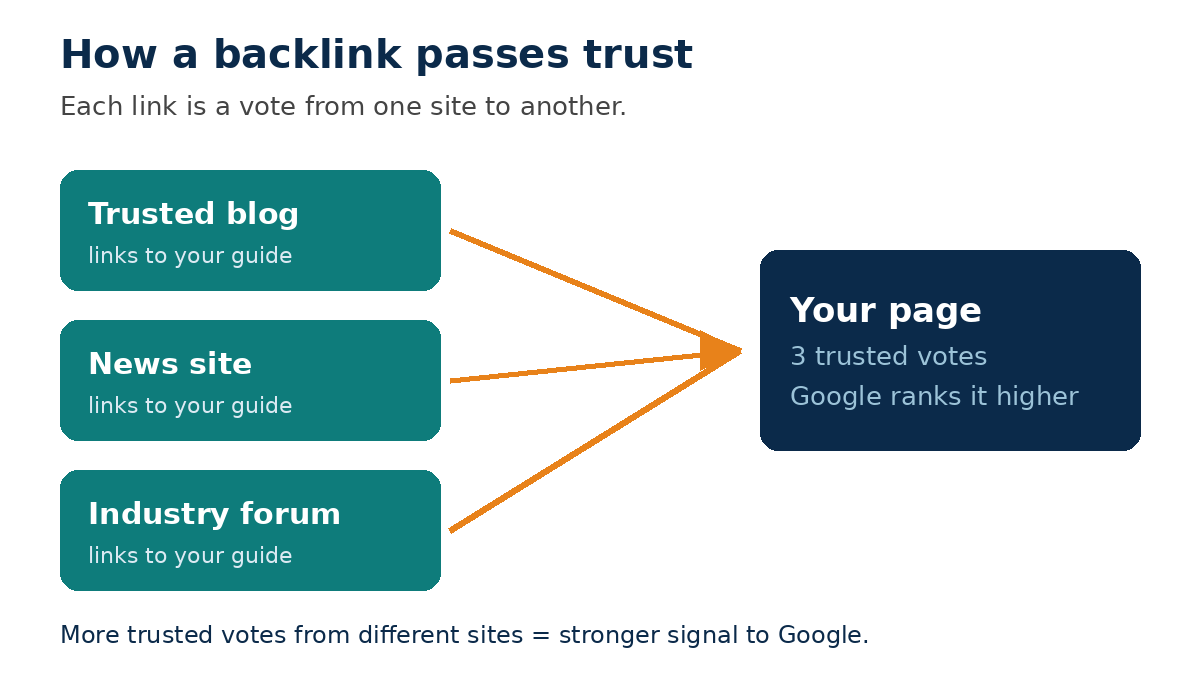
Here is a simple example. Suppose you publish a guide to fixing a leaking tap. A plumbing forum links to your guide in a thread, a DIY blog adds it to a list of useful repair guides, and a local newspaper links to it in an article about home maintenance. Your guide now has three backlinks from three referring domains. Google reads those three links as three separate sites saying your guide is worth reading.
How do backlinks work?
Google has used links as a ranking signal since the beginning. The original idea, called PageRank, treated a link as a vote. A page with many votes from trusted pages was judged more important than a page with none. That idea has changed a lot since 1998, but the core has not: Google still counts links when it decides which pages deserve to rank. Google’s own documentation confirms that link analysis, the modern form of PageRank, remains part of its core ranking systems.
A backlink passes value in three main ways:
- Trust. A link from a respected site in your field tells Google that your page is worth trusting. A link from a well-known industry publication carries far more weight than a link from a brand-new site nobody has heard of.
- Relevance. A link from a page about the same topic as yours counts for more than a link from an unrelated page. A cooking site linking to a recipe makes sense; a cooking site linking to a car insurance page does not, and Google can tell.
- Anchor text. The clickable words of a link, called anchor text, tell Google what the linked page is about. If many sites link to your page with the words “beginner’s guide to composting”, Google gets a clear hint about your page’s topic. Natural anchor text varies — a mix of brand names, plain URLs, and descriptive phrases looks normal, while every link using the same keyword looks forced.
Links can also be marked “nofollow”, which tells search engines not to pass ranking value through that link. Most links in blog comments, forum posts, and paid placements are nofollow. A followed link passes value; a nofollow link normally does not, though it can still send visitors and help Google find your page. Both types have a place in a healthy link profile.
Why backlinks matter for SEO
Backlinks matter because they are one of the few ranking signals that come from outside your own site. You can control your content, your page speed, and your titles. You cannot control who links to you — which is exactly why Google values those links. They are hard to fake at scale, and they reflect what other people think of your content.
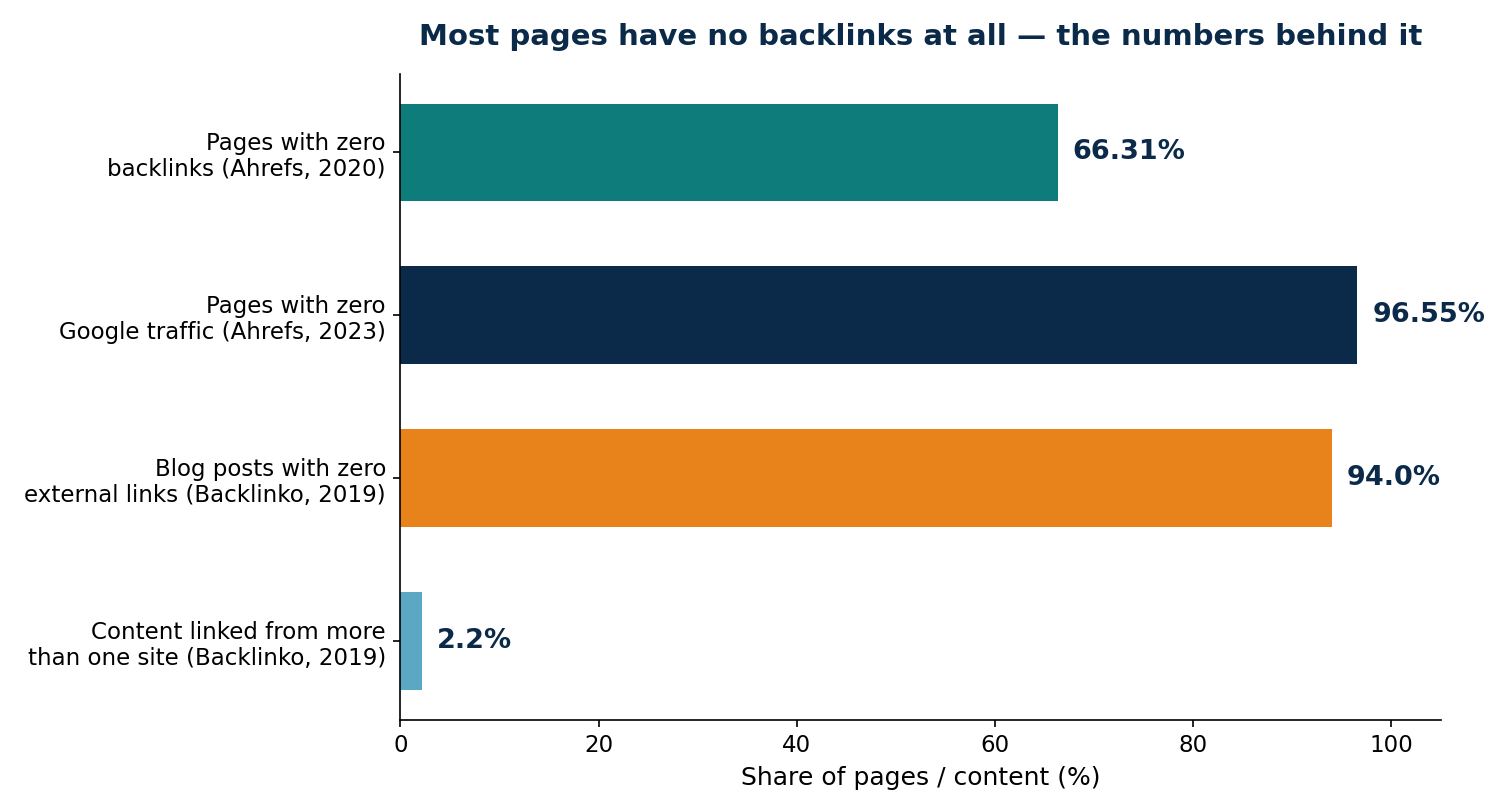
The numbers behind this are stark. Ahrefs studied more than a billion pages and found that 66.31% of them have no backlinks at all. In a later study of around 14 billion pages, Ahrefs found that 96.55% of pages get zero traffic from Google. Pages with no referring domains almost never earn meaningful traffic: of roughly 20 million pages with no referring domains in the Ahrefs index, only 2,997 get more than 1,000 search visits a month — about one page in every 6,671.
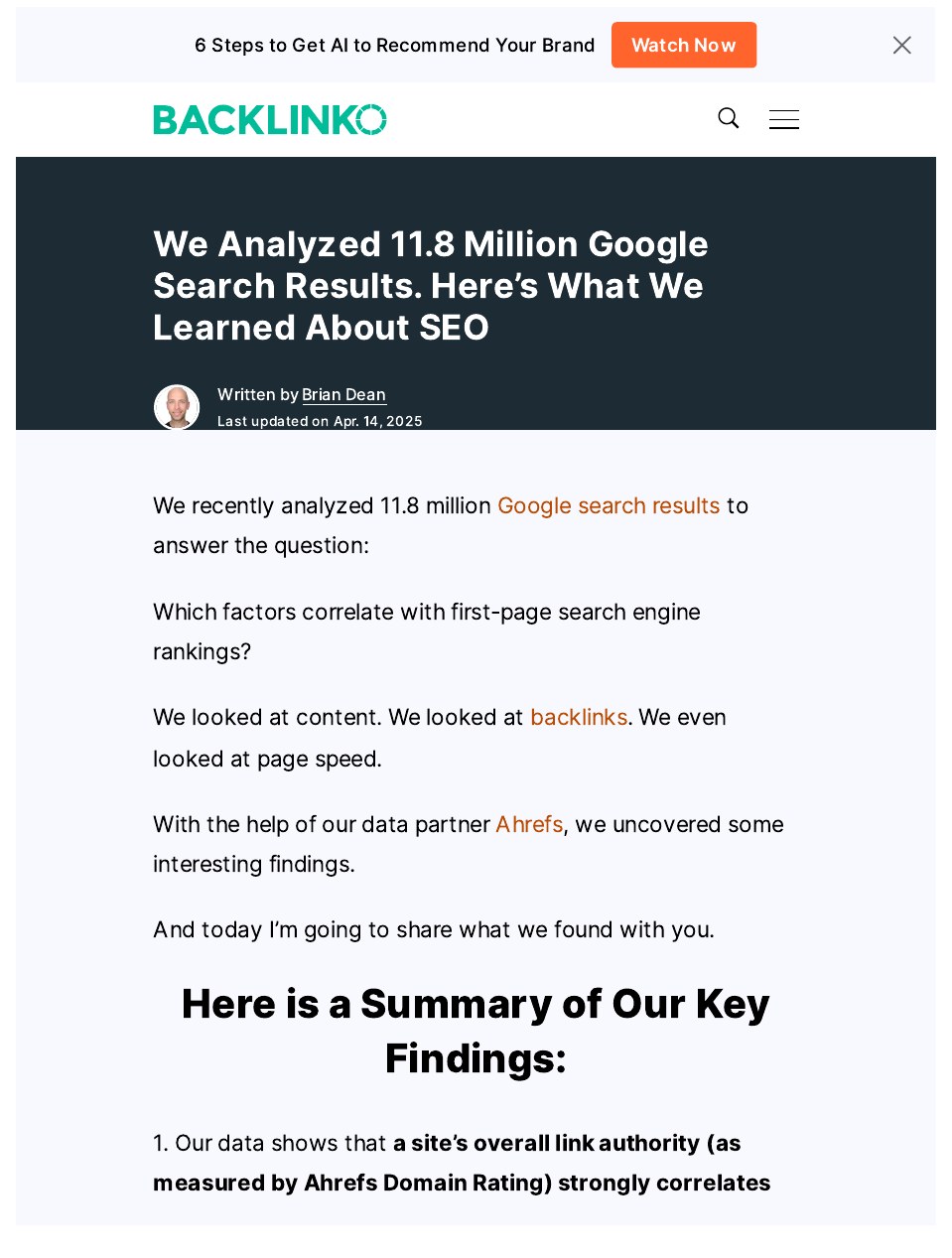
The pattern holds at the top of the results too. Backlinko’s analysis of 11.8 million Google search results found that the page in first place has, on average, 3.8 times more backlinks than the pages in positions two to ten, and about three times more referring domains. Correlation is not proof that the links caused the ranking — strong pages tend to attract both links and rankings — but the link between the two is consistent across every large study.
| What the research found | Source | Year |
|---|---|---|
| 66.31% of pages have zero backlinks (study of over 1 billion pages) | Ahrefs | 2020 |
| 96.55% of pages get zero traffic from Google (study of around 14 billion pages) | Ahrefs | 2023 |
| Only 1 in 6,671 pages with no referring domains gets over 1,000 monthly visits | Ahrefs | 2023 |
| The #1 Google result has 3.8x more backlinks than positions 2–10 | Backlinko, 11.8M results | 2020 |
| Referring domains correlate with rankings at 0.255 (backlinks 0.248) across 1 million SERPs | Ahrefs | 2025 |
| 94% of 912 million blog posts got zero external links | Backlinko / BuzzSumo | 2019 |
One honest note: links are not the whole story. Google’s Gary Illyes said in 2023 that links are no longer among the top three ranking factors. Content quality, relevance to the search, and user experience all matter too. But “not top three” is not the same as “does not matter”. A page with strong content and no links still struggles to rank for anything competitive, as the Ahrefs numbers above show.
What makes a good backlink?
Not all backlinks are equal. One link from a trusted, relevant site can be worth more than a hundred links from low-quality directories. Here is how to tell them apart.
| Good backlink | Bad backlink |
|---|---|
| From a real site with its own traffic and readers | From a site built only to sell links |
| On a page about a related topic | On a page about an unrelated topic |
| Placed inside the main content, by choice | Hidden in a footer, sidebar, or comment |
| Natural anchor text that fits the sentence | Exact-match keyword anchor text repeated everywhere |
| From a site that links out rarely and carefully | From a site that links to hundreds of unrelated pages |
| Earned because the content is useful | Paid for, swapped, or placed by a link scheme |
A good backlink looks like a genuine recommendation. Ask yourself: would this site link to my page if search engines did not exist? If the answer is yes, the link is probably a good one. If the link only exists because someone paid for it or because a tool placed it, it is a risk, not an asset.
The main types of backlinks
Backlinks come in many forms. These are the ones you will meet most often:
- Editorial links. A writer links to your page because it adds something to their article. These are the most valuable links, because they are given freely and usually come from real, trusted sites.
- Guest post links. You write an article for another site and it includes a link back to yours. Done well, on a relevant site, this is a normal and accepted way to earn links. Done badly, on low-quality sites that exist only to host guest posts, it is a link scheme.
- Resource page links. A site keeps a list of useful resources on a topic, and your guide is added to it. These links are common in education, health, and local business niches.
- Directory and citation links. A business listing in a directory, such as a local business listing, links to your site. These are useful for local SEO, but they carry little weight on their own.
- Broken link replacements. You find a dead link on another site and suggest your page as a replacement. The site owner gets a fixed page, and you get a link.
- Brand mentions turned into links. A site mentions your business by name but does not link. A short, polite email often turns the mention into a link.
Most strong link profiles contain a mix of these. A profile made of only one type — for example, only directory links — looks unnatural and earns little.
How to check your backlinks
Before you try to earn new links, find out what you already have. There are two free ways to do it.
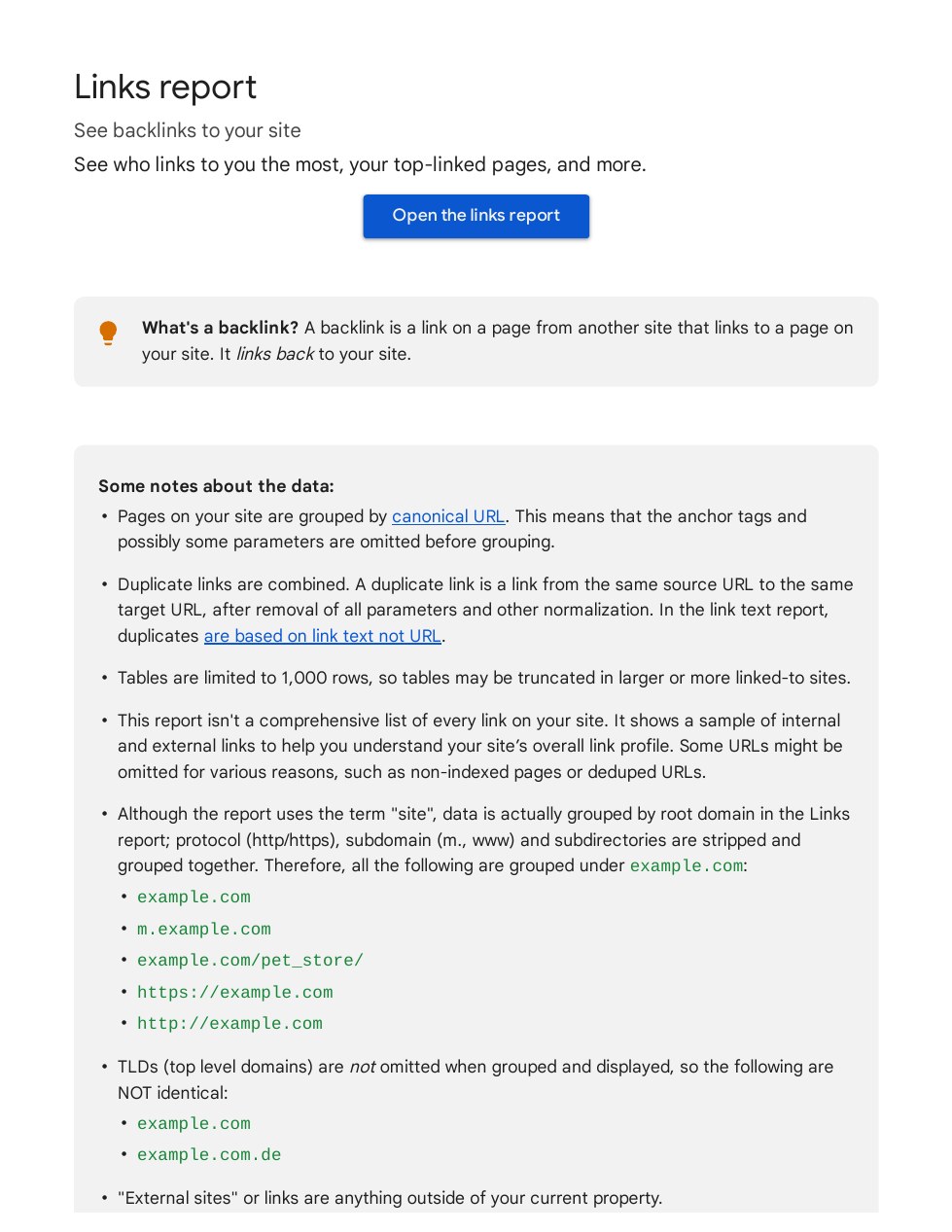
Step 1: Use Google Search Console. Open Search Console, go to Links in the left menu, and you will see your top linked pages, the sites linking to you most, and the anchor text they use. It is free, it comes from Google itself, and it is the best place to start. The screenshot below shows the Links report help page, so you know where to look.
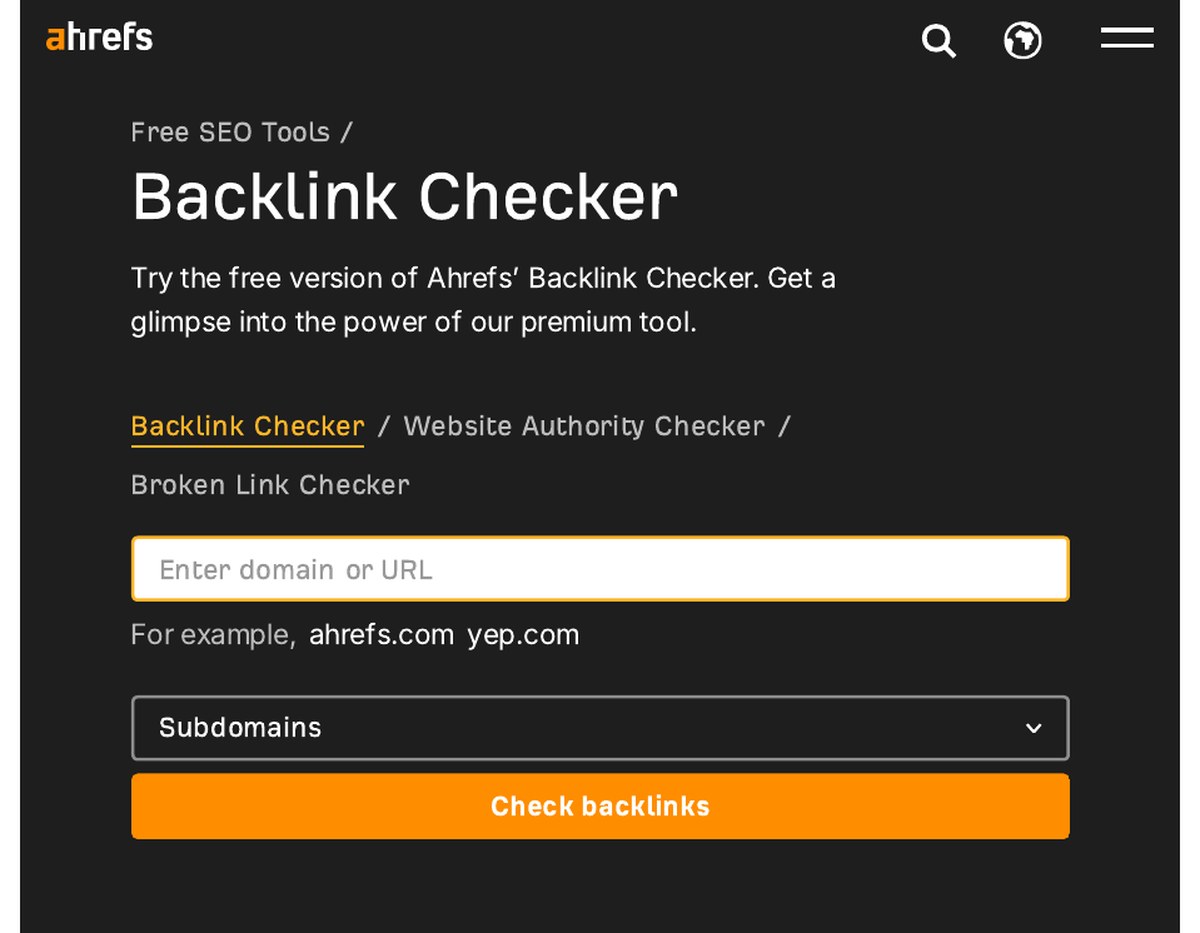
Step 2: Use a free backlink checker. Ahrefs offers a free backlink checker that shows the top 100 backlinks to any page, with the referring domain and Domain Rating for each. Paste your URL, and you get a quick picture of your link profile without paying for a tool.
Step 3: Check the quality, not just the count. A hundred links from one low-quality site are worth less than five links from five respected sites in your field. Look at the referring domains, check whether the linking pages are about your topic, and watch for links from sites you have never heard of. If you find links from spammy sites, note them down — you may need to disavow them later, which we cover in our guide to disavowing backlinks.
Step 4: Repeat the check every month. Link profiles change. Sites close, pages are deleted, and links disappear. A monthly check takes ten minutes and shows whether your link building is working.
How to earn backlinks the right way
There is no shortcut to good backlinks, but there is a clear method. These five steps are the ones that work again and again:
- Publish something worth linking to. Original research, a clear step-by-step guide, a free tool, or a useful list will earn links on its own. Backlinko and BuzzSumo found that 94% of blog posts get zero external links — and that content over 3,000 words earned 77.2% more referring domains than content under 1,000 words. Depth and usefulness are what get linked.
- Find the sites that already link to similar pages. Use a backlink checker to see who links to the top-ranking pages for your topic. Those sites have already shown they link to content like yours.
- Reach out with a real reason. Contact the site owner, mention their page by name, and explain why your page would help their readers. Short, specific, and honest beats long and flattering every time.
- Offer something useful, not just a link request. Suggest your page as a replacement for a broken link, offer a quote for their article, or point out a gap their page does not cover. People link to pages that help them.
- Be patient and keep going. One outreach email rarely earns a link. Most campaigns need dozens of emails to earn a handful of links, and links take weeks to show up in rankings. Steady work over months is what builds a strong profile.
If you would rather have a team do this for you, our link building services use manual outreach only — no link farms, no private blog networks, and no paid placements. Every link is earned from a real site.
Mistakes that hurt your backlink profile
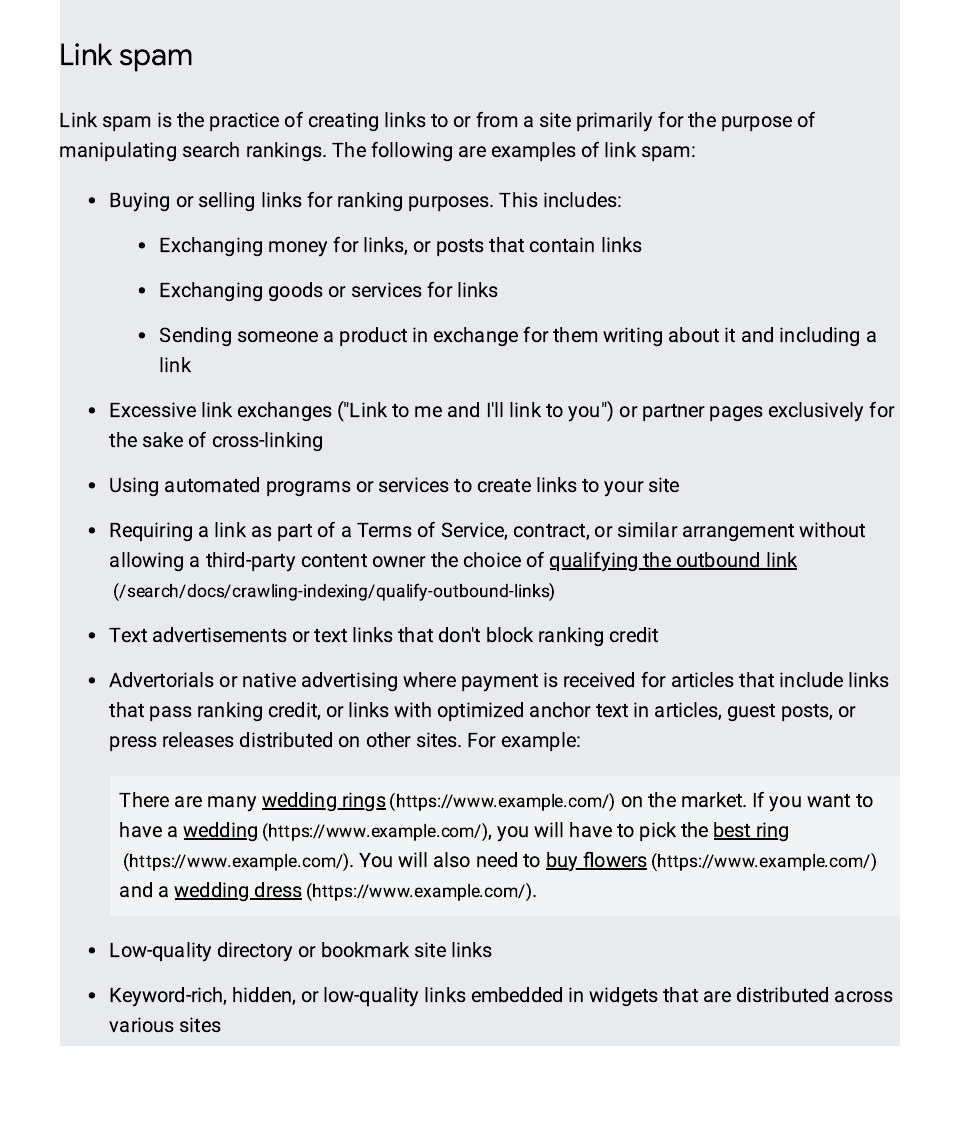
- Chasing quantity over quality. A thousand links from low-quality sites can do more harm than good. Google’s spam policies are clear that buying, selling, or exchanging links to manipulate rankings is link spam, and sites caught doing it can lose rankings.
- Using the same anchor text everywhere. If every link to your page says the exact same keyword phrase, it looks arranged. Natural link profiles have varied anchor text.
- Ignoring toxic links. Links from hacked sites, link farms, and spam networks can drag your site down. Check your profile regularly and disavow the worst ones.
- Linking to yourself too much. Internal links are useful, but stuffing your own pages with keyword-rich internal links is not a substitute for real backlinks.
- Expecting instant results. A new link can take weeks to be found and counted. Judging a campaign after a week is like judging a garden the day after planting.
What the research says about ranking pages
The final piece of the picture comes from Backlinko’s ranking study. The pages that win the top spots are not just the ones with the most links — they are the pages with links from many different sites, backed by content that deserves them. That is the whole lesson of this guide in one sentence: earn links from many different, trusted, relevant sites by publishing pages worth linking to.
Frequently asked questions
What is an SEO backlink in simple words?
An SEO backlink is a link from another website to your website. Search engines treat it as a vote of confidence: the linking site is saying your page is useful or trustworthy. Pages with more backlinks from trusted, relevant sites tend to rank higher in Google than similar pages with few or no backlinks.
Do backlinks still matter in 2026?
Yes, but they are one signal among many. Google has said links are no longer in its top three ranking factors, yet every large study still finds a strong link between backlinks and rankings. Content quality and relevance matter more than ever, but a page with great content and no links still struggles to rank for competitive keywords.
How many backlinks do I need to rank?
There is no fixed number. It depends on how competitive your keyword is and how many links the pages already ranking for it have. As a rule, count referring domains, not raw backlinks: ten links from ten different sites are worth far more than ten links from one site. Check the top ten pages for your keyword and aim to match their referring domain counts over time.
Are nofollow backlinks worth anything?
Yes, in smaller ways. A nofollow link does not normally pass ranking value, but it can send visitors, help Google find your page, and add variety to your link profile. Links from big sites such as Wikipedia and most news sites are nofollow, yet they are still worth having. A natural profile contains a mix of followed and nofollow links.
Can backlinks hurt my website?
Yes, if they come from the wrong places. Links from link farms, hacked sites, spam networks, or sites that exist only to sell links can trigger a penalty or a manual action from Google. If you find bad links pointing at your site, you can ask the site owner to remove them or use Google’s disavow tool to tell Google to ignore them.
Should I buy backlinks?
No. Google’s spam policies class buying or selling links that pass ranking value as link spam, and sites caught doing it can lose rankings or receive a manual action. Paid links are also easy to spot: they often sit on unrelated pages, use exact-match anchor text, and come from sites with no real readers. Earn links by publishing useful content and doing honest outreach instead — it is slower, but it lasts.
Sources
- Ahrefs, “96.55% of Content Gets No Traffic From Google” (search traffic study, 2023) — https://ahrefs.com/blog/search-traffic-study/
- Backlinko, “We Analyzed 11.8 Million Google Search Results” — https://backlinko.com/search-engine-ranking
- Backlinko / BuzzSumo, “We Analyzed 912 Million Blog Posts” (content study, 2019) — https://backlinko.com/content-study
- Ahrefs, “Google Says ‘Links Matter Less’ — We Looked at 1,000,000 SERPs” (January 2025) — figures verified via https://www.rank.ai/statistics/backlink-statistics
- Google Search Central, Spam policies (link spam) — https://developers.google.com/search/docs/essentials/spam-policies

Abdullah Zulfiqar is Co-founder and Client Success Manager at RankWithLinks, an SEO agency helping businesses grow online. He specializes in client relations and SEO strategy, driving measurable results and maximizing ROI through effective link-building and digital marketing solutions.