

If you search for how to get high PR backlinks, you are really asking one question: how do I earn links from websites that Google trusts? The old public PageRank score is long gone, but the principle behind it is alive and well. Links from respected, relevant websites still push pages up the rankings, and the data proves it.
The catch is that the game has changed. Chasing a single public score no longer works. Today, quality, relevance, and real editorial judgement decide which links move the needle. This guide walks you through seven honest methods that still earn high-authority backlinks in 2026, backed by current research.
What “High PR Backlinks” Mean Today
PageRank was the score Google once showed publicly, from 0 to 10, for every page on the web. It turned into a currency: site owners bought and sold “high PR links” the way traders buy stocks. The problem was not the maths; it was showing the maths. Google stopped updating the public score, and in March 2016 it removed the toolbar display entirely. There is no public PageRank score to check any more.
What Google did not do is stop caring about links. PageRank still runs inside Google as one of hundreds of ranking signals — leaked internal documents in 2024 even referenced several PageRank versions still in use. So when people talk about “high PR backlinks” today, they really mean links from pages and sites that carry strong internal authority: real traffic, real readers, and genuine topical relevance.
Third-party scores such as Domain Rating (DR) or Domain Authority (DA) try to estimate that authority. They are useful as a starting point, but they are not Google’s numbers. A 2025 study by seomontreal.io of 18,000 backlinks across 320 niches found that topical relevance of the linking page was the strongest predictor of ranking gains — stronger than any traditional authority metric. seomontreal.io’s 2025 backlink quality study In other words: a link from a relevant, trusted page beats a link from a random high-DR page.
What the Research Says About Backlink Quality
Before we get to the methods, here is what recent research tells us about how links actually behave:
| Finding | Source |
|---|---|
| The #1 Google result has on average 3.8x more backlinks than results #2–10 | Backlinko study of 11.8M results |
| Referring-domain count has a 0.255 rank correlation (backlink count: 0.248) | Ahrefs, January 2025 analysis of 1M US keywords |
| 96.55% of roughly 14 billion indexed pages get zero estimated organic traffic from Google | Ahrefs, 2023 analysis |
| Backlinks fell from 15% to 13% of Google’s algorithm weight between 2024 and 2025 | First Page Sage |
| 93.8% of link builders say quality matters more than quantity | Authority Hacker survey of 755 link builders |
| Topical relevance of the linking page was the strongest predictor of ranking improvement | seomontreal.io, 18,000-backlink study |
(Stats compiled from SERPreach’s backlink research roundup and SEOlutions’ link-building statistics)
The picture is consistent. Links still matter — but the bar for a “quality link” keeps rising. Google’s own Gary Illyes said at Pubcon 2023 that links have not been in the top three ranking factors “for some time”, and in April 2024 added: “We’ve made links less important. We need very few links to rank pages” — CJM Business Consulting’s overview of Google’s statements. Ten relevant, editorially earned links will beat a thousand low-quality ones. So the smart play is to earn fewer, better links.
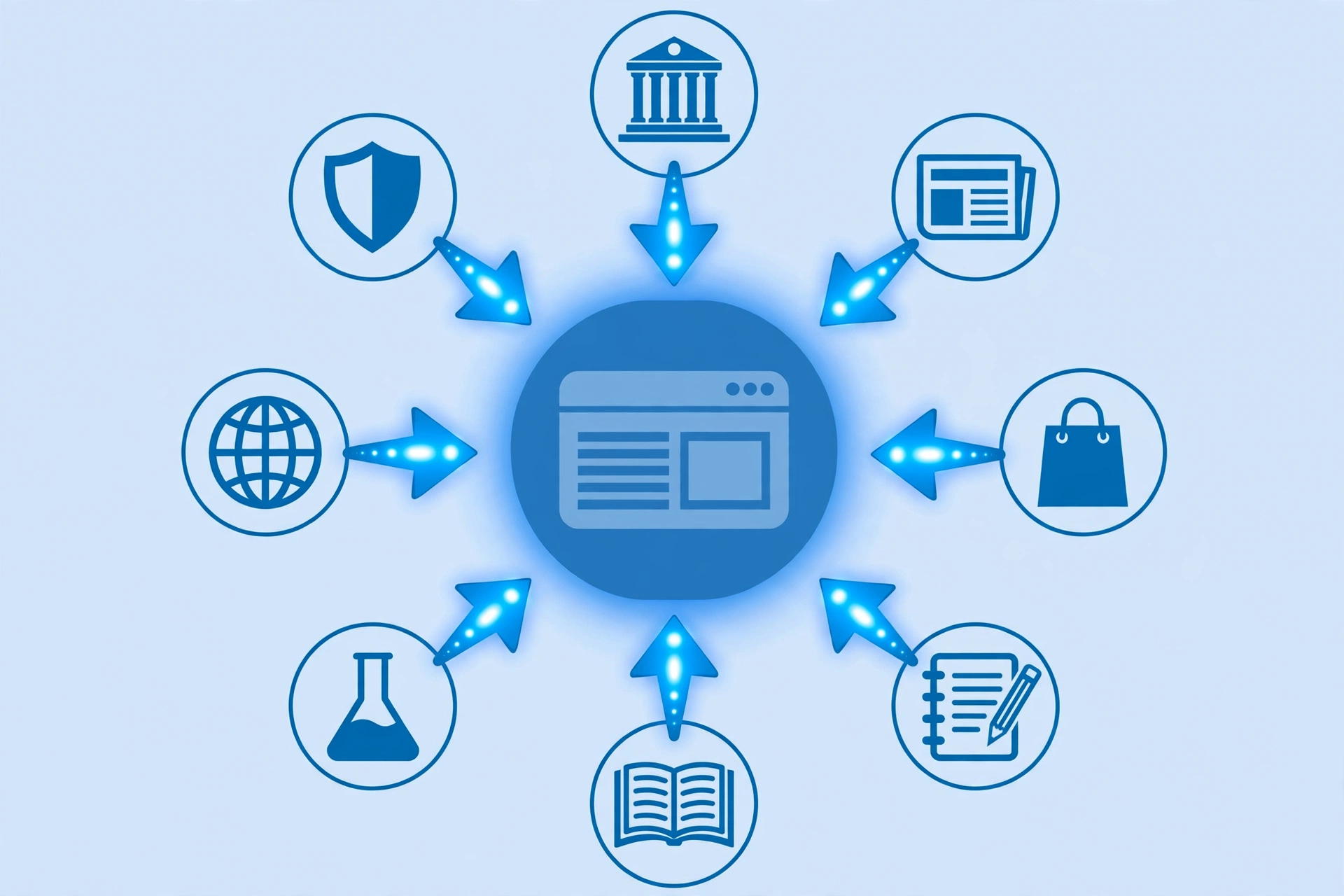
7 Ways to Earn High-Authority Backlinks
1. Guest posting on real, relevant sites
Guest posting still works — if the site is real. Target blogs in your niche that publish regularly, have genuine readership, and rank for their own keywords. Write the best article on that site’s blog that month, and place your link naturally where it genuinely helps the reader. Avoid sites that exist only to sell guest posts; Google treats those as link schemes.
2. Digital PR and journalist requests
Journalists need expert quotes every day. Services that connect experts with reporters let you answer real questions and earn links from news sites with enormous authority. Keep a short expert bio ready, answer fast, and give a genuinely useful quote rather than a sales pitch. One quote on a national news site can outweigh months of directory links.
3. Broken link building
Find popular pages in your niche that link out to resources which no longer exist. Then create a better, working replacement on your own site and tell the site owner about the dead link. You are doing them a favour — a broken link hurts their page — and the natural fix is to link to your replacement. It is manual work, but the success rate is high because you solve a real problem.
4. Publish original data or a small study
The links people chase hardest are the ones nobody has to be asked for. Original data earns them: a survey of your industry, an analysis of real numbers, or even a well-organised collection of statistics. Other writers need sources to cite, and a page full of verified, clearly presented data becomes one. This is exactly why research roundups attract links for years after publication.
5. Resource page link building
Many established sites keep “resources” or “recommended tools” pages that link out to the best content in a niche. Find the ones relevant to your topic, then check honestly whether your page belongs there. If it is genuinely one of the best resources on the subject, a short, polite email to the page owner often gets it added. If it is not good enough yet, improve the page first.
6. Turn unlinked brand mentions into links
Search for mentions of your brand, product, or unique data that do not link to you. These are the easiest links you will ever earn: the writer already knows you and chose to mention you. A friendly note saying “thanks for the mention — would you mind linking so readers can find us?” converts at a very high rate.
7. Manual outreach link building
All of the above share one thing: a human writes a personal, relevant message to a real site owner. That is what manual outreach link building is, and it is the one method no algorithm update has ever killed. It is slow and it cannot be faked at scale — which is exactly why Google rewards the links it earns. If your team does not have the hours for it, this is the part of SEO worth handing to specialists. Our professional link building services are built entirely on manual outreach: real sites, real editors, zero PBNs. manual outreach link building services

How to Judge a Backlink’s True Value
Before you chase any link, run it through this quick check. A link is worth pursuing when most of these are true:
- The linking site gets real organic traffic of its own
- The page covers a topic closely related to yours
- Your link sits inside the article text, not a footer or sidebar
- A real editor placed it because your page genuinely adds value
- The site does not openly sell links to anyone who pays
One link that ticks all five boxes will do more for you than fifty that tick one.
What to Avoid
Google’s spam policies have a whole section on link spam, and its AI-based SpamBrain system exists specifically to neutralise unnatural links. Stay clear of private blog networks (PBNs), link farms, automated link-building tools, and any service promising “1,000 backlinks for £50”. These links either get ignored or earn you a manual penalty — and recovering from one costs far more than the links ever did.
Frequently Asked Questions
Is PageRank still a ranking factor?
Yes, but not in the form most people imagine. Google removed the public PageRank score in 2016, so you can no longer look up a page’s PR. Internally, though, PageRank-style signals are still part of Google’s ranking systems — leaked documents from 2024 referenced several PageRank versions still in use. Wikipedia’s PageRank history The practical takeaway: stop chasing a number you cannot see, and chase the things it measured — links from trusted, relevant pages.
How many backlinks do I need to rank?
There is no fixed number. It depends on the keyword, the competition, and your content. Ahrefs’ 2025 analysis found only a modest 0.255 correlation between referring domains and rankings across a million high-volume keywords, which tells you links are one factor among many. For low-competition long-tail keywords, a handful of strong, relevant links plus good content can be enough. For competitive terms, you will need a sustained campaign.
Do nofollow links help SEO?
More than they used to. Since 2019, Google treats nofollow as a “hint” rather than a strict directive, and it may consider such links for ranking depending on relevance and context. Nofollow links from big news sites and forums also drive real referral traffic and brand visibility, which matters in its own right. Do not refuse a nofollow link from a great site.
How long does it take for backlinks to affect rankings?
Usually weeks to a few months. Google has to discover the linking page, crawl it, and recalculate. Fresh links on pages Google crawls often can show movement within a couple of weeks; links on rarely crawled pages take longer. This is normal — link building is a compounding strategy, not a switch you flip.
Is it safe to buy backlinks?
No. Buying links that pass ranking value violates Google’s spam policies, and Google actively targets link-buying schemes — its March 2024 core update specifically cracked down on scaled link manipulation. Sellers can also disappear, leaving you with paid links from dead or penalised sites. The honest answer: invest that budget in content and outreach that earns links instead. It is slower, but the links stay.

Abdullah Zulfiqar is Co-founder and Client Success Manager at RankWithLinks, an SEO agency helping businesses grow online. He specializes in client relations and SEO strategy, driving measurable results and maximizing ROI through effective link-building and digital marketing solutions.