
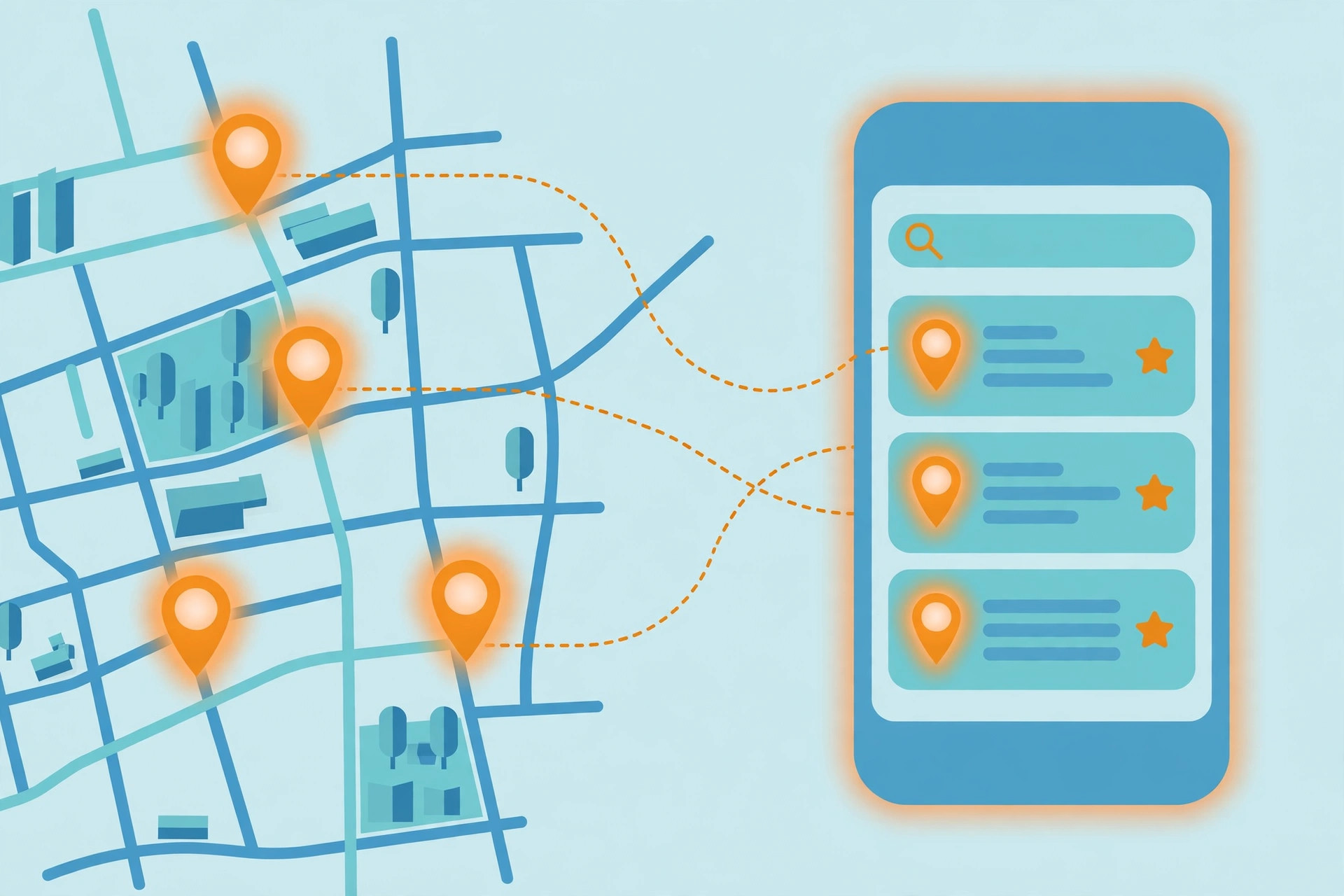
If you run a business that serves customers in a specific area, learning how to do local SEO is one of the smartest marketing moves you can make. Local SEO means optimising your online presence so your business shows up when nearby customers search for what you offer — like “plumber near me” or “coffee shop in Manchester”. This guide walks you through the six steps in plain language, with real data at every stage.
It matters because local searches are full of people ready to buy: Google’s local search research found that 76% of people who run a local search on their smartphone visit a related business within 24 hours, and 28% of those searches end in a purchase (Google Local Search Study, 2025).
Step 1: Claim and optimise your Google Business Profile
Your Google Business Profile (GBP) is the free listing that appears on Google Search and Google Maps when people search for your business or services. For local searches, it is the single most important asset you own — Google’s primary ranking factor for the local map pack is your primary GBP category (Wisernotify’s 2026 Google Business Profile statistics compilation).
Here is what to do:
- Claim your profile at business.google.com and verify your business.
- Pick the right primary category — this has the biggest effect on which searches you appear for.
- Fill in everything: opening hours, services, photos, products, and a clear business description with local keywords.
- Add new photos regularly — profiles with photos get noticeably more engagement than bare ones.
- Post updates using the Posts feature for offers, news, and events.
Google reports that customers are 2.7 times more likely to consider a business reputable if they find a complete Google Business Profile on Google Search and Maps (Google Business Profile Help). A half-finished profile costs you trust before the customer even visits your site.
Step 2: Keep your business details consistent everywhere
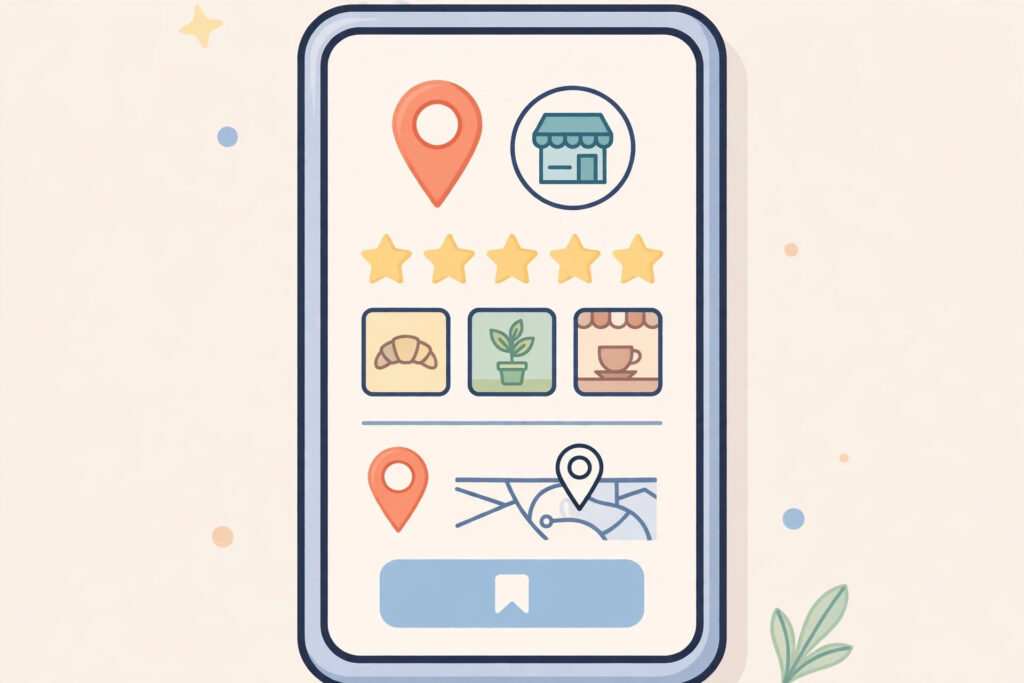
Your business name, address, and phone number (known as NAP) must be exactly the same everywhere they appear online: your website, your Google profile, directories like Yelp and Bing Places, and any local listings. Even small differences — “St.” vs “Street”, or a different phone format — can confuse search engines and cost you rankings.
Research compiled by Visionary Marketing in 2026 found that businesses with consistent NAP details across 50+ directories rank on average 2.4 positions higher — and 64% of small businesses have at least one inconsistency somewhere. Fixing your listings alone can move you ahead of most competitors.
Check your listings, fix every mismatch, and update them whenever you move or change your number.
Step 3: Collect more customer reviews
Reviews are one of the strongest local ranking signals, and they drive clicks directly. According to BrightLocal’s 2026 Local Consumer Review Survey, 97% of consumers read reviews online for local businesses.
More importantly, reviews influence where you rank: businesses in Google’s local 3-pack — the top three map results — receive 126% more traffic and 93% more actions (calls, website clicks, direction requests) than businesses ranked in positions 4 to 10, based on the 2023 SOCi Consumer Behavior Index. Reviews are a major part of what gets you into that top three.
How to get more reviews without breaking any rules:
- Ask every happy customer to leave a Google review, and make it easy with a direct review link or a QR code at your counter.
- Reply to every review, good or bad — Google notices, and so do future customers.
- Never pay for reviews or post fake ones. Google removes millions of fake profiles and reviews, and getting caught destroys trust.

Step 4: Add local keywords to your website
Your website needs to tell Google clearly where you operate and what you do. That means using local keywords — the phrases your customers actually search — in the right places:
- Title tags and headings: “Emergency Plumber in Leeds | Fast Call-Outs” beats “Our Services”.
- Homepage copy: mention your city and the areas you serve naturally in the text.
- Location pages: if you serve several towns, give each one its own page with genuinely useful local content — not the same page with the town name swapped.
- Contact page: show your full address, phone number, opening hours, and an embedded map.
- Blog: publish local content such as area guides, local case studies, or answers to questions your customers ask.
Write for humans first; Google follows. Repeating “plumber Leeds” twenty times on a page is keyword stuffing and hurts you.
Step 5: Build local links and citations
Links from other local websites tell Google your business is a real, trusted part of the community. For local SEO, these do not need to be national newspaper links — relevant local ones work best:
- Your local Chamber of Commerce and business associations.
- Local news sites and community blogs.
- Sponsorships of local sports teams, events, or charities (these often earn a link on the organiser’s site).
- Local directories and industry listings — make sure each one uses your exact NAP details.
- Supplier and partner websites.
This is manual outreach: real relationships, real links, zero shortcuts — the only approach that holds up when Google updates its algorithms.
Step 6: Make your website fast and mobile-friendly
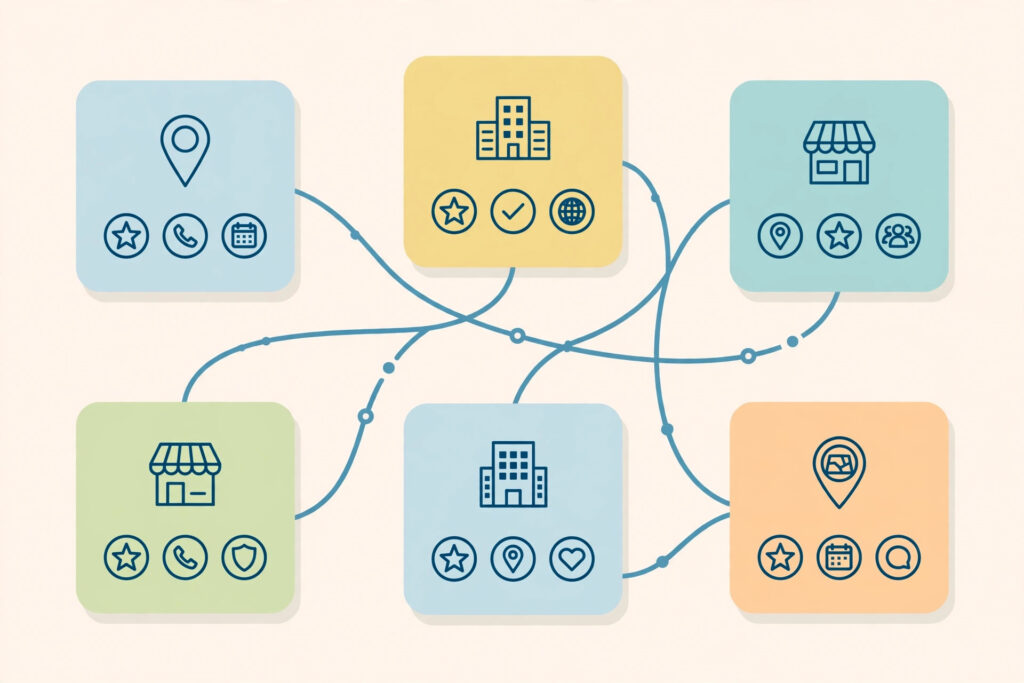
Local search is overwhelmingly a mobile activity — 73% of local searches start on a mobile device (BrightLocal Consumer Search Behavior, 2026). If your site is slow, hard to read on a phone, or your phone number is not tap-to-call, you are losing the exact customers local SEO is meant to win.
- Your site should load in under 3 seconds on a phone.
- Text must be readable without zooming; buttons big enough to tap.
- Your phone number and address should be easy to find on every page.
- Add LocalBusiness schema markup so Google can read your business details directly — this kind of structured data has been shown to lift click-through rates on local listings.
Local SEO by the numbers
| Fact | Source |
|---|---|
| 46% of all Google searches have local intent | Google, via BrightLocal 2026 statistics |
| 76% of smartphone local searches lead to a store visit within 24 hours | Google Local Search Study, 2025 |
| 28% of local searches result in a purchase | Google Local Search Study, 2025 |
| Customers are 2.7x more likely to trust a business with a complete Google Business Profile | Google Business Profile Help |
| Local 3-pack businesses get 126% more traffic and 93% more actions than positions 4–10 | SOCi Consumer Behavior Index, 2023 |
| 97% of consumers read online reviews for local businesses | BrightLocal Local Consumer Review Survey, 2026 |
| 73% of local searches start on a mobile device | BrightLocal Consumer Search Behavior, 2026 |
Sources: BrightLocal’s 2026 local SEO statistics, WiserReview’s 2026 local SEO statistics compilation.
Common local SEO mistakes to avoid
- Ignoring your Google Business Profile after claiming it — outdated hours and unanswered reviews send customers (and Google) the wrong signal.
- Inconsistent NAP details across directories.
- One generic page for every location — thin, duplicated location pages rank poorly and can look spammy.
- Ignoring negative reviews — a calm, professional reply does more for your reputation than the review took away.
- Expecting overnight results — local SEO typically takes 3–6 months to show its full effect. It compounds.
Final word
Local SEO comes down to six habits: a complete Google Business Profile, consistent business details, genuine reviews, local keywords on your site, real local links, and a fast mobile website. None of it is complicated — but it takes consistent effort.
If you would rather have specialists handle it, our local SEO services cover profile optimisation, citations, reviews strategy, and local link building for UK and international businesses.
FAQ
How long does local SEO take to work?
Most businesses see early movement within 4–8 weeks — more profile views, more calls — but meaningful ranking changes usually take 3–6 months. Local SEO compounds: reviews build, citations accumulate, and Google’s trust in your listing grows over time. It is a steady channel, not a quick fix, and once earned, the visibility tends to last.
Do I need a website to do local SEO?
A website helps a lot, but you can start without one. A claimed and fully optimised Google Business Profile alone can get you appearing in local map results. That said, a simple website with your services, local keywords, and contact details gives Google far more to work with and converts more of the clicks you earn.
How much does local SEO cost?
Doing it yourself costs nothing but time — a Google Business Profile is free. If you hire an agency, typical monthly retainers for small businesses range from a few hundred to a few thousand pounds depending on competition in your area. The return is strong: local searches convert at high rates because the searcher is usually ready to buy.
Should I buy backlinks to rank locally?
No — and be careful here. Paying for links violates Google’s guidelines, and paid links are often low quality, irrelevant, or from link networks Google actively penalises. For local SEO, a handful of genuine local links from chambers, local press, and community sites will outperform dozens of bought links, with none of the risk.
What is the Google local pack?
The local pack is the block of three business listings with a map that appears at the top of Google for local searches (for example, “dentist near me”). Businesses in the pack receive 126% more traffic and 93% more actions than those ranked just below it, which is why so much of local SEO focuses on winning one of those three spots.
How do I get my business on Google Maps?
Claim a free Google Business Profile at business.google.com, enter your business details, and complete Google’s verification step (usually by postcard, phone, or video). Once verified, your business can appear on Google Maps and in local search results. Keep the profile updated — hours, photos, and posts — to stay visible.

Abdullah Zulfiqar is Co-founder and Client Success Manager at RankWithLinks, an SEO agency helping businesses grow online. He specializes in client relations and SEO strategy, driving measurable results and maximizing ROI through effective link-building and digital marketing solutions.