

This beginner guide to guest posting for B2B SaaS companies in the UK explains the whole process in plain steps: find the right sites, check them properly, pitch a useful article, and publish it without breaking Google’s rules. Guest posting means writing an article for another website in your field, with a link back to your own site, usually in the author bio or where it genuinely helps the reader. For a UK software company selling to other businesses, it can bring referral visitors, build trust with a new audience, and earn a relevant link. It only works when the article is genuinely useful. A thin article on a weak site helps no one, and Google treats links made mainly to manipulate rankings as spam.
What guest posting can and cannot do
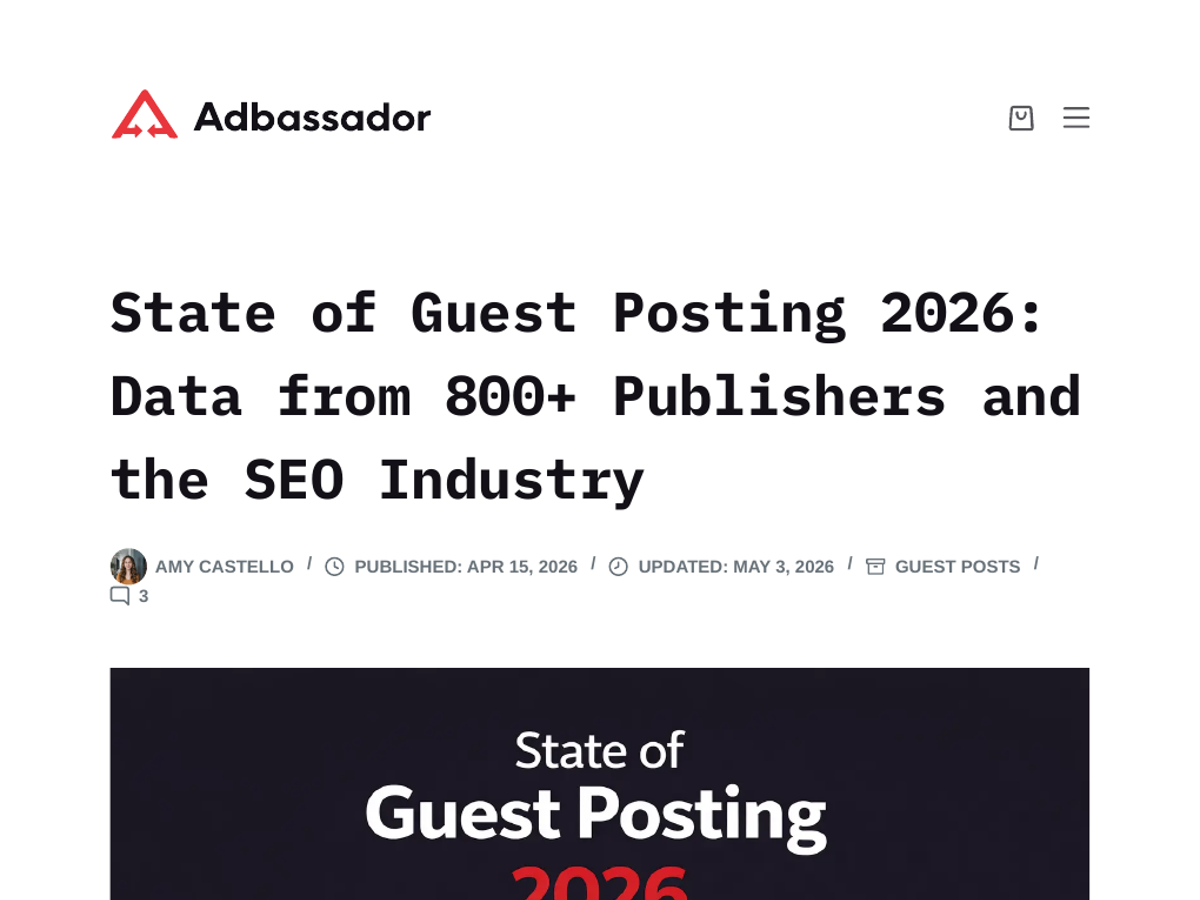
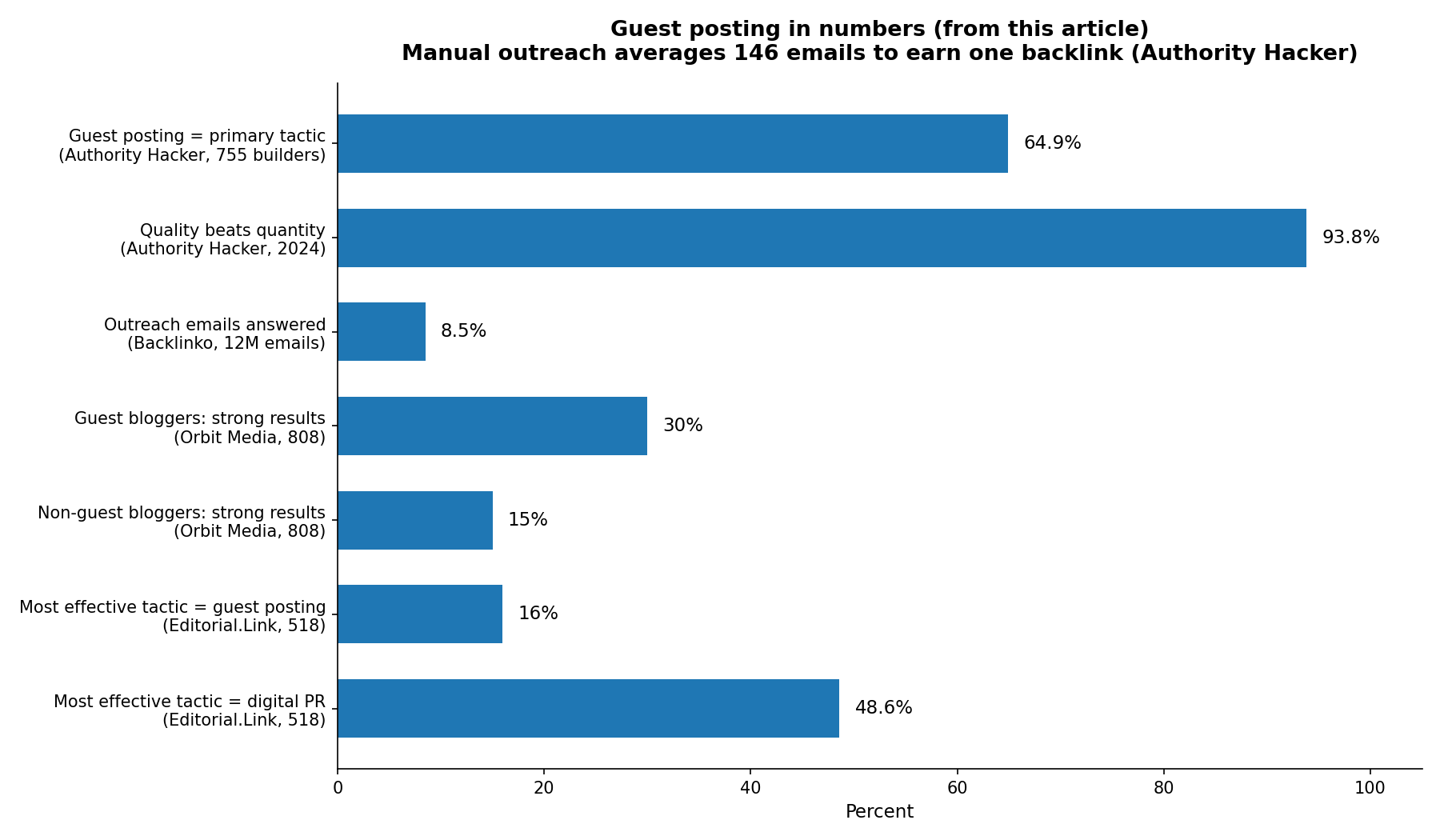
Guest posting is still widely used. A survey of 755 link builders reported by Adbassador found that 64.9% use guest posting as a primary tactic. At the same time, the same body of industry research is clear about quality: Authority Hacker’s 2024 research found that 93.8% of link builders say quality matters more than quantity. That tension is the whole story. A small number of strong placements on real, relevant sites beats dozens of placements on sites that exist only to sell links.
It also helps to keep expectations honest. In Editorial.Link’s survey of 518 SEO experts, only 16% rated guest posting the single most effective link building tactic, behind digital PR at 48.6%. Guest posting is one useful tool, not a complete strategy on its own. It works best when your own site already has something worth linking to, such as a clear product page, a useful guide, or original research.
| Finding | Source |
|---|---|
| 64.9% of link builders use guest posting as a primary tactic | Authority Hacker survey of 755 link builders, reported by Adbassador |
| 93.8% of link builders say quality matters more than quantity | Authority Hacker, 2024 |
| Only 8.5% of outreach emails get any response | Backlinko analysis of 12 million outreach emails |
| It takes an average of 146 emails to earn one backlink through manual outreach | Authority Hacker |
| 30% of guest bloggers reported strong results, compared with 15% of those who did not guest blog | Orbit Media Annual Blogger Survey 2025, 808 respondents |
| 16% of SEO experts rated guest posting the most effective tactic, against 48.6% for digital PR | Editorial.Link survey of 518 SEO experts |
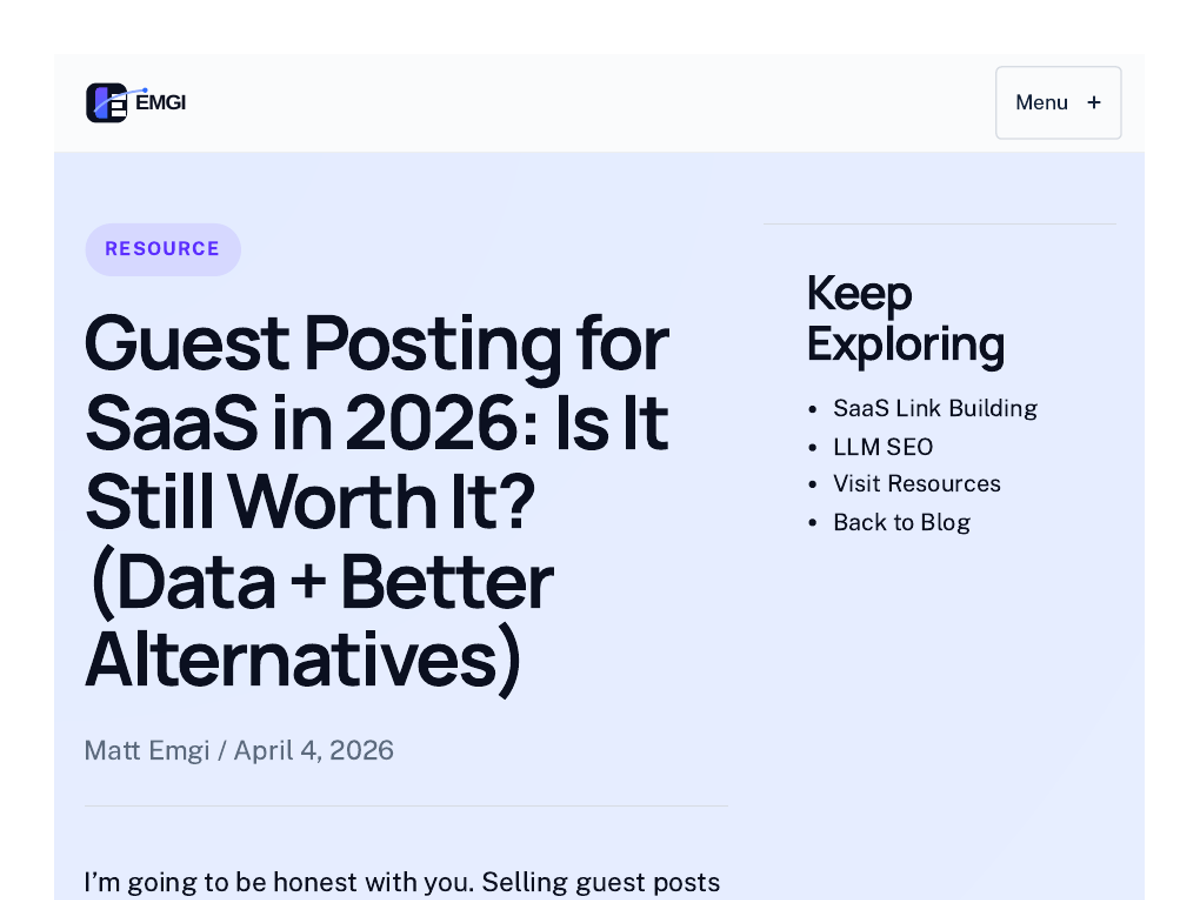
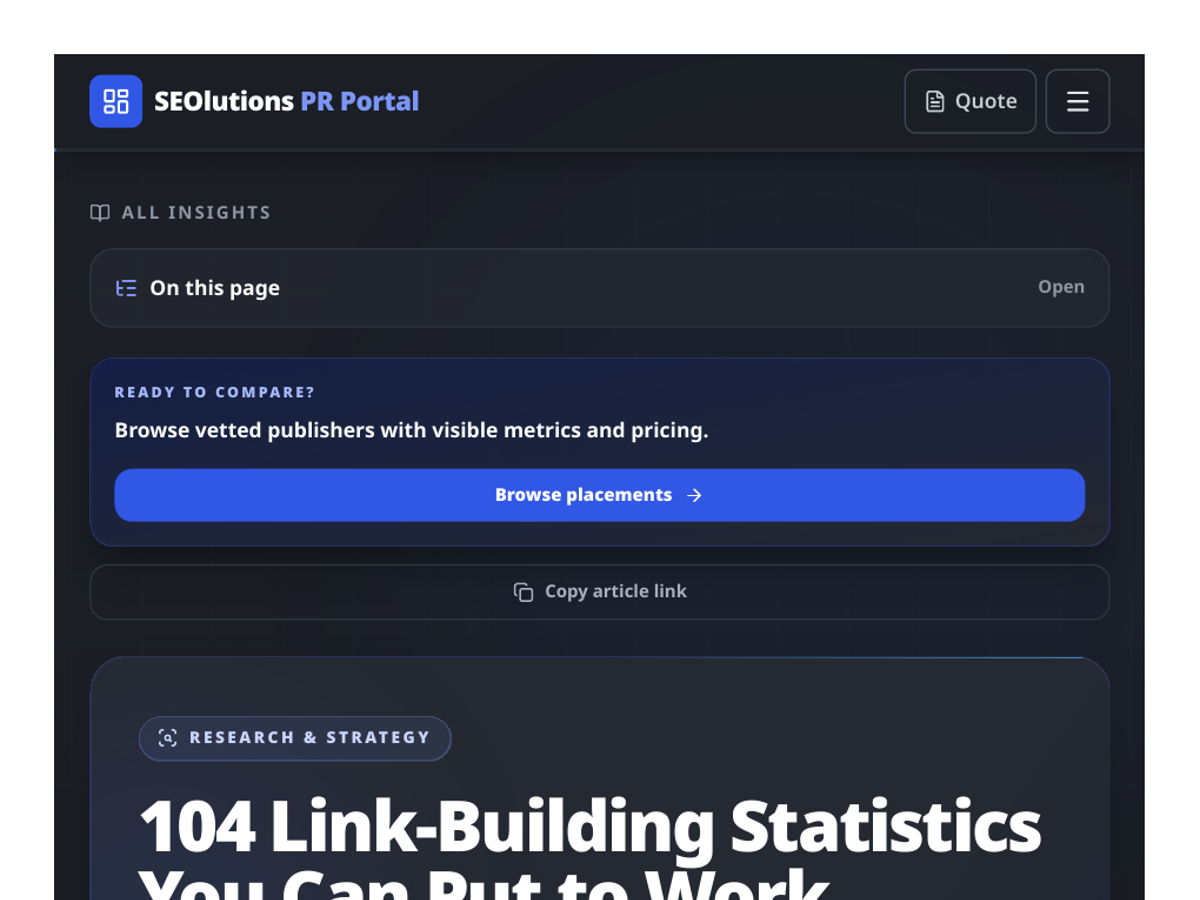
Further reading: EMGI Group and SEOlutions.
Step 1: Get clear on who you want to reach
Before you contact anyone, write down one sentence for each of these: who your buyer is, what problem your software solves, and what that buyer reads. A UK finance team using payroll software and a UK marketing team using a CRM tool read different blogs. If you pitch both with the same generic article, editors will notice.
Pick one niche to start with. For example, if you sell HR software to UK firms, your first targets should be HR, payroll, and small-business blogs that UK readers actually use — not general ‘write for us’ sites covering every topic. Relevance matters more than size. A link from a smaller, on-topic site that your buyers trust is worth more than a link from a large, unrelated site.
Step 2: Find sites that actually accept SaaS guest posts
Use search operators in Google to find real opportunities. Try searches such as ‘B2B SaaS write for us’, ‘SaaS guest post guidelines’, and ‘UK SaaS blog contribute’. Read the results properly. You are looking for a site with a clear editorial page, recent articles by named authors, and topics that match yours.
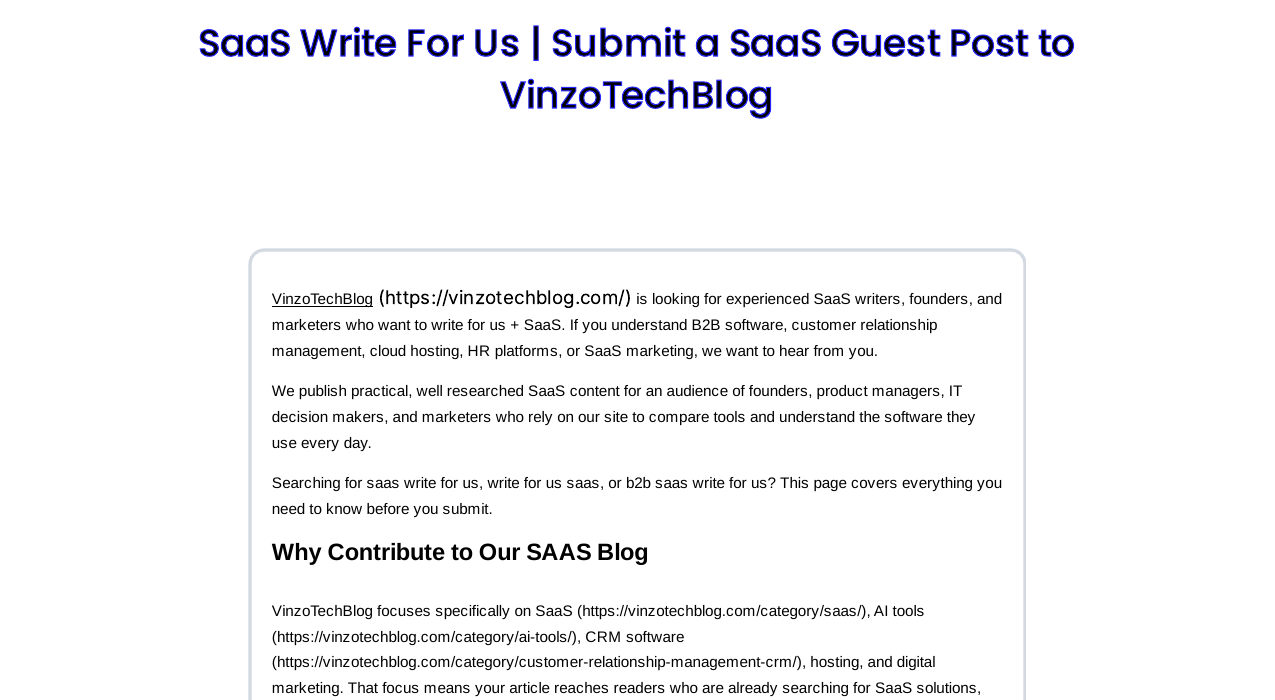
A good example of what to look for is a dedicated SaaS contributor page that sets out the topics it accepts and its editorial standards. The screenshot below shows one such page: VinzoTechBlog’s ‘Write For Us’ page, which lists B2B SaaS topics and asks for original, well-structured articles with credible sources.
Build a shortlist of 20 to 30 sites. Record the site name, its topics, its guidelines link, the editor’s name if shown, and one recent article you liked. Do not send the same pitch to 200 sites. The research above shows why: with only 8.5% of outreach emails getting a reply, a careful, personal pitch to a short list beats a mass email every time.
Step 3: Check Google’s rules before you pitch
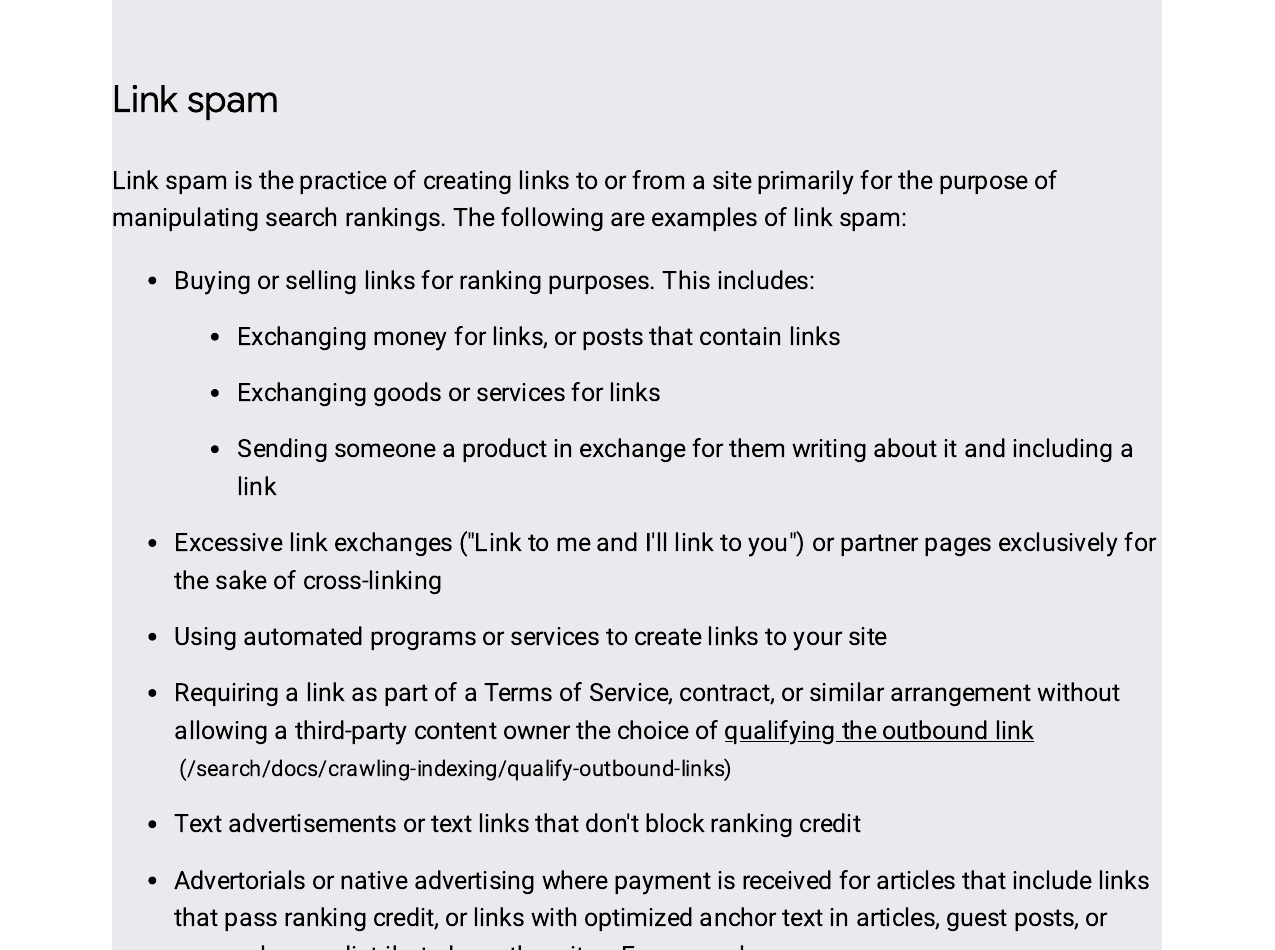
Google does not ban guest posts. Its spam policies say links created mainly to manipulate rankings count as link spam, and that includes paid articles and guest posts where payment is received for links that pass ranking credit. Google’s own guidance also says guest articles are fine when they inform users, educate another site’s audience, or bring awareness to a cause or company — but not when the main intent is to build links at scale back to the author’s site.
Read the policy yourself before you start, so you can spot a risky offer when you see one. The screenshot below shows Google Search Central’s spam policies page, where the link spam section sets this out.
Practical rules that follow from this: never pay for a link that passes ranking credit without proper qualification, never agree to keyword-stuffed anchor text in a guest post, and be honest with the editor about any commercial relationship. If a site offers to publish anything for a fee with no editorial review, walk away. That is not guest posting; it is a link scheme with an article attached.
Step 4: Vet each site like an editor would
Before you pitch, check five things about each site on your shortlist:
- Real audience: does it publish regularly, with named authors and comments or shares that look genuine?
- Topical fit: would its readers care about your topic, or would your article look out of place?
- Recent quality: read three recent posts. Are they useful, or are they thin articles stuffed with links?
- Link policy: does the site say how it handles links — for example, nofollow, sponsored, or editorial links only?
- UK relevance: does it speak to UK readers, UK rules, or UK business practice where that matters for your product?
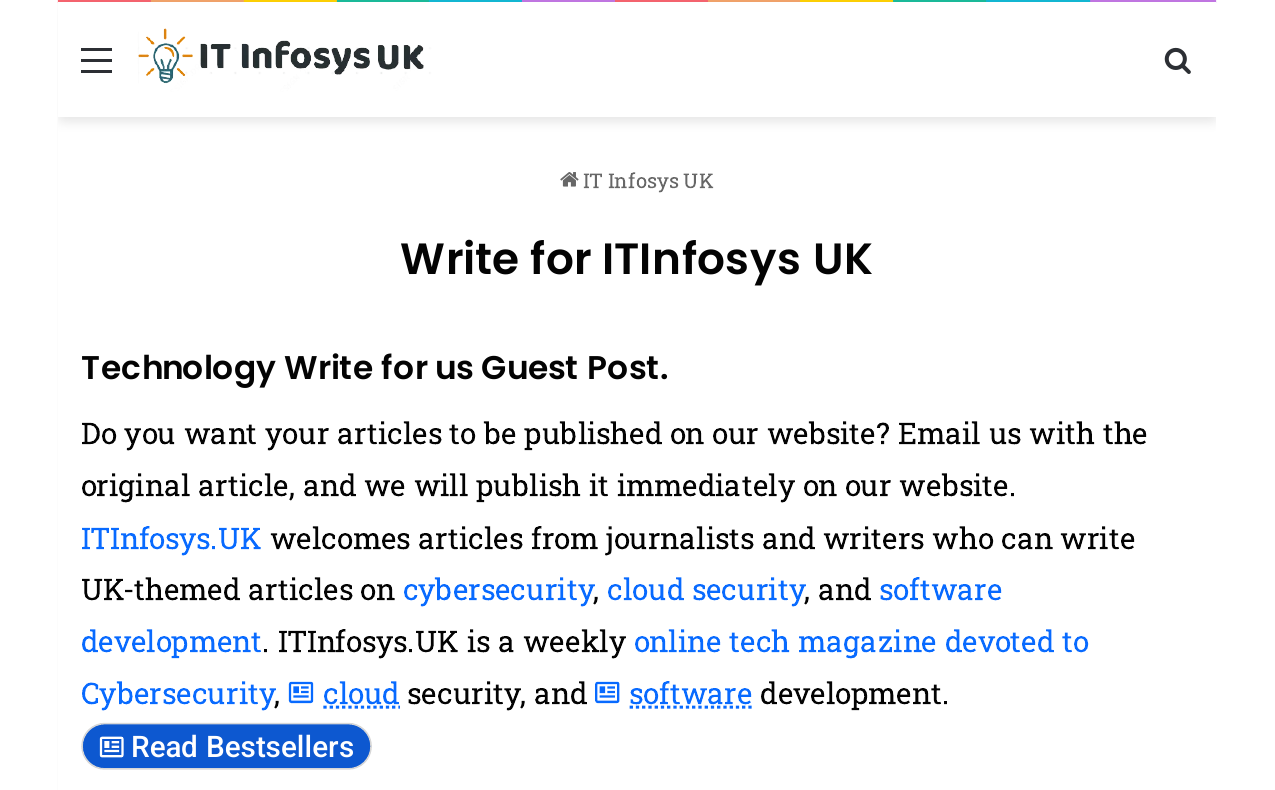
A UK example helps here. The screenshot below shows ITInfosys UK’s technology Write for Us page, which states it accepts articles on UK startups, cybersecurity, cloud security, and software development, and asks for original articles of 1,000 to 2,000 words with a real author bio. That level of detail is a good sign. A page that promises instant approval and follow links to anyone is a warning sign, not a selling point.
Drop any site that fails this check, even if it replied quickly. A link from a site Google later treats as spam can cost more than it ever gained.
Step 5: Pitch one strong idea, not a list of titles
Editors reply to pitches that show you read their site. Keep your email short: who you are, one sentence on why you read their blog, one article idea with a clear title and three bullet points on what it will cover, and one sentence on why their readers will benefit. Mention a recent article of theirs and how yours adds to it.
Offer an idea only you can write well. For a B2B SaaS company, that usually means a lesson from real product use: how you solved a common onboarding problem, what your data showed about churn, or a clear comparison of approaches you have tested. Avoid generic titles such as ’10 benefits of SaaS’. Editors have seen them hundreds of times.
Follow up once, politely, after about a week. If there is no reply, move on. Chasing one editor for a month wastes the time you could spend pitching five better sites.
Step 6: Write the article for their readers, not for your link
Write the article as if the link did not exist. Use UK spelling, short paragraphs, clear headings, and at least one example, table, or step list that a reader can act on. Link to your own site only where it genuinely helps the reader — for example, to a guide that explains a step in more depth — and keep the link count low. Put your main point early, and do not turn the article into a product advert. Editors will cut promotional language, and readers will stop reading.
Before you send it, check it against the site’s guidelines: word count, originality, image requirements, and link rules. Include a short author bio with your real name and role. A bio that hides who you are looks untrustworthy to both editors and readers.
Step 7: Track what each post actually brings
After publication, record the post URL, the publication date, and the link it contains. In Google Search Console, check whether the page is indexed and whether it sends referral traffic. Over a few months, compare posts: which sites sent visitors who stayed and read, and which sent almost no one? That record tells you where to pitch next, and where to stop spending time.
If you want help running this process properly, with manual outreach and no link networks, see RankWithLinks’ guest posting services. A good agency should be able to show you its vetting process and the sites it pitches — not just a price list.
Common mistakes to avoid
- Pitching sites that accept any topic. If a site publishes articles on casino tips, CBD, and SaaS on the same day, its audience is not real.
- Using the same article on several sites. Editors check, and duplicate content helps no one.
- Stuffing the article with links to your own pages. One or two relevant links are enough.
- Promising a client a set number of links per month from guest posts alone. Editors decide, and quality sites say no often.
- Ignoring the site’s guidelines. Most rejections happen because the writer never read them.
FAQ
What is guest posting for a B2B SaaS company?
Guest posting means writing a useful article for another website read by your target buyers, such as a SaaS, HR, or finance blog. The article carries your name and usually a link to your site. For a B2B SaaS firm, the goal is to reach buyers who already trust that blog, show real expertise, and earn a relevant link in the process.
How many guest posts should a beginner aim for each month?
Start with two to four strong pitches per month, not twenty. Research shows outreach replies are low, so a small, careful list gives you time to personalise each pitch and write a good article. One published post on a respected, relevant site is worth more than ten thin posts on weak sites.
How long does it take to see results from guest posting?
Allow three to six months before judging results. The post must be published, indexed, and found by readers, and referral traffic builds slowly. Track each post’s traffic and links in Search Console rather than expecting a ranking jump in the first week.
Do guest post links need a special tag?
It depends on the arrangement. Google asks sites to qualify links where payment, sponsorship, or another incentive is involved, using rel=’sponsored’ or rel=’nofollow’ as appropriate. If you are unsure, ask the editor how they tag contributor links, and do not try to pass a paid link off as a normal editorial link.
Should I pay for guest post placements?
Be very careful. Paying for a link that passes ranking credit without proper qualification breaks Google’s spam policies and can harm your site. Paying an editor for genuine editorial work is different from paying for a link, but if a site guarantees a follow link for a fee with no review, treat it as a risk and walk away.
What makes a good guest post pitch for a UK SaaS blog?
A good pitch names a specific article idea, shows you read the blog, and explains what UK readers will learn. Include three bullet points on what the article will cover, one sentence on your experience with the topic, and no generic praise. Keep it short enough to read in under a minute.
Sources: Adbassador, EMGI Group, SEOlutions, Google Search Central.

Abdullah Zulfiqar is Co-founder and Client Success Manager at RankWithLinks, an SEO agency helping businesses grow online. He specializes in client relations and SEO strategy, driving measurable results and maximizing ROI through effective link-building and digital marketing solutions.