Introduction
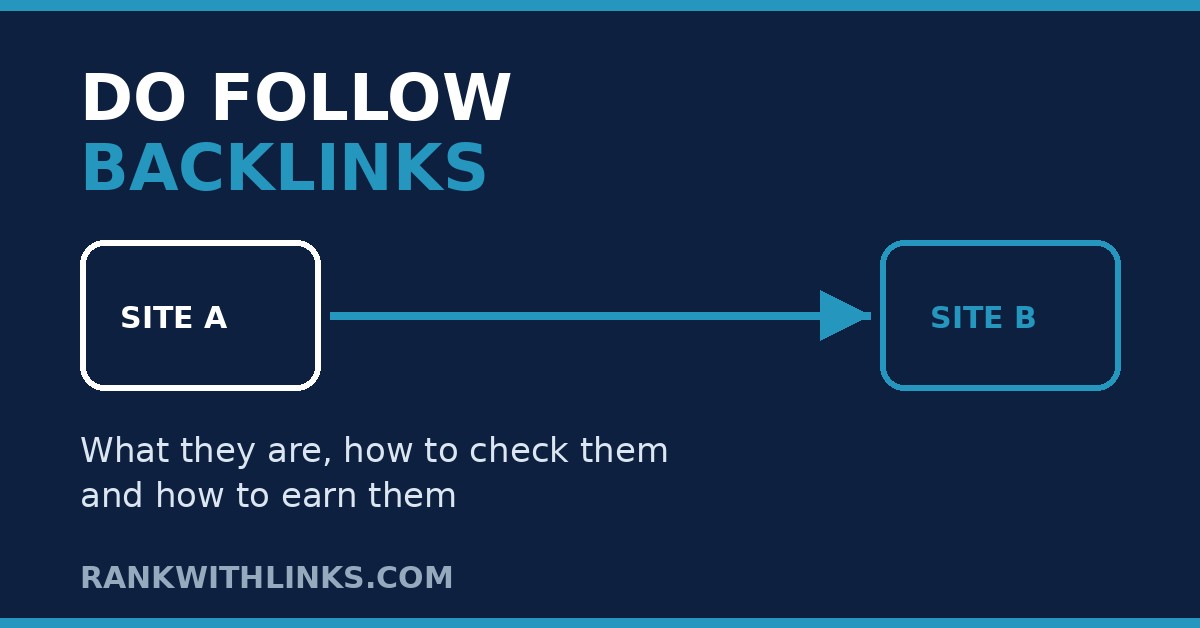
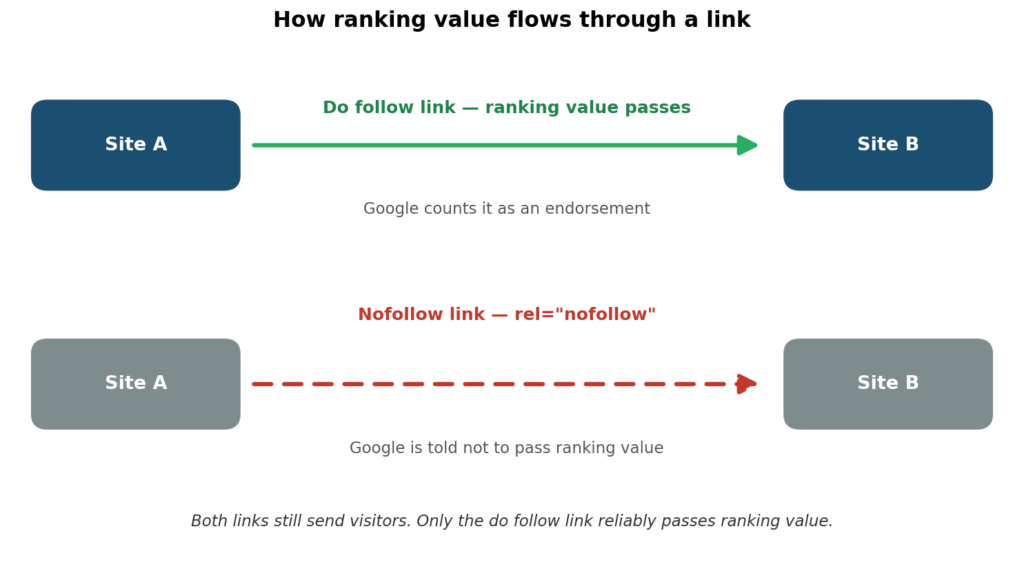
Do follow backlinks are the links that pass ranking value from one website to another. When a site links to your page with a plain, ordinary link — no special code added — Google treats it as an endorsement and may count it when deciding where your page ranks. That is why do follow backlinks sit at the centre of almost every link building plan.
The idea is simple, but the details trip people up. A link can look exactly the same on screen and still behave differently behind the scenes, depending on one small piece of code. This guide explains what do follow backlinks are, how they differ from nofollow, sponsored and ugc links, how to check any link in under a minute, and how to earn more of them without breaking Google’s rules.
What Is a Do Follow Backlink?
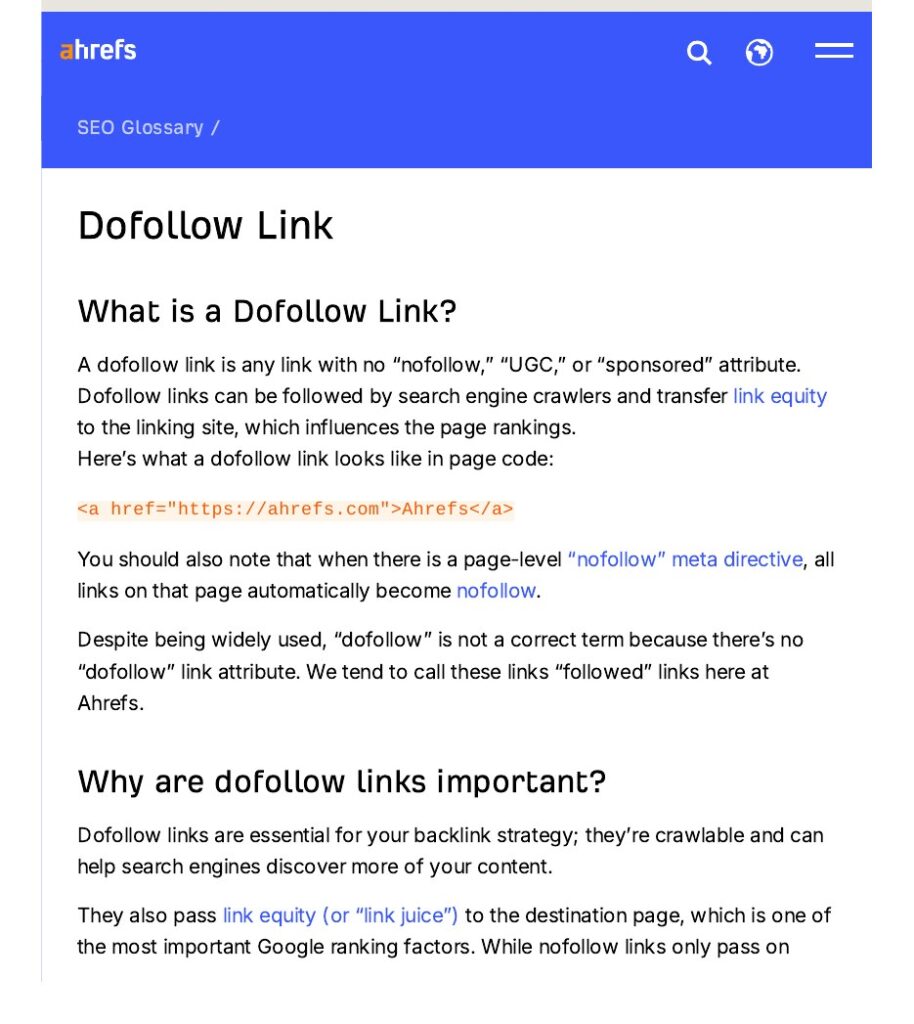
A do follow backlink is an ordinary hyperlink with no rel attribute telling search engines to hold back ranking credit. There is no such thing as rel=”dofollow” in HTML. “Dofollow” is simply the name SEOs give to a normal link — one that Google is free to follow and count as a vote of confidence for the page it points to.
Here is what a do follow link looks like in code:
<a href="https://example.com/guide">a helpful guide</a>
And here is the same link marked as nofollow:
<a href="https://example.com/guide" rel="nofollow">a helpful guide</a>
To a reader, both links look identical. To Google, they are different. The first may pass ranking value; the second tells Google not to pass it. That is the whole difference, and it is decided by a few characters in the page code.
The term “backlink” just means a link from another website pointing to yours. So a do follow backlink is a link from another site that carries no blocking attribute — the kind that can help your rankings.
Do Follow vs Nofollow: The Difference in Plain Words
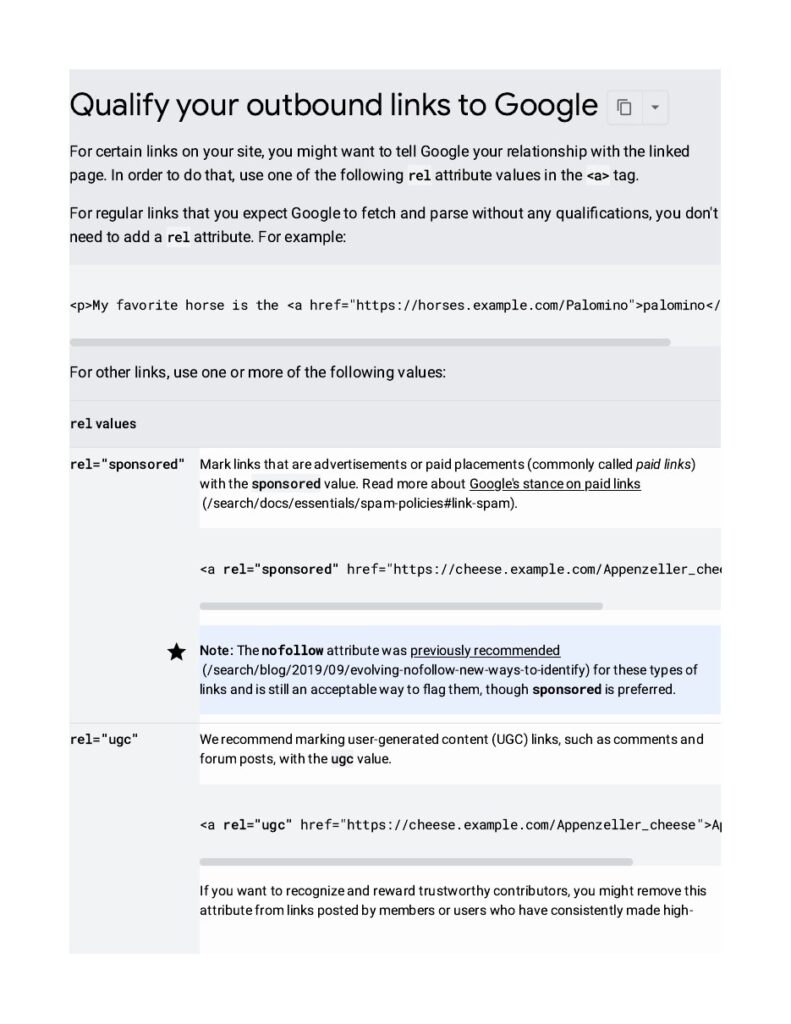
Google recognises four states for a link, and only one of them is do follow. The other three are labels that describe why the linking site does not want to fully endorse the link. Google’s own documentation, Qualify your outbound links to Google, sets out each one.
| Link type | Code | What it tells Google | When it is used |
|---|---|---|---|
| Do follow | No rel value | Follow this link and count it as an endorsement | Ordinary editorial links you stand behind |
| Nofollow | rel=”nofollow” | Do not associate this site with the page, or pass ranking credit | Links you do not want to vouch for |
| Sponsored | rel=”sponsored” | This link was created as part of an ad or paid placement | Ads, sponsorships and paid placements |
| UGC | rel=”ugc” | A user added this link, not the site’s editors | Blog comments, forum posts and reviews |
Two things in that table matter most. First, sponsored is Google’s preferred label for paid links, though nofollow is still accepted for them. Second, you can combine values — for example rel=”ugc sponsored” — when a link fits more than one description.
The history helps explain why these labels exist. Google introduced nofollow on 18 January 2005, together with Yahoo and MSN, to fight comment spam. For 14 years it was a strict instruction: Google would not count a nofollow link as a ranking signal at all. That changed on 10 September 2019, when Google announced that nofollow, sponsored and ugc would all be treated as hints rather than orders. The change applied to ranking straight away, and to crawling and indexing from 1 March 2020.
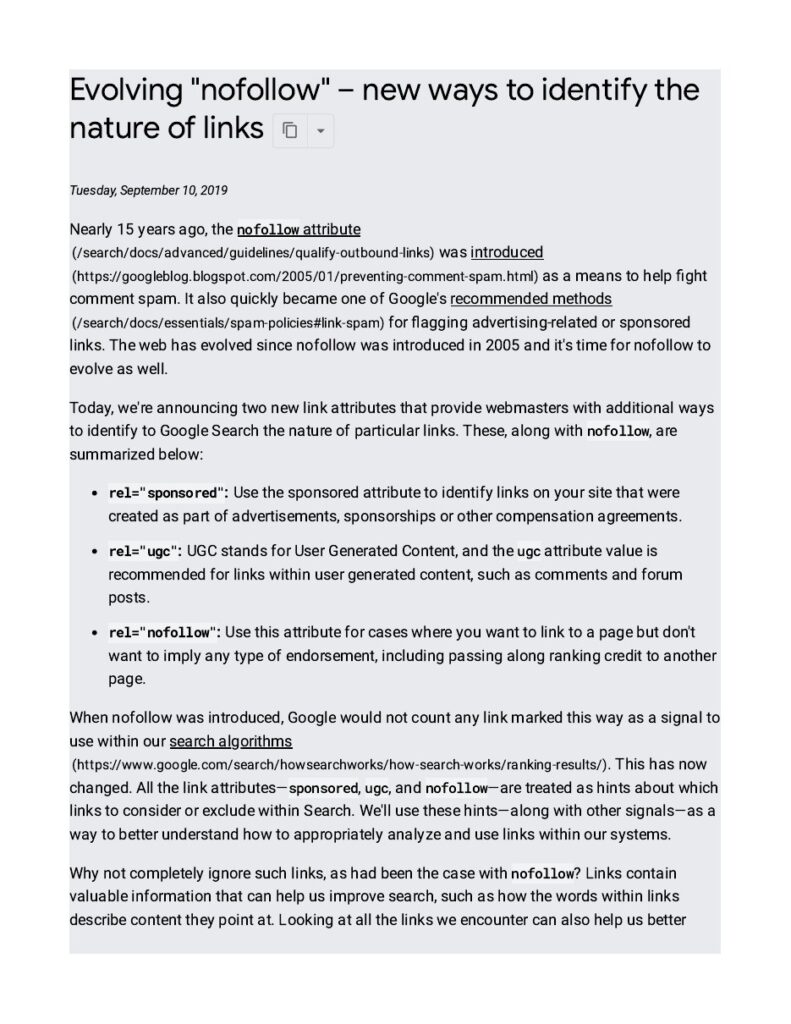
A hint means Google may still consider a nofollow link when it analyses the web — it simply does not promise to pass ranking value through it. In practice, treat a nofollow link as one that will not reliably help you rank, and a do follow link as one that can.
Why Do Follow Backlinks Matter for Rankings
Links are one of the strongest signals Google uses. Google has said for years that links, content and RankBrain sit among its top ranking factors, and large studies keep finding the same pattern: pages that rank well tend to have far more links pointing at them than pages that do not.
Backlinko’s analysis of 11.8 million Google search results found that the page in position one has, on average, 3.8 times more backlinks than the pages in positions two to ten. The same study found that the number of unique referring domains — different websites linking to a page — correlates with rankings more strongly than the raw number of backlinks. Ten links from ten different sites count for more than ten links from one site.
Ahrefs’ study of roughly one billion web pages found that 91% of pages get zero organic traffic from Google, and most of those pages have no backlinks at all. The link between the two is hard to ignore: pages without links rarely rank, and pages that rank usually have links.
A more recent Ahrefs analysis of one million US keywords (January 2025) put numbers on the relationship. Referring domains correlated 0.255 with rankings, while Domain Rating correlated only 0.131 — roughly half as strongly. The count of different sites linking to a page matters more than the overall authority score of your own domain.
What the Web Actually Looks Like: Do Follow vs Nofollow in the Wild
Most links on the web are do follow. Ahrefs analysed the link attributes of the top 110,000 websites by Ahrefs Rank and found that 10.6% of all backlinks carry the nofollow attribute. That leaves 89.4% as followed links. The newer attributes are rare by comparison: ugc appeared on 0.44% of referring domains and sponsored on just 0.01%.
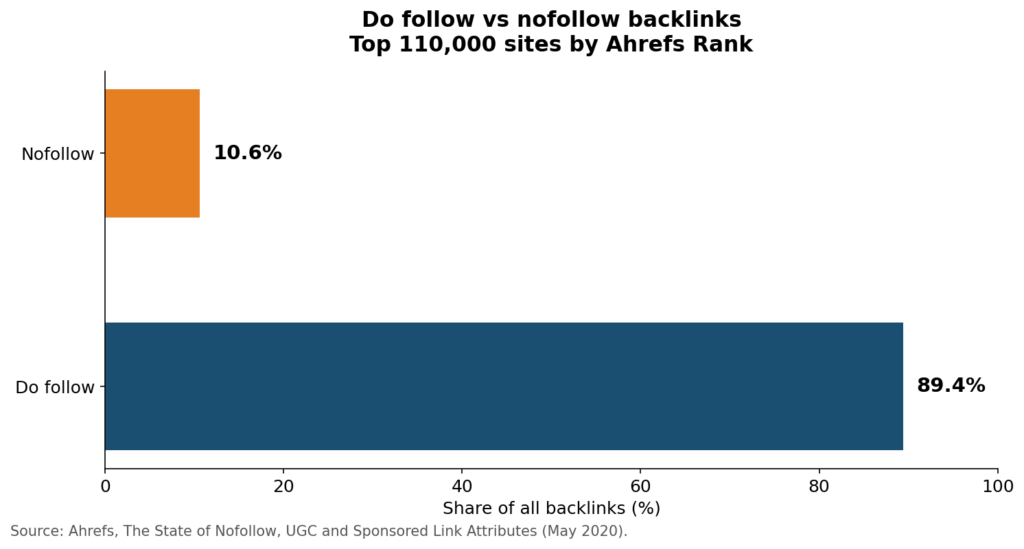
Smaller sites look a little different. A September 2026 analysis by Suff Digital of 68,161 live backlinks across 249 US small business websites found that 25.3% of backlinks were nofollow in total, and 31.3% on the average site. Small business sites pick up more directory, profile and comment links, which are often nofollow by default.
The lesson is that a natural link profile is mixed. Real sites earn both kinds of links, and a profile made up of 100% do follow links looks less natural than one with a sensible spread. Nofollow links still bring referral traffic and brand exposure — and a reader who finds you through one may link to you with a do follow link later.
How to Check If a Backlink Is Do Follow: Step by Step
You can check any single link in under a minute, with no tools at all. Here is the exact method.
Step 1: Open the page that links to you. Go to the page where the backlink sits, in any modern browser.
Step 2: Right-click the link and choose Inspect. In Chrome and Edge the menu item is “Inspect”; in Firefox it is “Inspect Element”. Your browser opens developer tools and highlights the link’s HTML code.
Step 3: Read the anchor tag. Look at the highlighted <a> tag. If it has no rel value, the link is do follow. If you see rel=”nofollow”, rel=”sponsored” or rel=”ugc”, it is not passing full ranking value.
Step 4: Check a whole page at once with an extension. If you need to check every link on a page, install a browser extension such as NoFollow or the Ahrefs SEO Toolbar. These highlight nofollow links as you browse, so you can see the follow and nofollow mix at a glance.
Step 5: Check your whole backlink profile with a tool. For a full picture of your own links, use Ahrefs Site Explorer or Semrush and open the Backlinks report, then filter by link type. Google Search Console shows you who links to you, but it does not show the rel attribute, so you still need a dedicated tool for the follow versus nofollow split.
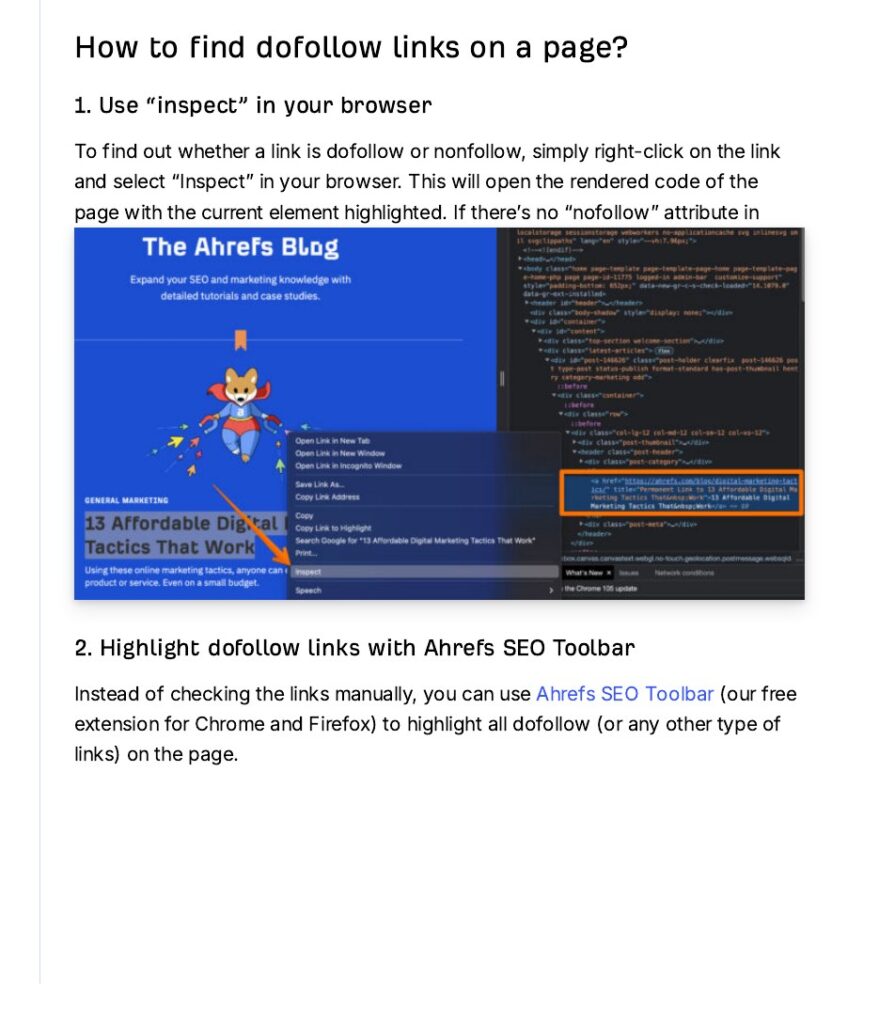
Ahrefs puts the definition in one line: a dofollow link is any link with no nofollow, ugc or sponsored attribute. That is the test to apply every time.
How to Earn Do Follow Backlinks
There is no shortcut to do follow backlinks that lasts. The links that move rankings are the ones other sites add because your page deserves them. These five methods earn them honestly.
- Publish something worth linking to. Original research, a useful calculator, a clear guide or a dataset other writers need will attract editorial links on its own. This is slow but it compounds: one strong page can earn links for years.
- Guest post on real sites in your niche. Write a genuinely useful article for a site your audience reads, with a natural link back to a relevant page on your site. The link should help the reader, not just serve your rankings.
- Target resource pages. Many sites keep pages that list the best tools, guides or articles on a topic. Find them with a search like “keyword + inurl:resources”, check that the page is still updated, then suggest your page with a short, honest email explaining why it belongs there.
- Fix broken links. Find pages in your niche that link to resources that no longer exist, then offer your working page as a replacement. The site owner gets a fixed page, and you get a relevant do follow link.
- Earn press and mentions. Digital PR — a survey, a study or a strong opinion backed by data — can win links from news sites and blogs that rarely link out at all. These are often the highest-value do follow links a site can get.
Whatever method you use, keep the anchor text natural. A mix of branded anchors, plain URLs and descriptive phrases looks normal. A profile where every link uses the same exact-match keyword anchor is a red flag.
If you want help building links the right way, take a look at our link building services — manual outreach, real sites, no private blog networks.
What a Healthy Do Follow Ratio Looks Like
There is no official ratio from Google, and anyone selling you a magic number is guessing. What the data shows is a range. Studies of top-ranking pages tend to find roughly 60% to 70% do follow links and 30% to 40% nofollow, with the exact split depending on the niche. Directory-heavy local niches run higher on nofollow; editorial-heavy niches run lower.
Use that as a rough guide, not a target to engineer. A healthy profile is one that grows naturally: editorial links, mentions, directories, profiles and the odd comment link, arriving over time from different kinds of sites. If your profile is 100% do follow, ask why — it usually means links were placed rather than earned, and that is the pattern Google’s spam systems look for.
Check your own split once a month in Ahrefs or Semrush. If nofollow links are missing entirely, broaden how you earn links. If do follow links are missing, your content or outreach needs work.
Mistakes to Avoid with Do Follow Backlinks
Chasing do follow links from any site that will give you one. A do follow link from a spammy or irrelevant site can hurt you. Relevance and trust matter more than the attribute. One link from a respected site in your niche beats fifty from link farms.
Paying for followed links. Google’s spam policies treat buying or selling links for ranking purposes as link spam. Paid links must be marked with rel=”sponsored” or rel=”nofollow”. A paid link left as do follow puts both sites at risk of a manual action.
Ignoring nofollow links. A nofollow link from a popular site can send real visitors, build your brand and lead to do follow links later. Turning down good nofollow links because they do not pass ranking value is short-sighted.
Using the same anchor text everywhere. Exact-match anchors on every link look manufactured. Vary them, and let other sites choose their own words when they link to you.
Forgetting to check links after you earn them. Sites change. A link that was do follow can be switched to nofollow, or the page can disappear. Check your most valuable links a few times a year.
FAQ
What is a do follow backlink?
A do follow backlink is an ordinary link from another website to yours that carries no rel=”nofollow”, rel=”sponsored” or rel=”ugc” attribute. Because nothing blocks it, Google may follow the link and pass ranking value to your page. There is no rel=”dofollow” code — do follow is simply the default state of a normal link.
Do do follow backlinks help SEO?
Yes. Do follow backlinks are one of the strongest ranking signals Google uses. Backlinko’s study of 11.8 million search results found the top-ranked page has 3.8 times more backlinks than pages in positions two to ten. But links are only one signal: content quality, relevance and page experience matter too, so links alone will not rank a weak page.
How can I check if a backlink is do follow?
Right-click the link on the page, choose Inspect, and read the highlighted anchor tag. If there is no rel attribute, the link is do follow. If you see rel=”nofollow”, rel=”sponsored” or rel=”ugc”, it is not. For a whole backlink profile, use Ahrefs or Semrush and filter the Backlinks report by link type.
What is a good do follow to nofollow ratio?
There is no official ratio from Google. Studies of top-ranking pages usually find around 60% to 70% do follow and 30% to 40% nofollow, but the right split depends on your niche. A natural, mixed profile matters far more than hitting an exact number — a profile that is 100% do follow looks placed rather than earned.
Should I buy backlinks to get more do follow links?
No. Google’s spam policies count buying or selling links for ranking purposes as link spam, and paid links must be marked with rel=”sponsored” or rel=”nofollow”. Buying followed links risks a manual action that can remove your pages from search results. Earn links with useful content and honest outreach instead — it is slower, but the links last.
Are nofollow backlinks worthless?
No. Nofollow links do not reliably pass ranking value, but they still bring referral traffic, expose your brand to new audiences and make your link profile look natural. They can also lead to do follow links later, when someone discovers your site through a nofollow link and chooses to link to it editorially.
Conclusion
Do follow backlinks are the links that can move your rankings, because they are the links Google is free to count. They are also the hardest links to earn, because they have to be given freely by another site. That is the point. A do follow link is a vote of confidence, and votes only mean something when they are earned.
Start by checking the links you already have. Use Inspect to see which of your backlinks are do follow, look at the mix in Ahrefs or Semrush, and then build a plan around content worth linking to and outreach worth answering. Do that consistently, and the do follow links will follow.

Abdullah Zulfiqar is Co-founder and Client Success Manager at RankWithLinks, an SEO agency helping businesses grow online. He specializes in client relations and SEO strategy, driving measurable results and maximizing ROI through effective link-building and digital marketing solutions.