
An SEO strategy for ecommerce websites is a plan for getting the right shoppers to your store from search engines, without paying for every visit. It covers the pages people land on, the words they search for, the speed and structure of your site, and the links that show Google your store can be trusted.
This matters because organic search is still the largest single source of traffic for online stores. Research compiled by Charle, citing Reboot Online, puts organic Google search at 43% of all ecommerce traffic, with 23.6% of ecommerce orders traced back to organic search. That is a large share of sales to leave to chance. This guide explains the parts of the strategy in order, so you can work through them one at a time.
What an ecommerce SEO strategy actually is
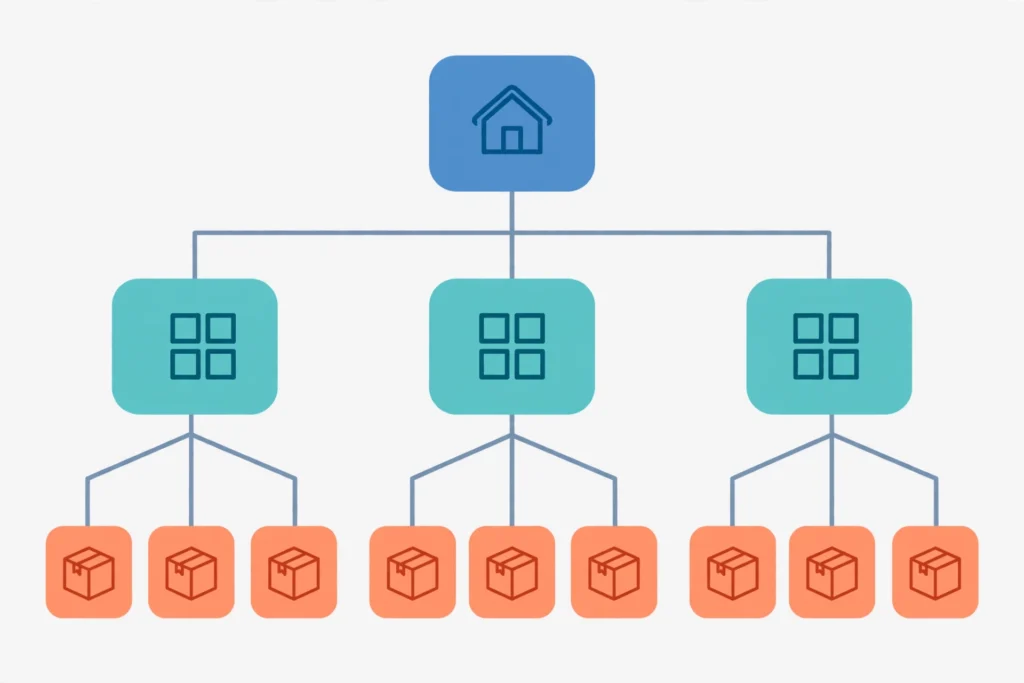
A good strategy is not a list of tricks. It is a set of decisions about which pages should rank for which searches, and what each page must do once a shopper arrives. Most stores have four kinds of pages that matter for search: the homepage, category pages, product pages, and helpful content such as buying guides. Category pages should rank for broad searches such as “running shoes”. Product pages should rank for exact searches such as a brand, model, or size. Guides should answer research questions and then point readers to the right category. If every page tries to rank for the same broad term, pages compete with each other and none of them does well. A clear map, where each search term has one main page, avoids that problem.
Start with keyword research that matches buying intent
Keyword research for a store is different from research for a blog. You need to know what the shopper wants to do, not just what they typed. There are three main kinds of intent. Informational searches ask how something works, for example “how to choose running shoes”. Commercial searches compare options, such as “best running shoes for flat feet”. Transactional searches show a shopper is ready to buy, such as “buy Nike Pegasus 41 size 9”. All three matter, but they belong on different pages: guides for the first, category pages for the second, and product pages for the third. Look at the search results for each term before you target it. If the results are mostly product listings, a category or product page is the right fit. If they are mostly guides, a helpful article is the right fit.
Category pages: your main ranking pages
Category pages usually bring in more search traffic than any single product page, because one page can serve many related searches. Treat them as proper landing pages, not just as a grid of products. A strong category page has a clear heading that matches the main search term, a short introduction that explains what the shopper will find, and links to subcategories. For example, a shoe store might have a main “running shoes” category with subcategories for road running, trail running, and racing shoes. Breadcrumbs, the small navigation trail at the top of the page, help shoppers and search engines understand where the page sits in the store. Add 150 to 300 words of genuinely useful copy to each main category page: who the products suit, what to look for, and which subcategories help.
Product pages that help shoppers decide
Product pages close sales, so they need to answer the questions a shopper would ask in a shop. Copying the manufacturer’s description word for word is a common mistake. If fifty stores use the same text, search engines have no reason to rank yours above the rest. Write a unique description for each important product. Cover the materials, sizing, fit, what is included, and who it suits. Add clear price, availability, delivery, and returns information. Real customer reviews add fresh, unique content and help shoppers trust the page. A specification table works well here too, because both shoppers and search engines can read facts quickly. Use clear image file names and alt text, show the product from more than one angle, and link to the parent category and to related products.
Technical SEO: speed, mobile and crawl control
Technical SEO is the foundation. If search engines cannot crawl your pages, or shoppers leave because pages are slow, good content will not save the rankings. Speed comes first. Research cited in ecommerce SEO statistics reports that stores loading in one second convert at 2.5 times the rate of stores taking five seconds. Compress images, remove scripts you do not need, and test your main pages on a phone, not only on a desktop. Most shoppers now browse on mobile, and a page that is hard to use on a small screen will lose sales even if it ranks well. Crawl control matters just as much on large stores. Filters for size, colour, price, and brand can create thousands of near-duplicate URLs. Use canonical tags to point those variations back to the main category page, and keep low-value filter and internal search pages out of the search index. Keep your sitemap clean, with only pages you want indexed. For out-of-stock products, keep a page live with a “notify me” option if the product will return, and redirect a permanently discontinued product to its parent category.
| Item | Value | Source |
|---|---|---|
| Share of ecommerce traffic from organic Google search | 43% | Reboot Online, via Charle |
| Share of ecommerce orders traced to organic search | 23.6% | Reboot Online, via Charle |
| Average conversion rate of organic ecommerce traffic | 2.8% | Smart Insights, via Charle |
| Conversion advantage of a 1-second load over a 5-second load | 2.5 times | Portent benchmark data |
| Average cart abandonment rate | 70.19% | Baymard Institute, analysis of 49 studies |
Sources: Charle ecommerce SEO statistics and Sender cart abandonment statistics.
Content that brings in shoppers before they buy
Not every shopper is ready to buy on the first visit. Many research first, compare options, and return later. Helpful content catches those shoppers early and builds trust before the sale. Buying guides, comparison articles, and ‘how to choose’ posts work best when they answer a real question in full. A store selling skincare, for example, could explain how to build a basic routine or what to check before buying a serum. Each guide should link to the category page it supports, so readers who are ready can move to products in one click. Keep content honest and specific: name materials, give sizes, explain trade-offs, and say who a product is not for as well as who it is for.
Links and mentions that build trust
Links from other websites still matter for ecommerce SEO, because they act as votes of confidence in your store. The safest way to earn them is to create something worth linking to: a useful buying guide, a sizing tool, a comparison, original research, or a genuinely helpful resource for your niche. Supplier and manufacturer ‘where to buy’ pages, local business listings, and genuine press mentions are also useful. A specialist agency can help here: our ecommerce link building services focus on manual outreach to real, relevant websites, with no private blog networks. That approach is slower than shortcuts, but it protects your rankings in the long term. Avoid schemes that promise hundreds of links at once or links from unrelated sites.
How to measure progress
Judge SEO for a store on sales and revenue, not only on rankings. Track four numbers each month: organic sessions, organic revenue, conversion rate from organic traffic, and the number of category and product pages receiving organic visits. Watch for pages that rank on the second page of results. A small improvement to the title, introduction, or internal links can often move those pages onto page one, where most clicks happen. Also watch checkout completion. With cart abandonment averaging 70.19% according to Baymard Institute, and 48% of shoppers citing extra costs such as shipping as a reason for leaving, clear pricing and a simple checkout can be worth as much as new traffic. Review progress monthly, but judge a strategy over three to six months.
Frequently asked questions
How long does an ecommerce SEO strategy take to work?
Most stores see early movement in three to six months, with stronger results after six to twelve months of steady work. Technical fixes and improved category pages can move faster, while new content and links take longer to build authority. Treat it as an ongoing programme, not a one-off project.
Should I focus on category pages or product pages first?
Start with technical issues that block crawling or indexing, then focus on category pages, because one strong category page can rank for many related searches and send traffic to many products. Improve product pages in batches, starting with best sellers and pages that already rank on page two or three.
What is the most common ecommerce SEO mistake?
Copying manufacturer descriptions across many product pages is one of the most common mistakes. It gives search engines no reason to prefer your page. Unique descriptions, real reviews, clear specifications, and useful category copy all help your pages stand out.
Does SEO still matter when AI answers appear in search results?
Yes, but the work has changed. Clear product data, structured markup, and genuinely helpful content help your pages get cited in AI answers as well as in normal results. Pages with schema markup achieve 20% to 40% higher click-through rates, according to figures compiled by Charle, so structured data is worth adding to product and category pages.
How many links does an online store need?
There is no fixed number. A small number of links from relevant, trusted websites is worth more than hundreds of low-quality links. Focus on earning links through useful guides, tools, and resources, and through genuine supplier and press mentions, rather than chasing a link count.
Is SEO better than paid ads for ecommerce?
They do different jobs. Paid ads bring traffic quickly and stop when you stop paying. SEO builds traffic that keeps arriving without a cost per click, and organic traffic converts at an average of 2.8% for ecommerce, ahead of social media. Most stores do best with both: ads for fast results and new launches, SEO for steady, long-term growth.

Abdullah Zulfiqar is Co-founder and Client Success Manager at RankWithLinks, an SEO agency helping businesses grow online. He specializes in client relations and SEO strategy, driving measurable results and maximizing ROI through effective link-building and digital marketing solutions.