
White hat backlinks are links other websites give you because your content is worth linking to — not because you paid for the link, traded for it, or placed it through a scheme. They are the links Google wants to count. If you want rankings that last, they are the only kind worth building.
The idea is simple. A backlink is a vote of confidence from one site to another. Google has used links as a ranking signal since the start, and it still does. The difference between white hat and everything else is how the link was earned. White hat links come from real editorial decisions: someone read your page, found it useful, and chose to link to it. That is the whole standard, and it is worth holding to, because Google’s spam policies are clear about the other side of the line.
What are white hat backlinks?
A white hat backlink is a link that follows Google’s spam policies. It is earned, not bought, and it is placed because the linking site genuinely wants its readers to find your page. The link is usually a normal “dofollow” link, but what makes it white hat is the method, not the link attribute.
A few examples make the line clear:
- A journalist links to your study in a news article because the numbers support their story.
- A blogger links to your guide because it answers a question their readers keep asking.
- A university resource page lists your free tool because it helps their students.
- A business mentions your company in a case study and links to your site.
None of these links were paid for. None were placed by an automated tool. Each one was a free editorial choice by the site doing the linking. That is what Google means when it talks about links earned through quality content.
White hat backlinks also tend to share three traits. They come from sites that are relevant to your topic. They come from pages that real people actually read. And they use natural anchor text — the words a person would use when pointing a reader to your page, not a stuffed exact-match keyword phrase repeated across dozens of sites.
Why white hat backlinks still matter in 2026
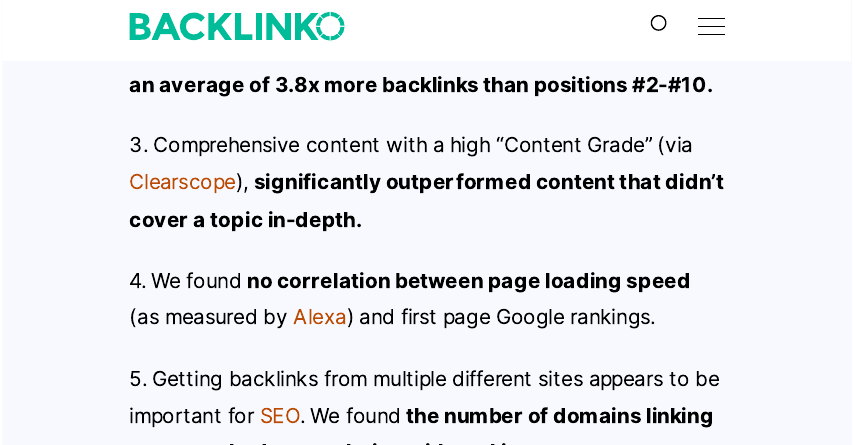
Links are not the only ranking factor, and Google itself has said their weight has fallen over time. Gary Illyes, a Google search analyst, said in 2023 that links had not been one of the top three ranking factors “for some time”. Even so, every large study still finds the same pattern: pages that rank well tend to have more links, from more different sites, than pages that do not.
The numbers tell the story:
| Finding | Figure | Source |
|---|---|---|
| Backlinks held by the #1 Google result vs positions 2–10 | 3.8x more | Backlinko, study of 11.8 million Google search results |
| Pages in Backlinko’s study with zero backlinks | 95% | Backlinko, study of 11.8 million Google search results |
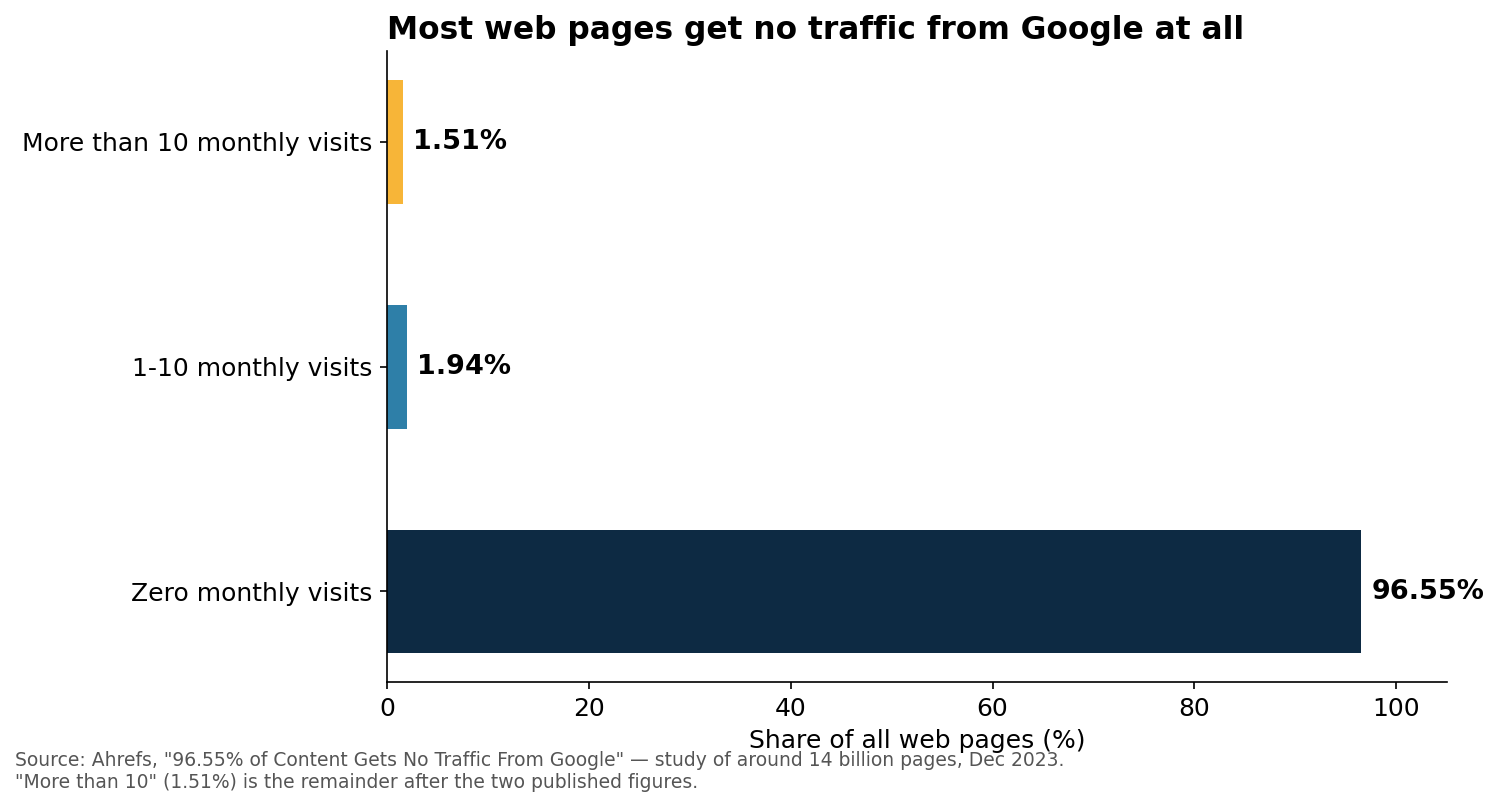
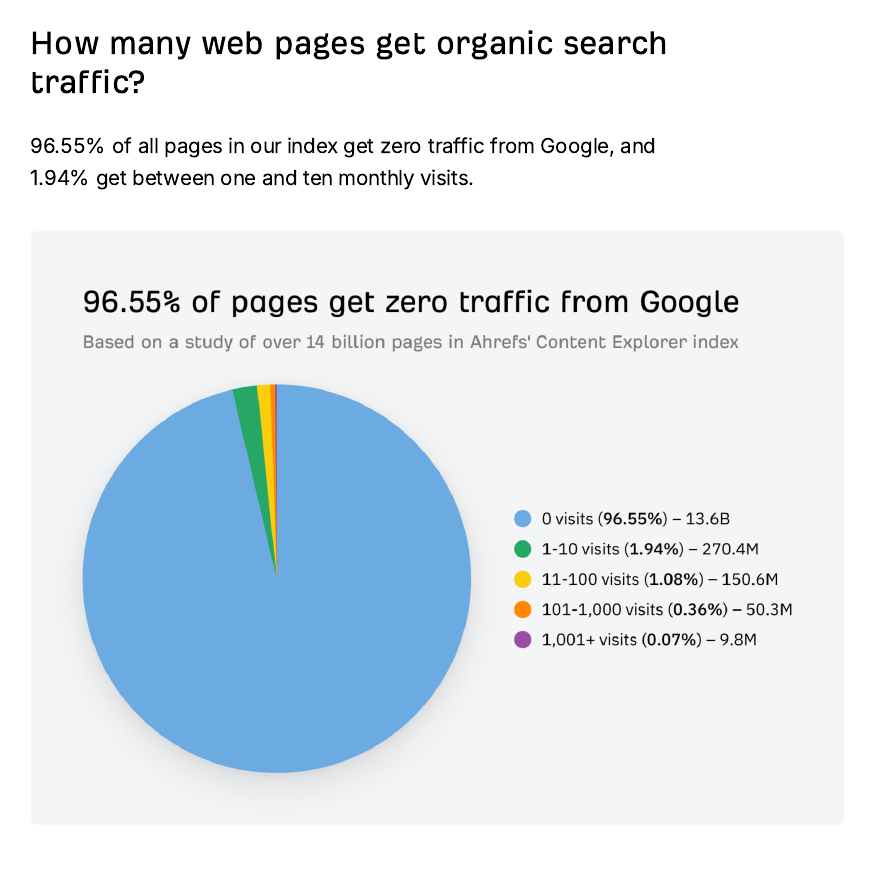
| Pages that get zero monthly traffic from Google | 96.55% | Ahrefs, study of around 14 billion pages, Dec 2023 |
| Pages that get only 1–10 monthly visits from Google | 1.94% | Ahrefs, study of around 14 billion pages, Dec 2023 |
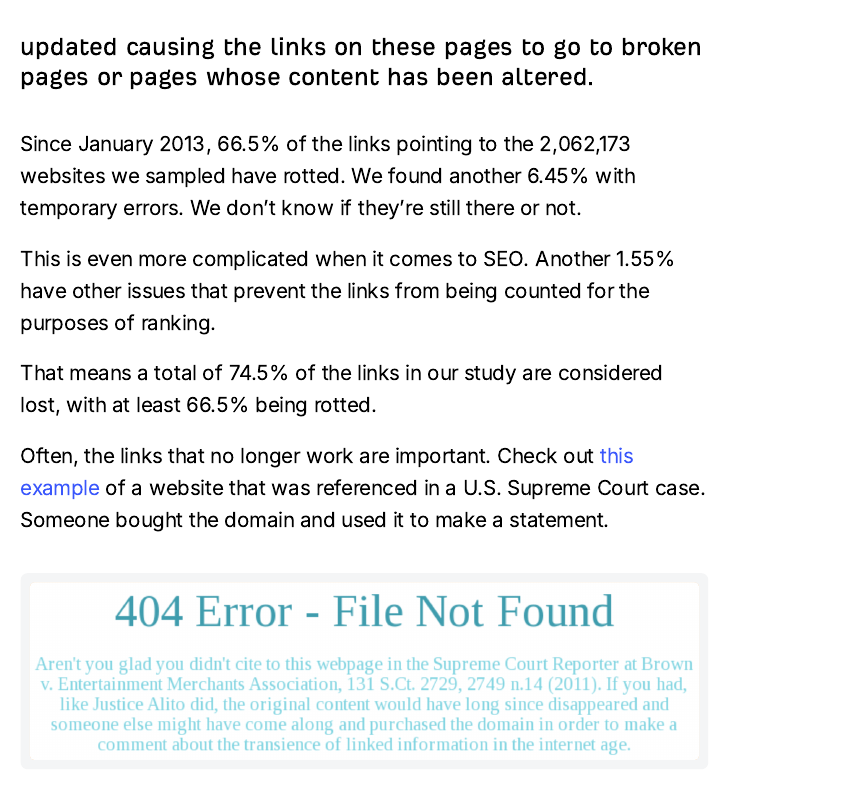
| Links built since 2013 that no longer exist | 66.5% | Ahrefs link rot study, 2,062,173 websites |
Two things stand out. First, the pages at the top of Google hold far more links than the pages below them — 3.8 times more, on average, in Backlinko’s analysis of 11.8 million search results. That is a correlation, not proof that links alone caused the ranking, but the pattern is strong and it has held up across many studies. Second, most pages have almost nothing: 95% of the pages in Backlinko’s study had no backlinks at all, and 96.55% of pages get zero traffic from Google, according to Ahrefs.
The link rot figure matters too. Ahrefs found that 66.5% of links built since 2013 have died — the linking page was removed, the link was taken out, or the page fell out of the index. Links from real, lasting pages on real sites survive. Links from thin sites built only to host links do not. That is one more reason to earn links that are meant to last.
White hat vs black hat backlinks
The difference is the method, not the link itself. A link from the same site can be white hat or black hat depending on how it got there.
| White hat | Black hat | |
|---|---|---|
| How the link is earned | Editorial choice by the linking site | Paid for, traded, or placed by automation |
| The content behind it | Useful content a real person would link to | Thin content made only to host links |
| The linking sites | Real sites with their own readers | Link farms, private blog networks (PBNs), spam directories |
| Anchor text | Natural, varied wording | Repeated exact-match keywords |
| Risk | None — this is what Google wants | Manual action, lost rankings, or removal from search results |
| How long it lasts | Years, if the linking page stays live | Often gone within months |
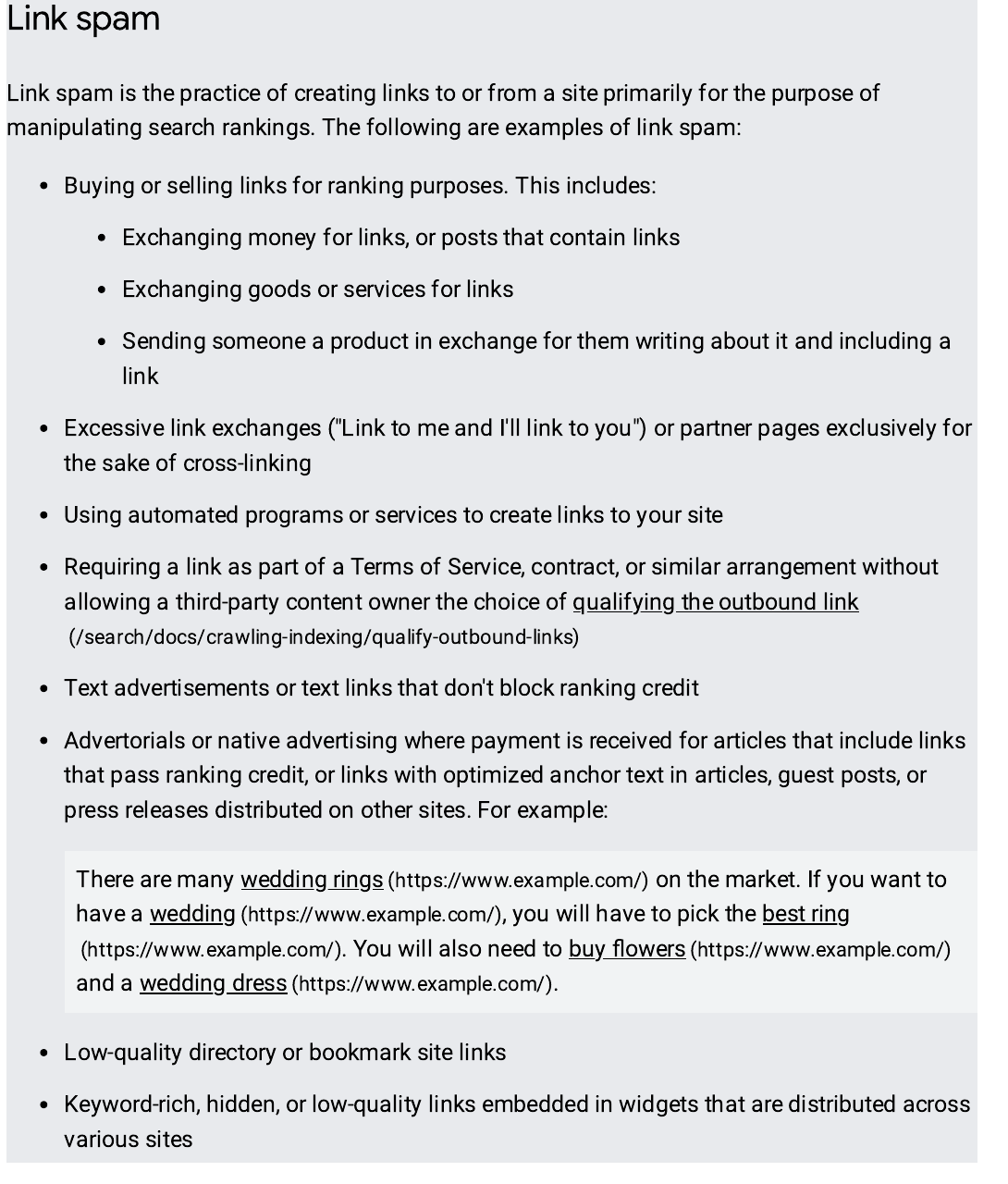
Google’s own spam policies page lists “buying or selling links for ranking purposes” as link spam, alongside excessive link exchanges, automated link building, and low-quality directory links. The same page states that sites which break the rules “may rank lower in results or not appear in results at all”. The risk is not theoretical. When Google rolled out its December 2022 link spam update, it said rankings could change as spammy links were neutralised — and the ranking benefit those links had passed could not be regained.
7 proven ways to earn white hat backlinks
There is no shortcut here. Every method below takes real work, and that is exactly why the links it produces are worth having. Pick two or three and do them well rather than trying all seven at once.
1. Publish original data and research
Original numbers attract links because journalists, bloggers, and other businesses need sources to cite. A small survey of your own customers, an analysis of data you already hold, or a round-up of public figures with your own charts can all work. You do not need a huge sample — a clear, honest study of 100 real customers beats a vague claim about “the industry”. Make the key figures easy to find, include a chart people can reuse with credit, and tell the sites that write about your topic that the study exists.
2. Create a genuinely useful free tool or resource
Free tools earn links for years after they are built. A calculator, a template, a checklist, or a checker that solves one small problem well will be linked to by blogs, forums, and resource pages. The tool does not need to be complex. It needs to work, to be free, and to answer a question people actually search for. Keep it updated, or the links will dry up when it goes stale.
3. Digital PR: newsworthy stories, not press releases
Digital PR means giving journalists a story worth covering. A fresh finding, a clear trend in your own data, or a strong opinion backed by evidence will get picked up; a press release that says your company exists will not. Find the journalists who already cover your topic, read what they write, and send them something that fits their beat. One link from a real news site is worth more than fifty links from sites nobody reads.
4. Guest posting on real sites in your niche
Guest posting is white hat when the site is real, the audience is real, and the article is written for those readers — not for the link. Choose sites you would be glad to be seen on even without a link. Write the best article you can for their audience, link to your own site only where it genuinely helps the reader, and say no to any site that exists mainly to sell guest posts. Google’s spam policies specifically call out advertorials and guest posts with links that pass ranking credit where payment changed hands.
5. Broken link building
Find pages in your niche that link to a resource which no longer exists, then offer your own working page as a replacement. Site owners like this because you are helping them fix their site, not asking for a favour. Use a backlink tool to find broken outbound links on relevant sites, check that your page genuinely covers the same topic, and send a short, polite email pointing out the dead link and suggesting yours. Keep the email brief and never pretend the broken link is a big problem — it is a small fix, and that is its appeal.
6. Reclaim unlinked brand mentions
People may already be talking about your business without linking to you. Search for your brand name, your product names, and your founders’ names, and look for mentions with no link. A short email asking the site owner to turn the mention into a link usually works, because they have already decided your business is worth naming. Set up a simple alert for your brand name so new mentions reach you while the article is still fresh.
7. Earn resource page links
Many sites keep a page of useful links for their readers — “resources”, “useful links”, or “further reading”. If your guide, tool, or study is genuinely better than what is already listed, ask to be added. Check the page first: if it lists outdated or broken links, mention that too. Resource page owners want their page to stay useful, so a clear, honest suggestion that improves it is welcome.
How to judge whether a backlink is worth having
Before you chase any link, run it through this short check. A link that fails most of these is not worth your time, even if it is free.
- Is the site real? It has real authors, recent posts, and readers who comment or share.
- Is it relevant? A link from a site in your field counts for more than a link from an unrelated site.
- Does the page get traffic? Check whether the linking page itself ranks or receives visits. A link from a page nobody sees passes little value.
- Is the link in the main content? Links inside the article body count more than links buried in footers, sidebars, or author boxes.
- Is the anchor text natural? It should read like something a person would write, not a keyword stuffed into a sentence.
- Would you want the link if Google did not exist? If the answer is yes — because it would send real visitors — it is a good link.
One more check matters: look at the site’s other outbound links. If a site links out to gambling, payday loans, and link farms alongside your page, walk away. Guilt by association is real in link building, and a link from a bad neighbourhood can do more harm than good.
What to avoid
Stay away from anything that sells links by the dozen. Link packages, “DA 90 backlinks for $50”, private blog networks, and automated tools that place links on hundreds of sites are all black hat, and Google’s SpamBrain system is built to find them. A single manual action can remove a site from search results entirely, and recovery takes months of cleaning up links and filing reconsideration requests.
Also avoid link exchanges at scale. One or two genuine reciprocal links between sites that work together are normal. A pattern of “link to me and I’ll link to you” across dozens of sites is listed in Google’s spam policies as link spam.
Paid links are not always against the rules — buying a link for advertising is fine as long as it is qualified with rel=”nofollow” or rel=”sponsored” so it passes no ranking credit. What breaks the rules is paying for a link that is meant to pass ranking value while pretending it is editorial. If a deal involves money and a followed link, it is not white hat.
Frequently asked questions
What is the difference between white hat and black hat backlinks?
White hat backlinks are earned through editorial choice: a real site links to your content because it is useful to its readers. Black hat backlinks are bought, traded, or placed by automation to manipulate rankings. Google’s spam policies allow the first and penalise the second, so the difference is not just ethical — it decides whether your rankings last or disappear after the next spam update.
Are white hat backlinks enough to rank on Google?
They help a great deal, but they are not the whole answer. Backlinko’s study of 11.8 million results found the top-ranked page holds 3.8 times more backlinks than positions 2 to 10, yet Google says links are no longer a top-three ranking factor. You still need content that matches what searchers want, a site Google can crawl easily, and pages that load fast. Links amplify good content; they cannot rescue weak content.
How long do white hat backlinks take to work?
Expect to wait weeks to months, not days. Google has to find the linking page, crawl it, and factor the link into its view of your site. Most sites see movement within one to three months of earning a strong link, and the effect builds as more links arrive. Links from new pages can take longer, because Google has to discover and trust the linking page first.
Should I buy backlinks?
No. Buying links for ranking purposes breaks Google’s spam policies, and the risk is real: your site can lose rankings or be removed from search results, and the benefit of the bought links cannot be regained once Google neutralises them. If you pay for a link as advertising, it must carry rel=”nofollow” or rel=”sponsored” so it passes no ranking credit. Spend the money on content and outreach instead — it is slower, but the links you earn stay.
Do nofollow links help?
Yes, in a smaller way. Google treats nofollow links as hints rather than direct ranking signals, and a natural link profile includes a mix of followed and nofollow links. Nofollow links from real sites also send referral traffic and put your brand in front of new readers. Do not turn down a good nofollow link — a natural profile that is 100% followed links looks suspicious on its own.
How many white hat backlinks do I need?
There is no fixed number. What matters is how many relevant referring domains the pages already ranking for your keyword have. Check the top ten results for your target keyword with a backlink tool and look at their referring domains, not their total link count — Ahrefs’ research found referring domain count is the strongest correlating backlink metric. Aim to match or beat the middle of that group with links from real, relevant sites, and keep building steadily rather than in bursts.
The bottom line
White hat backlinks are slower to earn than bought links, and that is the point. A link someone chose to give you because your content helped their readers is a link Google is happy to count, and it is a link that is still likely to be there in five years. Build content worth linking to, put it in front of the right people, and keep at it. The rankings follow the links — and the links follow the work.
If you would rather have an experienced team handle the outreach for you, our manual link building services focus on exactly this: real outreach to real sites, no PBNs, and links earned the way Google wants them earned.

Abdullah Zulfiqar is Co-founder and Client Success Manager at RankWithLinks, an SEO agency helping businesses grow online. He specializes in client relations and SEO strategy, driving measurable results and maximizing ROI through effective link-building and digital marketing solutions.