
What are website backlinks? They are links from one website to another. If a blog, a news site or a business directory links to one of your pages, that link is a backlink to your website. Search engines treat each backlink as a small vote of confidence: another site thought your page was worth pointing its readers to. This guide explains what backlinks are, how they work, why Google still values them, and how to earn good ones without breaking Google’s rules.
What is a website backlink?
A backlink is any link on somebody else’s website that points to a page on yours. You will also hear them called inbound links or incoming links — all three terms mean the same thing.
Here is a plain example. You run a plumbing business and write a clear guide to fixing a leaking tap. A local home-improvement blog reads it, likes it, and links to it from one of its own articles. That link is a backlink to your website. Readers of the blog can click it and land on your guide, and Google can follow it and learn that another site trusts your page.
Every backlink has two parts that matter. The first is the page it comes from: a link from a respected, well-read site counts for far more than a link from a site nobody visits. The second is the anchor text — the clickable words of the link. Anchor text tells Google what the linked page is about, so “guide to fixing a leaking tap” says much more than “click here”.
How does a backlink work?
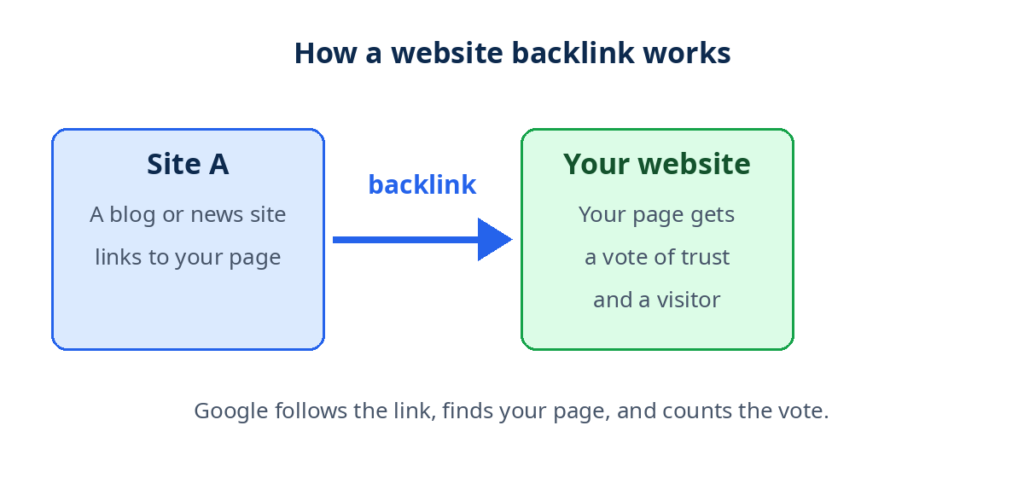
A backlink does two jobs at once. First, it sends people. Anyone reading the linking page can click through to yours, and those visitors arrive already interested in the topic. Second, it sends a signal to Google.
Google’s first ranking system, PageRank, was built on this idea. A link works like a vote, and votes from pages that are themselves trusted count for more. That idea still sits inside Google’s ranking systems today, even though the systems around it have grown far more complex.
A backlink also helps Google find your pages. When Google’s crawlers follow a link from a page they already know to a page they have not seen, they discover the new page. A page with no links pointing to it can sit unnoticed for a long time, which is one reason brand-new sites find it hard to get any search traffic at all.
Why backlinks matter: what the research shows
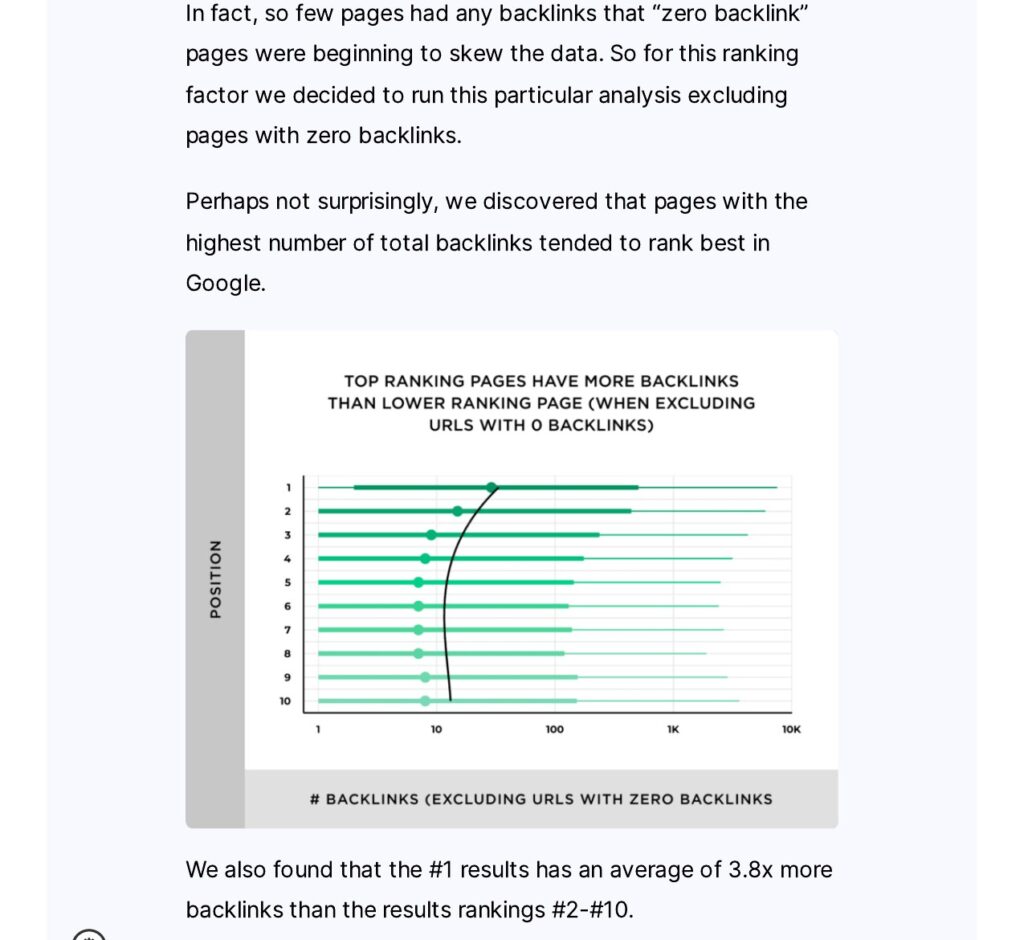
The link between backlinks and rankings is one of the most studied facts in SEO. The numbers below come from large, named studies — not from guesswork.
| Finding | Source and sample |
|---|---|
| The #1 result in Google has 3.8x more backlinks than positions #2–#10 | Backlinko, 11.8 million Google search results |
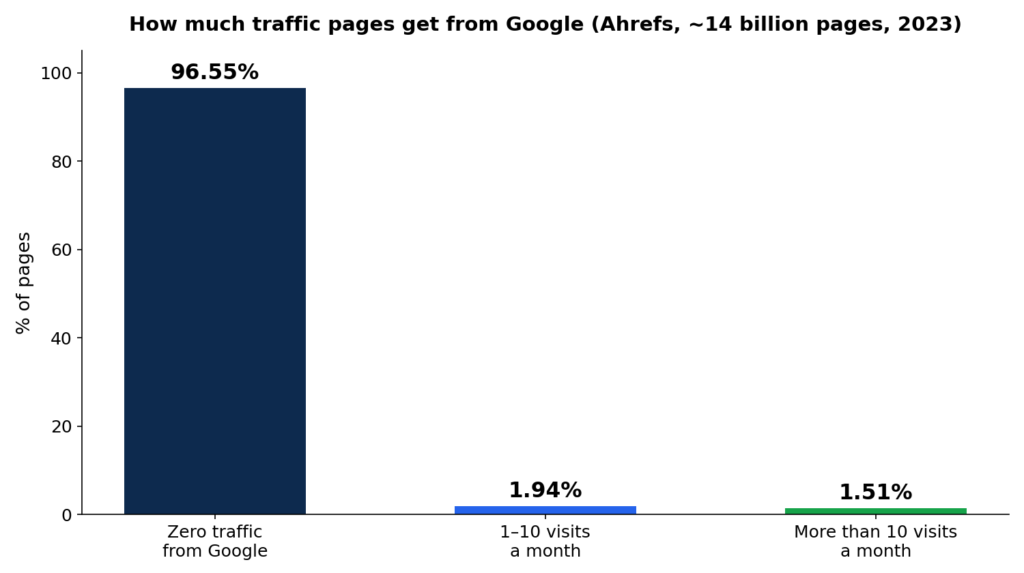
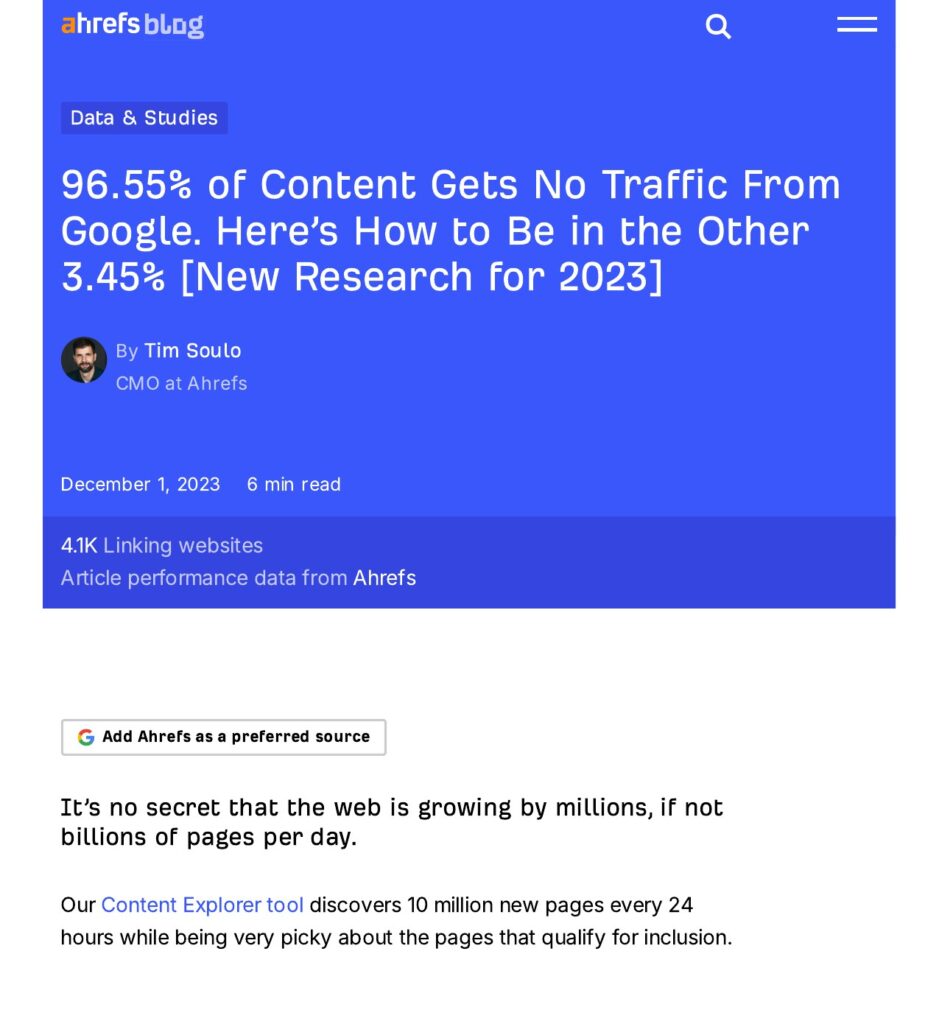
| 96.55% of all pages get zero traffic from Google | Ahrefs, around 14 billion pages |
| 66.31% of pages have no backlinks at all | Ahrefs, around 1 billion pages |
| Of around 20 million pages with no referring domains, only 2,997 get more than 1,000 search visits a month — about 1 in 6,671 | Ahrefs |
| Referring domains correlate more strongly with rankings (0.255) than total backlinks (0.248) | Ahrefs, 1 million keywords, 2025 |
| Backlinks carry around 13% of Google’s algorithm weight, down from 15% in 2024 | First Page Sage |
Read those figures together and the picture is clear. Most pages on the web have no backlinks and get no traffic. Pages with strong link profiles rank higher, get more visits, and hold their positions longer. But the numbers also carry a warning: they show correlation, not proof that links alone cause rankings, and the weight of links is falling slowly. In March 2024 Google quietly changed its own documentation, dropping the word “important” from its description of links as a ranking factor, and Google’s Gary Illyes has said links have not been a top-three ranking factor for some time. Links still matter. They just matter less than they did, and only the good ones count.
What makes a backlink good or bad?
Not all backlinks are equal. One link from a trusted site in your field can be worth more than a hundred links from sites nobody reads. A good backlink usually has four traits:
- Relevant. A link from a site in your field, or from a page about your topic, counts for far more than a link from an unrelated site.
- Editorial. The site chose to link to you because your content helped its readers — not because you paid for the link, swapped links, or placed it yourself.
- On a real page with real traffic. A link buried on a page nobody visits, or on a site built only to sell links, passes almost nothing.
- From a trusted source. Links from established publications, industry bodies and well-known sites carry more weight than links from new or unknown domains.
A bad backlink is the opposite: a link from an unrelated or low-quality site, a link you placed yourself on a forum or comment section, or a link from a site that exists only to sell links. Google’s SpamBrain system has detected and neutralised unnatural links since the December 2022 link spam update, so those links now pass no ranking value — and a site caught using them can rank lower or disappear from results entirely.
Links also come in flavours that change how Google treats them. A normal “dofollow” link passes ranking value. A “nofollow” link tells Google not to pass ranking value, though Google may still follow it to find the page. A “sponsored” link marks a paid link, and a “UGC” link marks a link in user-generated content such as a forum post. Nofollow links still bring visitors and still show Google your site is being talked about, so they are not worthless — they are simply worth less for rankings.
The main types of website backlinks
Most backlinks a site earns fall into a few common types:
Editorial links. A journalist, blogger or author links to your page because it adds something to their article. These are the most valuable links, because they are freely given.
Guest post links. You write an article for another site in your field, and the article links back to your site. These work when the host site is real and relevant — not when it exists only to host guest posts.
Resource page links. A site keeps a page of useful links on a topic, and your guide or tool earns a place on it. Resource pages are one of the oldest honest ways to build links.
Directory and listing links. A business directory, trade body or local listing links to your site. A listing on a real directory your customers use is fine; hundreds of listings on directories nobody visits are not.
Mention links. A site mentions your brand or your research and links to the source. Original data and clear guides earn these naturally.
Forum and comment links. Links you leave in comments, forum signatures or profiles. These are nearly always nofollow, and they help nobody if they are the whole of your link building. A genuine answer that links to a helpful page is fine; dropping links to promote your site is not.
How to check your website’s backlinks
You do not need a paid tool to see the links pointing to your site. Google Search Console shows them for free. Open your property, go to the Links report in the left-hand menu, and you will see your top linked pages, the sites linking to you most, and the anchor text they use. It is the only list of your backlinks that comes straight from Google.
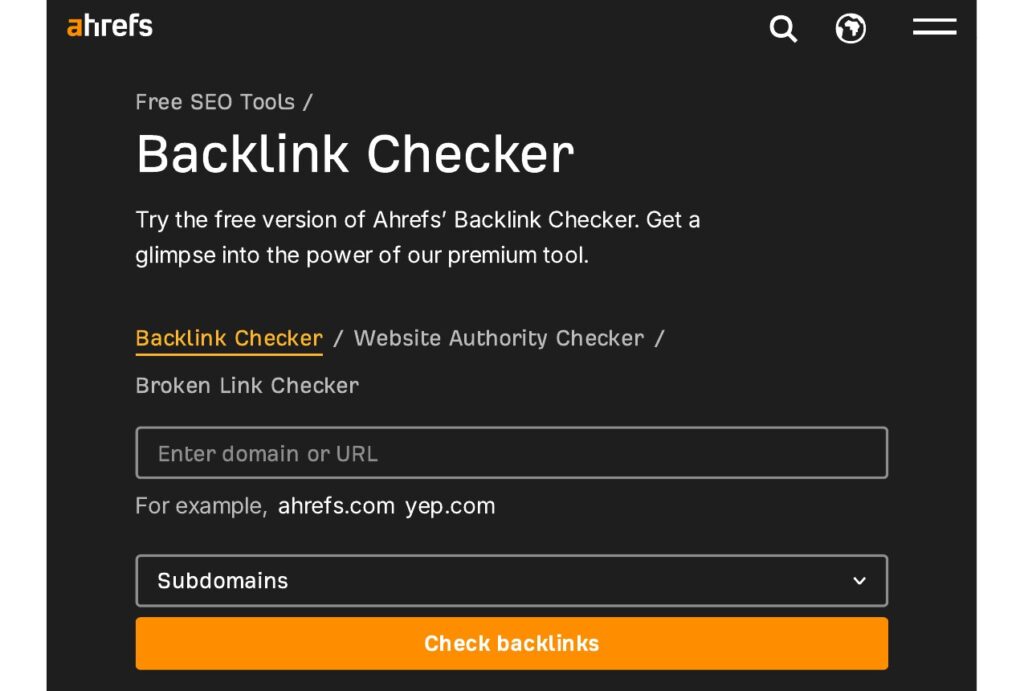
If you want more detail, such as the authority of the linking sites or links your competitors have that you do not, a backlink checker such as Ahrefs‘ free backlink checker will show a sample of your links. Paid tools show the full picture, but the free reports are enough to start with: check who links to you, look for anything odd, and note which of your pages attract links and which attract none.
How to get website backlinks the right way
Good link building is slow, manual work. There is no shortcut that lasts. These five steps are the core of it:
1. Make something worth linking to. Original research, a clear guide, a useful tool or a strong opinion piece. Pages that teach something new earn links; thin pages written only to rank do not.
2. Find the sites that already link to similar content. Use a backlink tool to see who links to the pages ranking for your topic. Those sites have already shown they link to this kind of content.
3. Reach out with a real reason. Write to the person who runs the site, explain what your page adds, and suggest the exact place it fits. Expect most emails to go unanswered — Backlinko and Pitchbox analysed 12 million outreach emails and found only 8.5% got a reply. A short, polite follow-up lifts replies, so do not give up after one email.
4. Use tactics that earn links honestly. Digital PR, broken link building, resource pages, and guest posts on real sites in your field all work. In Aira’s State of Link Building survey, 48.6% of experts rated digital PR the most effective tactic, ahead of guest posting at 16%.
5. Track what you earn and keep it. Check new links each month, watch for lost links, and fix or replace the ones that break. A link profile needs looking after, not just building.
If you would rather have a team do this for you, take a look at our link building services. We do manual outreach and earn links from real sites — no link farms, no private blog networks, no shortcuts.
What to avoid
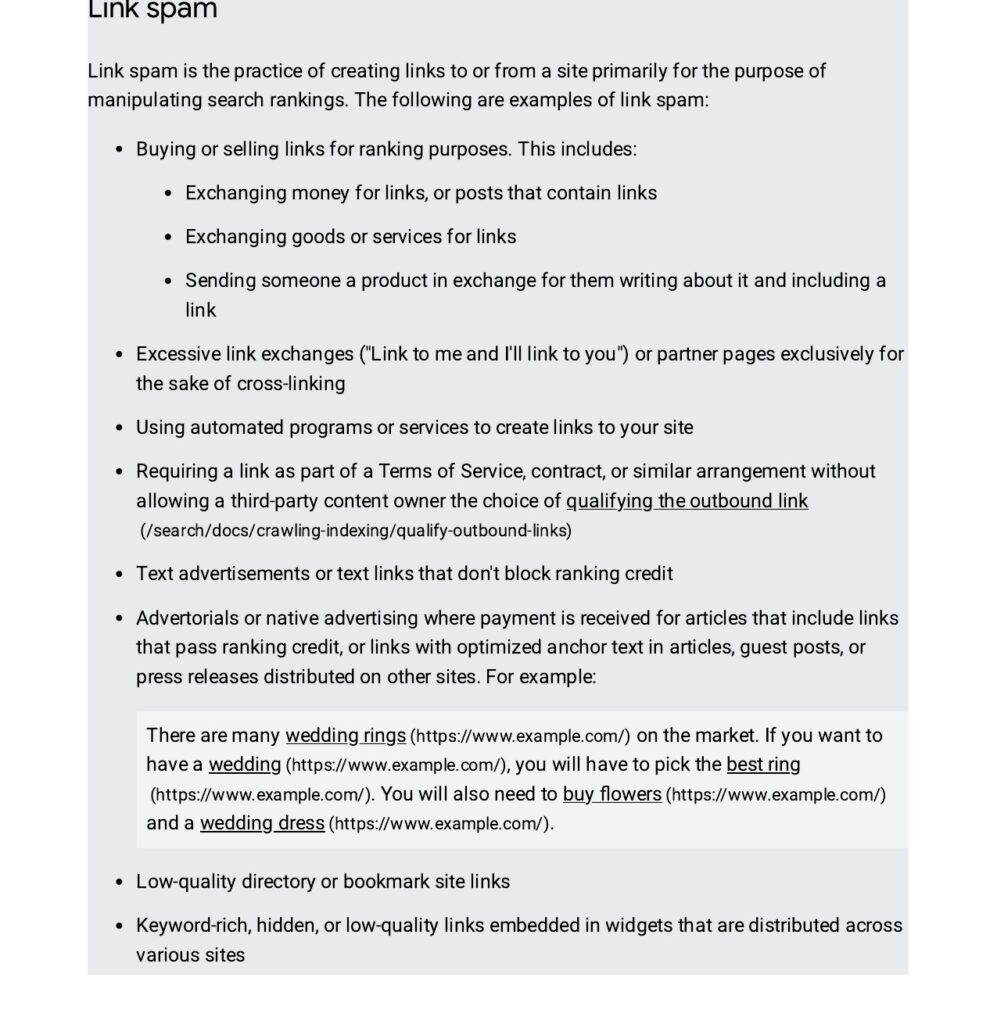
Google’s spam policies are clear about what counts as link spam: creating links mainly to manipulate rankings. That includes buying or selling links for ranking purposes, excessive link exchanges, automated link-building programs, and low-quality directory or bookmark links. Paid links are not banned outright — Google accepts that buying and selling links is a normal part of the web economy for advertising and sponsorship, as long as the link carries a rel=”nofollow” or rel=”sponsored” attribute. What breaks the rules is a paid link dressed up as an editorial one. Keep your link building honest, and you keep your rankings safe.
Frequently asked questions
What are website backlinks in simple terms?
A website backlink is a link from one website to another. When another site links to your page, it is pointing its readers to you and telling Google your page is worth a visit. Search engines treat backlinks as votes of confidence, so pages with more links from trusted, relevant sites tend to rank higher than pages with none.
Do backlinks still matter in 2026?
Yes. Links remain part of Google’s ranking systems, and every large study still finds that pages with more referring domains rank higher and get more traffic. Their weight has fallen — from around 15% of the algorithm in 2024 to around 13% — and quality now matters far more than quantity. But no serious study shows links becoming unimportant.
How many backlinks do I need to rank?
There is no fixed number, because it depends on the keyword. For low-competition keywords, a handful of links from relevant sites can be enough. For competitive keywords, the pages on page one often have dozens or hundreds of referring domains. Count referring domains, not total links, and compare your page with the pages already ranking for your keyword.
What is the difference between a backlink and a referring domain?
A backlink is a single link pointing to your site. A referring domain is a unique website that links to you. If one site links to you ten times, that is ten backlinks but one referring domain. Referring domains matter more for rankings, because ten links from ten different sites are ten independent votes, while ten links from one site are one voice repeated.
Can backlinks hurt my website?
Yes, if they are the wrong kind. Links from spam sites, link farms or sites that exist only to sell links can drag your rankings down, and Google’s SpamBrain system can neutralise them or trigger a manual action. Check your links in Google Search Console from time to time, and if you find clearly manipulative links you did not earn, you can disavow them.
Is it safe to buy backlinks?
No. Buying links for ranking purposes is link spam under Google’s spam policies, and Google’s SpamBrain system has neutralised unnatural links since December 2022, so bought links pass no ranking value. Worse, they can trigger a manual action or an algorithmic drop. If you pay for a link for advertising, it must carry rel=”sponsored” or rel=”nofollow”. Earn links instead.

Abdullah Zulfiqar is Co-founder and Client Success Manager at RankWithLinks, an SEO agency helping businesses grow online. He specializes in client relations and SEO strategy, driving measurable results and maximizing ROI through effective link-building and digital marketing solutions.