

Resource page link building means getting your best content listed on a page that already exists to recommend useful resources. Think of university reading lists, industry tool round-ups, local guides, and "helpful links" pages. The page owner already wants to link out. Your job is to give them a good reason to link to you.
This tactic works best when you have something genuinely worth recommending. A thin sales page rarely makes the cut. A clear guide, a useful tool, or original research has a much better chance.
What is resource page link building?
A resource page is a curated list of links on one topic. The owner collects the best articles, tools, courses, or organisations they can find, so their readers do not have to search for them.
Resource page link building is the process of finding those pages, checking they are a good fit, and asking the owner to consider your content. It is manual outreach, not a directory submission. The owner keeps full editorial control, and they can say no.
It differs from guest posting because you do not write for someone else’s site. You are asking for a place in an existing list. It pairs well with broken link building: if you spot a dead link on a resource page, telling the owner gives you a helpful reason to get in touch.
Why resource pages are worth your time
Resource pages are warm prospects. The owner has already decided that linking out helps their readers. You are asking them to judge one suggestion, not to change their mind about links.
That does not mean replies come easily. Real outreach data from Mentiohunt’s 2026 link building statistics shows resource-page prospects replied at 6.9% (32 replies from 464 prospects). Guest post pitches, by comparison, replied at 25.0% (80 of 320). Those figures count replies, not links won, so the final link rate is lower still. Expect to contact many pages, and make each pitch count.
There is a wider reason to keep building links at all. Backlinko’s analysis of 11.8 million search results found that the result in first place had about 3.8 times as many backlinks as the results in positions two to ten. Ahrefs has also reported that 95% of all web pages have no backlinks at all. Search Engine Land has reported that resource page link building was the second most popular link building strategy among SEO professionals. It has lasted because it is a fair exchange: the page gets better, and you get a relevant link.
What kind of content gets listed?
Before you search for pages, check you have something worth pitching. Editors list content that helps their readers.
Content that tends to get listed includes:
- A complete, up-to-date guide on one topic
- A free tool, calculator, template, or checklist
- Original research, survey results, or statistics
- A clear glossary or beginner’s explainer
If your best page is a sales page, do not pitch it. Create or improve a helpful resource first. A resource page that links to a sales page looks like an advert, and most good editors will refuse it.
How to find resource pages
Start with Google search operators. Replace "your topic" with your subject, and try several wordings, because not every resource page uses the word "resources".
- your topic intitle:resources
- your topic inurl:resources
- your topic "helpful resources"
- your topic "useful links"
- your topic "recommended resources"
- your topic intitle:links
Also try "best sites", "best blogs", and "places to learn" with your topic, to find pages that curate links without calling themselves resource pages.
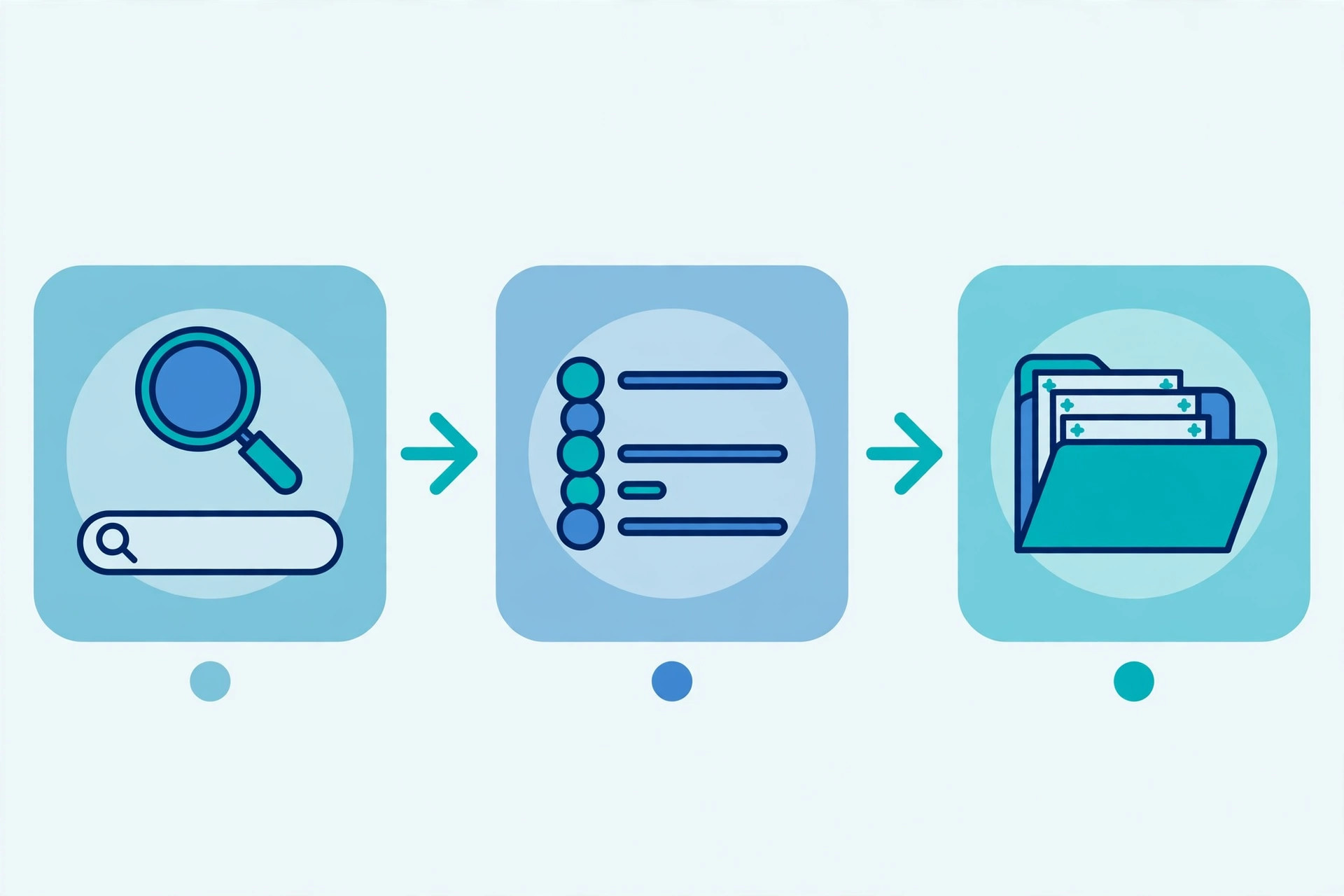
Other useful sources include competitor backlink profiles, association websites, and university guides. If a competitor is already listed on a strong resource page, that page is a realistic target too, provided your content is at least as useful. Keep a simple list as you go: page URL, topic, contact name if you can find one, and why your content fits.
How to vet a resource page before you pitch
Not every resource page is worth a pitch. A link from an abandoned, irrelevant, or spammy page can do more harm than good. Check each page:
- Relevance. Does the page cover your topic, or a closely related one?
- Maintenance. When was it last updated? Are most links still working?
- Quality of existing links. Are the other links to trusted, real sites? If not, walk away.
- Editorial standards. Does it link to a mix of sources, or only to one company? Does it look built to sell links? If so, skip it.
- Real audience. Does the site publish useful content, and does the page sit naturally within it?
A smaller number of relevant, maintained pages is worth far more than a large list of weak ones.

How to pitch a resource page
Keep your email short, specific, and honest. A good pitch has four parts: a specific comment on the page, a clear suggestion naming your resource and why it fits, a helpful extra such as a broken link you found, and an easy next step. Ask them to take a look and decide. Do not pressure them, and do not offer payment. Follow up once, a week or so later, if you hear nothing.
What the numbers say about outreach
The table below uses Mentiohunt’s 2026 outreach figures, which count replies rather than links won.
| Opportunity type | Prospects contacted | Replies | Reply rate |
|---|---|---|---|
| Guest post pitches | 320 | 80 | 25.0% |
| Resource pages | 464 | 32 | 6.9% |
| Listicle round-ups | 1,023 | 118 | 11.5% |
| Competitor backlinks | 1,518 | 201 | 13.2% |
Source: Mentiohunt, Link Building Statistics 2026.
Resource pages had the lowest reply rate of the four large types in that data. That is not a reason to avoid them. It is a reason to target well and pitch only pages where your content truly fits. Ten careful pitches will beat one hundred generic emails.
Common mistakes to avoid
- Pitching a sales page. Editors list resources, not adverts.
- Sending the same email to everyone. If the email could apply to any page, it will be ignored.
- Targeting pages that sell links. Paid placements on pages built for selling links can breach Google’s spam policies and put your site at risk.
- Chasing every page you find. Relevance and maintenance matter more than volume.
- Giving up after one batch. Track replies, learn which pitches get answers, and improve the next round.
How RankWithLinks approaches resource page outreach
At RankWithLinks, resource page outreach is done by hand: we find pages that fit the topic, check them properly, and contact owners with a specific, honest suggestion. We do not use private blog networks, and we do not place links on pages that exist only to sell them. Our manual link building services cover resource page outreach alongside other editorial tactics. The aim is simple: links a real editor chose to add, on pages a real reader would find useful.
Frequently asked questions
What is resource page link building?
Resource page link building means finding curated lists of useful links on a topic, then asking the page owner to consider adding your content. It works when your content is genuinely helpful, the page is relevant and maintained, and the owner keeps editorial control. It is a manual, editorial tactic, not a directory submission.
How do I find resource pages in my niche?
Use Google search operators such as "your topic intitle:resources", "your topic inurl:resources", and "your topic helpful resources". Also check competitor backlink profiles, association sites, and university guides. Try "best sites" and "places to learn" too, because some pages curate links without using the word resources.
What content works best for resource page links?
Guides, tools, templates, checklists, original research, and clear explainers tend to work best. The content should answer a reader’s question or solve a problem on its own. Sales pages and thin articles rarely get listed, because they do not improve the page for its readers.
How long does resource page link building take?
It is slow, steady work. Finding and vetting pages takes time, replies can take days or weeks, and some owners never reply. Mentiohunt’s 2026 data shows a 6.9% reply rate for resource-page prospects, so plan for a larger prospect list than the number of links you hope to win, and follow up once if needed.
Should you pay for a place on a resource page?
No. Paying for placement turns an editorial link into a paid one, and undisclosed paid links can breach Google’s spam policies. It also puts you on pages that may exist mainly to sell links. Pitch useful content instead, and let the owner decide on merit.
Are .edu and .gov resource page links better?
Not automatically. A link from an educational or government site can be valuable, but only if the page is relevant, maintained, and useful to its readers. The domain ending alone does not make a link good. Judge each page on relevance, quality, and editorial standards.

Abdullah Zulfiqar is Co-founder and Client Success Manager at RankWithLinks, an SEO agency helping businesses grow online. He specializes in client relations and SEO strategy, driving measurable results and maximizing ROI through effective link-building and digital marketing solutions.