
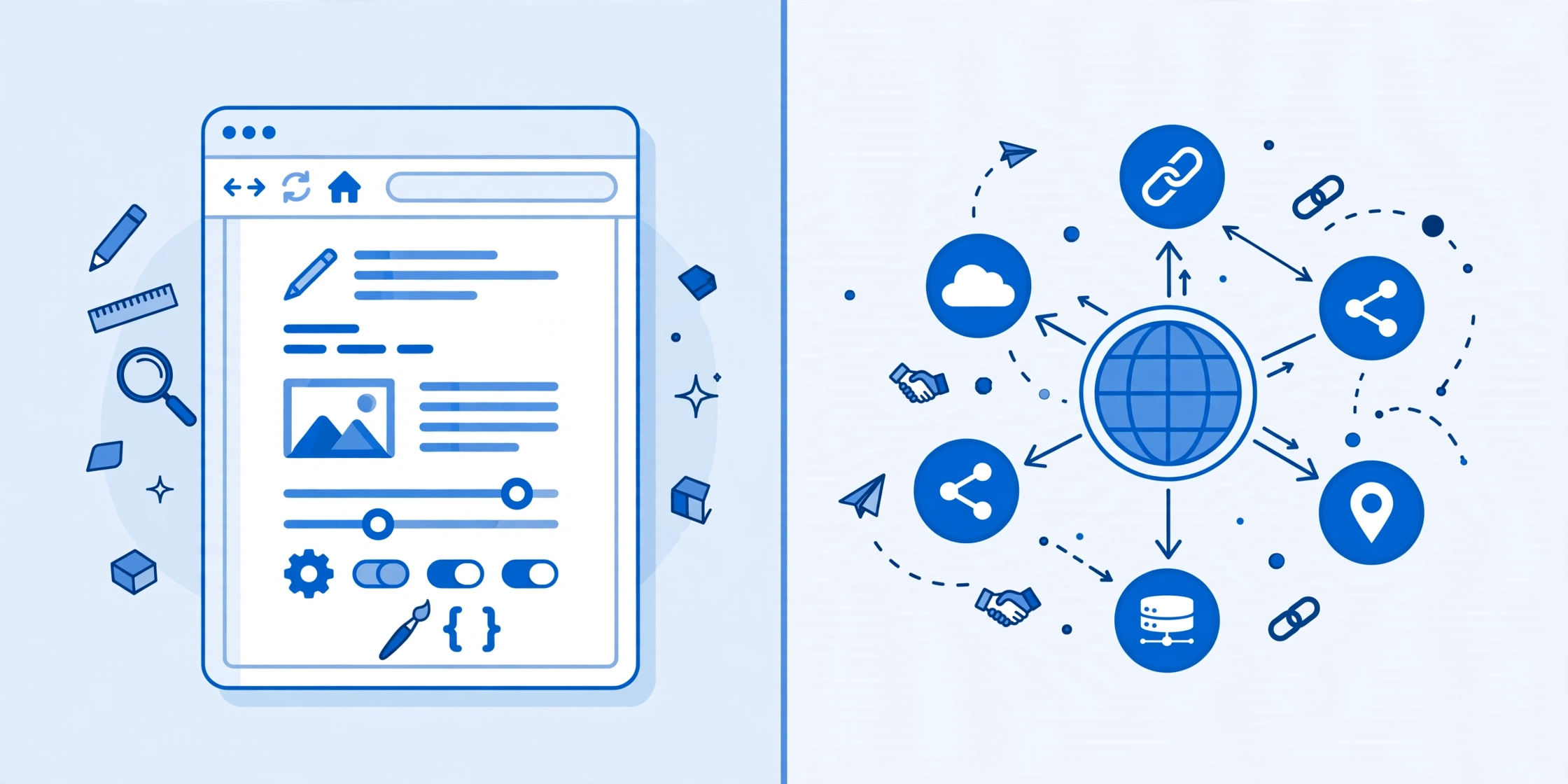
The difference between on page SEO and off page SEO is simple: on page SEO is everything you control on your own website, and off page SEO is everything that happens outside it — mostly other websites linking to yours. You need both to rank, but they work in very different ways. This guide explains each one, shows what they cover, and shares real data on why both matter.
What Is On Page SEO?
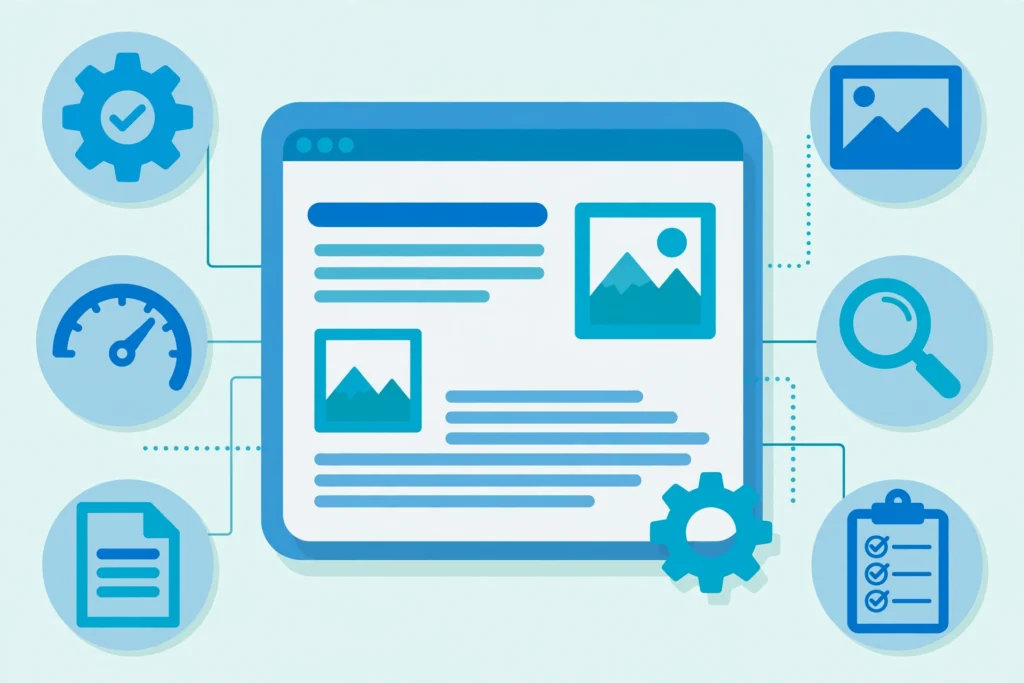
On page SEO (also written “on-page SEO”) means all the things you do on your own pages to help Google understand and rank them. It includes the words you write, the headings you use, the images, the page speed, and the way pages link to each other inside your site.
Think of it this way: on page SEO is your shop window. You decide what goes in it, how clean it is, and what it says. Google walks past thousands of windows — yours needs to clearly show what you sell and make people want to come in.
Main parts of on page SEO
- Content quality — useful, original text that answers the reader’s question fully.
- Titles and headings — clear title tags, one H1 per page, logical H2 and H3 sections.
- Keyword use — natural use of the target phrase and related terms, not stuffing.
- Images — descriptive file names and alt text, compressed so pages load fast.
- Internal links — links between your own pages so visitors and Google can move around.
- Page experience — fast loading, mobile-friendly design, easy navigation.
One useful data point: an analysis by Backlinko of 11.8 million Google search results found the average first-page result is about 1,447 words long. Length itself is not a ranking factor — Google has said so — but thorough pages tend to answer questions better, and that is what ranks. (Source: Kamaldeen, citing the Backlinko study.)
What Is Off Page SEO?
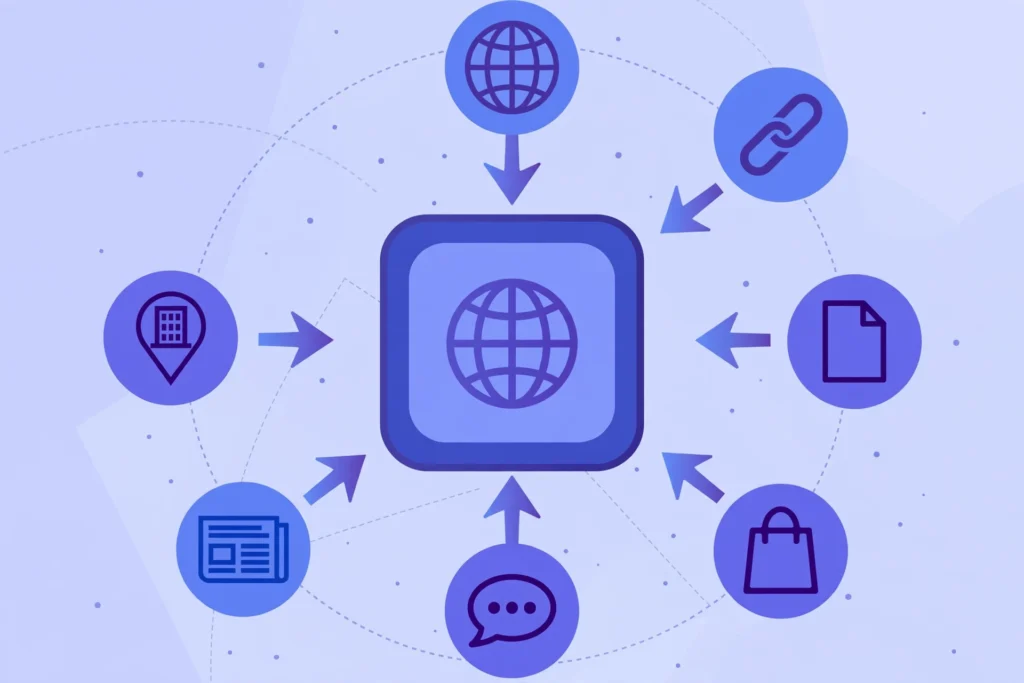
Off page SEO means all the signals that come from outside your website — mainly backlinks, which are links from other websites to yours. When a trusted site links to your page, it acts like a vote of confidence: it tells Google that other people find your content worth recommending.
Off page SEO also covers brand mentions, reviews, social shares, and digital PR. But backlinks are the biggest part by far.
To carry the shop analogy further: off page SEO is your reputation. Great shop windows matter, but if nobody in town has ever heard of you or recommends you, few people will walk through the door.
Main parts of off page SEO
- Backlinks — links from other websites. Quality beats quantity: one link from a respected site is worth more than dozens from weak ones.
- Brand mentions — people talking about your brand online, with or without a link.
- Reviews and citations — especially important for local businesses.
- Guest posts and digital PR — publishing useful content on other sites to earn links and attention.
The evidence for links is strong. Backlinko’s ranking-factor analysis found that the number one result in Google has on average 3.8x more backlinks than results in positions 2–10. And an Ahrefs study of around 14 billion pages found that 96.55% of all pages get zero search traffic from Google — with a clear correlation between the number of sites linking to a page and the traffic it receives. (Sources: Search Lab, citing Backlinko; Ahrefs.)
On Page SEO vs Off Page SEO: Side-by-Side Comparison
| Area | On Page SEO | Off Page SEO |
|---|---|---|
| Where it happens | On your own website | On other websites |
| You control it | Fully — you edit your pages | Partially — you earn it from others |
| Main actions | Content, headings, titles, speed, internal links | Backlinks, mentions, reviews, digital PR |
| Main signal to Google | “This page is relevant and well built” | “Other people trust this page” |
| Time to see results | Weeks | Months |
One important note: Google has said links are no longer in its top three ranking factors. At PubCon Austin in 2023, Google’s Gary Illyes said this, and in March 2024 Google changed its own documentation from “Google uses links as an important factor” to “Google uses links as a factor.” Links still help — but content quality and relevance matter more than ever. (Source: Search Engine Journal.)
Which One Matters More?
Honestly? Both — and on page SEO usually comes first. There is little point building backlinks to a page that loads slowly, reads badly, or does not answer the question. Fix the page first, then build its reputation.
That said, off page SEO is often the tie-breaker. When two sites have equally good content, the one with stronger, more trusted backlinks usually wins. Ahrefs found that of the roughly 20 million pages in its index with no referring domains, only 2,997 ever reach 1,000 monthly visits — about 1 in 6,671. Great content with zero links is almost invisible. (Source: SEO Mad Man, summarising the Ahrefs study.)
The click data shows why ranking matters so much. First Page Sage’s CTR data shows the first organic result gets 39.8% of clicks, position two gets 18.7%, and position three gets 10.2%. The top three results together take about 68.7% of all clicks. You need on page SEO to deserve a top spot — and off page SEO to earn it. (Source: The Stacc.)
How We Use Both at Rank With Links
We are a UK-registered agency specialising in manual link building. Our approach is simple: the on page side must be solid before we touch the off page side. We review the target page — its content, titles, and structure — then build links through manual outreach to real websites. No PBNs, no link schemes, no shortcuts.
If you want help with the off page half of your SEO, take a look at our link building services and see how we earn links the honest way.
Frequently Asked Questions
What is the main difference between on page SEO and off page SEO?
The difference is where the work happens. On page SEO covers everything on your own website — content, titles, headings, images, internal links, and page speed. Off page SEO covers signals from other websites — mainly backlinks, plus mentions, reviews, and social shares. On page SEO says your page is relevant; off page SEO says your page is trusted.
Can I rank with only on page SEO?
Sometimes, yes — for low-competition keywords. A well-written page targeting a niche query can rank on its own content quality. But for competitive terms, you will almost always need backlinks too. Ahrefs data shows that pages with no backlinks almost never reach meaningful traffic levels, so treating off page SEO as optional is risky.
Is off page SEO just link building?
Mostly, but not only. Link building is the biggest part of off page SEO, but brand mentions, online reviews, local citations, and social sharing also count. All of these tell Google what the wider web thinks of your site. Backlinks remain the strongest off page signal, though Google says content quality now matters more than it used to.
Should I buy backlinks to improve off page SEO?
No — we advise against it. Google’s spam policies define buying or selling links for ranking purposes as link spam, and it can lead to a manual penalty that wipes out your traffic. The safe route is earning links through useful content, genuine outreach, and digital PR. It is slower, but it does not put your site at risk.
How long does off page SEO take to work?
Usually months, not days. A new backlink needs to be discovered, crawled, and counted by Google, and its effect builds gradually as more links accumulate. On page changes can show results in weeks. Plan for at least 3–6 months of consistent off page work before judging the results.
Which should I do first: on page or off page SEO?
On page SEO first. Make sure the page is worth ranking: useful content, a clear title and headings, fast loading, and good internal links. Only then invest in off page SEO. Building links to a weak page is like inviting guests to a half-built house — it wastes the effort and the opportunity.

Abdullah Zulfiqar is Co-founder and Client Success Manager at RankWithLinks, an SEO agency helping businesses grow online. He specializes in client relations and SEO strategy, driving measurable results and maximizing ROI through effective link-building and digital marketing solutions.