
If you are running a business or managing a brand online, you already know that social media is one of the most powerful tools available to you. But here is the thing most marketers miss — organic social and paid social should not work in silos. When they are aligned and working together, the results are dramatically better. The challenge is finding the right platform that lets you manage both seamlessly.
In this article, we are going to break down the best platforms for aligning organic and paid social, why this alignment matters, and how to choose the right tool for your needs.
Why Aligning Organic and Paid Social Matters
Before diving into the platforms, it is important to understand why this alignment is so critical.
Organic social builds trust. It is your brand voice, your community, your long-term relationship with your audience. Paid social amplifies reach. It puts your content in front of people who have never heard of you. When both strategies are informed by the same data, the same messaging, and the same goals, your overall marketing performance multiplies.
Brands that align organic and paid social see higher engagement rates, lower cost-per-click, better audience targeting, and stronger brand consistency across the board. Now let us look at the platforms that make this possible.
1. Hootsuite
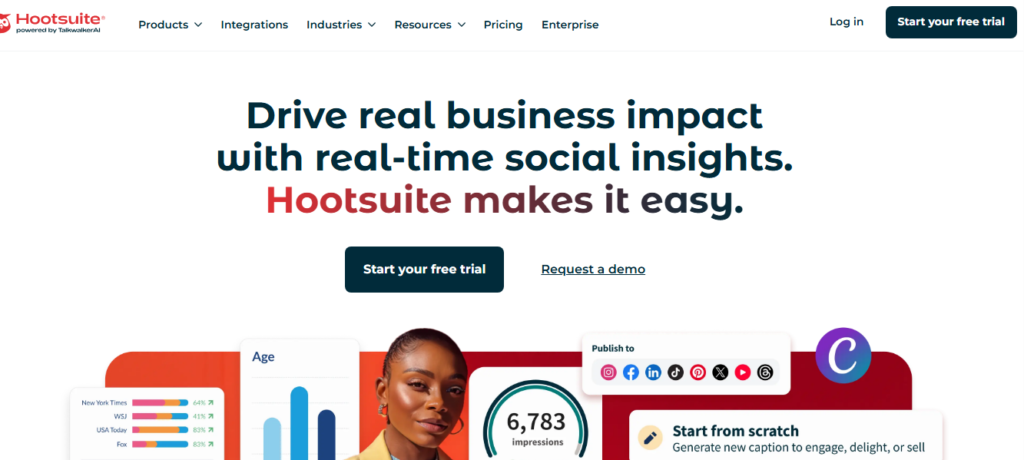
Hootsuite is one of the most well-known social media management platforms in the world, and for good reason. It offers a unified dashboard where you can schedule organic posts, manage paid ad campaigns, and analyze performance all in one place.
What makes Hootsuite stand out for organic and paid alignment is its ability to boost high-performing organic posts directly from the platform. You can see which organic content is gaining traction and instantly put paid budget behind it. This means your paid strategy is always data-driven and connected to what is already working organically.
Hootsuite supports Facebook, Instagram, Twitter/X, LinkedIn, TikTok, Pinterest, and YouTube. It also integrates with major ad platforms so your team does not need to jump between tools.
Best for: Mid-size to large businesses that want an all-in-one solution.
2. Sprout Social
Sprout Social is widely regarded as one of the most powerful platforms for social media management, and it does an exceptional job of bridging the gap between organic and paid strategies.
Its unified Smart Inbox pulls all your organic interactions and paid ad comments into one place. This means your community managers can respond to everything without losing track of what is paid and what is organic. Sprout also offers deep analytics that compare the performance of organic vs paid content side by side, giving you a crystal-clear picture of your ROI.
The platform’s listening tools are another huge advantage. You can monitor conversations in real time and use those insights to shape both your organic content calendar and your paid ad targeting. The result is a much more cohesive and responsive strategy.
Best for: Marketing agencies and enterprise brands that prioritize analytics and reporting.
3. Meta Business Suite
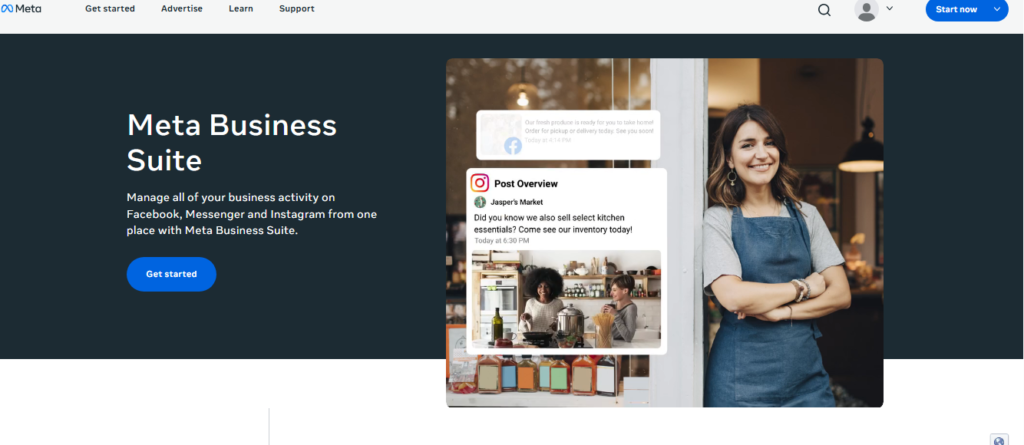
If Facebook and Instagram are your primary channels, Meta Business Suite is arguably the most powerful free tool available. It was built specifically to align organic and paid activity on Meta’s platforms.
Within Meta Business Suite, you can create and schedule organic posts, launch and manage paid ad campaigns, view combined analytics, and even set up A/B tests. One of its most useful features is the ability to see how your organic content performs before deciding whether to run it as a paid ad. This removes the guesswork from your paid strategy entirely.
The Ads Manager integration is seamless, and the audience insights tool helps you understand who is engaging with your organic content so you can build better lookalike audiences for paid campaigns.
Best for: Businesses whose primary audience is on Facebook and Instagram.
4. Buffer
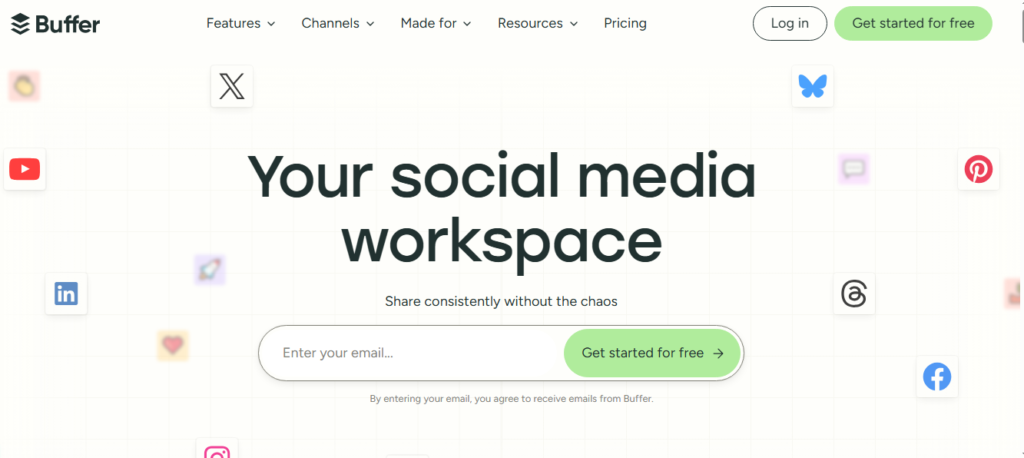
Buffer is a clean, simple, and affordable platform that has grown significantly in its capabilities over recent years. It is especially popular among small businesses, solopreneurs, and content creators who want to manage organic and paid social without a steep learning curve.
Buffer allows you to schedule organic content across multiple platforms and also offers a built-in promotion tool that lets you boost posts on Facebook and Instagram. While it may not have the enterprise-level depth of Sprout Social or Hootsuite, its simplicity is a genuine strength. Everything is easy to use, and the analytics are straightforward enough for any team member to understand.
Buffer also recently added AI-powered content suggestions that are informed by your past performance data, helping you create organic content that is more likely to succeed — and therefore more worth amplifying with paid spend.
Best for: Small businesses, startups, and individual creators.
5. HubSpot Social Media Management
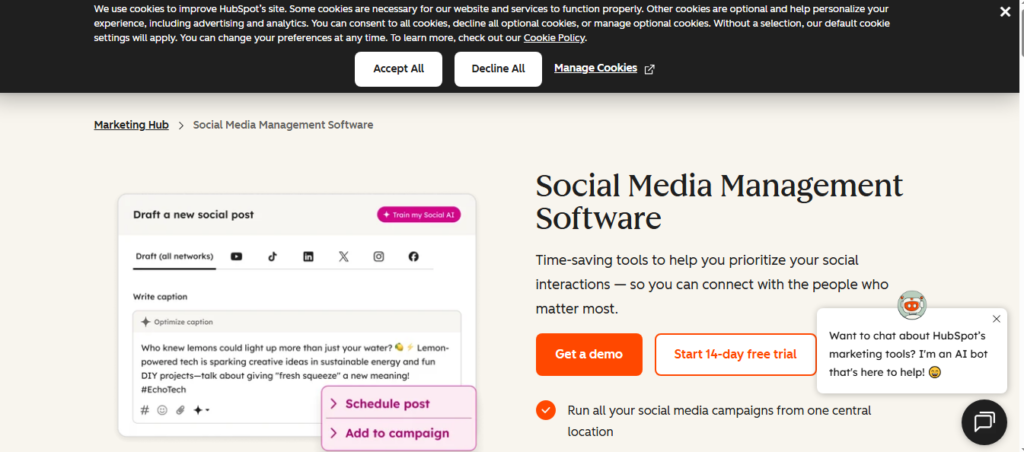
HubSpot is well known as a CRM and inbound marketing platform, but its social media management tool is seriously underrated when it comes to aligning organic and paid strategies.
The biggest advantage HubSpot offers is the direct connection between your social activity and your CRM data. When someone engages with your organic post or clicks a paid ad, that interaction is logged against their contact record. This means you can see exactly how social media — both paid and organic — is contributing to your pipeline and revenue.
HubSpot’s social tool supports scheduling, monitoring, and reporting for Facebook, Instagram, LinkedIn, and Twitter/X. It also integrates with Facebook Ads and Google Ads, giving you a complete view of your marketing performance in one dashboard.
Best for: B2B businesses and companies already using HubSpot for CRM or email marketing.
6. Loomly
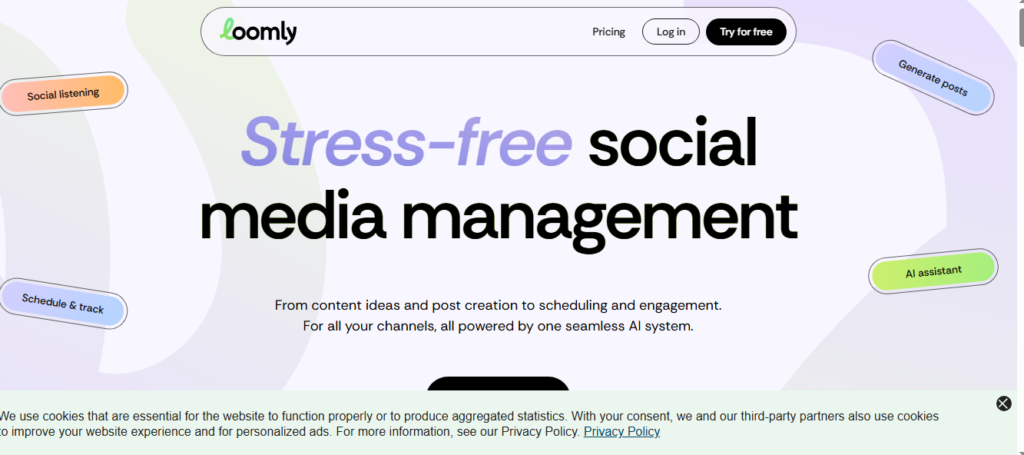
Loomly is one of the most underrated platforms on this list. It is a brand success platform designed to help marketing teams create, collaborate, and publish content across organic and paid channels.
One of Loomly’s standout features is its Post Ideas engine, which generates content suggestions based on trending topics, social media best practices, and your own past performance. Once you create an organic post, you can directly promote it as a paid ad within the platform without switching tools.
Loomly also offers strong team collaboration features, which is important for brands where different people manage organic content and paid advertising. It keeps everything in sync and ensures brand consistency across both strategies.
Best for: Teams that value collaboration and streamlined content workflows.
7. Planable
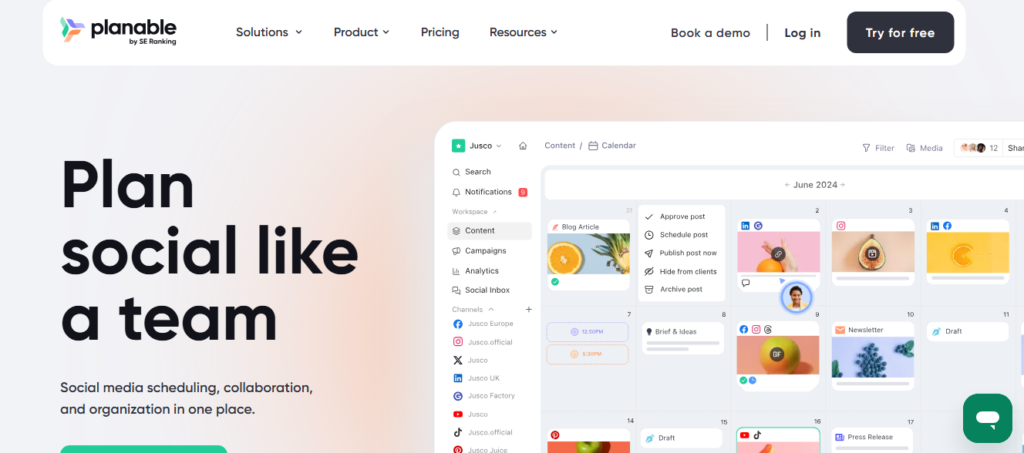
Planable is a content collaboration and scheduling platform that is particularly strong for teams that need to align messaging across organic and paid content before it goes live.
The platform’s visual feed preview is one of its most loved features. You can see exactly how your organic posts will look on each platform before publishing, which makes it easy to ensure your paid creative matches the same aesthetic and tone. Planable supports approval workflows, which means multiple stakeholders can review and sign off on both organic and paid content before it is published.
While Planable is more focused on the content creation and approval side than deep paid analytics, it is an excellent tool for teams where creative alignment between organic and paid is the top priority.
Best for: Creative teams and agencies managing multiple client accounts.
8. Semrush Social
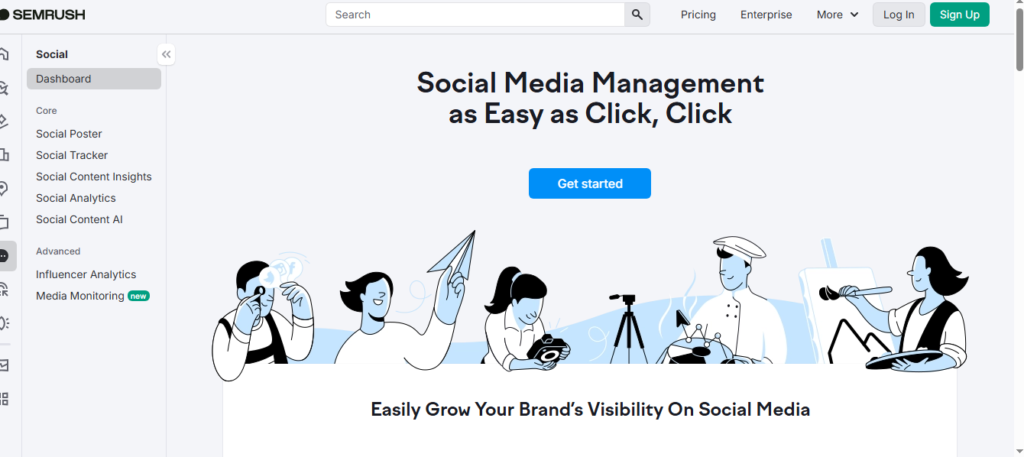
Semrush, best known as an SEO tool, has expanded into social media management with a product that ties together organic search data and social media performance in a way no other platform does.
This makes it uniquely valuable for brands that want their organic social and paid social strategies to be informed by the same keyword and audience data driving their SEO. You can manage organic social scheduling, monitor engagement, and analyze paid performance, all while having access to Semrush’s massive database of search trends and competitor insights.
For content marketers who want their social strategy to be closely aligned with their SEO and content marketing efforts, Semrush Social offers an unmatched level of integration.
Best for: SEO-driven brands and digital marketing teams that use Semrush for broader marketing strategy.
How to Choose the Right Platform for Your Business
With so many strong options available, the right choice depends on a few key factors.
Your team size matters. If you are a solo marketer or small team, Buffer or Loomly will give you everything you need without overwhelming complexity. If you are managing a large brand or multiple accounts, Hootsuite, Sprout Social, or HubSpot are better equipped for scale.
Your primary channels matter. If most of your audience is on Facebook and Instagram, Meta Business Suite is free and purpose-built for alignment on those platforms. If you are active across many networks, a third-party platform like Sprout Social gives you broader coverage.
Your goals matter. If analytics and reporting are your top priority, Sprout Social is the gold standard. If CRM integration and revenue attribution are critical, HubSpot is the clear winner. If creative collaboration and brand consistency are what you need most, Planable and Loomly are excellent choices.
Your budget matters. Meta Business Suite is free. Buffer has a very affordable entry-level plan. Hootsuite, Sprout Social, and HubSpot are premium investments that are well worth it for businesses with serious social media operations.
Final Thoughts
Aligning your organic and paid social media strategy is no longer optional — it is a competitive necessity. The brands that win on social media in 2026 are the ones using the same data, the same messaging, and the same insights to power both their organic content and their paid campaigns.
Whether you choose Hootsuite for its versatility, Sprout Social for its analytics depth, Meta Business Suite for its seamless Facebook and Instagram integration, or any of the other platforms on this list, the most important thing is that your organic and paid teams are working from the same playbook.

Usman Hakim is an SEO specialist at RankWithLinks, focusing on link building and organic growth. He helps brands improve search rankings through white-hat strategies, including guest posting and authority backlinks.