
If you have ever typed “backlinks to my site” into Google, you probably want a straight answer: how do I get other websites to link to mine, and does it actually help my rankings? A backlink is simply a link from another website to one of your pages. Search engines treat good links as a vote of trust, because another site chose to point its readers your way. This guide walks you through the whole job in plain steps: check the links you already have, earn new ones the safe way, avoid the tricks that cause trouble, and keep track of your progress month by month.
What a backlink to your site really is
A backlink is an ordinary link on someone else’s website that takes a visitor to your page. It can sit inside an article, on a resource page, in a partner listing, or in a news story. Not all links carry the same weight. A link from a real, relevant website that people actually read is worth far more than dozens of links from low-quality directories or automated sites that exist only to pass links around.
There is also a useful distinction to learn early. Your total backlink count is every link pointing at you. Your referring domains count is the number of different websites sending those links. Ten links from ten different sites are normally stronger than ten links from one site, because ten independent sites have each decided your page is worth recommending.
Step 1: Check the backlinks you already have
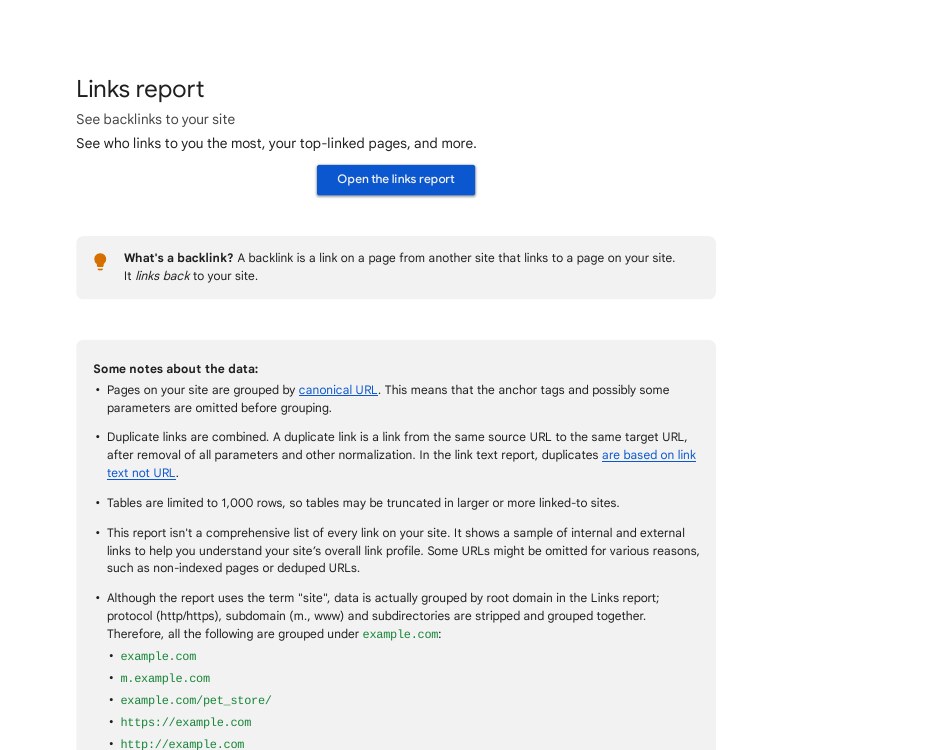
Before you chase new links, find out where you stand. You may already have links you never asked for, from directories, suppliers, customers, or old press mentions. Google Search Console shows you this for free.
- Open Google Search Console and choose your property.
- In the left menu, open Links.
- Look at “Top linking sites” to see which websites link to you most, and “Top linked pages” to see which of your pages attract links.
- Click a linking site to see the pages it links from, and check whether those pages are real and relevant.
- Export the list (Export external links) so you have a record to compare against next month.
If you find links from spammy or clearly fake sites, do not panic. Google says most sites never need to use its disavow tool, and it can judge which links to trust on its own. Only consider action if you have a large number of spammy links and a manual action, or a clear risk of one. For most small sites, the right move is to focus on earning good links, not fighting bad ones one by one.
What the numbers actually say about backlinks
It helps to know what the research shows, so you can judge advice you read elsewhere. The figures below come from large studies, and they are correlations, not promises. A correlation means two things tend to move together; it does not prove that one causes the other.
| Finding | Number | Source |
|---|---|---|
| Correlation between referring domains and rankings | 0.255 | Ahrefs, study of 1 million search results |
| Correlation between total backlinks and rankings | 0.248 | Ahrefs, study of 1 million search results |
| Correlation between Domain Rating and rankings | 0.131 | Ahrefs, study of 1 million search results |
| Backlinks held by the number one result, compared with positions 2 to 10 | 3.8 times more | Backlinko, study of 11.8 million search results |
| SEO professionals who named backlinks one of Google’s three most important ranking signals | 54.8% of 131 surveyed | Zyppy ranking factors survey, reported by Search Engine Land |
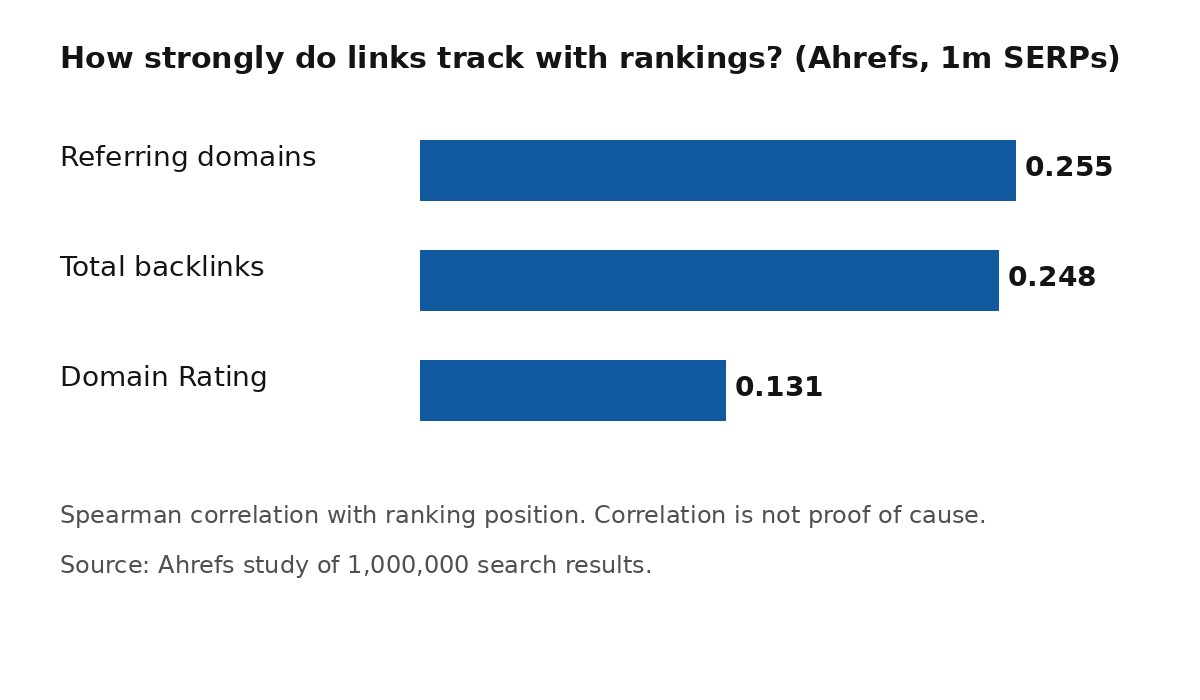
Two points stand out. First, referring domains scored slightly higher than total backlink count, which backs up the idea that links from more different sites matter more than many links from one site. Second, the number one result holding far more backlinks than the rest of the top ten shows how wide the gap can be at the top — but it also shows that top pages earned those links over time, not overnight.
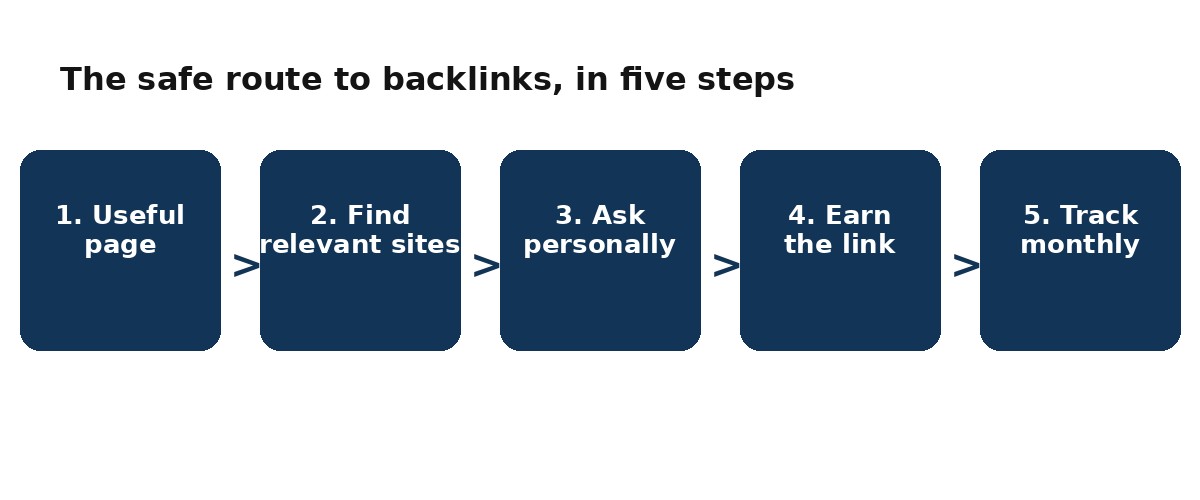
Step 2: Make one page worth linking to
People link to pages that help their own readers. Before you ask anyone for a link, make sure the page you want linked is genuinely useful. A thin sales page rarely earns links. A clear guide, a helpful checklist, a local resource list, or an original piece of research gives other sites a reason to point at you.
Pick one page to start with — your best guide or your most useful service page. Check that it answers its topic fully, loads fast, reads well on a phone, and has a clear title. One strong page is a better starting point than ten weak ones, because every link you earn then points at something worth visiting.
Step 3: Find sites that would naturally link to you
Make a short list of 20 to 30 relevant sites. Good candidates include blogs in your niche, local news sites, trade associations, suppliers and partners, and resource pages that already link to pages like yours. Search for phrases such as “useful resources” plus your topic, or look at which sites link to your competitors’ best pages.
For each site, note the right contact page or author, and one honest reason your page would help their readers. If you cannot find a real reason, leave that site off the list. A short, relevant list beats a long, random one, because site owners can tell the difference between a personal note and a mass email.
Step 4: Ask in a personal, helpful way
Write a short email to one person at a time. Say who you are, name their article or resource page, explain in one or two sentences why your page fits their readers, and link to the exact page. Do not offer money for a link, do not promise a link back in return, and do not send the same message to fifty sites at once.
A good request is easy to say yes to: it is relevant, it improves their page, and it asks for nothing shady. Expect most people to ignore you or say no. That is normal. If five out of fifty reply with a link, you have done well, and those five links will be real ones from sites that chose to link to you.
Step 5: Earn links without asking, too
Asking is only one route. Links also arrive when your content is worth finding:
- Publish one genuinely helpful guide on a question your customers keep asking, and share it where those customers already gather.
- Offer a free tool, template, or checklist that other sites can recommend.
- Share useful data from your own work, with the numbers clearly sourced, so writers can cite you.
- Take part in your local or trade community — events, sponsorships, and expert quotes often lead to natural mentions and links.
These routes are slower, but the links they bring tend to last, because they were given freely rather than arranged.
What to avoid: the shortcuts that cause trouble
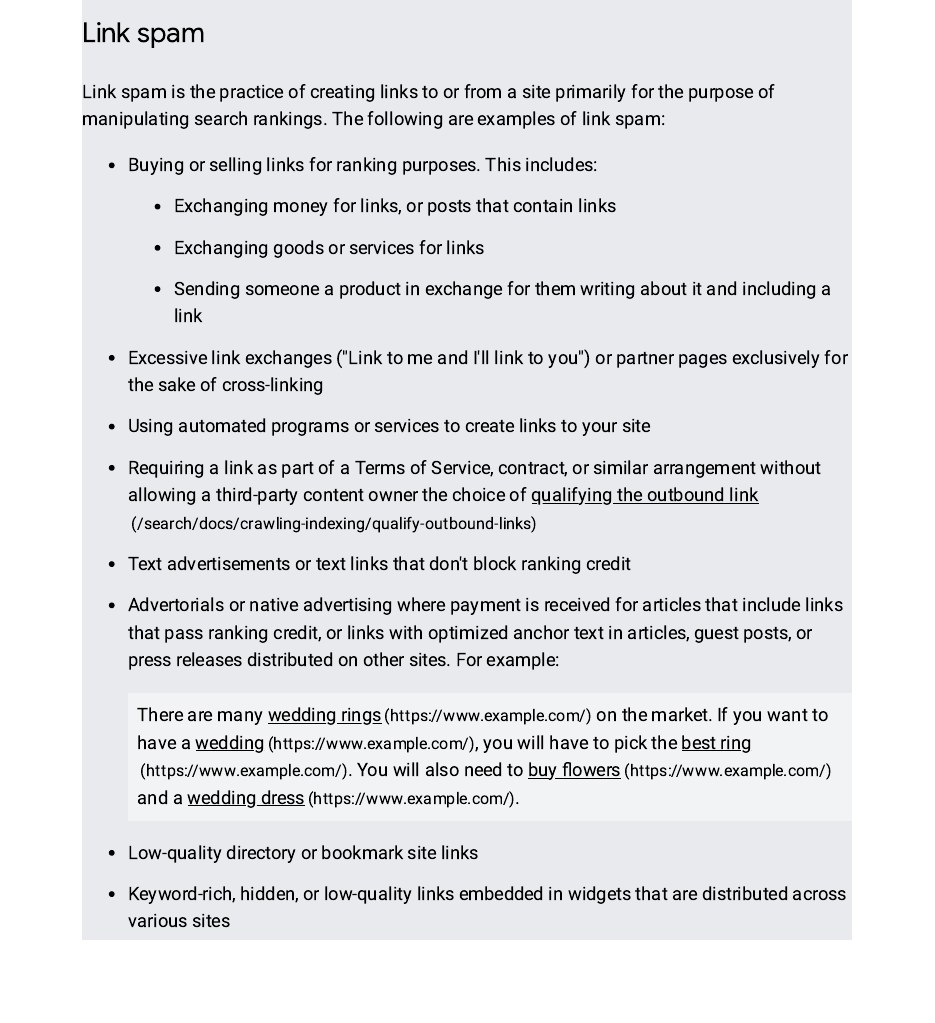
Google’s spam policies are clear that link spam means creating links mainly to manipulate rankings. That includes exchanging money for links that pass ranking credit, excessive link exchanges, and using automated programs to create links to your site. Paid links used for advertising are only acceptable when they are qualified so they do not pass ranking credit, for example with rel=”nofollow” or rel=”sponsored”.
Avoid link schemes, private blog networks, and bulk link packages that promise hundreds of links for a fixed price. They may lift a page briefly, but they leave a footprint Google’s systems are built to spot, and cleaning one up takes far longer than earning good links in the first place. If a link offer sounds too easy, that is usually the warning sign.
Step 6: Track your new backlinks every month
Link building works only if you measure it. Once a month, repeat the Search Console check from Step 1 and compare it with last month’s export:
- How many new referring domains appeared, and are they real, relevant sites?
- Which of your pages gained links, and did those pages move up in search?
- Did any good links disappear, for example because a page was removed or changed?
- Are any new links clearly spammy, and is there a pattern worth watching?
Keep a simple record: date, new referring domains, links lost, and any action taken. Over three to six months, this record shows what is actually working far better than a single day’s ranking check.
If you would rather have this done for you by a team that builds links by manual outreach, see our link building services for how we approach it.
FAQ
How long does it take to get backlinks to my site?
There is no fixed timetable, and anyone who promises one should be treated with caution. A first handful of real links can arrive within a few weeks of publishing a useful page and contacting relevant sites, but a strong profile is built over months of steady work. Judge progress by new referring domains each month, not by day-to-day ranking changes, which move for many reasons.
How many backlinks do I need to rank?
It depends on your topic and your competitors, not on a magic number. A page targeting a narrow local topic may compete with a small number of good links, while a broad national topic may need many more. Compare your page with the pages already ranking for your target phrase: look at their referring domains and content quality, and aim to match and then beat that standard honestly.
Are backlinks still important in 2026?
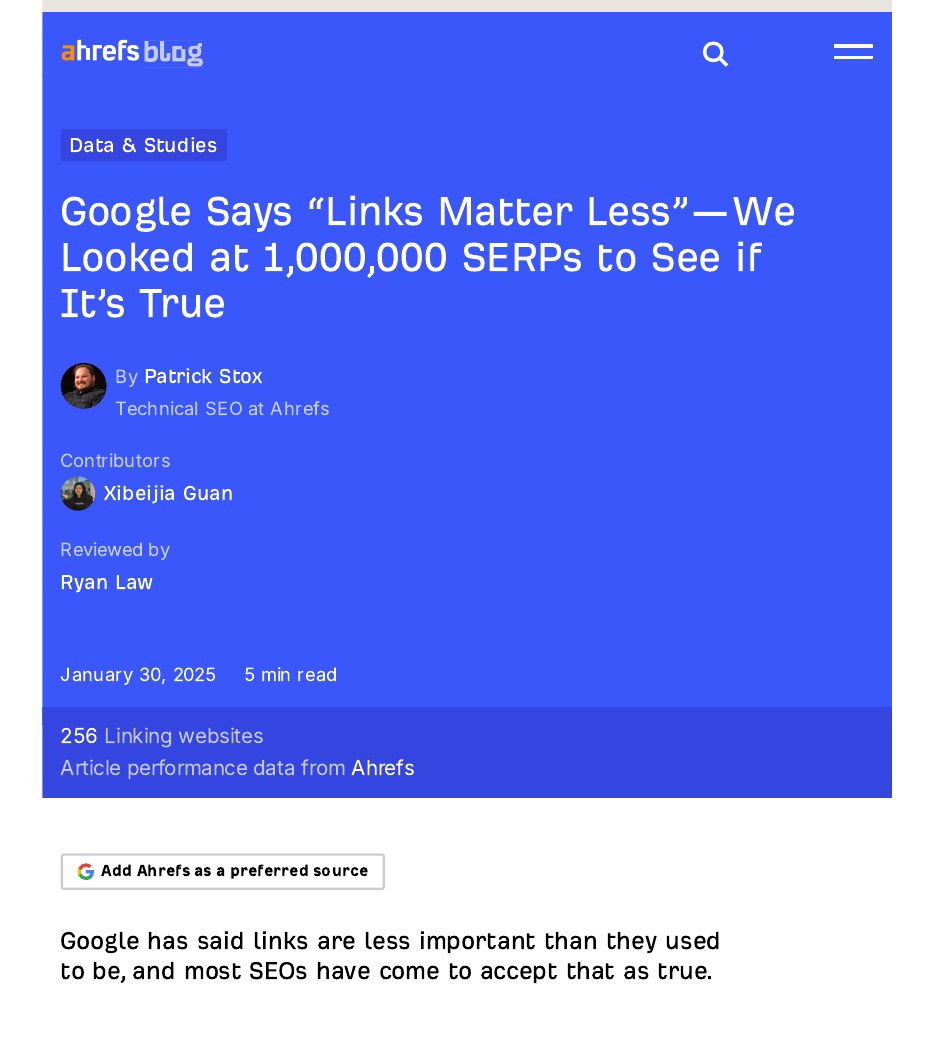
Yes, but they are one signal among many. Ahrefs’ study of one million search results still found referring domains and backlink counts correlating with rankings, and a majority of surveyed SEO professionals still named backlinks among the top ranking signals. Content quality, relevance, and a good user experience matter just as much, so links alone will not rescue a weak page.
Should I buy backlinks to speed things up?
No, not for ranking purposes. Google’s spam policies list buying or selling links for ranking purposes as link spam, and links bought that way can be ignored by Google or lead to a manual action. If you pay for advertising or sponsorship, the link must be qualified with rel=”nofollow” or rel=”sponsored” so it does not pass ranking credit. Earning links through useful content and honest outreach is slower, but it is the approach that lasts.
What is the difference between a backlink and a referring domain?
A backlink is one link pointing to your site. A referring domain is one website sending links to you, however many links it sends. If one blog links to you ten times, that is ten backlinks but one referring domain. Research suggests referring domains matter slightly more, because links from more independent sites show broader trust in your page.
How do I know if a backlink is a good one?
Ask three questions: is the linking site real, with real readers and content on your topic? Does the link sit naturally inside content a reader would find useful? Would you be happy for a customer to see that link? If the answer to all three is yes, it is a good link. If the site exists only to sell links, has thin or copied content, or has nothing to do with your topic, it is not one to chase.
Sources
- Ahrefs, “Google Says Links Matter Less — We Looked at 1,000,000 SERPs to See if It’s True”: https://ahrefs.com/blog/links-matter-less-but-still-matter/
- Google Search Central, “Spam Policies for Google Web Search”: https://support.google.com/webmasters/answer/66356?hl=en
- Search Engine Land, “Google’s top ranking factors, according to 131 SEO professionals”: https://searchengineland.com/google-top-ranking-factors-survey-131-seo-professionals-487723
- Backlinko, “We Analyzed 11.8 Million Google Search Results” — the 3.8 times figure for the number one result is the study’s published finding.

Abdullah Zulfiqar is Co-founder and Client Success Manager at RankWithLinks, an SEO agency helping businesses grow online. He specializes in client relations and SEO strategy, driving measurable results and maximizing ROI through effective link-building and digital marketing solutions.