
A digital PR strategist is the person who turns a brand into a story journalists want to cover — and turns that coverage into links that lift search rankings. They sit where public relations meets SEO: they find the newsworthy angle in a business, build it into a campaign, pitch it to the press, and measure the links and mentions that come back.
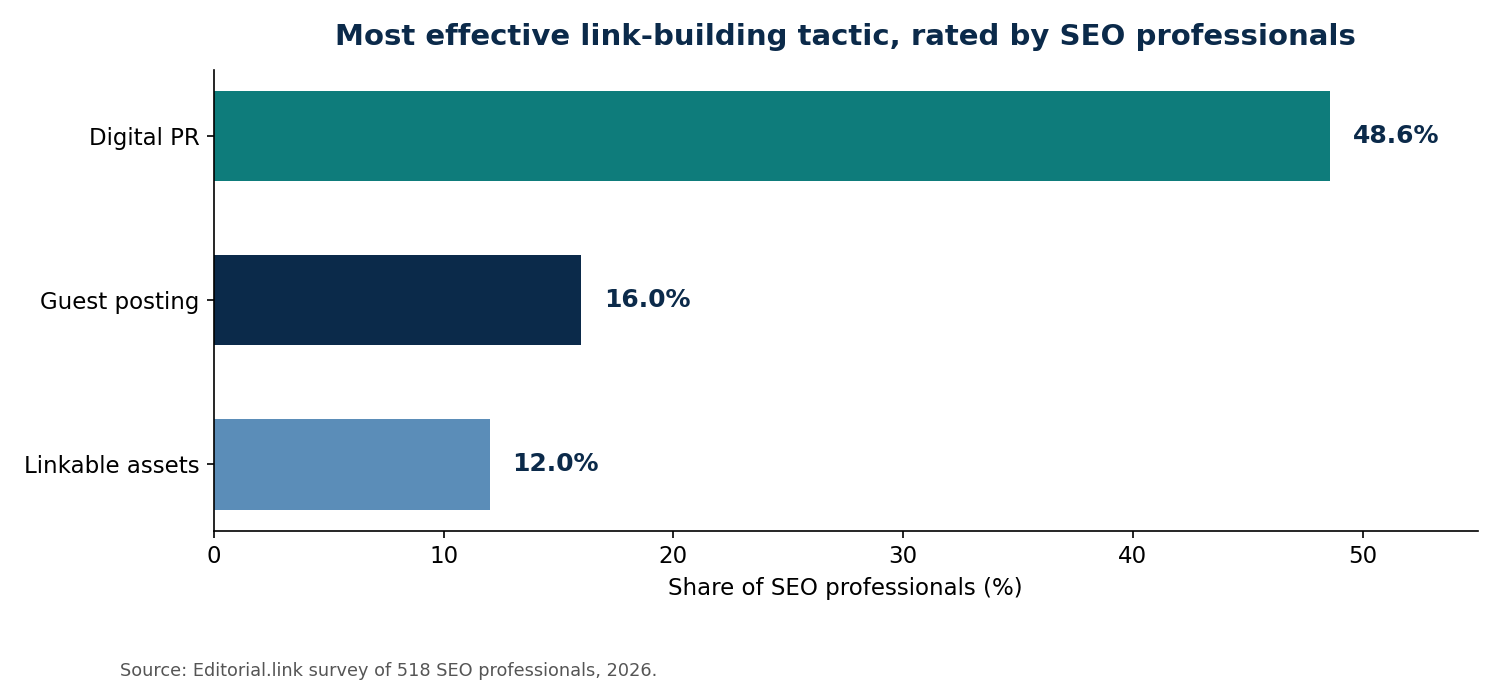
It is one of the most in-demand roles in SEO today. In a 2026 survey of 518 SEO professionals, 48.6% rated digital PR the most effective link-building tactic available — far ahead of guest posting at 16%. If you want links from real publications rather than directories and paid placements, a digital PR strategist is usually the person who earns them.
This guide explains what the role covers, what a strategist does day to day, the skills the job needs, what it pays in the UK, and how to become one.
What is a digital PR strategist?
A digital PR strategist plans and runs earned-media campaigns with one eye on the press and the other on search. Traditional PR chases coverage for reputation. Digital PR chases coverage that also earns backlinks, brand mentions and referral traffic — the things Google reads as signs of authority.
The strategist is the planner, not just the pitcher. They decide which stories a brand should tell, which data will back them up, which journalists to approach and how success will be measured. In an agency, one strategist usually owns several client accounts at once; in-house, they own the whole earned-media plan for a single brand.
The work is creative and analytical in equal measure. A good strategist can spot a story in a dull dataset, write a pitch a busy journalist will actually open, and then show a client exactly how many links, mentions and ranking gains the campaign produced.
What does a digital PR strategist do day to day?
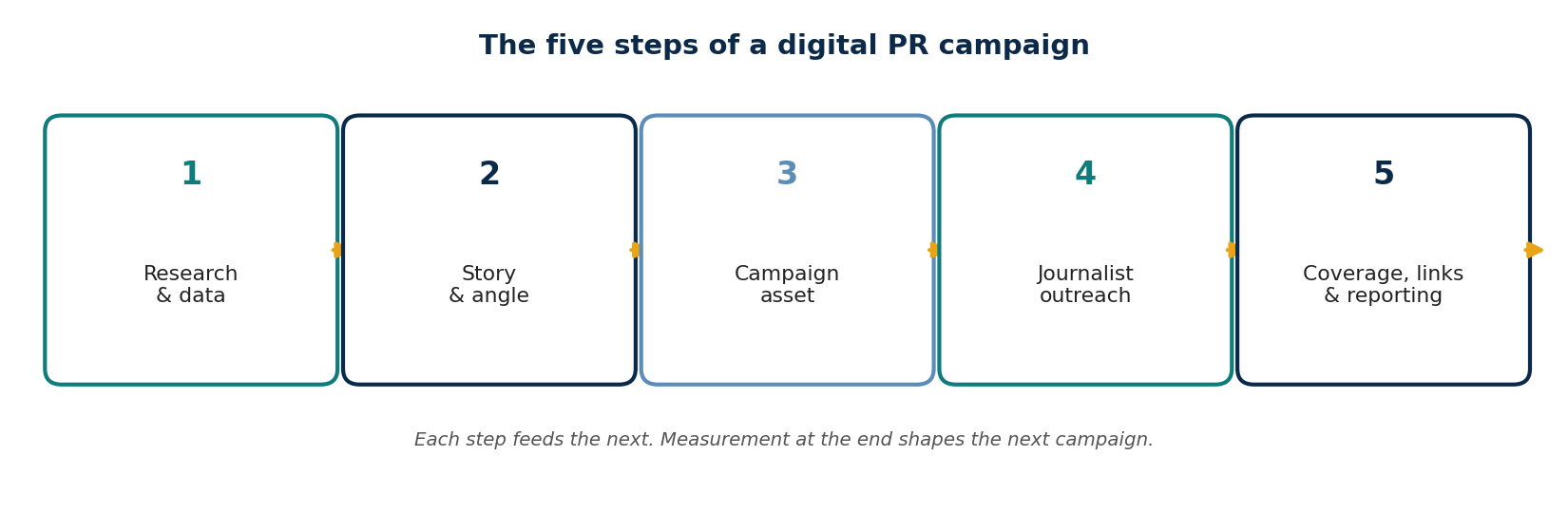
No two days look the same, but the work falls into five parts.
1. Strategy and planning
The strategist starts with the client’s goals: which pages need links, which topics the brand can credibly own, and what success looks like. They study the brand’s existing links, look at what competitors have earned, and build a campaign roadmap with themes, angles and targets. Agencies such as Reboot Online describe this as building “SEO-led digital PR strategies grounded in insight, data, and commercial goals.”
2. Campaign ideas and data
Most digital PR campaigns are built on data. The strategist finds a dataset — public records, a survey, company figures, a freedom of information request — and turns it into a story with a clear headline. Data-led campaigns are the most popular tactic in the field: about 95% of industry professionals use them, with expert commentary close behind at about 93%, according to a 2025 industry survey reported by Reporter Outreach.
3. Media outreach
Outreach is the heart of the job. The strategist builds a list of journalists who actually cover the topic, writes a short pitch, and sends it one-to-one. This is a numbers game with a low hit rate, so relevance matters more than volume. Muck Rack’s State of Journalism survey found that 88% of journalists delete pitches that miss their beat, and 62% prefer to be pitched in a one-to-one email. Keep pitches short too: 69% of journalists want them under 200 words.
4. Reactive PR
Not all coverage is planned. When a news story breaks, a strategist can offer a client as an expert commentator within hours. Journalists on deadline need quotes fast, and the brands that respond first get the link. This “reactive” work is why strategists watch the news every morning and keep expert spokespeople ready.
5. Reporting and measurement
After a campaign, the strategist reports what it earned: coverage, links, the authority of the linking sites, referral traffic and ranking movement. The average cost of digital PR is about $597 per earned link, according to BuzzStream’s 2025 survey, so clients want proof the money worked. Good reporting ties links back to the pages they were meant to help.
Digital PR statistics worth knowing
The numbers explain why the role exists. Digital PR is not a side task in SEO any more — it is the tactic most professionals rate first.
| Finding | Number | Source |
|---|---|---|
| SEO professionals who rate digital PR the most effective link-building tactic | 48.6% | Editorial.link survey of 518 SEO professionals, 2026 |
| Average acceptable price for one high-quality backlink | $508.95 | Editorial.link, 2026 |
| Average cost of digital PR per earned link | $597 | BuzzStream, 2025 |
| Journalists who delete pitches that miss their beat | 88% | Muck Rack State of Journalism, 2026 |
| Consumers who trust earned media over advertising | 92% vs 41% for paid ads | Nielsen, 2025 |
| Web pages with no backlinks at all | 66% | Ahrefs, study of 1 billion+ pages |
The cost figures matter for anyone hiring. A single high-quality backlink is valued at about $509 on average, and a hero digital PR campaign can cost up to $800 per link earned. That is why strategists are judged on the authority of the links they win, not the count. One link from a national newspaper beats ten from sites nobody reads.
The skills a digital PR strategist needs
The role blends writing, data, sales and SEO. These are the skills employers ask for most.
News sense
A strategist must know what makes a story. That means reading the news every day, understanding what journalists on each beat need, and spotting the angle in a client’s business that a stranger would care about. Without news sense, even good data goes unpitched.
Writing
Pitches, press releases, campaign pages and survey questions all need clear, tight writing. Journalists receive more than 50 pitches a week — 57% of them do, according to Cision’s 2026 State of the Media report — so a pitch that rambles gets deleted.
Data handling
Strategists work with spreadsheets, surveys and public datasets. They do not need to be data scientists, but they must be able to find a real finding in raw numbers, check it honestly, and present it in a chart a journalist can use. Invented figures are never acceptable: one wrong number can kill a campaign and a client’s trust.
SEO knowledge
A strategist needs to understand how links affect rankings, what a good link looks like, and which pages to point links at. They use tools such as Ahrefs and Google Search Console to check what a campaign earned and to find link gaps competitors have filled. Many agencies expect new strategists to learn SEO on the job, but the basics — anchor text, domain authority, follow and nofollow — are expected from day one.
Outreach and relationship building
Journalists remember who sends them useful stories and who wastes their time. Strategists build media lists, keep notes on what each journalist covers, and follow up politely. Backlinko’s study of millions of outreach emails found an average response rate of about 8.5% — and a single follow-up email increased replies by 65.8%.

Creativity under pressure
Campaigns need fresh ideas every month, and reactive PR needs an angle within hours. Employers look for people who can come up with ten ideas, throw away nine, and build the best one properly.
What does a digital PR strategist earn in the UK?
Pay depends on experience and location, with London roles paying the most. Current UK job adverts give a clear picture.
| Role | Salary | Source |
|---|---|---|
| Digital PR Specialist | £28,000–£45,000 | WhatJobs UK, 2026 |
| Digital PR Strategist | Up to £40,000 | Polaris Agency, London (hybrid) |
| Senior Digital PR Strategist | £30,000–£40,000 | NOVOS, London |
| Senior Digital PR Strategist | £42,500 | Reboot Online, remote UK |
| Digital PR Manager | £40,000–£45,000 | BMC Recruitment, Newcastle |
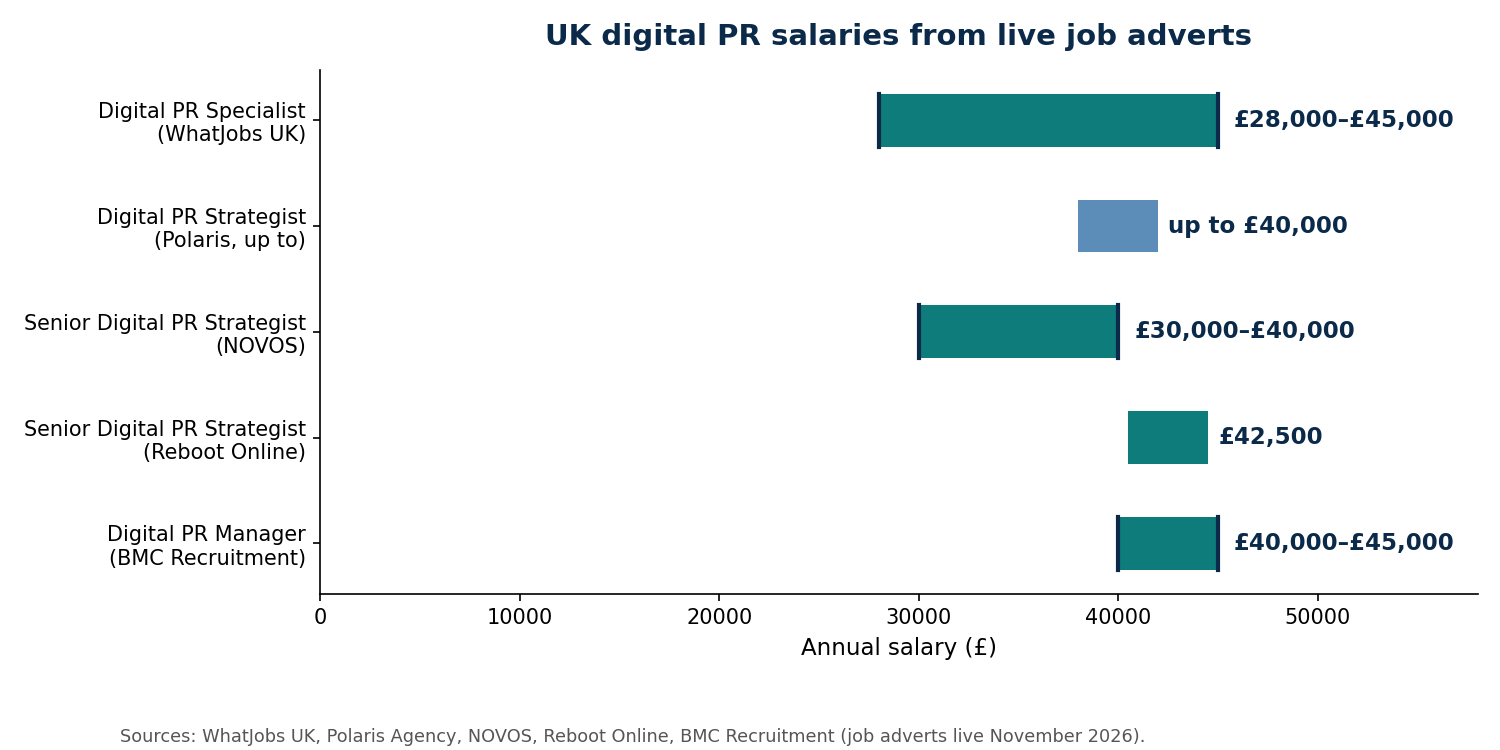
Junior strategists usually start around £28,000–£30,000. With two to three years of agency experience, £35,000–£40,000 is common. Senior strategists and managers earn £40,000–£45,000 and more, and London agencies pay at the top of each range. Freelance strategists charge by the day or by the campaign, and experienced ones earn well above the salaried rates — but they carry the risk of finding their own clients.
How to become a digital PR strategist
There is no single route in. Most strategists arrive from journalism, PR, content or SEO — and agencies hire for ability more than for a specific degree.
- Learn the SEO basics. Understand how links, rankings and search intent work. Free courses from Google and Ahrefs cover the ground, and reading Google’s own Search Central guidance is time well spent.
- Study real campaigns. Look at the digital PR campaigns that won coverage and ask why they worked: what was the data, what was the headline, and who was it pitched to?
- Practise pitching. Write short pitches for made-up stories and cut them to under 200 words. The discipline of the short pitch is the core skill of the job.
- Build a small portfolio. Run a data project of your own — a survey, a public dataset, a local story — and pitch it to a local paper or a niche blog. One earned link in a portfolio beats a page of claims.
- Apply for junior roles. Search for Digital PR Executive or Digital PR Specialist jobs at SEO agencies. These are the usual entry points, and agencies train juniors in outreach, media lists and reporting.
- Keep learning the tools. Ahrefs, BuzzStream or Muck Rack, Google Search Console and a spreadsheet are the daily toolkit. Knowing them before day one puts you ahead of most applicants.
Digital PR strategist vs link builder vs SEO
The titles overlap, and small teams often combine them, but the jobs are different.
- Digital PR strategist. Earns links through stories and press coverage. Their links come from journalists choosing to cite the brand.
- Link builder. Earns links through direct outreach: guest posts, resource pages, broken link building and partnerships. The work is more systematic and less news-driven.
- SEO. Owns the whole organic picture: technical fixes, content, keywords and links together. A digital PR strategist is one part of an SEO team, not a replacement for it.
A business that needs links from trusted publications should start with digital PR. A business that needs links to a specific set of pages quickly may get faster results from a link builder. Most serious campaigns use both, which is why agencies offer link building services that combine outreach with digital PR.
Should you hire a digital PR strategist or an agency?
Hire in-house if you publish newsworthy stories often — product launches, research, surveys, local data — and you want someone who lives inside the brand. Hire an agency if you need coverage now and cannot wait to recruit, train and build media contacts from scratch. Agencies bring existing journalist relationships and a team that can run several campaigns at once.
Either way, judge the work by the links it earns: the authority of the sites, the relevance to your pages, and the ranking movement that follows. Coverage without links is good PR but weak SEO, and a strategist who reports both is the one to keep.
FAQ
What does a digital PR strategist do?
A digital PR strategist plans earned-media campaigns that win press coverage and backlinks. They pick the story, find or create the data behind it, build the campaign asset, pitch journalists one-to-one, and report the links, mentions and ranking gains the campaign produced. The role blends PR, content, data and SEO.
How is digital PR different from traditional PR?
Traditional PR aims for reputation and brand awareness, usually in print and broadcast media. Digital PR aims for online coverage that earns backlinks and brand mentions, which search engines read as authority signals. The two share pitching skills, but digital PR is measured on links and search results, not just column inches.
What qualifications do you need to be a digital PR strategist?
There is no set qualification. A degree in PR, marketing, journalism or communications helps, and most job adverts ask for it or for equivalent experience. Employers care more about a portfolio of earned coverage, strong writing, news sense and basic SEO knowledge than about a specific certificate. Short courses in SEO and media outreach can also strengthen an application.
How much does a digital PR strategist earn in the UK?
Junior roles start around £28,000–£30,000. A digital PR strategist with a few years of agency experience typically earns £30,000–£40,000, and senior strategists earn around £42,500. Digital PR managers earn £40,000–£45,000 or more, with London roles paying at the top of each range. Freelancers can earn more per day but must find their own clients.
Is digital PR still effective for SEO in 2026?
Yes. In a 2026 survey of 518 SEO professionals, 48.6% rated digital PR the most effective link-building tactic, ahead of guest posting at 16%. Links from real publications remain hard for competitors to copy, and earned brand mentions are also becoming a factor in AI search results. The tactic works — but only with real stories and honest data.
Can a small business use digital PR?
Yes, and small businesses often have the best stories: local data, customer surveys, unusual expertise and community news. A small campaign built on one good dataset can earn links from local press and niche publications. Start with one story, pitch it to five journalists who cover the topic, and build from the coverage you win.

Abdullah Zulfiqar is Co-founder and Client Success Manager at RankWithLinks, an SEO agency helping businesses grow online. He specializes in client relations and SEO strategy, driving measurable results and maximizing ROI through effective link-building and digital marketing solutions.