
B2B SEO strategies work when they match how business buyers actually buy. That is the whole secret, and most B2B sites get it wrong. They chase traffic instead of buyers, publish thin pages for every keyword they can find, and then wonder why the pipeline stays empty.
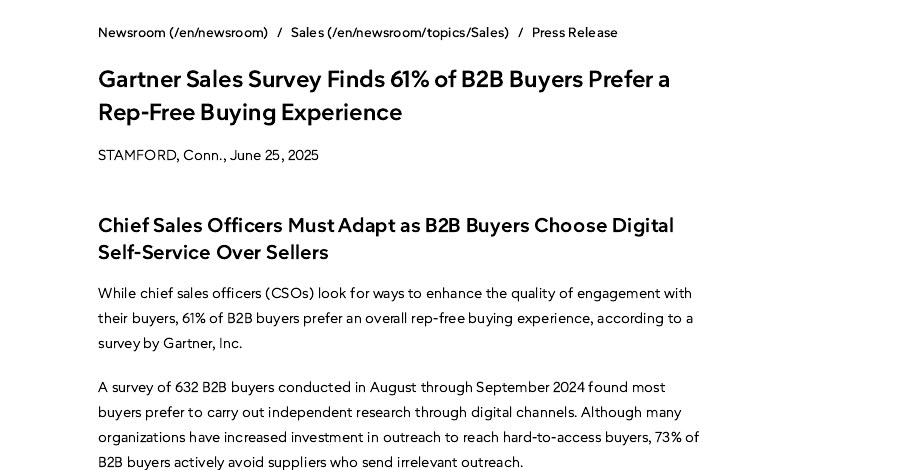
The numbers explain why the old approach fails. Gartner surveyed 632 B2B buyers in 2024 and found that 61% prefer a buying experience with no sales rep involved at all. Those buyers do their research alone, on Google, on review sites, and increasingly in AI chatbots. If your site does not show up with clear, honest answers while they are researching, you are not in the running — because by the time they contact a supplier, most of the decision is already made.
This guide sets out seven B2B SEO strategies that bring in qualified leads. Every figure comes from a named source, and every strategy is one you can start this week.
Why B2B SEO works differently
B2B buying is slow, careful, and done by a group. Gartner reports that the average B2B buying group now has 11 active members, each able to say no. A single blog post does not close a deal. What it can do is get your company onto the shortlist that the group builds together.
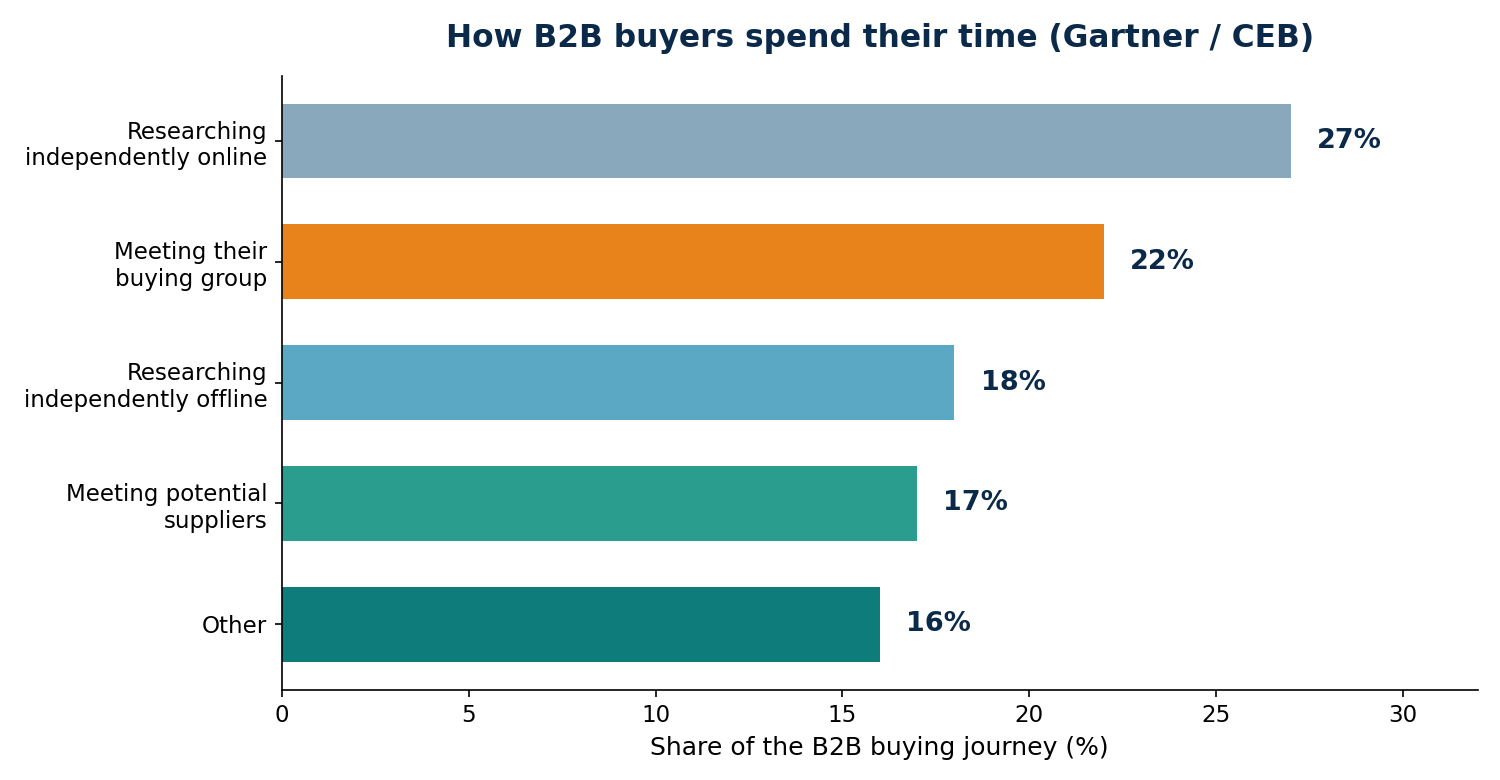
The second difference is time. Research by Gartner (then CEB) found that B2B buyers spend only 17% of their purchase journey meeting with potential suppliers. The rest goes on independent research: 27% of their time is spent researching online, 22% meeting their own buying group, and 18% researching offline. Your website does the selling while your sales team is not in the room.
The third difference is how the research starts. Google‘s B2B Path to Purchase study found that business researchers run an average of 12 searches before they visit a specific brand’s website — and just over 70% of those searches start with a generic query, not a brand name. That means the buyer types a problem, not your company name. If your pages answer the problem, you get found. If they only talk about your company, you do not.
The numbers behind B2B SEO
Before the strategies, here is the evidence in one place. These are the figures that shape the rest of this guide.
| What the data says | Figure | Source |
|---|---|---|
| B2B buyers who prefer a rep-free buying experience | 61% | Gartner, survey of 632 buyers, 2024 |
| Share of the buying journey spent meeting suppliers | 17% | Gartner / CEB buyer time study |
| Searches a B2B researcher runs before visiting a vendor’s site | 12 on average | Google / Millward Brown, B2B Path to Purchase |
| Share of all website traffic that comes from organic search | 53% | BrightEdge |
| Share of B2B revenue generated by organic search | 44.6% | BrightEdge |
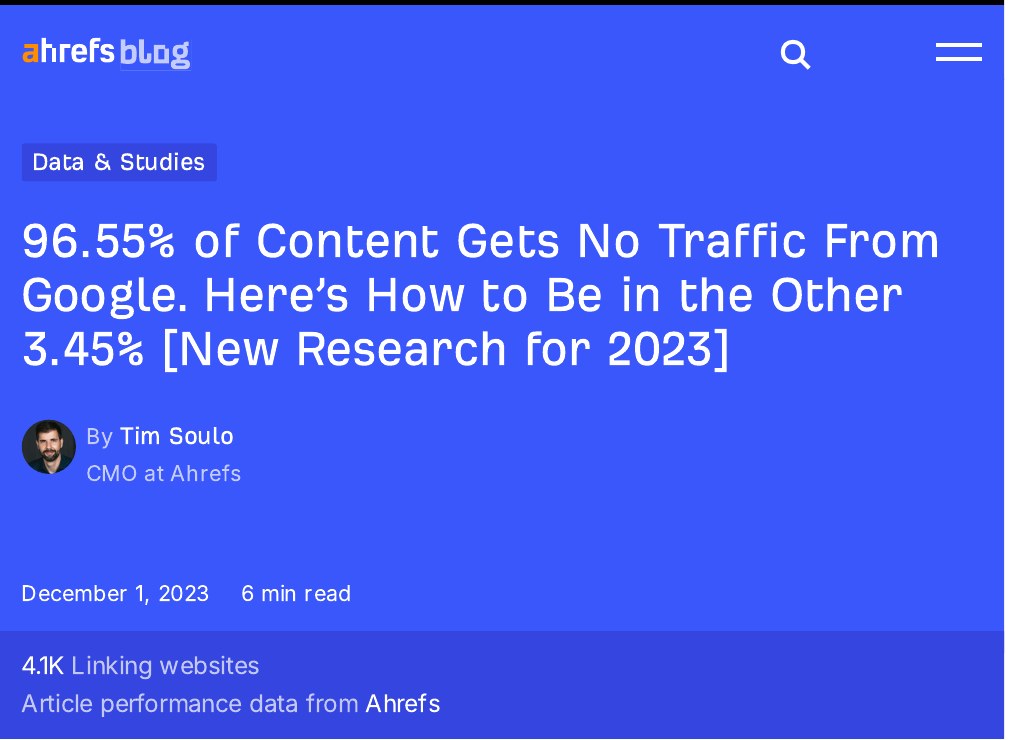
| Pages that get zero traffic from Google | 96.55% | Ahrefs, study of ~14 billion pages, 2023 |
| Pages with no backlinks at all | 66.31% | Ahrefs, same study |
| Close rate of SEO leads vs outbound leads | 14.6% vs 1.7% | HubSpot |
| Click-through rate of the top organic result vs page two | 27.6% vs 0.63% | Backlinko |
| B2B software buyers who start research in an AI chatbot more often than Google | 51% | G2 Buyer Behavior Report, 2026, 1,076 buyers |
Two rows deserve a second look. Organic search drives 44.6% of B2B revenue, more than any other channel — yet 96.55% of pages get no traffic from Google at all. The gap between those two numbers is the whole opportunity: the rewards go to the small share of pages that match real buyer intent and earn real links.
Strategy 1: Map keywords to the buying committee, not to one person
A B2B purchase is decided by a group of around 11 people, and each of them searches differently. The finance director searches for pricing and ROI. The IT lead searches for security and integration. The end user searches for how the product works day to day. One keyword list built for one buyer misses the other ten.
Start by listing the roles in your typical buying group. For each role, write down the three questions they ask before they will approve a purchase. Those questions become your keyword map. A page that answers “how much does it cost to run” speaks to finance; a page that answers “does it integrate with Salesforce” speaks to IT. Both pages can rank, and both bring a different member of the group to your site.
This is also why short, generic keywords are a weak target for B2B. A term like “software” tells you nothing about who is searching or what they need. A longer phrase like “project management software for construction firms” tells you the industry, the use case, and the buyer. Longer phrases have less traffic, but the traffic they bring is far closer to a sale.
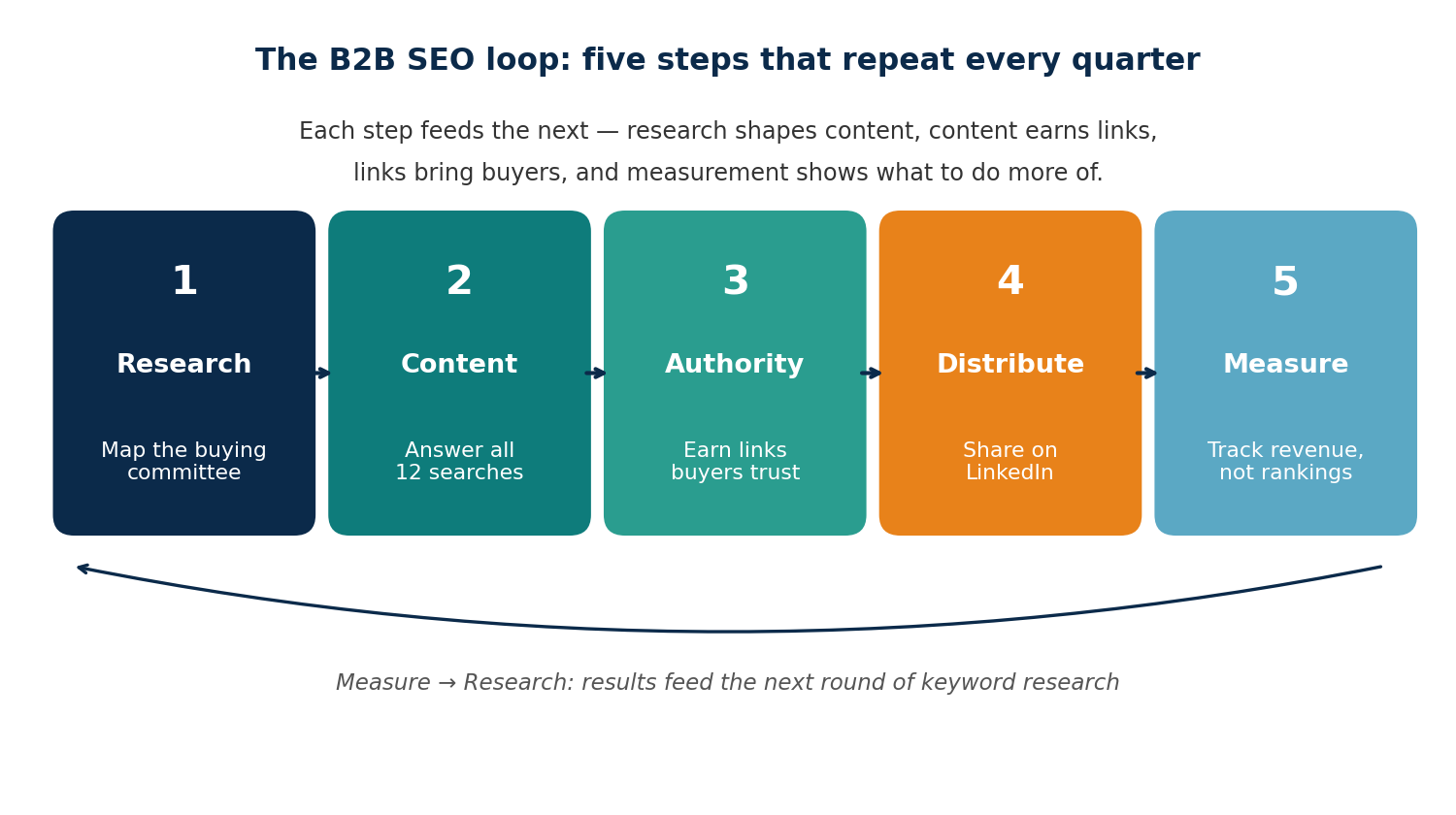
Strategy 2: Build content for all 12 searches
If a buyer runs 12 searches before visiting your site, you need useful pages at every step of that journey, not just at the end. Most B2B sites only build pages for the final step — the “buy now” page — and leave the first eleven searches to competitors.
Map your content to the journey in four stages:
- Problem stage. The buyer knows something is wrong but not what the fix is. Pages here explain the problem in plain words: guides, definitions, and checklists.
- Solution stage. The buyer knows the type of fix they need. Pages here compare approaches: “in-house vs outsourced”, “manual vs automated”.
- Vendor stage. The buyer compares suppliers. Pages here are comparisons, case studies, and honest feature breakdowns.
- Validation stage. The buyer checks you before signing. Pages here are pricing explainers, reviews, security pages, and implementation guides.
An older FocusVision study found B2B buyers read an average of 13 pieces of content before making a purchase, and eight of those come directly from vendor websites. That is eight chances to be helpful — or eight chances to be ignored because the page says nothing useful.
Strategy 3: Earn links from pages your buyers already trust
Ahrefs studied around 14 billion pages in 2023 and found that 66.31% of them have no backlinks at all. That is the main reason most B2B content never ranks: without links, Google has little reason to trust the page, and without trust, the page sits on page two or beyond, where the click-through rate is 0.63% against 27.6% for the top result (Backlinko).
For B2B, the links that matter most come from places your buyers already read: industry publications, review sites such as G2 and Capterra, analyst reports, partner sites, and trade associations. One link from a respected industry site is worth more than fifty links from directories nobody visits.
Three ways B2B companies earn those links:
- Publish original data. A survey of your own customers, or an analysis of your own product data, gives journalists and bloggers a reason to cite you.
- Write the guide nobody else has written. A clear, complete guide to a narrow problem in your industry earns links because it is the best page on that topic.
- Help journalists and analysts. When a reporter asks for an expert quote, a fast, useful answer often turns into a link from a news site.
Our own work follows the same rule: manual outreach to real sites, no private blog networks, and no paid links. If you want help with the outreach side, our SaaS link building services follow exactly that approach.
Strategy 4: Use LinkedIn as your B2B distribution channel
LinkedIn is where B2B buyers spend their working day. LinkedIn reports that around 80% of B2B social media leads come from the platform, and around 96% of B2B marketers include it in their strategy. For B2B SEO, LinkedIn matters in two ways.
First, it is where your content gets its first readers. A new guide shared by your team on LinkedIn reaches the exact people who search for the topic later. Those readers link to it from their own sites, mention it in their own posts, and search for your brand name afterwards — all of which help the page rank.
Second, it is where your experts build the authority Google looks for. When the author of a guide is a real person with a real LinkedIn profile, visible expertise, and a history of writing about the topic, the page carries more weight than an anonymous post from a faceless company blog. Put author names on your guides, link to their LinkedIn profiles, and let them share their own work.
Strategy 5: Fix the technical basics before you write more
B2B sites are often large, old, and slow — and technical problems quietly waste good content. Before you publish another guide, check four things:
- Speed. Business buyers research on work laptops and phones, often on office networks. A page that takes more than a few seconds to load loses readers before they read a word.
- Crawlability. If Google cannot reach a page, it cannot rank it. Check Search Console for pages that are discovered but not indexed, and fix the cause — usually thin content, duplicate pages, or a blocked resource.
- Structure. Every service page needs one clear H1, a logical set of H2s, and internal links to the guides that support it. A flat site where every page links only to the homepage wastes authority.
- Duplicate content. B2B sites often have near-identical pages for each location, industry, or product version. Merge or canonicalise them, or none of them will rank well.
None of this is glamorous, but it is the difference between content that ranks and content that sits unread. Remember the Ahrefs figure: 96.55% of pages get zero traffic. Most of those pages failed on the basics.
Strategy 6: Measure revenue, not rankings
Rankings feel good, but they are not the goal. The goal is pipeline. BrightEdge reports that organic search generates 44.6% of B2B revenue, and HubSpot‘s research puts the close rate of SEO leads at 14.6%, against 1.7% for outbound leads. An SEO lead is roughly eight times more likely to close than a cold outbound lead — because the buyer came to you, already educated.
So measure what matters:
- Qualified leads from organic search, not total sessions. A thousand visitors who never enquire are worth less than ten who do.
- Revenue per organic lead, tracked through your CRM to closed deals.
- Pages that produce enquiries, so you know which guides to update and which to stop writing.
- Time to close for organic leads against other channels.
If a page ranks first but never produces an enquiry, the page is answering the wrong question. Rewrite it for the buyer who is ready to talk, or replace it with a page that is.
Strategy 7: Get ready for AI search now
The newest change in B2B search is also the fastest-moving. G2‘s 2026 Buyer Behavior Report, based on a survey of 1,076 B2B software buyers, found that 51% now start their research in an AI chatbot more often than in Google — up from 29% a year earlier. More than half of your future buyers may meet your brand first inside an AI answer, not on a results page.
AI answers are built from the same pages that rank in Google, so the work does not change as much as the headlines suggest. What does change is the emphasis:
- Answer questions directly. AI tools quote pages that state the answer plainly in the first paragraph. Put the answer first, then the detail.
- Use clear structure. Headings that match real buyer questions, short paragraphs, and tables that compare options are easy for AI tools to read and cite.
- Keep facts current. AI tools favour pages that are recent and accurate. A guide from 2023 with old statistics is less likely to be quoted than one updated this year.
- Build mentions, not just links. AI answers cite brands, not only links. Being named in industry lists, reviews, and comparisons matters even when no link is attached.
Google still sends far more traffic to websites than all AI chatbots combined, so do not abandon classic SEO. But the buyers who start in a chatbot are growing every year, and the pages that answer clearly will be the ones quoted.
Mistakes that waste B2B SEO budgets
Three mistakes show up again and again in B2B SEO, and all three are avoidable:
- Writing for traffic, not buyers. A guide that brings 5,000 visitors and zero enquiries is a failure, however good the traffic graph looks. Write for the person who signs the cheque.
- Publishing without distribution. A guide nobody links to and nobody shares will join the 96.55% of pages with no traffic. Every guide needs a promotion plan: LinkedIn, email, outreach to sites that cover the topic.
- Copying competitors instead of answering buyers. If your content says the same thing as ten other sites, Google has no reason to rank yours above theirs. Interview your own customers, use your own data, and say something only you can say.
FAQ
What is B2B SEO?
B2B SEO is search engine optimisation for companies that sell to other businesses rather than to consumers. It targets longer, more specific keywords, builds content for a buying group of several decision-makers, and measures success in qualified leads and revenue rather than raw traffic. The buying cycle is longer and the deal values are higher, so each ranking is worth more than in consumer SEO.
How long does B2B SEO take to work?
Most B2B sites see early movement in three to six months, with steady lead growth from six to twelve months. The timeline depends on your starting authority, how competitive your keywords are, and how much useful content you publish. Quick wins are possible on narrow, low-competition topics, but a full pipeline effect takes at least two quarters of consistent work.
Which B2B SEO strategy brings leads fastest?
Targeting low-competition keywords tied to a clear buying intent usually brings leads fastest. A detailed guide for a narrow problem — for example, a specific industry or a specific software comparison — can rank in weeks and attract buyers who are already comparing suppliers. Broad, high-volume keywords take far longer and bring less qualified traffic.
Should we buy backlinks to speed up B2B SEO?
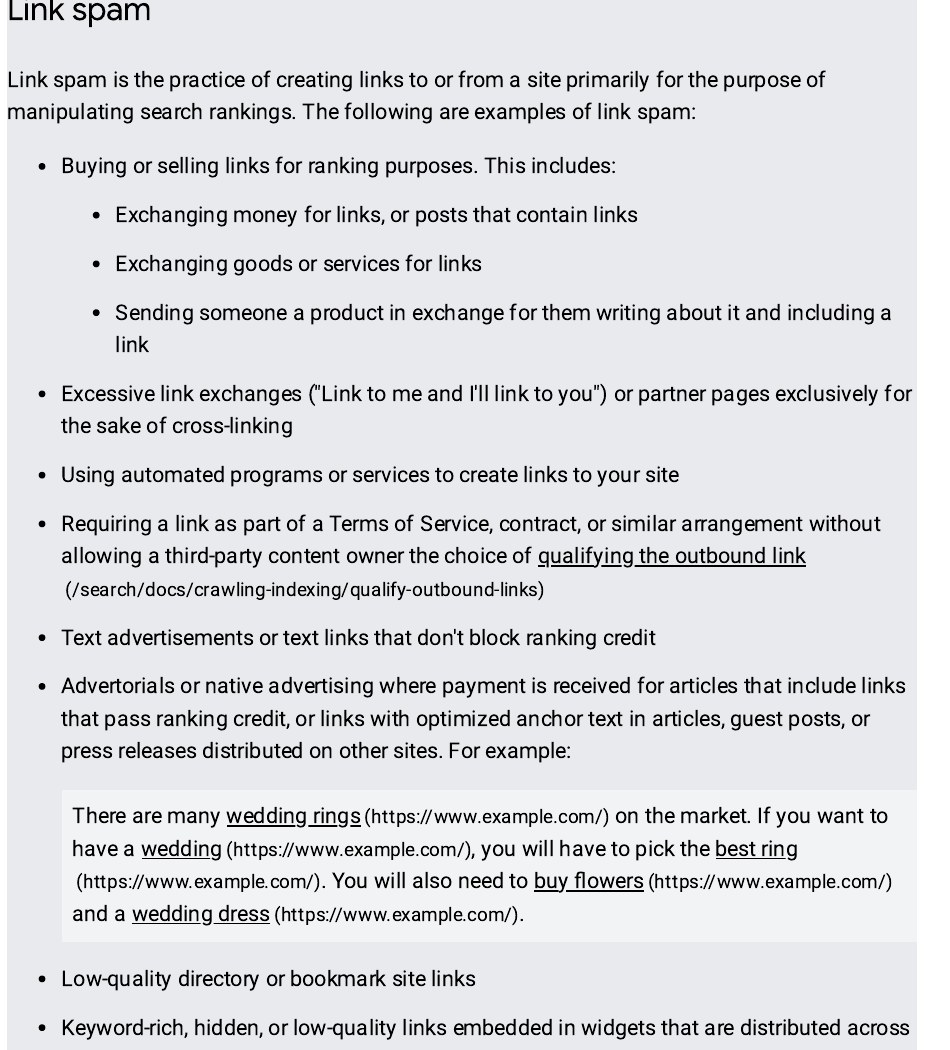
No. Paid links break Google’s spam policies, and Google states clearly that buying or selling links that pass ranking credit can lead to a manual action against your site. A link penalty is far more expensive than the time saved. Earn links instead by publishing original data, useful guides, and expert commentary that real sites want to cite.
How much should a B2B company spend on SEO?
There is no fixed figure, but most B2B companies that take SEO seriously spend a meaningful share of their marketing budget on it — typically a monthly retainer that covers content, technical work, and outreach. The right test is return: if organic search already drives a large share of your revenue, as BrightEdge‘s 44.6% figure suggests it can, under-spending on it is the expensive choice.
Do we still need SEO if buyers use AI chatbots?
Yes. AI chatbots build their answers from the same web pages that rank in Google, so the content that ranks well is also the content that gets quoted. G2 found 51% of B2B software buyers now start research in a chatbot more often than Google, which makes clear, well-structured, up-to-date pages more important, not less.

Abdullah Zulfiqar is Co-founder and Client Success Manager at RankWithLinks, an SEO agency helping businesses grow online. He specializes in client relations and SEO strategy, driving measurable results and maximizing ROI through effective link-building and digital marketing solutions.