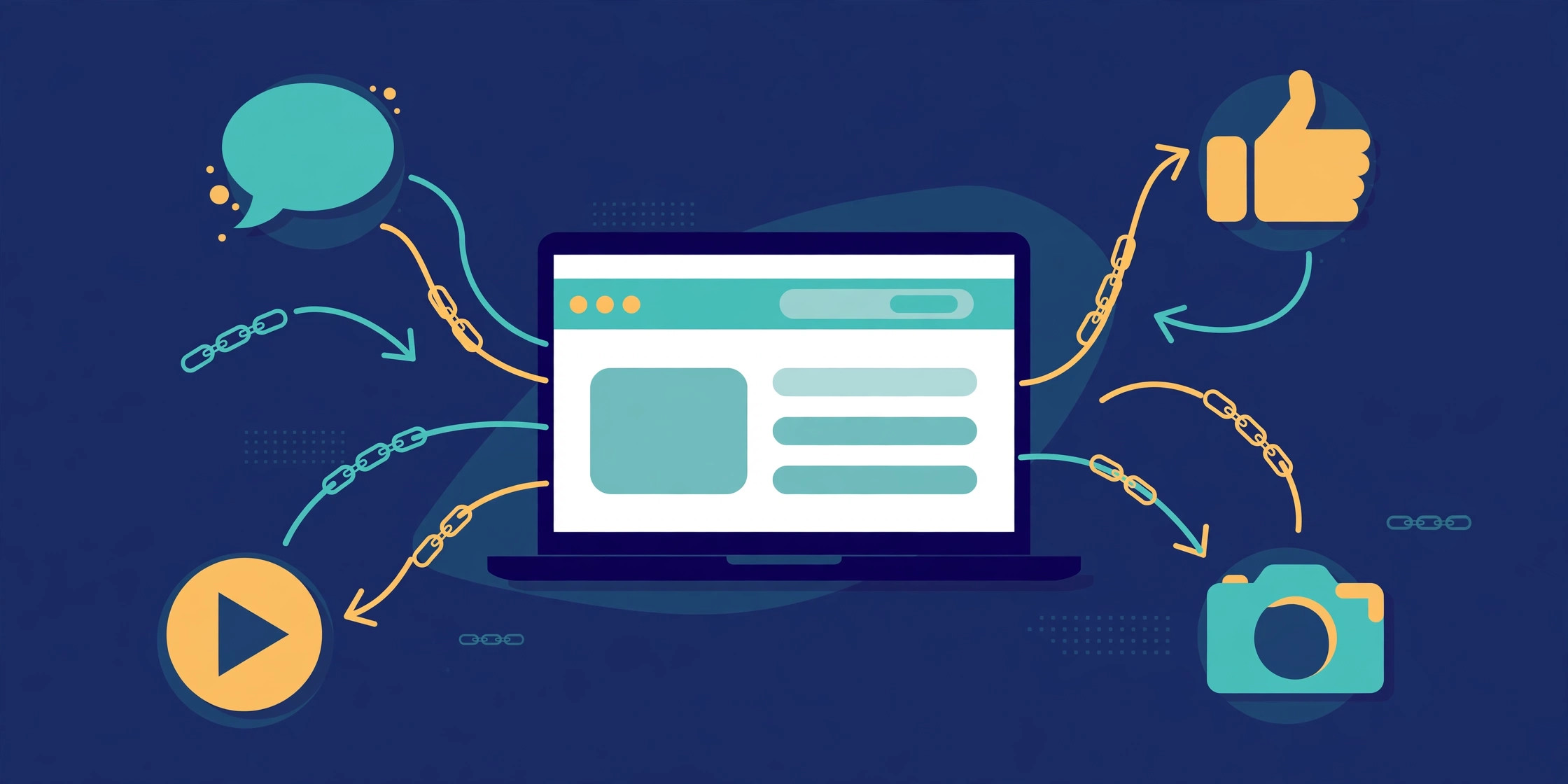
Social link building is the practice of using social media to earn backlinks to your website. You share useful content on platforms such as LinkedIn, X, Reddit and YouTube, people see it, and some of them link to it from their own websites and blogs. The links on social media itself are nofollow, so they pass no ranking value directly. The followed backlinks come later, from the writers, journalists and site owners who found your content through a social post.
That two-step path is what makes this tactic worth your time. A single post can put a guide in front of hundreds of people who run websites. You do not need a large following to start, and you do not need to pay for links. You need content worth linking to and a steady habit of putting it where the right people will see it.
What is social link building?
Social link building means promoting content on social platforms with the aim of earning backlinks. It is not the same as posting links and hoping for the best. It is a planned routine: publish something worth citing, share it where people in your niche spend time, join the discussion around it, and follow up with the people who engage.
The links you get from social platforms themselves are nofollow. Google treats a link from X, LinkedIn or Facebook as a nofollow link, which means it does not pass PageRank to your page. That fact leads some site owners to write social media off for SEO. That is a mistake. The value is indirect. A social post is distribution. Distribution leads to discovery, discovery leads to mentions, and mentions lead to followed links from real websites.
Think of it this way: a backlink has to be seen before it can be earned. Most web pages never get that chance. Ahrefs studied around one billion pages and found 66.31% of them have no backlinks at all. In a separate study of around 14 billion pages, Ahrefs found 96.55% get no traffic from Google. Social media is one of the cheapest ways to make sure your page is not one of the invisible ones.
Do social media links help SEO?
Social media links do not help rankings directly. Google has said this plainly, several times, over many years. In 2015, Google’s John Mueller was asked whether social signals affect organic rankings. His answer was: “Not directly, no.” In 2016, Google’s Gary Illyes answered the same question with: “No, we don’t.” Matt Cutts had said the same in a 2014 video, explaining that Google does not use follower counts or like counts as ranking signals.
That is the direct answer. The indirect answer is more useful. Social sharing puts content in front of people who write and link. A study reported by LaGrowthMachine, based on Ahrefs data covering 44,589 social shares, found that content with more than 500 social shares earned 77% more followed backlinks within 90 days than content with fewer than 50 shares. The shares did not cause the ranking. The shares caused the discovery, and the discovery caused the links.
There is also a correlation worth knowing about. An analysis by CognitiveSEO of 23 million shares found a clear link between social engagement and higher positions in search results. Correlation is not proof of cause, and Google’s own statements say shares are not a ranking factor. The honest reading is that good content gets shared and linked for the same reason: people find it useful. Social media speeds up the first half of that process.
Social link building by the numbers
| Fact | Number | Source |
|---|---|---|
| Social media user identities worldwide | 5.66 billion (68.7% of the world population) | DataReportal, Digital 2026 |
| Marketers who build links using social media | 61% | DemandSage |
| Extra backlinks per month for link builders who use social media | 22% more | DemandSage |
| Extra followed backlinks within 90 days for content with 500+ social shares | 77% more | Ahrefs study, reported by LaGrowthMachine |
| Web pages with no backlinks at all | 66.31% | Ahrefs, study of around 1 billion pages (2020) |
| Web pages that get no traffic from Google | 96.55% | Ahrefs, study of around 14 billion pages (2023) |
| Link builders who use Facebook for outreach | 23.5% | DemandSage |
| Link builders who use LinkedIn for outreach | 17.3% | DemandSage |
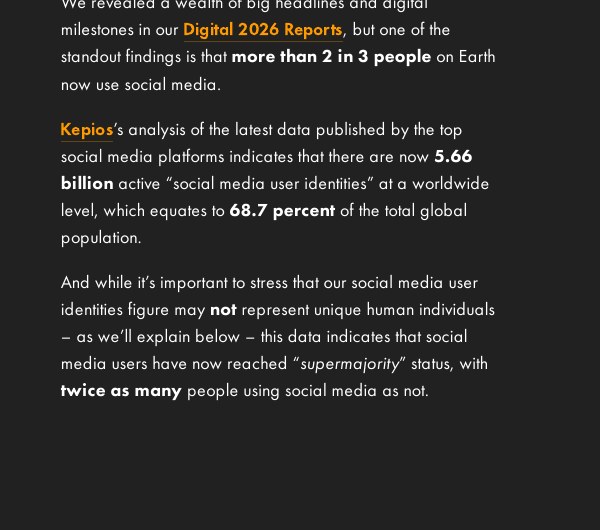
The audience is the first row of that table. With 5.66 billion social media user identities in the world, the people who could link to your content are already on these platforms. The question is whether your content reaches them.
How social link building works
Social link building follows a simple chain. Each step depends on the one before it.
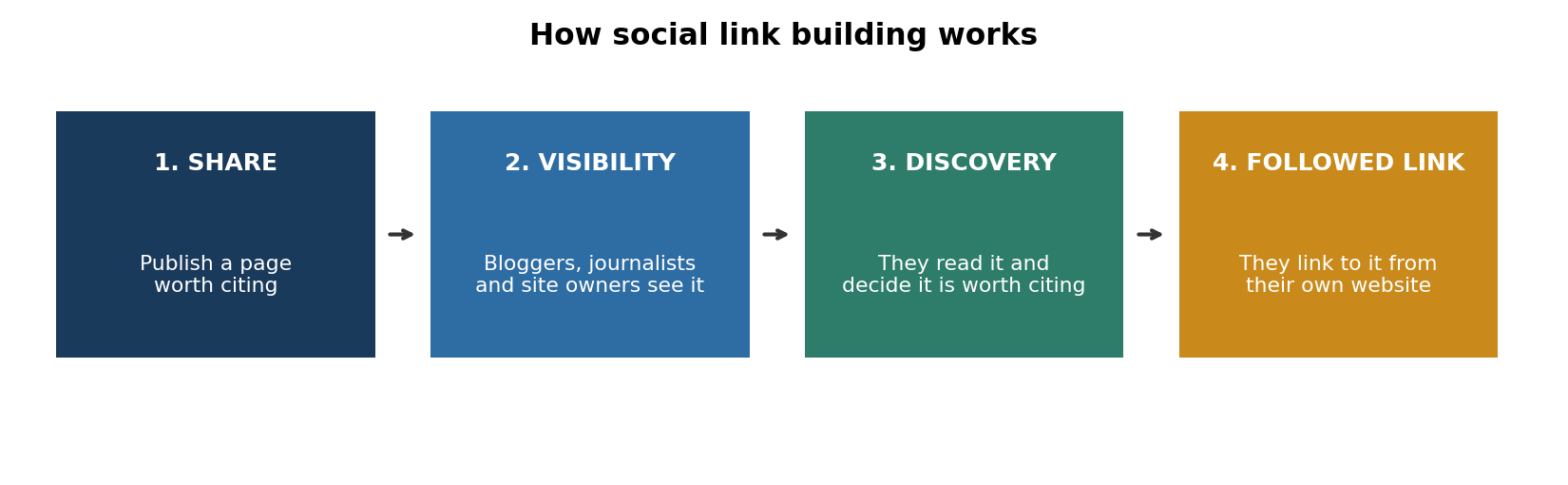
- Share. You publish a page worth citing — a guide, a study, a free tool, a clear answer to a common question — and you share it on the platforms where your audience spends time.
- Visibility. The post is seen by people in your niche: bloggers, journalists, forum members, newsletter writers, and other site owners.
- Discovery. Some of those people click through, read the page, and decide it is worth referencing. Others save it for a piece they are writing.
- Followed backlink. When they publish, they link to your page from their own site. That link is followed, and it is the link that helps your rankings.
If any step is weak, the chain breaks. Content nobody wants to cite earns nothing, however often you share it. A strong page shared once beats a weak page shared fifty times.
Step-by-step: earn backlinks from social media
Step 1: Start with a page worth linking to
No social tactic can save a page nobody wants to cite. Before you share anything, check that the page gives a reader a reason to link: original data, a clear step-by-step process, a worked example, or a free template. Pages that earn links answer a question better than anything else on the results page.
If your page is a sales page, do not expect links. Link to it from a useful guide instead, and share the guide. The guide earns the link, and the link passes value through your site.
Step 2: Pick one or two platforms, not six
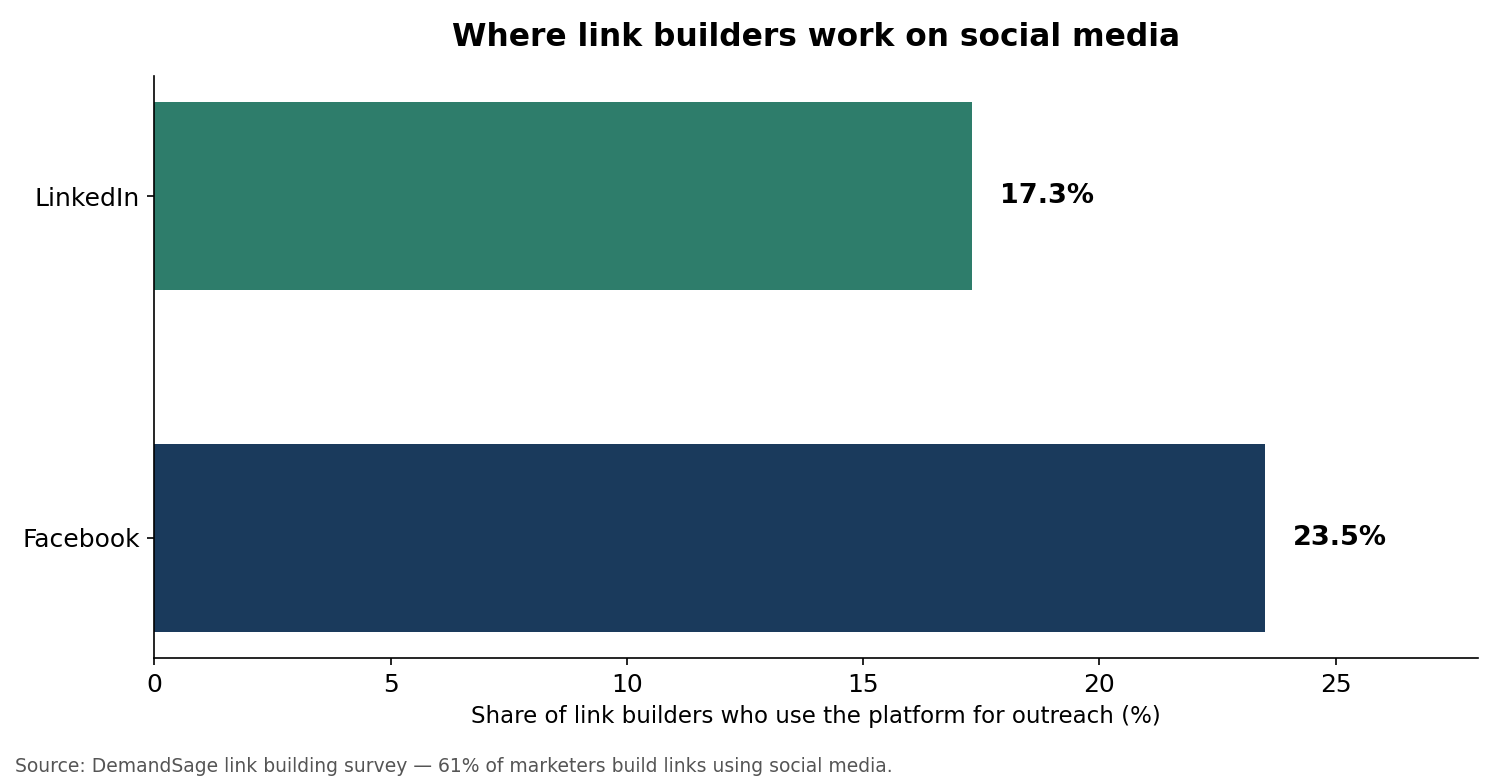
Facebook is the most used platform for link outreach, at 23.5% of link builders, followed by LinkedIn at 17.3%. Those figures come from the same survey that found 61% of marketers use social media for link building. But averages hide the real rule: go where your audience is.
For B2B and SaaS, LinkedIn and X are usually the best fit. For visual and how-to content, YouTube and Pinterest work well. For technical and niche communities, Reddit and specialist forums beat the big networks. Pick one or two platforms and post there every week. Spreading thin across six platforms helps nobody.
Step 3: Share with a hook, not just a link
A bare link with no comment gets ignored. Write two or three sentences that tell the reader what they will get: the result, the number, or the mistake the guide helps them avoid. Pull out one real fact from the page and lead with it. If the page has a chart or a diagram, attach the image to the post — posts with a visual get read more than plain text links.
Post at a time your audience is online, and post more than once. A single share reaches a small share of your followers. Share the same page again a week later with a different hook, aimed at a different angle of the same guide.
Step 4: Join the conversation instead of dropping links
The fastest way to get ignored on social media is to drop links and leave. Answer questions in your niche. Comment on other people’s posts with something useful. When a discussion turns to a problem your guide solves, that is the moment to share it — with context, not as a cold drop.
On Reddit and in Facebook groups, this matters most. Communities ban link-dropping, but they welcome a member who helps first. Build a small reputation before you share your own pages, and your links will be read rather than removed.
Step 5: Reach out to the people who shared your post
When someone shares your content, they have told you they like it. That is a warm lead. Send a short, polite message: thank them, and ask if they would like a quote, a chart, or a short follow-up for their own audience. Some will link to your page from a future post. A few will write about it.
Do the same for people who shared a competitor’s similar page. If they linked to a rival guide, they may link to yours too if yours is better and you tell them it exists.
Step 6: Turn unlinked mentions into links
Not every mention comes with a link. Around 40% of brand mentions on the web have no link attached, according to Ahrefs data. Set up a free alert for your brand name and your page titles. When you find a mention without a link, send a short message asking the site owner to add one. Most will, because they already thought your page was worth naming.
Which platforms work best for social link building?
Each platform earns links in a different way.
LinkedIn works best for B2B, SaaS and professional guides. A clear post aimed at people in one job role can reach writers and managers who run company blogs. LinkedIn is used by 17.3% of link builders for outreach, and it is the strongest platform for earning links from business sites.
X is fast and public. Journalists and bloggers use it to find sources and stories. A short thread that sums up your guide can be quoted and linked the same day.
Reddit can send large waves of traffic to a useful page, and the discussion often gets picked up by writers looking for sources. Follow each community’s rules. A link that helps the thread stays; a link that only promotes your site gets removed.
YouTube earns links from video descriptions and from bloggers who embed or cite a video. A video that explains your guide gives other sites a second thing to link to.
Pinterest suits visual guides, checklists and infographics. Pins last far longer than a post on X or Facebook, so one good pin can send traffic for months.
Facebook is the most used platform for link outreach at 23.5%, mainly because of groups. A niche group full of site owners and marketers is a better place to share than a business page with a small following.
What not to do
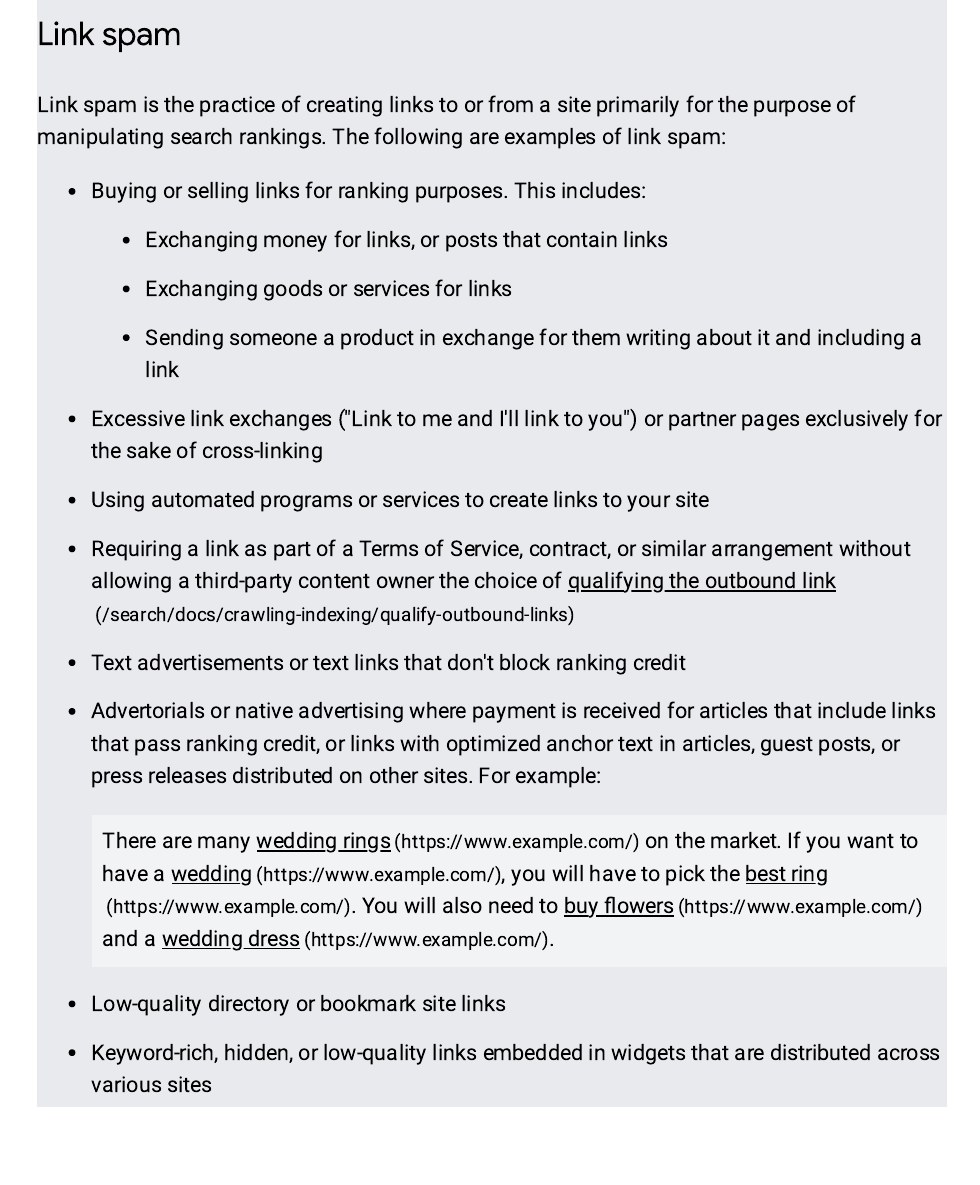
Social link building fails when it turns into spam. Do not post the same link in dozens of groups in one hour. Do not use bots or automation to mass-share your pages. Do not pay for shares or followers — Google ignores bought social signals, and the accounts that sell them are often fake.
Do not ask for links in your first message to a stranger. Earn the share first, then ask. And never present a nofollow social link as a ranking win to a client. The win is the followed link that comes after, and you should report it that way.
Google’s spam policies are clear that links meant to manipulate rankings can harm a site. Social sharing that is honest — a real person sharing a useful page with a real audience — is not link spam. Keep it honest and you stay on the right side of that line.
If you want help earning links the honest way, take a look at our link building services — manual outreach, no PBNs, and every link earned from a real site.
How to measure social link building
Track four numbers each month.
Referral traffic. Check Google Analytics for visits from each social platform. A post that sends real visitors is working, even before any link appears.
New referring domains. Check Ahrefs or Google Search Console for new sites linking to the pages you shared. This is the number that matters most.
Shares and saves. Watch which posts get shared, not just liked. Shares put your page in front of new audiences. Saves show people plan to use it later.
Unlinked mentions. Track mentions of your brand and page titles. Each unlinked mention is a link you can ask for.
If referral traffic rises but no new referring domains appear after two months, the problem is usually the page, not the posting. Improve the page, then share it again.
Frequently asked questions
What is social link building?
Social link building is the practice of using social media to earn backlinks. You share useful content on platforms such as LinkedIn, X, Reddit and YouTube. People who run websites see it, and some link to it from their own pages. The links on social platforms are nofollow, so the ranking value comes from the followed links earned after the content is discovered.
Do social media backlinks help SEO?
Social media links themselves do not directly help rankings, because they are nofollow and Google has said social signals are not a direct ranking factor. They help indirectly: sharing puts your content in front of bloggers, journalists and site owners who may link to it with a followed link. That followed link is what helps your rankings.
Which social media platform is best for link building?
LinkedIn is best for B2B and SaaS content, X is best for reaching journalists and bloggers quickly, and Reddit works well for niche and technical topics. Facebook is the most used platform for link outreach, at 23.5% of link builders, but the right choice depends on where your audience spends time. Pick one or two platforms and post there every week.
Are social media links dofollow or nofollow?
Links from the main social platforms are nofollow. That means they do not pass PageRank to your page. They still send referral traffic and help people discover your content. The followed links come later, when a site owner who found your page through social media links to it from their own website.
How long does social link building take to work?
Expect the first signs within two to four weeks: more referral traffic and more shares. Followed backlinks usually take one to three months, because writers need time to publish. Keep sharing one useful page a week. Results build slowly, then speed up as more people know your content exists.
Is it safe to build links through social media?
Yes, when it is honest. Sharing a useful page with a real audience is normal promotion, not link spam. It becomes risky only if you buy shares, use bots to mass-post links, or pay for links from link farms. Google’s spam policies target links meant to manipulate rankings, so keep your sharing genuine and your content worth citing.

Abdullah Zulfiqar is Co-founder and Client Success Manager at RankWithLinks, an SEO agency helping businesses grow online. He specializes in client relations and SEO strategy, driving measurable results and maximizing ROI through effective link-building and digital marketing solutions.