
Introduction
Local SEO strategies are the steps a business takes so that nearby customers find it first on Google and Google Maps. When someone searches “plumber near me” or “best dentist in Leeds”, they want a business they can visit or call today. If your business is the one Google shows first, you get the call. If it is on page two, you do not.
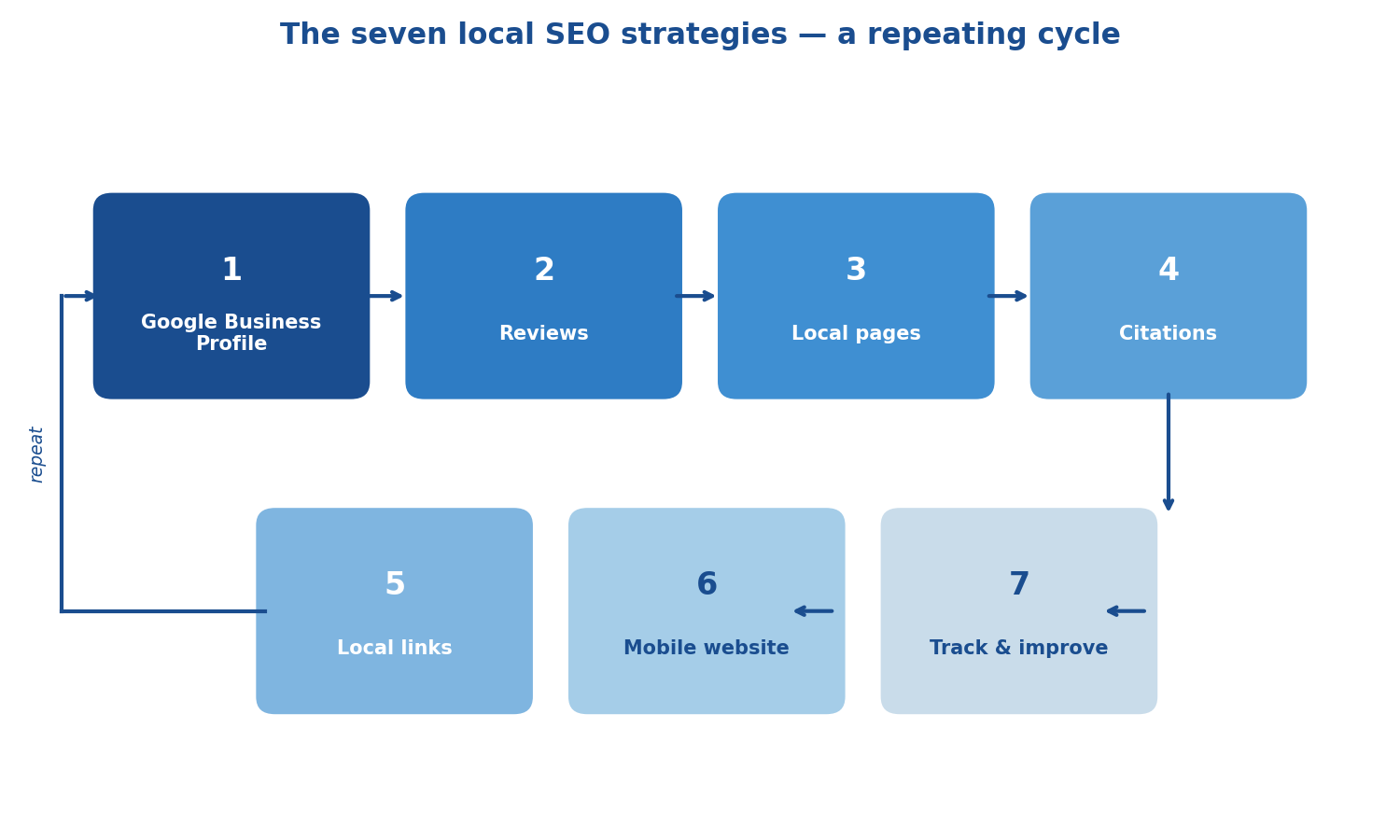
This guide covers seven local SEO strategies that work in 2026: a complete Google Business Profile, a steady flow of reviews, pages that match how local people search, consistent listings, local links, a fast mobile website, and honest tracking. None of them needs a big budget. They need regular work, done in the right order.
If you want this work handled for you, see our local SEO services — the same manual, white-hat approach described in this guide.
Why local search is worth the effort
Local search is where a large share of buying decisions start. The figures below come from Google’s own research, reported by Backlinko, and from BrightLocal’s consumer surveys.
| Fact | Source |
|---|---|
| 46% of all Google searches have local intent | Search Engine Roundtable, via Backlinko (Dec 2025) |
| 76% of people who search “near me” on a smartphone visit a business within 24 hours | Google, via Backlinko |
| 28% of local searches result in a purchase | |
| 88% of smartphone users who do a local search visit a related store within a week | |
| 98% of consumers search online for local businesses | BrightLocal |
Read together, the picture is clear: people who search locally act fast and close to home. A business in the map pack — the three listings with a map at the top of a local search — is in front of customers at the exact moment they are ready to choose.
Strategy 1: Claim and complete your Google Business Profile
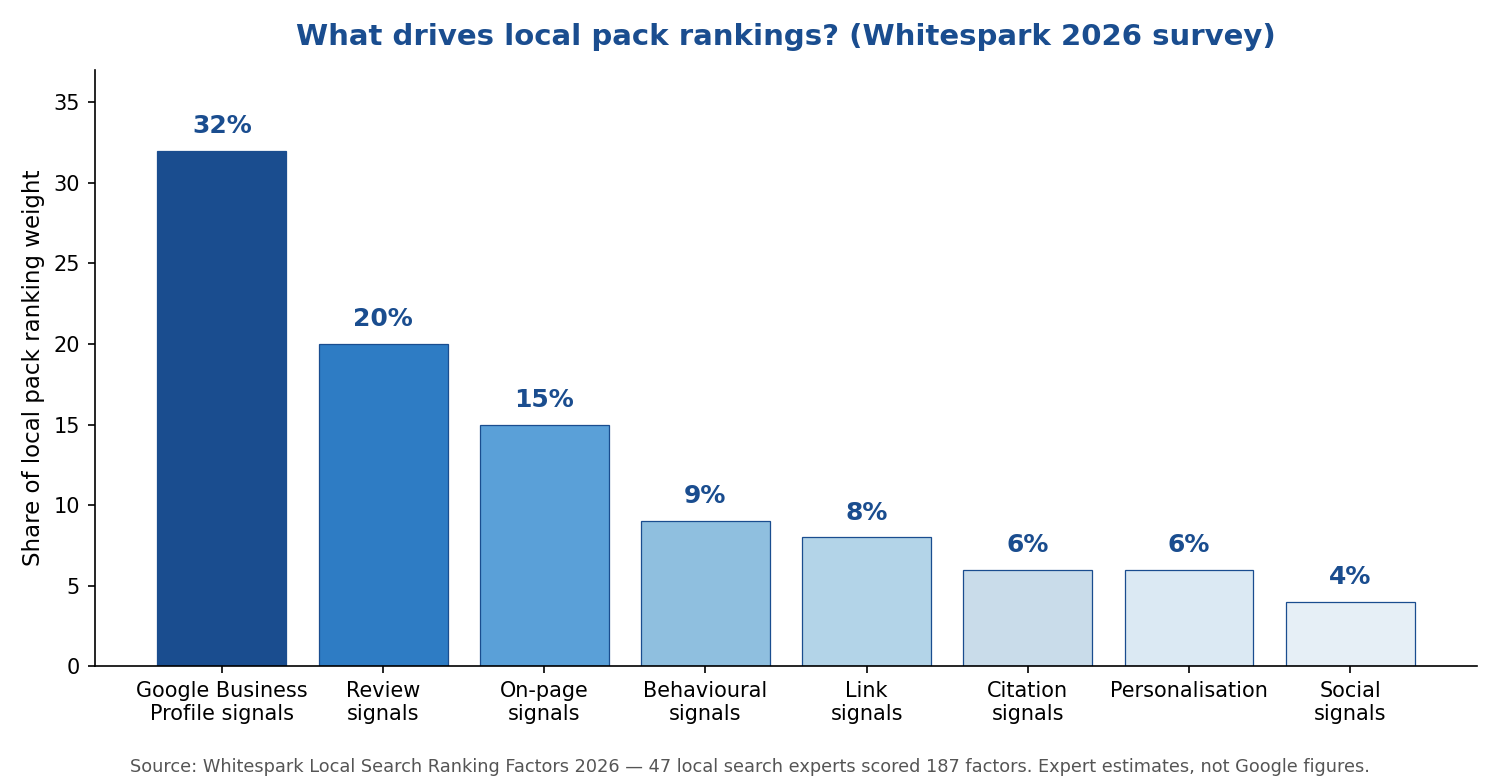
Your Google Business Profile is the listing Google ranks in the map pack, and the single most important asset in local SEO. In Whitespark’s Local Search Ranking Factors survey for 2026, 47 local search experts scored 187 factors and put Google Business Profile signals at about 32% of local pack ranking weight — the largest group by far. Reviews came second at about 20%, and on-page signals third at about 15%.
Claim the profile if it already exists, or create it if it does not. Verification matters: Google’s own help page says verification tells Google you are authorised to represent the business, so it is more likely to show up in search results. Then fill in every field: exact business name, primary category, additional categories, services, hours, phone number, website, and service area.
The primary category is the single highest-scored factor in the Whitespark survey, so choose the closest match to what you actually do. Add real photos of your premises, your team and your work, and post updates at least once a week. A profile with fresh photos and posts looks like a business that is open and active, because it is.
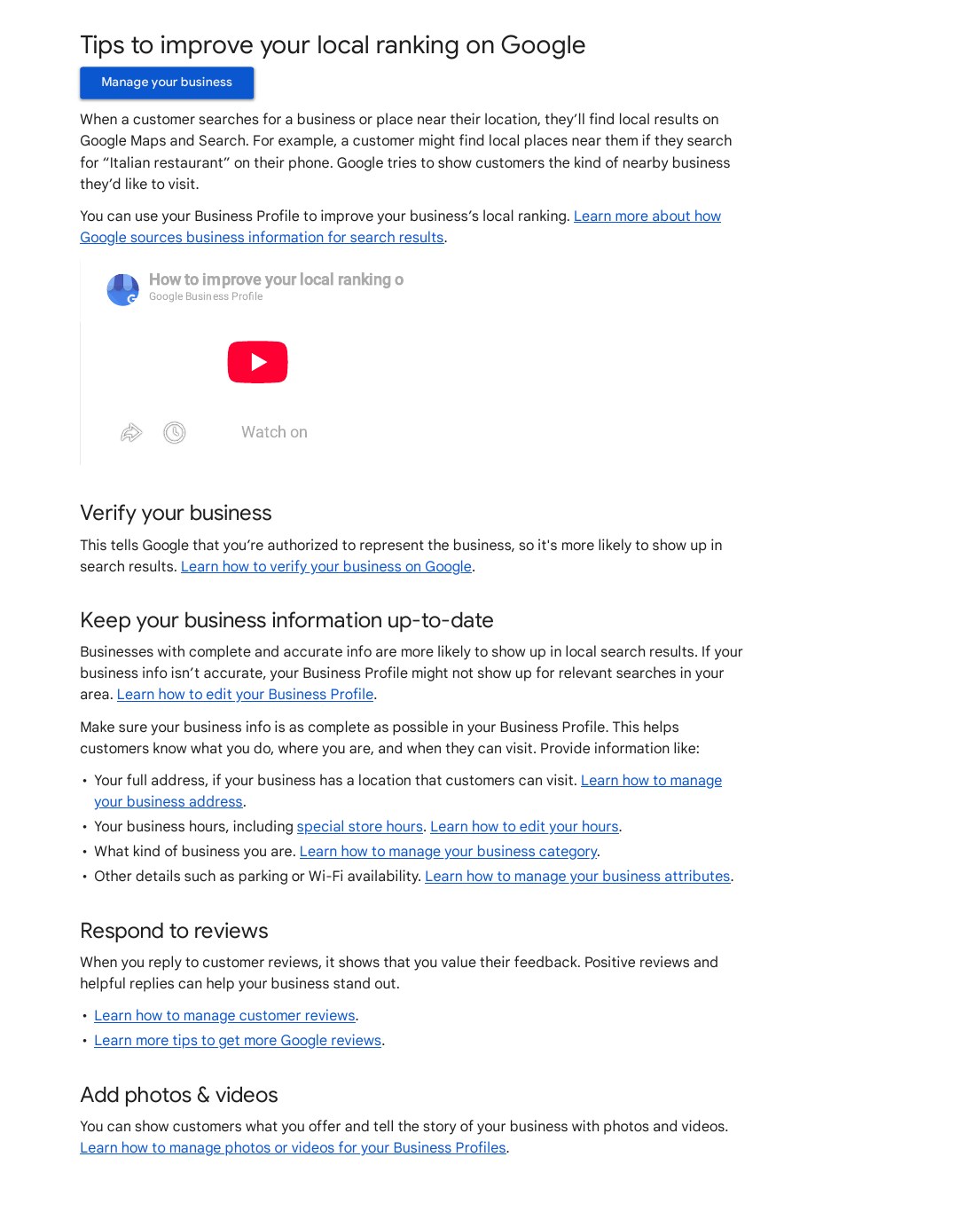
Google ranks local results mainly on three things: relevance (how well your profile matches the search), distance (how far you are from the searcher) and prominence (how well known your business is). You cannot change your distance from a customer. You can change everything else.
Strategy 2: Earn reviews — and answer every one
Reviews persuade customers and feed Google’s ranking at the same time. BrightLocal’s Local Consumer Review Survey 2025, based on 1,026 US adults, found that 96% of consumers are open to writing a review, yet only 29% actually wrote one in the past year. That gap is your opening: most happy customers will review you if you ask at the right moment.
The same survey found that 55% of consumers would only consider a business rated four stars or more, and 83% use Google to read reviews about local businesses. Ask every satisfied customer shortly after the job is done. BrightLocal found email is the most likely way people say they would leave a review (40%), followed by being asked in person (27%). Google gives every verified business a short review link and a QR code — put it on receipts, in follow-up emails and at the counter.
Answer every review, good and bad, within a few days. A short, specific reply shows future customers that a real person runs the business. Never pay for reviews or write fake ones: Google’s fake-engagement policy can suspend new reviews on a profile that breaks the rules, and the US Federal Trade Commission’s fake-review rule has been in force since October 2024.
Strategy 3: Build a page for each service and each area
Your website has to match the searches your profile cannot. A dentist in Manchester needs a page for “teeth whitening in Manchester” and a separate page for “emergency dentist in Manchester”, not one page that tries to cover both. In the Whitespark 2026 survey, the highest-scored factors for local organic results — the normal results below the map — were a dedicated page for each service, content that matches the city or neighbourhood, and the quality of links pointing to the domain.
Write each page for one service in one place. Use the town or area name in the title tag, the H1 and the first paragraph, then write genuinely useful content: prices or price ranges, what happens at the first visit, how long the work takes, and real photos. Add the area you serve in plain words, and link the page to your Google Business Profile and your contact page. One honest, complete page beats ten near-identical ones stuffed with place names.
Strategy 4: Keep your name, address and phone number identical everywhere
A citation is any mention of your business name, address and phone number — usually shortened to NAP — on another website. Google checks these listings to confirm your business is real and in the place it claims to be. Whitespark’s 2026 survey puts citation signals at about 6% of local pack weight: a small share, but a wrong phone number or an old address can cost you a customer even when your ranking is fine.
Write down one master version of your details and use it everywhere, character for character. Then check the main listings: Google, Bing Places, Apple Maps, Yelp, Facebook, and the directories that matter in your trade. Fix the wrong ones before you add new ones, and when you move premises or change numbers, work through the same list again. A business with 25 correct listings is in better shape than one with 200 listings, half of which point to an old address.
Strategy 5: Earn links from local sites
Links still matter in local SEO. In the Whitespark 2026 survey, link signals carry about 8% of local pack weight and about 24% of local organic weight — the second-largest group for the results below the map. Local links are also the hardest for a competitor in another city to copy, which is exactly why they help.
Aim for links that make sense for a real local business: your local chamber of commerce, a supplier or trade body that lists members, a local newspaper that covers your work, a charity or sports club you sponsor, and local blogs that write about your area. A guest post on a genuine local site can work too, if the site is real and the article is useful. What does not work is buying links from link farms or joining schemes that exist only to pass ranking signals. Google’s spam policies treat those as link spam, and the damage lasts longer than any short-term gain.
Strategy 6: Make your website fast and easy on a phone
Most local searches happen on a phone, often while the customer is already out. Statista reported in 2025 that 61% of all Google searches are now performed on mobile devices. If your site is slow, the phone number is not tappable, or the address does not open in Maps, the customer goes back to the results and calls the next business.
Check the basics: pages should load in under three seconds on a phone, the click-to-call button should be visible without scrolling, opening hours should be on every page, and the contact form should work with one hand. Test the site on a real phone, not only on a desktop. Fix what frustrates you as a customer, because it frustrates your customers too.
Strategy 7: Track calls, direction requests and visits
Local SEO is easy to measure, so measure it. Your Google Business Profile shows how many people called you, asked for directions, visited your website or viewed your photos, and which search terms brought them there. Your website analytics show which local pages bring visitors and which ones bring calls.
Review these numbers once a month. If direction requests rise but calls do not, check the phone number on the profile. If one service page brings most of the calls, build more content around that service. If a page gets visits but no calls, rewrite its opening lines and make the phone number easier to find. Small, regular fixes beat a big rebuild every two years.
Mistakes that hold local rankings back
- Claiming a Google Business Profile and leaving it half empty for a year.
- Using a keyword-stuffed business name that is not your real trading name.
- Ignoring negative reviews instead of answering them calmly.
- Building dozens of near-identical location pages with only the town name changed.
- Letting the phone number on Google differ from the one on the website.
- Chasing hundreds of low-quality listings instead of fixing the ones that matter.
- Never checking whether the work brings calls, so nothing ever improves.
Frequently asked questions
What are local SEO strategies?
Local SEO strategies are the steps that help a business appear in Google’s local results and on Google Maps when nearby people search for what it offers. They cover the Google Business Profile, reviews, location pages, citations, local links, mobile-friendly web pages and tracking. Done together, they put a business in front of customers who are close by and ready to buy.
How long does local SEO take to work?
Most businesses see early movement in four to eight weeks — more profile views, more calls, more direction requests — and steadier ranking gains over three to six months. The speed depends on the competition in your area, how complete your profile is, and how many reviews you already have. New businesses in competitive towns take longer than established ones in quiet areas.
Do I need a Google Business Profile to rank locally?
Yes, in practice. The map pack is built from Business Profiles, and Google Business Profile signals carry about a third of local pack ranking weight, according to Whitespark’s 2026 survey of 47 local search experts. A business without a profile can still rank in the normal organic results below the map, but it cannot appear in the map pack itself.
How many reviews do I need?
There is no fixed number, but two things matter more than the total: recency and rating. BrightLocal’s 2025 survey found that 55% of consumers would only consider a business rated four stars or more, and most readers trust recent reviews far more than old ones. A steady flow of new reviews each month beats a large pile of reviews from two years ago.
Can I do local SEO myself, or should I hire an agency?
A small business owner can do the basics: claim the profile, keep it complete, ask for reviews, and keep listings accurate. It takes a few hours a month. An agency helps when the market is competitive, when several locations need managing, or when the work keeps slipping down the list. Either way, the work is the same — there are no shortcuts that last.

Abdullah Zulfiqar is Co-founder and Client Success Manager at RankWithLinks, an SEO agency helping businesses grow online. He specializes in client relations and SEO strategy, driving measurable results and maximizing ROI through effective link-building and digital marketing solutions.