Best AI-Powered SEO Checking Software
Introduction: Why AI SEO Tools Have Become Non-Negotiable
The landscape of search engine optimization has changed dramatically. In 2026, ranking on Google is no longer just about sprinkling keywords into a blog post and hoping for the best. Search engines have grown smarter, user expectations have risen, and the competition for the top positions has intensified in almost every niche imaginable.
That is exactly why AI-powered SEO checking software has moved from being a nice-to-have tool to an absolute necessity for content creators, digital marketers, agencies, and business owners alike. These tools do not just check whether your article contains the right keywords. They analyze search intent, evaluate content depth, score readability, audit technical performance, and even simulate how Google’s algorithm might interpret your page before you ever hit publish.
Whether you are writing a product review, a service landing page, a long-form guide, or a news article, the right AI SEO writing and checking tool can be the difference between ranking on page one or disappearing into the void of page four.
This article covers the best AI-powered SEO checking software for writing in 2026, what features actually matter, how these tools work, and how to choose the right one for your specific goals.
What Makes an AI SEO Checking Tool Worth Using in 2026
Before diving into specific platforms, it is important to understand what separates a genuinely useful AI SEO tool from one that simply looks impressive on a demo video.
The best tools in 2026 share a core set of capabilities. They perform real-time content analysis as you write, not just after the fact. They understand semantic relevance, meaning they look beyond exact-match keywords and evaluate whether your content covers the topic thoroughly enough to satisfy modern search algorithms. They provide actionable suggestions rather than vague scores. And they integrate with the platforms most writers and marketers already use.
Here are the key features to prioritize when evaluating any AI SEO checking software this year.
Natural Language Processing Depth Google’s algorithm, powered by systems like BERT and MuM, understands language at a sophisticated level. The best AI SEO tools use comparable natural language processing to analyze your content the way Google does. They identify topic gaps, suggest related concepts, and flag areas where your content may feel thin or incomplete.
Search Intent Alignment Understanding whether a user wants information, wants to make a purchase, or is looking for a specific website is critical to writing content that ranks. Top-tier tools now evaluate your content against the dominant search intent for your target keyword and tell you whether your structure and messaging are aligned with what searchers actually want.
Competitor Content Analysis Knowing what the top-ranking pages cover gives you a roadmap. The best AI SEO tools scrape and analyze the current top results for your keyword and help you identify the content angles, word counts, heading structures, and subtopics that are already performing well.
Readability and Engagement Scoring Google pays attention to user behavior signals. Content that is difficult to read leads to higher bounce rates and shorter session times, both of which hurt rankings. Good AI SEO tools score your readability against your target audience and suggest improvements.
Technical SEO Integration Some tools go beyond on-page writing assistance and integrate technical auditing, including checking meta descriptions, title tag optimization, internal linking suggestions, schema markup recommendations, and page speed insights.
Google AI Overview Optimization This is a relatively new but rapidly growing priority. Google’s AI Overviews appear prominently at the top of search results and pull information directly from web content. Tools that help structure your writing in a way that increases the likelihood of being featured in these summaries are becoming especially valuable in 2026.
The Best AI SEO Checking Software for Writing in 2026
1. Surfer SEO
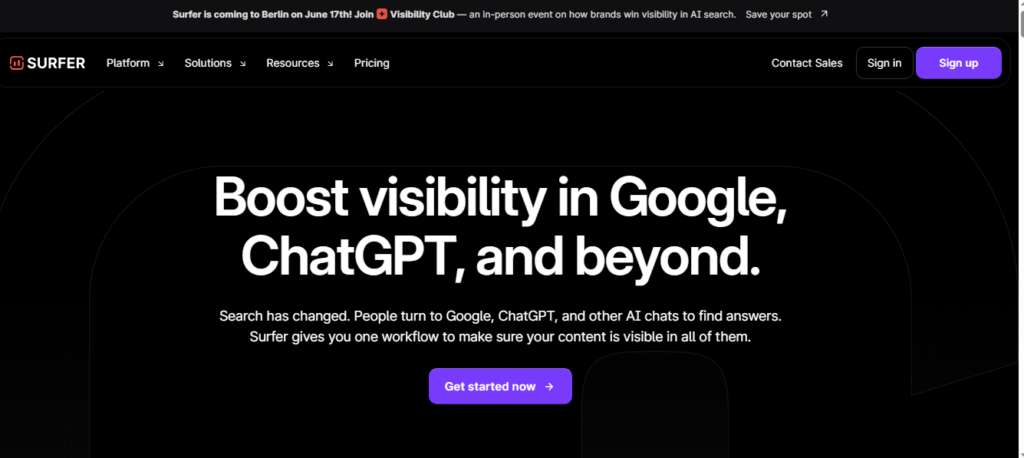
Surfer SEO remains one of the most widely respected AI-powered SEO content tools available in 2026. Its Content Editor feature allows writers to optimize articles in real time by comparing their content against the top-ranking pages for any given keyword.
Surfer analyzes over 500 on-page signals and provides a content score that reflects how well your article aligns with what is already ranking. It identifies missing semantic keywords, recommends ideal word counts based on competitor analysis, and flags structural issues like heading distribution.
What makes Surfer particularly useful for writers is its natural integration into the writing process. You do not have to finish your article and then audit it separately. The suggestions appear as you type, making optimization feel like a natural part of drafting rather than an afterthought.
Surfer also includes a keyword research tool, an outline builder powered by AI, and a plagiarism checker. For agencies and teams, it offers collaboration features that allow multiple users to work on optimized content simultaneously.
In 2026, Surfer has also leaned into AI Overview optimization, offering structured content guidance that increases the likelihood of your content appearing in featured snippets and Google’s generative summaries.
Best for: Content teams, SEO agencies, bloggers who publish regularly, and anyone who wants a comprehensive writing and optimization workflow in one platform.
2. Clearscope

Clearscope has built a strong reputation for being the cleanest and most straightforward AI SEO content optimization tool on the market. Its strength lies in its simplicity and the quality of its data.
When you enter a keyword into Clearscope, the tool analyzes the top-ranking content and generates a detailed report of the terms, phrases, and concepts your article needs to include to be considered comprehensive by search engines. Each term is graded by importance, and as you write, Clearscope tracks how many of those terms you have used and gives your content an overall grade.
The platform integrates directly with Google Docs and Microsoft Word, which is a significant advantage for writers who prefer to work in familiar environments. There is no need to copy and paste content into a separate interface.
Clearscope is particularly strong for enterprise-level content operations where consistency, scalability, and data accuracy are the highest priorities. Its reporting features make it easy to track content performance over time and demonstrate the value of SEO efforts to clients or stakeholders.
One area where Clearscope stands out in 2026 is its updated AI-driven content briefs, which provide writers with a detailed roadmap before they even begin drafting. These briefs include recommended headings, key questions to answer, and competitor insights that help writers create authoritative content from the very first sentence.
Best for: Enterprise content teams, marketing directors, SEO professionals managing large content operations, and writers who value clean data over flashy features.
3. MarketMuse
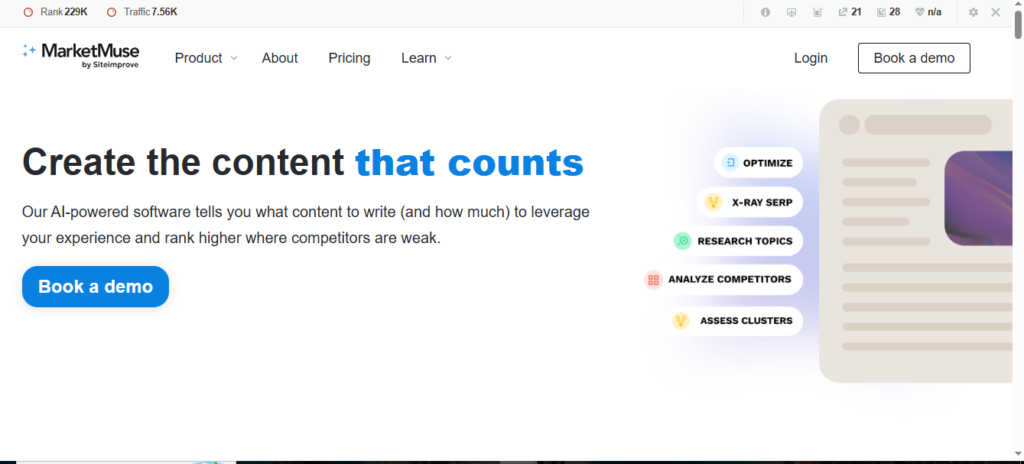
MarketMuse approaches SEO from a content strategy perspective rather than just an article-level optimization perspective, and that distinction makes it uniquely valuable for organizations thinking long-term about their content investment.
The platform builds a detailed model of your website’s existing content and identifies topical authority gaps. In other words, it tells you not just how to optimize one article but how to build a content ecosystem that establishes your site as a trusted authority in your niche. This is increasingly important in 2026 because Google has continued to reward sites that demonstrate deep, consistent expertise across a topic area.
For individual articles, MarketMuse provides a content brief that includes recommended topics to cover, questions to answer, target word count, and a list of related terms and concepts. Its AI-generated first drafts can serve as starting points for writers who want to save time without sacrificing quality.
MarketMuse also includes competitive analysis tools that show how your content stacks up against what is currently ranking, and it provides a difficulty score that helps you prioritize which content opportunities are most attainable given your current domain authority.
In 2026, MarketMuse has become especially valuable for brands investing in thought leadership and topical authority building as a long-term SEO strategy.
Best for: Content strategists, brand publishers, marketing teams with long-term SEO goals, and organizations focused on building topical authority rather than just optimizing individual pages.
4. Frase
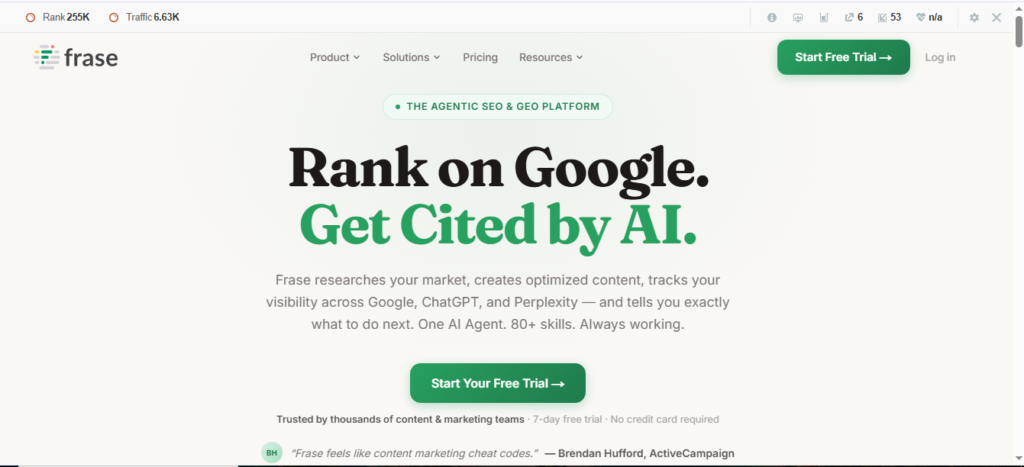
Frase combines AI writing assistance with SEO optimization in a way that genuinely accelerates the content creation process without cutting corners on quality. It is one of the most well-rounded tools available for individual creators and small teams who want both writing help and SEO guidance in a single interface.
When you start a new document in Frase, the tool automatically pulls the top-ranking pages for your target keyword and displays their structure, headings, word counts, and key topics in a sidebar. This gives writers immediate context about what the competition looks like before they write a single word.
Frase’s AI writing assistant can generate outlines, introductions, section drafts, and conclusions based on your keyword and brief. These drafts are not intended to be published without editing but serve as strong starting points that writers can refine into something genuinely original and authoritative.
The platform also includes a question research feature that surfaces the questions real users are asking about your topic across forums, search engines, and Q&A sites. This is particularly useful for writing content that targets featured snippets and Google AI Overviews, since both formats tend to reward content that directly and clearly answers specific user questions.
Frase’s optimization score updates in real time as you write, tracking your use of important terms and alerting you when your content falls short of what the top-ranking pages are covering.
Best for: Freelance writers, small content teams, bloggers, and content creators who want AI writing assistance alongside strong SEO optimization without paying enterprise-level prices.
5. Semrush Writing Assistant
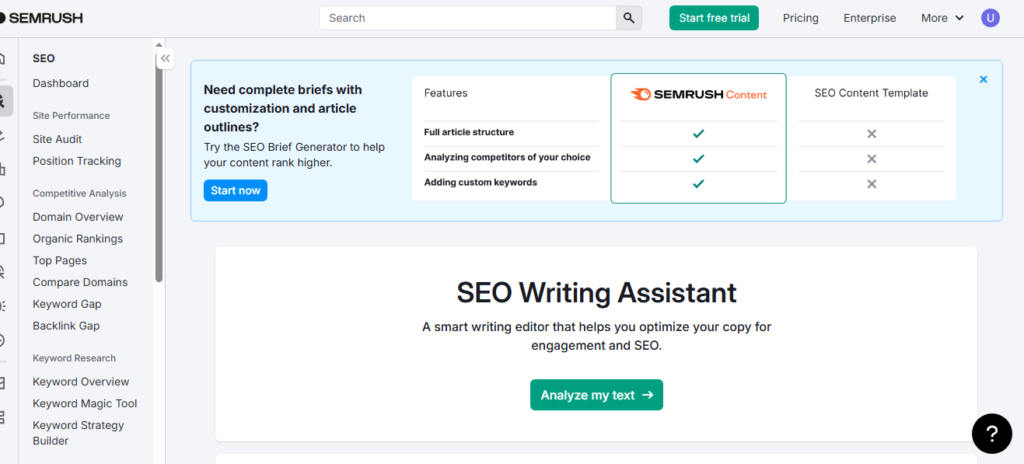
Semrush is one of the most recognized names in the SEO industry, and its Writing Assistant tool brings the platform’s deep keyword and competitor data directly into the content creation process.
The Writing Assistant integrates with Google Docs and WordPress, making it accessible without disrupting established writing workflows. As you write, it scores your content across four key dimensions: SEO, readability, originality, and tone of voice. Each dimension includes specific suggestions for improvement, making it easy to understand exactly what needs to change and why.
One of the strongest advantages of the Semrush Writing Assistant is its connection to the broader Semrush platform. Writers and SEO professionals who already use Semrush for keyword research, backlink analysis, and site auditing can pass that data directly into the Writing Assistant, creating a seamlessly integrated SEO workflow from keyword discovery to published content.
In 2026, Semrush has upgraded its AI capabilities significantly, including smarter rephrasing suggestions, tone adjustment tools, and content templates built specifically for different content types such as product pages, how-to guides, and opinion pieces.
Best for: SEO professionals and digital marketers who already use Semrush and want to extend its capabilities into their content workflow, as well as teams that need consistent tone of voice monitoring across large volumes of content.
6. NeuronWriter
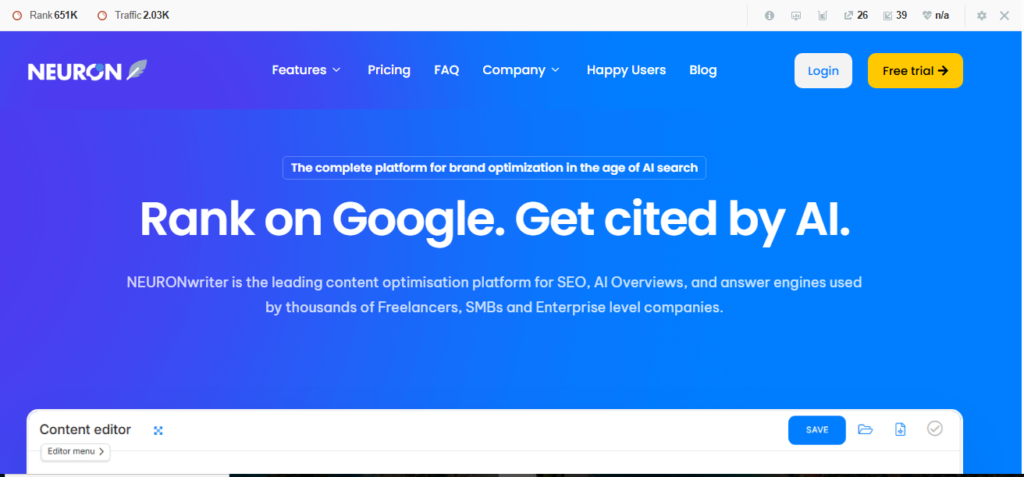
NeuronWriter has grown steadily in popularity among SEO-focused writers and has established itself as a strong mid-tier option that punches above its price point. It combines semantic content optimization with an AI writing assistant and natural language generation features in a clean, intuitive interface.
The tool analyzes top-ranking content for your keyword and generates a list of semantically related terms, questions, and topics your content should address. Its content editor shows your optimization score in real time and highlights areas where additional depth or coverage is needed.
NeuronWriter is particularly strong when it comes to content structure recommendations. It analyzes the heading hierarchies of top-ranking pages and suggests a logical structure for your own article, helping writers create content that is both user-friendly and search-engine-friendly from the outset.
The platform also includes internal linking suggestions, which is a feature that many competing tools overlook but which has a meaningful impact on on-page SEO and site authority distribution.
For 2026, NeuronWriter has introduced enhanced support for AI Overview optimization, including guidance on writing clear, direct answers to common questions in a format that Google’s generative AI is more likely to surface.
Best for: Individual SEO writers, niche site builders, and small agencies looking for strong semantic optimization capabilities at a more accessible price point than enterprise tools.
7. Jasper with SEO Mode
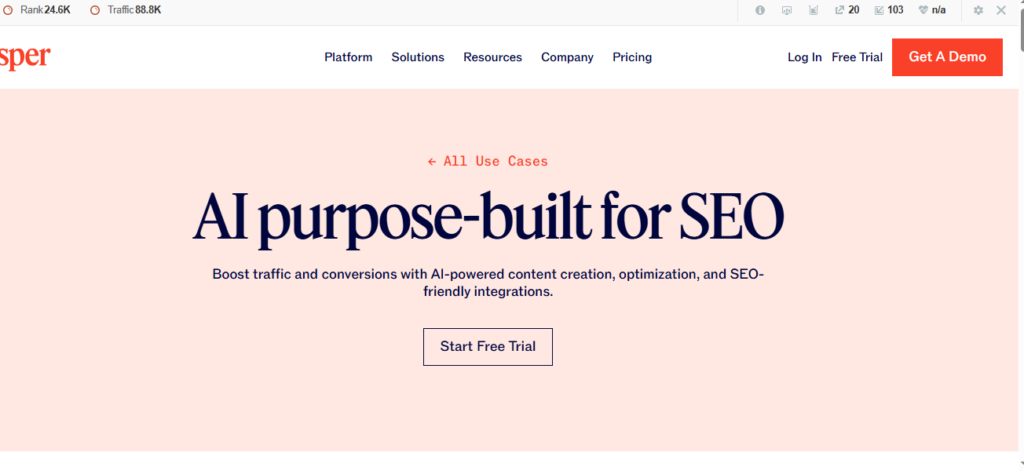
Jasper remains one of the most widely used AI writing platforms in the world, and its SEO Mode, developed in partnership with Surfer SEO, brings genuine optimization power to what was already a powerful content generation tool.
Jasper’s core strength is the quality and fluency of its AI-generated content. It produces writing that reads naturally and requires less editing than many competing AI writing tools. When combined with Surfer’s real-time SEO scoring, the result is a workflow where you can generate a strong draft quickly and then optimize it for search performance without switching platforms.
The platform includes a large library of content templates for different use cases, including blog posts, landing pages, product descriptions, email sequences, and social media content. Each template can be adapted for SEO purposes by activating the SEO mode and connecting it to a target keyword.
Jasper is also notable for its brand voice features, which allow teams to define a consistent tone and style that the AI maintains across all generated content. This is particularly valuable for businesses that produce high volumes of content and need to maintain a recognizable voice across every piece.
Best for: Content marketers, brands producing high volumes of content, agencies managing multiple client accounts, and businesses that want to combine fast AI content generation with reliable SEO optimization.
How to Choose the Right AI SEO Tool for Your Needs in 2026
With so many strong options available, choosing the right tool comes down to a clear understanding of your own goals, budget, workflow, and content volume.
If you are an individual writer or blogger working on a tight budget, Frase and NeuronWriter offer the best combination of features and affordability. Both tools provide genuine SEO value without requiring an enterprise-level investment.
If you are managing content for a large organization or agency and need robust data, scalability, and integration capabilities, Clearscope and MarketMuse are the strongest choices. Both are built for scale and offer features that support long-term content strategy rather than just one-off optimization.
If you already use Semrush as your primary SEO platform, the Writing Assistant is the natural choice because it leverages your existing data investment and fits seamlessly into your current workflow.
If speed of content production is your primary concern and you need to generate large volumes of optimized content efficiently, Jasper with SEO Mode or Surfer SEO’s AI writing integration will serve you best.
Optimizing for Google AI Overviews: What Every Writer Needs to Know in 2026
Google AI Overviews have become one of the most significant developments in search in recent years. These generative summaries appear at the very top of search results for a growing percentage of queries and pull information directly from web content to answer user questions without requiring a click.
For content creators, this creates both a challenge and an opportunity. The challenge is that AI Overviews can reduce click-through rates for informational queries. The opportunity is that content which gets featured in these summaries gains enormous visibility and credibility.
The best AI SEO tools in 2026 are actively helping writers optimize for AI Overview inclusion. The key principles are consistent across all platforms.
Write clear, direct answers to specific questions early in your content. Google’s generative AI tends to surface content that provides an unambiguous answer to a user’s query without requiring the reader to dig through paragraphs of preamble.
Use structured formatting including clear headings, concise paragraphs, and logical information hierarchy. Content that is easy to parse visually is also easier for AI systems to interpret and summarize accurately.
Cover topics comprehensively. AI Overviews tend to favor content that demonstrates authority and depth on a subject rather than surface-level coverage. If your article only scratches the surface of a topic, it is less likely to be pulled into a generative summary.
Use natural language and conversational phrasing for question-based content. When users ask questions in natural language, Google’s AI prefers sources that answer in a similarly natural, accessible way rather than in dry, robotic prose.
Common Mistakes to Avoid When Using AI SEO Tools
Even the best tools can be misused in ways that hurt rather than help your rankings. Here are the most common mistakes to watch out for.
Over-optimizing by cramming every suggested keyword into your content without regard for how it reads is one of the fastest ways to create content that scores well in a tool but performs poorly in real search results. Google’s algorithm is sophisticated enough to recognize content that prioritizes keyword density over genuine value.
Treating AI-generated drafts as finished content without substantive editing and fact-checking is another major risk. AI writing tools are powerful accelerators, but the content they generate still needs a human expert to review it for accuracy, nuance, and originality.
Ignoring the user experience in favor of SEO metrics is a persistent mistake. High rankings mean nothing if visitors land on your page and immediately leave because the content is poorly structured, difficult to read, or fails to answer their question.
Finally, relying on a single metric or score as the definitive measure of content quality leads many writers astray. No tool’s score is a perfect predictor of ranking success. Use these scores as guidance, not gospel.
Final Thoughts: The Future of AI-Powered SEO Writing in 2026 and Beyond
AI-powered SEO checking and writing software has matured significantly. The tools available in 2026 are not novelties or shortcuts. They are serious, data-driven platforms that help writers and marketers produce content that genuinely serves both search engines and human readers.
The most successful content creators in 2026 are those who use these tools intelligently, combining their data and suggestions with genuine expertise, original thinking, and a clear understanding of their audience. Technology can identify what is missing from your content and suggest how to structure it more effectively. But the creativity, authority, and authenticity that make content truly valuable still come from the person writing it.
Invest in the right AI SEO tool for your workflow, learn how to use it well, stay current with how Google’s algorithm and AI features are evolving, and keep your focus on creating content that genuinely helps the people reading it. Do all of that consistently, and strong search rankings will follow.
Want to Rank Higher on Google?
We build premium white-hat backlinks that actually move the needle. Trusted by 500+ brands.
📈 Book a Free Strategy Call