
What is ecommerce SEO? In short, it is the work of making an online store easy for search engines to find, understand and show to shoppers who are ready to buy. When someone searches for a product, a category or a buying question, ecommerce SEO helps the right product page, category page or guide appear in the results, with clear prices, stock details and reviews where Google can show them.
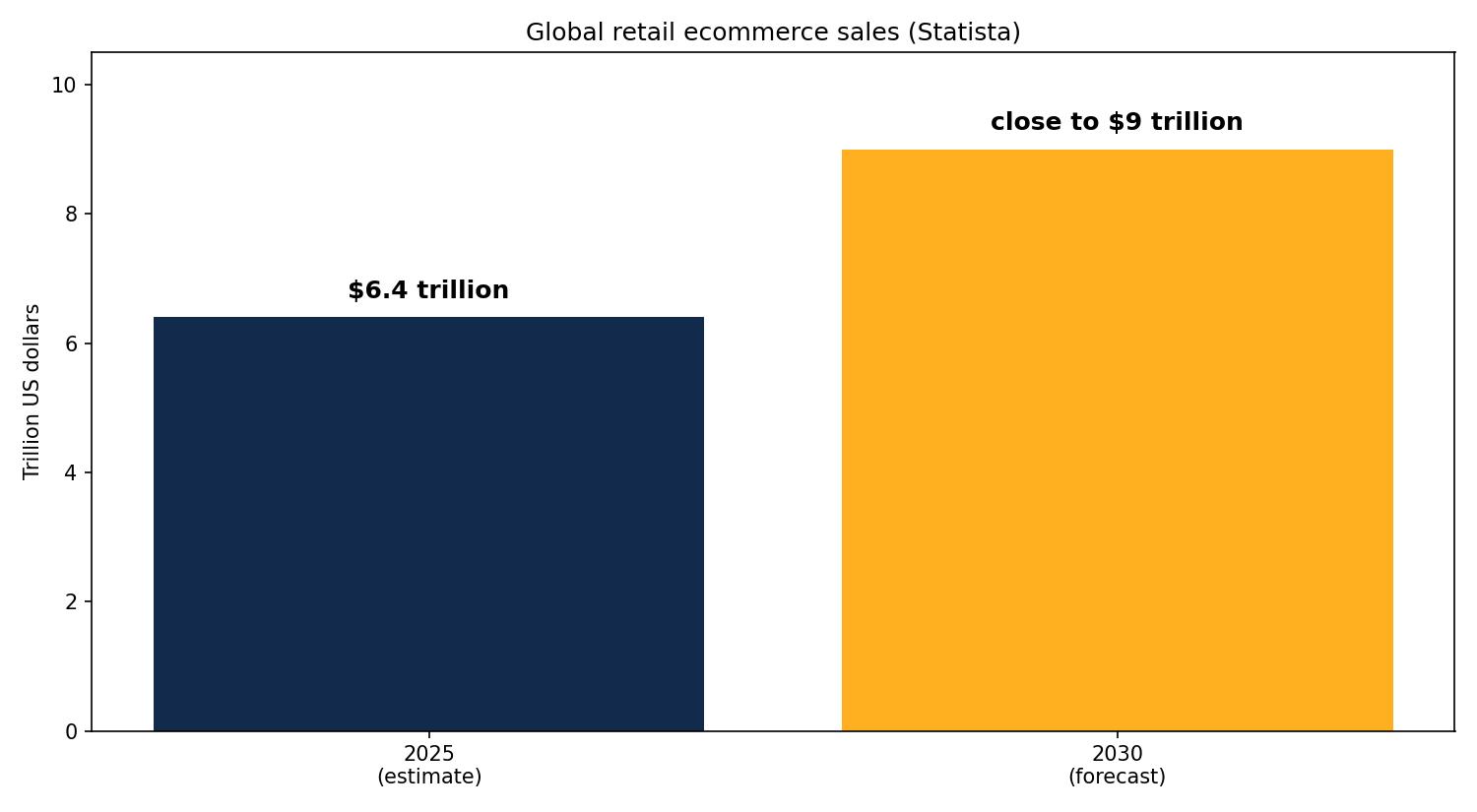
That matters because online shopping is now a large share of retail. Statista put global retail ecommerce sales at an estimated $6.4 trillion in 2025, with a forecast close to $9 trillion by 2030. In the United States alone, the Census Bureau reported total ecommerce sales of $1,233.7 billion for 2025, or 16.4% of total retail sales. A store that cannot be found in search is missing a large part of that market, and it must then pay for every visit through ads instead.
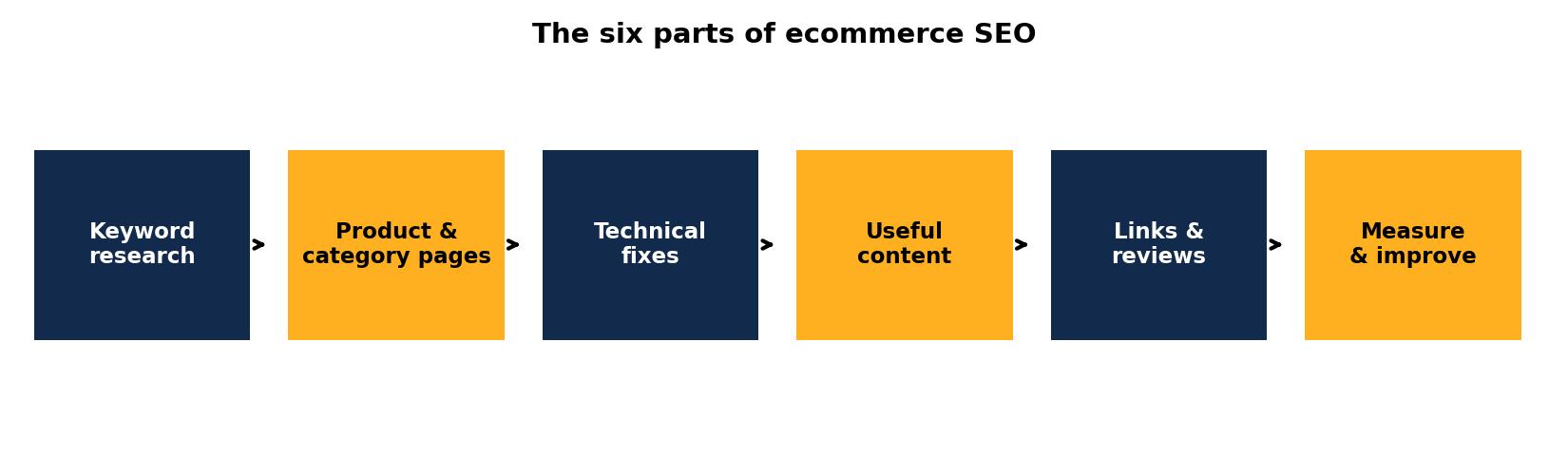
Ecommerce SEO is not one trick. It brings together keyword research, product and category pages, technical fixes, useful content and links from other trusted sites. Each part answers a different question: what do shoppers search for, which page should rank for it, can Google crawl and index that page, does the page answer the question well, and do other sites trust it enough to link to it?
How ecommerce SEO works, step by step
Search starts with a query. A shopper may type a broad term such as “running shoes”, a specific one such as “women’s waterproof running shoes size 6”, or a question such as “how to choose trail running shoes”. The first type shows buying intent at a general level. The second is much closer to a purchase. The third needs advice before the sale. A good store builds pages for all three, and sends each searcher to the page that fits best: categories for broad terms, product pages for specific terms, and guides for questions.
Google then needs to crawl the site, read each page and decide what it is about. Clear titles, helpful descriptions, one main heading per page and honest product details all help. So does a clean site structure: a homepage that links to categories, categories that link to products, and products that link back to related categories. When that structure is clear, shoppers and search engines both find their way around.
Finally, Google weighs trust. Pages that load fast, work well on a phone, carry real reviews and earn links from relevant sites tend to do better than thin pages copied from a supplier. That is why ecommerce SEO is ongoing work, not a one-off fix. Prices change, stock changes, new products arrive and old pages go out of date.
Start with the searches that lead to sales
Keyword research for a store is different from research for a blog. Start with the products you actually sell, then list how shoppers describe them. Include sizes, colours, materials, uses and problems the product solves. A page that targets “leather weekend bag” and a page that targets “leather weekend bag for cabin luggage” serve different shoppers, even though the words look similar.
Check search intent before writing. If the results for a term are all product listings, a category or product page is the right fit. If the results are guides and comparisons, a guide is the right fit, and it can link to the products it mentions. Forcing a product page to rank for a question, or a guide to rank for a product term, rarely works.
Keep a simple rule: one main keyword per page, and no two pages chasing the same term. When two pages on the same store compete for one keyword, Google must choose between them, and neither page gets the full benefit. A short list of target pages, each with its own keyword, avoids that problem.
Product and category pages that help shoppers decide
Product pages do most of the selling, so they deserve the most care. Write a unique description for each product instead of copying the supplier text. Supplier text appears on many stores, so it gives Google no reason to rank your version. Describe what the product is made of, who it suits, how it fits or works, what is included, and how delivery and returns work.
Category pages matter just as much. They catch broad searches and guide shoppers to the right products. Give each category a clear title, a short introduction that explains what the category covers, and filters that work, such as size, colour, price and brand. Avoid creating dozens of near-identical filtered pages that Google can index, because thin duplicate pages weaken the whole site. Use canonical tags to point filtered or sorted versions back to the main category page.
Images need care too. Use clear photos of the real product, compress them so pages load fast, and write descriptive alt text that names the product and its key feature. Alt text helps shoppers who use screen readers, and it helps search engines understand the image. Do not use a photo of a different product as a stand-in.
The technical basics every store needs
Technical SEO sounds complex, but the basics are straightforward. Pages must load quickly, especially on mobile phones, because many shoppers browse on a phone and leave slow pages. Images should be compressed, extra scripts kept to a minimum, and the checkout kept simple.
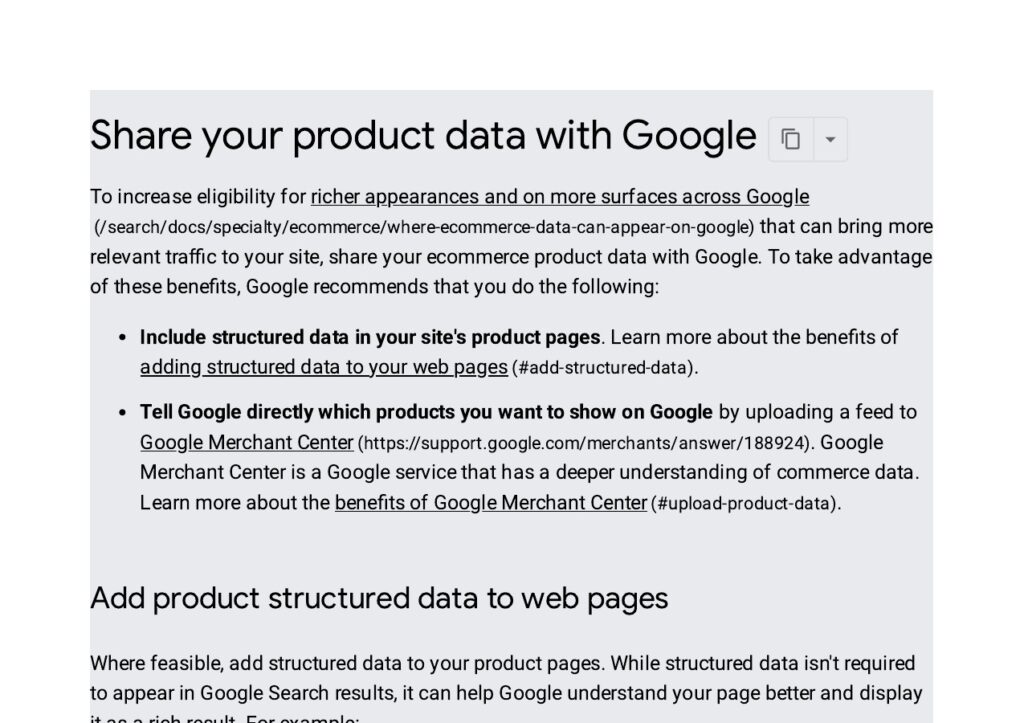
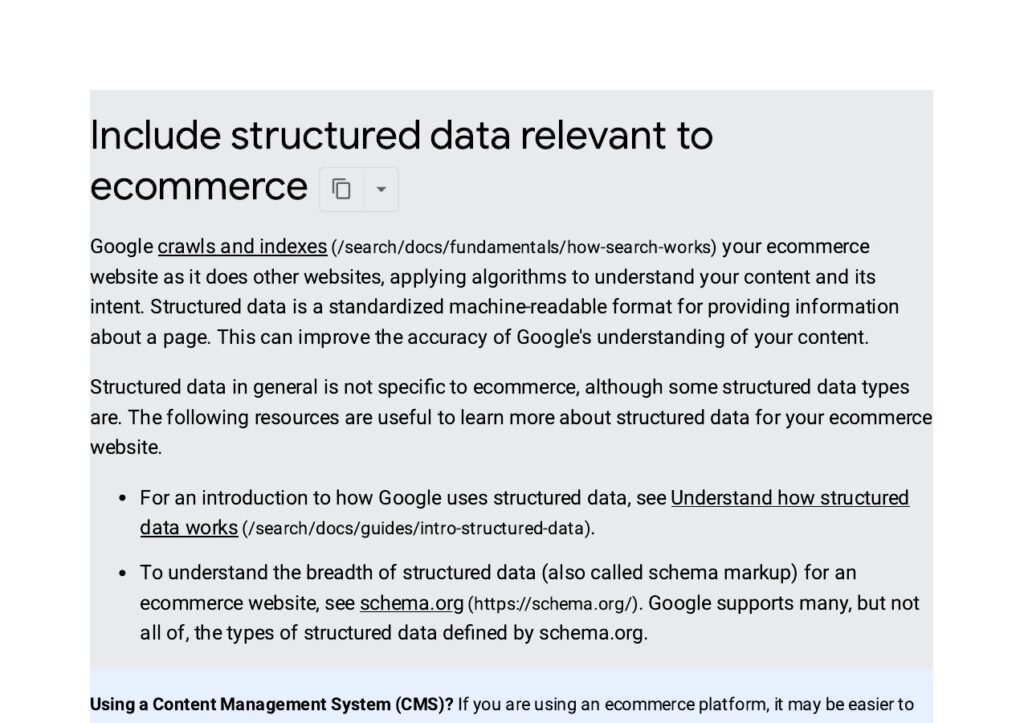
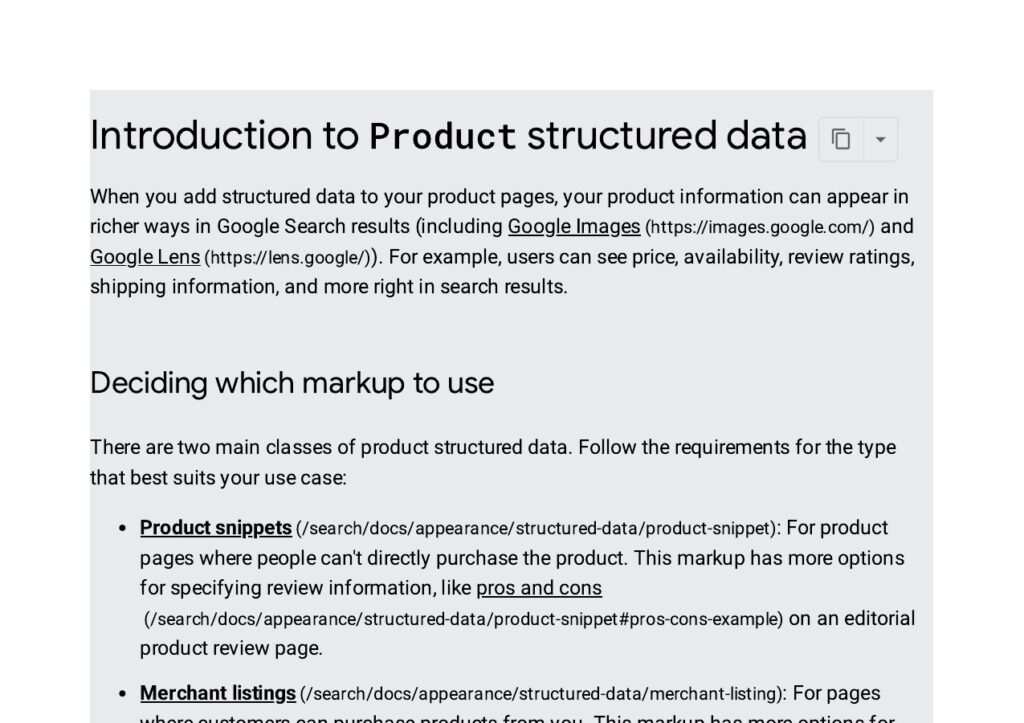
Google also needs clear signals about each product. Product structured data, a type of code on the page, can help Google show price, availability, review ratings and shipping details in search results. Google’s own guidance says structured data is not required to appear in search results, but it can help Google understand a page better and display it as a rich result. It also recommends sharing product data with Google through a Merchant Center feed, which is needed for some shopping surfaces such as the Google Shopping tab.
Other technical checks include a sitemap that lists the pages you want indexed, a robots file that does not block important pages, working internal links, and no broken pages after a product sells out. When a product is gone for good, redirect its page to the closest live alternative instead of leaving a dead end. When it will return, keep the page live and say clearly that it is out of stock for now.
Content that answers buying questions
Guides and comparison articles bring in shoppers who are not ready to buy yet. A guide that explains how to choose a product, compares two types, or answers common questions can rank for searches a product page never could. It also gives other sites something worth linking to, which helps the whole store.
Write guides from real knowledge of the products. Cover the decision a shopper faces, give honest pros and cons, and link to the relevant category and product pages where the advice applies. Avoid padding a guide with keywords. A shopper who feels helped is more likely to buy from that store later, and a page that truly answers the question is more likely to keep its ranking.
Links, reviews and trust
Links from other websites still matter for ecommerce SEO, because they act as votes of confidence. The best links come from real mentions: a journalist covering a product, a blogger reviewing it, a supplier listing stockists, or a local site listing a shop. Those links are hard to earn, and that is the point. A store that builds links through genuine products, useful guides and honest outreach is building an asset that paid ads cannot replace.
Reviews work in a similar way. Genuine customer reviews on product pages give shoppers confidence and give Google fresh, specific text about the product. Never invent reviews, and never copy reviews from another store. If a product has no reviews yet, that is fine. A clear description and honest details are better than fake praise.
Our team at Rank With Links helps stores with this part of the work through our ecommerce link building services, which focus on manual outreach and real placements rather than shortcuts.
How to measure ecommerce SEO
Rankings alone do not pay the bills. Measure the numbers that lead to sales: organic visits to product and category pages, clicks from search results, add-to-cart actions, completed orders from organic search, and revenue from organic search. Google Search Console shows which queries bring clicks and which pages need attention, while analytics shows what those visitors do next.
Watch for warning signs too. A sharp fall in clicks for a top category, a rise in pages that Google has not indexed, or a slowdown in page speed after new apps are added all deserve a quick look. Small problems found early are cheap to fix. The same problems found months later can cost a season of sales.
Ecommerce SEO numbers worth knowing
The figures below come from published sources, not from guesswork. They show why search deserves attention from any online store, and why mobile and product detail matter so much.
| Figure | What it means | Source |
|---|---|---|
| $6.4 trillion | Estimated global retail ecommerce sales in 2025 | Statista |
| Close to $9 trillion | Forecast global retail ecommerce sales by 2030 | Statista |
| $1,233.7 billion | Total US ecommerce sales in 2025 | US Census Bureau |
| 16.4% | US ecommerce share of total retail sales in 2025 | US Census Bureau |
| 46% | Share of product searches that begin on Google, in Jumpshot data | Jumpshot, reported by DemandSage |
| 33% | Share of website traffic from organic search across seven industries in 2024 | Conductor |
One figure deserves a note. The 46% figure for product searches is older Jumpshot data, and shopping habits have changed since, with marketplaces and social platforms taking a larger share of first searches. It is included because it still shows the scale of Google as a starting point, not because every shopper today starts there. Treat all single figures this way: useful for direction, never a promise for one store.
A simple checklist to start this week
- List your ten best-selling products and give each one a unique title, description and main keyword.
- Check that each category has its own page, a clear introduction and working filters.
- Add Product structured data to product pages, and check it with Google’s Rich Results Test.
- Compress product images, write descriptive alt text, and test the store on a phone.
- Submit your sitemap in Google Search Console and fix any pages it reports as not indexed.
- Write one guide that answers a real buying question, and link it to the products it mentions.
- Look at your organic traffic each month, and fix the pages that lose clicks before adding new ones.
Frequently asked questions
What is ecommerce SEO in simple terms?
Ecommerce SEO is the work of helping an online store rank in search engines for the searches its shoppers make. It covers product and category pages, technical fixes, useful guides and links from other sites. The goal is steady visits from people who want to buy, without paying for every click.
How is ecommerce SEO different from normal SEO?
Normal SEO can focus on one site or one topic. Ecommerce SEO must handle hundreds or thousands of similar pages, such as products in different sizes and colours. It needs extra care with duplicate pages, stock changes, filters, structured data and product images, or the site can grow messy fast.
How long does ecommerce SEO take to work?
There is no fixed date. Small fixes, such as better titles or faster images, can help within weeks. New category pages and guides often need months to earn rankings and links, because Google must crawl, index and test them against other results. Steady work over months beats a short burst every time.
Do I need ecommerce SEO if I already run ads?
Ads bring visits only while you pay for them, and costs rise when competitors bid on the same terms. SEO builds pages that can keep bringing visits after the work is done. Most stores do best with both: ads for fast sales and new launches, and SEO for steady, lower-cost visits over time.
Is Shopify good for ecommerce SEO?
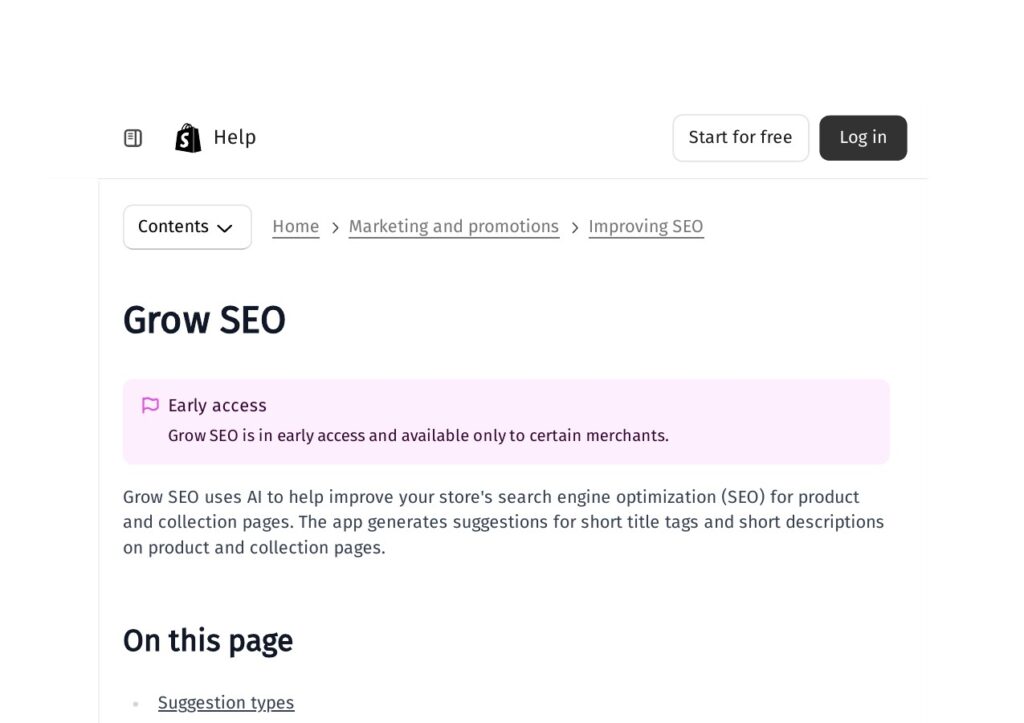
Shopify handles many basics well, including sitemaps, canonical tags, secure pages and built-in product structured data in its themes. It still needs human work: unique product descriptions, sensible category pages, fast images and links. No platform ranks a store on its own, and a store on any platform can do well with the basics done properly.
What is the biggest ecommerce SEO mistake?
Copying supplier descriptions across hundreds of product pages is the most common mistake. It leaves a store with little original content and no reason to outrank other sellers of the same products. Unique descriptions, real photos, honest reviews and helpful guides are what set one store apart from the rest.

Abdullah Zulfiqar is Co-founder and Client Success Manager at RankWithLinks, an SEO agency helping businesses grow online. He specializes in client relations and SEO strategy, driving measurable results and maximizing ROI through effective link-building and digital marketing solutions.