

Intro
Learning how to write SEO content for a law firm service page step by step starts with one simple fact: the page must answer a worried person’s question, not just list services. Someone searching for a family lawyer, a conveyancer or a personal injury solicitor usually needs help now, and they will judge the firm by how clearly the page explains what happens next.
A service page is not a blog post. A blog post can explore a topic. A service page must help a reader decide whether to contact this firm, and give them the facts they need to take that step with confidence. That means plain language, honest detail about the process and fees, and proof that the firm has done this work before.
This guide walks through the full process, from research to a final check before the page goes live.
Why a law firm service page needs a different approach
Legal help is a high-trust purchase. A reader cannot try a solicitor the way they might try a pair of shoes, so the page has to carry the trust. Vague claims such as “we are the best” do not help. Specific detail does: which cases the firm handles, how the first meeting works, what documents the reader should bring, and how fees are charged.
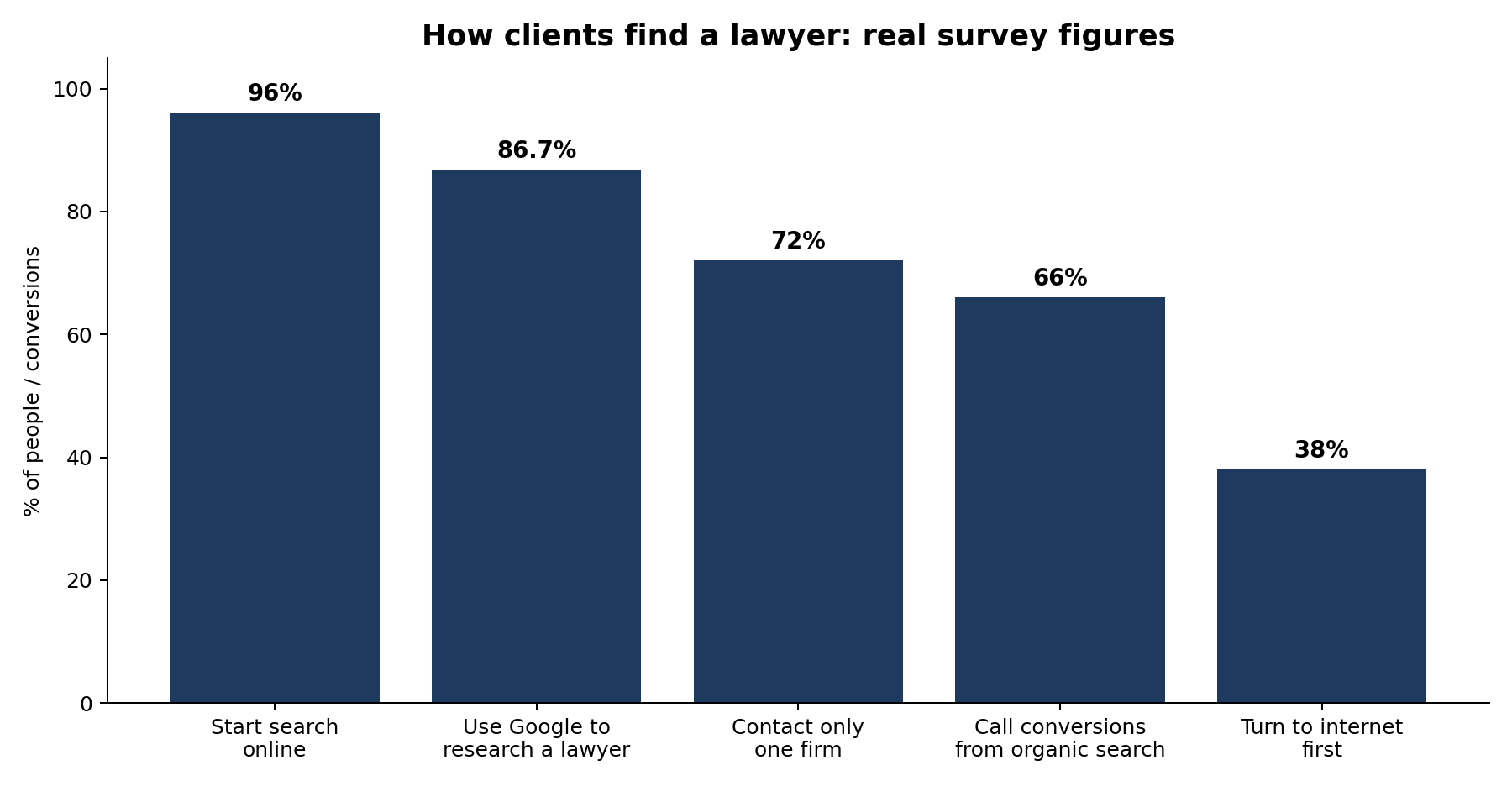
Search data shows why this matters. Research by First Page Sage, cited in law firm SEO reporting, found that 96% of people seeking legal advice start their search online. A 2025 iLawyerMarketing study, reported by Attorney at Work, found that 86.7% of people would use Google to research a lawyer. The same study found that 72% of people who contact a firm contact only one firm. In other words, the first page that looks clear and credible often wins the enquiry.

What the numbers say
| Finding | Figure | Source |
|---|---|---|
| People seeking legal advice who start their search online | 96% | First Page Sage research |
| People who would use Google to research a lawyer | 86.7% | iLawyerMarketing, 2025 |
| People who contact only one firm | 72% | iLawyerMarketing, 2025 |
| Law firm call conversions that come from organic search | 66% | Law Firm Marketing Pros, 2024 |
| Consumers who turn to the internet first when looking for a lawyer | 38%, against 29% who ask family or friends first | American Bar Association research |
These figures do not mean every firm will get the same results. They do show a clear pattern: search is where the first impression happens, and the service page is often that first impression.
Step 1: Find the real question behind the search
Start with the service and the place, for example “divorce solicitor in Manchester” or “employment lawyer for unfair dismissal”. Then ask what the reader is really worried about. It is rarely just the legal term. It is usually cost, time, risk, or what happens at the first meeting.
Check the search results for that phrase. Note the questions in “People also ask”, the headings on the top pages, and the topics they all cover. Those are the gaps your page must fill. If every top page explains fees and yours does not, your page will look thin by comparison.
Write down three things before drafting: the exact service, the reader’s main worry, and the action you want them to take, such as booking a consultation or calling the firm.
Step 2: Build the outline before you write a word
A clear outline stops the page from turning into a wall of text. Use one H1 for the service and place, then H2 sections in the order a reader thinks, not the order a firm wishes to present itself.
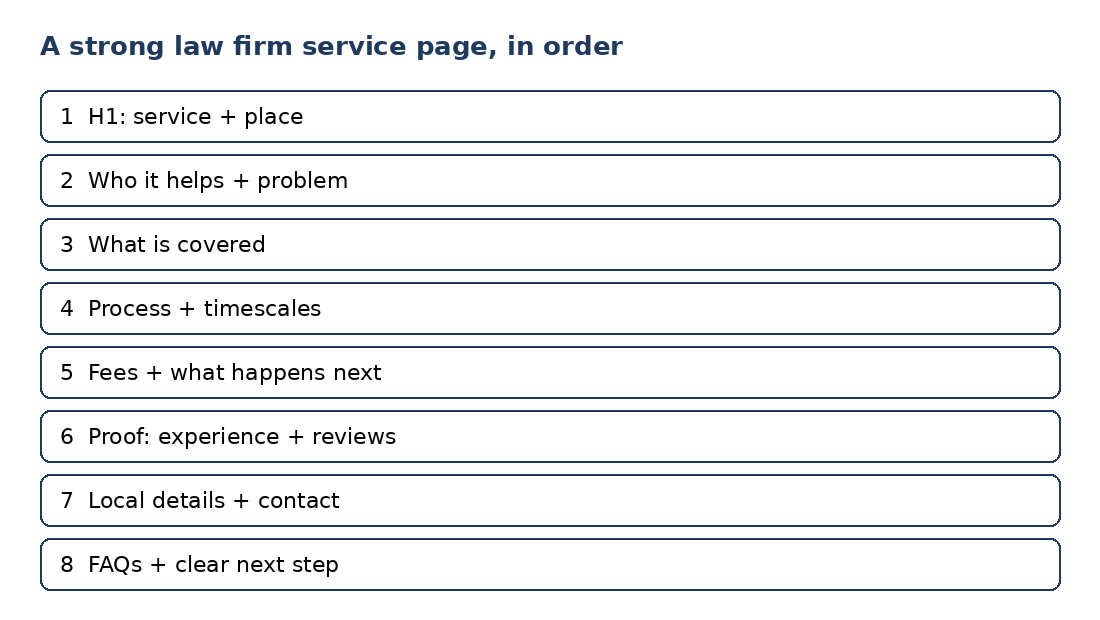
A practical outline looks like this:
- H1: the service and the place.
- Who the service helps, and the problem it solves.
- What is covered, and what is not covered.
- The process, in plain steps, with honest timescales.
- Fees, or how fees are worked out, and what happens next.
- Proof: experience, qualifications, and genuine reviews.
- Local details: offices, areas served, and contact options.
- FAQs, then one clear next step.
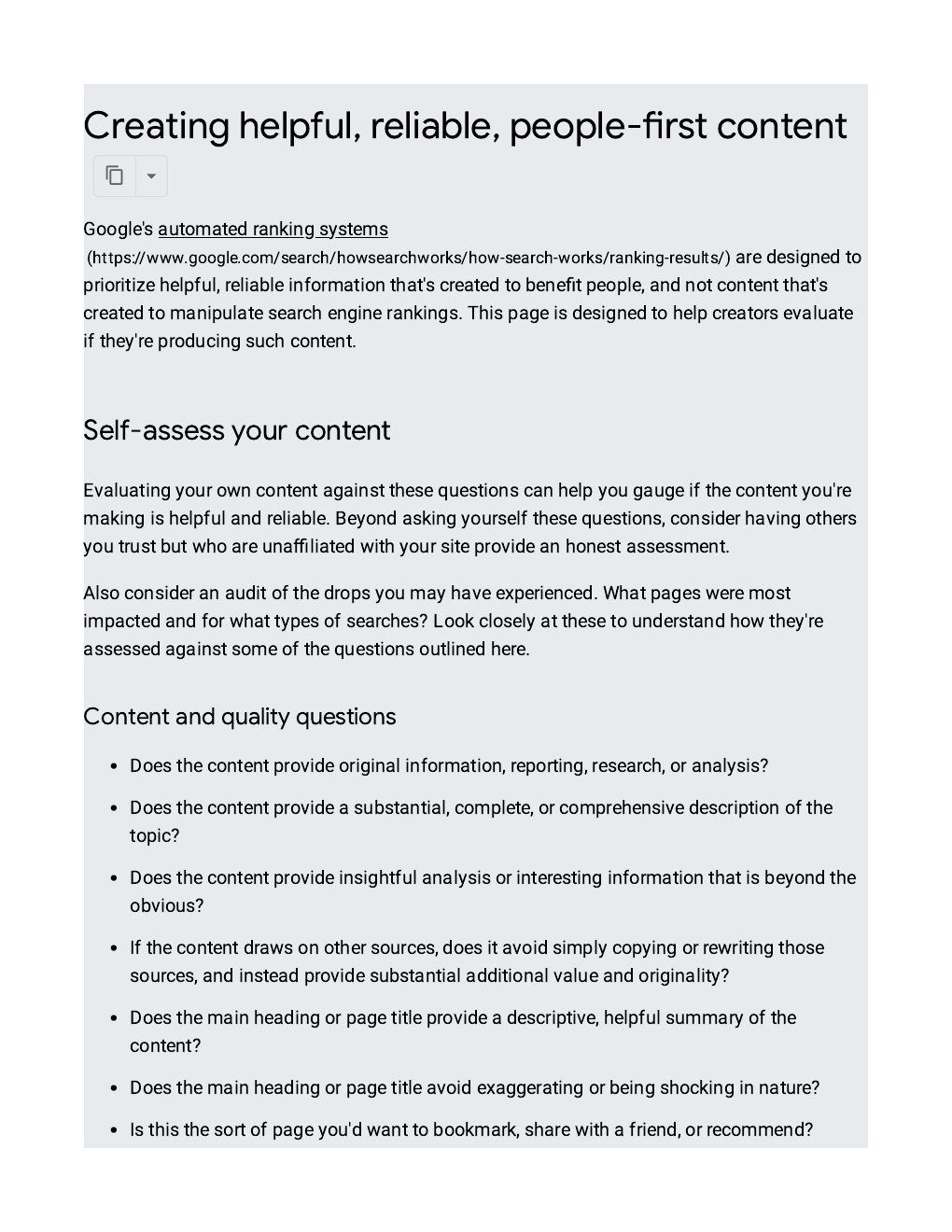
Google’s own guidance on creating helpful, reliable, people-first content makes the same point in a different way: content should be made mainly for people, show first-hand knowledge, and leave the reader feeling they have learned enough to act. Keep that test beside you while you draft.
Step 3: Write the opening so a worried reader stays
The first two paragraphs should say who the page is for, what the service covers, and what the reader gets by reading on. Avoid legal jargon in the opening. Explain terms in plain words the first time they appear, for example by saying what a “no win, no fee” agreement means in practice, rather than assuming the reader knows.
Use short paragraphs and short sentences. A reader on a phone, possibly in a stressful situation, will scan the page first. Headings should tell the story on their own: if someone reads only the headings, they should still understand the service, the process, and the next step.
Step 4: Explain the process, the timescale and the fees honestly
This is the section most law firm pages weaken. They describe the firm at length and skip the detail the reader actually wants.
For each service, cover:
- What happens at the first consultation, and whether it is free or charged.
- The main steps, in order, and who does what at each step.
- A realistic timescale, with the factors that can make a case take longer.
- How fees work: fixed fee, hourly rate, or a conditional agreement, and what is included.
- What the reader should bring or prepare before contacting the firm.
Do not promise an outcome. No honest firm can guarantee a court result or a settlement figure, and a page that does so will damage trust. Say what the firm will do, how it will keep the client informed, and what could change the plan.
Step 5: Show experience without making claims you cannot prove
Trust on a legal page comes from specifics. Name the solicitors who handle the work, with their roles and qualifications, and link to their profiles. Mention years of practice only if the figure is correct and can be checked. Use genuine client reviews, with the review source named, rather than invented praise.
If the firm has handled similar cases, describe the type of case in general terms, without naming clients or sharing confidential detail. A short example, such as how a typical unfair dismissal claim moves from the first meeting to a tribunal timetable, teaches far more than a paragraph of praise.
Also add the practical trust details: the firm’s registered name, office address, phone number, and professional regulator where relevant. Readers and search engines both use these signals to judge whether a firm is real and accountable.
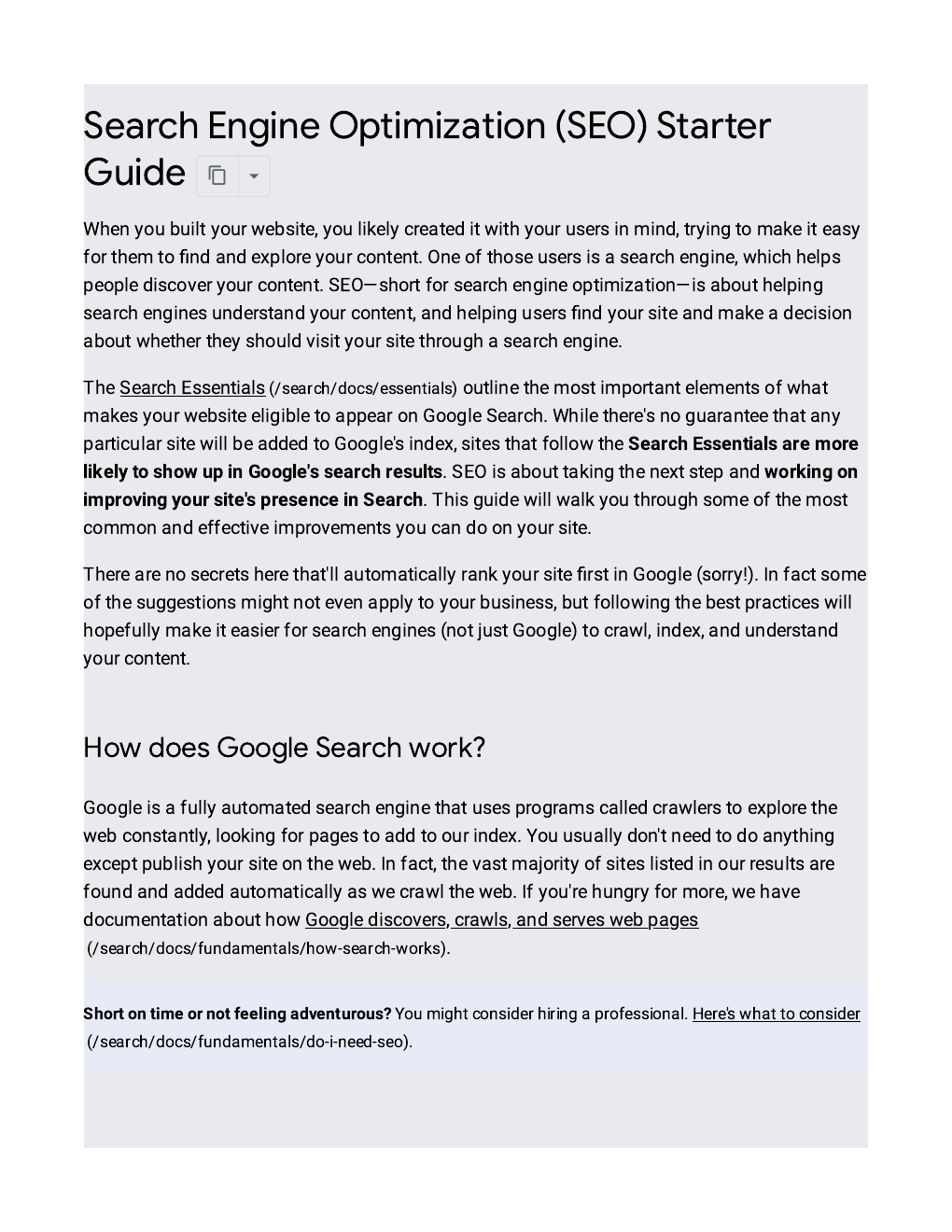
Google’s SEO Starter Guide gives the same basic advice for all sites: write clear titles and descriptions, use headings to show structure, and help search engines and readers understand what each page is about. Apply it here, and do not hide the important facts behind clever wording.
Step 6: Add the local detail that helps nearby clients find the page
Most law firm work is local, even when the first contact happens online. Name the towns and areas the firm serves, but only where it genuinely takes clients. Add the office address, opening hours, and how a reader can book: by phone, by form, or in person.
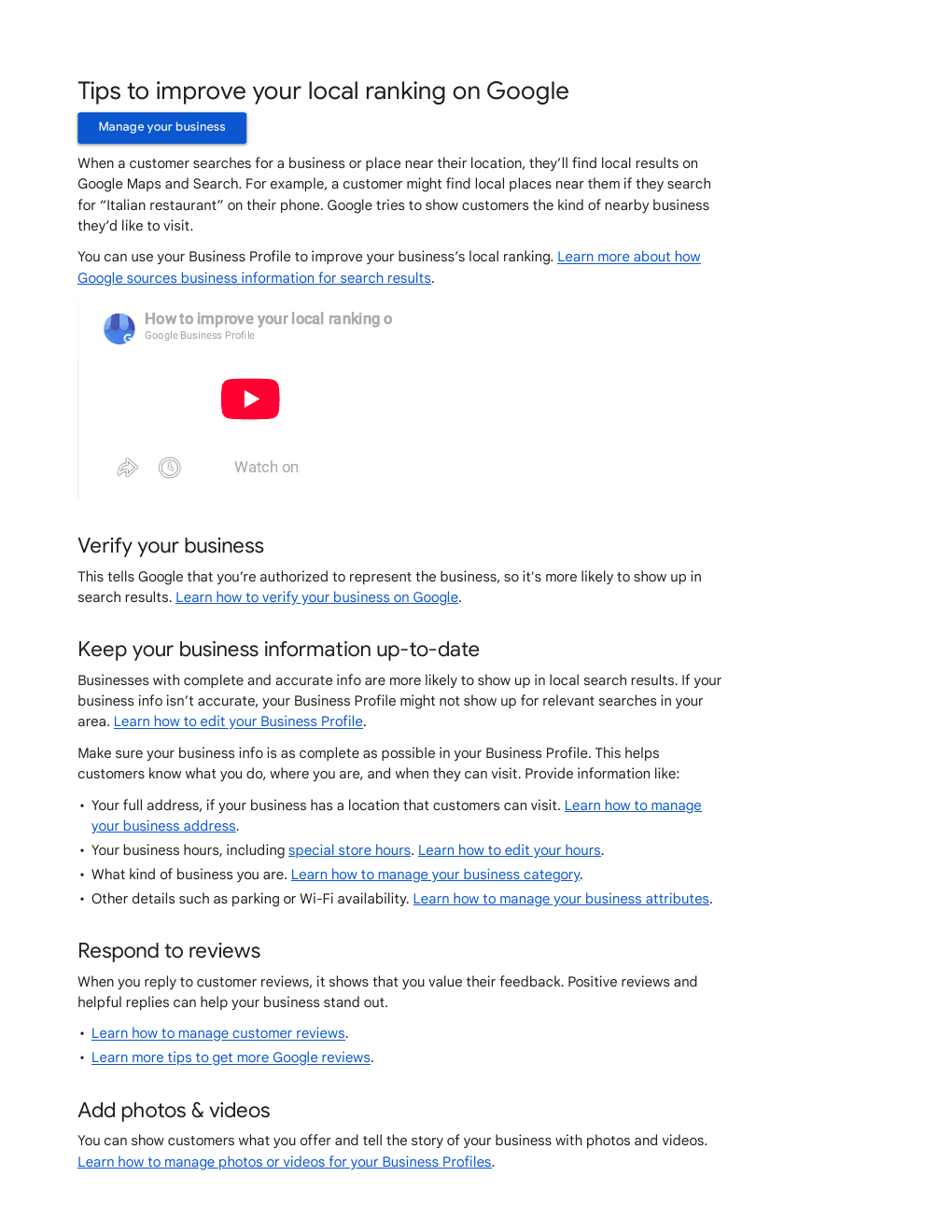
Keep the firm’s Google Business Profile consistent with the page: same name, same address, same phone number, and the same services. Google’s own help page on improving local ranking stresses keeping business information complete and up to date, because incomplete or wrong details can stop a firm showing up for relevant local searches.
Link the service page to the firm’s other relevant pages: the team page, the contact page, and one or two closely related services. Internal links help readers move naturally, and they help search engines understand which pages matter most. For firms that need help with this kind of content, our SEO content writing services cover service pages built around real search questions, not filler text.
Step 7: Check titles, links and facts before publishing
Before the page goes live, run this short checklist:
- Title and meta description: clear, under the character limits, and true to the page.
- One H1 only, with H2 sections in a logical order and no skipped levels used by accident.
- Every link works, and every statistic names its source with a link to it.
- No invented figures, client names, case results, or review quotes.
- Images have descriptive alt text, and the page loads quickly on a phone.
- The call to action is one clear step, such as “Book a consultation” or “Call the office”, not five competing buttons.
Ask someone outside the firm to read the page. If they cannot say, in one sentence, what the service is, what it costs, and what to do next, the page is not ready yet.
Common mistakes to avoid
First, writing for other lawyers instead of clients. Legal accuracy matters, but a page full of statute references and Latin terms will lose the reader it was meant to help.
Second, copying a competitor’s page and changing the firm name. Search engines and readers both spot thin, repeated content, and a copied page gives a reader no reason to choose this firm.
Third, hiding fees. Readers expect legal help to cost money, but they distrust pages that refuse to discuss cost at all. Even a range, or a clear explanation of how a fee is worked out, builds more trust than silence.
Fourth, stuffing the page with the same phrase. Use the service name naturally, then use the words clients actually use: solicitor, lawyer, claim, case, consultation, and the place name. Natural variation reads better and matches how people search.
FAQs
How long should a law firm service page be?
There is no fixed word count that guarantees a ranking. A page should be as long as it needs to be to answer the reader’s main questions: what the service covers, how it works, what it costs, and what to do next. For most services, that takes around 1,000 to 1,500 words of focused, specific content, not filler.
Should a law firm service page mention fees?
Yes, in honest terms. State whether the first consultation is free, whether the work is fixed-fee or hourly, and what affects the final cost. If an exact price is not possible, explain how the fee is worked out and what is included, so the reader is not left guessing.
How do I show experience on a service page without breaking client confidentiality?
Describe the type of work in general terms, name the solicitors and their qualifications, and use genuine, sourced reviews. Never name a client, share case details, or quote a result without permission. General examples of a typical process teach readers far more than vague claims.
How often should a law firm service page be updated?
Review it whenever the law, the firm’s services, the fees, or the contact details change, and at least once a year otherwise. Outdated fees, old office hours, or a solicitor who has left the firm all damage trust quickly, and they are easy for readers to spot.
Should a law firm pay for links to a service page?
Paying for links that pass ranking credit goes against Google’s spam policies and can lead to a penalty that harms the whole site. A safer path is manual outreach, useful content that other sites want to reference, and genuine local and professional listings. If an offer promises fast rankings from paid links, treat it with caution.
What is the first step if a firm has no service pages yet?
Start with the service that brings in the most enquiries, and write one complete page for it using the steps in this guide. Publish that page, check how readers use it, and then repeat the process for the next service, rather than publishing ten thin pages at once.
Final thought
A good law firm service page does one job well: it helps a worried person understand the service, the process, and the cost, and then makes the next step obvious. Write it in plain words, back every figure with a named source, and prove experience with specifics rather than praise. That is how a page earns both trust and rankings, and it is a standard worth holding every new service page to.
Sources: Google Search Central, “Creating helpful, reliable, people-first content”; Google Search Central, “SEO Starter Guide: The Basics”; Google Business Profile Help, “Tips to improve your local ranking on Google”; Attorney at Work, “How Clients Find Lawyers in 2025”; Andava, “Legal Marketing Statistics”.

Abdullah Zulfiqar is Co-founder and Client Success Manager at RankWithLinks, an SEO agency helping businesses grow online. He specializes in client relations and SEO strategy, driving measurable results and maximizing ROI through effective link-building and digital marketing solutions.