Best Software Supply Chain Security Platforms in 2026
Introduction
Software supply chain attacks have become one of the most dangerous and fast-growing threats in modern cybersecurity. From the SolarWinds breach to the XZ Utils backdoor, the message is clear: attackers no longer just target your systems directly. They target the tools, libraries, pipelines, and vendors you trust. In 2026, securing your software supply chain is not optional. It is a fundamental part of responsible software development.
Organizations of every size, from startups shipping their first SaaS product to Fortune 500 enterprises managing thousands of microservices, are now asking the same question: which platforms actually protect the software supply chain end to end?
This article covers the best software supply chain security platforms in 2026, what they do, how they compare, and what to look for when choosing the right solution for your environment.
What Is Software Supply Chain Security?
Software supply chain security refers to the practices, tools, and processes used to protect every component of the software development and delivery lifecycle. This includes open source dependencies, third-party libraries, CI/CD pipeline infrastructure, build environments, container images, and deployment artifacts.
A secure software supply chain ensures that the code your team writes, the packages you import, and the binaries you deploy have not been tampered with, compromised, or injected with malicious content at any point in their journey from source to production.
Key areas of concern include:
Dependency confusion and typosquatting attacks, where attackers publish malicious packages with names similar to legitimate ones. Build pipeline compromise, where attackers gain access to CI/CD systems to inject malicious code into otherwise clean software. Vulnerable open source components that carry unpatched CVEs into production environments. Insider threats and misconfigured access controls within development infrastructure. Lack of software bills of materials, or SBOMs, which makes it impossible to audit what is actually running in production.
Why Software Supply Chain Security Matters More in 2026
The threat landscape in 2026 looks dramatically different from even three years ago. Several trends have accelerated the urgency of supply chain security.
AI-generated code is now part of most development workflows, and while it accelerates productivity, it also introduces packages and patterns that developers may not fully audit. Open source consumption has grown exponentially, with the average enterprise application depending on hundreds or even thousands of third-party packages. Regulatory requirements have tightened significantly. Executive Order 14028, the EU Cyber Resilience Act, and NIST guidelines now require software vendors supplying government or regulated industries to demonstrate supply chain hygiene. Nation-state threat actors have specifically targeted software build systems as a high-leverage attack surface.
The result is that supply chain security has moved from a niche DevSecOps concern to a board-level risk management priority.
Key Features to Look for in a Supply Chain Security Platform
Before diving into specific platforms, it helps to understand what capabilities actually matter. When evaluating software supply chain security tools in 2026, look for the following:
SBOM Generation and Management: The platform should automatically generate Software Bills of Materials in standard formats like SPDX or CycloneDX and help you manage, update, and share them.
Dependency Scanning and SCA: Software Composition Analysis identifies known vulnerabilities in open source dependencies and provides actionable remediation guidance.
Secret Detection: Scans repositories and pipelines for accidentally committed API keys, tokens, and credentials.
Container and Image Security: Scans container images for vulnerabilities, misconfigurations, and malicious layers before they reach production.
CI/CD Pipeline Security: Monitors build pipelines for unauthorized changes, anomalous behavior, and misconfigurations that could enable pipeline poisoning attacks.
Policy as Code: Allows security teams to define and enforce security policies programmatically across the development lifecycle.
License Compliance: Tracks open source licenses to ensure your software distribution does not violate copyleft or other license obligations.
Runtime Monitoring: Detects anomalous behavior in running applications that could indicate a supply chain compromise.
Integration Depth: Deep integrations with GitHub, GitLab, Bitbucket, Jenkins, CircleCI, Kubernetes, and other standard DevOps tools.
Best Software Supply Chain Security Platforms in 2026
1. Snyk
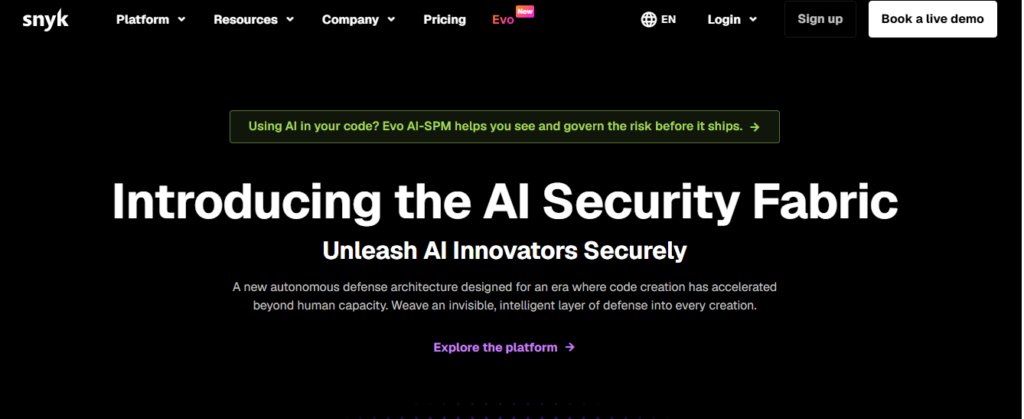
Snyk remains one of the most widely adopted developer-first security platforms in 2026. It covers open source vulnerability scanning, container security, infrastructure as code analysis, and code security in a unified platform that integrates directly into developer workflows.
What makes Snyk particularly effective is its focus on fixing, not just finding. When Snyk identifies a vulnerable dependency, it typically suggests the exact upgrade path, provides automated pull requests, and prioritizes issues by reachability, meaning it focuses on vulnerabilities that are actually exploitable in your specific code context rather than flooding teams with noise.
Snyk’s SBOM capabilities have matured significantly, and its integrations with GitHub, GitLab, Bitbucket, and major CI/CD platforms make it a natural fit for teams that want security embedded in their existing workflows without significant friction.
Best for: Development teams that want a developer-friendly tool with strong open source and container coverage and low friction adoption.
2. Chainguard
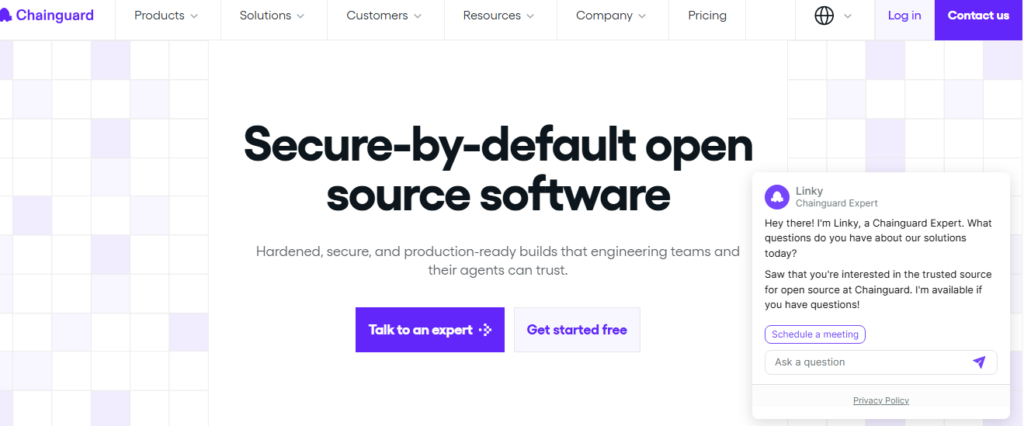
Chainguard has emerged as one of the most innovative supply chain security companies in the industry. Founded by key members of the open source security community, including contributors to Sigstore and SLSA, Chainguard takes a fundamentally different approach: rather than scanning for vulnerabilities after the fact, it builds security into the base images and packages themselves.
Chainguard Images are minimal, hardened container base images that are continuously rebuilt and maintained with near-zero known CVEs. By starting from a minimal, cryptographically signed base, teams dramatically reduce their attack surface before writing a single line of application code.
Chainguard also provides Wolfi, a Linux undistro purpose-built for containers and supply chain security, and offers tooling around software signing and verification using Sigstore’s Cosign and Rekor transparency log.
For organizations serious about provenance and attestation, Chainguard’s approach aligns perfectly with SLSA framework requirements and NIST SP 800-218 guidelines.
Best for: Security-conscious engineering teams building containerized workloads who want minimal attack surface and strong provenance guarantees.
3. Anchore Enterprise
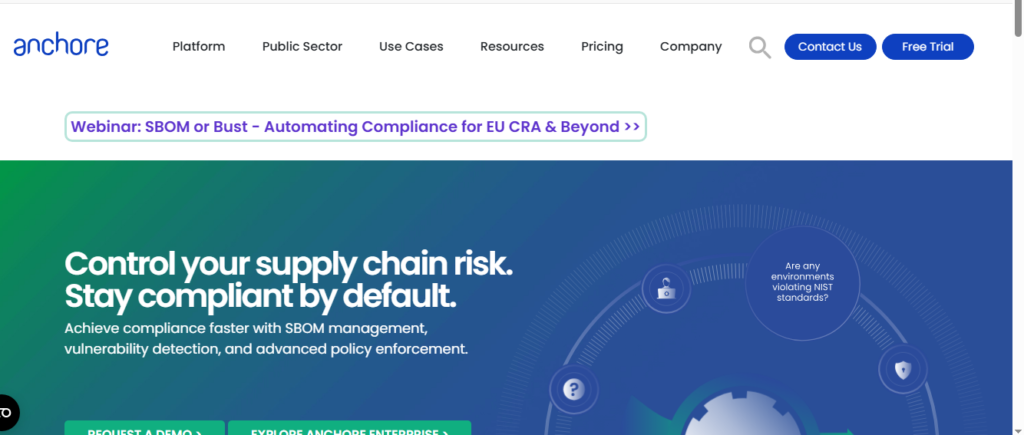
Anchore Enterprise provides a comprehensive container and SBOM security platform designed for enterprise environments with strict compliance requirements. It generates detailed SBOMs from container images, source code, and build artifacts, and continuously monitors them against vulnerability databases.
Anchore’s policy engine is one of its strongest features. Security teams can define granular policies that block deployment of images failing specific security checks, enforce license compliance rules, and gate CI/CD pipelines based on security posture. This makes it particularly well suited for regulated industries like healthcare, finance, and government contracting.
The platform supports multiple SBOM formats, integrates with existing vulnerability management tooling, and provides audit trails that satisfy compliance frameworks including FedRAMP, HIPAA, and SOC 2.
Best for: Enterprise teams in regulated industries that need strong policy enforcement, compliance reporting, and SBOM lifecycle management.
4. Semgrep Supply Chain
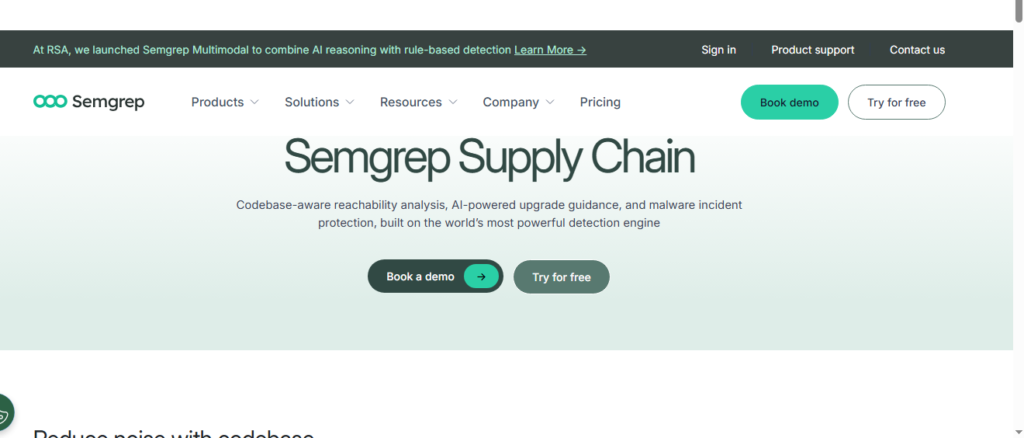
Semgrep has grown from a static analysis tool into a broader application security platform, and its Supply Chain module addresses open source dependency security with some genuinely differentiated capabilities.
Semgrep Supply Chain performs reachability analysis to determine whether a vulnerable function within a dependency is actually called by your application code. This is a critical distinction because the vast majority of vulnerabilities reported by traditional SCA tools are in code paths that are never executed. By filtering out unreachable vulnerabilities, Semgrep Supply Chain dramatically reduces alert fatigue and helps security teams focus on what actually matters.
The platform also provides dependency lifecycle insights, license scanning, and integrates natively with Semgrep Code and Semgrep Secrets for a unified AppSec experience.
Best for: Teams struggling with vulnerability noise and alert fatigue who want precise, reachability-based SCA results alongside code and secret scanning.
5. Socket Security
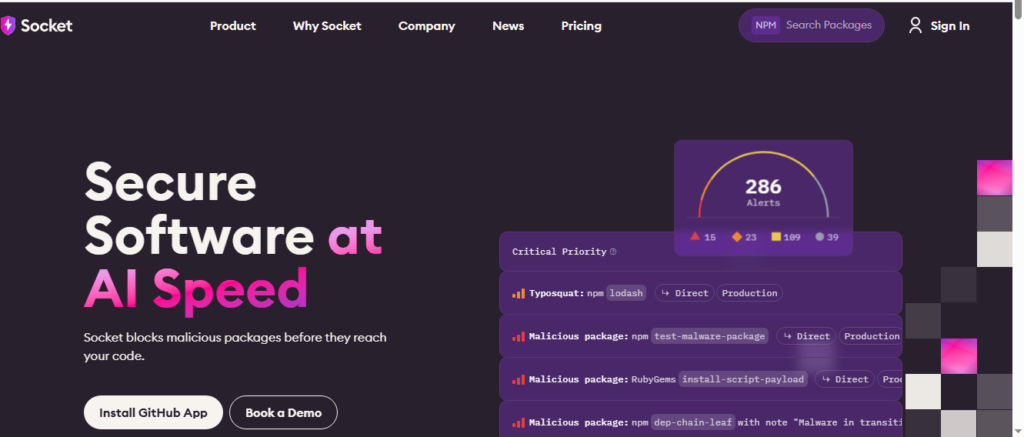
Socket has become one of the most respected names in open source supply chain security. Its approach is fundamentally proactive rather than reactive. Instead of only scanning for known CVEs, Socket analyzes the behavior and characteristics of npm, PyPI, Maven, and other packages to detect newly introduced threats before they appear in any vulnerability database.
Socket flags suspicious behaviors such as packages that install scripts running at install time, packages that access the filesystem or network unexpectedly, packages with obfuscated code, typosquats, and maintainer account takeovers. This makes it particularly effective against zero-day supply chain attacks that traditional CVE-based scanners will miss entirely.
Socket integrates directly with GitHub as a pull request check and also offers CLI tooling and API access. In 2026, it has expanded its coverage to additional package ecosystems and added deeper organizational policy controls.
Best for: Teams heavily reliant on open source packages, particularly npm and PyPI ecosystems, who need protection against novel and behavioral supply chain threats beyond known CVEs.
6. JFrog Xray and JFrog Advanced Security
JFrog’s Artifactory binary repository is already a central piece of the DevOps infrastructure at thousands of organizations, and JFrog Xray provides deep security scanning tightly integrated into that artifact management layer.
Xray performs recursive scanning of artifacts, packages, and containers stored in Artifactory, correlating them against multiple vulnerability databases and JFrog’s own threat intelligence feeds. Its contextual analysis feature reduces false positives by evaluating whether a vulnerability is actually exploitable given the specific way a package is used.
JFrog Advanced Security extends this with secret detection, infrastructure as code scanning, and software composition analysis across the full artifact lifecycle. The tight integration with Artifactory means organizations already using JFrog can add comprehensive supply chain security with minimal additional tooling overhead.
Best for: Organizations already invested in the JFrog platform who want supply chain security natively embedded in their artifact management workflow.
7. Aqua Security
Aqua Security provides one of the most comprehensive cloud-native security platforms available, with strong coverage across the software supply chain from code to cloud. Its Supply Chain Security capabilities include code scanning, open source risk management, container image security, pipeline security monitoring, and runtime protection in a unified platform.
Aqua’s Pipeline Security feature specifically monitors CI/CD pipelines for misconfigurations, excessive permissions, and anomalous activity, addressing the risk of pipeline poisoning attacks. Its integration with Argon, which Aqua acquired, brought deep CI/CD security expertise into the platform.
Aqua also provides detailed software supply chain attack path analysis, showing security teams how a potential attacker could move from a vulnerable dependency through the build pipeline into production, which helps prioritize remediation effort effectively.
Best for: Organizations that want a single, unified cloud-native security platform covering the full supply chain from source code through production runtime.
8. Grype and Syft by Anchore (Open Source)
For teams looking for powerful open source tooling without enterprise licensing costs, Grype and Syft from Anchore are outstanding choices.
Syft generates SBOMs from container images, filesystems, and a wide variety of package formats including rpm, deb, apk, npm, pip, gem, and many others. Its output is compatible with both SPDX and CycloneDX formats, making it useful for compliance reporting and sharing SBOMs with customers or regulators.
Grype consumes SBOMs or scans container images directly to identify known vulnerabilities, integrating with multiple vulnerability databases including the National Vulnerability Database, GitHub Advisory Database, and others.
Both tools are widely used in the open source community and serve as the foundation for several commercial products. They are particularly well suited for teams building custom security pipelines, integrating into homegrown platforms, or operating in cost-constrained environments.
Best for: Teams wanting free, open source, highly composable tools for SBOM generation and vulnerability scanning that can be integrated into any pipeline.
9. Legit Security
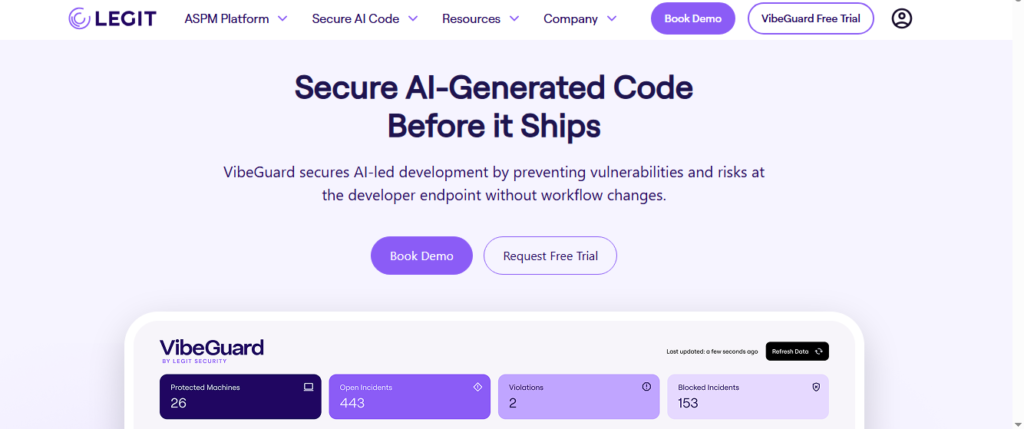
Legit Security focuses specifically on securing the software development environment and pipeline infrastructure itself, an area that many traditional AppSec tools overlook entirely. Rather than just scanning code and packages, Legit Security inventories and analyzes the security posture of your entire development ecosystem, including your GitHub organizations, CI/CD systems, secrets management practices, access controls, and artifact registries.
It maps your complete software factory, identifies misconfigured pipelines, overprivileged service accounts, exposed secrets in CI logs, and unprotected branches that could allow an attacker to insert malicious code without detection.
In 2026, as pipeline attacks have become increasingly common, Legit Security’s posture management approach provides visibility that pure scanning tools cannot deliver on their own.
Best for: Organizations that want to secure their development infrastructure and pipeline posture, not just the artifacts those pipelines produce.
10. Scribe Security
Scribe Security provides a platform built around software supply chain trust, with a particular emphasis on SBOM management, evidence collection, and compliance automation. It generates signed SBOMs and collects attestations at each stage of the software development lifecycle, creating a verifiable chain of evidence that software was built securely.
Scribe supports SLSA compliance verification, integrates with common CI/CD platforms, and provides policy-driven gating to ensure only verified, attested software advances through the pipeline. Its compliance modules address requirements from the US Executive Order on cybersecurity, the EU Cyber Resilience Act, and NIST SP 800-218.
For organizations that need to demonstrate supply chain security to customers, regulators, or government procurement offices, Scribe Security provides the audit trail and attestation infrastructure to do so credibly.
Best for: Software vendors and contractors who need to produce verifiable supply chain evidence and comply with government or enterprise customer security requirements.
How These Platforms Compare
Different platforms serve different needs, and the right choice depends heavily on your organization’s maturity, existing toolchain, and primary risk concerns.
If your biggest concern is open source vulnerability noise and alert fatigue, Semgrep Supply Chain or Snyk with reachability analysis will deliver the most signal-to-noise improvement.
If you are building containerized workloads and want to minimize your attack surface from the ground up, Chainguard Images combined with Syft and Grype or Anchore Enterprise provides a strong foundation.
If novel, zero-day supply chain attacks via malicious packages are your primary worry, Socket Security offers capabilities that CVE-based scanners simply cannot replicate.
If you need to satisfy government or enterprise procurement requirements with verifiable SBOM evidence and attestations, Scribe Security and Anchore Enterprise are designed specifically for this use case.
If you want to secure the pipeline infrastructure itself rather than just what flows through it, Legit Security fills a gap that most other tools leave open.
If you are already heavily invested in the JFrog ecosystem, Xray and JFrog Advanced Security provide the path of least resistance to comprehensive supply chain security.
Building a Layered Software Supply Chain Security Strategy
No single platform covers every dimension of software supply chain security perfectly. The most resilient organizations in 2026 take a layered approach, combining tools that address different parts of the problem.
A practical layered strategy might look like this:
At the dependency level, use Socket Security or Snyk to catch malicious and vulnerable packages before they enter your codebase. Enforce a private package proxy through Artifactory or Nexus to control what packages developers can pull.
At the build level, use Legit Security or Aqua Security to harden your CI/CD pipeline, enforce least privilege, and monitor for anomalous pipeline behavior. Require code signing for all build artifacts using Cosign and the Sigstore infrastructure.
At the artifact level, generate SBOMs for every release using Syft or Anchore and store them alongside signed artifacts. Scan images with Grype or Xray before promotion to production.
At the deployment level, enforce admission control policies in Kubernetes using tools like Kyverno or OPA Gatekeeper to require that only signed, scanned images with clean SBOMs can run in production.
At the monitoring level, use runtime security tooling to detect anomalous behavior in production that could indicate a supply chain compromise that made it through earlier controls.
Regulatory and Compliance Landscape in 2026
The regulatory environment surrounding software supply chain security has evolved significantly. Organizations operating in certain sectors need to be aware of the following requirements.
The US Executive Order 14028 and subsequent NIST guidance requires federal software vendors to provide SBOMs and demonstrate secure development practices. The EU Cyber Resilience Act, which came into force for many product categories in 2025 and 2026, requires manufacturers of products with digital elements to address supply chain security as part of their conformity assessment. The FDA has issued guidance requiring medical device manufacturers to submit SBOMs as part of premarket submissions. PCI DSS 4.0 includes requirements around software development security that encompass supply chain controls.
Platforms like Scribe Security, Anchore Enterprise, and Aqua Security specifically address these compliance needs with reporting features and audit trail capabilities designed for regulatory scrutiny.
Open Source vs Commercial Platforms
The open source ecosystem for software supply chain security has matured considerably. Tools like Syft, Grype, Trivy, Cosign, and SLSA verification tooling provide powerful capabilities at no licensing cost and are widely used even within organizations that also invest in commercial platforms.
The case for commercial platforms centers on several factors: integrated policy management, prioritized vulnerability intelligence, automated remediation workflows, enterprise support and SLAs, compliance reporting, and the human cost of integrating and maintaining multiple open source tools into a coherent security program.
For smaller teams or those early in their supply chain security journey, starting with open source tools is entirely reasonable. As the program matures and the cost of managing fragmented tooling grows, many organizations find that a commercial platform delivers meaningful efficiency gains.
Final Thoughts
The software supply chain is now one of the most targeted attack surfaces in cybersecurity, and the platforms reviewed in this article represent the strongest options available in 2026 for addressing that risk.
Snyk and Semgrep Supply Chain lead for developer-focused SCA with reachability analysis. Chainguard and Anchore Excel at container supply chain security and SBOM management. Socket Security stands out for behavioral detection of novel threats. Legit Security addresses the often-neglected pipeline posture problem. JFrog Xray fits naturally into existing JFrog ecosystems. Aqua Security delivers comprehensive cloud-native coverage. Scribe Security serves compliance-driven use cases particularly well. And the open source combination of Syft and Grype remains powerful for teams building their own tooling.
The right answer for your organization depends on your technology stack, team size, regulatory obligations, and the specific threats you are most concerned about. What is clear is that investing in software supply chain security in 2026 is not a nice-to-have. It is a critical component of building and shipping software responsibly in a threat environment that shows no signs of becoming more forgiving.
Want to Rank Higher on Google?
We build premium white-hat backlinks that actually move the needle. Trusted by 500+ brands.
📈 Book a Free Strategy Call