
Introduction: Engineering and Design Have Changed More in 3 Years Than the Previous 30
I have been working around engineering and design teams for over a decade. And honestly, the shift I have seen between 2022 and 2026 is unlike anything that came before it.
It is not just the tools that changed. The entire way teams think, collaborate, and deliver has been fundamentally restructured. The wall between design and engineering — that old, frustrating barrier where designers threw mockups over the fence and engineers complained they were impossible to build — has largely collapsed in forward-thinking organizations.
What replaced it is something much more interesting and genuinely more productive.
This guide covers exactly what design and engineering practice looks like in 2026 — the methodologies that are working, the tools that actually matter, the mistakes teams are still making, and the practical strategies that separate high-performing teams from everyone else.
Whether you are a designer trying to work more effectively with engineers, an engineering manager building a modern practice, or a business leader trying to understand why your product development keeps missing deadlines — this guide is written specifically for you.
Key Takeaways
Before going deep, here is what you will know by the end of this guide:
- Design and engineering in 2026 operate as unified practices in the best organizations — not separate departments
- AI has changed the role of both designers and engineers but has not replaced either
- The most successful teams share a systems thinking mindset rather than just tools
- Sustainability and accessibility are no longer optional considerations — they are core practice requirements
- The biggest competitive advantage is not technology — it is how well your team communicates and iterates
What Is Design and Engineering Practice in 2026?
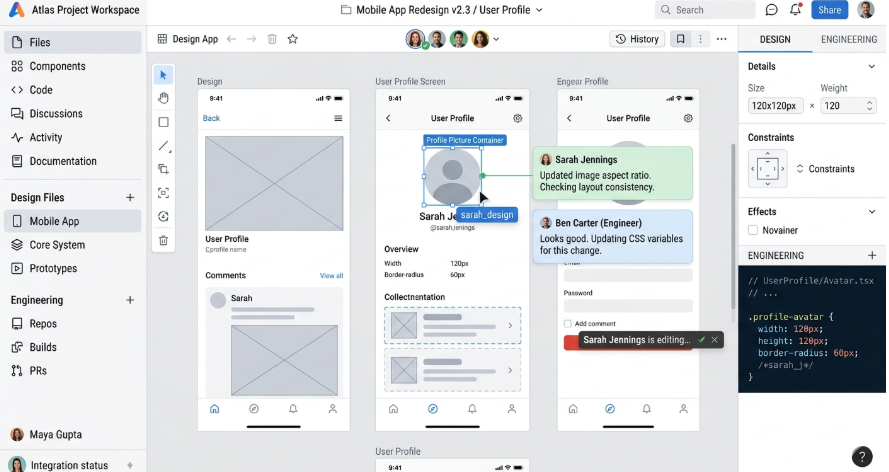
Design and engineering practice refers to the organized set of methods, tools, workflows, and principles that teams use to create products, systems, and solutions from concept to delivery.
In 2026 this practice looks fundamentally different from what it was even three years ago because of three major forces that have reshaped everything simultaneously.
First, artificial intelligence became genuinely useful inside the design and engineering workflow — not just as a buzzword but as a daily tool that handles specific tasks faster than any human could.
Second, the demand for sustainable and accessible design went from a nice-to-have to a regulatory and market requirement in most industries globally.
Third, the rise of distributed and remote-first teams made deep collaboration across time zones and disciplines a core competency rather than a logistical challenge to manage around.
The teams that adapted to all three forces simultaneously are producing better products faster with fewer resources. The teams that are still working the old way are struggling to understand why their competitors keep shipping while they keep planning.
The Evolution of Design and Engineering Practice
Understanding where practice stands today requires understanding where it came from and why it changed.
The Old Model — Sequential and Siloed
For most of the 20th century and well into the 2000s, design and engineering operated sequentially. A design team would complete their work and hand off specifications to an engineering team. The engineering team would then attempt to implement what was designed — often discovering practical constraints that made the original design impossible, expensive, or structurally unsound.
This produced what became known as the handoff problem. Rework was constant. Timelines stretched. Frustration on both sides was the norm rather than the exception.
The Integrated Model — Concurrent and Collaborative
By the 2010s and early 2020s agile methodologies, design systems, and cross-functional product teams began breaking down the sequential model. Designers started sitting in engineering sprints. Engineers started attending design critiques. The conversation became continuous rather than transactional.
This improved things significantly but the barrier never fully disappeared. Designers still designed without fully understanding technical constraints. Engineers still built without fully appreciating the user experience rationale behind design decisions.
The Unified Practice Model — 2026
What characterizes leading design and engineering practice in 2026 is genuine unification. Not just sitting in the same meetings — actually sharing ownership of outcomes, speaking a common language of systems and constraints, and using AI-assisted tools that make the gap between design intent and engineering implementation smaller than it has ever been.
The best teams in 2026 do not think about design and engineering as separate disciplines that need to collaborate. They think about them as two complementary lenses through which a single unified practice looks at the same problem.
Core Principles of Modern Design and Engineering Practice
These are the foundational principles that guide high-performing teams in 2026. They are not tools or methodologies — they are ways of thinking that make everything else work better.
Systems Thinking First
Every component exists within a system. Every design decision has engineering implications. Every engineering constraint has design consequences. Teams that approach every problem by first understanding the system it sits within make better decisions faster than teams that optimize individual components in isolation.
In practice this means before asking “how should this look” or “how should this work” the first question is always “what system does this belong to and how does it interact with everything else in that system.”
Constraint-Informed Creativity
The best design and engineering teams in 2026 treat constraints as creative inputs rather than creative obstacles. Budget limits, material properties, performance requirements, manufacturing tolerances, accessibility standards — all of these are not problems to work around. They are the parameters that define the solution space and make great design possible.
Teams that resist constraints spend enormous energy fighting reality. Teams that embrace constraints spend that same energy exploring the richest possible solutions within a defined space.
Continuous Validation Over Final Delivery
The waterfall mindset — design everything, build everything, test everything, ship everything — still exists in some organizations. But modern practice validates continuously. Small testable increments. Fast feedback loops. Real user contact early and often. This principle applies equally to hardware engineering, software development, architectural design, and product design.
Sustainability as a Design Constraint
In 2026 sustainability is not a separate initiative or a marketing talking point. In leading practices it is a core engineering and design constraint that sits alongside cost, performance, and timeline at every decision point.
Material choices, energy consumption, repairability, end-of-life planning — these considerations enter the design and engineering conversation at the beginning of a project rather than as an afterthought at the end.
The Tools Defining Design and Engineering Practice in 2026
Tools matter but they are always secondary to the thinking and process behind them. That said these are the tools and platforms that are genuinely shaping modern practice.
AI-Assisted Design Tools
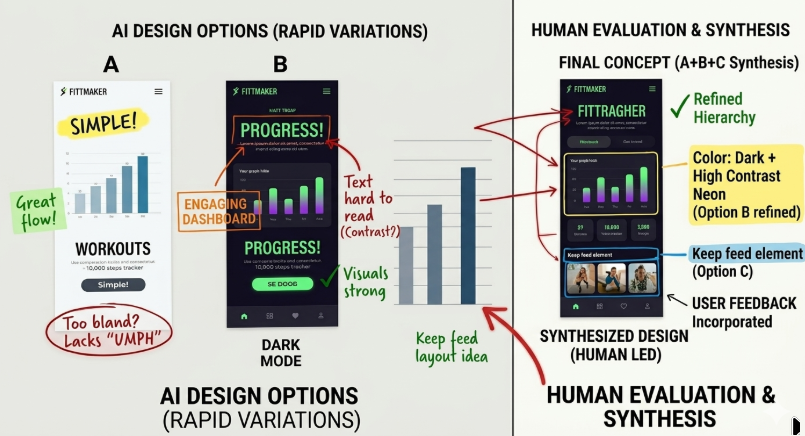
AI has moved from experimental feature to core workflow component across design tooling in 2026. The key shift is that AI now handles the generative and exploratory phase of design work — producing multiple design directions, exploring material and structural variations, generating component options — freeing designers to focus on evaluation, refinement, and decision-making rather than production.
Tools in this space are embedded in platforms most teams already use rather than sitting as separate AI applications. The teams getting the most value are those that have learned how to prompt, evaluate, and refine AI-generated design outputs rather than either rejecting AI entirely or accepting its outputs uncritically.
Parametric and Generative Engineering Tools
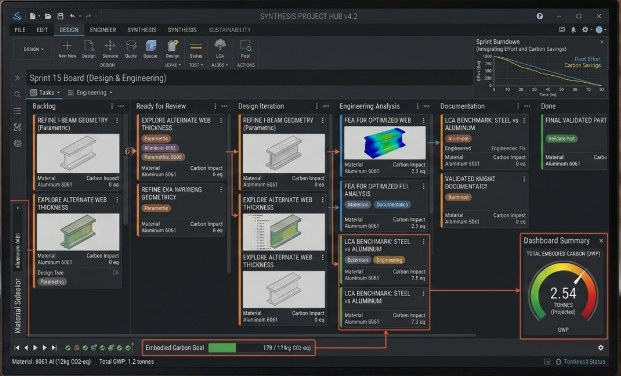
In engineering practice parametric design — where changing one parameter automatically updates all dependent components and calculations — has become standard rather than advanced. Generative design tools that use computational algorithms to optimize structures for specific performance requirements are now accessible to mid-market engineering teams, not just large enterprise operations.
The practical impact is that engineers can explore hundreds of structural or mechanical configurations in the time it previously took to analyze a handful — leading to genuinely better-optimized solutions and faster design iteration cycles.
Unified Design-to-Engineering Platforms
The most significant tooling development of the past three years is the emergence of platforms that genuinely connect design and engineering workflows without requiring manual translation between them. Design specifications in these platforms automatically generate engineering documentation. Material selections in design automatically feed structural calculations in engineering. Changes in one discipline automatically flag implications in the other.
This does not mean the tools do the thinking. It means the administrative friction between disciplines has been reduced enough that the human thinking — the judgment, the creativity, the problem-solving — can dominate the workflow rather than being consumed by translation and documentation tasks.
Digital Twin Technology
Digital twins — virtual replicas of physical systems that update in real time based on sensor data from the physical counterpart — have become a standard tool in manufacturing, infrastructure, and product engineering practice in 2026.
For design and engineering teams this means the feedback loop between designed intent and real-world performance is dramatically faster. Problems that would previously have only been discovered after months of field operation now surface in the digital twin within hours of deployment — allowing rapid iteration on physical products in ways that were previously only possible in software.
Methodology Comparison: Which Approach Works Best in 2026
Different projects and contexts call for different methodological approaches. Here is an honest comparison of the main methodologies in active use.
| Methodology | Best For | Key Strength | Key Weakness | 2026 Relevance |
|---|---|---|---|---|
| Agile Design-Engineering | Software and digital products | Fast iteration, continuous feedback | Can lack long-term structural thinking | Very High |
| Systems Engineering | Complex infrastructure and aerospace | Rigorous requirement tracing | Slow and documentation-heavy | High in regulated industries |
| Design Thinking | User-centered product development | Strong empathy and problem framing | Can underweight technical constraints | High when paired with engineering |
| Lean Engineering | Manufacturing and process improvement | Waste elimination, efficiency | Can sacrifice innovation for efficiency | High in production environments |
| Integrated Concurrent Engineering | Multi-discipline complex products | Parallel workstreams reduce timeline | Requires strong coordination | Growing rapidly |
| Biomimicry Design | Sustainable and novel material problems | Nature-tested solutions | Requires specialist knowledge | Emerging and growing |
The honest answer for most teams in 2026 is that no single methodology dominates. High-performing teams are methodology-fluent — they know multiple approaches and select the right tools for each specific project context rather than applying one framework to every problem regardless of fit.
AI in Design and Engineering Practice: The Reality in 2026
AI is the most discussed topic in design and engineering circles right now. It is also the most misunderstood. Here is what is actually happening.
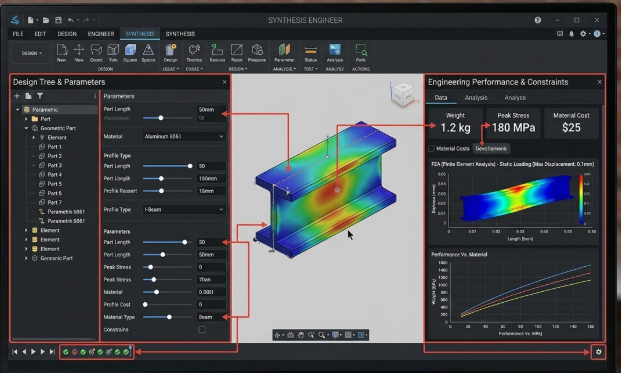
What AI Is Genuinely Good At
AI in design and engineering practice in 2026 genuinely excels at specific tasks. Generative exploration — producing many design or structural variations quickly. Pattern recognition — identifying performance anomalies in engineering data faster than human review. Documentation — generating structured specifications, reports, and compliance documentation from unstructured inputs. Code generation in software engineering — producing functional code from natural language specifications for well-defined problems.
For all of these tasks AI makes skilled practitioners faster and allows them to explore a broader solution space than they could manually. This is genuinely valuable.
What AI Cannot Replace
AI cannot replace engineering judgment. It cannot assess whether a technically feasible solution is actually the right solution for a specific human context. It cannot navigate the organizational politics and stakeholder dynamics that shape what gets built and what does not. It cannot take responsibility for failure when a design or engineering decision goes wrong.
The teams that are using AI most effectively in 2026 are those that understand it as a capable specialist tool for specific tasks — not as a replacement for the human expertise that gives those tasks their meaning and direction.
The Skill Shift AI Is Causing
The most important skill shift AI is driving in design and engineering practice is the rise of evaluation and curation skills over pure production skills. The ability to generate a hundred structural options is now table stakes. The ability to quickly evaluate which of those hundred options is actually worth pursuing — and to articulate clearly why — is the differentiating human skill.
This is changing what training programs, hiring criteria, and career development paths look like across the industry.
Sustainability in Design and Engineering Practice
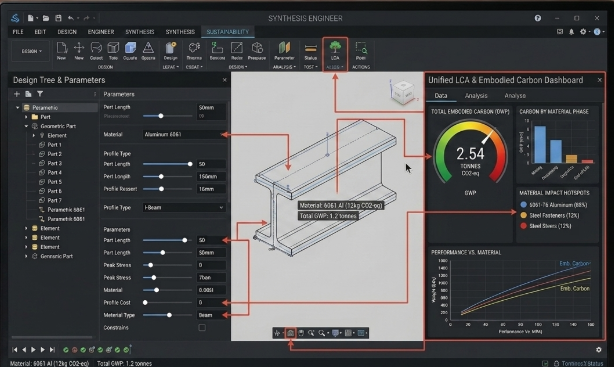
Sustainable design and engineering is no longer a specialty track. In 2026 it is a core competency that every practitioner needs to carry.
The regulatory environment in most major markets now requires documented sustainability analysis as part of engineering and design approval processes. This means life cycle assessment, embodied carbon calculation, material sourcing documentation, and end-of-life planning are not optional additions — they are required deliverables.
Beyond compliance the market has shifted too. Clients, procurement departments, and consumers across most sectors are making purchasing decisions that include sustainability performance as a primary criterion alongside cost and functional performance.
Teams that build sustainability thinking into their standard design and engineering workflow from the first day of a project — rather than treating it as a compliance checkbox at the end — produce better outcomes, move through approval processes faster, and build stronger relationships with clients who care about this increasingly central set of concerns.
Accessibility as Core Engineering and Design Practice
Alongside sustainability, accessibility has undergone a similar shift from optional consideration to core practice requirement in 2026.
In software and digital product design this means WCAG 3.0 compliance as a baseline rather than an aspiration. In physical product and environmental design it means universal design principles integrated from the earliest concept stage. In system engineering it means designing for the full range of human capability variation rather than for an idealized average user.
The teams that do this well do not see accessibility as a constraint that limits design creativity. They see it — correctly — as a discipline that produces better solutions for everyone by forcing clearer thinking about the full range of user needs and contexts.
Practical Tips From Real Practice: What Actually Works in 2026
These are insights from observing and working with high-performing design and engineering teams — not theoretical best practices but things that actually move the needle.
Tip 1 — Run design and engineering kickoffs together, not separately When both disciplines align on project constraints, user needs, and success criteria in the same room at the start of a project, the entire downstream workflow is faster and produces less rework. This single change produces more efficiency than almost any tool upgrade.
Tip 2 — Build a shared vocabulary before building anything else Design and engineering teams often use the same words to mean different things. Component. System. Prototype. Iteration. Spending one hour at the start of a project aligning on what specific terms mean in the context of that project prevents weeks of miscommunication downstream.
Tip 3 — Make constraints visible to everyone from day one Budget, timeline, regulatory requirements, manufacturing tolerances, performance specifications — all of these should be visible to both designers and engineers from the first day. Teams that keep constraints siloed in one discipline and then introduce them as obstacles later create enormous amounts of avoidable rework.
Tip 4 — Prototype at the right fidelity for the current question The single biggest waste of time in design and engineering practice is building high-fidelity prototypes to answer questions that a sketch or a digital model could have answered in a fraction of the time. Match prototype fidelity to the specific question being asked — not to a desire to look polished or impressive.
Tip 5 — Review failures as systematically as successes High-performing teams conduct structured post-project reviews of what went wrong with the same rigor they apply to celebrating what went right. The engineering and design lessons from failures compound over time into a genuine competitive advantage.
Pros and Cons of Modern Unified Design and Engineering Practice
Pros:
- Dramatically reduced rework from misaligned design and engineering assumptions
- Faster time to market through parallel rather than sequential workstreams
- Better products because engineering constraints inform design from the start
- Stronger team cohesion and shared ownership of outcomes
- More efficient use of AI tools when both disciplines share tooling platforms
- Sustainability and accessibility better integrated when both disciplines own them together
Cons:
- Requires significant organizational change that takes time and creates friction
- Demands broader skill sets from both designers and engineers
- Shared tooling platforms have a learning curve and transition cost
- Not all project types benefit equally from deep integration
- Can create accountability ambiguity when both disciplines share ownership of outcomes
- Requires strong facilitation and clear process to avoid meetings that consume more time than they save
Common Mistakes Teams Are Still Making in 2026
Despite all the progress in tools and methodology, these mistakes remain stubbornly common.
Mistake 1 — Adopting tools without changing process Buying new software and expecting it to fix collaboration problems that are actually caused by organizational structure and communication habits. Tools amplify good process and amplify bad process equally.
Mistake 2 — Treating AI output as final rather than as a starting point Teams that publish or implement AI-generated design and engineering outputs without expert review and validation are producing work that looks efficient but carries hidden quality risks.
Mistake 3 — Skipping the systems analysis at the beginning Jumping directly into design and engineering solutions without properly understanding the system the solution needs to exist within. This produces technically competent solutions to the wrong problems.
Mistake 4 — Measuring activity rather than outcomes Tracking hours worked, features designed, and components engineered rather than measuring whether the solution is actually solving the problem it was designed to solve.
Mistake 5 — Leaving sustainability to the end Organizations that treat sustainability as a final compliance check rather than a design and engineering input from the start are doing more work for worse outcomes.
FAQ — Design and Engineering Practice in 2026
What is design and engineering practice? Design and engineering practice is the organized set of methods, workflows, tools, and principles that teams use to create products and systems from concept through to delivery. In 2026 it increasingly refers to unified practice where both disciplines share ownership of outcomes rather than working sequentially in isolation.
How has design and engineering practice changed in 2026? The most significant changes are the integration of AI tools into daily workflows, the collapse of the traditional barrier between design and engineering disciplines, the elevation of sustainability and accessibility from optional considerations to core practice requirements, and the normalization of distributed cross-disciplinary teams.

What skills do design and engineering professionals need in 2026? Beyond technical discipline-specific skills, the most valued capabilities in 2026 are systems thinking, AI tool literacy and evaluation skills, cross-disciplinary communication, sustainability analysis, and the ability to validate and test assumptions quickly rather than building complete solutions before testing.
Is AI replacing designers and engineers in 2026? No. AI is changing what designers and engineers spend their time doing — handling generative exploration, documentation, and pattern recognition tasks — but the judgment, creativity, contextual understanding, and accountability that define genuine design and engineering expertise cannot be replicated by current AI systems. The demand for skilled practitioners has not declined but the skills most in demand have shifted.
What is the most important methodology for design and engineering teams in 2026? No single methodology dominates. High-performing teams in 2026 are methodology-fluent — able to apply agile, systems engineering, design thinking, and lean principles selectively based on what each specific project requires rather than applying one framework to every problem.
How do you integrate sustainability into design and engineering practice? By treating sustainability constraints — embodied carbon targets, material sourcing requirements, energy consumption limits, end-of-life planning — as core design and engineering inputs from the very first day of a project rather than as compliance requirements addressed at the end. This requires both technical skills in life cycle assessment and organizational commitment to making sustainability visible in project briefs and approval criteria.
What is the biggest challenge for design and engineering teams in 2026? Organizational change. The tools and methodologies for unified design and engineering practice exist and are accessible. The harder challenge is changing the structures, incentives, communication habits, and cultural norms of organizations that were built around the old sequential siloed model. Technology adoption is always faster than organizational adaptation.
Conclusion: The Practice Has Changed — Has Your Team?
Design and engineering practice in 2026 rewards teams that think in systems, embrace constraints, validate continuously, and treat sustainability and accessibility as core disciplines rather than optional extras.
The tools are more powerful than they have ever been. The methodologies are more refined. The AI capabilities are genuinely useful when used with skill and judgment. None of that matters if the people using those tools are still working in silos, handing off rather than collaborating, and optimizing individual components rather than thinking about the systems those components serve.
The single best investment any design and engineering organization can make right now is not a new software platform. It is time spent aligning your people — across design and engineering disciplines — on a shared understanding of the problems you are solving, the constraints you are working within, and the criteria by which you will judge whether your solutions actually work.
That alignment, more than any tool or methodology, is what separates the teams producing genuinely exceptional work in 2026 from everyone else.

Fazilat zulfiqar is an SEO specialist at RankWithLinks, focused on improving search rankings through smart link building and optimization.He helps businesses grow organic traffic and build strong online authority.