

Introduction
If you’ve ever lost a deal because your proposal felt generic, you already know the problem.
Most proposals are written from the inside out. You talk about your company, your process, your credentials. The client reads it and thinks — “okay, but what does this mean for me?”
A market led proposals roadmap flips this completely.
Instead of starting with what you offer, you start with what the market needs. You build your proposal around real demand signals, competitive gaps, and buyer psychology.
I’ve reviewed hundreds of proposals over the years — winning ones and losing ones. The difference almost always comes down to one thing: did the proposal speak the buyer’s language, or the seller’s?
This guide will show you exactly how to build a market led proposal roadmap that wins deals, builds trust, and positions you as the expert your clients actually want to hire.
What Is a Market Led Proposals Roadmap?
A market led proposals roadmap is a strategic framework that guides how you research, structure, and deliver proposals based on market intelligence rather than internal assumptions.
Think of it as the bridge between what the market is asking for and what you’re offering.
It includes:
- Market research and demand analysis
- Buyer persona and decision-maker mapping
- Competitive positioning
- Proposal structure and messaging strategy
- Delivery and follow-up plan
The roadmap doesn’t just help you write better proposals. It helps you win the right deals, faster.
Why Traditional Proposals Fail
Before we build the roadmap, let’s be honest about why most proposals don’t work.
They’re too focused on the seller. Pages about your team, your history, your awards. Clients don’t care about your awards. They care about their problem.
They’re not personalized. Copy-paste proposals with the client’s name swapped out. Buyers notice this immediately.
They lack market context. No data. No industry benchmarks. No proof that you understand the space the client operates in.
They propose solutions before proving understanding. You jump straight to “here’s what we’ll do” without first saying “here’s what we know about your situation.”
A market led approach fixes all of these.
The 7-Stage Market Led Proposals Roadmap
Here’s the roadmap broken down into clear, actionable stages.
Stage 1: Market Intelligence Gathering
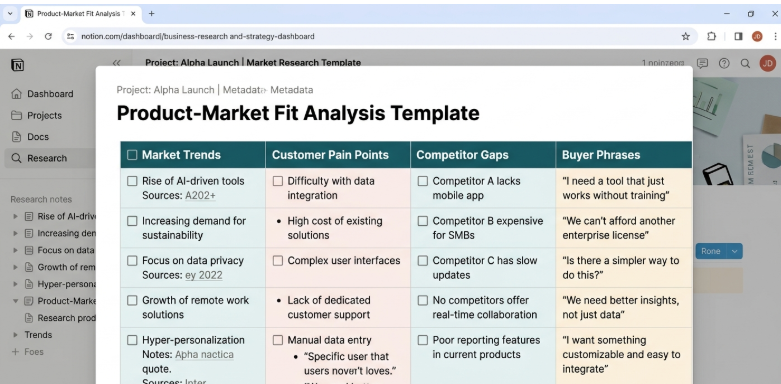
Before you write a single word of your proposal, you need to understand the market your client operates in.
This means:
- Industry trends affecting your client’s business
- Common pain points in their sector
- What competitors are offering (and where they’re falling short)
- Buyer language — the exact words and phrases decision-makers use
Practical tip: Spend at least 2 hours on market research before every major proposal. Read industry reports, LinkedIn discussions, and even Reddit threads in your client’s niche. You’ll discover language and concerns you’d never find in a brief.
Stage 2: Decision-Maker Mapping
Not everyone who reads your proposal has the same concerns.
The CFO cares about ROI and cost justification. The operations manager cares about implementation difficulty. The CEO cares about strategic fit.
Map out who will read your proposal and what each person needs to feel confident saying yes.
| Stakeholder | Primary Concern | What They Need to See |
|---|---|---|
| CEO | Strategic value | Long-term impact and alignment |
| CFO | Financial return | Clear ROI, cost breakdown |
| Operations Manager | Execution risk | Timeline, process, support plan |
| End User | Ease of use | Simplicity, training, day-to-day impact |
Write your proposal so it speaks to all of them — not just the person who sent you the brief.
Stage 3: Competitive Gap Analysis
This is where most proposal writers leave money on the table.
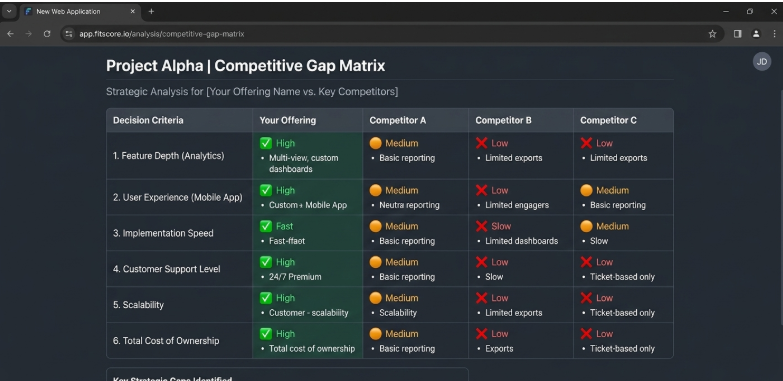
Before you propose your solution, understand what the competition is offering. Where are they weak? What are they not saying? What client concerns are they ignoring?
Your proposal should fill those gaps explicitly.
For example: if every competitor in your space talks about speed but nobody talks about post-delivery support, make support your differentiator. Lead with it. Make it a section in your proposal.
Practical tip: Search for competitor proposals, case studies, and testimonials. Look at what clients are praising — and what they’re complaining about. That’s your roadmap for differentiation.
Stage 4: Proposal Architecture
Now you’re ready to structure your proposal.
A market led proposal structure looks like this:
- Executive Summary — Start with their situation, not your pitch
- Market Context — Show you understand the landscape
- Problem Statement — Define the challenge in their language
- Proposed Solution — Now you present your offer
- Methodology — How you’ll deliver
- Social Proof — Relevant case studies and results
- Investment and ROI — Pricing with clear value framing
- Next Steps — Make it easy to say yes
Notice that your company background doesn’t appear until section 6 at the earliest. Everything before that is about them.
Stage 5: Messaging and Tone Calibration
The way you say something matters as much as what you say.
Match the tone of your proposal to the culture of the company you’re pitching. A startup wants energy and speed. An enterprise client wants stability and process. A nonprofit wants mission alignment.
Use the language from your Stage 1 research here. If your research showed the client uses phrases like “operational efficiency” and “scalable systems,” use those exact phrases in your proposal. It signals that you’ve done your homework.
Avoid:
- Jargon that your client doesn’t use
- Overclaiming (“world-class,” “industry-leading”)
- Vague promises without evidence
Use:
- Specific numbers and data
- Client’s own language
- Concrete outcomes, not just activities
Stage 6: Proposal Delivery Strategy
How and when you deliver your proposal affects how it’s received.
Timing matters. Send your proposal when decision-makers are likely to have time to read it. Monday mornings and Friday afternoons are not ideal. Tuesday to Thursday, mid-morning, tends to work best.
Format matters. For large deals, consider a proposal walkthrough call. Don’t just email the PDF and wait. Walk them through it. It shows confidence and lets you answer questions in real time.
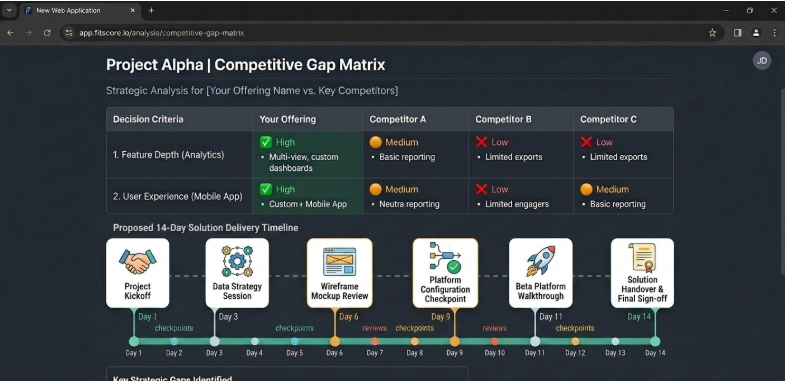
Follow-up matters. Build a follow-up sequence into your roadmap. Day 1 after delivery: confirm receipt. Day 3: check for questions. Day 7: request feedback or decision timeline.
Stage 7: Post-Proposal Learning Loop
Whether you win or lose, every proposal teaches you something.
Build a feedback loop into your roadmap:
- Win: document what resonated and why
- Lose: ask for honest feedback (most clients will tell you if you ask respectfully)
- Track patterns: are you losing at pricing? At scope clarity? At competitor comparison?
Over time, this data turns your roadmap from a framework into a finely tuned machine.
Market Led Proposals vs. Traditional Proposals
| Factor | Traditional Proposal | Market Led Proposal |
|---|---|---|
| Starting point | Your capabilities | Market needs and buyer pain |
| Research depth | Minimal | Extensive, pre-proposal |
| Language | Seller’s terminology | Buyer’s own language |
| Structure | Company-first | Client-first |
| Differentiation | Features-based | Gap-based |
| Follow-up | Passive | Strategic and planned |
| Win rate | Average | Above average |
| Relationship impact | Transactional | Trust-building |
Pros and Cons of a Market Led Proposals Roadmap
Pros
- Higher win rates because proposals feel personally relevant
- Stronger positioning against competitors
- Builds credibility and trust before the contract is signed
- Helps you qualify bad-fit clients earlier (saving time)
- Creates a reusable system that improves over time
Cons
- Takes more time upfront, especially the research phase
- Requires discipline to follow the process for every proposal
- Can feel slower in fast-moving sales environments
- Needs ongoing updates as market conditions change
The pros clearly outweigh the cons — especially for high-value deals where the time investment is justified.
Tools That Support Your Market Led Roadmap
You don’t need to do this all manually. Here are tools that help at each stage:
| Stage | Recommended Tools |
|---|---|
| Market research | SEMrush, Ahrefs, SparkToro, LinkedIn |
| Competitor analysis | SimilarWeb, G2, Trustpilot, Crayon |
| Proposal building | PandaDoc, Proposify, Qwilr |
| CRM and follow-up | HubSpot, Pipedrive, Salesforce |
| Feedback collection | Typeform, Google Forms, Loom |
Common Mistakes to Avoid
Even with a good roadmap, these mistakes can sink your proposals:
Skipping the research stage when you’re in a hurry. This is exactly when you need it most. Rushed proposals lose to prepared ones every time.
Writing for the person who contacted you, not the full buying committee. Always think about who else will read this.
Being vague about outcomes. “We’ll improve your marketing” is not a promise. “We’ll increase qualified leads by 30% in 90 days” is.
Making the pricing section feel like a surprise. Price framing matters. Anchor the value before revealing the number.
Not asking for the sale. Your next steps section should be clear and specific. “Please review and let us know” is not a next step.
Unique Insights From Real Proposal Work
Here are a few things I’ve seen work that most proposal guides don’t mention:
The 80/20 research rule. Spend 80% of your research time on the client’s market and only 20% on the client themselves. You’ll bring insights they haven’t even considered.
Mirror their internal language. If a client’s website calls their customers “members” instead of “clients,” use “members” in your proposal. Small details like this signal attention.
Lead with the problem they haven’t named yet. If your research uncovers a trend or risk they haven’t mentioned in their brief, address it proactively. It positions you as an advisor, not just a vendor.
Use a “before and after” frame. Show clearly what their situation looks like now (without your solution) and what it looks like after. Make the gap obvious.
FAQ: Market Led Proposals Roadmap
Q: What is a market led proposals roadmap?
A market led proposals roadmap is a structured process for creating proposals based on market research, buyer intelligence, and competitive analysis rather than just describing your own services or products.
Q: How is a market led proposal different from a standard proposal?
A standard proposal typically leads with the seller’s capabilities and credentials. A market led proposal starts with the buyer’s context, market situation, and specific pain points — making it feel more relevant and credible.
Q: How long does it take to build a market led proposal?
For a high-value deal, expect to spend 4-8 hours on research and strategy before writing. The actual proposal writing may take 2-4 hours. The upfront investment significantly increases your win rate.
Q: Can small businesses use this approach?
Absolutely. In fact, small businesses benefit even more because this approach helps them compete against larger, more established competitors by being smarter and more targeted rather than trying to outspend them.
Q: What if I’m losing deals even with a market led approach?
Go back to your Stage 2 (decision-maker mapping) and Stage 5 (messaging). Often the research is good but the message isn’t landing with the right person or isn’t framed in a way that resonates emotionally as well as logically.
Q: How often should I update my market led proposals roadmap?
Review and update your roadmap every quarter, or whenever you notice a shift in your win/loss ratio or when entering a new market or industry.
Q: Should I use the same roadmap for every industry?
The framework stays the same, but the research, language, and competitive context will differ by industry. Always adapt Stage 1 and Stage 5 specifically for each market you’re targeting.
Conclusion
A market led proposals roadmap is not just a better way to write proposals. It’s a better way to think about selling.
When you lead with market intelligence, speak your buyer’s language, address competitive gaps directly, and structure your proposal around their priorities — you stop being a vendor and start being a trusted advisor.
That shift changes everything. It changes how clients perceive your value. It changes your win rate. It changes the quality of the deals you attract.
Start with Stage 1. Do the research before you write a single word. Build the habit, follow the roadmap, and refine it with every proposal you send.
The market is giving you signals all the time. A market led approach just means you’re finally listening.

Fazilat zulfiqar is an SEO specialist at RankWithLinks, focused on improving search rankings through smart link building and optimization.He helps businesses grow organic traffic and build strong online authority.