
Best Chatbot Software for Customer Service in 2026: The Complete Guide
Introduction
Customer service has entered a new era. In 2026, the question is no longer whether your business should use chatbot software — it is which platform gives you the greatest advantage in a market where AI-driven support has become the baseline expectation, not a differentiator.
Customers today expect immediate, accurate, and personalized responses at any hour, on any channel, in any language. They have little patience for hold music, canned responses, or being bounced between departments. Businesses that meet that expectation consistently earn loyalty. Those that do not lose customers quietly and permanently.
Chatbot software for customer service has matured dramatically. The clunky, frustrating bots of just a few years ago — the ones that replied “I did not understand that” to nearly everything — have been replaced by genuinely intelligent systems powered by large language models, real-time data access, and deep integration with business systems. In 2026, the best customer service chatbots do not just deflect tickets. They resolve problems, anticipate needs, and deliver experiences that customers actually appreciate.
This guide covers everything you need to make a smart, informed decision about the best chatbot software for customer service in 2026 — from what to look for, to which platforms lead the market, to how to implement one without making the mistakes that sink most rollouts.
What Customer Service Chatbot Software Looks Like in 2026
The definition of a customer service chatbot has expanded considerably. In 2026, the best platforms are better described as AI-powered support agents — autonomous systems capable of handling multi-step workflows, accessing live business data, reasoning through ambiguous requests, and adjusting their behavior based on customer history and context.
Several developments have reshaped the landscape over the past two years.
Large language models are now embedded in nearly every serious customer service platform. This means bots can understand intent across a wide range of phrasings, handle follow-up questions naturally, and generate responses that feel genuinely conversational rather than scripted.
Agentic AI has arrived in customer service. Rather than simply providing information, the best chatbots in 2026 can take action — processing a refund, updating an address, scheduling a callback, escalating a priority case, or triggering a workflow in a backend system — all within the same conversation, without human intervention.
Real-time personalization has become standard. A chatbot that does not know who it is talking to, what they have purchased, and what their history looks like is considered inadequate. Modern platforms pull live CRM data into every conversation, enabling support that feels personal at scale.
Voice and multimodal interaction have moved from experimental to practical. Customers can now speak to AI support agents across phone and smart devices, or send images and video when describing a problem — and the best platforms handle all of it within a unified system.
Why Investing in Chatbot Software in 2026 Is a Strategic Necessity
The business case for AI-powered customer service chatbots has never been stronger. Here is what is driving adoption across industries in 2026.
Support costs continue to rise. Hiring, training, and retaining customer service agents remains expensive. Inflation, remote work infrastructure, and rising wage expectations have pushed cost-per-contact figures higher across the board. AI-powered chatbots that can resolve sixty to eighty percent of incoming queries without human involvement represent significant, measurable cost savings.
Customer expectations have accelerated. Two-minute response times that felt impressive in 2022 feel slow in 2026. Customers have been conditioned by AI-native experiences across every area of their digital lives. They expect instant, intelligent, and accurate support — and they will switch to a competitor who provides it.
Agent burnout is a real operational risk. Repetitive, high-volume query handling is demoralizing for skilled support agents. Chatbots that handle the routine free up human agents for complex, emotionally sensitive, and high-value interactions — which is not only more efficient but also significantly better for agent retention.
Data intelligence has become a competitive advantage. Every chatbot conversation is a structured data event. Organizations that analyze those conversations systematically — identifying trends, anticipating problems, and refining their products and messaging accordingly — are operating with an intelligence advantage that compounds over time.
Global reach demands multilingual, always-on support. In 2026, even small businesses operate internationally. Providing high-quality support across time zones and languages without an enormous headcount requires automation. Modern chatbot platforms make that possible without sacrificing quality.
Core Features That Define the Best Customer Service Chatbot Software in 2026
Not every platform that calls itself an AI chatbot deserves the label. These are the capabilities that genuinely matter when evaluating options in 2026.
Advanced Natural Language Understanding
The gap between basic NLP and true natural language understanding has widened. The best platforms in 2026 do not just identify keywords — they understand intent, context, tone, and nuance. They handle typos, slang, regional language variations, and mid-conversation topic shifts without breaking the flow. When a customer says “this is ridiculous, my third time asking about this” the bot should recognize frustration and respond with empathy, not a generic answer.
Agentic Capabilities and Workflow Execution
A chatbot that can only retrieve information is only half as valuable as one that can act on it. In 2026, the most powerful customer service bots are agentic — they can initiate refunds, modify orders, update account information, send confirmation emails, create and escalate support tickets, and interact with multiple backend systems within a single conversation thread.
Omnichannel Consistency
Customers move fluidly between channels — starting a conversation on your website, continuing it on WhatsApp, and following up by email. The best platforms maintain conversation continuity across all those touchpoints, with a unified customer profile that travels with the interaction regardless of channel.
Intelligent Escalation and Human Handoff
Escalation in 2026 is not a fallback — it is a designed, intelligent step in the support journey. The best platforms detect frustration signals, complexity thresholds, and customer value indicators to trigger escalation at exactly the right moment. Agents receive full conversation context, suggested responses, and relevant CRM data the instant they take over.
Real-Time CRM and Backend Integration
Deep integration with your CRM, e-commerce platform, inventory system, billing software, and logistics provider is non-negotiable. A chatbot operating with live customer data can deliver support that feels genuinely personalized. One operating in isolation can only offer generic answers.
Proactive Support and Outbound Messaging
The best customer service chatbots in 2026 do not wait for customers to come to them. They proactively reach out when a delivery is delayed, when a subscription is about to renew, when an account issue is detected, or when a customer has abandoned a checkout. This shift from reactive to proactive support has become a meaningful differentiator.
Voice and Multimodal Interaction
Customers who prefer voice, who are driving, or who need to describe a physical problem visually should not receive a degraded experience. Leading platforms in 2026 support voice input, image uploads, and video sharing within the same support flow — with AI that can interpret all of it.
Robust Analytics and Conversation Intelligence
Real-time dashboards, resolution rate tracking, CSAT scoring, sentiment analysis, and AI-generated conversation summaries give support leaders the visibility they need to manage performance and drive continuous improvement. The best platforms also surface proactive alerts — flagging emerging issue trends before they become crises.
Security, Privacy, and Compliance
In 2026, data handling is under greater regulatory scrutiny than ever. Enterprise-grade chatbot platforms offer end-to-end encryption, role-based access controls, GDPR and CCPA compliance features, data residency options, and full audit trails. For industries like healthcare, finance, and legal services, these are non-negotiable requirements.
The Best Chatbot Software for Customer Service in 2026
1. Intercom (Fin AI Agent)
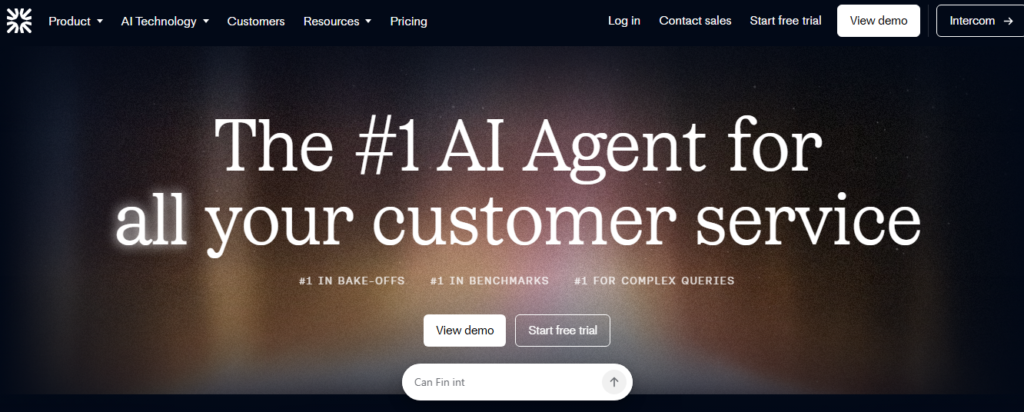
Intercom’s Fin AI Agent has established itself as one of the most capable AI-powered customer service solutions available in 2026. Built on the latest generation of large language models, Fin goes well beyond answering questions — it reasons through complex support scenarios, takes action within integrated systems, and handles multi-turn conversations with a naturalness that is genuinely impressive.
Fin’s architecture allows it to draw from multiple knowledge sources simultaneously — your help center, internal documentation, CRM data, and live backend systems — and synthesize that information into a coherent, accurate response. It does not just locate a relevant article and hand it over. It interprets the content, applies it to the customer’s specific situation, and responds accordingly.
The handoff experience within Intercom is among the best in the industry. Agents receive the full conversation transcript, a summary of the issue, the customer’s CRM profile, and Fin’s suggested resolution — all in one view. For support operations that care deeply about both automation rates and customer satisfaction, Intercom remains a top-tier choice.
The platform’s omnichannel coverage, deep integration library, and continuously improving AI make it particularly well suited for SaaS companies, subscription businesses, and e-commerce operations handling significant support volume.
Best for: Mid-market to enterprise businesses, SaaS platforms, e-commerce brands, and organizations that want a polished, AI-first support experience with strong omnichannel coverage.
2. Zendesk AI Agents
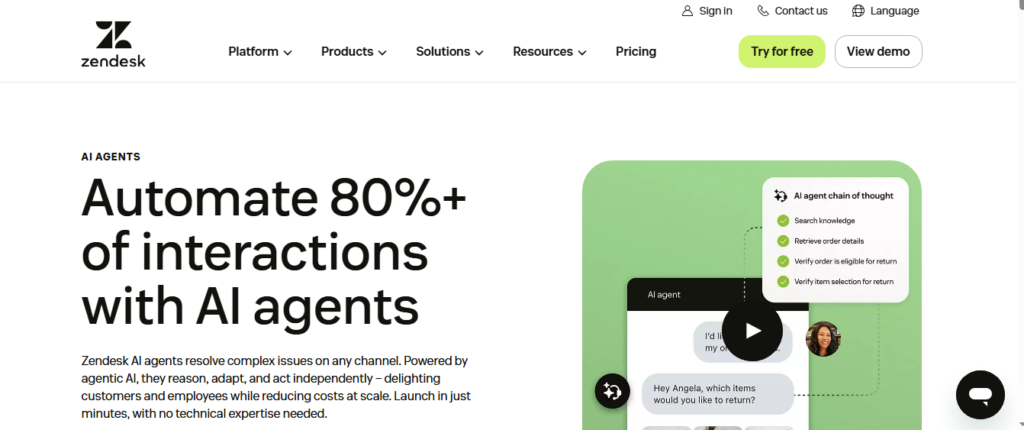
Zendesk has made sweeping investments in AI over the past two years, and in 2026 its AI agent capabilities represent a substantial leap from what the platform offered historically. The new generation of Zendesk AI agents can autonomously resolve a wide range of customer queries — handling everything from order inquiries and password resets to complex, multi-step troubleshooting flows.
What gives Zendesk a durable advantage is the breadth of its ecosystem. The AI layer sits on top of the world’s most widely used customer service platform, which means it benefits from deep ticketing integration, a mature agent workspace, an extensive library of third-party connectors, and decades of accumulated workflow intelligence.
Zendesk’s generative AI features for agents — including response drafting, conversation summarization, and knowledge gap identification — complement the bot capabilities and create a genuinely end-to-end AI-enhanced support operation. Organizations that want AI to improve both the automated and human sides of customer service will find Zendesk’s 2026 offering particularly compelling.
Best for: Businesses already on Zendesk, high-volume support operations, enterprises that need deep workflow customization, and teams looking to enhance both bot and agent performance simultaneously.
3. Salesforce Agentforce
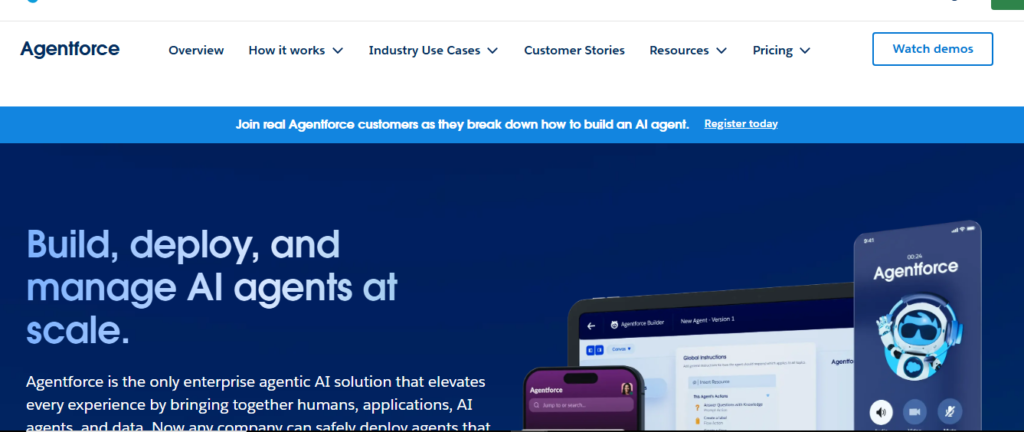
Salesforce’s Agentforce platform represents the company’s most ambitious push into autonomous AI for customer service, and in 2026 it is one of the most powerful enterprise-grade solutions available. Built on the Einstein AI framework and deeply integrated with Salesforce Service Cloud, Agentforce enables truly agentic customer service — bots that do not just answer questions but take complex, multi-step actions within the Salesforce ecosystem.
An Agentforce bot can access a customer’s full Salesforce record, review case history, process transactions, update records, trigger approval workflows, and escalate to a human agent with complete context — all within a single conversation. For organizations running large, complex service operations on Salesforce infrastructure, this level of integration is transformative.
The trade-off is that Agentforce requires meaningful technical investment to configure and optimize. It is not a tool for small teams or businesses without dedicated Salesforce expertise. But for enterprise operations that need AI to be a genuine participant in complex service workflows, the ceiling is remarkably high.
Best for: Enterprise businesses on Salesforce, large customer service operations with complex workflows, and organizations that need AI to take meaningful action within CRM systems.
4. Tidio (Lyro AI)
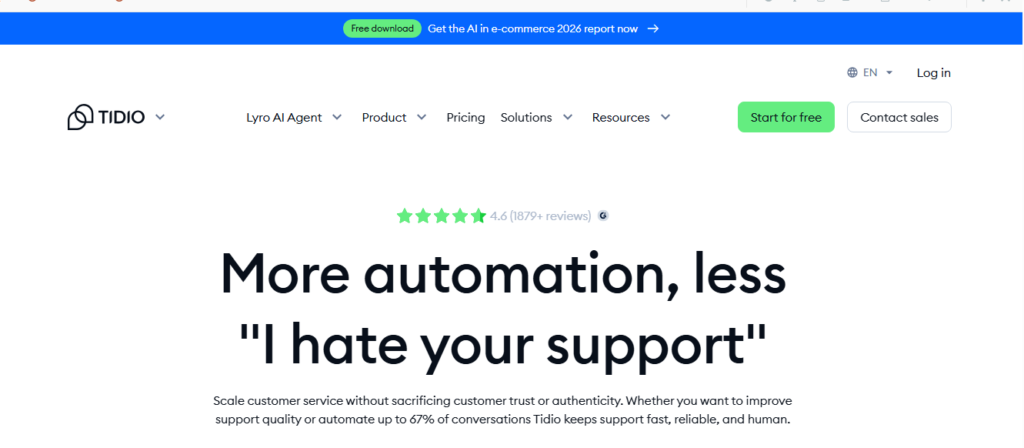
Tidio has continued to punch above its weight class, and in 2026 its Lyro AI chatbot remains one of the best options for small and medium-sized businesses looking for accessible, effective customer service automation. Lyro now handles a significantly broader range of queries than it did in earlier iterations, with improved reasoning capabilities and a much more natural conversational style.
What Tidio does better than almost anyone is remove the barriers to entry. Setup is fast, the visual bot builder is genuinely intuitive, and integrations with Shopify, WooCommerce, WordPress, and other popular platforms are straightforward. A small team can have a capable, well-configured chatbot live within a day or two — without a developer.
Tidio has also expanded its proactive messaging capabilities, allowing businesses to trigger personalized bot outreach based on browsing behavior, cart activity, and customer segments. For e-commerce businesses in particular, this creates meaningful opportunities to resolve concerns before they become abandoned carts or support tickets.
Best for: Small businesses, e-commerce startups, solopreneurs, and teams that need a capable AI chatbot without significant technical resources or budget.
5. Freshchat (Freshworks)
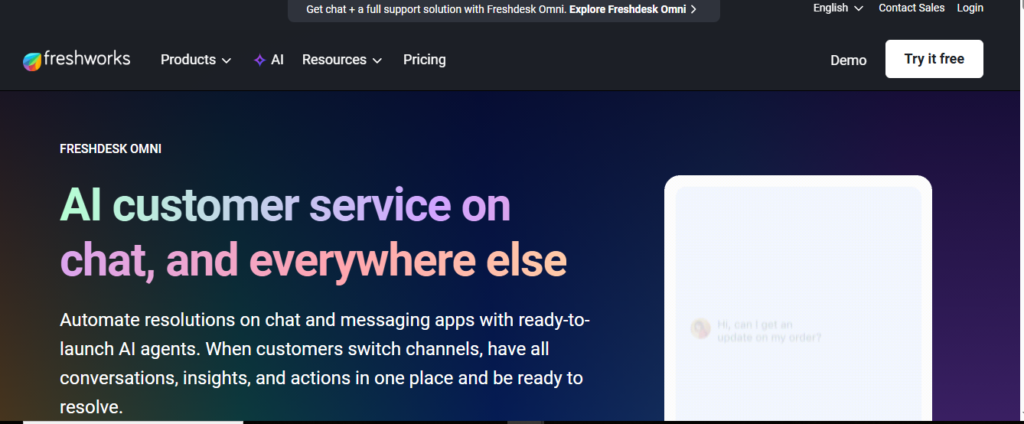
Freshchat remains one of the strongest all-around customer service chatbot platforms for growing businesses, and its 2026 capabilities reflect significant AI investment from Freshworks. The platform’s Freddy AI engine now powers more sophisticated intent detection, smarter routing, and more capable self-service flows across web, mobile, and messaging channels.
The biggest competitive advantage Freshchat offers is its place within the Freshworks suite. Tight integration with Freshdesk for ticketing, Freshsales for CRM, and Freshservice for IT support means that Freshworks customers get a unified AI layer across their entire customer-facing operation. Data flows freely between systems, giving bots and agents a complete view of each customer.
Freshchat’s support for WhatsApp, Apple Messages for Business, and Instagram alongside traditional web chat makes it a genuinely omnichannel platform — and the conversation routing intelligence has improved considerably, ensuring customers reach the right resource quickly.
Best for: Businesses in the Freshworks ecosystem, mid-market companies scaling their support operations, and teams that want strong omnichannel coverage with unified CRM integration.
6. HubSpot AI Chatbot
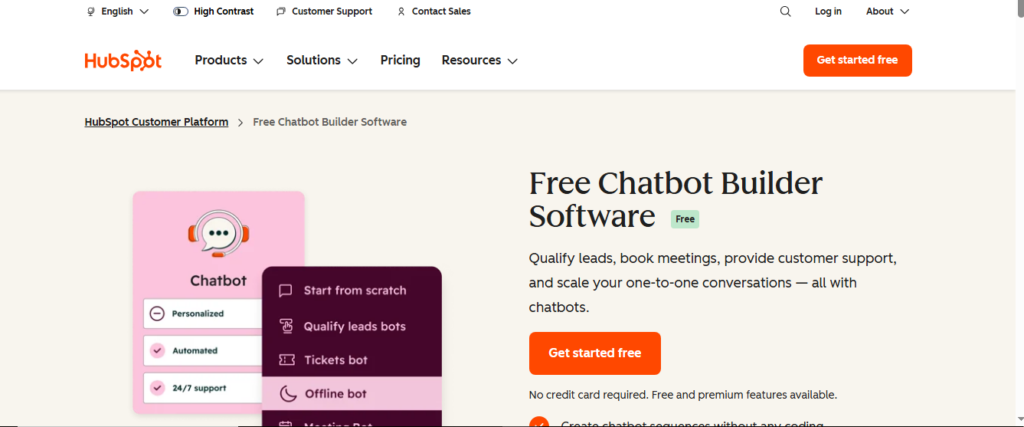
HubSpot’s chatbot capabilities have evolved meaningfully alongside the broader HubSpot AI initiative. In 2026, the HubSpot chatbot is smarter, more flexible, and more deeply integrated with the CRM than ever before. It remains a particularly compelling choice for businesses where the boundary between marketing, sales, and customer service is fluid — which describes most small and mid-sized companies.
Every chatbot conversation automatically enriches the HubSpot contact record, making follow-up more intelligent whether it comes from a service rep, a sales team member, or an automated workflow. For companies running their entire customer relationship on HubSpot, the chatbot adds genuine incremental value rather than operating as a disconnected layer.
HubSpot’s generative AI writing tools now assist with bot response scripting, making it easier to craft flows that sound natural and on-brand. The platform remains more accessible than enterprise alternatives, with pricing and complexity suited to teams that do not have dedicated operations staff.
Best for: HubSpot users, inbound-focused businesses, and small to mid-sized teams that want chatbot capabilities tightly integrated with their CRM and marketing workflows.
7. ManyChat
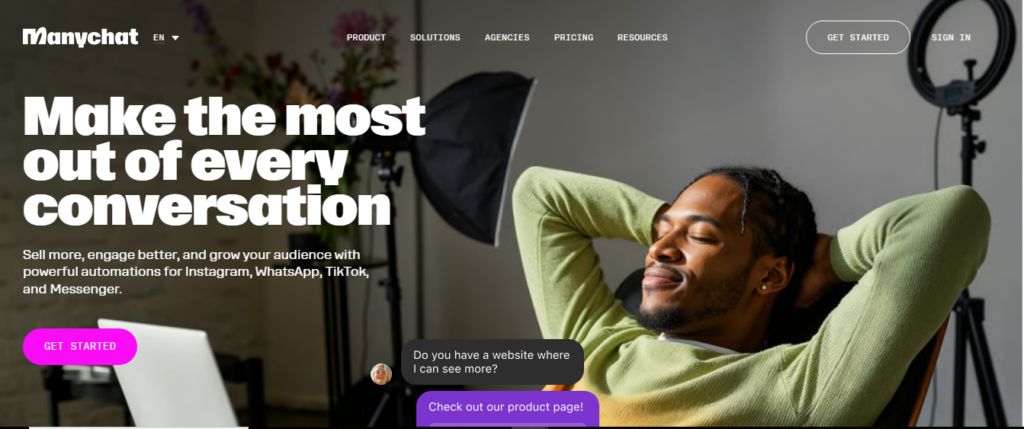
ManyChat continues to lead the market for businesses whose customer service happens primarily through social media and messaging channels. In 2026, its strengths are more relevant than ever — Instagram DMs, WhatsApp conversations, and Facebook Messenger interactions are primary support channels for a growing number of consumer brands.
ManyChat’s automation capabilities for social media are unmatched. Comment-triggered responses, DM sequences, post-purchase follow-up flows, and proactive re-engagement campaigns can all be built visually without writing a line of code. For brands running active social media operations, ManyChat turns every public interaction into a potential service touchpoint.
The platform has also expanded its AI capabilities, with smarter intent detection and more flexible natural language responses replacing some of the more rigid keyword-based flows. It is not the right tool for complex, enterprise-grade service operations — but for social-first businesses, it remains the best option available.
Best for: E-commerce brands with strong social media presence, direct-to-consumer companies, and businesses whose customers primarily reach out through Instagram, WhatsApp, and Messenger.
8. Drift (Salesloft)
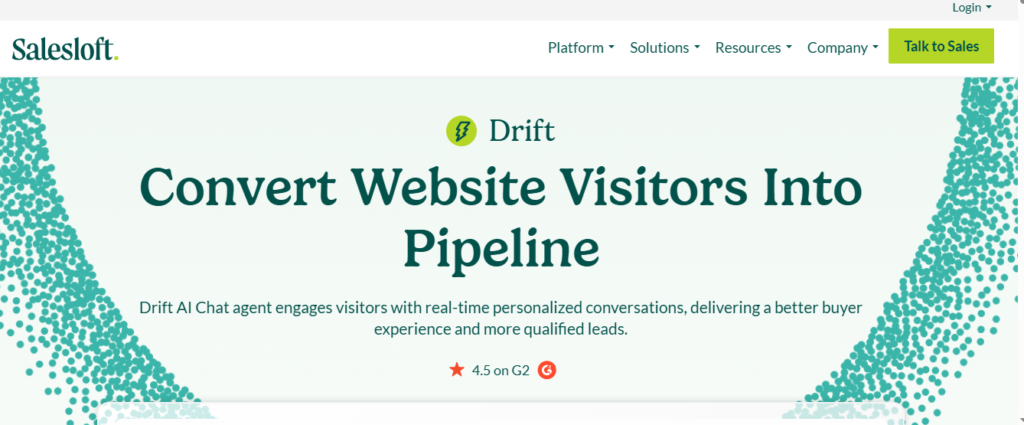
Drift, now operating as part of the Salesloft platform, continues to serve B2B companies that need intelligent conversation automation across both sales and service contexts. Its chatbot capabilities are particularly strong for businesses where customer service and account management overlap — where the person asking a support question today might be the decision-maker in a renewal conversation next quarter.
Drift’s routing intelligence is excellent, identifying visitor intent and account tier to deliver differentiated experiences to different customer segments. A top-tier enterprise account gets a different experience from a free-tier user — and the chatbot manages that distinction automatically.
For B2B organizations running complex customer relationships and wanting their AI to reflect those complexities, Drift’s continued investment in conversational intelligence makes it a platform worth serious consideration.
Best for: B2B companies, account-based sales and service models, and organizations that want AI to align customer service with revenue and retention goals.
How to Choose the Right Customer Service Chatbot in 2026
The market has never offered more capable options, which paradoxically makes the decision harder. Here is a framework for narrowing it down.
Map your support volume and query types first. Run a simple analysis of your current support tickets or conversations over the past ninety days. What percentage are repetitive, transactional queries versus genuinely complex issues? That ratio will tell you a great deal about how much automation potential you have and what level of AI sophistication you need.
Audit your existing tech stack honestly. The right chatbot is almost always the one that integrates most deeply with the systems you already rely on. A Salesforce-native organization should start with Agentforce. A Freshworks shop should look at Freshchat first. Fighting against poor integrations is a constant tax on your team’s time and the quality of your bot’s responses.
Evaluate the escalation experience as seriously as the bot experience. Most chatbot demos show you the bot at its best. Ask vendors to show you what happens when the bot fails, when a customer expresses frustration, and when a conversation needs to go to a human. The quality of that transition matters enormously for customer satisfaction.
Consider your growth trajectory. A platform that works well at your current volume but cannot scale with you will require a painful migration in twelve to eighteen months. Understand each platform’s pricing model at two times and five times your current volume before making a commitment.
Run a real pilot before full deployment. Most leading platforms offer trial periods or phased implementation options. Use them. A bot that performs well in a demo environment may behave differently when exposed to the full range of real customer queries. Identify those gaps before you go live at scale.
Implementation Best Practices for 2026
The technology has matured. The gap between successful and unsuccessful chatbot implementations now comes down almost entirely to how well you implement and manage the tool — not the tool itself.
Invest in your knowledge base before your bot. An AI chatbot draws its intelligence from the content you provide. If your help center is incomplete, inconsistent, or outdated, the bot will reflect that. A thorough knowledge base audit and refresh before launch is not optional — it is the foundation of everything else.
Define success metrics clearly before launch. Containment rate alone is not enough. Pair it with CSAT scores, escalation rates, first-contact resolution, and average handling time. And measure customer experience in the bot channel specifically, not just across your support operation as a whole.
Build escalation flows as carefully as resolution flows. The moment a customer transitions from bot to human should feel seamless and respectful. Design those flows with the same rigor you bring to the automated portion, and ensure agents are trained on how to pick up a bot-initiated conversation gracefully.
Establish a regular optimization cadence. Review a sample of bot conversations weekly in the early months. Where did the bot provide inaccurate information? Where did customers abandon the conversation? Where did they seem frustrated? Every one of those data points is an optimization opportunity.
Communicate clearly with customers. In 2026, most customers know they are talking to an AI. Trying to disguise it undermines trust. Being transparent — while still delivering a warm, capable, and efficient experience — builds it.
Emerging Trends Shaping Customer Service Chatbots in 2026
Autonomous AI agents are redefining what automation means. The most advanced platforms are moving from reactive chatbots to proactive AI agents that monitor accounts, detect issues, and initiate conversations before customers even know a problem exists. This shift from reactive to predictive support is one of the most significant developments in the industry.
Emotional intelligence is becoming a differentiator. Platforms are investing in sentiment analysis that goes beyond flagging negative words — detecting tone, pacing, and contextual frustration signals, and adjusting responses accordingly. A bot that recognizes when a customer is upset and adapts its behavior accordingly delivers a meaningfully better experience.
Voice AI is becoming viable for complex support. Advances in speech recognition and natural language generation have made voice-based AI support genuinely usable for interactions beyond simple IVR-style menu navigation. Businesses in phone-heavy industries are beginning to see real resolution rates from voice AI agents.
Tighter regulatory scrutiny is reshaping data practices. Several major markets introduced or strengthened AI transparency requirements in 2025 and 2026. Businesses need to ensure their chatbot implementations include clear AI disclosure, robust data handling practices, and the ability to produce audit trails when required.
AI-assisted agent tools are closing the loop. The best customer service operations in 2026 are not just deploying bots — they are equipping human agents with AI tools that summarize conversations, suggest responses, surface relevant knowledge, and flag anomalies in real time. The combination of AI-powered automation and AI-augmented human support is what best-in-class looks like now.
Final Thoughts
The best chatbot software for customer service in 2026 is the platform that fits your business, your customers, and your team — and that you are genuinely committed to implementing well. Technology alone does not transform customer service. Thoughtful implementation, continuous optimization, and a genuine commitment to the customer experience do.
Whether you are a small e-commerce business taking your first steps toward automation or an enterprise operation looking to deploy agentic AI across a global support function, the options available in 2026 are extraordinary. The gap between what AI can do and what most businesses are actually doing with it remains wide — and that gap represents an enormous opportunity.
Choose a platform you can grow with. Invest in the knowledge and workflows that feed it. Measure what matters. Iterate without hesitation. The businesses that treat their chatbot as a living, evolving system — not a one-time deployment — are the ones that will define what exceptional customer service looks like in the years ahead.

Usman Hakim is an SEO specialist at RankWithLinks, focusing on link building and organic growth. He helps brands improve search rankings through white-hat strategies, including guest posting and authority backlinks.