
Key Takeaways
Before diving deep, here is what you will walk away knowing after reading this guide:
- Instagram search operates more like a search engine than most creators realize — and most people are not optimizing for it at all
- Your username, bio, captions, alt text, and hashtags all function as ranking signals inside Instagram’s search algorithm
- Keyword intent on Instagram differs significantly from Google — understanding the difference is what separates growing accounts from stagnant ones
- Optimizing for Instagram search queries in 2026 requires a combination of semantic keyword strategy, content relevance signals, and engagement depth
- Even accounts with modest follower counts can outrank larger competitors in Instagram search when their optimization is tighter and more intentional
Introduction: The Search Traffic Nobody Talks About
A few years ago, a fitness coach named Priya had 4,200 Instagram followers and was convinced the platform had stopped working for her. She was posting consistently, using popular hashtags, and still watching her reach flatline every week.
Then she discovered something that changed her entire approach. She typed her niche topic — “home workouts for busy moms” — directly into Instagram’s search bar. The top results were not accounts with hundreds of thousands of followers. They were mid-sized, focused accounts whose content was tightly organized around that exact phrase. Their bios mentioned it. Their captions used it naturally. Their highlight covers were labeled with related terms. Their content was searchable in ways hers simply was not.
Within ninety days of applying Instagram search queries optimization to her account, her profile visits tripled and she gained over 2,800 new followers — organically, without ads.
This is not a rare story in 2026. Instagram has quietly evolved into one of the most powerful visual search engines on the internet. Over 500 million searches are conducted on Instagram every day. Yet the overwhelming majority of creators and brands are still treating the platform purely as a social feed — and leaving enormous organic discovery potential completely untapped.
This guide changes that.
What Is Instagram Search Queries Optimization?
Instagram search queries optimization is the strategic process of aligning your account content — including your username, bio, captions, hashtags, alt text, and overall content themes — with the specific words and phrases your target audience types into Instagram’s search bar.
It is the Instagram equivalent of SEO for Google. The goal is the same: when someone searches for a topic you cover, your content appears prominently in the results.
Instagram’s search function in 2026 is significantly more sophisticated than it was just two years ago. The platform now uses natural language processing to understand search intent, semantic relationships between words, and content relevance signals beyond simple keyword matching. This means optimization strategies that worked in 2021 — stuffing captions with hashtags, for example — no longer produce the same results.
Modern Instagram search queries optimization requires a more holistic, intent-driven approach that mirrors the semantic SEO principles that have shaped Google content strategy for years.
How Instagram Search Actually Works in 2026
Understanding the mechanism behind Instagram search is essential before applying any optimization strategy. Instagram’s search algorithm evaluates several distinct ranking factors when determining which content to surface for a given query.
Relevance Signals
Relevance is the primary ranking factor. Instagram’s algorithm assesses how closely your content matches the searcher’s query by analyzing:
- Text in your username and display name
- Keywords in your bio
- Caption text and its semantic relationship to the search query
- Hashtags used in posts
- Alt text on images and videos
- The overall thematic consistency of your account
Accounts that consistently publish content around a specific topic cluster rank higher for related search queries than accounts that post broadly across many unrelated subjects.
Engagement Quality Signals
Instagram does not just measure whether content is relevant — it measures whether users engage with it. High-quality engagement signals that a piece of content genuinely satisfies the searcher’s intent. Key engagement signals include:
- Save rate — one of the strongest signals of content value
- Share rate — indicates content worth distributing
- Comment quality — substantive comments signal real audience engagement
- Watch time on Reels — completion rate matters significantly
- Profile visits from search results — indicates the content drew genuine interest
Account Authority Signals
Established accounts with consistent posting history, strong engagement rates, and clear topical focus carry more authority in Instagram search than new or scattered accounts. Verification, while not required, adds an additional trust signal.
User Activity Context
Instagram personalizes search results based on individual user behavior. Accounts and content types that a user has previously engaged with are weighted more heavily in their personal search results. This means broad optimization attracts new searchers while engaged community signals amplify visibility to likely converters.
Instagram Search Queries Optimization: Step-by-Step Strategy
Step 1 — Identify Your Target Instagram Search Queries
he foundation of Instagram search queries optimization is knowing exactly what your audience searches for. This requires research, not assumption. The same keyword research thinking that drives Google rankings applies directly here — and if you want to sharpen that research muscle properly, understanding the 10 important skills every SEO specialist should have gives you the strategic framework that makes Instagram keyword research faster, sharper, and more effective than guessing from trends alone.
Start with these research methods:
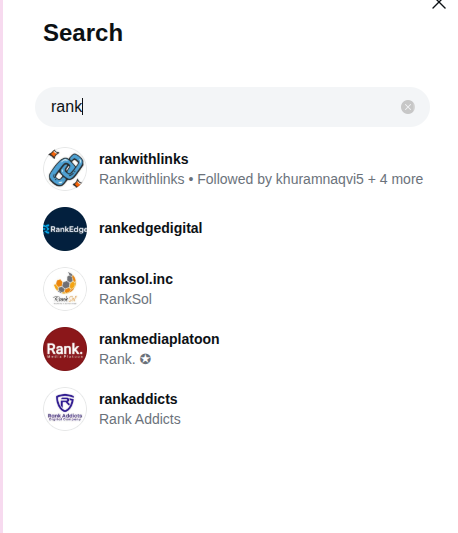
Instagram’s Own Search Bar Type your primary topic into Instagram’s search bar and observe the auto-complete suggestions. These are real, high-volume queries being typed by real users. They are Instagram’s equivalent of Google’s search suggestions — and they are telling you exactly what people want to find.
Competitor Account Analysis Identify the top three to five accounts in your niche that appear consistently in search results. Analyze their bios, caption structures, and hashtag patterns. What specific phrases appear repeatedly? These are the terms Instagram’s algorithm has validated as topically relevant.
Google Keyword Research Applied to Instagram Tools like Google Keyword Planner and Ubersuggest reveal search volume data for topic-related keywords. While these are Google metrics, they indicate real-world interest levels. High-volume Google keywords often correspond to high-demand Instagram search queries in the same niche.
Instagram Explore Page Analysis The content Instagram surfaces on the Explore page for your niche reveals which topics and content formats are currently receiving elevated algorithmic distribution. Explore page placement is directly related to search relevance signals.
Once you have identified your target queries, organize them into three tiers:
- Primary query — Your core niche topic (one to two terms)
- Secondary queries — Related subtopics and specific variations (five to ten terms)
- Long-tail queries — Specific, question-based, or highly niche phrases (ten to twenty terms)
Step 2 — Optimize Your Username and Display Name
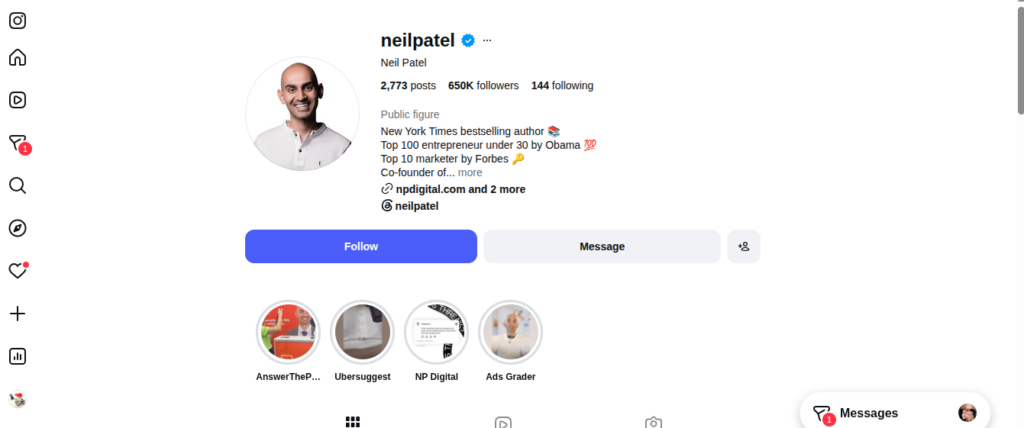
Your Instagram username and display name are the highest-weighted text fields in Instagram’s search ranking system. They are the first place the algorithm looks when matching accounts to search queries.
Username optimization: If you have not yet established a personal brand dependent on your name, incorporate a primary keyword into your username. A fitness account named “fitnesswithpriya” signals topical relevance more clearly to Instagram’s algorithm than “priya_official” does.
Display name optimization: This is the most immediately actionable optimization for existing accounts. Your display name — the bold text that appears below your profile photo — should include your primary keyword or a closely related phrase.
Examples of optimized display names:
- “Sarah | Home Workout Coach” — targets “home workout” queries
- “Digital Marketing Tips | James” — targets “digital marketing” queries
- “Budget Travel Asia | Maya” — targets “budget travel Asia” queries
This single change alone can meaningfully improve your account’s visibility in Instagram search results within days of implementation.
Step 3 — Rewrite Your Bio for Search and Conversion
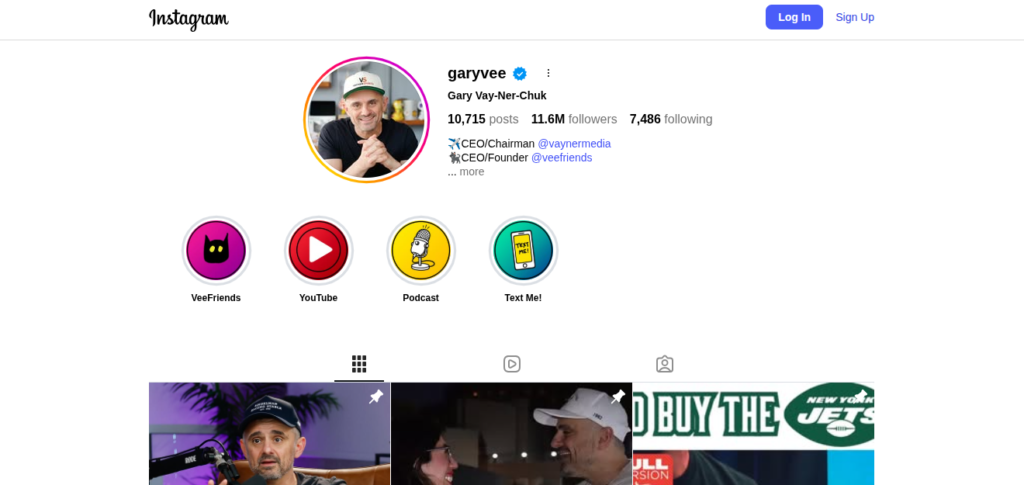
Your Instagram bio serves a dual purpose in search queries optimization. It functions as a keyword signal for the algorithm and as a conversion tool for human visitors who land on your profile from search results.
A bio optimized for both purposes follows this structure:
Line 1 — What you do (keyword-rich) State your primary topic and value proposition in one clear line. Include your primary search query naturally.
Line 2 — Who you help (audience signal) Specify your target audience. This creates semantic relevance between your content and the people most likely to search for it.
Line 3 — Proof or credibility A specific achievement, credential, number, or social proof element that builds immediate trust.
Line 4 — Call to action with link A clear instruction directing visitors to your link in bio.
Example of an optimized bio:
Healthy meal prep recipes for busy professionals Helping 10K+ people eat well without the stress Featured in Bon Appétit & Food52 👇 Free 7-Day Meal Plan Below
This bio incorporates “meal prep recipes” as a target keyword, establishes audience specificity, adds authority signals, and drives action — all within 150 characters.
Step 4 — Optimize Captions With Semantic Keywords
Caption optimization is where many Instagram search queries optimization strategies fall short. The common mistake is keyword stuffing — repeating a target phrase awkwardly multiple times hoping to rank for it. This approach does not work and actively reduces content quality.
The correct approach uses semantic keyword integration — writing captions that naturally incorporate your target query alongside related terms, synonyms, and contextually relevant phrases that Instagram’s NLP engine associates with your topic.
For a target query of “plant-based meal prep,” a semantically optimized caption would naturally include related terms like:
- vegan recipes
- healthy meal planning
- whole food ingredients
- protein-rich plant foods
- weekly food prep
- clean eating
None of these terms need to be forced. When a caption is written by someone who genuinely knows their topic, these related terms appear organically. That natural semantic richness is exactly what Instagram’s algorithm looks for when matching content to search queries.
Caption structure for search optimization:
- First line — Hook that incorporates your primary keyword naturally (this line appears before the “more” fold and carries the most weight)
- Body — Substantive, valuable content that uses semantic keywords contextually
- Hashtag section — Targeted hashtags placed at the end (more on this below)
Step 5 — Build a Strategic Hashtag Architecture
Hashtags in 2026 function less as discovery tools than they did in Instagram’s earlier years and more as content classification signals. Instagram uses hashtag data to understand the topical category of your content — which in turn influences which search queries your posts appear for.
Effective hashtag strategy for search optimization uses three tiers:
Tier 1 — Niche-specific hashtags (primary) These are highly specific to your exact content topic. Low to medium volume. High relevance. Examples for a content marketing account: #contentmarketingstrategy, #b2bcontentmarketing, #contentmarketingtips
Tier 2 — Topic-level hashtags (secondary) Broader topic categories that establish your content’s thematic home. Medium volume. Examples: #contentmarketing, #digitalmarketingtips, #socialmediamarketing
Tier 3 — Audience hashtags (contextual) Hashtags your target audience actively follows or searches for, even if they are not the exact topic of your post. Examples: #marketingagency, #smallbusinessowner, #entrepreneurmindset
Use five to fifteen hashtags per post in 2026. The era of thirty-hashtag captions is over. Fewer, more targeted hashtags signal stronger topical relevance than a broad spray of loosely related tags.
Step 6 — Use Alt Text for Image Search Optimization
Instagram’s accessibility alt text feature is one of the most underused search optimization tools on the platform. When you add descriptive alt text to your images, you are providing Instagram’s algorithm with explicit text data about your visual content — data that directly influences search visibility.
Instagram generates automatic alt text using image recognition technology. This auto-generated text is generic and often inaccurate. Replacing it with manually written, keyword-inclusive descriptions is a straightforward win.
To add manual alt text: Go to Advanced Settings when creating a post, select Write Your Own Alt Text, and write a natural, descriptive sentence that includes your target keyword.
Example for a meal prep photo: Auto-generated alt text: “Food in containers” Optimized manual alt text: “Seven-day plant-based meal prep containers with quinoa, roasted vegetables, and chickpea protein bowls”
The difference in search signal quality between these two descriptions is significant.
Step 7 — Optimize Reels for Instagram Video Search
Reels have become the primary content format for Instagram search visibility in 2026. Video content receives substantially more algorithmic distribution than static images, and Reels specifically are indexed for both Instagram search and Google video search results.
Reels optimization for search queries requires attention to:
Video caption/text overlays Text that appears on screen within a Reel is indexed by Instagram. Including your target keyword in on-screen text reinforces the topical signal of your caption.
Audio selection Original audio Reels can be searched by the audio name you assign. Using a keyword-relevant audio name creates an additional discovery pathway.
Reel cover image and caption The Reel cover caption is the text displayed when the Reel appears in grid view and search results. Treat this as a headline — include your primary keyword naturally.
Hook optimization Instagram measures Reel completion rates closely. A strong, specific hook in the first two seconds that clearly signals what the video delivers attracts the right searchers and drives higher completion rates — which signals relevance to the algorithm.
Step 8 — Build Topical Depth Through Content Clustering
Single optimized posts do not build search authority on Instagram. Topical depth does. Accounts that consistently publish multiple pieces of content around a specific topic cluster signal to Instagram’s algorithm that they are a genuine authority on that subject. This same authority-building logic applies across every major social platform — each one rewards topical depth and consistent engagement, but the way each platform defines “professional relevance” differs significantly. If you work across Instagram and LinkedIn simultaneously, understanding which type of social networking site would best describe LinkedIn helps you build platform-specific strategies rather than applying one approach everywhere and getting inconsistent results. which elevates their ranking position for related search queries over time.
A content cluster strategy for Instagram works as follows:
Choose one primary topic category. Create a content calendar that covers different angles, sub-topics, questions, and formats within that category consistently. Every piece of content reinforces the account’s thematic signal to the algorithm.Once your cluster content is publishing consistently across Instagram and other platforms simultaneously, the smartest next move is bringing all of it into one centralized hub your audience can explore without bouncing between apps — the Social Media Stuff EmbedTree guide covers exactly how creators are doing this in 2026 to strengthen both audience retention and topical authority signals.
For a personal finance account, a content cluster might include:
- How to build an emergency fund (educational post)
- The 50/30/20 budgeting rule explained (Reel)
- Common budgeting mistakes and how to fix them (carousel)
- Best budgeting apps for beginners (comparison post)
- Reader questions about debt payoff strategies (Q&A Story)
Each piece of content individually targets a specific search query. Collectively, they build the account’s authority as a go-to resource for personal finance content — which raises rankings across all related queries simultaneously.
Common Instagram Search Optimization Mistakes to Avoid
Even well-intentioned creators make these errors regularly. Avoiding them separates accounts that grow steadily from those that plateau despite consistent effort.
Mistake 1 — Optimizing for popularity instead of relevance Using the highest-volume hashtags and broadest keywords puts you in competition with millions of posts. Tighter, more specific optimization beats broad reach targeting every time for sustained search visibility.
Mistake 2 — Ignoring the display name field Most accounts use only their personal or brand name in the display name. This wastes the highest-weighted text field in Instagram’s search ranking system. Always include a keyword.
Mistake 3 — Inconsistent posting themes Posting randomly across multiple unrelated topics destroys topical authority. Every post that falls outside your content cluster dilutes your search relevance signal.
Mistake 4 — Auto-generated alt text Leaving Instagram’s automatic alt text in place means missing one of the simplest and most direct keyword optimization opportunities the platform offers.
Mistake 5 — Chasing trending audio instead of relevant audio Trending audio drives Reel distribution to broad audiences. Relevant audio and content drives distribution to search audiences. Both have value, but pure trend chasing without topical relevance builds vanity metrics rather than searchable authority.
Expert Tips From High-Growth Instagram Accounts
These are strategies consistently observed across accounts that achieve strong, sustained Instagram search visibility.
Tip 1 — Use question-based captions Captions that mirror the exact phrasing of questions people search for — “How do I start investing with $100?” — align precisely with conversational search queries and perform exceptionally well in Instagram’s NLP-driven search results.
Tip 2 — Name your Highlight covers with keywords Instagram Story Highlight cover labels are indexed. Naming your Highlights with relevant keywords — “Meal Prep Tips,” “Budget Travel,” “Beginner Workouts” — creates additional search entry points directly on your profile.
Tip 3 — Engage with search-driven content in your niche Accounts that actively engage with top-performing content in their niche send behavioral signals to Instagram that align them with that topical cluster — which gradually elevates their own search positioning within the same topic space.
Tip 4 — Refresh old posts with updated captions Editing captions on older posts to incorporate current search query optimization reactivates the content algorithmically. This is a fast way to improve search visibility without creating new content from scratch.
Instagram Search Queries Optimization vs. Traditional Instagram Growth Strategy
| Factor | Traditional Growth Strategy | Search Queries Optimization |
|---|---|---|
| Primary focus | Follower count and reach | Discoverability and intent matching |
| Content approach | Trending topics and viral formats | Topical depth and query alignment |
| Hashtag use | Maximum volume, broad tags | Fewer, highly targeted, niche tags |
| Caption writing | Engagement-focused hooks | Keyword-integrated, semantic depth |
| Growth timeline | Spike-driven, unpredictable | Slower build, compounding returns |
| Audience quality | Mixed, often low-intent | High-intent, niche-matched |
| Long-term value | Dependent on algorithm feed | Sustainable organic search traffic |
Pros and Cons of Instagram Search Queries Optimization
Pros:
- Drives high-intent, niche-matched audience discovery
- Builds compounding organic reach that does not depend on feed algorithm changes
- Reduces reliance on paid promotion for visibility— though once your organic search foundation is solid, pairing it with a targeted paid strategy multiplies results significantly. If you are ready to explore which platform gives the best return on ad spend alongside your organic Instagram efforts, this comparison of the best social media platform for targeted advertising breaks down exactly where your budget works hardest in 2026.
- Creates searchable content assets that continue generating traffic long after posting
- Aligns Instagram strategy with broader SEO thinking for multi-platform authority
Cons:
- Results take longer to materialize than viral or trend-based strategies
- Requires consistent topical focus — limits content variety for creators who enjoy posting broadly
- Ongoing keyword research and caption discipline adds to content creation workload
- Highly competitive niches require sustained optimization effort to move rankings meaningfully
FAQ: Instagram Search Queries Optimization
What is Instagram search queries optimization? Instagram search queries optimization is the process of strategically aligning your account profile, content, captions, hashtags, and alt text with the specific words and phrases your target audience types into Instagram’s search bar — with the goal of appearing prominently in those search results.
Does Instagram SEO actually work? Yes. Instagram uses a sophisticated search algorithm that evaluates keyword relevance, engagement quality, and content authority to rank results. Accounts that optimize systematically for these signals consistently outrank competitors in Instagram search — regardless of follower count.
How long does Instagram search optimization take to show results? Most accounts begin seeing measurable improvements in search visibility within four to eight weeks of implementing consistent optimization. Display name and bio changes often show faster results, sometimes within days. Content cluster authority builds over three to six months of consistent posting.
What are the most important Instagram search ranking factors? The highest-impact ranking factors are your display name keywords, bio keyword relevance, caption semantic richness, hashtag targeting accuracy, engagement rate and save rate, content topical consistency, and account posting frequency.
Do hashtags still matter for Instagram search in 2026? Yes, but differently than in earlier years. Hashtags now function primarily as content classification signals rather than direct discovery drivers. Fewer, more targeted hashtags aligned with your specific niche outperform broad, high-volume hashtag strategies for search visibility.
Can small accounts rank in Instagram search? Absolutely. Instagram search results are not exclusively dominated by large accounts. Smaller accounts with tight topical focus, strong engagement rates, and well-optimized content regularly outrank larger accounts that post broadly without search optimization.
How do I find the right keywords for Instagram search? Use Instagram’s own search bar autocomplete for query research, analyze top-performing competitor accounts in your niche, review Google Keyword Planner for related term volume data, and monitor your Instagram Insights for the search terms already driving profile visits.
Conclusion: Start Treating Instagram Like the Search Engine It Is
Instagram is no longer just a social feed where the most recent or most popular content wins. It is a fully functional visual search engine — one that 500 million people use every single day to find content, discover creators, research products, and solve problems.
The creators and brands who understand this in 2026 are building sustainable, compounding organic growth that does not evaporate every time Instagram changes its feed algorithm. They are appearing in front of high-intent audiences who are actively searching for exactly what they offer.
Instagram search queries optimization is not complicated. It requires clarity about your niche, consistency in your content themes, and discipline in how you write your bio, captions, and alt text. The technical barriers are low. The competitive advantage for those who implement it is enormous — because most creators still are not doing it.
Start today with the three highest-impact changes: update your display name to include your primary keyword, rewrite your bio with intent-matched language, and edit your next five captions with semantic keyword depth rather than generic engagement bait.
Those three actions alone will put your account ahead of the majority of your competitors in Instagram search — and the compounding effect from there is where real, lasting growth begins.

Fazilat zulfiqar is an SEO specialist at RankWithLinks, focused on improving search rankings through smart link building and optimization.He helps businesses grow organic traffic and build strong online authority.