
Best Software for Property Managers in 2026: The Complete Guide
What Is the Best Software for Property Managers?
The best software for property managers in 2026 includes Buildium, AppFolio, Propertyware, Rentec Direct, TenantCloud, Yardi Breeze, DoorLoop, Hemlane, Rent Manager, and ResMan. Each platform serves a different segment of the property management industry — from independent landlords managing a handful of units to large-scale commercial property management companies overseeing thousands of doors.
Property management software centralizes every aspect of running a rental portfolio — tenant screening, lease management, rent collection, maintenance tracking, accounting, and owner reporting — into a single platform. The right software eliminates manual processes, reduces costly errors, and gives property managers the visibility and control they need to scale their business efficiently.
Choosing the wrong platform means paying for features you do not need, struggling with tools not built for your portfolio type, or outgrowing your software just as your business starts to gain momentum.
Why Property Managers Need Dedicated Software in 2026
Managing rental properties with spreadsheets, email chains, and paper records was never efficient — and in 2026 it is no longer competitive. Tenants expect online portals for rent payments and maintenance requests. Owners expect real-time financial reporting. Regulations around lease compliance, security deposits, and fair housing require meticulous documentation.
Property management software solves all of these challenges simultaneously. It automates rent collection, sends late payment reminders, tracks maintenance work orders from submission to completion, generates owner statements automatically, and stores every lease document in a searchable digital archive.
Top 10 Best Software for Property Managers in 2026
1. Buildium
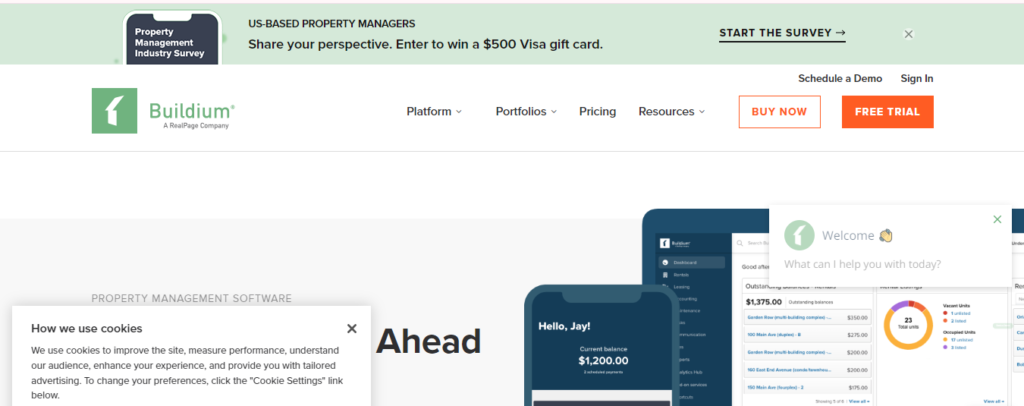
Buildium is one of the most widely adopted property management platforms in the industry, trusted by tens of thousands of property managers across residential, community association, and student housing portfolios. It offers a comprehensive feature set that covers every core function of property management without overwhelming smaller operations.
Key Features:
- Online rent collection with automatic late fee assessment
- Tenant and owner portals for self-service communication
- Full general ledger accounting with bank reconciliation
- Maintenance request tracking with vendor management
- Tenant screening with credit, criminal, and eviction reports
- Lease management with e-signature capability
- Open API for integration with third-party tools
- Performance analytics and customizable owner reports
Best For: Small to mid-sized residential property management companies managing between 50 and 5,000 units who need a reliable, full-featured platform with strong accounting capabilities.
Weakness: Pricing scales with unit count and can become expensive for larger portfolios; some users report the interface feels dated compared to newer platforms.
2. AppFolio Property Manager
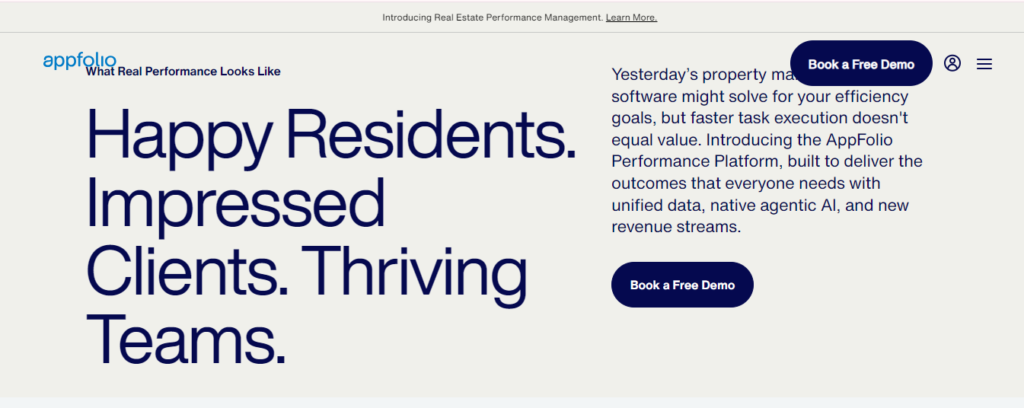
AppFolio is a cloud-native property management platform built for scale. It serves residential, commercial, student housing, community association, and mixed-use portfolios — all within a single, modern interface. In 2026, its AI-powered features have made it one of the most forward-thinking platforms in the industry.
Key Features:
- AI leasing assistant for automated prospect communication
- Smart maintenance — AI-powered triage and vendor assignment
- Online applications, screening, and lease signing in one workflow
- Bulk text messaging for tenant communication at scale
- Automated accounts payable with invoice processing
- Customizable owner and performance reporting dashboards
- Built-in website builder for property marketing
- Mobile app for on-the-go management
Best For: Mid to large-scale property management companies managing 200-plus units across multiple property types who want a modern, AI-enhanced platform that grows with their business.
Weakness: Minimum unit requirement of 50 units makes it inaccessible for very small landlords; per-unit pricing adds up quickly for large portfolios.
3. Propertyware
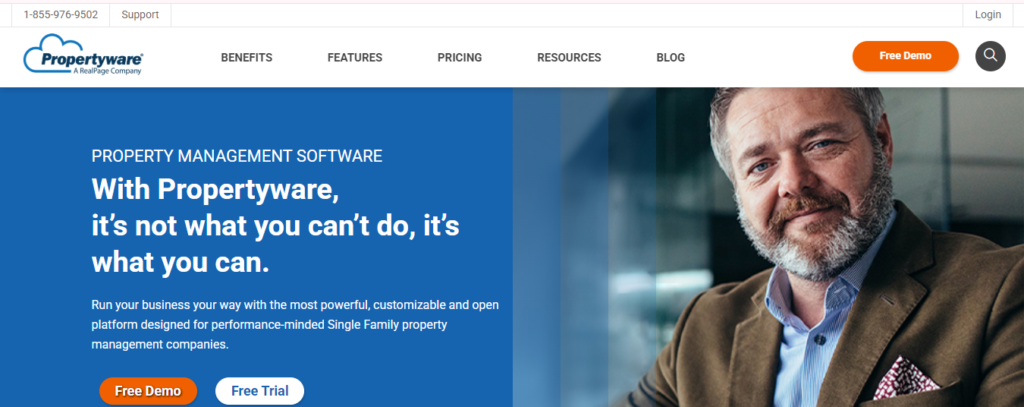
Propertyware is a highly customizable single-family property management platform built specifically for managers of scattered-site residential portfolios. Unlike most platforms that treat single-family homes as a secondary use case, Propertyware was designed from the ground up for the unique challenges of managing individual homes across wide geographic areas.
Key Features:
- Customizable workflows for single-family management operations
- Maintenance management with contractor portals and work order tracking
- Tenant and owner portals with real-time communication
- Robust open API for integration with specialized tools
- Built-in document management and e-signatures
- Inspection management with photo documentation
- Custom reporting with flexible data export
- Integrated accounting with job costing capabilities
Best For: Property management companies specializing in single-family rentals and scattered-site portfolios who need deep customization and strong maintenance management tools.
Weakness: Interface can feel complex for new users; setup and configuration requires significant time investment compared to out-of-the-box solutions.
4. Rentec Direct
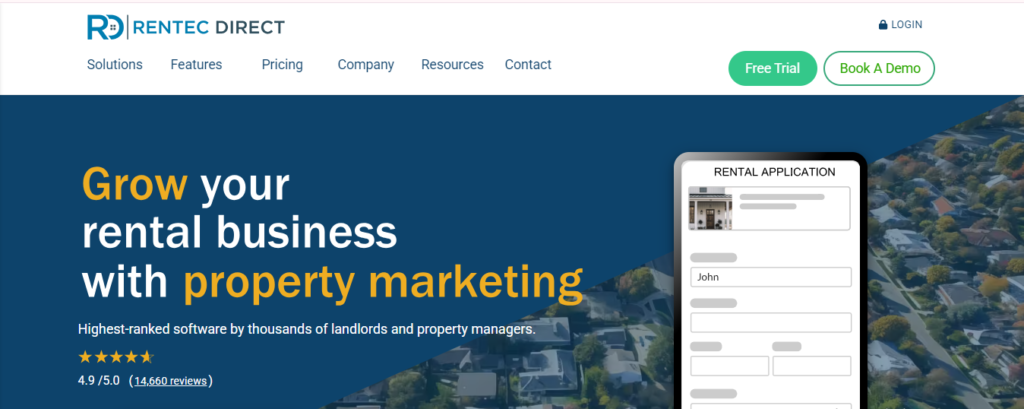
Rentec Direct is a straightforward, no-frills property management software that delivers strong core functionality at a price point accessible to independent landlords and small property management companies. It has earned a loyal following for its responsive customer support and transparent pricing with no hidden fees.
Key Features:
- Online rent collection with ACH and credit card processing
- Tenant screening with nationwide background checks
- Full accounting suite with tax preparation reports including 1099s
- Tenant and owner portals with document sharing
- Maintenance request management and tracking
- Vacancy listing syndication to major rental platforms
- Two-factor authentication and bank-level data security
- No setup fees and no long-term contracts
Best For: Independent landlords and small property management companies managing fewer than 500 units who want reliable core functionality without complex pricing or unnecessary features.
Weakness: Less suited to large portfolio operations or companies that need advanced automation, AI features, or highly customizable reporting.
5. TenantCloud
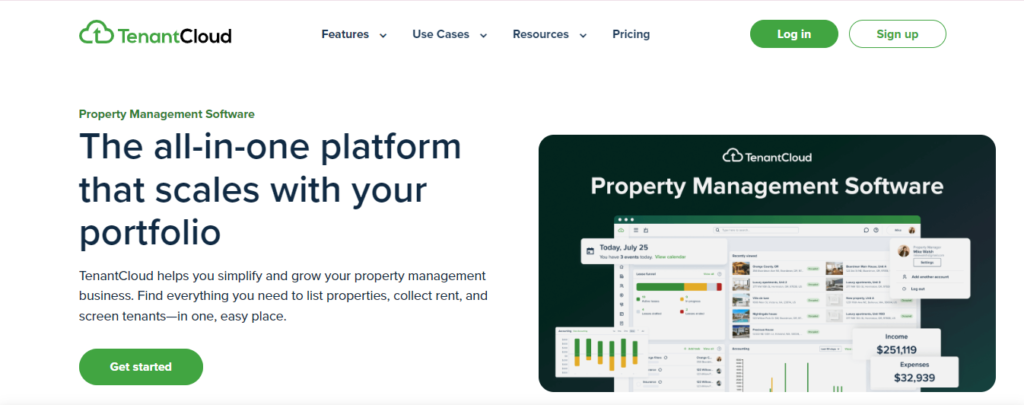
TenantCloud is a modern, cloud-based property management platform that stands out for offering a genuinely useful free tier alongside its paid plans — making it one of the most accessible entry points into professional property management software for new landlords and small operators.
Key Features:
- Free plan available for landlords managing up to 75 units
- Online rent collection with automatic payment reminders
- Tenant screening and online rental applications
- Maintenance request management with messaging
- QuickBooks Online integration for accounting
- Lease templates with e-signature capability
- Listing syndication to Zillow, Apartments.com, and more
- Service provider marketplace for finding local contractors
Best For: New landlords, small independent property managers, and investors just starting to build their rental portfolio who want professional software capabilities without an upfront financial commitment.
Weakness: Free tier has limitations on features and customization; growing portfolios will need to upgrade to paid plans as their needs expand.
6. Yardi Breeze
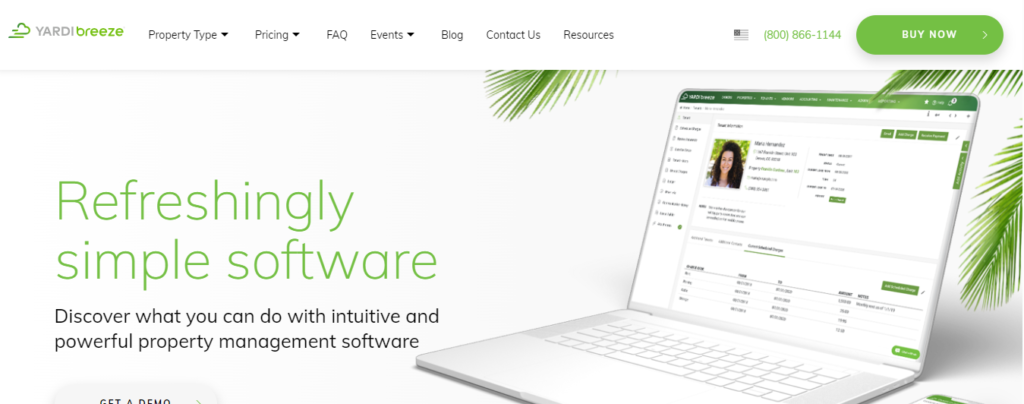
Yardi Breeze is the streamlined, user-friendly version of the enterprise-grade Yardi platform — designed specifically for small to mid-sized property management companies that want the power and reliability of the Yardi ecosystem without the complexity and cost of Yardi Voyager.
Key Features:
- Residential and commercial property management in one platform
- Online rent collection and owner disbursements
- Tenant and owner portals with real-time communication
- Maintenance management with vendor tracking
- Built-in CRM for prospect and lead management
- Automated accounts payable and receivable
- Customizable financial reporting
- Upgrade path to Yardi Voyager as portfolio scales
Best For: Small to mid-sized property management companies managing mixed residential and commercial portfolios who want a clean, modern interface backed by Yardi’s industry-proven infrastructure.
Weakness: Less feature depth than AppFolio or Buildium for purely residential operations; some advanced features require upgrading to the full Yardi platform.
7. DoorLoop
DoorLoop is one of the fastest-growing property management software platforms in 2026, built with a modern design philosophy that prioritizes ease of use without sacrificing functionality. It serves residential, commercial, student housing, and HOA portfolios with a clean interface that new users can navigate confidently from day one.
Key Features:
- Intuitive onboarding with dedicated setup support
- Online rent collection with automated payment workflows
- Tenant screening with one-click background checks
- Lease management with customizable templates and e-signatures
- Maintenance request portal with vendor assignment
- QuickBooks Online two-way sync for accounting
- Owner portal with real-time reporting and document sharing
- Open API with Zapier integration for workflow automation
Best For: Property managers of all sizes who prioritize ease of use, fast onboarding, and a modern interface — particularly managers switching from outdated software or spreadsheets.
Weakness: Accounting features, while solid, are not as deep as dedicated platforms like Buildium for complex multi-entity accounting structures.
8. Hemlane
Hemlane takes a unique approach to property management software by combining a self-service platform with an optional network of local property management agents — making it ideal for remote landlords and investors who want professional support without paying full-service management fees.
Key Features:
- Local agent network for on-the-ground support in any market
- Online applications, screening, and lease signing
- Rent collection with automatic payment processing
- Maintenance coordination with 24/7 emergency support option
- Tenant communication hub with automated messaging
- Financial reporting and expense tracking
- Listing syndication to major rental platforms
- Scalable from full self-management to full agent support
Best For: Remote landlords, out-of-state investors, and independent rental property owners who want the flexibility of self-management with the safety net of local professional support when needed.
Weakness: Not designed for large property management companies or portfolios requiring sophisticated accounting and multi-user workflow management.
9. Rent Manager
Rent Manager is a powerful, feature-rich property management platform that serves residential, commercial, and mixed-use portfolios of all sizes. It is particularly well-regarded among established property management companies for its deep accounting capabilities, extensive customization options, and robust reporting engine.
Key Features:
- Comprehensive double-entry accounting with job costing
- Highly customizable workflows and user permission levels
- Advanced reporting with custom report builder
- Maintenance management with full work order lifecycle tracking
- Integrated VoIP phone system for tenant communication
- Online portals for tenants, owners, and vendors
- API and integration marketplace for third-party connections
- Available as both cloud-hosted and on-premise deployment
Best For: Established property management companies managing diverse portfolio types — residential, commercial, affordable housing — who need deep accounting functionality and extensive customization without platform limitations.
Weakness: Steeper learning curve than most competitors; the depth of features requires significant training investment for new users and staff.
10. ResMan
ResMan is a property management platform purpose-built for multifamily residential and affordable housing operations. It combines leasing, operations, and accounting in a single platform with a particular focus on compliance management — making it the go-to choice for property managers navigating the complexities of affordable housing regulations.
Key Features:
- Full multifamily leasing and operations management
- Affordable housing compliance tools including HUD and tax credit programs
- Integrated marketing and lead management
- Online applications and lease signing
- Resident portal for rent payments and maintenance requests
- Revenue management and budgeting tools
- Customizable performance dashboards
- Robust API for third-party integrations
Best For: Multifamily property management companies and affordable housing operators who need strong compliance management, leasing automation, and operations tools built specifically for apartment communities.
Weakness: Less suitable for single-family or commercial property management; pricing is positioned for professional management companies rather than individual landlords.
How to Choose the Best Software for Property Managers
Start With Portfolio Type and Size
The most important factor in selecting property management software is matching the platform to your specific portfolio. Single-family rentals have very different operational needs from multifamily apartment communities. Commercial properties require different lease structures and accounting treatment. Affordable housing demands compliance tools that most residential platforms do not offer.
Define your portfolio clearly before evaluating any software:
- How many units are you currently managing?
- What property types are in your portfolio — residential, commercial, mixed?
- Are you managing single-family homes, multifamily communities, or both?
- Do you have affordable housing or HUD-regulated properties?
- How quickly do you expect your portfolio to grow?
Evaluate Accounting Depth Carefully
Accounting is often the most underestimated aspect of property management software selection. Basic platforms offer simple income and expense tracking. Advanced platforms offer full double-entry general ledger accounting, job costing, multi-entity reporting, and automated bank reconciliation.
If your company manages money on behalf of owner clients, you need trust accounting capabilities — not just basic bookkeeping. Buildium, Rent Manager, and AppFolio all offer strong trust accounting. Simpler platforms like TenantCloud and Hemlane are better suited for landlords managing their own properties.
Consider Maintenance Management Requirements
Maintenance is one of the highest-volume operational functions in property management. Some platforms offer basic work order tracking. Others offer full maintenance management with vendor portals, photo documentation, inspection workflows, and automated follow-up.
If your portfolio generates high maintenance volume — as single-family scattered-site portfolios typically do — invest time evaluating maintenance management depth before making a final decision.
Assess Tenant and Owner Portal Quality
Tenant portals directly impact rent collection rates and tenant satisfaction. Owner portals directly impact client retention and new business referrals. Both should offer a clean, mobile-friendly experience that requires no training to use.
When evaluating software, always test the tenant and owner portal experience from the user’s perspective — not just the property manager’s administrative view.
Factor In Growth and Scalability
The best property management software for your business today may not be the best software for your business in three years. Choose a platform that has a clear upgrade path as your portfolio grows. AppFolio, Yardi Breeze with its Voyager upgrade path, and Rent Manager all scale effectively from mid-size to enterprise operations.
Key Features Every Property Management Software Should Have
Regardless of portfolio size or type, every property management platform worth considering in 2026 should include:
- Online rent collection with automated reminders and late fee processing
- Tenant screening with credit, criminal, and eviction history checks
- Lease management with digital document storage and e-signature capability
- Maintenance management with work order tracking from submission to completion
- Owner reporting with real-time financial statements and performance dashboards
- Tenant communication tools including messaging, email, and SMS
- Accounting with at minimum income and expense tracking and bank reconciliation
- Mobile access for both property managers and tenants
Platforms that cannot deliver all of these core functions reliably should not be considered regardless of pricing or marketing claims.
Property Management Software Pricing: What to Expect in 2026
Property management software pricing varies significantly across the market and is structured in several different ways.
Per-unit monthly pricing is the most common model. Platforms like Buildium, AppFolio, and DoorLoop charge a monthly fee per unit under management. This model scales naturally with your portfolio but costs more as you grow.
Flat monthly pricing is offered by some platforms including Rentec Direct, which charges a flat fee based on unit count tiers rather than per individual unit. This can be more predictable for budgeting purposes.
Freemium models like TenantCloud offer a base tier at no cost with paid upgrades for advanced features. This works well for new landlords but often has limitations that force an upgrade as operations grow.
Enterprise pricing for large portfolios is typically negotiated directly with vendors. AppFolio, Yardi, Rent Manager, and ResMan all offer custom pricing for portfolios over a certain size.
When evaluating total cost, always factor in transaction fees for rent collection, screening report fees, and any charges for additional users or integrations beyond the base subscription.
Common Mistakes When Choosing Property Management Software
Choosing Based on Price Alone
The cheapest property management software is rarely the best value. A platform that saves you fifty dollars a month but costs you ten hours of manual work or a single missed rent payment more than eliminates any pricing advantage. Evaluate total operational cost — not just subscription fees.
Ignoring Accounting Requirements
Many property managers choose software based on leasing and tenant management features, only to discover later that the accounting capabilities cannot support their reporting needs or owner distribution workflows. Always evaluate accounting depth early in the selection process.
Skipping the Free Trial
Every major property management platform offers a free trial or demo. Never commit to a subscription without running real scenarios from your actual workflow through the system first. Import a sample of your actual data, test the tenant portal, generate an owner report, and process a test maintenance request.Property managers should also ensure their lease documents, inspection reports, and owner statements are backed up using reliable cloud storage solutions to protect critical business data at every stage.
Underestimating Training and Onboarding Time
Switching property management software mid-operation is disruptive. Budget adequate time for data migration, staff training, and a parallel running period where both old and new systems operate simultaneously before full cutover.
Choosing a Platform You Will Outgrow
A platform perfect for ten units will often be inadequate for one hundred. Choose software with a clear growth path that matches your three-to-five-year business projections — not just your current portfolio size.
Best Property Management Software by Use Case in 2026
Best for small residential portfolios: Rentec Direct or TenantCloud
Best for mid-size residential companies: Buildium
Best for large-scale and AI-powered management: AppFolio
Best for single-family scattered-site portfolios: Propertyware
Best for ease of use and fast onboarding: DoorLoop
Best for remote landlords and investors: Hemlane
Best for mixed residential and commercial: Yardi Breeze
Best for deep accounting and customization: Rent Manager
Best for multifamily and affordable housing: ResMan
Best free starting option: TenantCloud
The Future of Property Management Software in 2026 and Beyond
Artificial intelligence is transforming property management software at every level. AI leasing assistants now handle prospect inquiries, schedule showings, and follow up with leads around the clock without human intervention. Predictive maintenance tools analyze equipment data to flag potential failures before they become expensive repairs. Smart rent pricing engines adjust rates dynamically based on local market conditions and vacancy trends.
Automation is eliminating the most time-consuming manual tasks — invoice processing, owner statement generation, lease renewal reminders, and delinquency management — freeing property managers to focus on relationship building, portfolio growth, and strategic decision-making.
Integration ecosystems are expanding rapidly. The best property management platforms in 2026 connect seamlessly with smart home devices, utility management systems, insurance platforms, and real estate investment analytics tools — creating a fully connected property management tech stack.
Final Thoughts
The best software for property managers is the platform that matches your portfolio type, supports your operational workflows, scales with your growth, and delivers a professional experience for both your tenants and your owner clients.
There is no universal answer — a solo landlord managing five single-family homes and a company managing three thousand apartment units have fundamentally different needs. But within every segment of the market, there is a platform purpose-built to serve it exceptionally well.
Start with a clear definition of your portfolio and operational requirements. Shortlist two or three platforms that match your profile. Run each through a free trial using real data from your actual operation. The right software will make your daily workflow feel effortless — and the wrong one will make itself known just as quickly.
In 2026, property managers who invest in the right technology operate leaner, grow faster, and retain both tenants and owner clients at significantly higher rates than those who do not. The software decision is not an operational detail — it is a strategic one.

Fazilat zulfiqar is an SEO specialist at RankWithLinks, focused on improving search rankings through smart link building and optimization.He helps businesses grow organic traffic and build strong online authority.