
I’ve sat across the table from dozens of bootstrapped founders who had a great product, a growing customer base — and absolutely no idea how much runway they had left. One of them called me on a Tuesday afternoon. They were eight weeks from zero. Eight weeks. And they’d been growing 15% month-over-month for the past six months.
How does that happen? It happens when you’re running a business without a proper financial model. Revenue looks great in your bank account. Invoices are going out. Customers are happy. But nobody tracked the payment lag, the payroll spike in March, or the annual software renewals stacking up in Q2. By the time reality shows up, you have no time to respond.
This guide is the financial model playbook I wish I’d had ready to hand those founders. It’s built for 2026 — a year when global venture funding remains well below its 2021 peak, when AI tools have raised expectations for lean operations, and when investors want proof of profitability before writing checks. Revenue-first isn’t just the bootstrapper’s philosophy anymore. It’s the market’s demand.
80% of startups funded entirely through bootstrapping (SBA data)
38% fail due to cash depletion — not bad products
3:1 minimum LTV-to-CAC ratio for healthy unit economics
13wk rolling cash forecast is the #1 survival tool
⚡ Key takeaways
- Every bootstrapped startup needs a live financial model — not a launch-day spreadsheet you never open again.
- Cash runway is your single most important metric. Know it at all times, especially when growth looks strong.
- Bottom-up revenue forecasting from real conversion data beats top-down market-share guessing every time.
- Keep fixed costs below 40% of monthly recurring revenue until that revenue is consistent for 3+ months.
- A 13-week rolling cash flow forecast catches problems 6 weeks before they become emergencies.
- Always model three scenarios: worst, base, and best — then make commitments based on the worst case.
- Unit economics (LTV ÷ CAC ≥ 3) must be healthy before you scale marketing spend.
What Is Startup Booted Financial Modeling?
Startup booted financial modeling is the process of forecasting your startup’s financial future using only internal revenue — no outside investment, no venture capital safety net, no bridge loans.This reduces financial risk and helps founders build a stable, long-term business — one that reflects a thoughtful entrepreneur journey.
The core assumption is simple but demanding: every dollar your business spends must first be earned. Revenue funds operations. Operations generate more revenue. The cycle is self-sustaining or the business does not survive.
This is fundamentally different from the financial models used by venture-backed startups, which typically assume that a future funding round will eventually cover any cash gap. A VC-backed model can tolerate months or even years of heavy losses in pursuit of market share. A booted model has no such luxury. Every expense must be justified by existing or near-certain future revenue.
That constraint sounds limiting. In practice, it is clarifying. Bootstrapped founders who build rigorous financial models make faster, more confident decisions because they always know exactly where they stand. They do not overhire. They do not overspend on marketing channels that have not proven themselves. They do not sign long-term leases before revenue supports them.
The discipline that bootstrapping demands is precisely what makes bootstrapped companies so resilient. Mailchimp, Basecamp, Notion, Zoho, and Calendly all grew without significant outside capital in their early years. Their founders understood their numbers intimately. That understanding was a competitive advantage, not a limitation.
he key distinction from VC-backed modeling: Venture-backed models assume a future funding round will cover cash gaps. Bootstrapped models assume no such safety net exists. That one difference changes how every expense, hire, and growth investment must be evaluated.
Why Bootstrapped Startups Absolutely Need Financial Modeling
Many early-stage founders treat financial modeling as something they will get to eventually — after product-market fit, after the first ten customers, after things stabilize. For bootstrapped founders, that delay is one of the most dangerous decisions they can make.
Here is what happens without a financial model:
You overspend in month three because revenue looked strong in month two, without accounting for the customer payment lag you did not anticipate. You hire a full-time developer in month five because business feels good, then discover that recurring revenue does not actually cover the new salary. You run a marketing campaign in month seven without knowing whether your customer acquisition cost is higher than your average customer’s lifetime value. You run out of cash in month nine, not because the business was bad, but because you never had visibility into what was coming.
A structured booted financial model prevents each of those scenarios. Specifically, it delivers five things that bootstrapped founders cannot afford to operate without:
Financial Visibility. You know exactly where money is coming from, where it is going, and how much cushion you have. No surprises.
Decision Quality. Every hire, every marketing campaign, every tool purchase can be evaluated against your model before you commit. You make decisions based on data rather than optimism.
Sustainable Growth. The model tells you when growth is funded by real revenue versus when you are pulling forward cash you do not yet have. It keeps expansion grounded in reality.
Investor Readiness. When you eventually decide to raise capital — if you ever do — a clean, detailed financial model signals operational maturity to investors. Founders who have run lean businesses and tracked their numbers precisely are far more credible than founders presenting speculative growth charts.
Early Warning System. A well-maintained model flags problems weeks or months before they become crises. A sudden drop in conversion rate, a delayed payment from a major client, an unexpected cost spike — all of these show up in the model before they show up in your bank account.
The Five Core Pillars of Booted Financial Modeling
Every strong booted financial model is built on five interconnected pillars. Weaken any one of them and the entire model becomes unreliable.
Pillar 1 — Revenue Forecasting
Your revenue forecast is the foundation of everything. Build it from the bottom up, not the top down.
Top-down forecasting starts with a large market number and assumes you will capture some percentage of it. (“The global project management software market is $10 billion. If we capture just one percent, that is $100 million in revenue.”) This approach is almost useless for operational planning. It tells you nothing about how revenue will actually materialize month by month.
Bottom-up forecasting starts with your actual sales capacity and customer behavior. How many qualified leads can you generate this month? What percentage convert? What is the average contract value? What is your churn rate? Build from those real numbers upward.
Example: You generate 100 qualified leads per month. Your conversion rate is 15 percent, so you close 15 new customers. Average monthly contract value is $200. That gives you $3,000 in new monthly recurring revenue. Add that to your existing MRR, subtract projected churn, and you have a grounded forecast for next month.
Conservative forecasting is not pessimism. It is self-protection. Consistently build your operational plans around 70 to 80 percent of your best-case revenue projection. If you exceed it, great. If you do not, you are still solvent.
Pillar 2 — Cost Structure Analysis
Understanding exactly what you spend — and why — is the second pillar. Every expense in your business falls into one of two categories.
Fixed costs remain constant regardless of revenue. Rent, full-time salaries, software subscriptions, insurance, and hosting fees are fixed. They hit your account whether you sold ten products this month or a thousand.
Variable costs scale with revenue. Payment processing fees, advertising spend, freelancer costs, shipping, raw materials, and customer success resources are variable. They rise when the business grows and fall when it contracts.
The operational rule for bootstrapped startups: keep fixed costs below 40 percent of monthly recurring revenue. Do not allow fixed expenses to grow until recurring revenue has consistently exceeded them for at least three consecutive months. Locking in high fixed costs based on optimistic projections is one of the most common ways bootstrapped startups destroy themselves.
Every month, review your cost structure for expenses that have grown quietly. SaaS tools, team subscriptions, and agency retainers have a way of accumulating without anyone noticing. A monthly cost audit keeps these under control.
Pillar 3 — Cash Flow Management
Revenue is a story you tell. Cash flow is reality.
A startup can be technically profitable on paper while simultaneously running out of cash — if customers pay net-60, if a large invoice is delayed, if a refund is processed unexpectedly, or if a major expense arrives before the next payment cycle. This disconnect between profit and cash is called a timing gap, and it has killed more bootstrapped startups than bad products or weak demand.
Manage cash flow at the weekly level, not the monthly level. Build a 13-week rolling cash flow forecast and update it every week. This short-term view catches cash gaps before they become emergencies. A problem visible six weeks out can almost always be solved. The same problem discovered on Friday afternoon with no cash in the account cannot.
Maintain a cash reserve of at least three to six months of operating expenses at all times. Many bootstrapped founders set a hard floor — a minimum cash balance below which they will not drop without a specific recovery plan already in place. A 20 to 30 percent contingency buffer above projected expenses is considered standard practice.
Practical tactics to improve cash flow without raising revenue: offer discounts for annual prepayment, tighten payment terms from net-30 to net-15 or net-7, invoice immediately upon delivery rather than at the end of the month, and follow up on overdue invoices within 48 hours rather than waiting.
Pillar 4 — Unit Economics
Unit economics answers one essential question: does the business make money on each individual customer?
Two metrics define unit economics for most startups:
Customer Acquisition Cost (CAC) is the total cost of winning one new customer. Include all marketing spend, sales costs, trial or demo costs, and any overhead that exists because of the sales process. If you spent $10,000 on marketing last month and acquired 50 new customers, your CAC is $200.
Customer Lifetime Value (LTV) is the total revenue or profit a single customer generates over their entire relationship with your business. For a subscription business charging $50 per month with an average customer lifespan of 24 months and a gross margin of 70 percent, the LTV is $50 × 24 × 0.70 = $840.
The LTV-to-CAC ratio tells you whether your business model is fundamentally sound. A ratio of 3:1 or higher means each customer generates at least three times what it cost to acquire them. That is the threshold for a healthy, scalable business. A ratio below 1:1 means you are losing money on every single customer you acquire. Scaling that model does not fix it — it accelerates the losses.
Track CAC and LTV by acquisition channel. Customers who come through organic search often have dramatically different LTV and CAC profiles than customers who come through paid advertising. Channel-specific unit economics help you allocate marketing spend where it actually creates value.
Pillar 5 — Break-Even Analysis
Break-even is the moment your monthly revenue covers all your monthly costs — fixed and variable — with nothing left over. It is the point at which your business stops consuming cash and starts producing it.
For bootstrapped founders, reaching break-even is the single most important early financial milestone. Until you reach it, every month is a countdown. After you reach it, the pressure changes entirely.
The break-even formula:
Break-Even Revenue = Fixed Monthly Costs ÷ Gross Margin Percentage
Example: Your fixed monthly costs are $9,000. Your gross margin is 75 percent. Break-even revenue = $9,000 ÷ 0.75 = $12,000 per month. That is your target. Every decision — hire, tool, campaign — should be evaluated through the lens of whether it brings you closer to or further from that number.
Recalculate your break-even every time your fixed costs change. Adding a new full-time employee, signing an office lease, or committing to a new software contract all raise your break-even threshold and extend the timeline to profitability.
The Three Financial Statements Every Booted Startup Needs
A complete financial model integrates three core documents. Together they give you a full, three-dimensional picture of your business’s financial health.
1. Profit and Loss Statement (P&L)
The P&L shows revenue, costs, and net profit or loss over a defined period — typically monthly. It answers the question: “Is this business making money?” Key benchmarks: gross margin above 60 percent for service businesses, above 70 percent for SaaS. Net margin should improve month over month even if it remains negative in the early stages.
2. Cash Flow Statement
The cash flow statement tracks the actual timing of cash moving in and out of the business. It is the most critical statement for a bootstrapped startup because it captures reality — not accounting abstractions. A business can show profit on its P&L and simultaneously show a negative cash flow if customers owe money but have not yet paid. Always read your cash flow statement before your P&L.
3. Balance Sheet
The balance sheet captures assets, liabilities, and equity at a specific moment in time. Even lean startups need a clean, updated balance sheet. It shows the true net worth of the business and is essential if you ever pursue a bank loan, line of credit, or outside investment. Investors and lenders look at the balance sheet first.
Key Metrics Every Bootstrapped Founder Must Track Monthly
These are survival metrics — not vanity metrics. Track every one of them at minimum on a monthly basis. If cash is tight, track burn rate and cash runway weekly.
Monthly Recurring Revenue (MRR) — The predictable, recurring portion of monthly revenue. The primary growth indicator for subscription businesses. Healthy growth is 10 to 20 percent MRR increase per month in early stages.
Gross Burn Rate — Total cash spent per month, regardless of revenue.
Net Burn Rate — Cash spent minus cash received per month. If you earn $8,000 and spend $12,000, your net burn rate is $4,000.
Cash Runway — How many months you can operate at the current net burn rate before cash runs out. Calculated as: Cash on Hand ÷ Net Monthly Burn Rate. This is the single most important number in your entire model.
Customer Acquisition Cost (CAC) — Total acquisition cost divided by new customers acquired in the same period.
Customer Lifetime Value (LTV) — Average monthly revenue per customer × average customer lifespan in months × gross margin percentage.
LTV-to-CAC Ratio — Target 3:1 or higher. Below 1:1, the business model is fundamentally broken at scale.
Gross Margin — Revenue minus direct costs, expressed as a percentage of revenue. Above 70 percent is the target for SaaS. Above 50 percent for most service businesses.
Monthly Churn Rate — Percentage of customers who cancel in a given month. Even a 3 percent monthly churn means losing over 30 percent of your customer base annually. Monitor this obsessively.
Break-Even Month — The projected calendar month when monthly revenue will first cover all operating costs. Every major decision should be evaluated against this target date.
How to Build Your Booted Financial Model: Step by Step
You do not need an MBA or an expensive financial planning tool. You need a spreadsheet, honest data, and the discipline to update it every month.
Step 1 — Build an Assumptions Tab
Every variable that drives your model lives here: pricing tiers, conversion rates, churn rate, average sales cycle, headcount plan, software costs, estimated taxes, payment collection timing. Separating assumptions from calculations makes the model easy to update and stress-test. When reality diverges from your forecast, you change one number in assumptions — not dozens of formulas scattered across multiple tabs.
Step 2 — Build Your Revenue Forecast
Map every revenue stream separately. A SaaS business might have monthly subscriptions, annual plans, and one-time setup fees. A consulting business might have retainer clients and project-based work. Build each stream from the bottom up using your assumptions. Apply your conversion rate to your lead volume. Apply your churn rate to your existing customer base. Calculate projected MRR 12 to 24 months out.
Step 3 — Map All Expenses in Detail
List every expense. Every single one. Monthly subscriptions that seem small add up quickly. Separate fixed and variable expenses. Include: salaries and contractor costs, software and tools, office or coworking space, marketing and advertising, payment processing fees, legal and accounting, taxes, equipment, insurance, and any anticipated one-time costs. Add a 20 to 30 percent contingency buffer to your total.
Step 4 — Build a 13-Week Cash Flow Forecast
Forecast weekly cash inflows and outflows for the next 13 weeks. Account for invoice payment timing, not invoice issue date. If a client receives an invoice today but typically pays in 30 days, the cash hits your model 30 days from now — not today. Flag any weeks where projected cash falls below your minimum reserve threshold.
Step 5 — Calculate Break-Even
Use your fixed cost total and gross margin percentage to calculate your monthly break-even revenue target. Mark this as a horizontal line in your revenue forecast. Track your progress toward it every month.
Step 6 — Build Three Scenarios
Create a worst-case scenario (revenue 30 percent below forecast, costs 20 percent above), a base case (current assumptions), and a best case (revenue 20 percent above forecast). Make all major commitments — new hires, long-term contracts, major tool purchases — based on whether they are sustainable in the worst-case scenario.
Step 7 — Review and Update Monthly Without Fail
Compare actuals to projections every single month. Where they diverge, investigate. Update your assumptions based on what you have learned. A model that reflects real performance is dramatically more valuable than a model that has not been touched since launch day.
Bootstrapped vs. Venture-Funded: Key Modeling Differences
The distinction matters more than most founders realize when choosing how to build their financial model.
A venture-backed model assumes that future capital will cover cash shortfalls. It tolerates extended periods of high burn rate in exchange for rapid customer acquisition and market share. Revenue growth is the primary goal. Profitability is a later-stage concern. The model is designed to impress investors and demonstrate potential at scale.
A booted model assumes that revenue alone must fund every dollar of every expense. Profitability — or at minimum, cash flow neutrality — is an early goal, not a distant one. Every expense is measured against current and near-term revenue. Hiring, marketing, and product investments are calibrated to what the business can actually sustain. The model is designed to keep the business alive and growing on its own terms.
Applying venture-backed financial thinking to a bootstrapped startup is one of the most common and costly mistakes early founders make. Spending ahead of revenue because you expect rapid growth is only safe if you have a funding round lined up. Without that safety net, it is simply a fast path to running out of cash.
Real-World Examples of Disciplined Booted Financial Modeling
Mailchimp — Founded in 2001, grew entirely without venture capital by obsessively tracking revenue, costs, and margin at every stage. Reinvested profits into product development instead of aggressive paid acquisition. Acquired by Intuit in 2021 for approximately $12 billion. Founders retained full equity throughout.
Basecamp — Built and sustained without outside investment through strict financial discipline, deliberately limiting headcount, and prioritizing profitability over growth velocity. The founders have been vocal critics of the VC model and have built a highly profitable business at a fraction of the scale most investors would demand.
Zoho — One of the largest bootstrapped SaaS companies in the world, with over 80 million users. Built entirely on reinvested revenue over more than 25 years. The company has never taken outside funding and remains privately owned with full founder control.
Each of these companies succeeded not because they had more capital — they had less — but because they had better financial visibility and greater operational discipline than their funded competitors.
Common Mistakes That Kill Bootstrapped Financial Models
Overly Optimistic Revenue Projections. Assuming your best month will become the baseline for every future month, or projecting growth curves not grounded in actual marketing capacity or customer acquisition data, causes founders to overspend consistently. Model at 70 to 80 percent of your realistic best case.
Underestimating Operating Costs. First-time founders almost universally underestimate what it actually costs to run a business. Legal fees, accounting, software tools, customer support infrastructure, and team management overhead are all higher than expected. Build in a 25 percent cost buffer from day one.
Ignoring Cash Flow Timing. Recognizing revenue when invoices are issued rather than when cash is received is a bookkeeping distinction with life-or-death consequences for a bootstrapped startup. Always model cash flow on a received basis, not an accrual basis.
Hiring Too Early. Converting temporary revenue into permanent fixed payroll commitments is the single most common way bootstrapped startups create financial crises. Only hire full-time employees when recurring revenue has consistently exceeded the fully-loaded salary cost for three to six months.
Treating the Model as a One-Time Document. A financial model built at launch and never updated is worse than useless — it creates false confidence. The model must be updated monthly, minimum. The value comes from the ongoing comparison between projection and reality.
Ignoring Scenario Planning. Founders who only model their expected outcome are unprepared for any deviation from that plan. Build your worst-case scenario first. Make all major financial commitments based on whether the business survives the worst case — not thrives in the best case.
Not Tracking Churn. Many early-stage founders focus entirely on new customer acquisition and ignore churn. A 5 percent monthly churn rate means losing more than half your customers every year. No acquisition strategy can outrun a churn problem at that rate.
Best Tools for Bootstrapped Financial Modeling in 2026
Google Sheets or Microsoft Excel — The right starting point for virtually every bootstrapped founder. Free, flexible, and more than sufficient for the first 18 to 24 months. The discipline of building and maintaining your own model in a spreadsheet creates financial fluency that no automated tool can replicate.

QuickBooks or Xero — Essential once you have regular transactions flowing through the business. Automated bookkeeping, bank reconciliation, and P&L reporting. Xero is slightly better for service businesses; QuickBooks is more popular among US-based product companies.

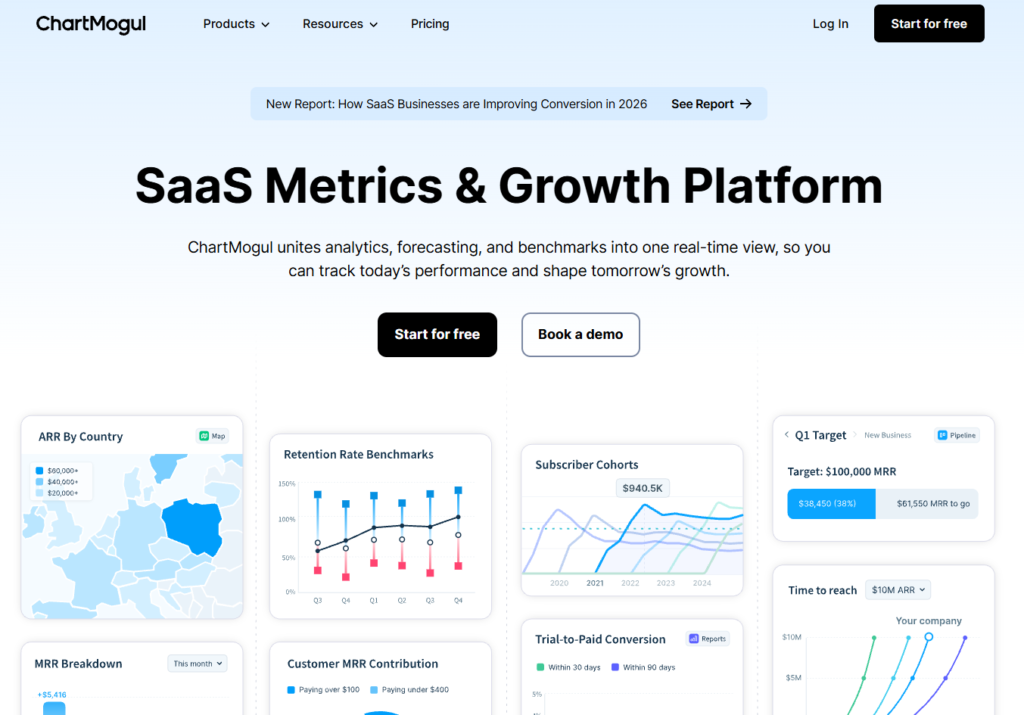
ChartMogul or Baremetrics — SaaS-specific metrics dashboards that automatically pull and calculate MRR, LTV, churn, and cohort retention from your payment processor. Worth the investment once you pass $5,000 in monthly recurring revenue and need automated, real-time metric tracking.
Fathom or Jirav — Advanced forecasting and scenario planning platforms built for growing businesses that need sophisticated reporting for board members, potential investors, or multi-entity structures.

Runway or Mosaic — Modern financial planning and analysis platforms increasingly popular with bootstrapped founders who want more sophistication than spreadsheets provide but do not yet need enterprise-level tools.

The principle that governs tool selection: the best financial modeling tool is the one you will actually use consistently. A simple Google Sheet updated weekly beats a sophisticated platform nobody opens.
When Booted Financial Modeling Works Best
Booted financial modeling is most powerful for businesses with the following characteristics:
SaaS and subscription businesses with predictable, recurring revenue and measurable churn — the model’s inputs are stable and forecastable.
Digital service businesses including agencies, consulting firms, freelance platforms, and managed service providers — high margin, low fixed costs, and relatively short sales cycles make these ideal candidates.
Content and media businesses monetized through subscriptions or advertising — revenue is trackable, costs are largely fixed, and margin is typically strong once the initial content investment is made.
E-commerce businesses with strong unit economics, manageable logistics complexity, and high repeat purchase rates.
B2B software companies with clear sales cycles, defined customer segments, and measurable conversion rates at each stage of the funnel.
Booted financial modeling is less suitable for businesses that require heavy capital investment before any revenue is possible — deep biotech research, hardware manufacturing at scale, or large infrastructure projects. These may require external capital regardless of the founder’s preference. But even in those cases, rigorous financial modeling remains essential. The structure simply differs.
Frequently Asked Questions
What exactly is startup booted financial modeling?
It is the process of building financial projections and managing business finances using only internal revenue — without relying on external investment. The core principle is that revenue must fund all operations, and every major financial decision must be validated against that constraint.
How is it different from a standard startup financial model?
A standard startup model often assumes a future funding round will cover cash shortfalls. A booted model assumes no such safety net exists. Revenue must fund everything. That single difference changes how every cost, hire, and growth investment is evaluated.
How often should I update my financial model?
Monthly at minimum. If cash is tight, if revenue is inconsistent, or if you are within three months of running out of runway, update your cash flow forecast weekly.
What is the single most important metric in booted financial modeling?
Cash runway. It tells you exactly how many months your business can survive at the current burn rate. Everything else matters, but cash runway is what determines whether the business is alive long enough to execute on everything else.
Can a booted model actually help me raise money later?
Yes. Investors consistently say that founders who can demonstrate disciplined financial management, detailed metric tracking, and a thorough understanding of their unit economics are more fundable — not less — than founders who relied on growth projections without operational proof points.
What is a healthy LTV-to-CAC ratio?
3:1 or higher for a healthy, scalable business. Below 2:1 warrants serious attention. Below 1:1 means the core business model is losing money on every customer acquired.
What tools should I start with?
Google Sheets for modeling. QuickBooks or Xero for bookkeeping. Add ChartMogul or Baremetrics once you pass $5,000 MRR. Do not over-invest in tools before you have consistent revenue flowing through them.
Conclusion
Startup booted financial modeling is not a spreadsheet task. It is a discipline — a way of running a business that prioritizes financial clarity over financial hope.
In 2026, that discipline matters more than ever. The era of growth-at-all-costs is over. Investors who once celebrated hypergrowth regardless of burn rate now demand a credible path to profitability before they open their wallets. The market rewards founders who understand their numbers intimately and make decisions accordingly.
The bootstrapped founders who build businesses that last are not necessarily the ones with the best product or the largest addressable market. They are the ones who know exactly where every dollar comes from, where every dollar goes, and how many months they have to make the next right decision.
Build the model. Update it every month. Use it to drive every major decision. Let revenue lead.

Abdullah Zulfiqar is Co-founder and Client Success Manager at RankWithLinks, an SEO agency helping businesses grow online. He specializes in client relations and SEO strategy, driving measurable results and maximizing ROI through effective link-building and digital marketing solutions.