

Introduction: Buying a Home Has Never Been More Complex — Or Better Supported
Buying a home is one of the most significant financial decisions most people will ever make. It involves more variables, more stakeholders, more paperwork, and more potential for costly mistakes than almost any other purchase in a lifetime.
A decade ago, homebuyers were largely dependent on real estate agents for access to listings, market data, and neighborhood intelligence. The agent held the information advantage and buyers largely followed their lead.
That dynamic has fundamentally shifted.
Today’s homebuyer has access to a remarkable ecosystem of digital tools that put market intelligence, mortgage calculations, neighborhood data, property history, and comparative analysis directly in their hands — before they ever speak to an agent, during their search, and all the way through closing.
The challenge in 2026 is not finding tools. It is knowing which ones actually deliver value and which ones are marketing-heavy platforms that look impressive but tell you less than you need to know.
This article covers the best real estate tools available to homebuyers right now — organized by what they do best, with honest assessments of where each one excels and where its limitations lie.
Property Search and Listing Platforms
These are the tools most buyers start with — the platforms that aggregate property listings and give you a searchable database of what is available in your target market.
Zillow
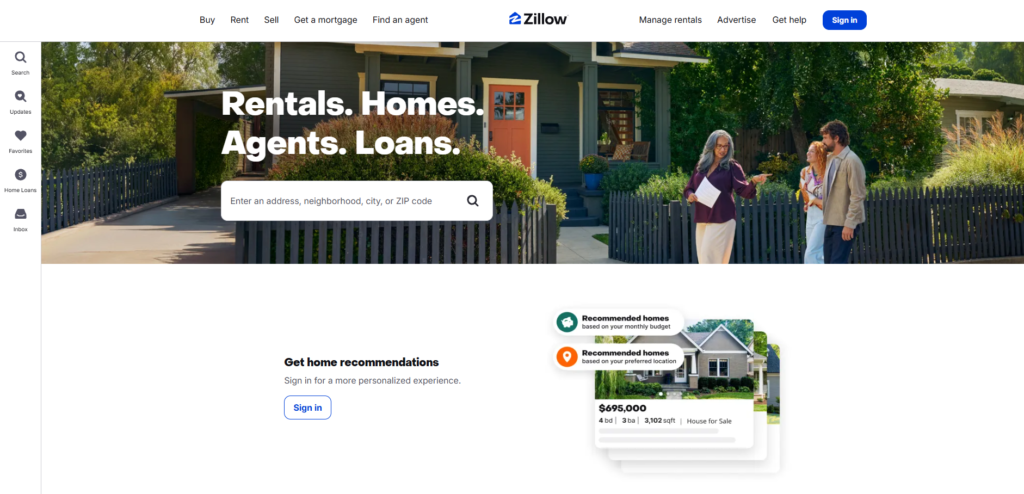
Zillow remains the most visited real estate platform in the United States and for good reason. Its listing database is comprehensive, its search filters are sophisticated, and its mobile app is genuinely well-designed for buyers who want to browse on the go.
The Zestimate — Zillow’s automated home valuation tool — is both its most famous feature and its most misunderstood one. Zestimates are useful as rough orientation tools that give you a ballpark sense of whether a listing is priced reasonably relative to the algorithm’s estimate. They are not appraisals, not offers, and not reliable enough to use as a serious negotiating anchor without cross-referencing against comparable sales data.
Zillow’s strongest features for buyers in 2026 include its 3D home tours, its saved search and alert system that notifies you when new listings match your criteria, and its integration of school ratings, neighborhood data, and commute time calculations directly into listing pages. The ability to see days on market, price history, and previous sale prices on individual listings gives buyers useful context without needing to ask an agent for the information.
Limitation worth knowing — Zillow’s listing data is not always real-time accurate. Some listings appear as available when they are already under contract or sold, which creates frustrating experiences for buyers who fall in love with a property before discovering it is no longer available.
Realtor.com

Realtor.com pulls listing data directly from Multiple Listing Service databases, which means its listing accuracy and update frequency is generally stronger than platforms that aggregate from secondary sources. For buyers who have had the experience of finding a perfect property on Zillow only to discover it sold two weeks ago, Realtor.com’s more reliable data freshness is a meaningful practical advantage.
The platform’s neighborhood and school information is detailed, and its mortgage calculator integration allows buyers to see estimated monthly payments directly on listing pages without switching tools. The recent integration of AI-powered search features allows more natural language queries — telling the platform what you are looking for in conversational terms rather than filling out rigid filter boxes.
Realtor.com is particularly strong for buyers in competitive markets where listing accuracy and speed of information matter — arriving at a showing having already verified the listing is genuinely active saves wasted effort in fast-moving markets.
Redfin

Redfin distinguishes itself from Zillow and Realtor.com by being both a listing platform and a real estate brokerage — meaning it has agents who represent buyers and sellers directly, not just a platform that connects them with third-party agents.
For buyers the most distinctive feature is Redfin’s real-time MLS data updates — listings appear on the platform within minutes of going live rather than with the hours-long delay that affects some competitors. In competitive markets where new listings receive multiple offers within the first day, this speed advantage is genuinely meaningful.
Redfin’s map-based search interface is among the best in the industry, allowing buyers to visually explore neighborhoods and identify available properties in specific micro-areas rather than searching by ZIP code alone. The platform also publishes its own market reports and data analysis that give buyers useful intelligence about market conditions in their target areas.
For buyers who choose to work with a Redfin agent, the brokerage model offers potential commission rebates that can represent meaningful savings — though the experience of working with a Redfin agent versus an independent buyer’s agent varies by market and individual agent quality.
Mortgage and Affordability Tools
Understanding what you can genuinely afford — not just what a lender will approve you for, which is a very different question — is one of the most important aspects of a successful home purchase. These tools help buyers make that calculation honestly.
Bankrate Mortgage Calculator
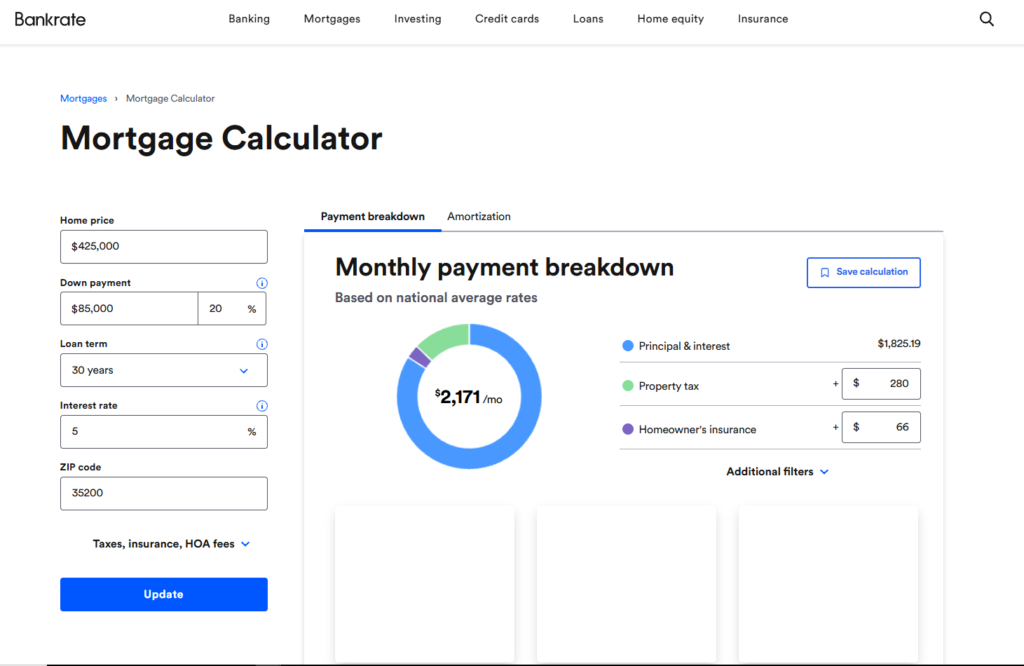
Bankrate’s mortgage calculator is one of the most comprehensive free tools available for understanding the true cost of a home purchase. Beyond the basic principal and interest calculation, the tool incorporates property taxes, homeowner’s insurance, and private mortgage insurance — giving buyers a realistic monthly cost estimate rather than the artificially low number that principal-and-interest-only calculators produce.
The amortization schedule feature is particularly valuable for first-time buyers who want to understand how much of their early payments go toward interest versus principal — the reality of which often surprises buyers who have never seen a mortgage amortization table before.
Bankrate also publishes daily mortgage rate surveys that give buyers a reliable benchmark for evaluating the rates their lenders are quoting — essential context for knowing whether the rate you are being offered is competitive or whether it is worth shopping further.
NerdWallet Home Affordability Calculator
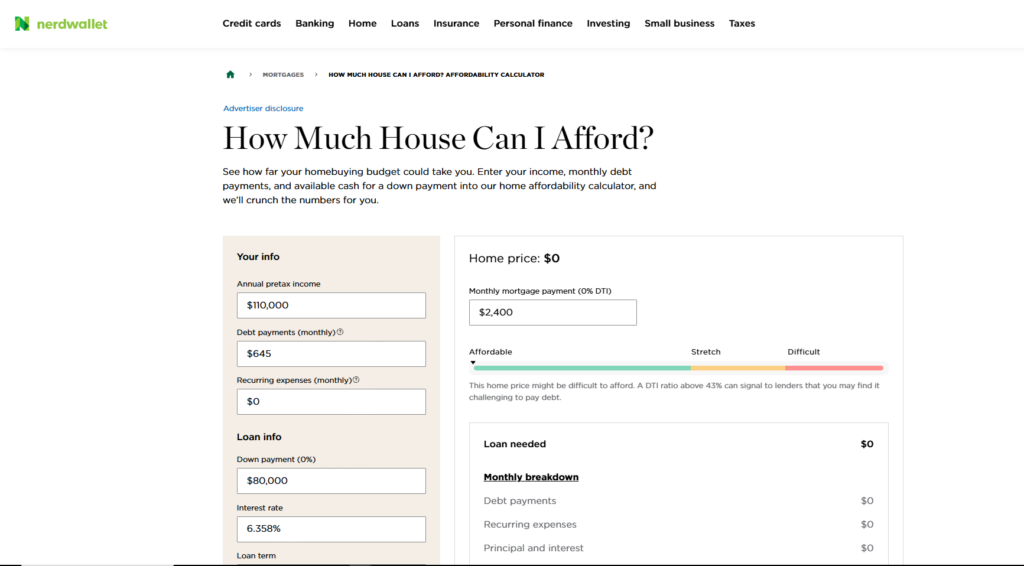
NerdWallet’s affordability calculator takes a more holistic approach than most — factoring in your monthly debt obligations, down payment, estimated taxes, and insurance to produce a genuinely conservative estimate of what you can afford rather than the maximum a lender might approve.
This distinction matters enormously. A lender’s maximum approval reflects what you can technically borrow based on debt-to-income ratios. NerdWallet’s affordability tool helps you understand what monthly payment leaves you with enough financial breathing room to handle the unexpected costs that homeownership inevitably produces — maintenance, repairs, appliances, and the dozen other things that come up in the first year of owning a home.
The tool also helps buyers understand how different down payment amounts affect monthly payments and whether paying points to buy down the interest rate makes financial sense for their specific situation.
Mortgage Pre-Approval Platforms
Getting pre-approved before seriously searching is not optional in most 2026 markets — sellers in competitive areas will not consider offers from buyers who have not demonstrated financing ability. Several platforms have made the pre-approval process significantly faster and less painful than the traditional paper-heavy bank process.
Better Mortgage offers fully online mortgage applications with pre-approval decisions in as little as three minutes, no origination fees, and transparent rate comparisons that make shopping easier. Rocket Mortgage provides a similarly streamlined digital experience with strong customer service and a wide range of loan products. LoanDepot and loanDepot’s mello platform have invested heavily in digital mortgage processing that reduces the documentation burden on buyers.
For buyers who prefer working with a traditional bank or credit union, most major lenders now offer comparable digital pre-approval processes — but the comparison value of getting pre-approval quotes from at least two or three lenders before committing to one cannot be overstated. Even a quarter-point difference in interest rate translates to significant money over the life of a thirty-year mortgage.
Neighborhood Research Tools
Knowing a property is not enough. Knowing the neighborhood it sits in — the schools, the crime picture, the commute, the walkability, the flood risk, the long-term trajectory — is equally important for making a confident purchase decision.
Walk Score

Walk Score calculates a walkability rating for any address in the United States, showing how easily residents can access everyday destinations — grocery stores, restaurants, parks, schools, and transit — on foot or by bike. For buyers who value walkability as a quality of life factor, Walk Score provides a quick, reliable comparison tool that works consistently across different neighborhoods and cities.
The platform has expanded beyond pure walkability to include transit scores and bike scores — giving buyers a complete picture of car-free mobility options for a given address. For buyers moving from urban to suburban environments or vice versa, these scores provide useful orientation about how daily life logistics will change.
GreatSchools

For buyers with school-age children — or buyers who understand that school district quality significantly affects property values and resale potential — GreatSchools provides detailed ratings and review data for public and private schools across the country.
The platform’s ratings incorporate both academic test score data and equity metrics that measure how well a school serves students across income and demographic groups. The parent review component adds qualitative texture to the quantitative ratings — giving buyers a sense of school culture and community beyond what test scores alone reveal.
It is worth understanding that school district boundaries can affect the same neighborhood differently depending on exactly where a property sits — a two-block difference can mean different school assignments in some cities. Verifying exact school assignments for a specific address through the local district website is always worth doing rather than relying solely on neighborhood-level generalizations.
City-Data.com
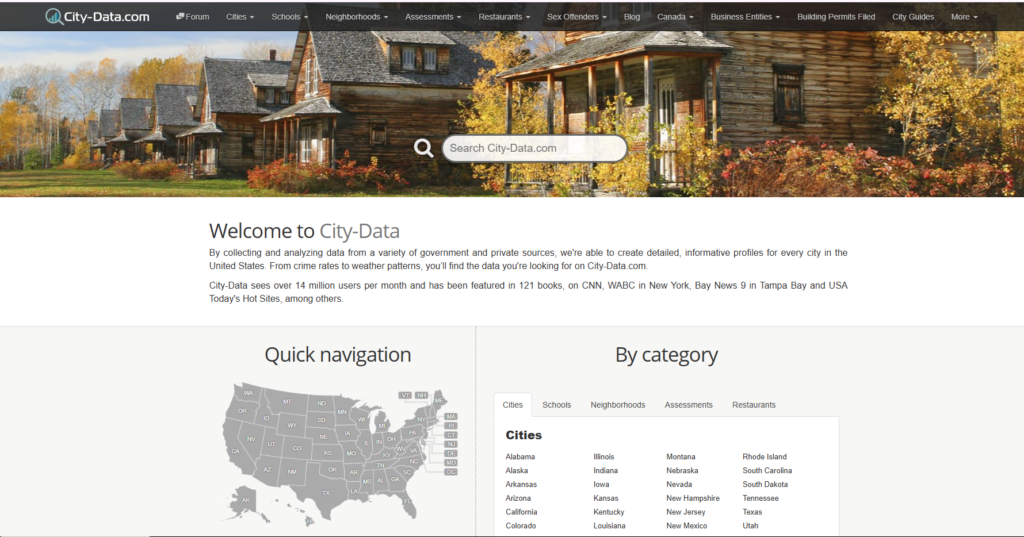
City-Data.com is an underutilized research treasure for serious homebuyers. The platform aggregates census data, crime statistics, employment data, demographic trends, and economic indicators at the city and neighborhood level into one searchable interface.
For buyers evaluating markets they are less familiar with — relocating buyers, investors evaluating multiple markets — City-Data provides the kind of objective quantitative context that is difficult to assemble from other sources. Historical population trends, income distribution data, employment sector composition, and housing market statistics all paint a picture of a neighborhood’s trajectory that complements the current-state view that listing platforms provide.
FEMA Flood Map Service Center
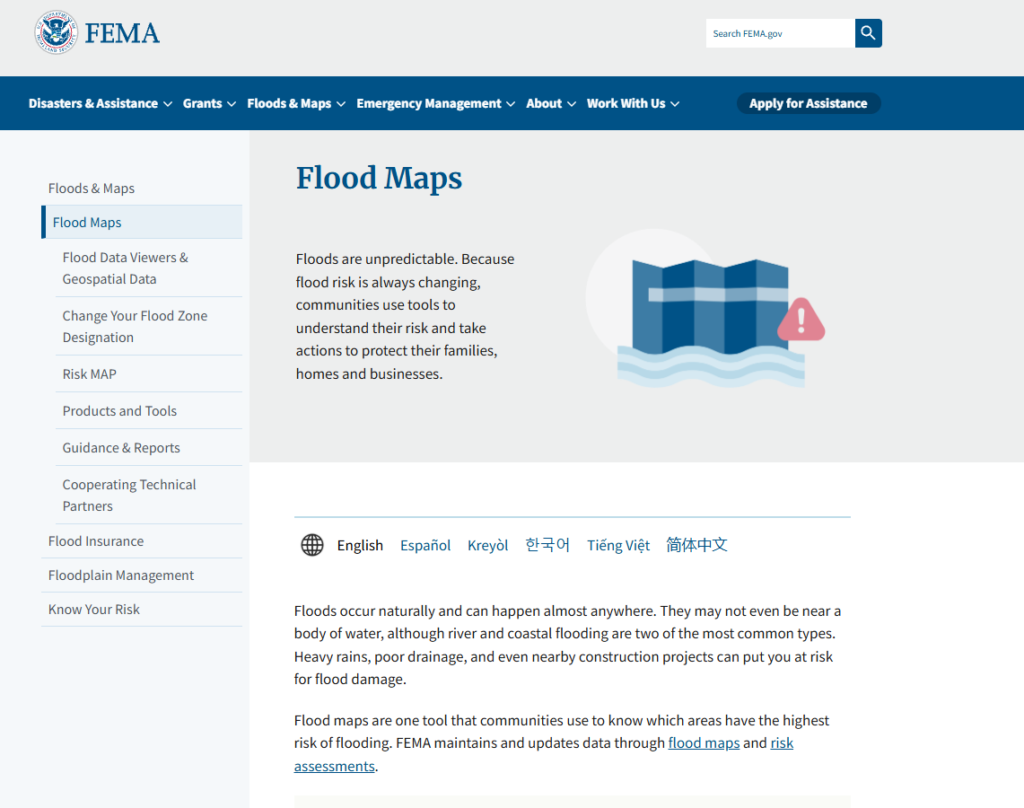
Flood risk is one of the most consequential and most frequently overlooked factors in home purchasing decisions. FEMA’s Flood Map Service Center allows buyers to check any address against federal flood zone maps — determining whether a property sits in a high-risk flood zone that requires federally mandated flood insurance.
In many coastal, riverside, and low-lying areas, flood insurance premiums have increased dramatically in recent years as actuarial pricing has been updated to more accurately reflect actual risk. A property that looks affordable based on listing price and mortgage payment can become significantly less affordable once mandatory flood insurance is factored in.
Checking FEMA flood maps for any property you are seriously considering is a simple step that takes five minutes and can save you from a very expensive surprise after closing.
Market Intelligence and Analytics Tools
Understanding market conditions — whether you are in a buyer’s or seller’s market, where prices are trending, and how quickly homes are selling — gives buyers the negotiating context to make strong offers without overpaying.
Redfin Data Center
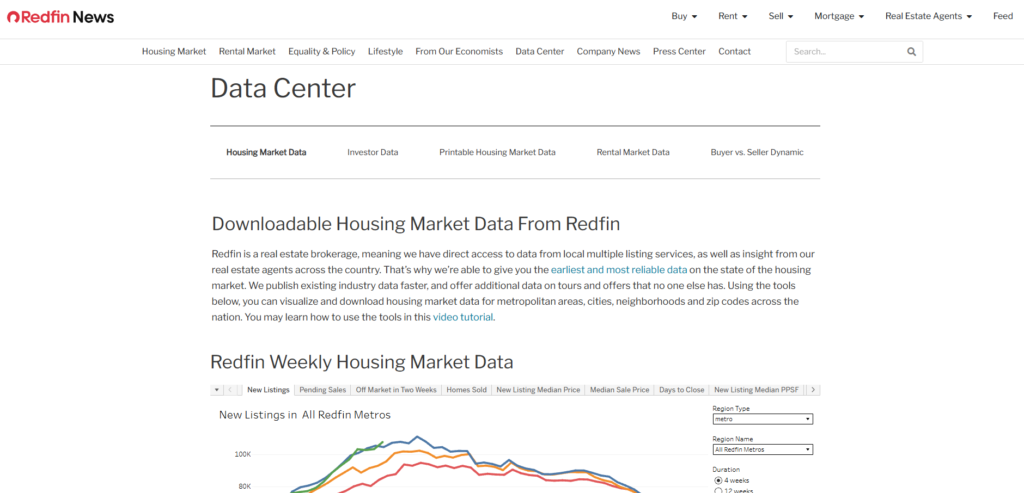
Redfin’s publicly accessible data center publishes weekly and monthly market reports covering median sale prices, days on market, sale-to-list price ratios, and inventory levels at the city and neighborhood level. This data is among the most current and granular freely available market intelligence — updated more frequently than most government statistical releases.
For buyers trying to understand whether to negotiate or whether the market demands an over-list offer, Redfin’s sale-to-list ratio data is particularly useful. A market where homes are consistently selling at 103% of list price tells a very different negotiating story than one where homes are selling at 97% of list — and this data gives buyers an objective basis for calibrating their offer strategy.
Zillow Research
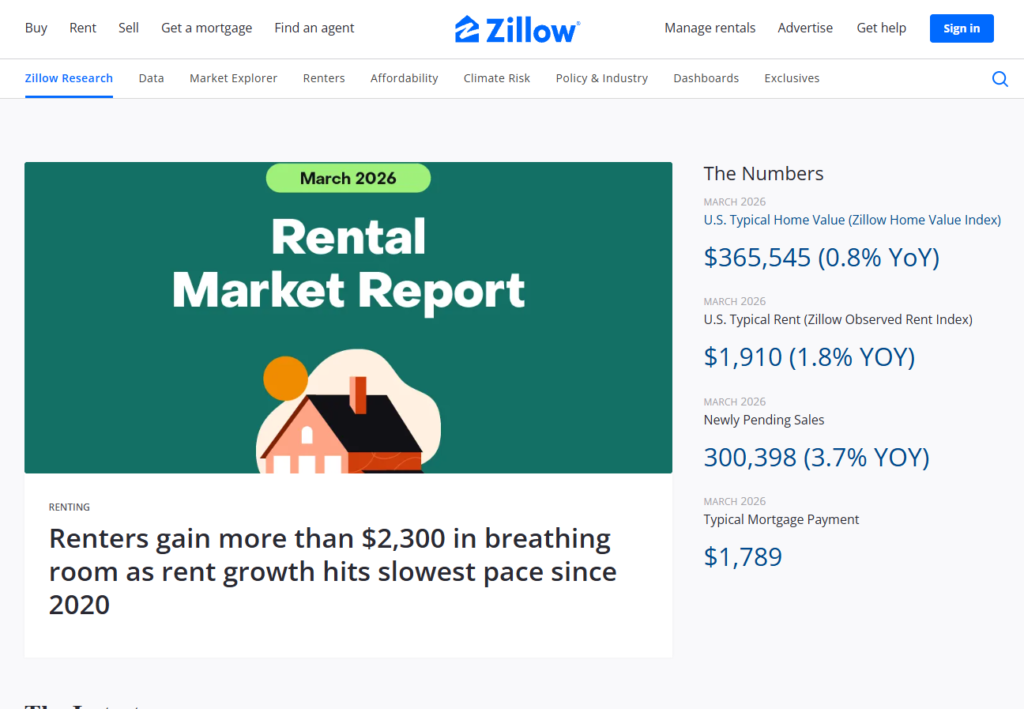
Zillow’s research division publishes detailed housing market reports covering national, regional, and local market trends with historical data going back years. The Zillow Home Value Index and Zillow Observed Rent Index are widely cited data series that give buyers context for understanding how current prices compare to historical norms.
For buyers trying to assess whether they are buying near a market peak or in a market with further upside, historical price trend data provides essential context — though all market forecasting should be approached with appropriate humility given how consistently real estate market predictions miss their targets.
Altos Research
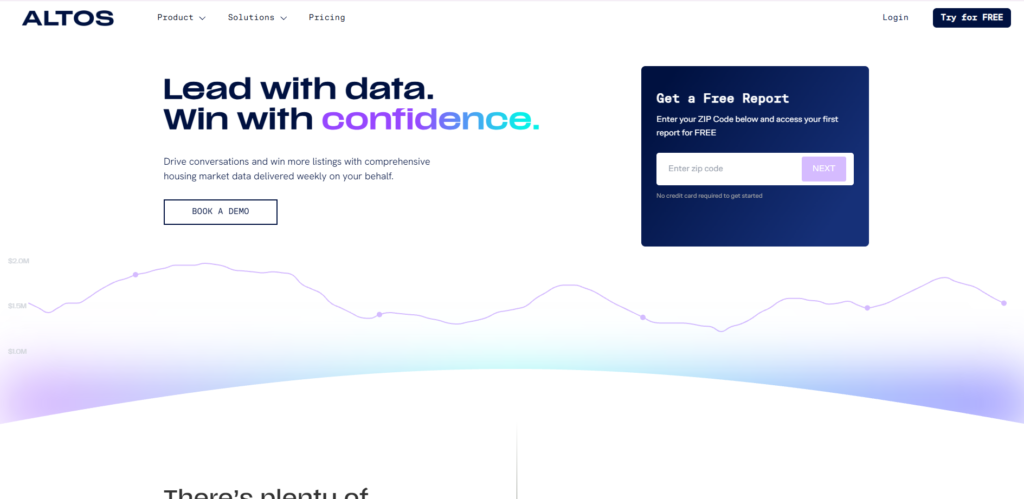
Altos Research provides weekly real estate market data that is more granular and more current than most alternatives — particularly valuable in fast-moving markets where month-old data already feels stale. The platform tracks active inventory, median list prices, days on market, and price reduction rates on a weekly basis across hundreds of markets.
For serious buyers who want to understand whether market conditions are shifting — inventory building or declining, prices accelerating or softening — Altos Research provides the kind of high-frequency data that allows buyers to time their search and negotiate with current rather than lagging market intelligence.
Home Inspection and Due Diligence Tools
The due diligence phase — after an offer is accepted but before closing — is where buyers discover what they are actually buying beneath the surface presentation. These tools support that process.
HomeAdvisor and Angi
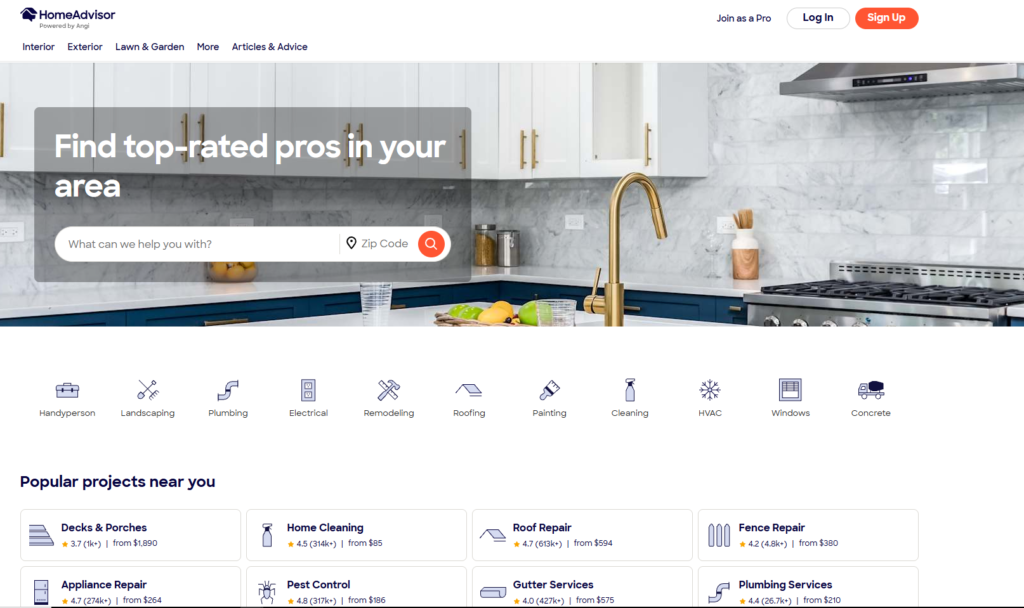
Finding a qualified, trustworthy home inspector is one of the most important decisions in the home buying process. HomeAdvisor and Angi (which merged) provide searchable databases of licensed contractors and inspectors with verified reviews, licensing information, and background check status.
For buyers in unfamiliar markets who do not have personal referral networks to draw on, these platforms provide a reasonable starting point — though reading the full text of reviews rather than just aggregate star ratings, and verifying inspector licensing through your state’s licensing board, are both worth doing before committing to an inspector.
Sewer Scout and Porch

Sewer line issues — one of the most expensive surprises new homeowners encounter — are not covered by standard home inspections unless specifically requested. Sewer Scout and similar specialized inspection services provide dedicated sewer scope inspections that examine the condition of the line between the house and the municipal connection.
For any home with mature trees near sewer lines, older clay pipe sewer systems, or a history of slow drains reported during the inspection, the relatively modest cost of a sewer scope inspection is excellent insurance against a potentially catastrophic post-closing discovery.
PropStream
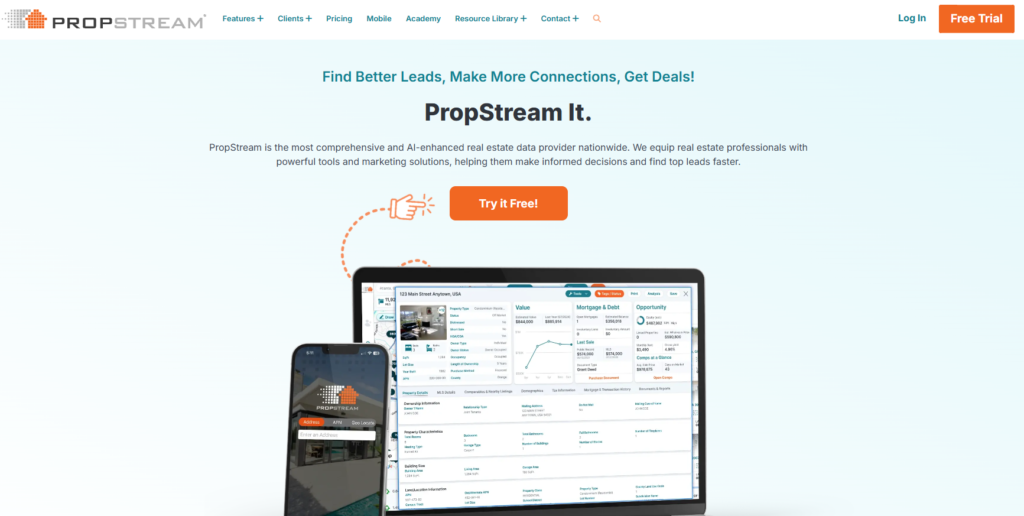
PropStream is a comprehensive property intelligence platform that gives buyers access to detailed property history including ownership records, transaction history, tax assessments, liens, distressed status indicators, and MLS history. For buyers who want to understand the complete picture of a property’s history before making an offer, PropStream provides data depth that standard listing platforms do not offer.
The platform is particularly valuable for identifying properties with complicated ownership histories, undisclosed liens, or patterns of price reductions that suggest underlying issues the listing presentation does not reveal.
AI-Powered Tools Changing the Homebuying Experience
Artificial intelligence has begun meaningfully improving several aspects of the homebuying process in ways that go beyond basic search filtering.
Opendoor and iBuyer Platforms
For buyers who also have a home to sell, iBuyer platforms like Opendoor have simplified what was previously one of the most logistically complicated aspects of homebuying — synchronizing the sale of your existing home with the purchase of your new one. While iBuyer offers typically come in below maximum market value, the certainty, speed, and timing flexibility they provide has genuine value that purely financial comparisons sometimes understate.
ChatGPT and AI Research Assistants
General-purpose AI assistants have become genuinely useful research companions for homebuyers navigating unfamiliar processes. Asking an AI assistant to explain the difference between pre-qualification and pre-approval, to clarify what title insurance covers, to explain what happens during escrow, or to help draft negotiation language for a repair request are all legitimate uses that help buyers navigate processes they may be experiencing for the first time.
AI assistants are not replacements for professional advice from agents, attorneys, and lenders — but they are excellent tools for building the background knowledge that allows buyers to have more productive conversations with those professionals and to recognize when advice they are receiving deserves a follow-up question.
Tools for First-Time Homebuyers Specifically
First-time buyers face a steeper learning curve than repeat buyers and benefit from tools designed with that reality in mind.
HUD-Approved Housing Counseling
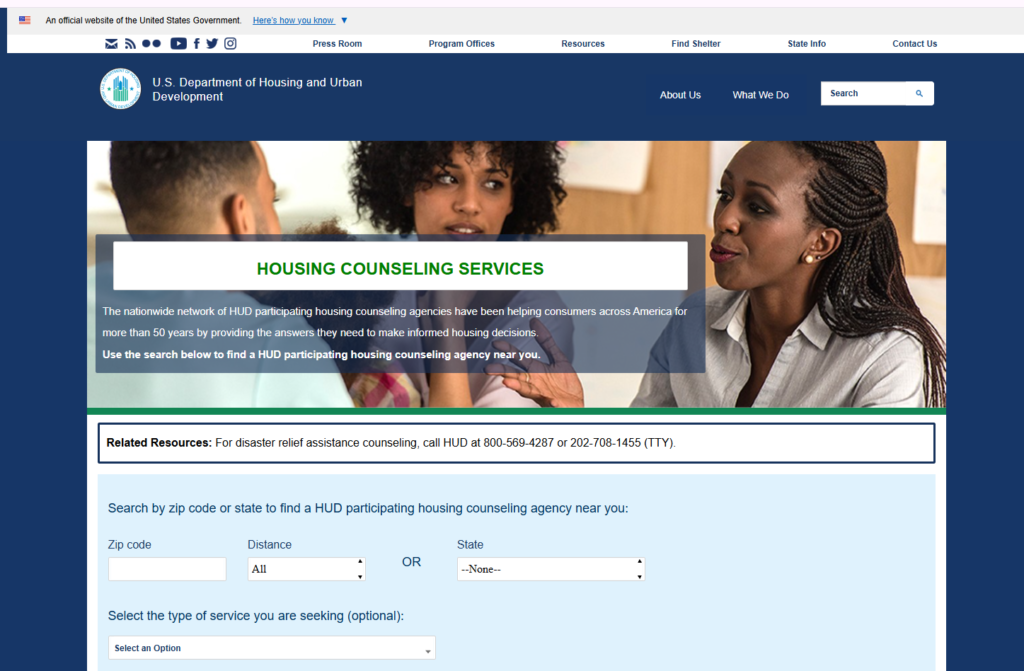
The U.S. Department of Housing and Urban Development maintains a database of approved housing counseling agencies that provide free or low-cost guidance to first-time buyers navigating the purchase process. These agencies help buyers understand their financing options, review their credit situation, identify down payment assistance programs they may qualify for, and prepare for the responsibilities of homeownership.
For buyers who feel overwhelmed by the complexity of their first purchase — which is most first-time buyers — HUD-approved counselors provide objective guidance without the sales motivation that can affect advice from lenders and agents.
Down Payment Resource
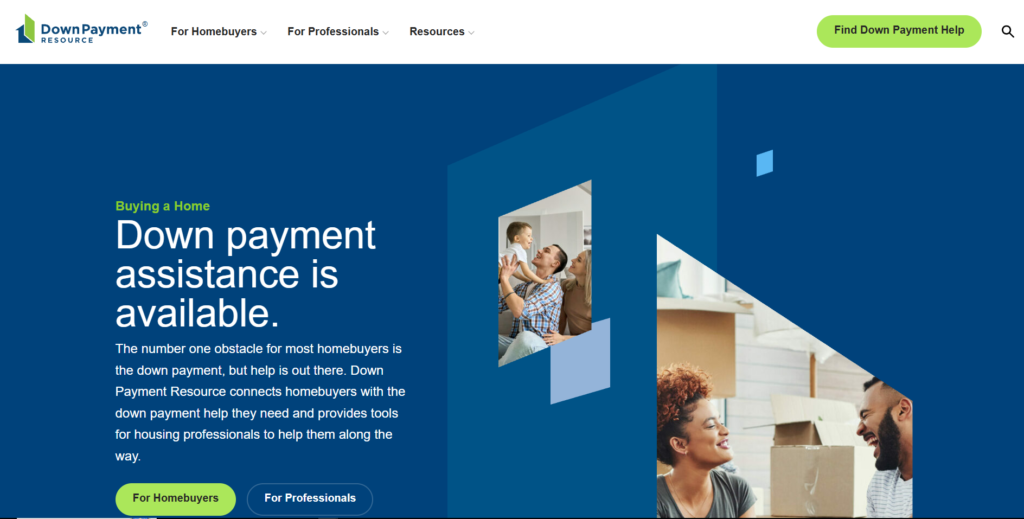
Down Payment Resource is a platform that aggregates information about down payment assistance programs available across all fifty states — including programs from state housing finance agencies, local governments, nonprofits, and employers. Many first-time buyers are unaware of assistance programs they qualify for simply because the information is fragmented and difficult to find.
Down Payment Resource consolidates this information in searchable form — helping buyers understand what assistance is available in their specific market before assuming that the full down payment must come entirely from personal savings.
Freddie Mac’s CreditSmart

For buyers whose credit profile needs work before they will qualify for the best mortgage rates, Freddie Mac’s free CreditSmart educational program provides structured guidance on understanding credit scores, improving credit history, managing debt, and preparing financially for homeownership. The program is self-paced, free, and significantly more specific to mortgage qualification than generic personal finance resources.
Building Your Complete Tool Stack
No single tool does everything a homebuyer needs. The most effective approach combines multiple tools that each do one thing well into a coherent research and decision-making workflow.
A practical starting stack for most buyers looks something like this. Use Redfin or Realtor.com for listing search given their data accuracy advantages. Use Zillow Research and Redfin Data Center for market trend intelligence in your target area. Use Bankrate’s mortgage calculator for payment modeling and NerdWallet’s affordability calculator for honest budget setting. Use GreatSchools and Walk Score for neighborhood quality assessment. Use FEMA’s flood map tool for risk screening on any property you consider seriously. Use Down Payment Resource to identify assistance programs you may qualify for. Use PropStream or a similar property history tool for due diligence on properties you are actively pursuing.
Layer in AI research assistance for understanding processes and terminology throughout the journey, and you arrive at a comprehensive research infrastructure that would have been impossible to assemble outside professional real estate circles just a decade ago.
What Tools Cannot Replace
The proliferation of powerful homebuying tools has not eliminated the value of working with experienced local professionals — it has changed what those professionals need to provide to add genuine value.
A skilled buyer’s agent who knows your target market deeply still brings something no tool fully replicates — judgment about which neighborhoods are genuinely improving versus which ones are in structural decline, knowledge of which listing agents are known for accurate disclosures versus problematic ones, and negotiating experience that is genuinely difficult to acquire from a first purchase.
Real estate attorneys in states where they are customary provide legal review that protects buyers in ways that digital tools cannot. Lenders who take time to genuinely explain your options rather than simply processing your application add value that rate comparison tools alone cannot match.
The right mental model for homebuying tools in 2026 is this — they make you a significantly better-informed buyer who can hold productive conversations with professionals, recognize when advice deserves scrutiny, and arrive at every stage of the process with the context needed to make confident decisions. They do not replace the professionals. They make the relationship with those professionals dramatically more productive.
Conclusion
The best real estate tools for homebuyers in 2026 share a common quality — they put information and intelligence in buyers’ hands that previously required professional intermediaries to access. This democratization of market data, neighborhood intelligence, mortgage modeling, and property history has genuinely shifted power toward buyers who take the time to use these tools effectively.
The platforms and tools covered in this article represent the strongest options available across every phase of the homebuying journey — from initial market research and affordability modeling through property search, neighborhood evaluation, due diligence, and mortgage comparison.
Used together thoughtfully, they give buyers the foundation to make one of the most significant decisions of their lives with genuine confidence rather than the anxiety that comes from feeling dependent on information they cannot independently verify.
The best home purchase is an informed one. In 2026, the tools to make it informed are better than they have ever been.

Abdullah Zulfiqar is Co-founder and Client Success Manager at RankWithLinks, an SEO agency helping businesses grow online. He specializes in client relations and SEO strategy, driving measurable results and maximizing ROI through effective link-building and digital marketing solutions.