
Introduction
Managing IT assets has never been more complex — or more critical. As organizations scale their technology infrastructure, keeping track of hardware, software licenses, cloud resources, and end-of-life devices becomes a full-time challenge. Without the right system in place, companies face compliance risks, inflated costs, security vulnerabilities, and operational chaos.
That is exactly why IT asset management software has become a cornerstone of modern IT operations. Whether you are running a lean startup with fifty endpoints or a global enterprise with thousands of devices spread across multiple locations, the right ITAM solution can transform how your team manages, tracks, and optimizes technology investments.
This guide covers the best IT asset management software in 2026, what features to look for, how to evaluate your options, and what trends are shaping the future of ITAM. By the end, you will have everything you need to make a confident, well-informed decision.
What Is IT Asset Management Software?
IT asset management software — commonly referred to as ITAM software — is a category of tools designed to help organizations track, manage, maintain, and optimize their technology assets throughout their entire lifecycle. This includes physical hardware like laptops, servers, and networking equipment, as well as intangible assets like software licenses, subscriptions, cloud services, and digital certificates.
A robust ITAM platform does more than just create a spreadsheet of your devices. It automates discovery, monitors asset health, manages vendor contracts, enforces license compliance, tracks depreciation, and integrates with service management workflows. In 2026, the best platforms go even further by incorporating artificial intelligence, predictive analytics, and deep integrations with cloud and cybersecurity tools.
ITAM is closely related to — but distinct from — IT service management (ITSM). While ITSM focuses on delivering and supporting IT services, ITAM focuses specifically on the assets that power those services. Many modern platforms combine both disciplines, offering a unified approach to technology governance.
Why IT Asset Management Matters More Than Ever in 2026
The stakes for effective IT asset management have risen sharply in recent years. Several key trends have made ITAM a board-level priority rather than just an IT housekeeping task.
Rising Software Costs and License Audits Software vendors have become increasingly aggressive about auditing their customers. A single compliance gap — running more instances of a tool than your license permits — can result in six-figure penalties. ITAM software provides the visibility needed to stay ahead of audits and avoid costly surprises.
Hybrid and Remote Work Infrastructure The shift to remote and hybrid work permanently expanded the asset perimeter. Employees now use company-owned or personally owned devices from home, coffee shops, and co-working spaces. Managing assets that exist beyond the traditional office boundary requires tools built for distributed environments.
Cloud Sprawl and SaaS Proliferation Organizations in 2026 use an average of hundreds of SaaS applications across their departments. Many of these subscriptions are purchased outside of IT — a phenomenon known as shadow IT. ITAM software that can discover and monitor cloud and SaaS assets helps organizations rein in unnecessary spending and reduce risk.
Cybersecurity Pressures Unmanaged assets are one of the leading causes of security breaches. If you do not know what is connected to your network, you cannot protect it. ITAM tools with real-time discovery and vulnerability integration are now considered part of a comprehensive cybersecurity strategy.
Sustainability and ESG Compliance Environmental, social, and governance reporting requirements are pushing companies to track the carbon footprint of their technology. ITAM software helps organizations monitor device energy consumption, manage responsible e-waste disposal, and demonstrate sustainability commitments.
Key Features to Look for in IT Asset Management Software
Before diving into specific platforms, it is worth understanding what separates a good ITAM tool from a great one. Here are the most important features to evaluate.
Automated Asset Discovery Manual asset inventories are slow, error-prone, and outdated the moment they are completed. The best ITAM software automatically discovers hardware and software assets across your network, including remote endpoints, cloud instances, and virtual machines. Look for agentless discovery options that do not require software installed on every device.
Comprehensive Asset Lifecycle Management A strong ITAM platform tracks assets from procurement through retirement. This includes purchase date, warranty information, maintenance records, depreciation schedules, and disposal documentation. Lifecycle visibility helps teams plan refresh cycles proactively rather than reactively. As assets reach the end of their lifecycle, IT asset disposition ensures secure, compliant, and efficient handling of retired equipment while minimizing risks and maximizing residual value.
Software License Management License compliance is one of the most financially sensitive areas of ITAM. Your software should track license entitlements versus actual usage, flag overuse and underuse, manage renewal dates, and support common licensing models including per-seat, per-device, concurrent, and subscription-based agreements.
Integration with ITSM and Help Desk Platforms Assets do not exist in isolation. They are connected to tickets, incidents, change requests, and service requests. ITAM tools that integrate natively with platforms like ServiceNow, Jira Service Management, or Freshservice provide richer context for every support interaction.
Reporting and Analytics Data without insight is just noise. The best platforms offer pre-built dashboards and customizable reports covering asset inventory, license compliance, cost analysis, and end-of-life forecasting. In 2026, AI-driven analytics that surface anomalies and recommend actions are increasingly standard.
Cloud and SaaS Management As infrastructure shifts to the cloud, ITAM software must follow. Look for platforms that can track AWS, Azure, and Google Cloud resources alongside traditional on-premises hardware, and that can discover and manage SaaS application usage across your organization.
Mobile Device Management Integration Smartphones and tablets are now core business tools. While dedicated MDM platforms handle device configuration and security, ITAM software should be able to pull mobile asset data into a unified inventory alongside laptops and desktops.
Role-Based Access Controls Different stakeholders need different levels of access. Finance teams need cost and depreciation data. IT technicians need configuration details. Executives need summary dashboards. ITAM platforms with granular role-based access ensure the right people see the right information.
API and Workflow Automation Modern IT operations rely on automation. ITAM tools with robust APIs and built-in workflow engines can automate routine tasks like sending license renewal alerts, triggering procurement requests, or updating records when devices are deployed or retired.
Best IT Asset Management Software in 2026
Here is a detailed look at the leading ITAM platforms available in 2026, covering their strengths, ideal use cases, and key differentiators—helping you find the perfect IT asset management software with the help of Techimply.
1. ServiceNow IT Asset Management
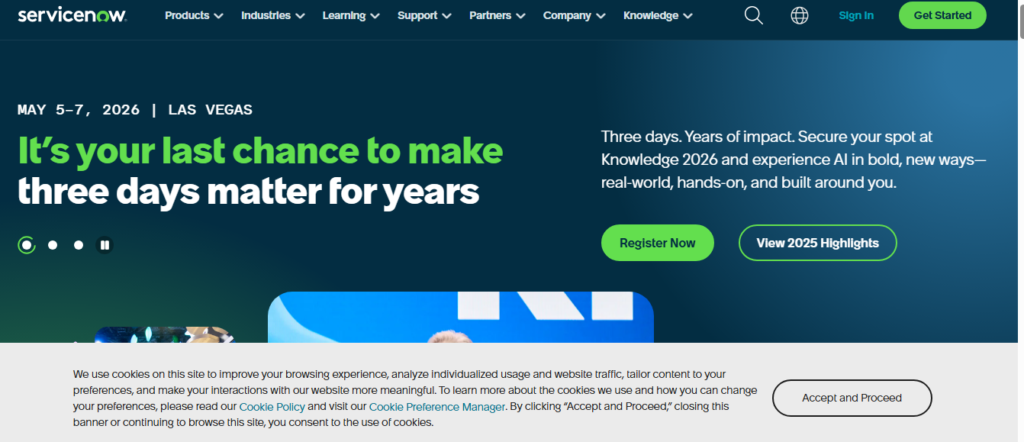
ServiceNow remains one of the most comprehensive and widely adopted ITAM platforms in the enterprise space. Its asset management module sits within the broader ServiceNow platform, which means it benefits from deep integration with ITSM, HR service delivery, security operations, and financial management workflows.
The platform excels at software asset management, offering detailed license workspaces that normalize publisher data, track true-up obligations, and manage complex licensing agreements. Hardware asset management capabilities cover the full lifecycle from procurement to retirement, including automated workflows for receiving, deploying, and disposing of assets.
In 2026, ServiceNow has continued to enhance its AI capabilities through its Now Intelligence engine, which provides predictive analytics for hardware refresh planning and automated anomaly detection for license compliance.
Best for: Large enterprises that are already invested in the ServiceNow ecosystem or need a tightly integrated ITSM and ITAM solution.
ServiceNow is a significant investment in both licensing and implementation resources. Smaller organizations may find the platform more than they need. they can improve operational efficiency, reduce downtime, and optimize IT workflows by leveraging ServiceNow managed services for enterprises for ongoing support and platform management.
2. Freshservice Asset Management
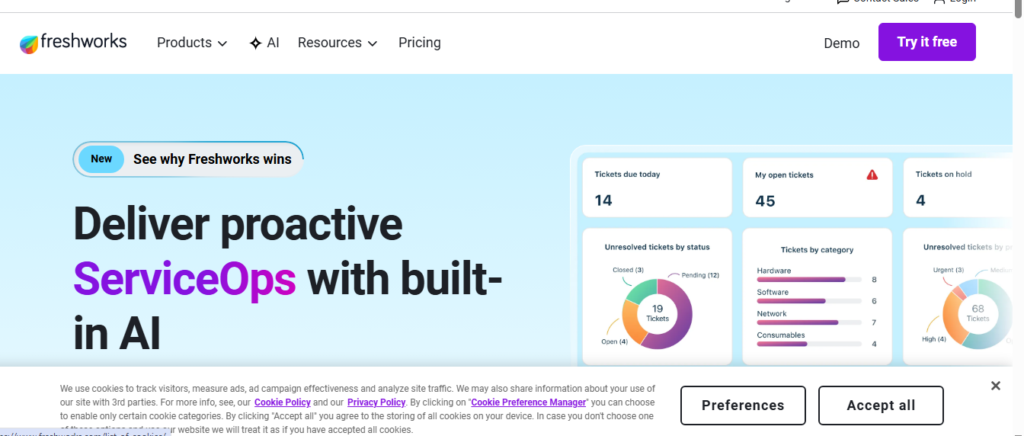
Freshservice has grown into one of the most popular ITAM solutions for mid-sized organizations, offering a clean, intuitive interface with powerful capabilities at a more accessible price point than enterprise-tier competitors.
The platform includes automatic discovery through agent-based and agentless scanning, a well-designed configuration management database, and strong integration with the Freshservice help desk. Asset relationships and dependencies can be mapped visually, making it easier to understand the impact of changes or failures.
Freshservice has made significant investments in AI-driven automation, allowing teams to set up rules that automatically classify, assign, and update assets without manual intervention. Its SaaS management module has also matured considerably, offering spend analytics and optimization recommendations for cloud applications.
Best for: Mid-market organizations looking for a modern, easy-to-deploy ITAM solution with strong ITSM integration and competitive pricing.
Considerations: Organizations with very complex enterprise licensing agreements may find Freshservice’s SAM capabilities less robust than specialized alternatives.
3. Lansweeper
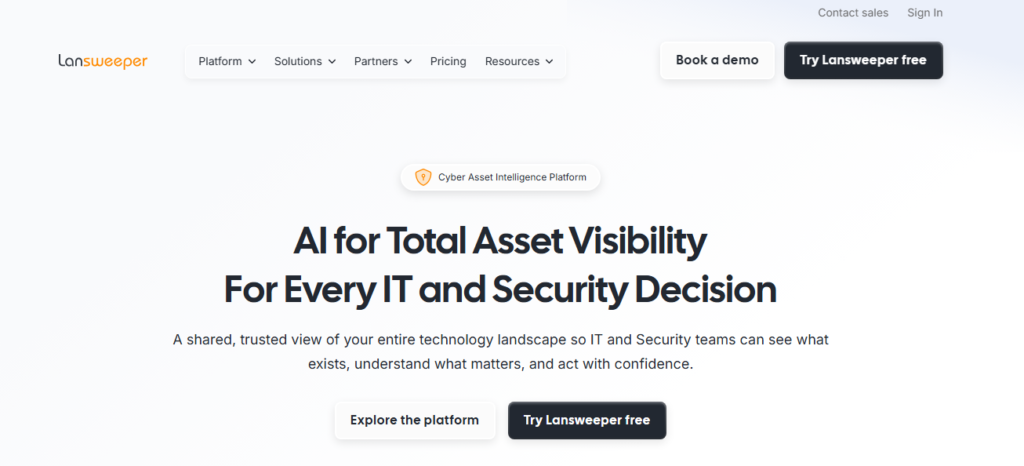
Lansweeper has built its reputation on exceptionally deep and accurate network discovery. Where many ITAM tools struggle to find every device on a complex network, Lansweeper is known for uncovering assets that other scanners miss, including operational technology, IoT devices, and legacy systems.
The platform generates detailed technology intelligence reports that go beyond simple inventory lists. IT and security teams can query the Lansweeper database to answer specific questions about their environment — for example, finding all devices running a specific operating system version or identifying all machines with a particular vulnerability.
In 2026, Lansweeper has expanded its cloud connector capabilities significantly, allowing organizations to pull asset data from AWS, Azure, Google Cloud, and major SaaS platforms into a single unified view. Its recently launched Risk Insights feature correlates asset data with vulnerability databases to prioritize remediation efforts.
Best for: Organizations with complex or mixed environments where accurate, comprehensive discovery is the top priority, including environments with OT and IoT assets.
Considerations: Lansweeper is strongest as a discovery and inventory platform. Organizations that need deep financial management or procurement workflow capabilities may want to pair it with a complementary tool.
4. Asset Panda
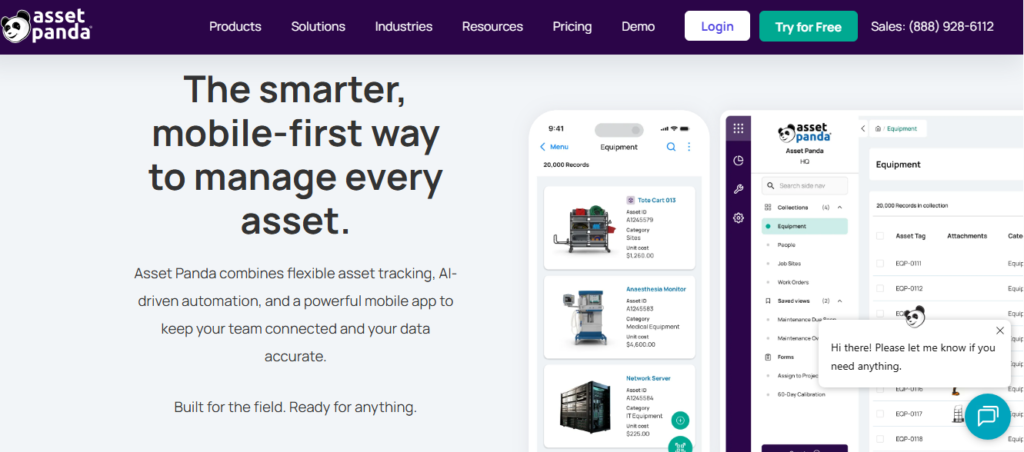
Asset Panda takes a flexible, customizable approach to asset management that sets it apart from more rigid enterprise platforms. Rather than imposing a fixed data model, Asset Panda allows organizations to define their own asset types, fields, workflows, and relationships — making it adaptable to virtually any industry or use case.
The platform is particularly well-suited for organizations that manage a mix of IT and non-IT assets, such as facilities equipment, vehicles, or tools alongside laptops and servers. Its mobile app is one of the best in the category, supporting barcode and QR code scanning for fast physical audits.
Asset Panda includes built-in maintenance scheduling, check-in and check-out tracking, and audit trail logging. Its reporting engine is flexible and accessible for non-technical users, with a visual report builder that does not require SQL knowledge.
Best for: Organizations that need flexibility to manage diverse asset types or that want a highly customizable platform without extensive IT implementation work.
Considerations: Asset Panda is less focused on deep software license management and automated network discovery than some competitors. It works best when combined with complementary discovery tools.
5. ManageEngine AssetExplorer
ManageEngine AssetExplorer is a strong mid-market option that offers a broad feature set at a price point that makes it accessible to smaller IT teams. It covers hardware and software asset management, contract management, purchase order management, and lifecycle tracking within a single unified interface.
The platform includes both agent-based and agentless discovery, with support for Windows, Mac, Linux, and network devices. Its software metering capabilities track actual application usage, which helps organizations identify shelfware — licensed software that is paid for but rarely or never used.
AssetExplorer integrates natively with other ManageEngine products including ServiceDesk Plus, making it a logical choice for organizations already invested in the ManageEngine ecosystem.
Best for: Small to mid-sized organizations looking for a comprehensive, cost-effective ITAM solution with strong software metering and contract management features.
Considerations: The user interface, while functional, has a more traditional design compared to newer platforms. Cloud-native and SaaS asset management capabilities, while improving, may not match dedicated solutions in that area.
6. Ivanti IT Asset Management
Ivanti has assembled a comprehensive IT management portfolio through a series of strategic acquisitions, and its ITAM suite reflects that breadth. The platform covers hardware asset management, software asset management, and IT financial management within a single solution that is deeply integrated with Ivanti’s endpoint management and security tools.
One of Ivanti’s strongest differentiators is its software asset management depth, particularly for complex enterprise agreements including Microsoft, Oracle, and SAP. Its license reconciliation engine handles nuanced licensing rules that simpler platforms often get wrong, reducing compliance risk for organizations with complex vendor relationships.
Ivanti has also made significant progress on AI-driven automation in recent years, with intelligent workflows that can recommend license harvesting actions, flag underutilized assets, and predict upcoming refresh needs based on usage patterns and age.
Best for: Enterprises with complex software licensing environments, particularly those managing large Microsoft, Oracle, or SAP agreements alongside endpoint management requirements.
Considerations: Ivanti’s portfolio breadth can make it challenging to navigate, and the platform’s depth means a higher investment in training and onboarding.
7. Snipe-IT
For organizations with limited budgets or a preference for open-source solutions, Snipe-IT is the standout choice. It is a free, open-source IT asset management platform with a clean, modern interface and a surprisingly capable feature set for its price point.
Snipe-IT handles hardware asset tracking, software license management, accessory and consumable tracking, and basic reporting. It supports custom fields, user check-in and check-out workflows, and integrations with LDAP and Active Directory for user management. The platform is self-hosted, giving organizations full control over their data.
The Snipe-IT community is active, and the platform receives regular updates. A hosted version is also available for organizations that prefer not to manage their own infrastructure.
Best for: Small organizations, nonprofits, educational institutions, or technically capable teams with budget constraints that want a capable ITAM tool without licensing fees.
Considerations: Snipe-IT lacks automated network discovery, advanced software metering, and AI-driven analytics. It is primarily a manual tracking tool and requires more administrative effort than automated enterprise platforms.
8. Flexera One
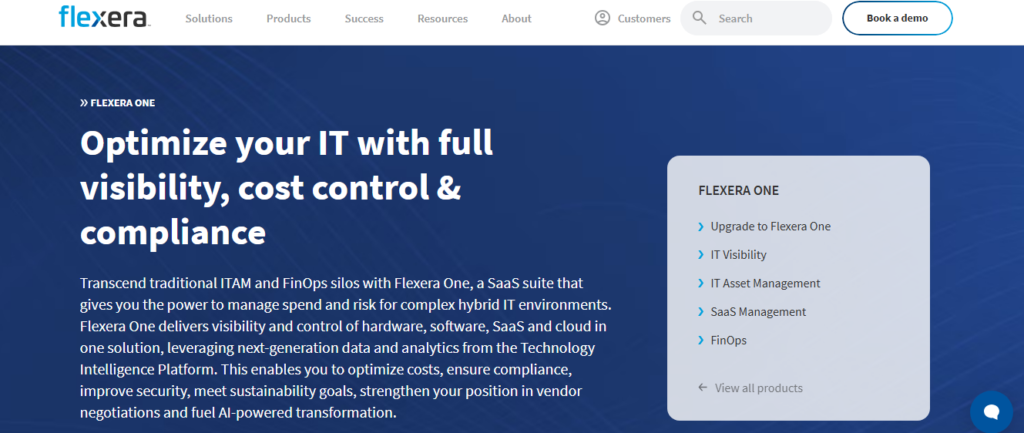
Flexera One is a specialized platform that leads the market specifically in software asset management and technology intelligence. While it also covers hardware and cloud assets, its core strength is helping organizations manage the financial and compliance dimensions of their software portfolio.
The platform includes one of the most comprehensive software recognition libraries in the industry, automatically identifying and normalizing software data across millions of applications. Its financial management module tracks total cost of ownership, budget forecasting, and vendor spend analysis at a level of depth that general-purpose ITAM tools rarely match.
Flexera One’s SaaS management capabilities are particularly strong, offering discovery of unsanctioned cloud applications, spend optimization recommendations, and vendor negotiation intelligence based on usage analytics.
Best for: Large enterprises with complex software licensing environments, significant SaaS spend, or teams that need to demonstrate financial accountability for technology investments.
Considerations: Flexera One is a premium product with pricing to match. It is best suited for organizations where software compliance and financial optimization are primary drivers.
How to Choose the Right IT Asset Management Software
With so many capable platforms available, narrowing down the right choice for your organization requires a structured evaluation process. Here is a framework for making a confident decision.
Start with your primary pain points. Are you struggling with software license compliance? Asset visibility? IT spending accountability? Identifying your most urgent challenges will help you focus on platforms that address them directly rather than choosing based on feature lists alone.
Define your asset scope. Do you primarily need to manage traditional on-premises hardware and software? Or do you also need cloud, SaaS, mobile, and OT asset coverage? Platforms vary significantly in how well they handle different asset types, so clarity on scope is essential.
Consider your integration requirements. ITAM software does not exist in isolation. It needs to work with your help desk, procurement, HR, security, and financial systems. Make a list of your critical integrations before evaluating vendors.
Assess your team’s technical capacity. Some platforms are highly configurable but require significant expertise to implement and maintain. Others are designed for rapid deployment with minimal customization. Be realistic about the resources your team can dedicate to implementation and ongoing administration.
Evaluate total cost of ownership. Licensing fees are just one component of cost. Factor in implementation services, training, integration development, and the internal time required to manage the platform. A less expensive tool that requires significant manual effort may ultimately cost more than a premium platform with strong automation.
Request a proof of concept. Before committing to any platform, negotiate a pilot deployment that allows you to test the tool against your actual environment. Demos are useful, but nothing replaces hands-on experience with your own data.
ITAM Software Pricing: What to Expect in 2026
Pricing for IT asset management software varies widely depending on the platform, deployment model, and scale of deployment. Here is a general overview of what organizations can expect.
Open-source platforms like Snipe-IT are free to use, though self-hosting involves infrastructure and administration costs. Hosted versions typically start at a few hundred dollars per month.
Mid-market platforms like Freshservice, ManageEngine AssetExplorer, and Asset Panda typically price on a per-asset or per-technician basis. Organizations can expect to pay anywhere from a few dollars to twenty dollars or more per asset per year, depending on the tier and features selected.
Enterprise platforms like ServiceNow, Flexera One, and Ivanti are negotiated on a contract basis and are generally priced based on the number of assets under management, the number of users, and the modules selected. Enterprise deals frequently run into six figures annually for large deployments.
Cloud-specific pricing models have also become more common, with some vendors offering consumption-based pricing tied to the volume of assets managed or the volume of API calls made.
Emerging Trends in IT Asset Management for 2026
The ITAM landscape is evolving rapidly. Understanding the key trends shaping the category will help you evaluate platforms not just for where they are today, but where they are heading.
AI and Machine Learning Integration AI is transforming every category of enterprise software, and ITAM is no exception. In 2026, leading platforms use machine learning to predict hardware failure before it occurs, recommend optimal refresh timing, flag unusual license consumption patterns, and automate routine asset classification tasks. Organizations should look for platforms where AI is embedded in core workflows, not just bolted on as a marketing feature.
Cyber Asset Attack Surface Management The convergence of ITAM and cybersecurity is accelerating. Cyber asset attack surface management — or CAASM — is an emerging practice that uses ITAM data to continuously identify, inventory, and assess the security posture of all connected assets. ITAM platforms with native security integrations are becoming essential for organizations that want a unified view of their technology risk.
FinOps and IT Financial Management As cloud spending has exploded, a new discipline called FinOps has emerged to bring financial accountability to technology investments. ITAM platforms are increasingly incorporating FinOps capabilities — tracking cloud spend, identifying waste, optimizing reserved instance purchases, and creating chargeback models that allocate costs to specific business units.
Environmental Sustainability Tracking ESG reporting requirements are driving demand for ITAM features that track the environmental impact of technology assets. This includes monitoring energy consumption, calculating carbon footprints for device fleets, and managing responsible disposal through certified e-waste programs. Organizations subject to sustainability reporting should evaluate how well potential ITAM platforms support these requirements.
Unified Endpoint and Asset Management The boundary between endpoint management and IT asset management continues to blur. Organizations increasingly want platforms that can both manage the configuration and security of endpoints and track those same devices as managed assets. Vendors that offer unified capabilities — or deep integrations between their endpoint management and ITAM products — are gaining traction.
Common IT Asset Management Challenges and How to Solve Them
Even with the right software in place, organizations frequently encounter challenges in their ITAM programs. Here are the most common problems and practical solutions.
Incomplete or inaccurate asset inventory. Many organizations discover during their first ITAM deployment that their actual asset count is significantly different from what they thought. Automated discovery combined with regular physical audits is the most effective approach to building and maintaining an accurate inventory. Barcode scanning during physical audits dramatically improves accuracy and efficiency.
Shadow IT and unauthorized assets. Employees frequently connect personal devices or sign up for unauthorized SaaS applications without IT knowledge. ITAM platforms with network-based discovery and SaaS application monitoring help surface shadow assets. Organizations should pair technical discovery with clear policies and a self-service request process that makes it easy for employees to get the tools they need through approved channels.
License compliance gaps. License compliance failures often stem from poor data normalization — different versions or spellings of the same product being tracked as separate items. Platforms with strong software recognition libraries that automatically normalize product names reduce this risk significantly.
Resistance to adoption. ITAM programs frequently fail not because of technology limitations but because stakeholders do not adopt the platform consistently. Investing in training, simplifying workflows for common tasks, and demonstrating the business value of the program — such as money saved through license optimization — are essential for driving sustained adoption.
Integration complexity. Organizations with diverse technology stacks often struggle to connect ITAM data with other systems. Prioritizing platforms with pre-built integrations for your most critical systems, and establishing clear data ownership and synchronization policies, reduces integration friction significantly.
IT Asset Management Best Practices
Deploying ITAM software is just the beginning. Realizing its full value requires consistent operational practices.
Establish a clear asset ownership model that defines who is responsible for each class of asset — who approves purchases, who manages deployments, and who handles disposals. Without clear ownership, asset data becomes stale quickly.
Create standardized naming conventions and asset categories before you begin populating your ITAM database. Retroactively normalizing messy data is time-consuming and error-prone.
Automate as much of the asset lifecycle as possible. Automated discovery, automated license reconciliation, and automated renewal alerts reduce the manual burden on IT teams and ensure that the ITAM system reflects reality rather than falling behind.
Conduct regular audits even with automated discovery in place. Physical spot checks validate that automated data is accurate and catch assets that may have been missed by automated scanning.
Integrate ITAM data into your broader IT governance processes. Asset data should inform change management decisions, security incident investigations, budget planning, and vendor negotiations. An ITAM system that exists in isolation from other IT processes delivers only a fraction of its potential value.
Conclusion
The right IT asset management software can be one of the highest-return investments an IT organization makes. By providing complete visibility into your technology assets, enforcing license compliance, reducing unnecessary spending, and supporting security and sustainability objectives, a strong ITAM platform pays for itself many times over.
In 2026, the best options range from open-source tools like Snipe-IT for budget-conscious teams to enterprise powerhouses like ServiceNow and Flexera One for organizations with complex, large-scale environments. Mid-market leaders like Freshservice, Lansweeper, and ManageEngine AssetExplorer offer excellent value for organizations between those extremes.
The best platform for your organization is the one that aligns most closely with your specific environment, integrations, team capacity, and strategic goals. Take the time to define your requirements clearly, test your shortlisted options against real-world scenarios, and think not just about where your ITAM program is today but where you need it to be in two or three years.

Usman Hakim is an SEO specialist at RankWithLinks, focusing on link building and organic growth. He helps brands improve search rankings through white-hat strategies, including guest posting and authority backlinks.