
A Chief Technical Examiner (CTE) is a senior professional responsible for evaluating technical systems, auditing engineering projects, and ensuring compliance with safety and quality standards.
Organizations rely on Chief Technical Examiners to verify that projects follow technical guidelines, industry standards, and regulatory requirements. These professionals play a crucial role in sectors such as engineering, manufacturing, construction, infrastructure, and technology.
Because of their responsibility for overseeing technical accuracy and safety, Chief Technical Examiners are considered one of the most important oversight roles in technical industries.
What Is a Chief Technical Examiner?
A Chief Technical Examiner is a technical authority who reviews engineering processes, systems, and technical documentation to ensure that work meets regulatory and operational standards.
Unlike engineers who design systems, Chief Technical Examiners review and verify technical work performed by teams.
Their role helps organizations:
- Maintain high technical standards
- Prevent safety risks
- Ensure regulatory compliance
- Improve engineering processes
In many companies, the Chief Technical Examiner provides the final technical approval for critical systems or projects.
Chief Technical Examiner Salary
The salary of a Chief Technical Examiner varies depending on industry, location, and experience.
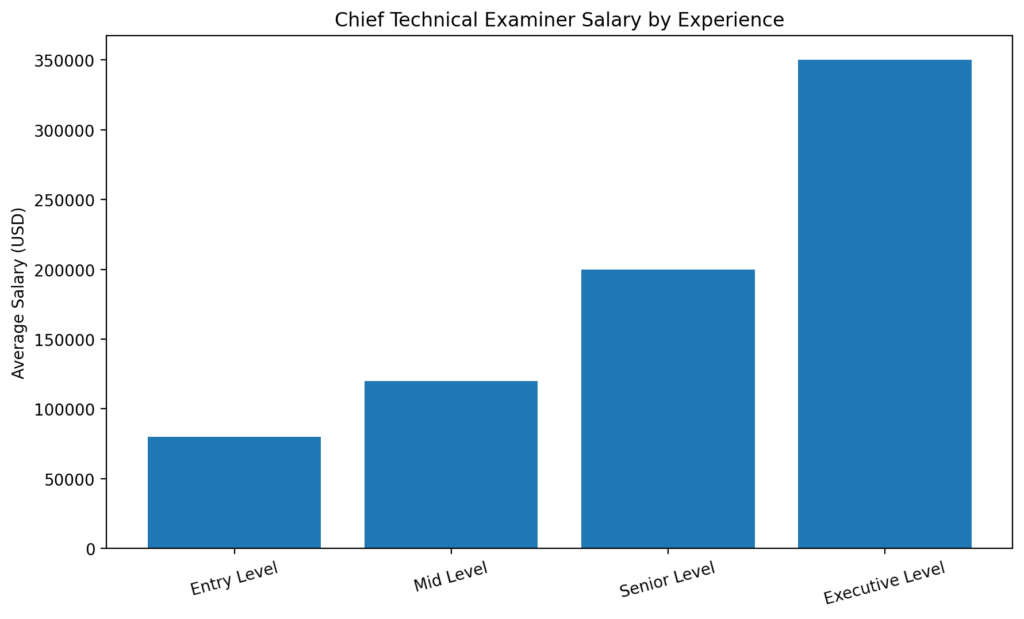
Typical salary ranges include:
- Entry-level senior examiner: $80,000 per year
- Mid-level examiner: $120,000 per year
- Senior examiner: $200,000 per year
- Executive-level examiner: $350,000+ per year
Below is a visual breakdown of salary growth by experience.
Chief Technical Examiner Salary by Experience
Share
As professionals gain experience and leadership responsibilities, their salaries increase significantly.
Job Growth and Demand
Organizations looking to hire such specialized roles often use tools like a LinkedIn ad maker to create targeted job campaigns and reach qualified professionals efficiently.
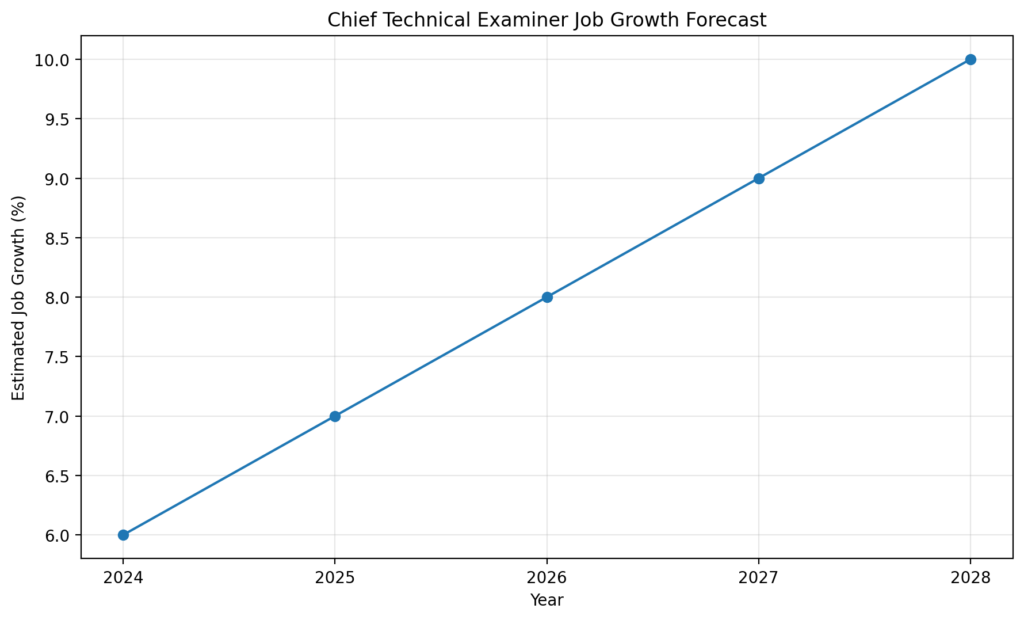
Fields related to Chief Technical Examiner roles, such as engineering management and technical auditing, are expected to grow steadily in the coming years.
Job Growth Forecast
Share
This growth is driven by:
- Increased infrastructure development
- Higher regulatory standards
- Technological complexity
- Safety and compliance requirements
Industries That Hire Chief Technical Examiners
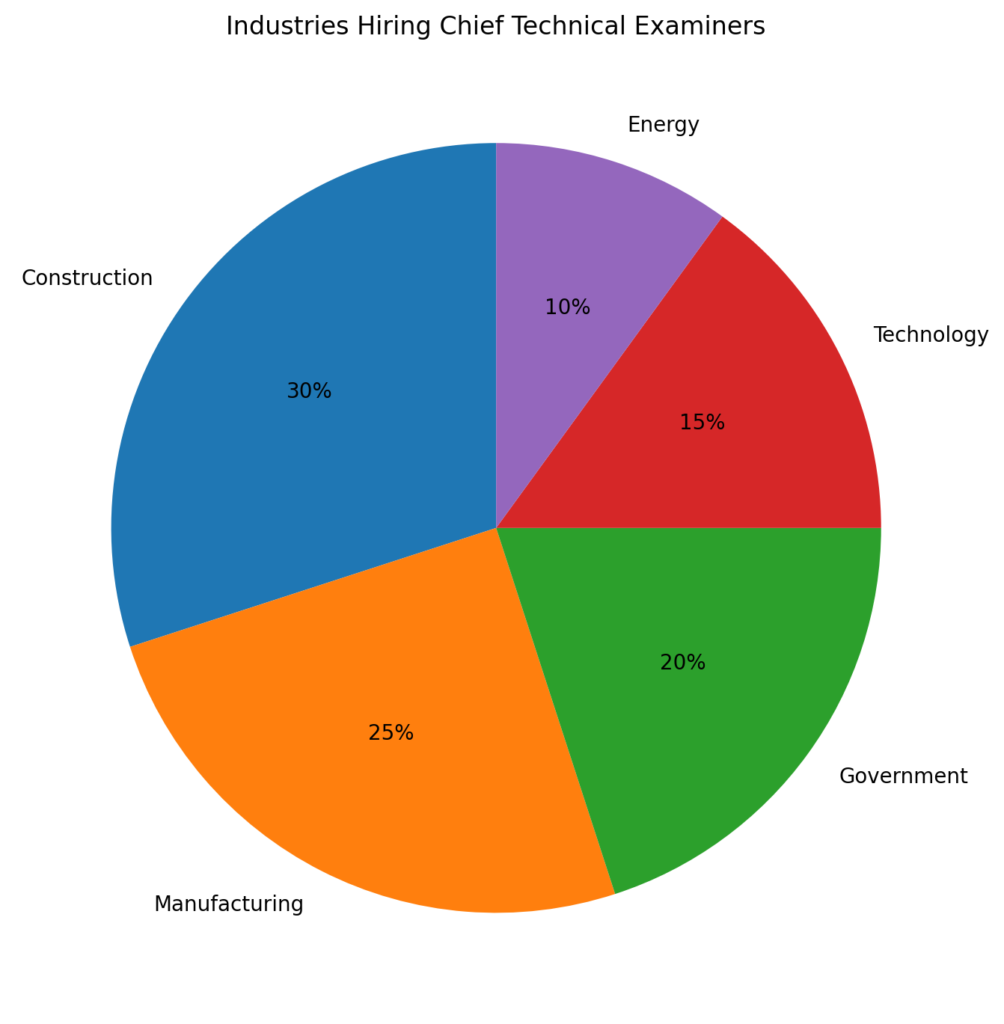
Chief Technical Examiners are needed in industries where technical systems must meet strict quality and safety standards.
Major industries include:
- Construction and infrastructure
- Manufacturing
- Government engineering departments
- Technology companies
- Energy and utilities
Industry Distribution
Share
Construction and manufacturing sectors employ the largest percentage of technical examiners.
Skills Required for a Chief Technical Examiner
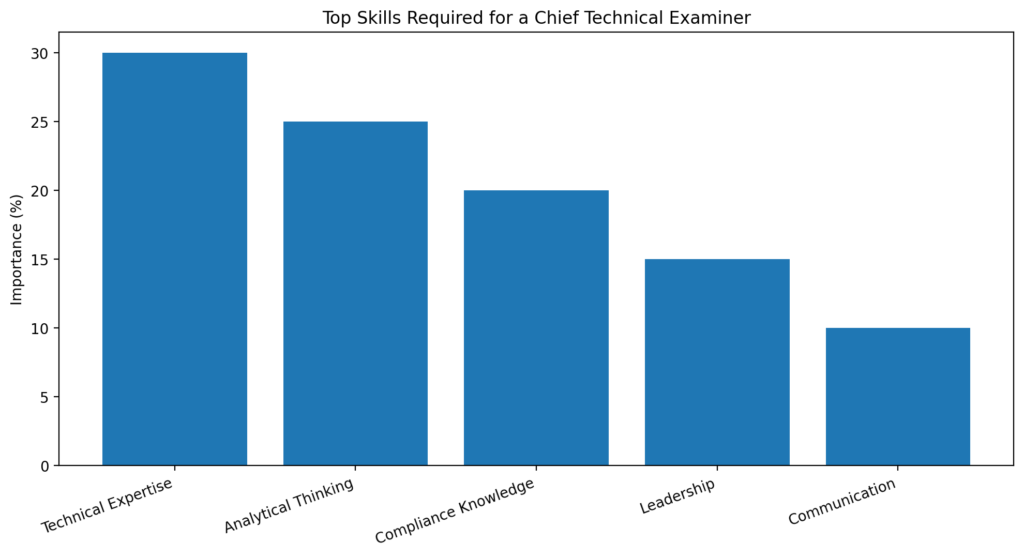
To succeed in this role, professionals must combine deep technical knowledge with leadership and analytical skills.
Important skills include:
- Engineering expertise
- Analytical thinking
- Compliance and regulatory knowledge
- Leadership and management
- Technical reporting and communication
Skills Importance
Share
Technical expertise and analytical skills are the most critical competencies for this role.
Career Path to Become a Chief Technical Examiner
Most Chief Technical Examiners build their careers over many years in engineering or technical inspection roles.
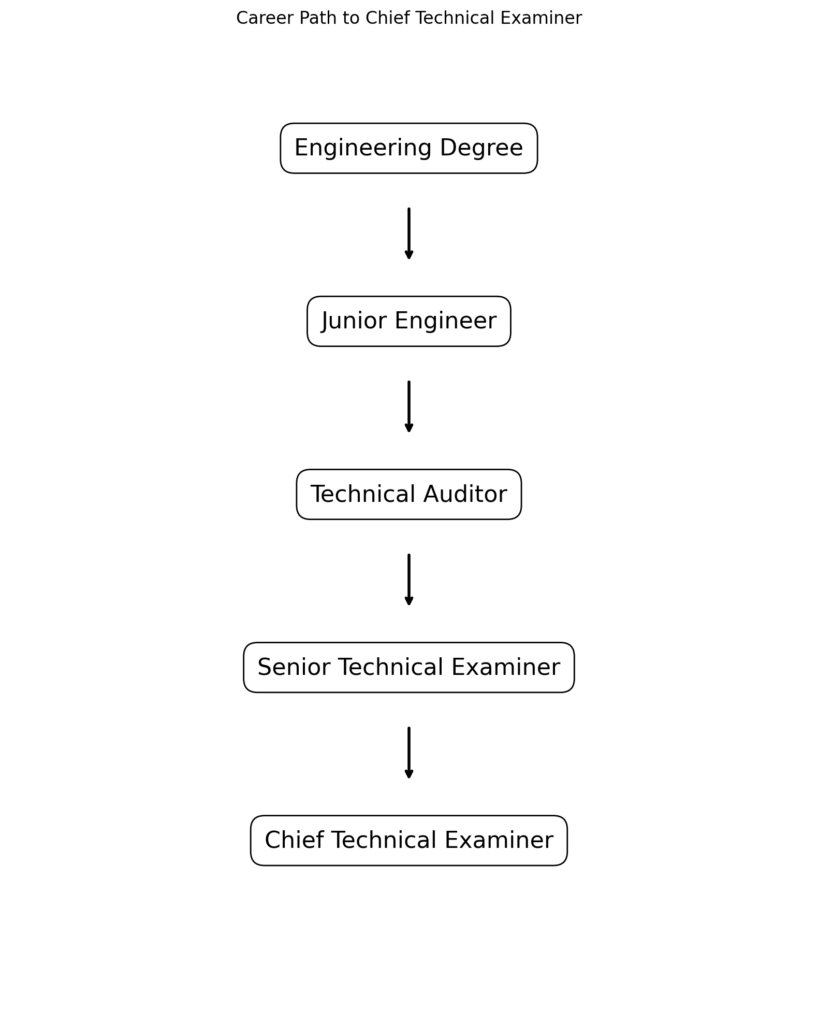
Typical career progression includes:
- Engineering Degree
- Junior Engineer
- Technical Auditor
- Senior Technical Examiner
- Chief Technical Examiner
Career Path Diagram
Share
Professionals usually reach this role after 10–20 years of experience.
Job Availability and Related Roles
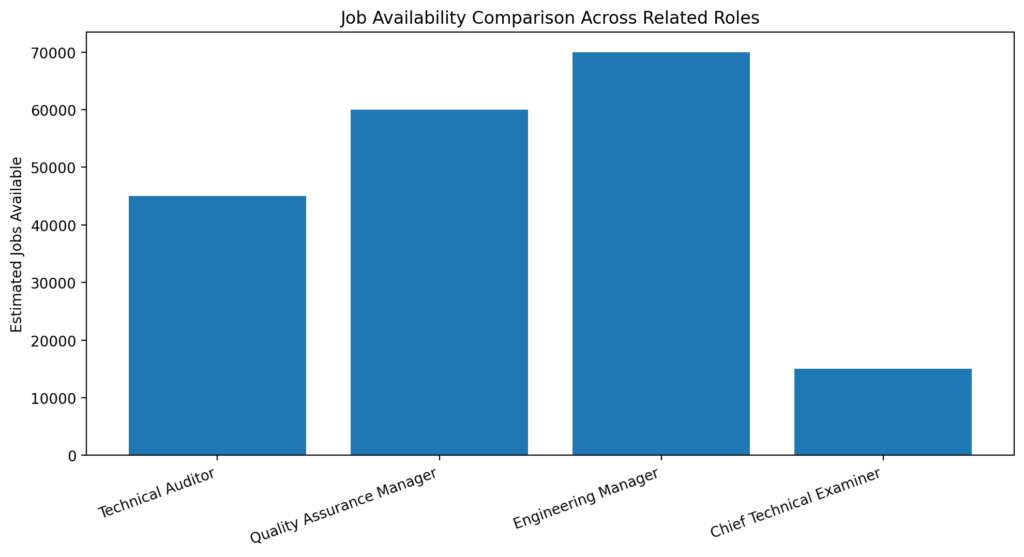
The job title “Chief Technical Examiner” is relatively specialized, but similar roles exist across many industries.
Related positions include:
- Technical auditor
- Quality assurance manager
- Engineering manager
- Compliance engineer
Job Availability Comparison
Share
Across related fields, there are tens of thousands of technical oversight positions worldwide.
Global Demand for Chief Technical Examiners
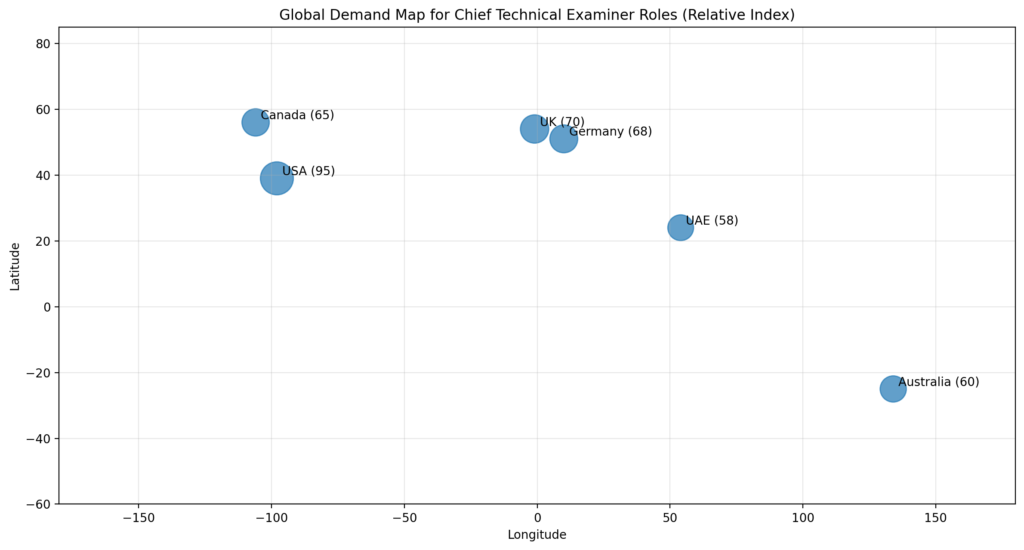
Demand for technical oversight professionals is particularly strong in developed economies and rapidly growing infrastructure markets.
Global Demand Map
Share
Countries with strong demand include:
- United States
- United Kingdom
- Canada
- Germany
- Australia
- United Arab Emirates
Future of the Chief Technical Examiner Role
The role of Chief Technical Examiner is evolving with the advancement of technology.
Emerging trends include:
- AI-driven technical audits
- Automated inspection systems
- Data-driven risk assessment
- Digital compliance monitoring
As industries continue to expand and regulations become stricter, the importance of technical oversight professionals will continue to grow.
Frequently Asked Questions
What does a Chief Technical Examiner do?
A Chief Technical Examiner audits technical systems, reviews engineering work, and ensures projects meet safety and regulatory standards.
Is Chief Technical Examiner a government job?
The role exists in both government agencies and private companies, especially in industries requiring strict compliance.
What degree is required?
Most positions require a degree in engineering, technology, or a related technical field.
How long does it take to become a Chief Technical Examiner?
Professionals typically need 10–20 years of engineering experience before reaching this position.
Conclusion
The Chief Technical Examiner plays a vital role in ensuring the safety, quality, and reliability of complex technical systems. By reviewing projects, auditing processes, and enforcing standards, these professionals protect organizations from costly mistakes and safety risks.
With strong salaries, growing demand, and leadership responsibilities, the role offers an excellent career path for experienced engineers and technical specialists.

Abdullah Zulfiqar is Co-founder and Client Success Manager at RankWithLinks, an SEO agency helping businesses grow online. He specializes in client relations and SEO strategy, driving measurable results and maximizing ROI through effective link-building and digital marketing solutions.