
Running a small business in 2026 means navigating rising operational costs, evolving tax regulations, and increasingly competitive markets. One area where you simply cannot afford to overspend is accounting software. The encouraging reality is that you do not have to. The market for affordable accounting tools has never been more competitive, and small business owners today have access to powerful platforms that cost a fraction of what enterprise solutions charge — without giving up the features that actually matter.
Whether you are a solo freelancer tracking client invoices, a retail shop owner managing inventory, a food truck operator reconciling daily sales, or a growing service business handling payroll for a small team, there is an affordable accounting solution designed specifically for your situation.
This comprehensive guide covers the best cheap accounting software for small business in 2026, explains exactly what to look for before committing to a platform, breaks down real pricing so there are no surprises, and helps you match the right tool to your specific business needs. Every recommendation here balances cost, capability, and ease of use — because affordable software that frustrates you daily is not actually a bargain.
Why Small Businesses Need Dedicated Accounting Software in 2026
The spreadsheet era of small business accounting is over. Not because spreadsheets cannot handle numbers — they can — but because the demands placed on modern small businesses have grown far beyond what manual tracking can efficiently support.
In 2026, tax authorities in most countries expect digital record keeping. Clients expect professional invoices with online payment options. Lenders and investors expect clean, audit-ready financial statements. Banks expect real-time transaction categorization for business credit applications. Meeting these expectations with a spreadsheet is technically possible, but practically exhausting.
Accounting software automates the tedious, repetitive work that consumes hours every week. Bank feeds pull in transactions automatically. Recurring invoices go out without manual input. Expense categories are applied by rules you set once. Tax reports generate in seconds. Year-end preparation, which once meant days of frantic organizing, becomes a routine quarterly task.
The other major shift in 2026 is artificial intelligence. Nearly every accounting platform worth considering now uses AI to some degree — categorizing transactions intelligently, flagging anomalies, predicting cash flow, and offering plain-language insights about your business performance. Features that required a bookkeeper or financial advisor just a few years ago are now built directly into affordable monthly subscriptions.
The bottom line is simple. Every hour you spend manually managing finances is an hour not spent serving customers, growing your business, or simply living your life. Cheap accounting software is not a luxury — it is one of the highest-return investments a small business owner can make.
What to Look for in Affordable Accounting Software
Shopping for accounting software without a clear criteria list is how small business owners end up overpaying for features they never use or, worse, choosing a tool that is missing something critical. Before comparing platforms, define what your business actually needs.
Non-Negotiable Core Features
Bank and credit card synchronization is the single most time-saving feature in any accounting tool. The software should connect directly to your financial institutions, pull in transactions automatically, and apply categorization rules without requiring manual entry. In 2026, this is standard — avoid any platform that does not offer it.
Income and expense tracking forms the foundation of your entire financial picture. Every transaction that enters or exits your business must be recorded, categorized, and reportable. Look for software that makes this process intuitive, even for users with no accounting background.
Professional invoicing matters enormously for service businesses and freelancers. The platform should let you create branded invoices, send them electronically, accept multiple payment methods including credit cards and bank transfers, and automate follow-up reminders for overdue accounts. The faster clients pay, the healthier your cash flow.
Financial reporting is where accounting software earns its value. You need, at minimum, a profit and loss statement, a balance sheet, and a cash flow report. These three documents tell the complete financial story of your business and are required for tax filing, loan applications, and strategic planning.
Tax preparation support in 2026 means more than just expense tracking. Look for software that calculates sales tax automatically, tracks quarterly estimated tax obligations, flags deductible expenses, and allows your accountant or tax preparer to access your books directly without a separate export process.
Features Worth Paying a Little More For
Payroll integration becomes essential the moment you hire your first employee. Some platforms include basic payroll in their standard plans. Others offer it as a paid add-on. If you have staff, factor payroll capability into your cost comparison from the beginning.
Inventory management is critical for product-based businesses. You need to track stock levels, set reorder points, and connect inventory counts directly to your cost of goods sold calculations. Not every cheap accounting tool handles this well, so if inventory matters to your business, test it specifically before committing.
Project-based billing helps consultants, agencies, and contractors track time and expenses per project and bill clients accurately. If you work on multiple client projects simultaneously, this feature can significantly increase revenue by ensuring nothing goes unbilled.
Multi-currency support is increasingly relevant for small businesses that sell internationally or work with clients in other countries. In 2026, even small online shops often transact in multiple currencies, and software that handles conversion automatically saves real money and time.
Mobile functionality determines how useful the software is outside your office. Strong mobile apps let you capture receipts immediately, log mileage, check cash flow, and send invoices from anywhere. Weak mobile apps make fieldwork frustrating.
Questions to Ask Before Choosing
How many users do you need? Some platforms charge per seat and can become expensive quickly when shared with a bookkeeper, partner, or accountant.
Does the software integrate with tools you already use? Point-of-sale systems, e-commerce platforms, payroll services, and CRM tools should connect seamlessly.
What does customer support actually look like? Free tiers often come with email-only support and slow response times. If you need help urgently during tax season, that matters.
Is pricing transparent? Watch for platforms that advertise a low base price but charge extra for bank connections, additional reports, phone support, or essential features that should be standard.
Best Cheap Accounting Software for Small Business in 2026
1. Wave Accounting — Best Completely Free Option
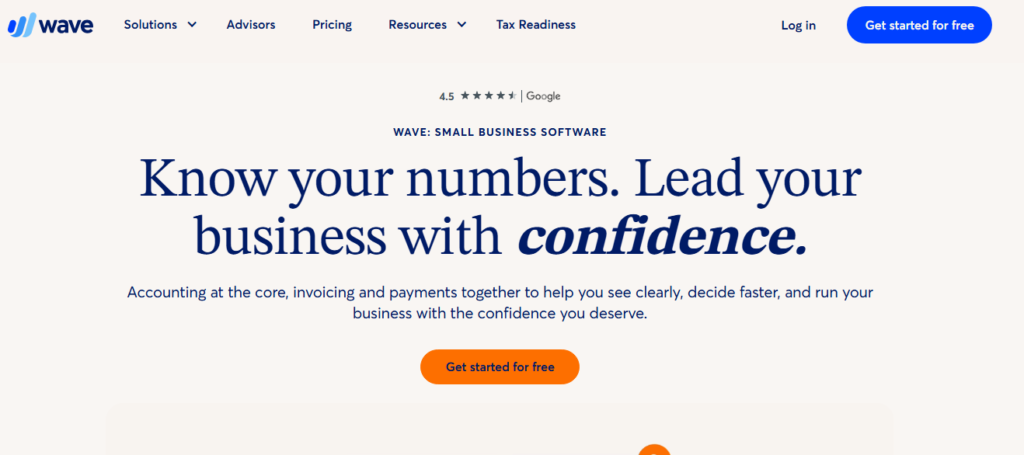
Wave remains the strongest completely free accounting solution available in 2026, and its recent improvements have made it even more competitive. For businesses that need professional invoicing, income and expense tracking, receipt scanning, and financial reporting without paying a monthly subscription, Wave delivers a genuinely complete solution.
The platform operates entirely in the cloud, requires no software installation, and works on any device with a browser. Bank connections are included at no cost, pulling transactions automatically from most major financial institutions. The invoicing system is clean and professional, supporting custom branding, payment links, and automatic late-payment reminders.
Wave introduced smarter AI-powered transaction categorization in recent updates, reducing the manual work involved in keeping books organized. The categorization learns from your corrections over time, becoming progressively more accurate as it understands your specific business patterns.
Where Wave generates revenue is through add-on services. Payment processing for credit card transactions carries a per-transaction fee, which is competitive with industry standards but worth factoring into your pricing decisions. Payroll is available as a paid add-on, with pricing varying by region. The Advisory services feature connects you with professional bookkeepers for an additional fee if you want human support.
For solo freelancers, independent contractors, photographers, designers, writers, consultants, and very small service businesses without employees, Wave’s free core suite is remarkably capable. Many business owners use it successfully for years without ever needing a paid upgrade.
The one honest limitation is scalability. Wave is not built for complex businesses with inventory, multiple departments, or advanced reporting needs. It serves its target audience exceptionally well, but trying to stretch it beyond that audience leads to frustration.
Pricing: Core accounting, invoicing, and reporting are completely free. Payment processing and payroll are paid add-ons.
Best for: Freelancers, sole proprietors, consultants, and micro-businesses with straightforward accounting needs.
Verdict: If your business qualifies, starting with Wave costs you nothing and saves you everything. There is simply no better entry point into small business accounting software.
2. Zoho Books — Best Value for Feature-Rich Accounting
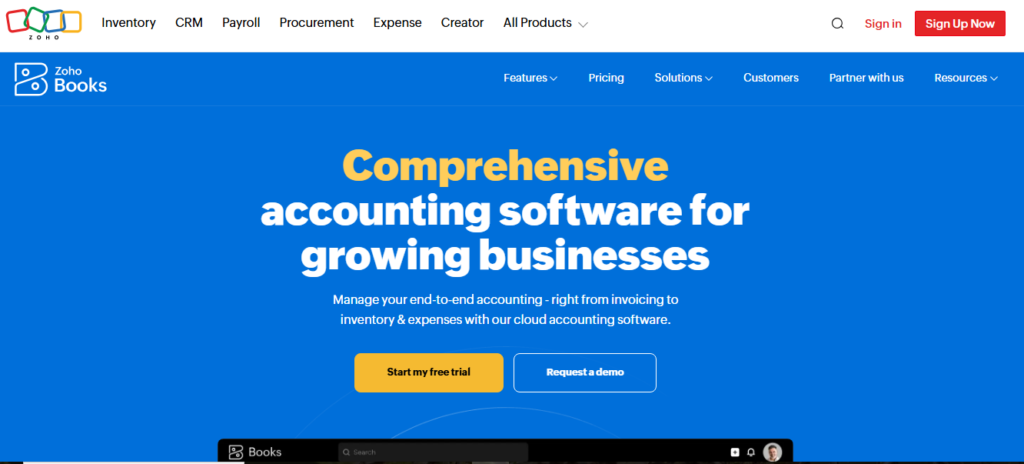
Zoho Books is the most underrated accounting platform in the small business market, and in 2026 it has strengthened its position as the best value option for businesses that need serious accounting capability without a serious price tag.
For businesses that fall below a specific annual revenue threshold, Zoho Books offers a free plan that includes more features than many paid competitors. Businesses that need additional capability access premium plans at price points that remain well below industry averages.
The feature depth at every tier is extraordinary. Zoho Books includes full double-entry bookkeeping, automated bank reconciliation, professional invoicing with payment portals, expense management, project and time tracking, inventory control, multi-currency support, and a comprehensive suite of financial reports. The automation engine is particularly powerful — you can create rules that automatically categorize transactions, schedule recurring invoices, send payment reminders, and even generate and send recurring reports to stakeholders.
The AI-powered features in 2026 have matured significantly. Zoho Books can now detect duplicate transactions, flag unusual spending patterns, predict upcoming cash flow gaps based on historical data, and offer plain-language summaries of your financial position without requiring any manual analysis on your part.
Zoho Books integrates natively with the broader Zoho ecosystem, which is a meaningful advantage for businesses already using Zoho CRM, Zoho Payroll, Zoho Projects, or other Zoho applications. The unified data environment eliminates duplicate entry and gives you a complete view of your business operations from a single platform.
For businesses not using other Zoho products, the platform still connects with major third-party applications including payment processors, e-commerce platforms, and payroll services. The integration library has expanded considerably and covers most tools that small businesses commonly use.
Customer support is responsive across all plan levels, and the documentation is among the most thorough in the industry. For business owners learning accounting fundamentals alongside managing their software, Zoho’s help resources are genuinely educational.
Pricing: Free plan available for qualifying small businesses. Paid plans start at approximately fifteen dollars per month.
Best for: Small businesses that want enterprise-level features at budget pricing, especially those already in the Zoho ecosystem.
Verdict: Zoho Books offers more accounting power per dollar than any other platform on this list. If you are willing to invest a small amount of time learning the interface, the return on that investment is substantial.
3. FreshBooks — Best for Service Businesses and Freelancers Who Invoice Heavily
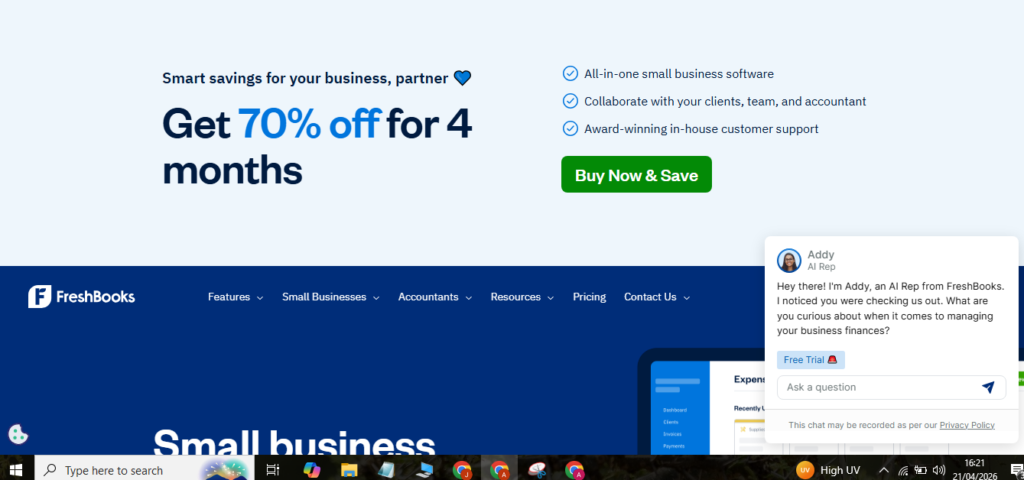
FreshBooks has spent over a decade perfecting the freelancer and service business accounting experience, and in 2026 it remains the most polished option for professionals whose primary accounting need revolves around client billing, time tracking, and project management.
The platform’s invoicing system is genuinely best-in-class. Invoices are beautiful, highly customizable, and optimized for fast payment. You can embed payment links that accept credit cards, bank transfers, and digital wallets. Automatic payment reminders go out on schedules you configure, and clients can comment directly on invoices — eliminating the back-and-forth email chains that slow down payment collection.
Time tracking is built natively into FreshBooks and connects directly to invoicing. You log hours against a project or client, and when billing time arrives, those hours convert automatically into invoice line items. For consultants, lawyers, designers, developers, and any professional who bills by the hour, this integration alone justifies the subscription cost through reduced billing errors and recovered unbilled time.
The expense management system makes it easy to attach receipts to expenses, categorize spending, and flag billable expenses for automatic inclusion on client invoices. The mobile app handles receipt capture reliably, which is particularly useful for business owners who travel or meet clients regularly.
FreshBooks added more robust double-entry accounting reports in recent years, addressing a historical gap in its financial reporting capabilities. You now get proper balance sheets, general ledger reports, and chart of accounts management alongside the simpler reports that were always available.
The honest limitation of FreshBooks is that it is designed specifically for service businesses and freelancers. If your business sells physical products, manages inventory, or requires manufacturing cost tracking, FreshBooks is not the right tool. It excels in its lane but does not pretend to be something it is not.
Pricing: Entry-level plans start at approximately seventeen dollars per month, with regular promotional discounts that can reduce this significantly for the first several months.
Best for: Freelancers, consultants, agencies, lawyers, designers, contractors, and any service professional who invoices clients regularly.
Verdict: If client invoicing and time tracking are at the center of your business model, FreshBooks delivers the best experience in the affordable tier.
4. QuickBooks Simple Start — Best for Long-Term Growth and Accountant Compatibility
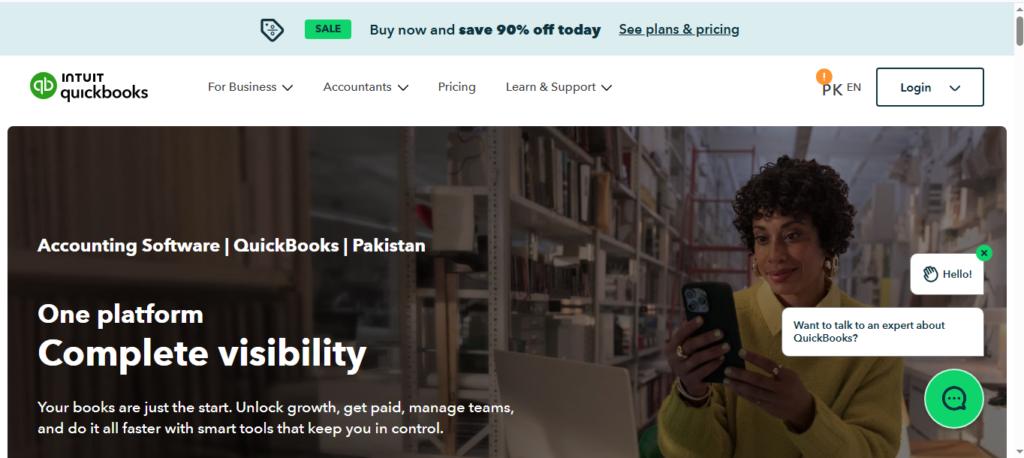
QuickBooks is the most widely used small business accounting platform in the world, and its Simple Start plan offers the most accessible entry point into a ecosystem that scales with your business indefinitely.
Simple Start in 2026 covers income and expense tracking, invoicing, receipt capture, mileage tracking, cash flow monitoring, sales tax calculation, and a solid set of financial reports. The interface has continued to improve with each update, and the AI-powered bookkeeping assistant now handles routine categorization tasks with high accuracy.
The reason QuickBooks Simple Start earns a place on a list of affordable options despite being slightly more expensive than alternatives is compatibility. Virtually every accountant, bookkeeper, and tax preparer in the country works with QuickBooks files fluently. When you need professional accounting support — and most businesses do eventually — there is zero friction. No file conversions, no learning curve for your advisor, no risk of data loss during transition.
The QuickBooks app ecosystem is also the largest in the industry. Over seven hundred integrations cover payroll, e-commerce, point of sale, project management, CRM, and virtually every other business tool category. As your business grows and your software needs evolve, QuickBooks connects to almost anything.
The upgrade path within QuickBooks is also meaningful. When Simple Start becomes too limited — and for growing businesses it eventually will — moving to Essentials, Plus, or Advanced is seamless. Your data migrates instantly, your team needs no retraining, and the transition causes no disruption to your operations.
Pricing: Simple Start begins around seventeen to nineteen dollars per month, with frequent introductory discounts.
Best for: Businesses planning for growth, owners who work with accountants regularly, and anyone who values maximum software compatibility.
Verdict: QuickBooks Simple Start costs slightly more than the alternatives but pays for that difference through unmatched professional compatibility and a growth path that never requires switching platforms.
5. Xero Starter — Best for International Small Businesses
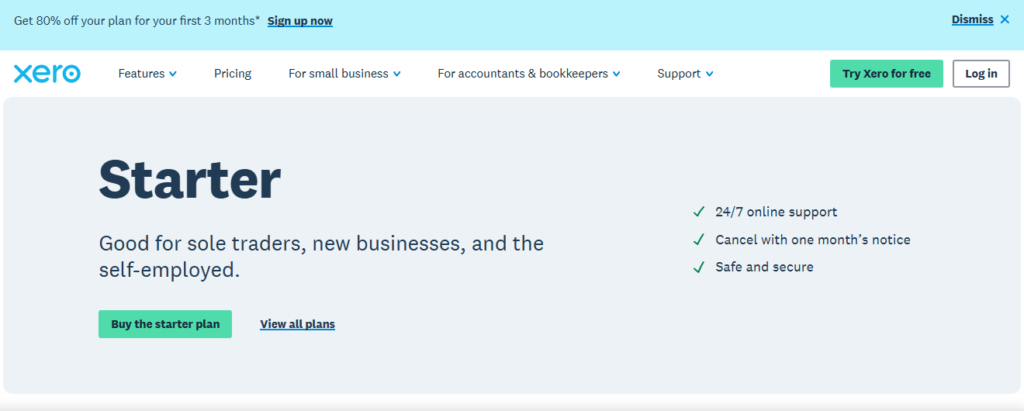
Xero has built a strong reputation internationally, and its Starter plan brings the platform’s capabilities within reach of small business budgets. For businesses that operate across borders, deal in multiple currencies, or work with international clients, Xero’s handling of these complexities is smoother than most competitors.
The Starter plan includes bank connections, reconciliation, invoicing, expense claims, and financial reporting. The interface is clean and modern, with a dashboard that gives a clear at-a-glance view of cash flow, outstanding invoices, and upcoming bills. The mobile apps are among the most capable in the market.
Xero’s inventory tracking, while available on higher-tier plans, handles the needs of product-based small businesses more elegantly than many alternatives. The platform also connects with an extensive library of third-party apps, making it flexible enough to slot into most existing business technology stacks.
One consideration with Xero Starter is the transaction and invoice limits imposed at the entry level. These limits are manageable for genuinely small businesses but can become restrictive as transaction volume grows. Monitor your usage and budget for an upgrade as your business scales.
Pricing: Starter plan begins around approximately fifteen dollars per month.
Best for: International businesses, businesses dealing in multiple currencies, and small businesses that value a modern interface and strong mobile functionality.
Verdict: Xero Starter is a competitive choice, particularly for businesses operating globally or those that prioritize interface quality alongside core functionality.
6. Patriot Software — Best Budget Option for Small Businesses with Employees
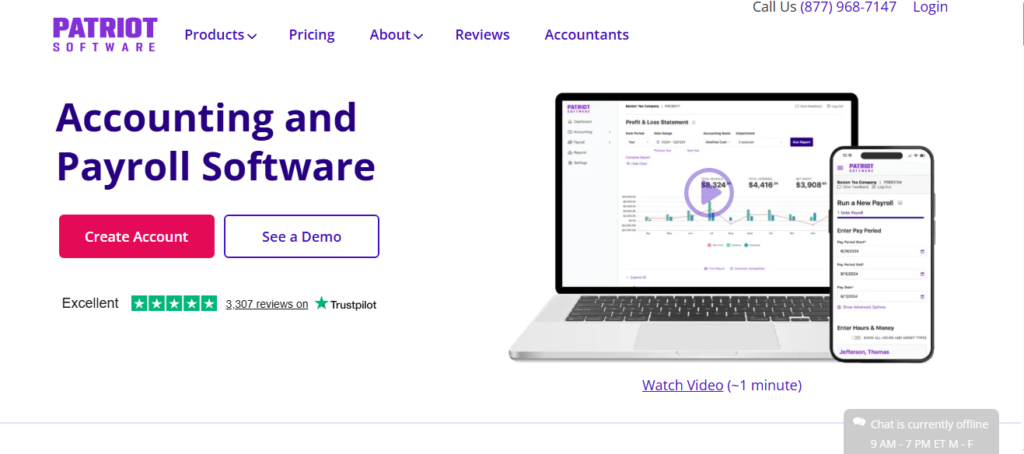
Patriot Software occupies a unique and valuable position in the market. It offers accounting software at a genuinely low price point, with payroll as an affordable add-on — making it the most cost-effective complete solution for small businesses that have employees but want to keep software costs minimal.
The accounting module covers income and expense tracking, invoicing, bank connections, and financial reporting with straightforward simplicity. It is not the most feature-rich platform, but it handles the fundamentals reliably and without unnecessary complexity.
Where Patriot earns genuine distinction is payroll. The payroll service runs direct deposit, calculates federal and state taxes automatically, files payroll tax returns on your behalf, and generates year-end W-2 forms — all at a price that significantly undercuts competitors like QuickBooks Payroll and Gusto. For a small business with a handful of employees, the combined cost of Patriot accounting and payroll is often less than just the payroll module on competing platforms.
The interface is not the most modern in the industry, and the integration ecosystem is smaller than QuickBooks or Xero. But for a business whose primary needs are clean accounting records and reliable payroll processing, Patriot delivers that combination at a price that is difficult to match.
Pricing: Accounting starts at approximately twenty dollars per month. Payroll is available as an add-on with pricing based on employee count.
Best for: Small businesses with one to twenty-five employees that need both accounting and payroll at a genuinely low combined cost.
Verdict: If payroll is a requirement and budget is a constraint, Patriot Software offers the most value per dollar in the combined accounting and payroll category.
Comparing the Top Options at a Glance
Understanding how these platforms stack up against each other across the dimensions that matter most helps clarify the right choice for your specific situation.
Wave stands alone as the only genuinely free option for core accounting features. It is ideal for the simplest business situations and represents zero financial risk. Zoho Books offers the deepest feature set at the lowest paid price, making it the best value for businesses that need more than Wave can provide. FreshBooks wins for service businesses and freelancers whose world revolves around billing clients and tracking time. QuickBooks Simple Start costs a bit more but provides the professional compatibility and growth runway that businesses planning to scale should prioritize. Xero Starter earns its place for businesses operating internationally or across multiple currencies. Patriot Software is the clear choice for businesses that need accounting and payroll together at a tight budget.
How to Choose the Right Cheap Accounting Software for Your Business
The right answer depends entirely on your specific circumstances. Running through a few key questions simplifies the decision considerably.
What is your current revenue and transaction volume? At very low revenue and transaction volume, Wave’s free plan handles everything you need. As volume and complexity grow, platforms with stronger automation and reporting become more valuable.
Do you have employees? If yes, payroll integration becomes a critical factor. QuickBooks, Zoho Books, and Patriot all offer integrated payroll solutions. Factor payroll cost into your total software budget from the beginning.
Do you sell physical products? Inventory management quality varies significantly across platforms. Zoho Books and Xero handle inventory more robustly than FreshBooks or Wave. Test inventory features specifically if your business relies on them.
How important is accountant collaboration? If you work closely with an external accountant, QuickBooks compatibility is a significant practical advantage. Most accounting professionals know QuickBooks deeply and can support you most efficiently within that platform.
What other tools does your business use? Check integration availability before committing. If your business runs on Shopify, Square, Stripe, HubSpot, or other major platforms, confirm that your accounting software connects to them natively before subscribing.
How comfortable are you with accounting concepts? If you are new to business finances, platforms with strong educational resources and intuitive interfaces — FreshBooks and Wave in particular — reduce the learning curve considerably. If you have some accounting background, the deeper functionality of Zoho Books or QuickBooks rewards that knowledge.
Tips for Getting the Most Value from Budget Accounting Software
Choosing the right platform is only the first step. How you use it determines whether you get full value from your subscription.
Connect your bank accounts immediately. The automation that makes accounting software valuable only works when transactions flow in automatically. Set up your bank connections on day one and configure categorization rules before your transaction history grows large.
Establish consistent habits around receipt capture. The biggest gap in most small business accounting records is missing receipts for cash and card expenses. Use your software’s mobile receipt capture feature immediately after every purchase. Ten seconds of discipline in the moment saves hours of reconstruction later.
Reconcile your accounts monthly. Bank reconciliation confirms that your software records match your actual bank and credit card statements. Monthly reconciliation catches errors quickly and ensures your financial reports are accurate when you need them.
Review your financial reports quarterly. You are paying for these reports — use them. A quarterly review of your profit and loss statement reveals trends in your spending and revenue that weekly transaction review misses. These insights often surface opportunities to cut costs or invest more aggressively in what is working.
Invite your accountant or bookkeeper to access your software directly. Every platform on this list supports accountant access. Giving your tax preparer or bookkeeper direct login eliminates manual report exports, reduces errors during file transfer, and typically saves you money on professional accounting fees.
The Role of AI in Affordable Accounting Software in 2026
Artificial intelligence has transformed what small business accounting software can do at affordable price points in 2026. Features that once required expensive add-ons or professional services are now embedded in standard monthly subscriptions.
Intelligent transaction categorization is the most immediately practical application. Modern accounting platforms analyze your transaction descriptions and amounts, compare them against your historical patterns and industry norms, and assign categories automatically with high accuracy. The time savings from this single feature can amount to hours per month for active businesses.
Cash flow forecasting has become genuinely useful in affordable tools. Platforms like Zoho Books and QuickBooks now analyze your historical revenue and expense patterns to project future cash flow with reasonable accuracy. For small businesses that live close to their financial margins, early warning of an upcoming cash crunch can be the difference between a manageable challenge and a genuine crisis.
Anomaly detection flags unusual transactions automatically. If a vendor charges significantly more than your historical average, if an expense appears in an unexpected category, or if a duplicate transaction is recorded, AI-powered systems surface these issues without requiring manual review of every line item.
Natural language financial summaries translate your raw financial data into plain-language insights. Instead of reading a balance sheet and drawing your own conclusions, modern platforms increasingly offer summaries like your revenue grew fourteen percent this quarter compared to the same period last year, driven primarily by increased sales in your largest product category. For non-financial business owners, these summaries make data accessible and actionable in ways that raw numbers do not.
Common Mistakes to Avoid When Choosing Accounting Software
Understanding what to look for is valuable. Understanding what pitfalls to avoid is equally important.
Choosing based on price alone almost always leads to regret. Free software that lacks a feature your business depends on is more expensive than inexpensive paid software that handles everything you need. Calculate the true cost of missing features in terms of your time before prioritizing the lowest subscription price.
Ignoring scalability is a common trap for growing businesses. Migrating accounting data from one platform to another is painful, disruptive, and time-consuming. Choose a platform you can grow into, not just one that fits your current needs.
Overlooking true total cost catches many small business owners by surprise. A platform advertised at fifteen dollars per month might charge extra for additional users, payroll, payment processing, premium support, or specific integrations. Read the pricing page carefully and model your actual expected monthly cost before committing.
Skipping the free trial wastes an obvious opportunity. Every platform on this list offers some form of free trial or free plan. Use it before paying. Spend time navigating the interface, entering a week of real transactions, generating a report, and testing any features specific to your business needs.
Neglecting data security is a mistake with potentially serious consequences. Your accounting software holds sensitive financial data about your business. Verify that any platform you choose uses industry-standard encryption, offers two-factor authentication, and has a clear data backup and recovery policy.
Conclusion
Finding the best cheap accounting software for small business in 2026 is genuinely achievable without compromise. The platforms available today offer capabilities that would have cost ten times as much a decade ago, and the competition between providers continues to drive prices down while driving quality up.
Wave is the starting point for any business that can work within its free model. Zoho Books delivers the most features per dollar for businesses ready to pay a small monthly fee. FreshBooks serves service businesses and freelancers with a client-billing experience that nothing else matches. QuickBooks Simple Start provides the professional ecosystem and growth runway that ambitious businesses value. Xero handles international complexity elegantly. Patriot Software solves the accounting and payroll bundle challenge at the lowest combined price.
Your perfect choice depends on your business model, your team size, your growth plans, and honestly, your personal preference for how software feels to use. Take advantage of free trials. Test the features that matter most to your specific business. Read the pricing pages carefully. And remember that the best accounting software is not necessarily the most expensive or the most feature-packed — it is the one you will actually use consistently, because consistent use is what transforms accounting software from a subscription into a genuine business advantage.
The right tool, used well, pays for itself many times over in time saved, errors avoided, taxes minimized, and financial clarity gained. In 2026, that combination has never been more accessible or more affordable.
Sonnet 4.6

Usman Hakim is an SEO specialist at RankWithLinks, focusing on link building and organic growth. He helps brands improve search rankings through white-hat strategies, including guest posting and authority backlinks.