

In today’s digital-first world, financial firms cannot afford to ignore social media. Whether you are a wealth management company, an insurance agency, a fintech startup, or a traditional bank, having a strong social media presence builds trust, attracts clients, and positions your brand as an authority in the financial space. But managing social media content consistently is not easy, especially when you are dealing with compliance regulations, sensitive data, and a professional audience that expects accuracy.
That is where marketing software comes in. The right tool can save your team hours every week, ensure compliance, and help you publish high-quality content that actually converts. In this article, we break down the best marketing software for social media content for financial firms in 2026, along with what to look for and how to choose the right one.
Why Financial Firms Need Specialized Social Media Marketing Software
Financial firms face unique challenges that most businesses do not have to deal with. You operate under strict regulatory frameworks like FINRA, SEC, FCA, and MiFID II. Every piece of content you publish must be compliant, archived, and in some cases pre-approved. A generic social media tool that works for a fashion brand simply will not cut it for a brokerage or a financial advisory firm.
Beyond compliance, financial firms need tools that help them maintain a consistent, professional tone across platforms like LinkedIn, Twitter/X, Facebook, and Instagram. They also need to educate their audience on complex topics without losing their attention, all while competing with thousands of other financial brands posting similar content.
The best marketing software for financial firms combines automation, compliance features, content creation, scheduling, and analytics into one seamless platform.
What to Look for in Marketing Software for Financial Firms
Before diving into the top tools, here are the key features you should prioritize when evaluating any social media marketing software for your financial firm.
Compliance and archiving capabilities should be at the top of your list. The software must support regulatory archiving, approval workflows, and audit trails. This keeps you protected during audits and ensures every post meets industry standards.
Content creation and AI assistance is another critical factor. Financial content can be complex and time-consuming to produce. Tools with built-in AI writers and content templates help your team produce more posts in less time. Many businesses also rely on an AI logo generator to quickly create branded visuals that align with their social media campaigns and overall marketing identity.
Scheduling and automation features allow you to plan weeks or months of content in advance. This ensures a consistent posting schedule even during busy periods.
Analytics and reporting help you understand what content is resonating with your audience so you can double down on what works and eliminate what does not.
Team collaboration features are important for firms with multiple advisors, branch offices, or marketing teams. You need tools that allow multiple users to create, review, and approve content before it goes live.
Integration capabilities matter too. The software should connect with your CRM, email marketing platform, and other tools you already use.
Best Marketing Software for Social Media Content for Financial Firms
1. Hootsuite

Hootsuite is one of the most widely used social media management platforms in the world, and it has strong features that make it suitable for financial firms. It supports scheduling across all major social platforms, offers team collaboration tools, and integrates with compliance solutions like Smarsh and ZL Technologies.
Hootsuite allows you to create content calendars, manage multiple accounts from a single dashboard, and generate detailed performance reports. For financial firms managing multiple advisors or branch locations, the team management features are particularly useful.
Its analytics dashboard is robust, giving you data on reach, engagement, clicks, and follower growth. The platform also offers a content library where your compliance team can store pre-approved posts that advisors can use without going off script.
Hootsuite is best suited for mid-size to large financial firms that need a scalable, all-in-one social media management solution.
2. Sprout Social
Sprout Social is a premium social media management tool that stands out for its clean interface, deep analytics, and powerful listening tools. Financial firms love Sprout Social because it offers detailed audience insights that help you understand who your followers are and what they care about.
The platform includes a smart inbox that consolidates all your social messages into one place, making it easy for your customer service or client relations team to respond quickly. It also includes approval workflow tools that let compliance teams review posts before they are published, which is a must-have for regulated industries.
Sprout Social’s reporting features are among the best in the industry. You can generate white-label reports for management presentations and track performance across all your social channels from a single view.
It also integrates with tools like Salesforce, HubSpot, and Microsoft Dynamics, making it ideal for financial firms that use CRM software to manage client relationships.
Sprout Social is best for financial firms that prioritize data-driven decisions and need advanced analytics alongside their social media management.
3. Hearsay Social

Hearsay Social is purpose-built for financial services firms. Unlike general marketing platforms, Hearsay was designed from the ground up with compliance in mind. It is used by some of the world’s largest financial institutions, including banks, insurance companies, and broker-dealers.
What makes Hearsay Social stand out is its compliance engine. The platform automatically flags content that may violate FINRA or SEC guidelines before it is published. It archives all social media activity and integrates with major compliance archiving systems like Smarsh and Global Relay.
Hearsay also offers a distributed marketing model, which is perfect for large financial firms with multiple advisors or agents. Corporate marketing teams can push pre-approved content to individual advisors, who can then personalize it within approved limits and publish it to their own social profiles.
The platform supports LinkedIn, Facebook, Twitter/X, and Instagram, and it includes performance analytics to help your team understand what content is driving client engagement and leads.
Hearsay Social is the gold standard for enterprise-level financial firms that need the highest level of compliance and control over their social media activity.
4. Salesforce Marketing Cloud Social Studio

Salesforce Marketing Cloud includes Social Studio, a powerful tool for managing social media content as part of a broader marketing strategy. For financial firms already using Salesforce CRM, this integration is a game-changer.
Social Studio allows you to publish and schedule content, monitor brand mentions, engage with your audience, and track campaign performance, all within the Salesforce ecosystem. The tight integration with Salesforce CRM means you can tie social media engagement directly to client records, giving your advisors a complete picture of how clients are interacting with your brand online.
The platform supports advanced audience segmentation, so you can tailor your content to specific client groups based on their interests, financial goals, or stage in the client journey.
While Social Studio is a powerful tool, it is best suited for firms that are already invested in the Salesforce ecosystem. If you are not a Salesforce user, the learning curve and cost may not justify the switch.
5. Buffer

Buffer is a straightforward, affordable social media scheduling tool that is excellent for smaller financial firms or independent financial advisors who do not need enterprise-level features. It allows you to schedule posts across LinkedIn, Facebook, Instagram, Twitter/X, and more from a simple dashboard.
Buffer’s clean interface makes it easy for non-technical users to get started quickly. It includes basic analytics, a content calendar, and a browser extension that allows you to add content to your queue with a single click while browsing the web.
For financial advisors who create their own content and just need a reliable scheduling tool to maintain a consistent posting schedule, Buffer is an excellent choice. It is affordable, easy to use, and gets the job done without unnecessary complexity.
However, Buffer lacks the compliance features that larger financial firms require, so it is best reserved for sole practitioners or small RIA firms where compliance oversight is managed separately.
6. Canva for Teams
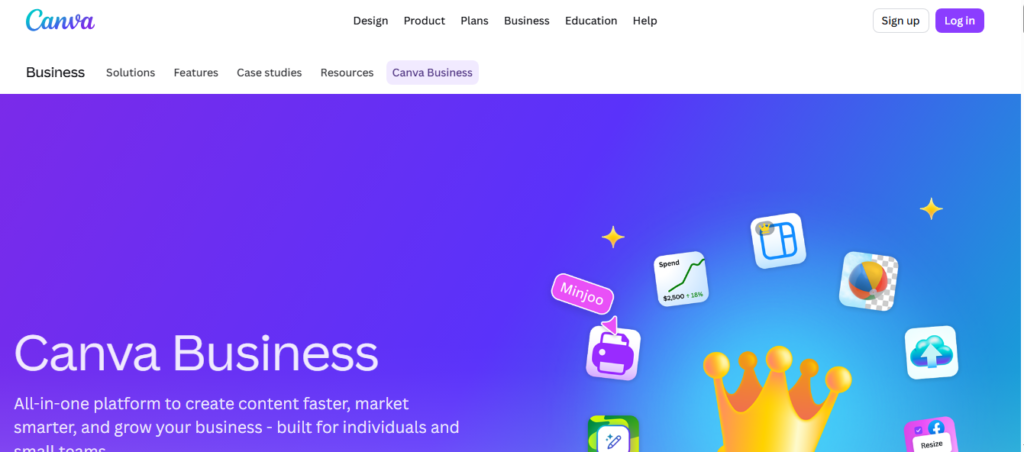
While Canva is primarily a design tool rather than a social media management platform, it deserves a place on this list because of how transformative it has been for financial content creation. Creating professional-looking social media graphics used to require a graphic design team or expensive design software. Canva changes that.
Canva for Teams allows your marketing or advisor team to create branded social media posts, infographics, charts, and educational content using drag-and-drop templates. Financial firms can upload their brand colors, logos, and fonts to ensure every piece of content looks consistent and professional.
Canva also integrates with tools like Hootsuite and Buffer, so you can design your content in Canva and schedule it directly to your social channels without switching between multiple apps.
For financial firms that produce a lot of educational content, market updates, or thought leadership posts, Canva is an essential part of the content creation workflow.
7. Jasper AI
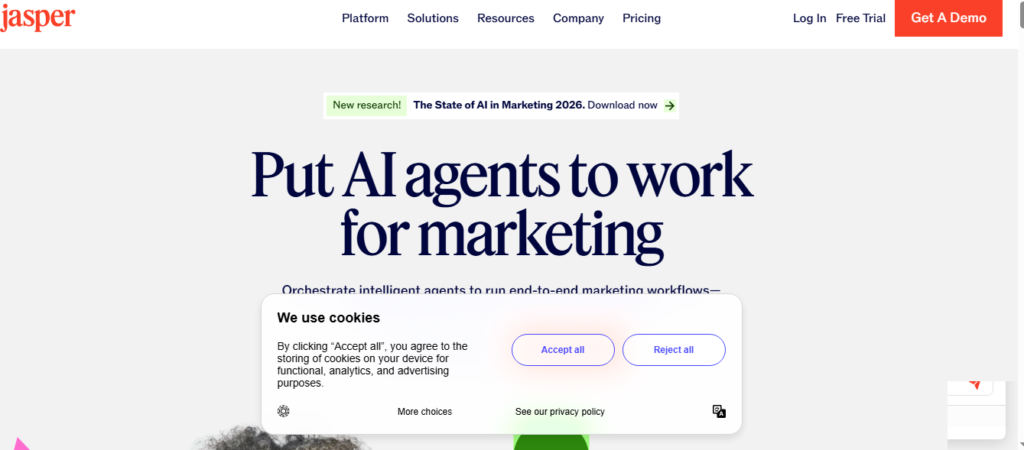
Jasper AI is one of the leading AI-powered content creation platforms, and it is increasingly being used by financial marketing teams to generate social media captions, blog posts, email newsletters, and more. Instead of staring at a blank screen trying to figure out what to say, your team can use Jasper to generate a first draft in seconds and then refine it to match your brand voice.
Jasper is trained to write in a variety of tones and styles, which means you can produce content that sounds professional, approachable, authoritative, or educational depending on what the moment calls for. You can give it prompts like “write a LinkedIn post explaining the benefits of a diversified portfolio for a first-time investor” and it will generate multiple options for you to choose from.
For financial firms that struggle with content volume, Jasper dramatically increases your output without increasing your headcount. It pairs especially well with a scheduling tool like Hootsuite or Buffer and a design tool like Canva.
8. Seismic LiveSocial
Seismic LiveSocial is a social media content platform built specifically for financial advisors and wealth managers. It curates compliant, third-party content from reputable financial publications and makes it easy for advisors to share it directly to their social channels with a single click.
The platform addresses a major pain point for financial advisors: they know they should be active on social media, but they do not have time to find and create content. LiveSocial solves this by delivering a daily feed of compliance-approved articles, market insights, and educational content that advisors can share to build their credibility and stay top of mind with clients.
It integrates with LinkedIn and other platforms and includes analytics to track which content is generating engagement. For large firms with hundreds of advisors who need to maintain an active social media presence without straining the marketing department, Seismic LiveSocial is an outstanding solution.
Comparison Summary
Hearsay Social is the best overall option for enterprise financial firms with strict compliance requirements. Hootsuite is the best for multi-location firms managing many accounts. Sprout Social is the best for data-driven financial marketing teams. Seismic LiveSocial is the best for financial advisor firms that need curated, compliant content. Buffer is the best budget-friendly option for independent advisors. Canva for Teams is the best for financial content design and branding. Jasper AI is the best for AI-assisted content creation at scale.
How to Build a Social Media Content Strategy for Financial Firms
Choosing the right software is only half the battle. You also need a solid content strategy to back it up. Here are the key steps to building a social media content strategy that works for financial firms.
Start by defining your target audience. Are you talking to high-net-worth individuals, millennials saving for their first home, small business owners, or retirees? Your audience determines your content tone, format, and platform.
Next, choose the right platforms. LinkedIn is the most important platform for B2B financial firms and professional services. Facebook and Instagram work well for consumer-facing financial brands. Twitter/X is useful for market commentary and thought leadership.
Develop a content mix. A good rule of thumb is to follow the 70-20-10 rule: 70 percent educational content, 20 percent branded content, and 10 percent promotional content. Financial audiences are suspicious of firms that only post sales messages, so leading with education builds trust.
Create a content calendar. Plan at least four weeks in advance and use your scheduling tool to batch your content in one sitting rather than scrambling to post every day.
Engage with your audience. Social media is a two-way conversation. Respond to comments, answer questions, and participate in relevant discussions to build relationships with your followers.
Measure and optimize. Review your analytics monthly to see which posts are performing best and adjust your strategy accordingly. Double down on what works and stop doing what does not.
Common Mistakes Financial Firms Make on Social Media
Many financial firms make the mistake of treating social media like a press release channel, only posting when they have a major announcement. This approach does not build engagement or grow a following.
Another common mistake is ignoring compliance until after content is published. Compliance should be part of the content creation process from the very beginning, not an afterthought. Using tools like Hearsay Social or Hootsuite with compliance integrations ensures this happens automatically.
Financial firms also often make the mistake of using too much jargon. Your social media audience includes people at all levels of financial literacy. Write as if you are explaining concepts to a smart friend who does not work in finance.
Finally, many firms underestimate the power of visuals. Text-only posts consistently underperform compared to posts that include images, infographics, or videos. Tools like Canva make it easy to add a visual element to every post.
Final Thoughts
Social media is no longer optional for financial firms. It is one of the most powerful tools you have for building brand awareness, educating your audience, attracting new clients, and retaining existing ones. The key is to use the right software to manage it efficiently and stay compliant while doing so.
Whether you are a large enterprise bank looking for a comprehensive compliance-first solution like Hearsay Social, or an independent advisor looking for a simple scheduling tool like Buffer, there is a marketing software solution that fits your needs and budget.
Investing in the right tools today will save you time, protect you from compliance risk, and give you a competitive edge in a crowded market. The financial firms that win on social media are the ones that show up consistently, provide real value to their audience, and use smart technology to do it at scale.
Start by identifying your biggest pain point, whether that is content creation, scheduling, compliance, or analytics, and choose the tool that solves that problem first. Then build your social media marketing stack from there.

Usman Hakim is an SEO specialist at RankWithLinks, focusing on link building and organic growth. He helps brands improve search rankings through white-hat strategies, including guest posting and authority backlinks.