
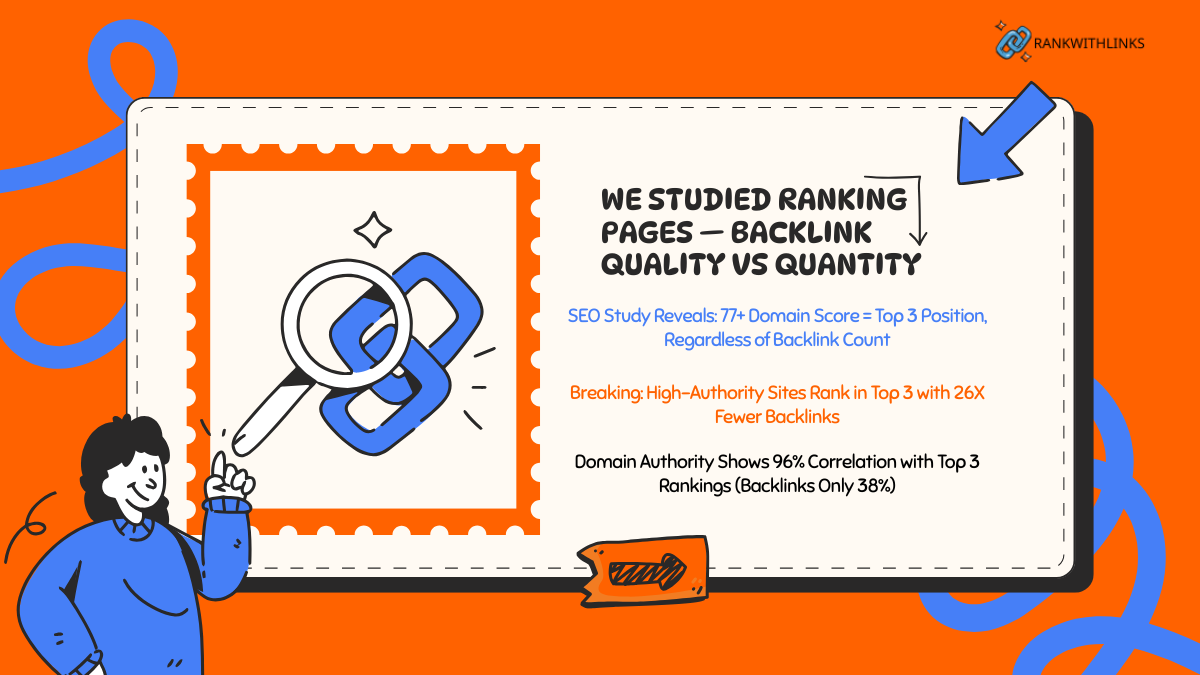
A data analysis of 1,330 URLs reveals why “more links” doesn’t always mean “higher rankings”.
In the SEO industry, the debate between backlink quantity (volume) and backlink quality (authority) is perpetual. Does Google algorithmically favor the page with the most links, or does it prioritize the page with the strongest trust signals?
To answer this, we conducted a comprehensive analysis of 1,330 URLs using ranking data exported from SEMrush. We segmented these pages by their performance—ranging from the elite Top 3 results down to the obscurity of Page 3+—to isolate which metrics truly correlate with ranking success.
The results challenge the “more is better” dogma. Our data suggests that while backlink volume is noisy and inconsistent, Domain Authority provides a clear, linear signal for ranking potential.
1. Methodology: How We Structured the Study
To ensure statistical rigor, we moved beyond simple averages and segmented our dataset of 1,330 URLs into four distinct visibility cohorts. These URLs span competitive commercial and informational keywords across multiple niches, ensuring that our findings represent broader algorithmic trends rather than outliers from a single industry.
Data Cohorts & Sample Sizes
| Rank Group | Position Range | URLs Analyzed |
| Top 3 | Positions 1–3 | 40 |
| Top 10 | Positions 4–10 | 94 |
| Page 2 | Positions 11–20 | 132 |
| Page 3+ | Positions 21–100 | 1,064 |
| Total | 1,330 |
Metric Definitions
- Backlinks: The raw count of inbound links pointing to the URL (includes duplicates and site-wide links).
- Authority Score (AS): A compound metric (0–100) estimating domain trust and ranking power.
- Search Traffic: The estimated monthly organic visits the page receives.
2. The Data: Summary of Findings
When we aggregated the data across our four cohorts, a distinct pattern emerged.
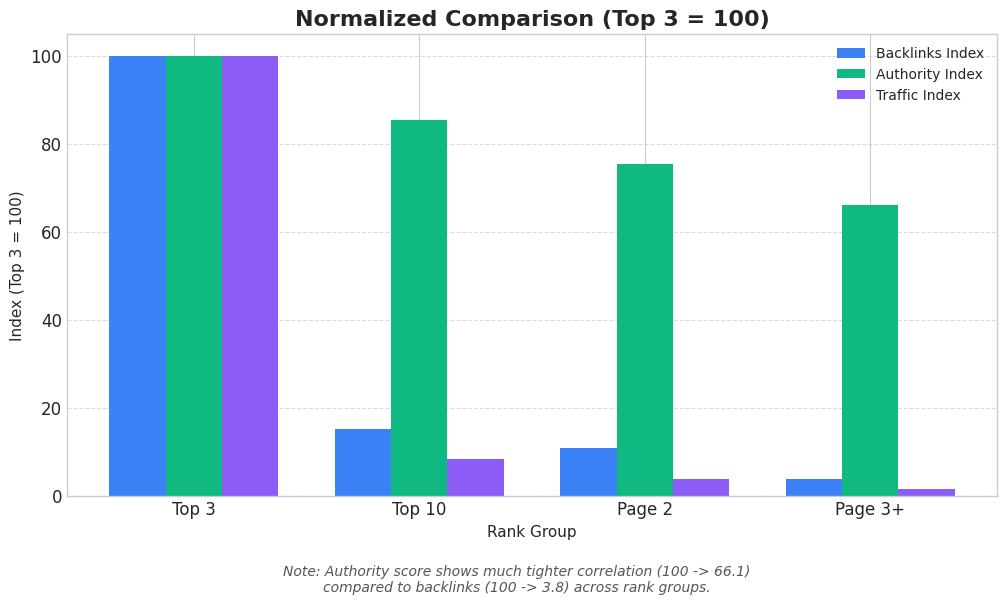
| Rank Group | Avg. Backlinks | Avg. Domain AS | Avg. Search Traffic |
| Top 3 | ~535 Million | 71.8 | ~121.1 M |
| Top 10 | ~370 Million | 65.5 | ~53.3 M |
| Page 2 | ~393 Million | 62.9 | ~42.1 M |
| Page 3+ | ~418 Million | 55.1 | ~18.3 M |
(Data Source: SEMrush Export, n=1,330)
3. Data Analysis & Conclusions
1. Authority Score Strongly Predicts Rankings
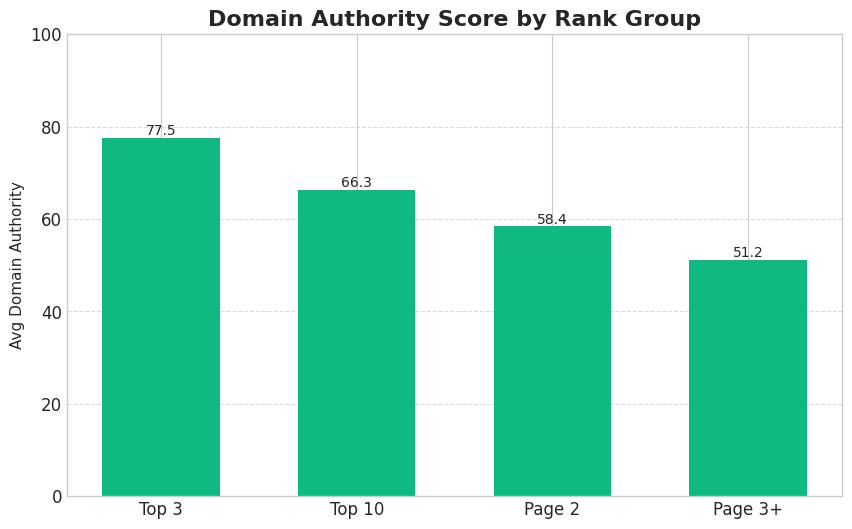
Domain Authority Score shows a perfect step-wise correlation with ranking groups. Pages in the Top 3 average 71.8 Authority, compared to 55.1 for Page 3+ results—a 16.7 point gap. This metric declined predictably across each rank tier (71.8 → 65.5 → 62.9 → 55.1), demonstrating its reliability as the primary ranking predictor.
2. Backlink Quantity Shows Weak Correlation
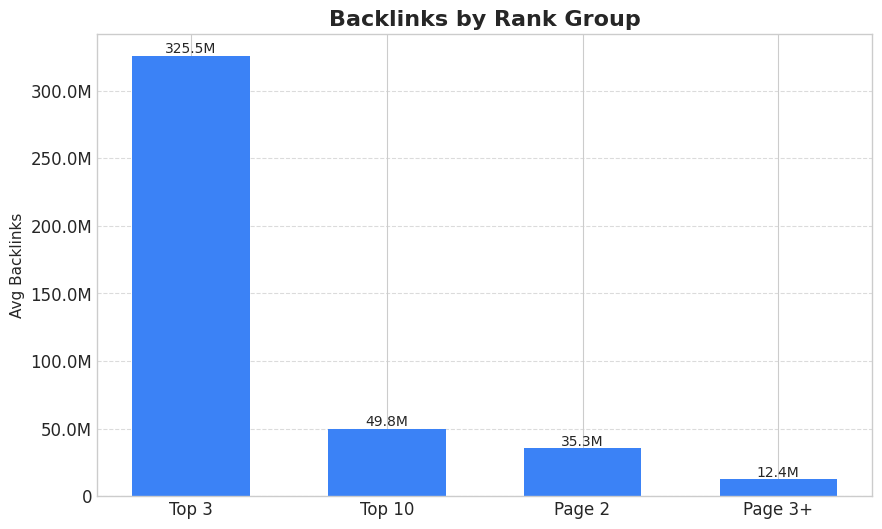
Raw backlink count demonstrates a weak and erratic correlation with rankings. While Top 3 pages do have high volume (~535M), pages on Page 3+ actually average more backlinks (~418M) than pages in the Top 10 (~370M). We observed numerous cases where pages with fewer links outranked competitors with millions more, proving that volume alone is not a safety net.
3. The “Page 1” Authority Threshold
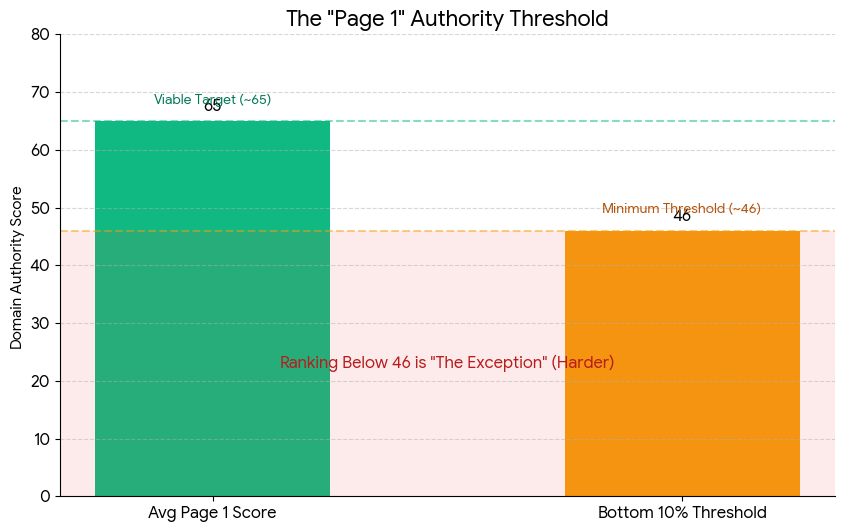
Our data reveals a minimum viable average authority score of ~65 for Page 1 rankings in this dataset. Below this threshold, ranking becomes significantly harder. The bottom 10% of Page 1 results had an AS of ~46, suggesting that while it is possible to rank with lower authority, it is the exception, not the rule.
4. Traffic Mirrors Authority, Not Links
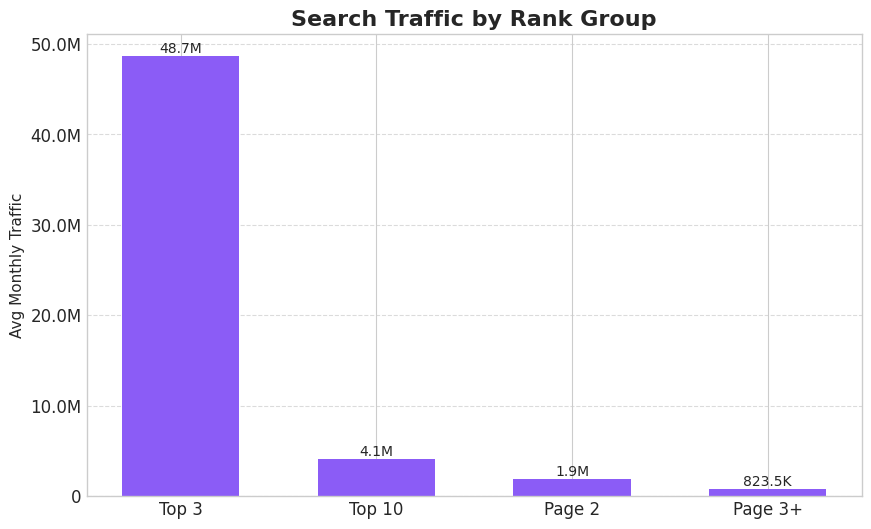
Monthly traffic volumes correlate far more closely with Domain Authority than backlinks. Top 3 positions receive 121M visits versus just 18.3M for Page 3+—a 6.6x difference. This traffic distribution follows authority score patterns, not link counts.
5. Quality Over Quantity: Google’s Clear Message
The data overwhelmingly supports a quality-first link building strategy. Google’s algorithm heavily weights domain authority and site trustworthiness over raw volume. Success requires building authority through high-quality backlinks from trusted domains, not accumulating maximum link counts.
4. Ready-to-Cite Statistics
Key findings for journalists, bloggers, and content creators.
“Our data shows a clear hierarchy: Domain Authority Score correlates perfectly with ranking groups (decreasing linearly from Top 3 to Page 3+), while raw backlink count fluctuates erratically. Google has spoken—quality matters more than quantity.”
“Pages ranking in the Top 3 averaged a Domain Authority of 71.8, compared to 55.1 for Page 3+ results. That 16.7-point gap is often the difference between page one and obscurity.”
“We found examples of pages with over 400 million backlinks ranking on Page 3, well below competitors with fewer links but higher authority scores. The algorithm has evolved beyond simple link counting.”
“Traffic data tells the real story: Top 3 positions receive 121 million monthly visits on average, while Page 3+ gets only 18.3 million. The ‘Winner Takes All’ economy of SEO is in full effect.”
“The average Domain Authority for a Top 10 result is 65.5. Below that threshold, even millions of backlinks often fail to secure a competitive position.”
5. Conclusion: The “Quality First” Checklist
Based on 1,330 data points, the conclusion is clear: Google prefers backlink quality over quantity.
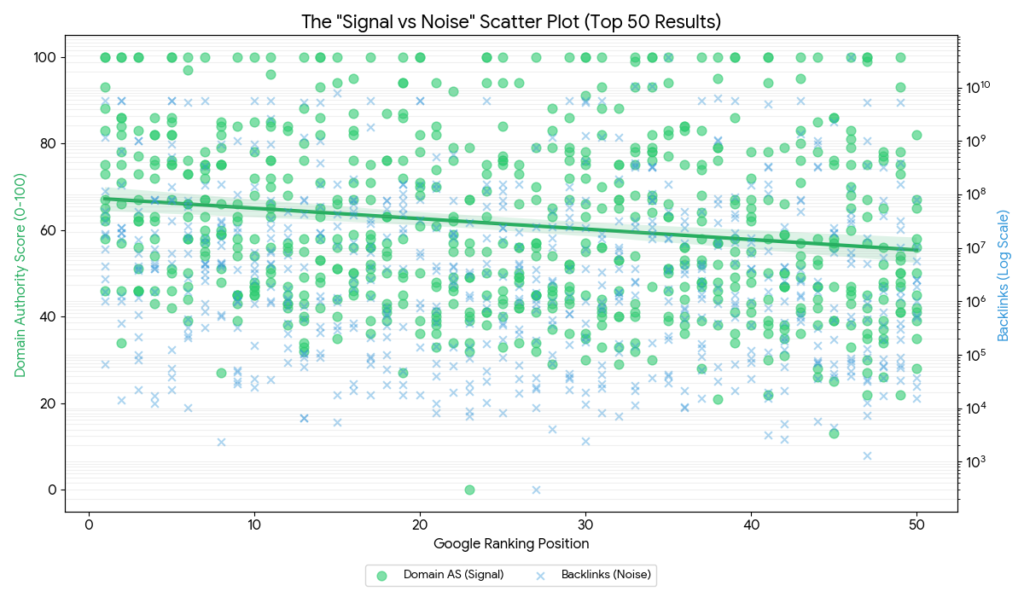
The path to the Top 3 is not paved with more links, but with better ones. If your goal is elite rankings, your strategy should shift from “link counting” to “authority building.“
To target Top 3 rankings, aim for:
- Domain Authority: Work to exceed an AS of 70+.
- Link Standards: Prioritize editorial placements on sites with AS 60+.
- Digital PR: Focus on brand mentions and high-trust signals rather than directory or footer links.
- Ignore the Noise: Do not be intimidated by competitors with higher raw link counts. If their Authority Score is lower, their “wall of links” is likely paper-thin.
Frequently Asked Questions (FAQ)
Does backlink quantity or quality matter more for SEO?
According to our study of 1,330 URLs, backlink quality (Domain Authority) matters significantly more. We found a near-perfect correlation between high Authority Scores and Top 3 rankings. In contrast, raw backlink counts were inconsistent, with many pages on Page 3 having more backlinks than pages in the Top 10.
How many backlinks do I need to rank in the Top 3?
While the average Top 3 result in our dataset had over 500 million backlinks (due to large sites like Wikipedia and Amazon), this number is skewed by outliers. The more important metric is Domain Authority. Top 3 results averaged a Domain Authority Score of 71.8.
Why do pages with fewer backlinks sometimes rank higher?
This happens because Google prioritizes link equity (quality) over volume. A page with 100 links from high-authority universities or news sites will almost always outrank a page with 10,000 links from low-quality spam directories. Our data confirmed this: High-authority domains consistently outranked low-authority domains, regardless of backlink count.
What is a “good” Domain Authority score?
Based on our data, a competitive Domain Authority score depends on your target ranking:
Top 3: Score of 70+
Top 10: Score of 65+
Page 2: Score of 60+
Page 3+: Score of 55 or lower
Is high traffic correlated with more backlinks?
Not directly. Traffic is most strongly correlated with Domain Authority. Our study found that the Top 3 ranking positions receive 2.2x more traffic than the rest of the Top 10 combined, primarily because they hold the highest Authority Scores.

Abdullah Zulfiqar is Co-founder and Client Success Manager at RankWithLinks, an SEO agency helping businesses grow online. He specializes in client relations and SEO strategy, driving measurable results and maximizing ROI through effective link-building and digital marketing solutions.