
Best Software for Simplifying Event Planning in 2026: The Complete Guide
Event planning has never been more demanding — or more technologically capable. In 2026, the gap between planners who use the right software and those who rely on outdated manual methods has never been wider. AI-powered automation, real-time collaboration tools, hybrid event infrastructure, and deeply integrated data systems have redefined what event management software can do, and the best platforms today bear little resemblance to the tools that existed even three or four years ago.
Whether you are coordinating an intimate corporate workshop, a multi-day international conference, a high-profile wedding, or a virtual product launch reaching thousands of people across time zones, there is now software purpose-built to handle your specific type of event with precision and efficiency.
This guide covers the best software for simplifying event planning in 2026, with detailed breakdowns of each platform’s strengths, ideal use cases, pricing approach, and the specific problems each one is best equipped to solve.
Why Event Planning Software Has Become Non-Negotiable in 2026
The role of event planner has expanded considerably over the past few years. Attendees now expect personalized experiences, seamless digital check-ins, hybrid participation options, and instant communication throughout the event lifecycle. Clients and stakeholders demand detailed ROI reporting, real-time budget visibility, and professional-grade documentation at every stage.
Meeting these expectations manually is simply not realistic anymore. A mid-size corporate conference in 2026 might involve coordinating with twenty or more vendors, managing a hybrid guest list spanning multiple countries, running a live-streamed agenda with interactive Q&A sessions, and delivering a post-event analytics report within forty-eight hours of closing. No spreadsheet or email chain can handle that volume of complexity without something breaking.
Modern event planning software addresses this reality by centralizing every workflow, automating repetitive tasks, and giving planners real-time visibility into every moving part of an event. The result is fewer errors, faster execution, more satisfied clients, and events that consistently deliver on their intended goals.
How AI Has Changed Event Planning Software in 2026
One of the most significant developments in event management technology over the past two years has been the deep integration of artificial intelligence into core planning workflows. In 2026, AI is no longer a novelty feature — it is a functional component of the best platforms on the market.
AI-powered tools now assist with speaker scheduling by analyzing session topic relationships and attendee interest data to build optimized agendas. They generate personalized event recommendations for attendees based on their registration profile, past behavior, and stated preferences. They flag budget anomalies before they become overruns, suggest vendor alternatives when a preferred supplier is unavailable, and draft personalized attendee communications at scale.
For planners managing multiple simultaneous events, AI assistants embedded in platforms like Cvent and Bizzabo now act as intelligent project managers, surfacing critical tasks that are at risk, predicting which attendees are likely to cancel based on engagement signals, and recommending actions to improve registration conversion rates.
This shift has not replaced human planners — it has made skilled planners dramatically more productive, allowing small teams to manage event programs that would previously have required significantly larger staff.
What to Look for in Event Planning Software in 2026
Before exploring specific platforms, it helps to know which capabilities matter most in the current environment. The following features represent the essential checklist for any serious evaluation.
AI-Assisted Planning Tools — Look for platforms where AI actively helps with scheduling, communication drafting, budget forecasting, and attendee personalization rather than simply offering a chatbot for support queries.
Hybrid and Virtual Event Infrastructure — In 2026, the ability to deliver a seamless experience for both in-person and remote attendees within the same event is a baseline expectation, not a premium add-on.
Advanced Registration and Ticketing — Custom registration flows, dynamic pricing, multi-currency support, group registration, and integrated payment processing should all be standard.
Real-Time Budget Management — Platforms that connect directly to vendor invoices, process automated reconciliation, and alert planners to variances in real time save hours of manual bookkeeping every week.
Attendee Engagement Tools — Live polling, Q&A management, networking facilitation, gamification, and mobile event apps all contribute to the kind of active participation that modern attendees expect.
Deep CRM and Marketing Integrations — The best platforms sync bidirectionally with Salesforce, HubSpot, Marketo, and similar tools so that event data flows automatically into the organization’s broader marketing and sales ecosystem.
Post-Event Analytics — Comprehensive reporting on attendance, engagement, revenue, survey responses, and lead quality is essential for demonstrating value and continuously improving event performance.
Data Security and Privacy Compliance — With global privacy regulations continuing to evolve, platforms that offer built-in GDPR, CCPA, and regional compliance tools protect both planners and their attendees.
The Best Event Planning Software of 2026
1. Cvent — Best for Enterprise Event Programs
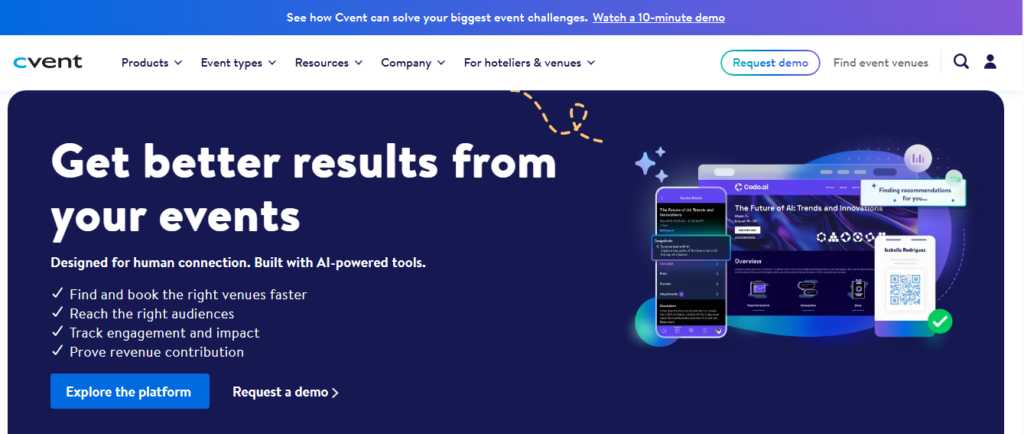
Cvent remains the dominant platform for large-scale enterprise event management in 2026, and its continued investment in AI and hybrid event capabilities has kept it firmly at the top of the market for corporate event teams.
Its venue sourcing network now includes over 300,000 verified venues globally, with AI-powered matching that analyzes your event requirements — capacity, location, AV needs, catering preferences, budget range — and surfaces the most relevant options ranked by fit score. Planners report that this feature alone saves multiple hours on venue research for each event.
The registration and event website builder has been significantly upgraded with no-code customization tools that produce polished, branded experiences without requiring design or development resources. Dynamic registration paths allow the form to adapt based on attendee type, showing corporate registrants a different set of questions and ticket options than general public attendees, for example.
Cvent’s hybrid event module connects in-person and virtual attendees within a unified platform, with synchronized agendas, shared networking spaces, and consistent engagement tools for both audiences. Its onsite solutions — including facial recognition check-in, contactless badge printing, and real-time attendance tracking — deliver the kind of seamless door experience that sets the tone for the entire event.
For organizations running programs of ten or more events annually, Cvent’s portfolio analytics dashboard gives leadership a consolidated view of event performance, spend, and ROI across the entire program, making it much easier to justify event budgets and optimize the program mix over time.
The platform’s pricing reflects its enterprise positioning and is best suited to organizations with dedicated event budgets rather than independent planners or small teams.
Best for: Corporate event departments, associations, professional services firms, and enterprises managing high-volume, multi-event programs.
2. Eventbrite — Best for Public Events and Community Ticketing
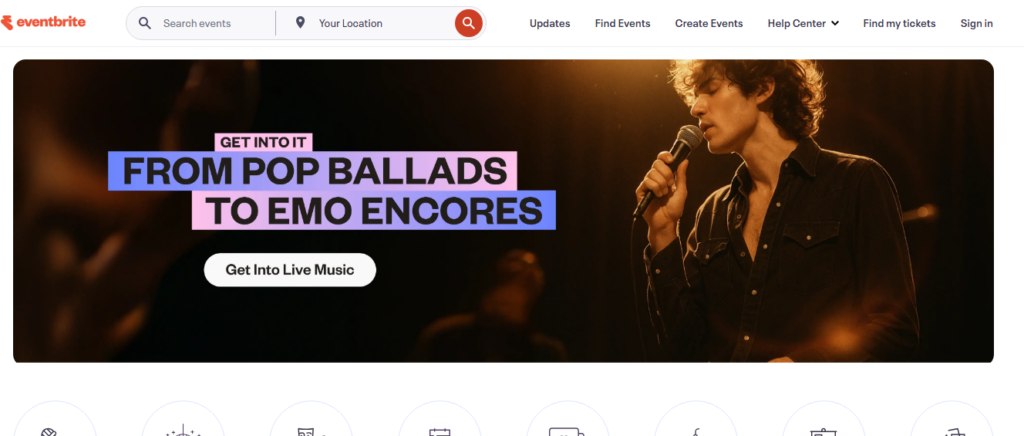
Eventbrite continues to be the go-to platform for public-facing events where discoverability, ease of ticket purchase, and broad audience reach are the primary objectives. In 2026, its marketplace remains one of the most powerful organic distribution channels available to event organizers, drawing tens of millions of active event-seekers each month.
The platform’s updated creator tools make it faster than ever to launch an event page, configure ticket tiers, set promotional pricing windows, and begin accepting registrations within minutes. Its payment processing is reliable, its fee structure is transparent, and its payout timeline is predictable — three qualities that matter enormously to independent organizers managing cash flow.
Eventbrite has expanded its analytics capabilities meaningfully, now offering demographic breakdowns of ticket buyers, conversion tracking from discovery to purchase, and comparative performance data that shows how your event is performing against similar events in your category and location. This data is genuinely useful for refining marketing strategies and pricing decisions.
The platform has also improved its promotion tools, with direct integrations for Meta and Google ad campaigns that allow organizers to run paid promotion directly from the Eventbrite dashboard, targeting audiences based on interest and location data without leaving the platform.
Where Eventbrite still has gaps is in deep event management functionality. It remains primarily a ticketing and promotion platform rather than a full planning suite, so organizers with complex vendor management, multi-team coordination, or detailed budget tracking needs will likely need to pair it with additional tools.
Best for: Music promoters, community organizers, fitness instructors, workshop hosts, festival producers, and anyone running public ticketed events.
3. HoneyBook — Best for Independent and Boutique Event Planners
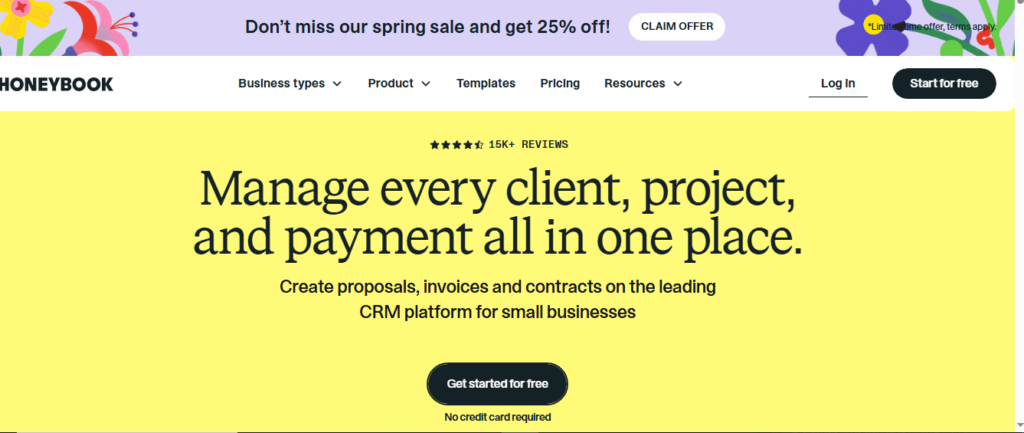
HoneyBook has solidified its position in 2026 as the leading business management platform for independent event planners and small boutique agencies. Its core value proposition remains unchanged — it replaces the patchwork of separate tools that most freelance planners use for client management, proposals, contracts, and invoicing with a single, cohesive platform — but the product has matured considerably in both depth and usability.
The client pipeline now includes AI-powered lead scoring that helps planners prioritize follow-up based on the likelihood of conversion, drawing on signals like inquiry response time, budget range, and event type. Automated follow-up sequences ensure that no potential client falls through the cracks during busy periods, which is one of the most common ways independent planners lose business.
Its contract and payment tools remain among the strongest in any platform at this price point. Legally binding e-signatures, automated payment reminders, flexible installment plan configuration, and direct bank deposit for received payments eliminate most of the administrative friction that makes running a planning business unnecessarily stressful.
HoneyBook’s project management features have expanded to include timeline visualization, task dependencies, and a client portal where clients can review proposals, sign contracts, make payments, and track event progress — all without requiring back-and-forth email communication for every update.
The mobile app experience is excellent, which matters for planners who spend most of their working hours on-site rather than at a desk.
Best for: Independent wedding planners, freelance event coordinators, small boutique planning agencies, and creative professionals building client-based event businesses.
4. Planning Pod — Best All-in-One Platform for Professional Planners and Venues
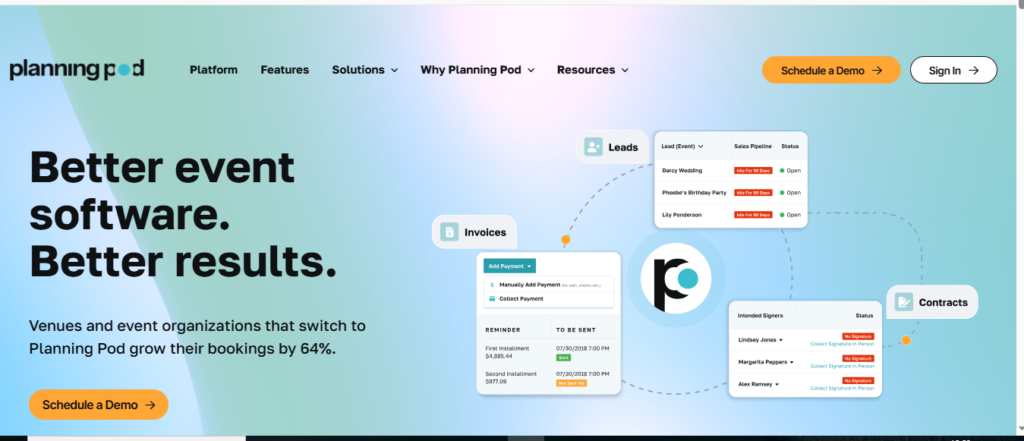
Planning Pod remains one of the most comprehensively designed tools for professional event planners and event venues in 2026. Unlike platforms that started as project management tools and added event features over time, Planning Pod was built entirely around the specific workflows of event coordination from the ground up.
Its suite covers more than thirty interconnected planning functions, including detailed floor plan design and seating management, food and beverage planning with per-person cost calculations, multi-vendor contract tracking, guest list management with dietary and accessibility needs tracking, event timelines with automated reminders, and a complete budget module that tracks actual versus projected spending in real time.
The floor plan designer continues to be one of its strongest differentiators. Planners can build detailed room layouts using a library of furniture, equipment, and fixture templates, adjust capacity configurations, and share interactive visual floor plans with clients and venue contacts for approval. For planners who manage dozens of events per year across different venues, this feature alone saves an enormous amount of time compared to building floor plans in generic design tools.
For event venues managing their own bookings, Planning Pod’s venue management module handles lead tracking, room availability calendars, multi-event scheduling to avoid conflicts, client communication logs, and BEO (Banquet Event Order) generation — essentially serving as a CRM and operations platform for the venue itself.
The 2026 version has added AI-assisted timeline building that generates a draft event timeline based on event type, duration, and guest count, which planners can then customize. This feature significantly reduces the time required to build a new event file from scratch.
Best for: Full-service event planners managing multiple client events simultaneously, wedding planners, and event venues managing their own booking operations.
5. Whova — Best for Conferences and Multi-Track Events
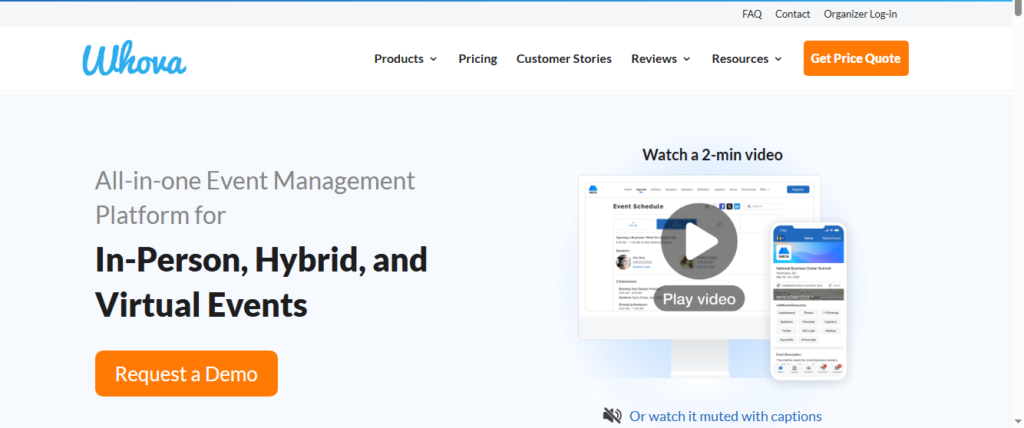
Whova has continued to strengthen its position as the top choice for conference organizers and professional associations in 2026, with its attendee engagement tools setting the standard that other platforms aspire to match.
The platform’s mobile event app is its crown jewel. Attendees use it to build personalized schedules from multi-track agendas, connect with other participants through an AI-powered networking matching system that suggests relevant contacts based on professional background and stated interests, participate in session Q&A and live polls, access sponsor and exhibitor information, and receive real-time event updates. Post-event surveys consistently show that Whova’s app contributes meaningfully to overall attendee satisfaction scores.
For organizers, Whova provides a clean agenda management interface that handles complex multi-track programming, speaker management tools that collect bio information and presentation materials through an automated portal, and sponsor and exhibitor management features that allow commercial partners to update their own profiles and access lead retrieval data.
The platform has invested heavily in hybrid event capabilities since 2023, and the current version handles simultaneous in-person and virtual audiences well, with synchronized session streaming, shared networking spaces that bridge physical and digital attendees, and unified analytics that measure engagement across both audiences.
Whova’s pricing is structured per event rather than as an annual subscription for smaller organizations, which makes it accessible to associations and nonprofits that host one or two major events per year without requiring a large ongoing commitment.
Best for: Conference organizers, trade show producers, professional associations, academic event organizers, and nonprofit organizations hosting annual gatherings.
6. Bizzabo — Best for Marketing-Driven Event Programs
Bizzabo has continued to evolve in 2026 as the premier choice for organizations that treat events as a strategic marketing channel deeply integrated with their broader revenue operations. Its positioning at the intersection of event management and marketing technology remains distinct in the market.
The platform’s Event Experience OS — its term for the unified data layer that connects attendee behavior across registration, session attendance, app engagement, and post-event follow-up — has become significantly more sophisticated. It now feeds behavioral signals directly into connected CRM and marketing automation platforms in near real-time, allowing sales teams to see event engagement data within their existing workflow tools within minutes of an interaction occurring.
Its personalization capabilities have expanded meaningfully. Organizers can now define audience segments based on job title, industry, company size, or past event behavior, and automatically deliver different agenda recommendations, content tracks, and networking suggestions to each segment throughout the event experience. Attendees receive a more relevant experience; organizers see higher engagement rates and better post-event conversion metrics.
Bizzabo’s virtual and hybrid production tools, branded as Bizzabo Studio, support broadcast-quality live streaming with professional graphics overlays, multi-speaker panel management, pre-recorded session integration, and interactive viewer features including live Q&A, polling, and reaction tools. The production quality achievable through Bizzabo Studio rivals dedicated virtual event platforms while remaining within the same system used to manage the rest of the event.
Best for: B2B marketing teams, demand generation professionals, revenue operations leaders, and organizations where events are a measurable contributor to sales pipeline and customer retention.
7. Asana — Best for Internal Event Team Coordination
Asana remains one of the most effective tools for managing the internal project side of large event productions in 2026, particularly for in-house corporate event teams and agencies managing multi-person productions with complex cross-functional dependencies.
Its timeline view maps every task across the full event production cycle, shows how tasks depend on each other, and automatically identifies which downstream tasks are at risk when a deadline is missed upstream. For large events involving venue teams, creative agencies, AV suppliers, catering coordinators, and multiple internal departments, this level of dependency mapping is invaluable.
Asana’s AI features, grouped under its Asana Intelligence branding, now include automatic task prioritization based on deadline proximity and dependency impact, smart meeting summaries that convert action items into tracked tasks, and workload analysis that identifies when team members are over-allocated before it becomes a performance problem.
The template library includes purpose-built event planning templates covering conference production, product launches, corporate retreats, and trade show management. These templates provide a ready-to-use starting structure that teams can customize rather than rebuilding a task framework from scratch for every new event.
Asana integrates with Cvent, Eventbrite, Google Workspace, Slack, Zoom, and most other tools that event teams use, making it an effective coordination layer that sits above specialized event platforms.
Best for: Corporate event teams, full-service agencies, and organizations managing large multi-department event productions.
8. Airmeet — Best for Virtual and Hybrid Networking Events
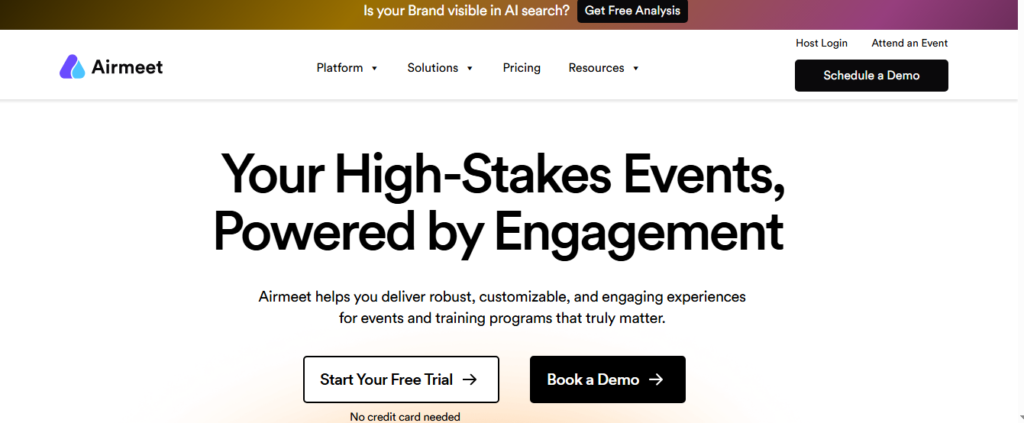
Airmeet has emerged as one of the strongest platforms specifically designed for virtual and hybrid events where meaningful attendee networking is the primary goal, making it a genuine alternative to more established platforms for this specific use case.
Its signature feature is the Social Lounge — a virtual space where attendees can join tables of up to eight people for spontaneous video conversations, replicating the hallway and coffee break networking dynamics that are impossible to recreate through standard webinar formats. In 2026, this model has been refined with AI-powered table suggestions that match attendees based on their profiles and stated interests, dramatically improving the quality of connections made.
Airmeet supports a full range of event formats within a single platform, including keynote sessions with large audiences, interactive breakout workshops, panel discussions, expo hall experiences with virtual booths, and one-on-one scheduled meetings. This versatility makes it suitable for events that need to move fluidly between different formats throughout the day.
Its analytics dashboard tracks session attendance, networking engagement, booth visits, and interaction rates, giving organizers a detailed picture of how attendees actually spent their time rather than just who registered and who showed up.
Airmeet’s pricing is competitive and scales based on attendee count, making it accessible to organizations of various sizes without requiring an enterprise commitment.
Best for: Virtual and hybrid conferences, professional communities, virtual trade shows, online summits, and organizations where attendee networking is the central value proposition.
9. Trello — Best Budget-Friendly Tool for Simple Event Planning
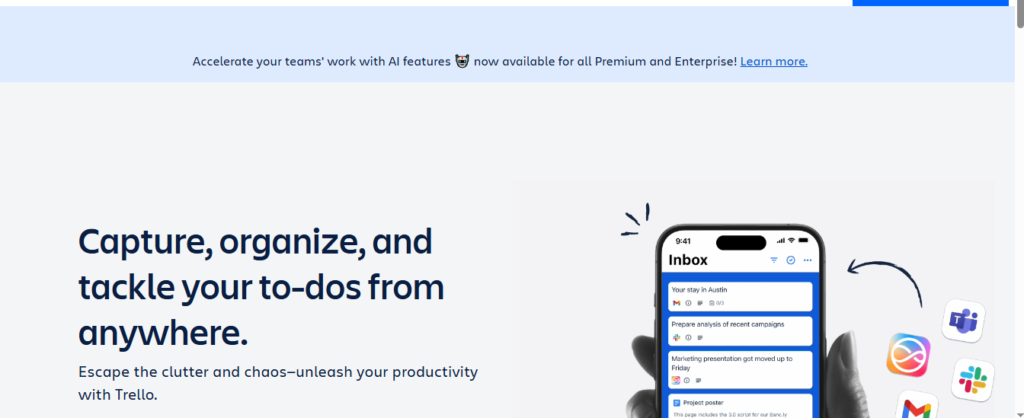
Trello remains a practical, low-cost option for smaller events, internal gatherings, and planners who need organizational structure without the complexity or cost of a full event management platform.
Its board-based system works well for breaking an event into phases — initial planning, vendor outreach, marketing, registration management, day-of logistics, and post-event wrap-up — and tracking progress visually across each phase. Task cards can include checklists, attachments, due dates, and assignees, giving small teams a shared view of who is doing what and when.
The free tier remains genuinely functional, and Trello’s paid plans are priced far below any specialized event management platform. For a team of two or three people organizing a single annual company event or a recurring community meetup, the investment in a more sophisticated platform is rarely justified.
Its limitations are real. There is no built-in registration system, no guest management, no budget tracker, no vendor database, and no attendee communication tools. Trello-based event planning always requires pairing it with other tools — typically Google Forms, a spreadsheet for budgeting, and an email marketing platform for attendee communication.
Best for: Small internal company events, community meetups, nonprofit gatherings, and occasional event organizers who need simple task organization without a full platform investment.
Comparing the Top Event Planning Software at a Glance
Understanding how these platforms stack up against each other makes the selection process considerably easier. Cvent and Bizzabo dominate the enterprise and marketing-driven segments respectively, both offering deep integrations and sophisticated analytics at premium price points. Eventbrite leads for public-facing ticketed events where audience reach matters as much as logistics management. HoneyBook and Planning Pod serve the professional planner market from different angles — HoneyBook prioritizing client relationship management and business operations, Planning Pod emphasizing depth of event-specific planning tools. Whova and Airmeet excel in attendee engagement, with Whova strongest for in-person and hybrid conferences and Airmeet leading for virtual and networking-centric events. Asana sits in a category of its own as a project coordination layer rather than a front-end event platform. Trello serves as the accessible entry point for smaller, simpler event needs.
How to Choose the Right Event Planning Software for Your Situation
The right platform is rarely the one with the most features — it is the one that best addresses your specific operational bottlenecks while fitting within your team’s capacity to learn and adopt new tools.
Start by mapping your current process and identifying where things most consistently go wrong or take longer than they should. Is it vendor coordination? Guest communication? Budget tracking? Internal team alignment? Cross-referencing your pain points against the strengths of each platform will quickly narrow the field to two or three serious candidates.
Consider your event volume. A planner running one large annual conference has different needs than a team producing forty events per year. Higher volume generally justifies more investment in a comprehensive platform because the efficiency gains compound across every event in the program.
Think about your attendee experience goals. If personalization, networking facilitation, and digital engagement are central to what you are trying to deliver, platforms with strong app and engagement features deserve more weight in your evaluation. If your attendees primarily need clean registration and clear communication, a simpler platform may serve equally well at lower cost.
Finally, evaluate integrations carefully. The best event planning software is the one that fits smoothly into your existing technology ecosystem — not the one that requires you to rebuild every adjacent workflow from scratch.
Most of the platforms covered in this guide offer free trials, demo accounts, or pilot event options. Taking the time to test two or three leading candidates with a real or simulated event before committing to a subscription is almost always worth the effort.
The Future of Event Planning Software
Looking ahead, the trajectory of event planning technology in 2026 and beyond points toward even deeper AI integration, more seamless physical-digital hybrid experiences, and increasingly sophisticated personalization at scale.
Predictive analytics tools will become more accurate at forecasting attendance, identifying at-risk registrations before cancellations happen, and optimizing event formats based on real behavioral data rather than assumptions. Augmented reality wayfinding and check-in experiences will become more common at large in-person events. AI agents will handle more of the routine vendor communication, attendee inquiry responses, and post-event follow-up that currently consumes significant planner time.
The planners who will thrive in this environment are those who learn to work effectively with these tools — not just using them to automate existing tasks, but thinking creatively about what becomes possible when the administrative burden of event planning is significantly reduced. Better events, stronger relationships, more ambitious programs, and more time devoted to the creative and strategic work that technology cannot replace.
Final Thoughts
Event planning software in 2026 is sophisticated, varied, and genuinely capable of transforming the way events are organized and experienced. The platforms covered in this guide represent the strongest options available across every major segment of the market, from enterprise corporate programs to independent boutique planning businesses, from large in-person conferences to fully virtual networking events.
The right tool is out there for your specific situation. Identify your priorities, test your top options, and invest in a platform that your team will actually use consistently. The returns — in time saved, errors avoided, client satisfaction, and events that deliver on their full potential — are well worth it.

Usman Hakim is an SEO specialist at RankWithLinks, focusing on link building and organic growth. He helps brands improve search rankings through white-hat strategies, including guest posting and authority backlinks.